
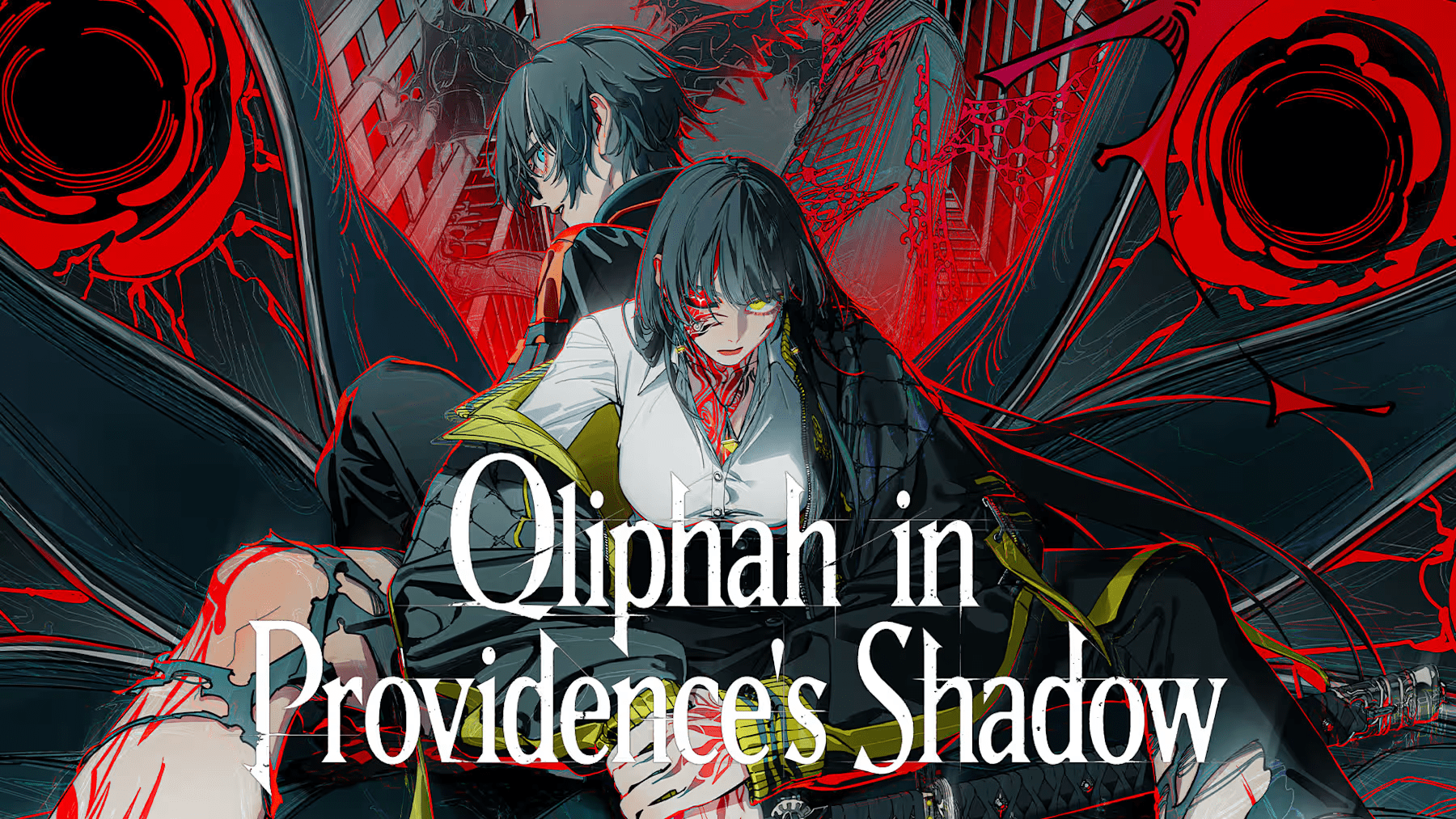

Visual novels as a genre are definitely not my “cup of tea.” I’ve always found it overwhelmingly boring to just sit and read too much about various dramas, especially since most VNs come from Japan or focus on Japanese tropes. It’s not that I dislike Japanese games in general, but VNs simply don’t click with me. However, mixing a VN with something else sounded like a highly intriguing concept. Since our resident genre expert, Jonas, was bogged down with an extensive Gamescom report, I figured: let me give this a shot, maybe I’ll actually like it. At first glance, when I saw we could review Qliphah in Providence’s Shadow, I loved the art, I loved that it wasn’t a dry VN but rather combined with real-time tactical combat, and above all, I loved the English title. (Fun fact: Qliphah is actually pronounced Khalifa, yes, like that one, with a silent H at the end). Anyway, let’s dive into the review before we spontaneously drift into totally different topics.
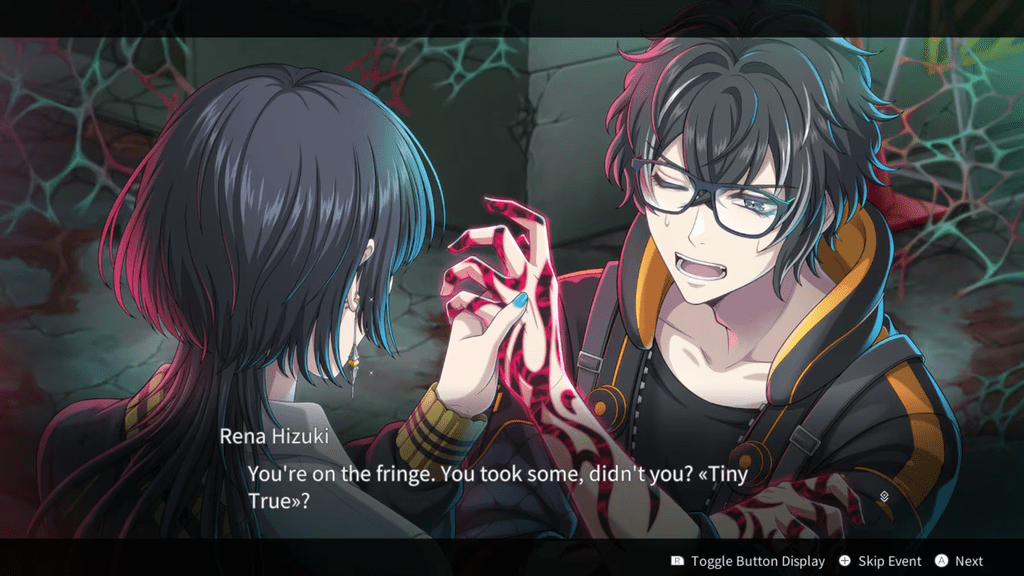
The story of Qliphah in Providence’s Shadow is set in Tokyo 2030, though it looks absolutely nothing like the Tokyo we are used to seeing. Following an event known as the “Collapse,” reality itself begins to unravel, the boundary between our world and something far more bizarre is practically non-existent, and grotesque creatures known as Aberrations roam the city. I have to admit, I really liked the story right from the start. Okay, “liked” might be too strong a word, but it genuinely intrigued me. This isn’t just a classic post-apocalyptic world where civilization was wiped out; it is a place where the laws of reality warp right before your eyes. UnitePlus and Arc System Works clearly designed this world heavily influenced by Japanese urban horror and anime/manga aesthetics, which shines through this blend of police investigation, supernatural phenomena, mutations, and rather grim human destinies.
You start off taking the role of a young detective, Rena Hizuki, working for the Metropolitan Police Department, Public Safety Bureau, Foreign Affairs Section 5, 2nd Anomaly Investigation Unit. Yep… that is the full name of her division. She bears a “Stigma,” a mysterious mark spreading across her body that simultaneously grants her the ability to see fragments of her own future. Furthermore, she wields a sword that isn’t just a standard blade, but an artifact tied to the grander mystery of her world. Her foresight is one of her most fascinating character traits and heavily impacts the gameplay, because Rena can effectively see what is coming, but she doesn’t necessarily always have the power to change it.
Very early on, you encounter a lost kid named Soma Hoshigami. He is a food delivery boy just trying to survive in this horrific version of Tokyo, which has already robbed him of his family. What he doesn’t realize is that he is no ordinary human; he is infected with a virus that turns people into monsters. However, the infection isn’t progressing in him; instead, it grants him specific abilities that will prove highly useful during your playthrough with this duo. Rena has to detain him because he is essentially considered “lost property” in this world. She has to catalog him and try to save him, but from that exact moment, their dynamic becomes far more interesting than a player might initially assume. As I mentioned, they effectively form the dual-protagonist team you play as in this game.
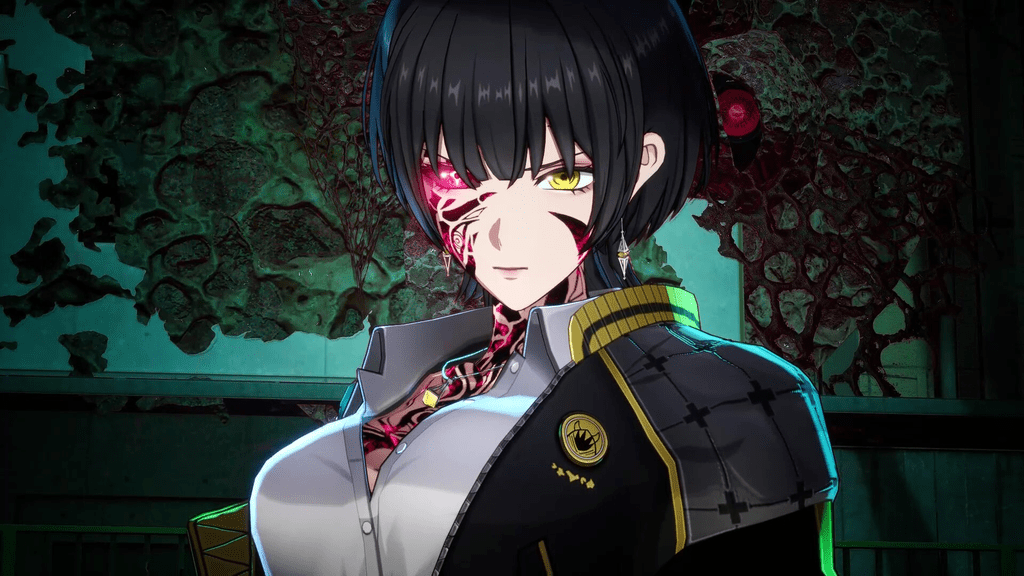
Driven by completely different motives, the two are dragged into an investigation far larger than Soma’s impending transformation. At the center of her detective case is “Tiny True,” a mysterious and highly dangerous drug flooding the streets of Tokyo, alongside the Stigmas, bizarre bodily symbols appearing on young people and gradually mutating their physical forms. As the investigation deepens, it becomes obvious that these aren’t just random mutations or the standard fallout of the Collapse. What I find particularly fascinating about this concept is the idea that the Collapse wasn’t merely a catastrophe that ruined Tokyo; it was an event that fundamentally altered the nature of the world. According to the game’s director, Satoshi Hirayae, some people in this world can attain almost god-like powers, while those lacking that potential end up as Aberrations, grotesque entities stripped of their humanity. This adds a fantastic layer of complexity to the narrative, as beneath the classic “what happened to the world” mystery lies a deeper philosophical question about what happens to people who can transcend the limits of a normal human.
Now, Shinbou no Kurifa (its Japanese title, which is shorter and easier to type) features two layers of gameplay layered over this complex narrative setup. One is the Visual Novel aspect, as I previously mentioned. This is where you essentially learn and uncover what is happening in the world. You have a map of Tokyo allowing you to investigate occurrences at specific locations. However, there are no fully rendered 3D environments for the story segments, just text, static backgrounds, and character dialogue bubbles. You know, standard stuff for anyone who has ever played a VN. The catch here is that every action and every case consumes one in-game day, and you are constantly fighting a countdown to the next Collapse, or rather, another wave of the catastrophe that will further decimate the world. Story-wise, it isn’t wildly action-packed during these segments; it’s simply the vehicle for narrative progression. But on the flip side of the gameplay coin, the game gets noticeably harder and more complex. Before we jump into that second gameplay dimension, let me just touch on a few more things regarding the story and progression.
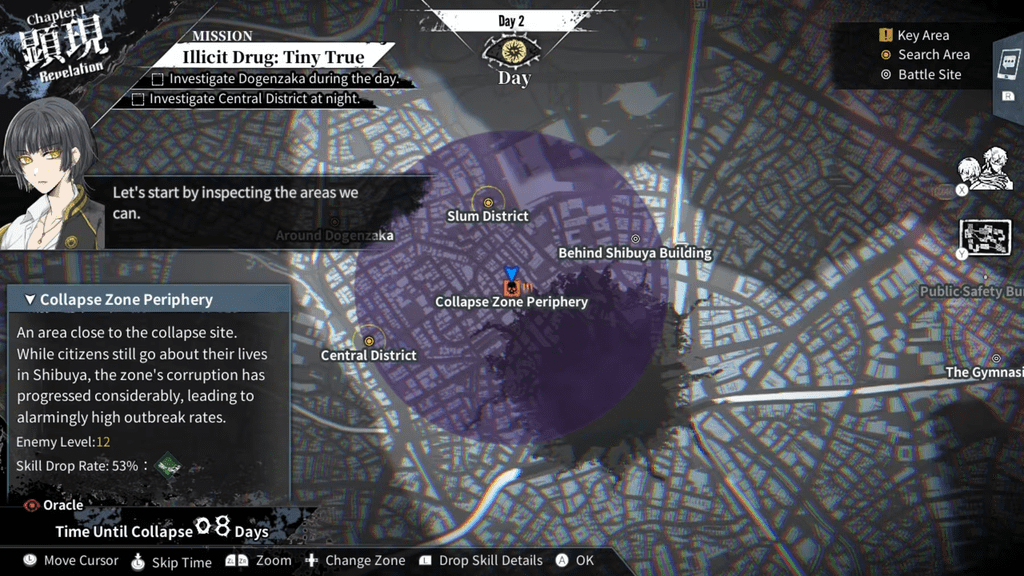
At the end of each day, after completing main and side missions, you are rewarded with expanded lore and memos detailing world events. This will effectively be your primary method of learning more about this genuinely fascinating universe. Additionally, you earn Research Points used for character development. Before I dive into that, I have to share my thoughts on how the story actually unfolds. Even though everything is nicely packaged, and I must say, uncomplicated, because I fully expected something disastrously boring, it is highly engaging, and the narrative progression flows beautifully. However, I am genuinely bummed that there aren’t more interactive ways to investigate the world. Because Rena, despite being a detective, doesn’t actually do any real detective work; everything boils down to dialogue and reading the lore you receive, find, or unlock. I think this is a missed opportunity, but on the other hand, as I said, it makes the experience highly digestible, straightforward, and easy to consume.
Now, the other side of the game is significantly more engaging for me, and… well, I can confidently say it is far, far more complicated than I ever expected it to be. The fact is, this isn’t just a VN; it is also a combat RPG featuring incredibly flashy, stylish, and cool encounters. UnitePlus put serious effort into bridging two worlds that haven’t really crossed paths like this before, and I have to admit this segment is far more intriguing than the story itself. UnitePlus and Arc System Works emphasize that this game belongs to the “Timeline Turn-based RPG” genre, or rather, a subgenre of something we already know. You are probably wondering: what is so different here compared to other games with similar combat mechanics?
Simply put: everything about how the combat actually plays out. When I saw the word “Timeline,” I immediately thought, “Okay, this is a turn-based game featuring a literal timeline on the screen so you know when your turn is, and with certain character abilities, you can skip an enemy’s turn to land a strike.” It’s not a crazy assumption since that term is almost exclusively tied to that exact mechanic, and I thought that sounded cool. But it turns out, this is something entirely different.
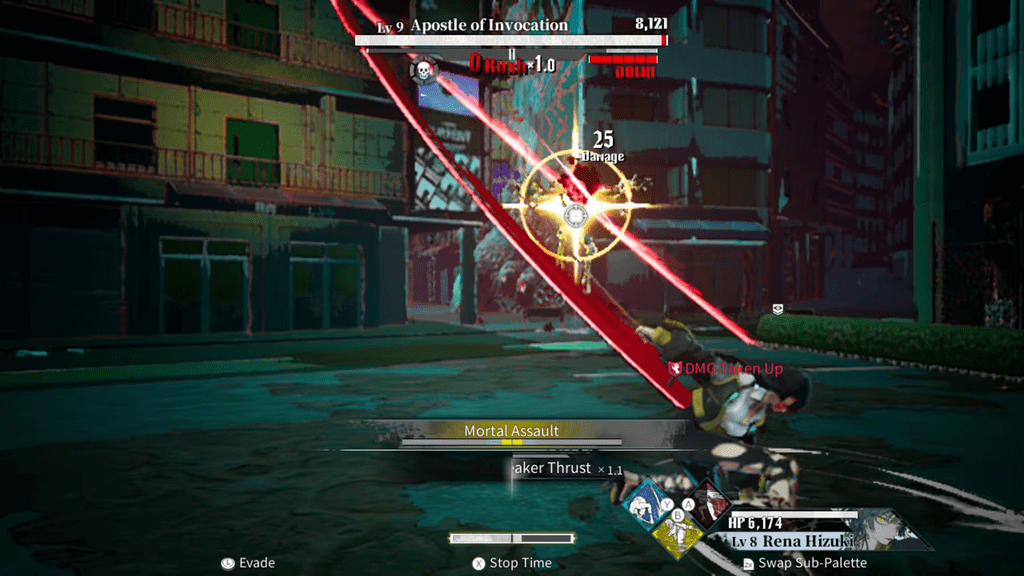
Fundamentally, you fight up to three enemies simultaneously. You have skills you need to use, which are color-coded (at least the primary ones): Blue, Red, and Yellow. Now, anyone would think, “Alright, I have three ‘basic moves,’ a block, and a dodge (only left or right, to be clear), how complicated can that be?” The catch is that the goal here isn’t to just mash buttons, endlessly stack attacks, and watch the beautifully animated sequences of Rena and Soma executing flashy moves (the visual presentation here is exceptional, by the way). The trick is that you have to closely monitor your enemy. The monster standing in front of you attacks using the exact same color-coded system. The core loop demands that you press the corresponding colored attack at the precise moment to execute a Counter. The entire combat system is essentially built around this: land a Counter, then unleash a combo to decimate the enemy. On top of that, you have special powers that amplify your strike damage. And a successful counter doesn’t mean the fight is over and you can just dump your entire combo list while waiting for the enemy to drop. You have to monitor the timeline sitting in the middle of the screen. One belongs to you, one belongs to the enemy. You essentially have to read the enemy’s intent and queue your attacks accordingly. White attacks can only be dodged or blocked, meaning you cannot counter them, which forces you to remain hyper-active at every single moment of the encounter.
Without turning this into a full mechanical tutorial, I’ll just say that as you progress, it gets significantly more complicated. Circling back to the Research Points: you use them to unlock other passive and active skills. Passives are always active, obviously, while active skills are the varied attacks and moves you trigger mid-combat.
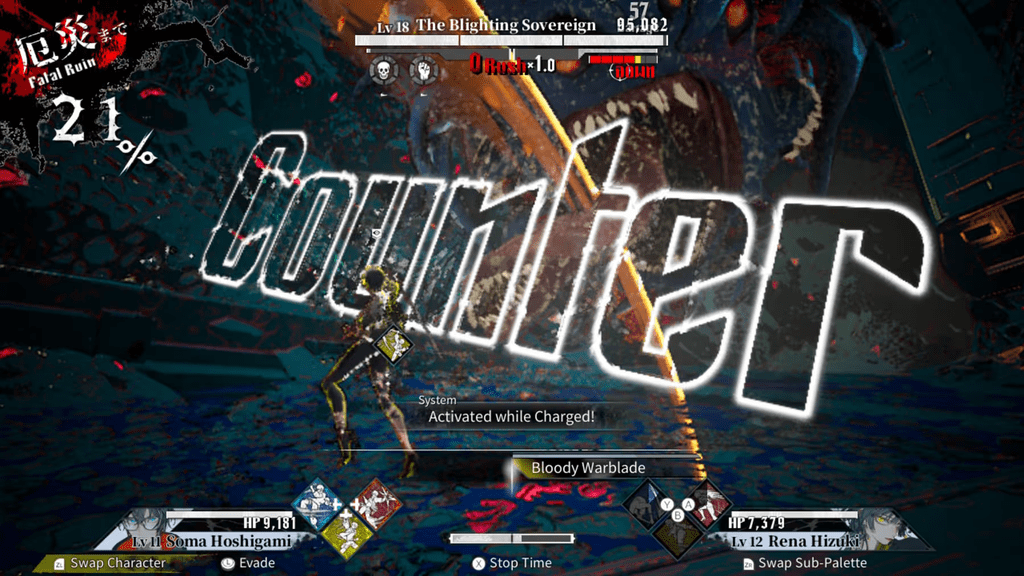
The trick with the combat mechanics is that it seems simple, and the opening tutorial explains the basics well, but once you start playing and tracking everything on screen, it is incredibly easy to get overwhelmed because you have so many moving parts to plan and consider. Especially later in the game. For certain enemies, since you are controlling both Rena and Soma, landing a counter sometimes requires you to execute the exact same attack with both characters simultaneously. Later on, this is handled by controlling one character’s attacks on the D-Pad, and the other’s on the face buttons (BAYX on the Switch 2). Again, that timeline isn’t just there for you to blindly follow and click attacks; if you learn an enemy’s pattern, you can “predict” their next move, just like Rena, and queue up a sequence of attacks in advance to deal massive damage. When the fight gets too hectic, fast, and difficult to track, you can slow down time to analyze what is actually happening. If you mess up your skill input queue, you can reset the entire sequence and start planning your strikes from scratch.
I have to admit, this might be the most unique mechanic I have ever seen in an RPG title. Beyond that, it is visually stunning and highly attractive. The only issue is that it can sometimes be overly demanding, especially for players unaccustomed to fast-paced action. Okay, maybe it isn’t pure fast-paced action, but it genuinely feels like it in the heat of the moment because it forces you to think, strategize, and even position yourself, despite only being able to move in two directions. Best of all, I went into this completely blind, having no idea what to expect, and the entire mechanic was a fantastic surprise.
Now for the things I didn’t quite love. The first is what I already mentioned: there is virtually zero detective work in this game, aside from reading. There is no deduction, no hunting for clues, no actual mystery-solving. The mystery simply unfolds around you while you exist in this world. The second issue involves the combat. I don’t know if it’s just me, or if the game isn’t perfectly “calibrated,” but when utter chaos breaks out on screen, say, with three heavy enemies alongside Rena and Soma, it feels like the timelines and the inputs you queue don’t properly sync up. However, I am far more inclined to believe this is a skill issue on my part rather than a flaw in the game’s design, because you can clearly see the development team poured their hearts into making this something fresh, cool, and engaging, which it absolutely is.
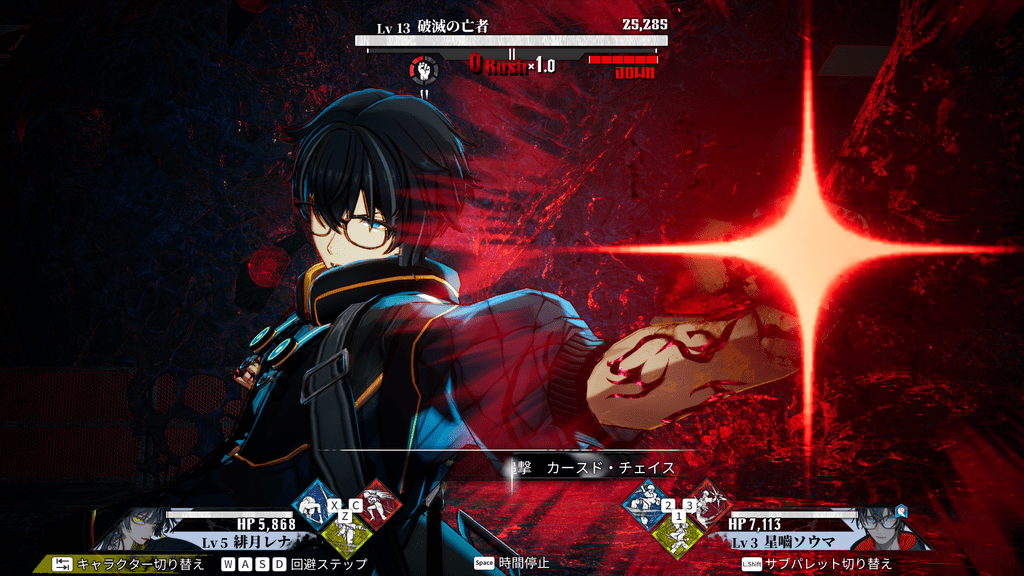
It is evident that this is a lower-budget title, but those funds were utilized smartly to execute the development team’s specific vision. Because of this, there are no massively complex environments or story missions where you can roam and explore; the only fully 3D segments are the combat arenas. That said, the 2D character art is brilliantly drawn, and the 3D models are equally great. You get two versions of the cast: the beautifully illustrated 2D sprites during the VN segments, and the fully modeled 3D versions during combat. I have to say that the models, animations, music, and effects are packaged wonderfully into this highly engaging product.
We would like to thank Arc System Works for providing us with a copy of the game for review purposes.
Qliphah in Providence’s Shadow (Nintendo Switch 2)
Considering this is the very first VN I have ever played, mostly because it was blended with such an unconventional, incredibly cool, and fresh combat mechanic, I have to admit I genuinely liked the game. I am bummed that there isn't any actual detective work or even a sliver of exploration. Having said that, Qliphah in Providence’s Shadow will inevitably remain a massive niche title, but one that absolutely demands your attention. If you are a fan of cool, distinctly Japanese narratives paired with highly stylized and visually stunning combat, you have to check this out.
