
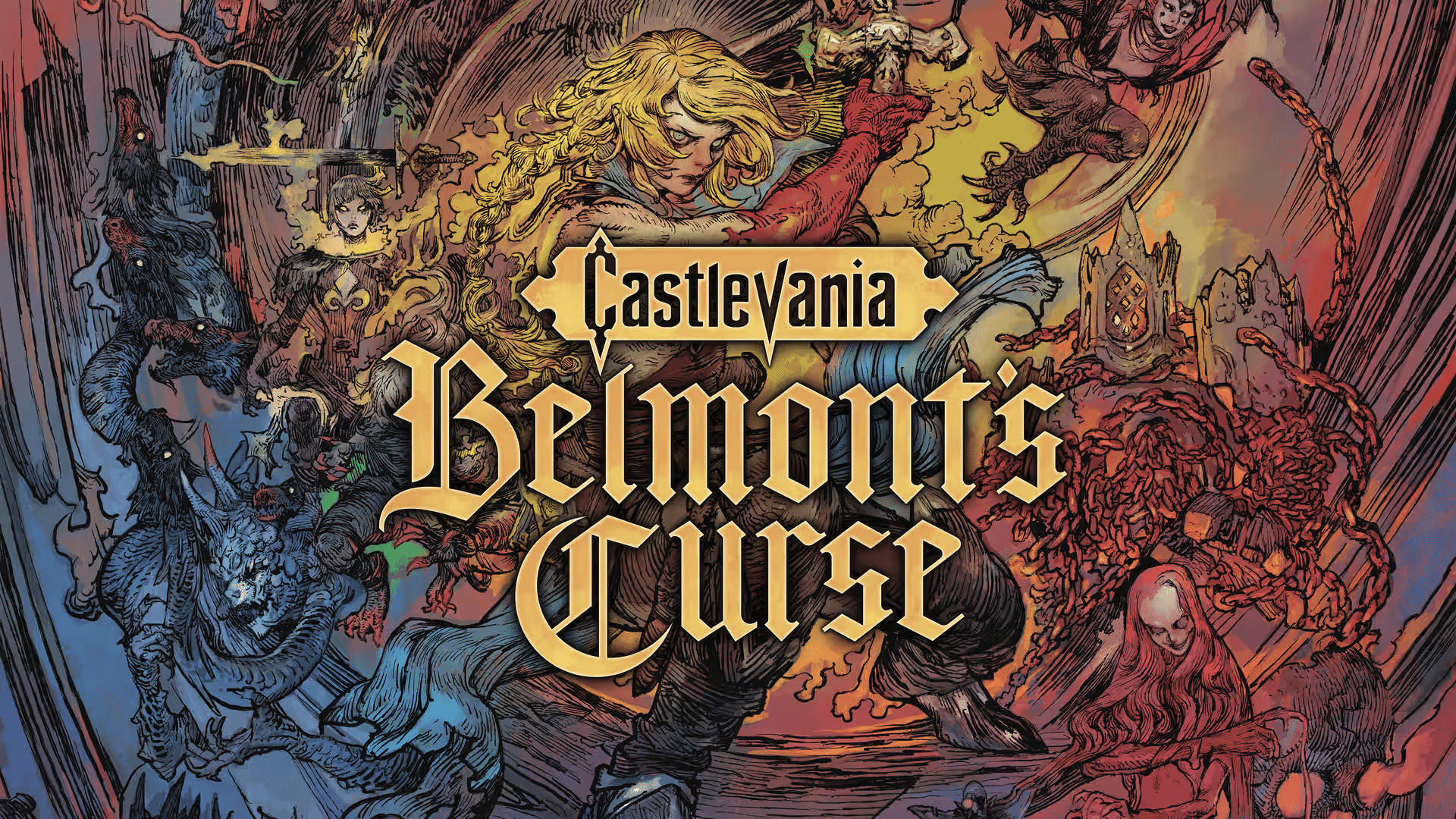

When I wrote about Metroidvanias earlier, I touched upon the sheer renaissance indie development teams have sparked over the last decade. But what exactly happened in the meantime to the colossal names that literally built the foundation and lent their names to the genre? Well, you could say they’ve been wandering aimlessly in the dark. Nintendo burned themselves with a couple of ill-fated Metroid spin-offs literally no one asked for, alongside a highly conservative remake of the second game. Konami, meanwhile, pivoted hard toward slot machines, their only real contribution being scattered compilations of ancient Castlevania titles. And while Nintendo managed a triumphant return in 2021 with the solid Metroid Dread, it took Konami quite a bit longer to decide whether they even wanted to remain a video game company. If not by making games internally, then at least by finally doing what hordes of rabid fans have been begging them to do for years: licensing out their incredibly rich IP collection to other development studios. After Metal Gear and Silent Hill, it was finally Castlevania‘s turn. It is genuinely baffling that it took them this long, especially considering the explosive popularity of the Netflix series, which this game heavily leans on for its visual identity, but hey, better late than never. The indie studio chosen for this monumental project is Evil Empire, composed of developers who previously worked on Dead Cells and The Rogue Prince of Persia. So, once again, the narrative circles back to independent studios ruling this genre.
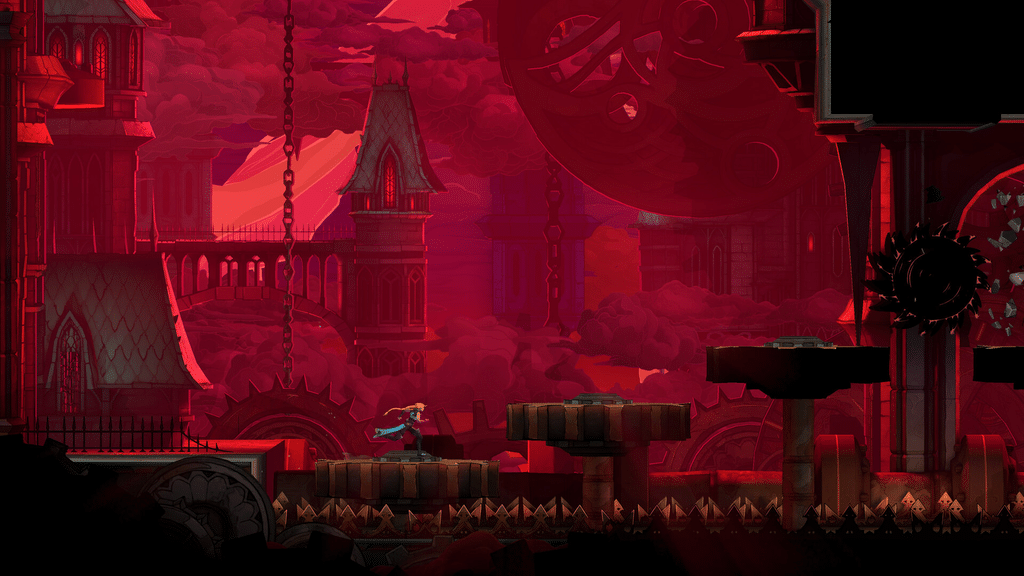
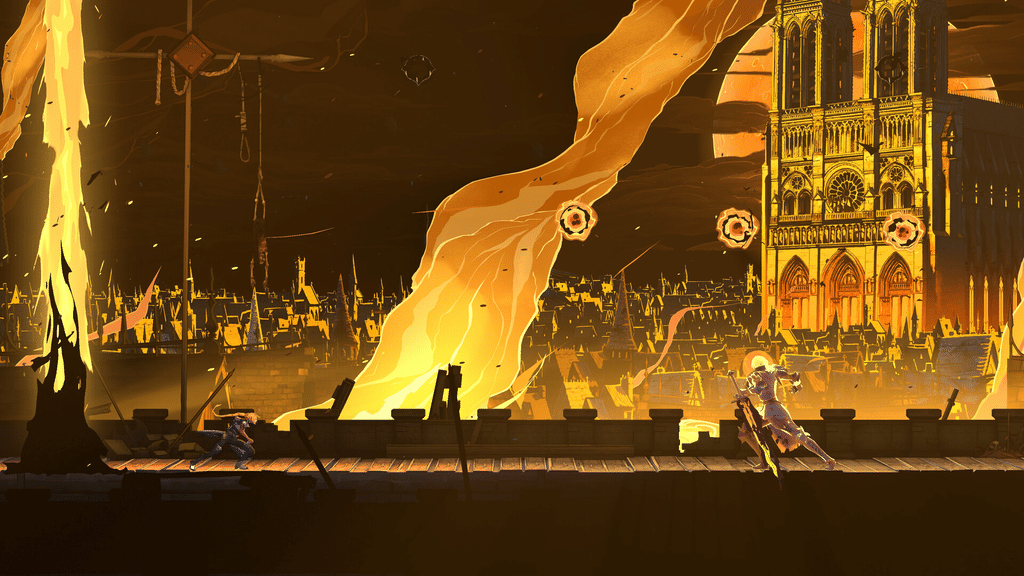
Within the sprawling history of the franchise, Belmont’s Curse positions itself as a direct sequel to Castlevania III: Dracula’s Curse and Curse of Darkness, acting as the final chapter in a thematic “Dracula’s Curse” trilogy covering Trevor’s relentless war against the forces of darkness. However, a significant amount of time has passed since those games. Age is slowly catching up to Trevor, he simply cannot handle everything alone anymore, and that is exactly where his daughter, Rose, enters the stage. The duo receives an urgent summons from a bishop to resolve a catastrophic crisis engulfing Paris. The walking dead are roaming the streets, the city is ablaze, and the local guard has completely deserted, leaving the capital entirely at the mercy of dark forces. Trevor and Rose arrive to find the city in total ruin and deduce they will be vastly more effective if they split up. Before parting ways, Trevor hands Rose a deck of blank tarot cards, prepared for her by her mother before she died, which will play a massive mechanical and narrative role in her mission.
The moment the game finally hands you control of Rose, it becomes abundantly clear that this is something completely different for the franchise, so much so that hardcore legacy fans might actually experience a mild shock. You are greeted by a brand-new 2.5D graphical style, character designs leaning heavily toward anime aesthetics, and a color palette dominated by shockingly vibrant hues. The soundtrack has also undergone a massive transformation, delivering a wild blend of modern synth and dance beats remixed with iconic motifs from older games. This will undoubtedly be a highly controversial decision for many, as the classic gothic musical themes are one of the franchise’s absolute hallmarks. Truth be told, some of the new tracks definitely clash with the grim environments. However, as the game progresses, a few of them will absolutely worm their way into your brain, and you’ll catch yourself humming them. A personal standout is a theme that slowly builds and escalates across several consecutive levels, constantly teasing familiar motifs, until it finally culminates in a phenomenally fun, synth-heavy remix of “Bloody Tears” in the game’s central hub area.
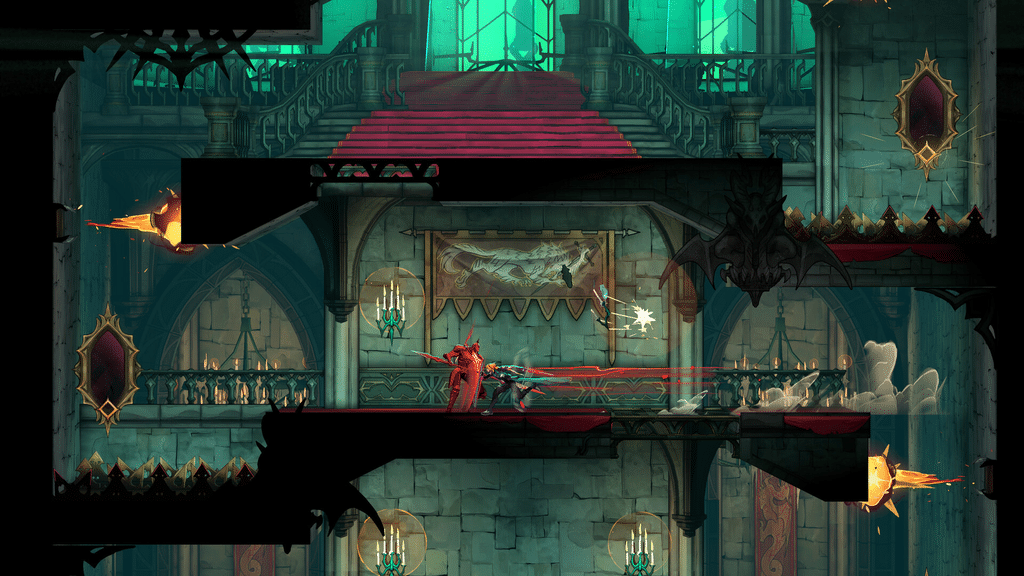
When it comes to the actual gameplay, the influence of other modern Metroidvanias, as well as the studio’s pedigree from their previous projects, has undeniably left a massive footprint on Belmont’s Curse. For starters, traversal has been completely modernized, meaning the platforming is significantly more demanding and heavily featured compared to older entries. Rose moves with incredible agility and grace, beautifully conveyed through rich, meticulously detailed animations that dynamically adapt to every ledge, wall, or object she interacts with. The only thing that slightly sours the visual fluidity is the bizarre technical decision to render all moving platforms and environmental traps at exactly half the framerate, which aggressively sticks out from the otherwise buttery-smooth presentation.
Combat has received a similarly drastic modernization. The pacing is blistering, demanding sharp reflexes to properly react to the relentless assaults of numerous enemies, all of whom, thankfully, pull their visual designs straight from legacy titles. Alongside several beautifully animated attack combos, Rose boasts a highly standard modern toolkit, including a dash, a grapple, and a parry. However, where the combat violently deviates from genre norms is the fact that her dash possesses absolutely zero invincibility frames (i-frames). This is something that takes a lot of time to get used to. It demands intense focus on flawless positioning and heavily relying on jumping and crouching to physically evade attacks, at least until you unlock the parry. The parry timing isn’t punishingly strict, opening the door for a much more aggressive, high-risk playstyle. Even more bizarre is the fact that the grapple move is actually the one blessed with i-frames. The developers clearly tried to balance this by giving it a highly sluggish wind-up animation. However, once you nail that specific timing, the grapple effectively becomes one of the most overpowered abilities in the entire game, and depending on your equipped weapon, you can shamelessly abuse it in countless scenarios.
Speaking of weapons, the arsenal at Rose’s disposal is somewhat modest compared to classic Castlevania RPGs. You get your standard swords, spears, sword-and-shield combos, dual-wielded blades, gauntlets, greatswords, and, naturally, whips. The differences between weapons within the exact same class are almost exclusively restricted to raw damage numbers, with only the ultimate, late-game variants boasting any truly unique attributes. The progression curve for acquiring them is also bafflingly mapped out. You can stumble upon some of the ultimate weapons long before you find gear that is technically two tiers weaker, instantly rendering the lesser weapons completely obsolete. The exact same issue plagues the Relic system, which is used to buff specific stats or abilities. Very early on, you will identify a handful of blatantly overpowered Relics, allowing you to comfortably ignore the rest for the entirety of the game. Furthermore, the majority of them are designed around an incredibly tedious, passive philosophy that is growing increasingly unpopular among players: “Rose deals extra damage for 5 seconds after taking a hit” or “Rose takes less damage if her health drops below 60%,” and a dozen similar variations. It honestly feels like this entire system, along with the overarching leveling mechanics, was bolted onto the game purely out of obligation to the franchise’s RPG pedigree, rather than being genuinely well-thought-out. I strongly believe the game would have benefited vastly more from a smaller, highly distinct pool of weapons and Relics that drastically altered your moveset and tactical approach, rather than this half-hearted attempt at a watered-down RPG stat system. Dedicated “builds” technically exist, but they aren’t nearly as diverse or exciting as what other modern Metroidvanias offer.

What ultimately salvages this and drastically elevates the overall experience are the aforementioned tarot cards. Rose’s Belmont lineage is well established, but what I didn’t mention is that her mother is the legendary witch Sypha Belnades. From her, Rose inherited not just the titular curse, but potent magical affinities. These abilities physically manifest through the blank tarot deck, which she will slowly populate and upgrade over the course of the adventure. Whenever you defeat a major boss, Rose binds their soul to a card, allowing her to draw highly specific magic from them. Beyond just acting as combat spells, these cards serve to deeply enrich the game’s lore and provide the framework for several minor side-quests, which is desperately needed, because aside from the trapped bosses, traditional NPCs are practically non-existent. Once bound to a card, these bosses effectively become your permanent companions, and Rose can actively converse with them. Some, like Joan of Arc, are highly supportive, offering crucial lore dumps and encouraging Rose on her mission. Others exist purely to hinder her, aggressively troll her, or act as bizarre comic relief. The magic spells themselves are devastatingly powerful. While the early hours of the game offer a respectable challenge, by the late game, you will become so ridiculously overpowered that you can wipe an entire screen of enemies from existence in seconds. Each tarot card also features a checklist of specific challenges, ranging from simply killing enemies in a certain way to long-term objectives like solving massive environmental puzzles or uncovering hidden zones. Completing these challenges permanently upgrades the spell tied to that specific card.
This leads us to another massive highlight of the game: the exploration. Even though the art direction is significantly brighter and more colorful than legacy titles, the underlying spirit and oppressive atmosphere remain fully intact. After clearing the burning streets of Paris, Rose will delve into the sewers, a sprawling cemetery, various catacombs, and eventually, the iconic, sprawling wings of Dracula’s Castle. While the starting areas are relatively linear, the moment you step foot inside the castle, the map violently branches out, connecting zones in multiple overlapping ways, making navigation a genuine challenge. Aside from the standard Metroidvania hurdle of lacking the specific mobility upgrade needed to cross a gap, you are frequently gated purely by a lack of knowledge regarding how a specific zone operates and where you are actually supposed to go. You can acquire this critical information in several ways: binding a boss to a tarot card, conversing with spectral ghosts you occasionally encounter, solving brilliantly integrated environmental puzzles, or sometimes just relying on pure, dumb luck because you were curious enough to poke around a dark corner or smack a suspicious wall. There will absolutely be moments where you feel completely, hopelessly lost, right up until something clicks in your brain. You realize the solution is genuinely brilliant and was staring you right in the face the entire time. It is also worth noting that the map is absolutely massive, yet fast-travel points and save rooms are agonizingly sparse, at least until you manage to complete one particularly grueling, extensive side-quest.
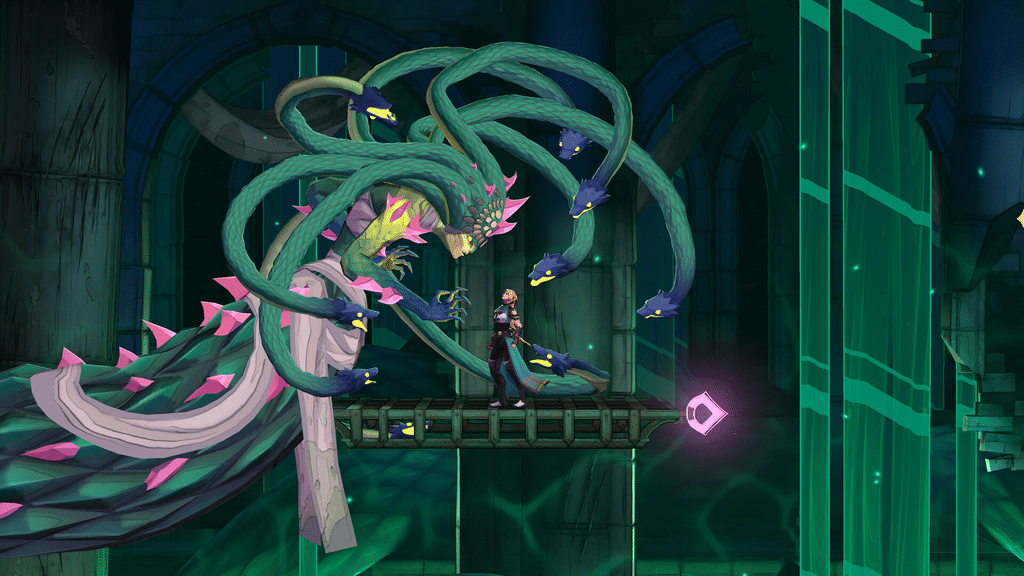
Castlevania: Belmon's Curse (Nintendo Switch 2)
Even though it physically follows centuries of fictional lore and decades of real-world gaming history, Belmont's Curse undeniably represents a fresh start. While it may not introduce anything wildly revolutionary to the genre mechanically, the French development team has highly successfully dragged Castlevania kicking and screaming into the modern era. Yes, some of their artistic and mechanical design choices will likely prove controversial, but they absolutely succeeded in stamping this legendary franchise with their own highly distinct signature. That is something you will either wholeheartedly embrace, allowing you to fully enjoy a highly polished, fiercely modern Metroidvania, or—if you are an unyielding purist of the old-school Castlevania formula, you might just have to go back to waiting for the next Bloodstained sequel.
