


For all of us gamers, there is always that one game that pushes you, or simply forced you, to transition from PC to consoles. Maybe that isn’t as common nowadays, since most games release on PC as well (save for a few PlayStation exclusives and, of course, Nintendo games). But back in the day, if you wanted to play a specific title, you had to buy the platform it exclusively lived on. For me, that game was Halo: Combat Evolved. Way back in 2001, right after it launched, I bought up every magazine I could find just to read about it. Needless to say, I was mesmerized by everything I read and saw. I didn’t just read those reviews and impressions once; I read them over and over until I had memorized every minute detail of someone else’s thoughts. When I finally got the chance to buy my first console, exclusively for Halo: Combat Evolved, I did it, and naturally, I was blown away by what I experienced. I had played consoles before that: PlayStation 1, NES, SNES, Commodore, Amiga, PlayStation 2. But nothing came close to what Halo: Combat Evolved offered players at that moment.

A fantastic world, stellar action, epic scenes at every turn, and a story that pulls you in so deeply that you think about it for days, weeks, months, and even now, years and decades after its release. No other FPS game has done as much for the industry and a specific genre as Halo: Combat Evolved did. Microsoft and Bungie popularized console FPS games on a global scale with just one title. And the feeling of being part of that community was simply beautiful.
Twenty-five years later, following a remaster for the Xbox 360 and the Halo: The Master Chief Collection, we are finally getting the first true remake of the Halo game that changed the industry’s rules for the FPS genre. And the lingering question remains: how does this title hold up regarding its story, shooting mechanics, and everything else in a world where FPS games have evolved into something completely different? But let’s start from the beginning.

The story in Halo Campaign Evolved is fundamentally unchanged from Combat Evolved. You take on the role of a super-soldier codenamed John-117, better known as the Master Chief, tasked with, well, saving the entire world. However, the narrative progression in Halo Campaign Evolved and the original game is handled brilliantly. The human race and the Covenant, a religious alliance of alien races, have been locked in a galaxy-spanning war for years. That war has brought both sides face-to-face with a totally unknown and mysterious object called Halo. Following a Covenant attack on one of the strongest cruisers in the Earth fleet, the Pillar of Autumn, all survivors, including the Master Chief, are forced to crash-land on this massive ring-shaped space installation known as Halo.
Now, I believe 99% of people who play games have at least heard of, if not played, some version of a Halo title by now, so I feel it’s slightly redundant to dive too deeply into the lore and plot in this text. Still, it’s nice to lay the groundwork with at least a brief introduction to the story and events. (And if anyone is interested in the overarching Halo story, I did a recap of all the games a while ago, which you can check out on my YouTube link.) But let’s move on.

Halo: Combat Evolved has always been renowned for its brilliant FPS mechanics, which, as I’ve said multiple times, were revolutionary for consoles at the time of its release. Bungie did such an incredible job that even today, it is a genuine pleasure to play the original game from way back in 2001. The gunplay was immensely satisfying, and the AI behavior was so advanced that we didn’t see a game with better enemy routines for arguably the next 10-15 years, okay, with the exception of the F.E.A.R. titles. The levels were designed with exploration in mind, giving players the freedom to simply soak in the world around them. All of this was highly effective for any player embarking on this adventure. So much so that everyone who finished it immediately wanted more Halo games to explore the story, characters, and events as deeply as possible.
Because of this, I must admit I was quite skeptical about how that iconic Halo feel would translate into a new engine. Unlike the recent Halo titles, specifically Halo Infinite and its SlipSpace Engine, which honestly didn’t exactly cover itself in glory, Halo Campaign Evolved utilizes Unreal Engine 5, or rather, the latest iteration of that graphics engine. Because of this switch, the big question was: how much would Halo Campaign Evolved actually retain that classic Halo flavor during gameplay? Would the difference be glaring, and most importantly, would it bother long-time fans of the franchise? (Just to circle back to the SlipSpace Engine for a second, because I know many will ask what the big deal is since they’ve already switched engines once before: the SlipSpace Engine wasn’t built from scratch. Its core code was based on the Blam! Engine that powered all previous Halo games. That is precisely why they all maintained that familiar Halo feeling.)

But to my delight, and I believe the delight of longtime fans, the feeling of the gunplay is absolutely spot on! Naturally, the gameplay itself has undergone some changes; to be precise, it has been modernized for today’s standards. But the shooting, the movement, and all the quirks that defined the original Halo are present here. Because of this, anyone who played the original will feel right at home the moment they start Campaign Evolved.
The moment you begin the first level, calibrating the Master Chief after he wakes from cryo-sleep, you will immediately feel that fluid, magical shooting mechanics kick in. Halo: Combat Evolved was known for incredibly satisfying gunplay from start to finish, and I have to say that switching to a new graphics engine hasn’t stripped that away from players. What has changed, however, is the game’s balance, as I previously mentioned. And I believe that will bother some of the franchise’s hardcore fans.
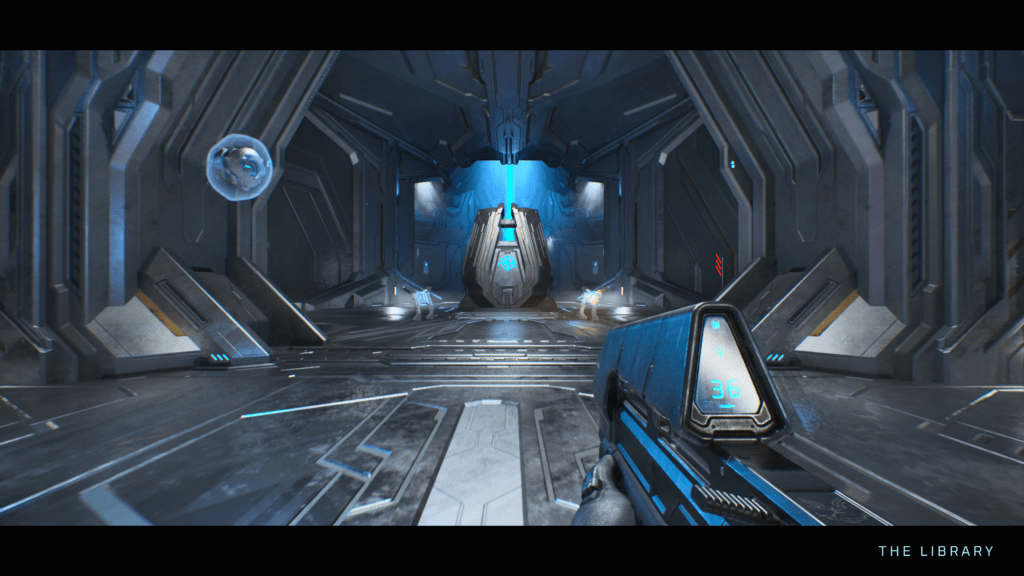
Some weapons have received minor tweaks. For example, the Assault Rifle now holds 36 rounds in a magazine compared to the original 60. On the flip side, the Assault Rifle is significantly stronger and more accurate than in the original, so the reduced mag size makes some sense in this context. The Magnum has been nerfed; it’s no longer the go-to weapon it was in the original. This is somewhat logical, but I can’t say I’m a fan of the change. The rest of the arsenal remains more or less the same without major alterations, but a new addition is the ability to use the Energy Sword, which wasn’t an option in the original. Additionally, when you pick up power-ups now, they don’t activate automatically; you trigger them when needed. Also, your health now regenerates over time, like in modern games. This slightly kills that old-school Halo vibe, but conversely, it introduces a familiar mechanic for players who are just now diving into the Halo adventure.
Generally speaking, on the Normal difficulty, Halo Campaign Evolved feels somewhat easier than the original. That doesn’t mean it isn’t fun or challenging in certain moments, but you can see that these minor adjustments have impacted the overall balance of the game. On top of that, there are changes to the level design.
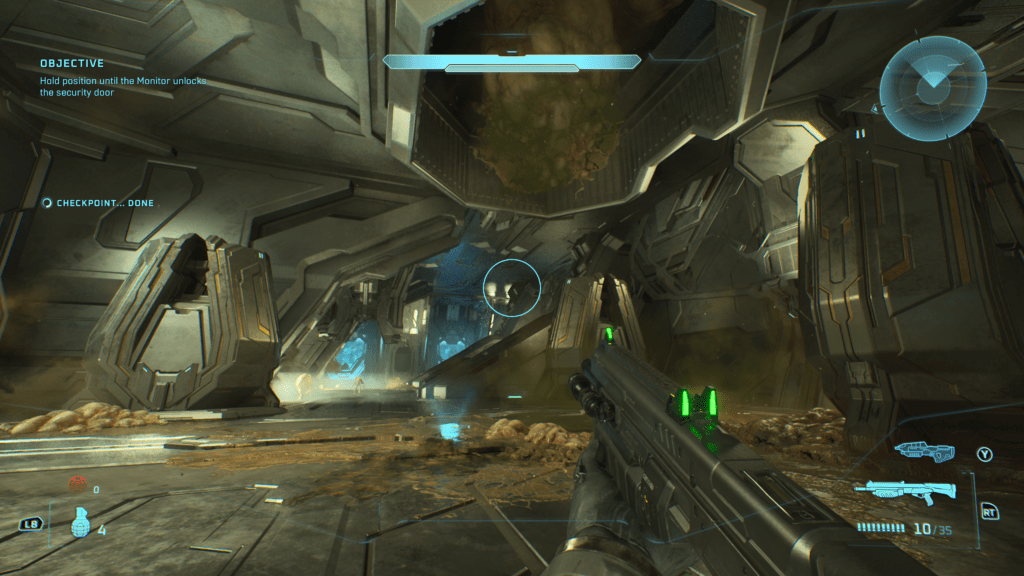
Fundamentally, the open levels where major events occur remain unchanged; everything is as it was, just much prettier. What has changed are some of the tunnels and connecting corridors between sections of a given map. Previously, these were used to mask background loading screens, but now, there is no need for that. In my opinion, this is a welcome decision. Even though it makes the game feel slightly more straightforward, it eliminates those moments of unnecessary downtime.
Another aspect that received a highly welcome overhaul is the cinematics. They are executed much, much better now, which goes without saying since the original came out in 2001. What I find particularly interesting is the inclusion of brand-new cinematic sequences that didn’t exist before. These pull the player even deeper into the narrative and showcase events that were previously only depicted through brief gameplay segments. I’m thinking specifically about the beginning and the end of the game, when the most crucial events unfold. Regarding the voice acting, I’ve seen varying opinions when compared to the original, but this is a remake, and for a remake, the voice work is excellently done. That Halo magic hasn’t been erased, and when combined with the reworked cinematics, it all comes together into an outstanding experience.

Finally, at least regarding the technical side of things, there’s the graphics. I have to admit that the Unreal Engine, or at least this version of it, is a perfect fit for the Halo universe. The game is dominated by metallic environments much more frequently than organic ones, and because of this, UE5 truly shines in depicting everything that makes Halo what it is. The most important thing is that the overall vibe remains identical to what it was. The graphics have been upgraded without altering the color palette or anything that made HaloHalo. Bright purples and greens still dominate the foreground, accented by metallic reflections and those alien structures that can now finally shine exactly the way they were intended to 25 years ago.

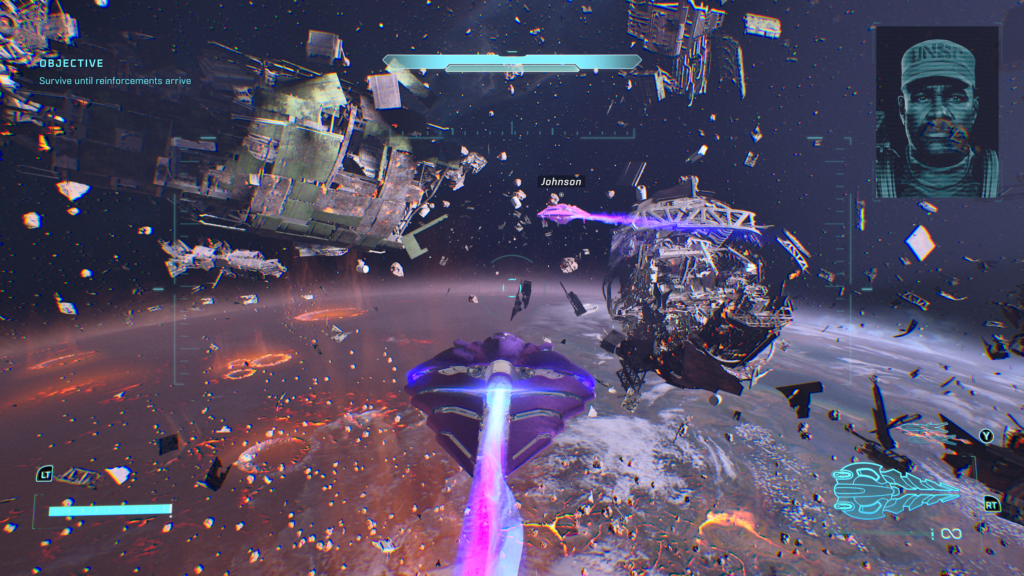
In addition to the main campaign, Halo Studios treated us to an extra bonus: three missions that take place about a year before the events of Halo: Combat Evolved. This is Operation Meteorite, where the Master Chief, alongside Sgt. Avery Johnson, must infiltrate a Covenant research vessel to discover the location of High Charity, the de facto capital of the Covenant. Interestingly, this mission takes place prior to Halo: Reach, but to me, it feels like it better connects players to the events that unfold in Halo 2 (which I hope we also get a remake for).
These three missions are a more-than-welcome bonus to this campaign, and that connection to Halo 2 isn’t just apparent in some of the characters that appear, but also in the arsenal the Master Chief wields. For instance, right at the start, you have the Battle Rifle at your disposal. But even better than the weapons is the fact that these missions are entirely new, crafted without the level design constraints that bound Halo: Combat Evolved. Because of this, every mission looks truly gorgeous. It is only in these sequences that you can catch a glimpse of what a brand-new Halo game might look like if it were set in a similar time period and environment.
We would like to thank CD Media Greece for providing us with a copy of the game for review purposes.
Halo Campaign Evolved (Xbox Series X)
And here we arrive at the end of this Halo Campaign Evolved review, and I have to point out that after beating it, I felt almost the exact same hype I felt the very first time I played the original. My thought was: "Wow, this still looks and feels so epic, and this is undoubtedly Bungie's magnum opus and the best thing they have created so far" (with all due respect to Destiny fans). Halo Studios managed to retain the magic of Halo: Combat Evolved, port it over to a new engine, beautify it, modernize it (which is a debatable decision for some fans), and serve it up on all platforms—including, for the first time ever, on a PlayStation console. I think this was an absolute bullseye and perhaps a warm-up for what awaits us from the Halo franchise in the future. I just hope that Halo Studios will closely follow and respect the tradition of the older titles when creating a new Halo game, without too much experimentation like we saw with Halo Infinite. If you are a Halo fan, or if you simply love space shooters, this is an absolute must-play title for you.
