
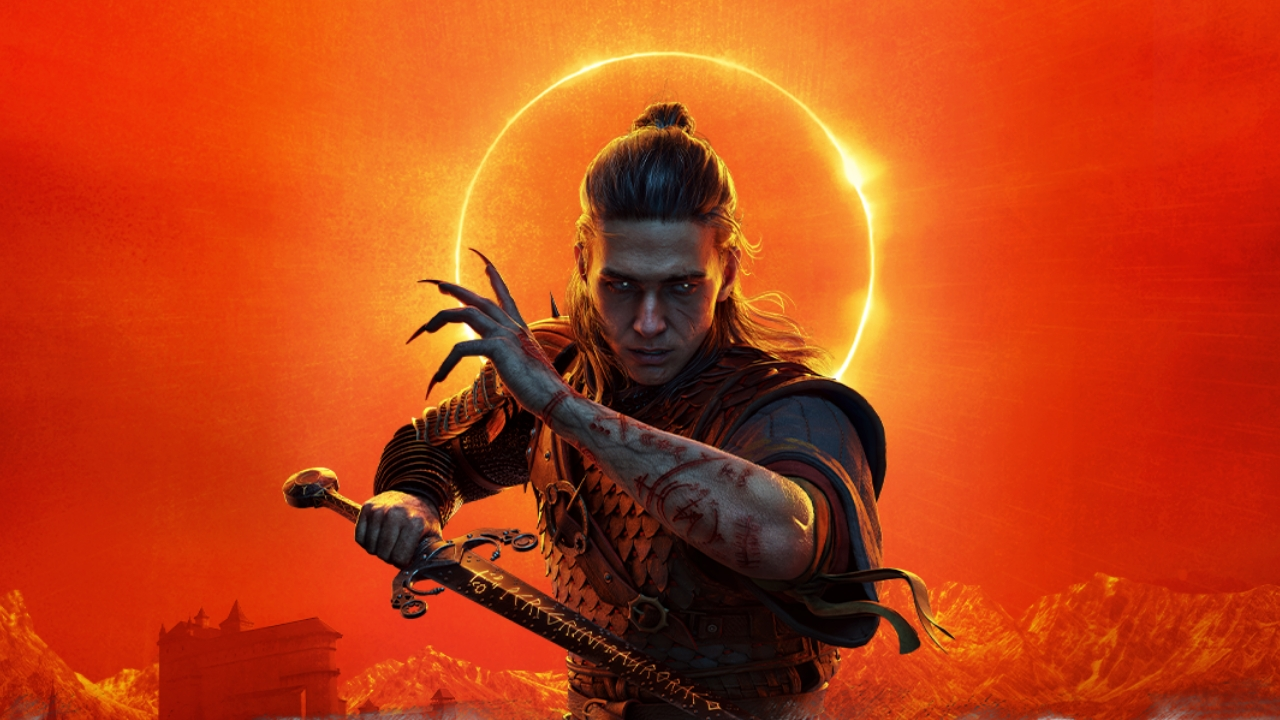

Vampires have always been fascinating creatures, beings that awakened in us a primal fear of what lurks in the darkness. Unfortunately, over time, they have increasingly become romanticized, and their once terrifying nature has given way to romantic ideals. When I was little, I was obsessed with the movie Dracula II: Ascension, and later I discovered films such as Let the Right One In, A Girl Walks Home Alone at Night, and From Dusk Till Dawn. My fascination with vampires, however, did not stop with film. There are also video games such as Nosferatu: The Wrath of Malachi, the criminally underrated Vampyr, and, of course, the legendary Legacy of Kain games.
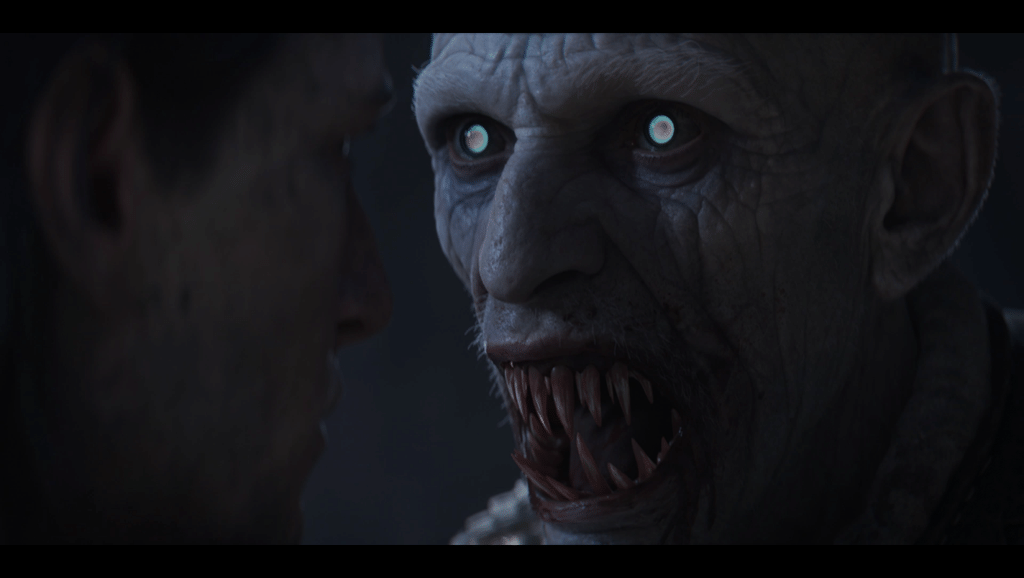
That is why The Blood of Dawnwalker immediately reminded me of Nosferatu: The Wrath of Malachi. Not only because of its dark atmosphere and vampire theme, but also because of the time limit you are given, forcing you to save your family quickly. However, what I did not expect was for the dynamic between the protagonist and the main antagonist to remind me so strongly of the relationship between Kain and Raziel. And for someone who holds the Legacy of Kain games so close to her heart, that parallel was more than enough to make me even more interested in the story of The Blood of Dawnwalker.
Between Humanity And The Monster
The story of The Blood of Dawnwalker begins in the 14th century, in the Vale Sangora valley, where we meet Coen, a seemingly ordinary young man and the son of a farmer. His world, at least at first glance, is not much different from the life of any other person of that era. He spends his days with his family, far from great ambitions and events that could change the course of history. However, the peace he knows will soon be shattered. The valley has fallen under the rule of a vampire named Brencis, and what awaits us in the opening scene hints that we are in for much more than another story about bloodthirsty creatures of the night.
As the plague ravaged valley sinks into despair, we witness Coen’s desperate attempt to escape with his sister. Their escape, however, is interrupted by an encounter with Brencis, who feeds the girl his own blood. Even at this moment, the game gives us reason to suspect that something far more complicated lies behind the vampire’s seemingly monstrous act. Rather than being just another lord of darkness who wants to destroy everything in his path, Brencis turns out to be someone who uses his blood to cure the inhabitants of the valley of the plague. And this is where The Blood of Dawnwalker begins to move away from familiar vampire clichés, introducing us to a world where the line between savior and tormentor is far from clear.
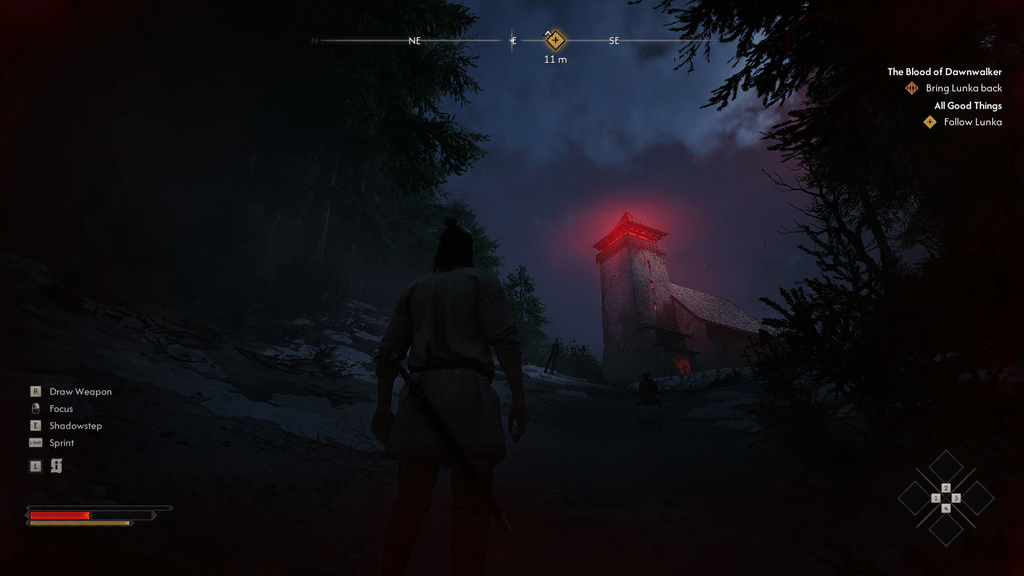
Of course, in this story, nothing is quite what it seems at first glance. Two years after Brencis’s arrival, what once represented protection has turned into a subtler, but no less cruel form of enslavement. The people of Vale Sangora are forced to offer their blood during frequent blood masses, while the price of their survival gradually becomes the price of their freedom. When Coen’s mother, already in poor health, stands against them during one of these ceremonies, the consequences become inevitable. The outcome of this event also depends on decisions you made earlier during a certain quest, giving us an early indication of just how much your choices can affect the fates of the characters.
Meanwhile, Coen’s father has already begun plotting a rebellion. The situation quickly spirals out of control, and after the chaos, Coen finds himself in a mine, where Brencis finds him. When the vampire attempts to transform him, something unexpected happens. Coen undergoes the transformation, but becomes neither fully human nor fully vampire. A Dawnwalker is born – a being condemned to exist between two worlds, trapped on the boundary between humanity and monstrosity.
One of the game’s most striking moments comes immediately after this transformation. As you attempt to speak with the characters, Coen’s thoughts begin to boil down to a single need: ,,feed, feed, feed”. This detail is incredibly effective because it does not simply tell us that Coen has changed – it allows us to feel that change. His confusion, despair, and loss of control are transferred to the player, creating an unsettling sense of helplessness. At that moment, vampirism stops being a mere fantasy of power and immortality and becomes a curse threatening to consume everything Coen once was.
After leaving the mine, Coen faces Brencis once again, this time in open combat. Brencis badly wounds him, leaving him on the brink of death. When Coen finally regains consciousness, he learns that a witch named Anca saved him, but also that his family is gone – Brencis has kidnapped them. At that moment, Coen is given a goal that will determine the course of his fate, he has only 30 days to find and save them.
After an opening that skillfully intertwines family tragedy, vampire mythology, and moral uncertainty, The Blood of Dawnwalker finally releases us into its world. Thirty days. One family to save. And a protagonist whose humanity increasingly clashes with his newfound nature with every passing day. Time relentlessly moves forward, and the question is no longer simply whether Coen will manage to save his loved ones, but what will be left of him when that moment finally arrives.
Freedom Of Choice Under The Shadow Of Time
The Blood of Dawnwalker is an open world action RPG developed by Rebel Wolves, a Polish studio founded in 2022. by former developers from CD Projekt Red. From the very first glance, it is clear that the spirit of The Witcher 3: Wild Hunt can be felt in the game’s DNA, which is hardly surprising considering the experience of the people behind the project. Still, no matter how naturally certain similarities may emerge, I do not want to view The Blood of Dawnwalker through the lens of The Witcher 3. This is not an attempt to repeat something we have already seen – it is a game that takes certain familiar elements, shapes them according to its own vision, and builds something that deserves to stand on its own and is absolutely worth paying attention to.
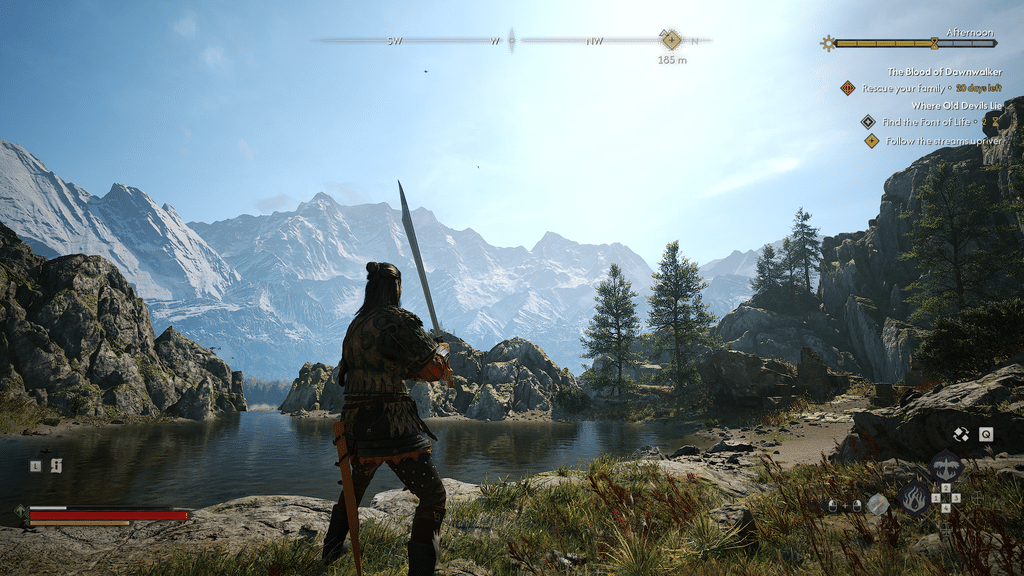
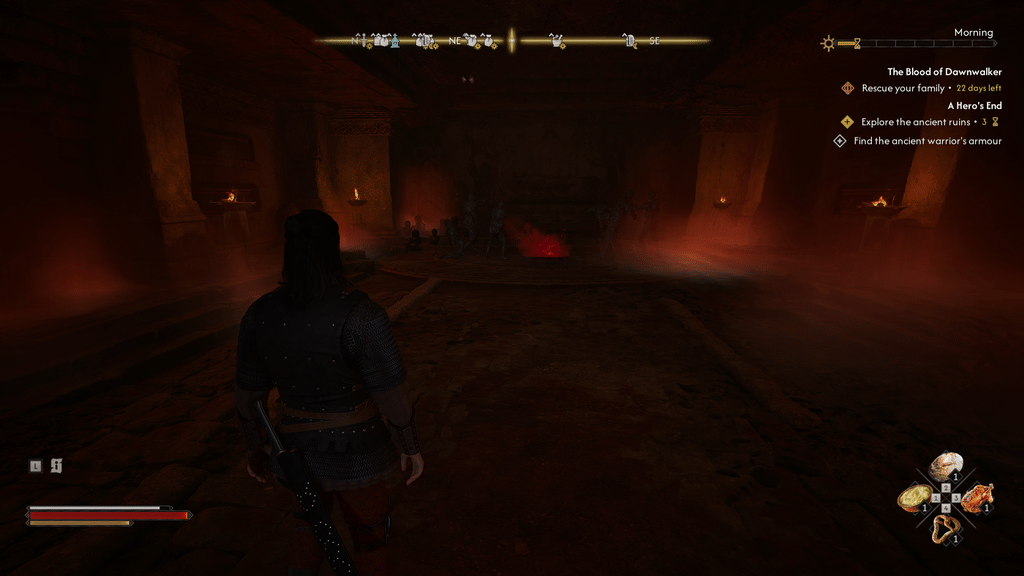
There are two things in The Blood of Dawnwalker that could divide players quite a bit – the 30 day time limit and a combat system that requires a little more attention than simply swinging a sword. And while the idea of a time limit initially sounded somewhat intimidating to me, especially because I am someone who likes to explore every corner of a map, I quickly realized there was no real reason to panic. Every quest, as well as certain activities in the world, consumes time. On paper, this might sound like a recipe for constant stress, but in practice, the system is much more forgiving than I expected. I finished the game with as many as 12 days left on the timer, despite completing a huge number of quests and side activities, exploring the world, and finding some very good weapons and armor along the way. So, the game really does make you think about how you spend your time, but it does not punish you for wanting to stray from the main path and explore whatever catches your interest.
There is, however, one thing about the timer that I did not particularly like, even unlocking skills requires a certain amount of time to pass. Personally, I think that could have been ,,free”. I understand the idea behind such a system, but if the main purpose of the timer is already to make you choose between different activities and quests, I do not see a particular need for precious time to be spent simply on selecting abilities. You will also occasionally come across a chest that takes time to open, although there is a little trick here, time will not pass if you do not collect all the items from the chest. I do not know whether this will be changed in a future patch, but it was actually very useful.
At the end of the day, the time limit really is not something you should be afraid of. It is entirely possible to complete a huge portion of the game, I would even say around 90% of the quests, while still having enough time to focus on the main story. Even if you fail to save your family within the allotted 30 days, the game does not end with a traditional Game Over screen. You just…end up without your family.
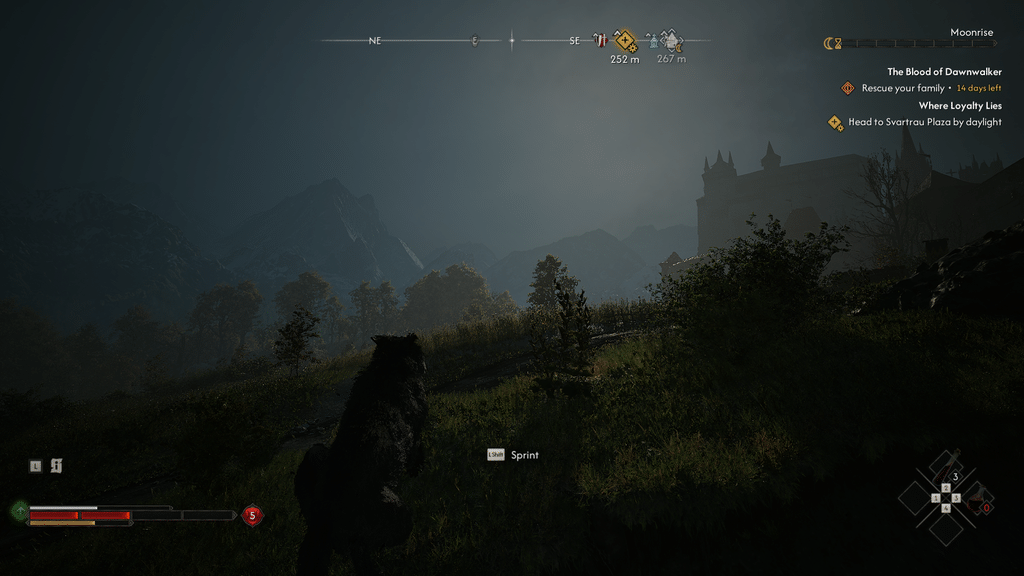
The Day & Night mechanic is another important part of the gameplay. During the day, you are, of course, human and rely on your weapons and certain abilities, which I will discuss a little later. However, when night falls, Coen’s vampiric side comes fully into play. As a vampire, you become significantly stronger, and in addition to your sword, you can also use your own claws as weapons. Because of this, the way you play changes with the transition between day and night, and in certain situations you will have to consider whether it is smarter to fight as a human or wait for darkness and give in to your vampiric side.
At first glance, the combat system seemed quite complicated to me. It took me some time during the tutorial to get used to all of its mechanics, but once it finally clicked, combat became fairly easy.
The combat will feel particularly familiar to players who have played Kingdom Come, as you have to carefully watch the direction from which an enemy attacks and place your block in that direction. At the same time, you also choose the direction from which you will strike, meaning combat requires a little more concentration and precision than traditional hack-and-slash systems.
Coen has his own stamina bar, which plays a very important role during combat. If you perfectly block an enemy attack, your stamina is restored, while a normal block consumes stamina even though you take no damage. Naturally, there are also attacks that cannot be blocked, and these are clearly marked with a red skull, at which point you have no choice but to dodge in any direction.
Once I got used to the whole system, combat became genuinely fun for me, especially when I found myself surrounded by larger groups of enemies. If you are fighting one opponent, do not expect the others to politely wait their turn, they will attack you from all sides, forcing you to constantly keep track of what is happening around you. And once you add Witchcraft abilities and your other skills into the mix, combat becomes a real treat. You can throw sand into an enemy’s eyes and slow them down, make their blood boil, send crows after them, or teleport behind their back while they desperately try to find you. The combination of all these abilities gives you plenty of room to experiment and find a fighting style that suits you best. The only moments when combat was not particularly enjoyable for me were those when I found myself stuck in a certain area with no way to escape. Once you enter combat, it is not always easy to get out of it if you do not want to engage. For example, I once tried to climb a rock when a monster attacked me, but I could not simply jump down and run away. In situations like this, Coen performs a dodge instead of making an actual jump, which could become quite frustrating at times.
Health also depends on which form you are currently in. As a vampire, your health gradually regenerates, and you can also feed on human or animal blood. As a human, however, you have to rely on food kept in your quick slot or healing items that you can craft yourself. This difference further emphasizes that human and vampire are not simply two visual forms of the same character, but two different approaches to survival and combat.
Coen’s skill tree is divided into three main paths: Witchcraft, Swordmastery, and Vampirism.
Vampirism, however, is somewhat more specific. If you want to unlock more and more vampiric powers, you will need to increase your Corruption, which happens as you drink more blood. Witchcraft and Swordmastery are not entirely conventional either, since certain skills can only be unlocked after you find and read specific books. This is another detail that makes exploring the world more rewarding, because you never know whether a hidden corner might actually contain a new ability.
The equipment system is also handled in an interesting way, primarily because you can have two different equipment sets – one for day and one for night.
Certain pieces of armor increase specific attributes, which means it is not enough to simply pick the item with the biggest numbers. You need to carefully choose what you wear and consider which bonuses best suit your playstyle. Both weapons and armor can be upgraded at the blacksmith, but there is another interesting detail, the equipment you find in the world scales with your level. Because of this, I would recommend not rushing to use or upgrade Legendary equipment you find very early. It is much better to save it for later, when its potential will be significantly greater.
A Valley Full Of Secrets And Bloody Stories
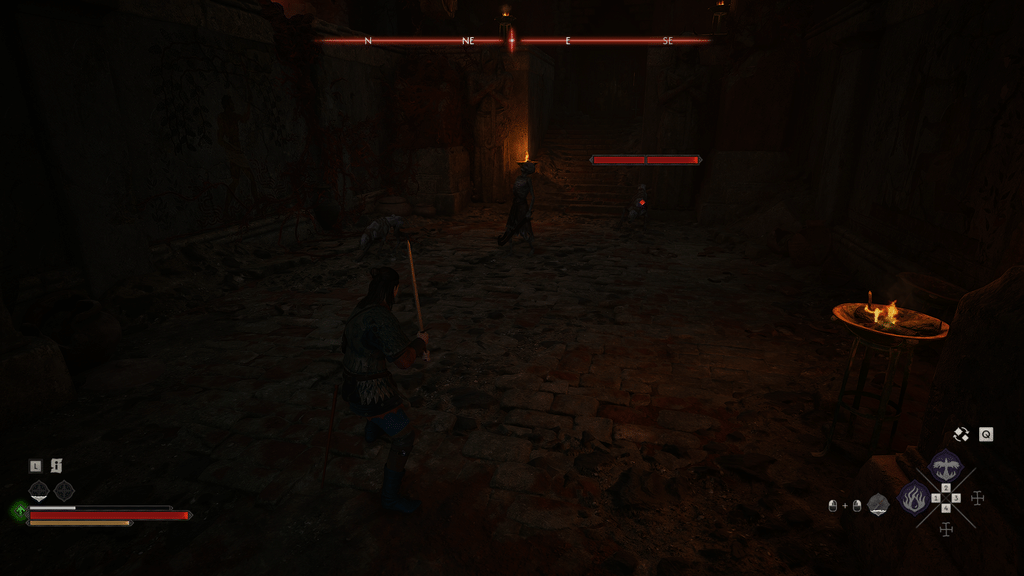
Vale Sangora may not have a huge map, but it is more than enough to constantly tempt you to stray from the path. No matter how many times I set out directly toward the next quest, I would almost always come across something that caught my attention along the way. Abandoned places, hidden items, interesting locations, and little details that initially seemed completely insignificant were often enough to make me forget where I had originally been heading. Because of this, exploration never felt like a chore, but rather something I naturally wanted to do.
What I particularly enjoyed was the way the world itself is built. Vale Sangora has its own lore and backstory, which are gradually revealed through exploration and conversations with its inhabitants. The people of this region are not simply there to give you your next objective; through them, you can learn more about the place itself, its past, and even the enemies you are fighting. The world building is genuinely impressive, and the game does not overwhelm you with information, instead leaving you enough room to explore and connect the dots yourself. On top of that, you will often encounter interesting characters who will give you pieces of lore about the vampires themselves, as well as why you became a Dawnwalker in the first place and whether you are actually the only one.
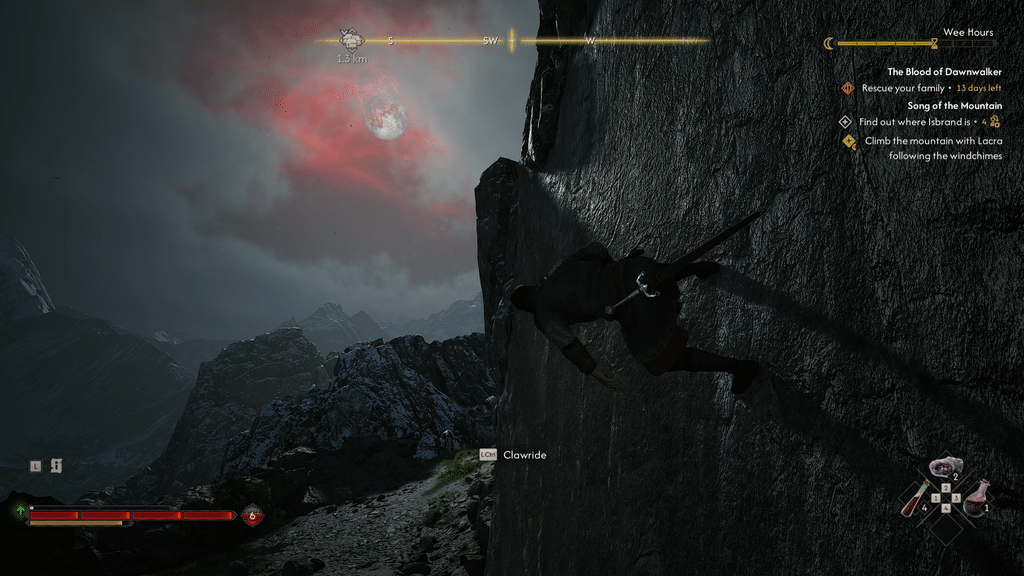
To make moving through this world easier, Coen can use an ability during the day that allows him to run incredibly fast. When night falls, things become even more interesting where you can transform into a wolf, which also allows you to move quickly, although at the cost of stamina. Night also allows you to teleport across rooftops, climb walls, and approach locations in different ways that you might not be able to reach during the day.
For those who like to get a better look at their surroundings, there are several towers you can climb to survey the area from above and discover points of interest nearby. There are also Shrines scattered throughout the map, which serve several purposes, you can rest, level up, and use them for fast travel. However, some Shrines will not be available immediately, and you will first have to find the corresponding statue to activate them.
And then we come to the bosses.
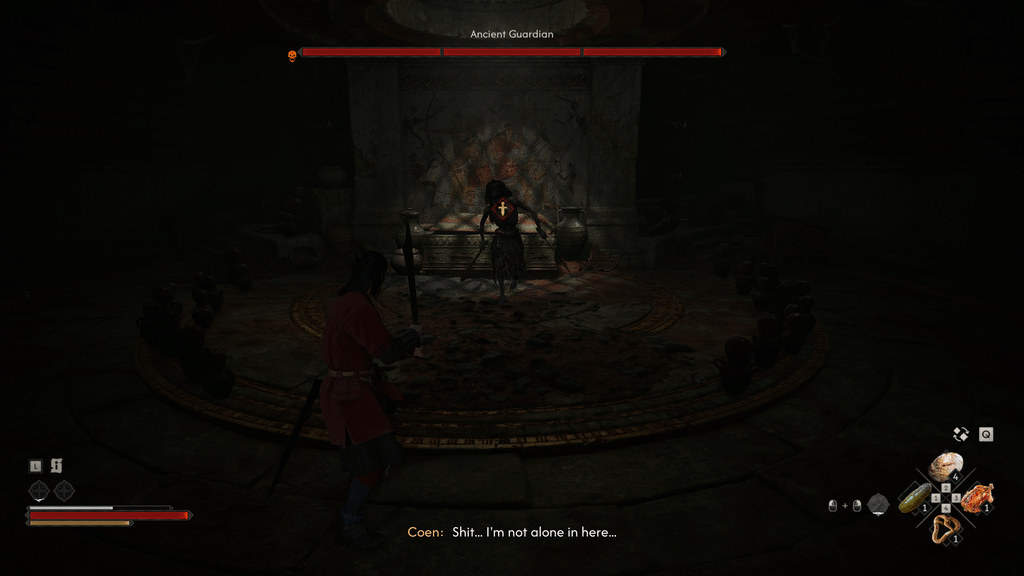
There are several of them in the game, but I particularly liked the way you encounter them and eventually reach their fights. Each boss has their own ,,operations” that you will have to destroy or sabotage in order to disrupt their activities enough to attract their attention. Only then will quests gradually give you the opportunity to approach them and finally initiate the actual encounter. There is also an Infamy level, which further affects the entire process. The higher your Infamy, the faster the boss will notice you, meaning your activities in the world directly affect how long you can remain under their radar.
The boss fights themselves were genuinely interesting to me, but what makes them stand out even more are the quests that lead you to them. Instead of having a boss simply appear at the end of a mission, the game allows you to gradually enter their territory, sabotage their operations, and eventually challenge the encounter yourself. Because of this, their appearance feels much more meaningful, and the journey toward the actual fight was often just as interesting to me as the battle that followed.
The characters are exceptionally well done, as is the voice acting. They are memorable, each has an interesting story, you will have the opportunity to learn more about your family, and there are also romance options with three characters. Personally, Anca and her quest were my favorite part, making her my favorite romance option as well.
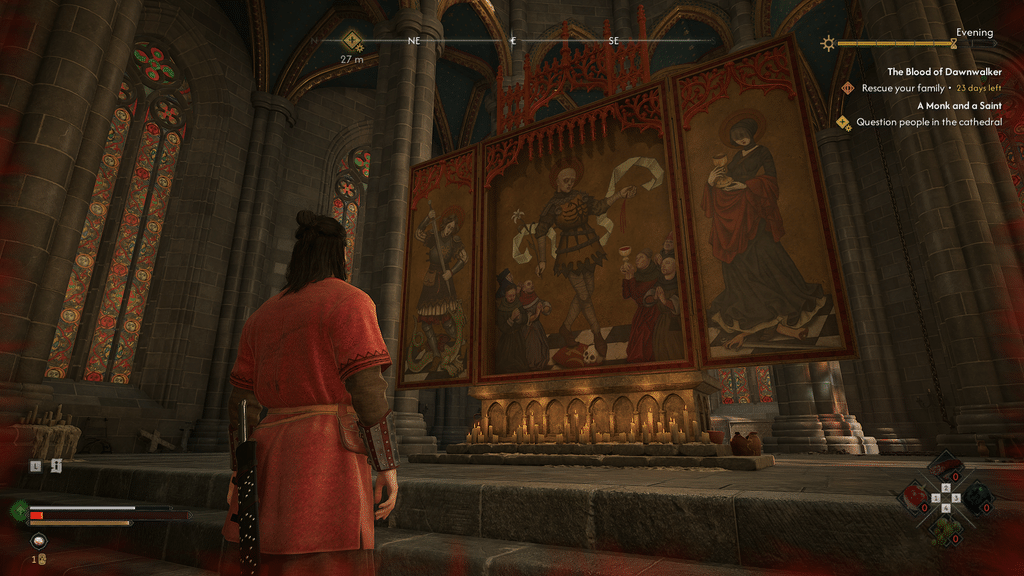
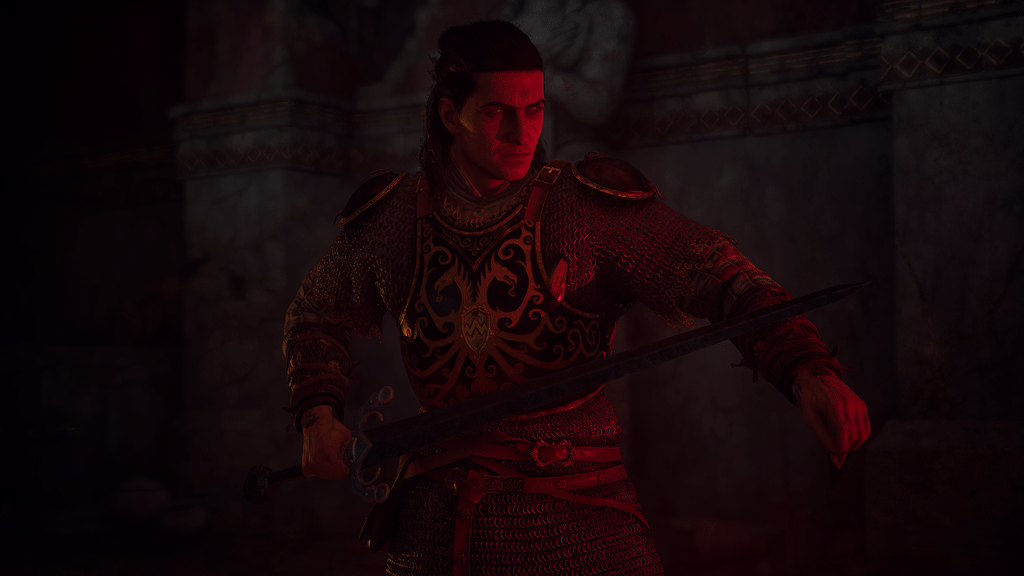
The world itself is heavily inspired by the Gothic style. The game features a beautiful cathedral that you can explore literally from one end to the other, and the art style is gorgeous. There is a good chance you will find yourself in certain locations simply spending a considerable amount of time looking at the paintings and everything surrounding you. On top of that, the night, despite being something that should be frightening, is genuinely beautiful, especially when you look up at the sky and see two moons, with the blood moon creating a stunning contrast. Perhaps, in a way, the two moons also symbolize Coen’s human and monstrous sides. And, once again, I have to mention that the main antagonist is not a typical villain. There is a purpose behind him and a connection to your character that leaves plenty of room for philosophical discussion and deeper reflection.
Blood, Time, And What Remains of A Man
The Blood of Dawnwalker is a game that pleasantly surprised me precisely because it did not try to be something it is not. Yes, you can feel The Witcher in its DNA, which is almost impossible to ignore when you know who is behind the project, but Rebel Wolves has managed to take familiar elements and create a world with an identity of its own. What I liked most was the way The Blood of Dawnwalker uses vampirism. Coen does not simply gain a new form that makes him stronger and more interesting. With it come hunger, loss of control, and the question of how long he can remain the person he once was. At the same time, the 30 day time limit is not simply a mechanic that forces you to plan your activities more carefully – it constantly reminds you that time is passing and that some decisions simply cannot wait, while also adding considerable replayability.
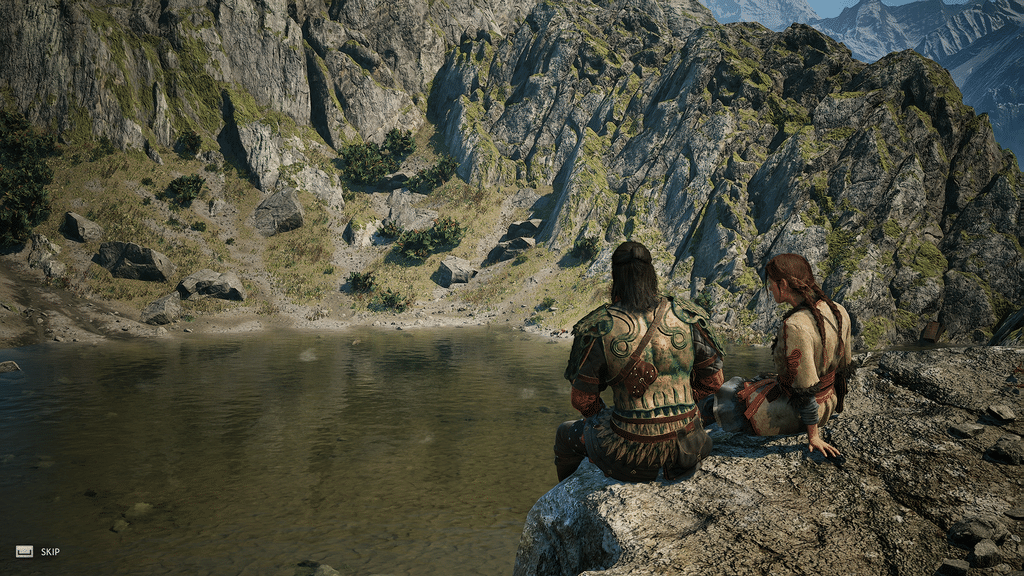
I particularly appreciate that the game does not offer a simple division between good and evil. Brencis is not just another vampire who needs to be killed, Coen is not a traditional hero, and his transformation is not a reward. The more time you spend in Vale Sangora, the more you realize that the line between human and monster is not where you initially expected it to be, and the game also offers several different endings.
The Blood of Dawnwalker (PC)
The Blood of Dawnwalker reminded me why vampires were once so fascinating to me. Not because of their immortality, power, or romantic aesthetic, but because of the fear of what a person might become when they lose control of themselves. In a world where time relentlessly moves forward, a family disappears before your eyes, and blood becomes both a source of life and a curse, the hardest question is not how to win, but how much you are willing to lose in order to remain human.
And that is precisely why I cannot wait to see what Rebel Wolves has in store for us next. I know they have already announced that they are working on a sequel and that the choices we made in this game will carry over into the next one, so all that remains is to wait and hope that the sequel will be even better.
