

Cooperative games are a fantastic way to bond with family, friends, or your significant other because, simply put, playing together is almost always better than playing solo. Even some single-player games just beg to be experienced with someone sitting next to you. However, the co-op games I usually think of are often shared experiences viewed simultaneously by two individuals. Take It Takes Two, Split Fiction, and similar titles, you experience the adventure from the same perspective, share the same ultimate goal, see exactly what the other player sees, and generally do what the other player does. Okay, maybe not exactly the same things, since cooperation is required to solve puzzles, but you get what I mean. I honestly cannot recall ever playing a game that features two entirely different perspectives and playstyles, delivering a fundamentally distinct experience to each player. Beyond The Dark: Nightwatch is undoubtedly the first game of its kind, the first to offer two completely asymmetric perspectives, forcing players to communicate in a way they likely never have before in a video game. I mean, you still communicate using words, obviously, but you “feed” information to each other in an entirely new way. I hope I explained that right!
Beyond The Dark: Nightwatch is the debut title from Atlantis Studio, helmed by creative director Nico Augusto. What’s even more intriguing is the involvement of Ru Weerasuriya, co-founder of the sadly now-shuttered Ready at Dawn, a studio that brought us some fantastic titles, including The Order: 1886. Furthermore, the game features voice acting by Troy Baker, whose legendary roles need no introduction, and a score composed by Oscar Araujo, known for his work on the Castlevania: Lords of Shadow series and Blades of Fire. This is quite an impressive assembly of talent, all pooling their skills to create an unforgettable experience. And I must admit, the experience of playing this title, and the lingering feeling after you stop, is truly unforgettable.
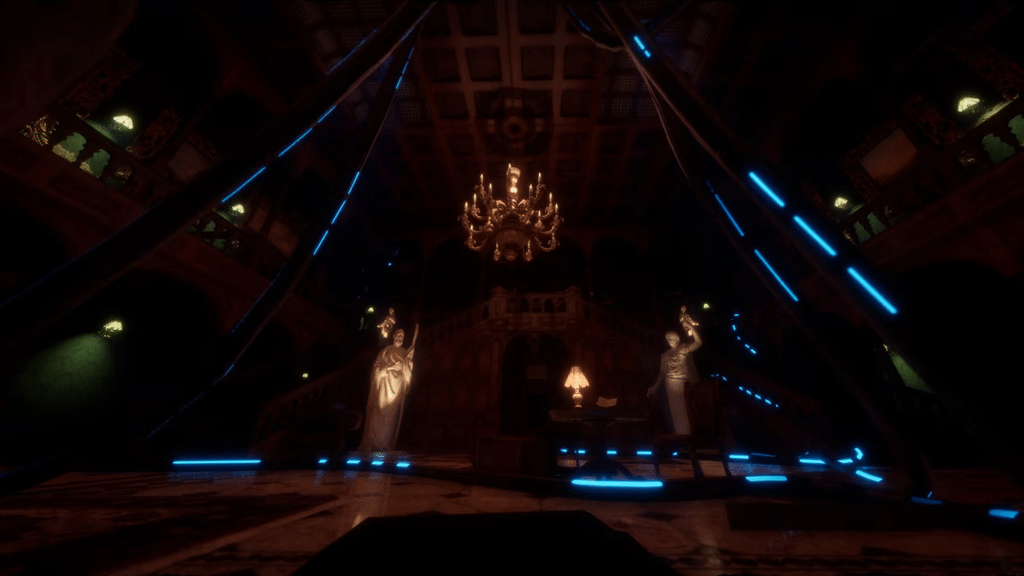
The game is set in an isolated house far from civilization, where you wake up completely disoriented, with no idea where you exactly are and what to do. There is no immediate explanation for why you are there, at least not at the start. However, it quickly becomes abundantly clear that you need to escape, you must find a way out of this claustrophobic structure you somehow ended up in. But you aren’t alone in this house. The Gloam is there, a bizarre monstrosity that tracks your every move. Okay, “tracks” might not be the right word; it actively hunts you whenever you try to accomplish anything useful. Your primary objective is to find the exit without dying and letting The Gloam catch you.
But you don’t have to endure this horror alone. There is a second player, oh yes, it’s a cooperative game, as I mentioned. However, the second player isn’t physically in the room with you, which is exactly how this title is meant to be played. They are far away from our protagonist, who is trapped in a house in some remote corner of the planet. And the second player doesn’t see what you see, but they can see what you can’t. This might sound overly philosophical, but you’ll understand what I mean as we go. So, you as the first player (or perhaps the second) who wakes up in the house must remain in constant communication with the other player, your partner in this nightmare, from beginning to end. It’s an asymmetric cooperative title, something we rarely see executed so well. The catch is that you can only play this game in co-op. In other words, you need another person. Because of this, the developers included a free Friend’s Pass. If you own the game, you can invite anyone from your Friends List to join your horror adventure for free. The entire setup is executed brilliantly.
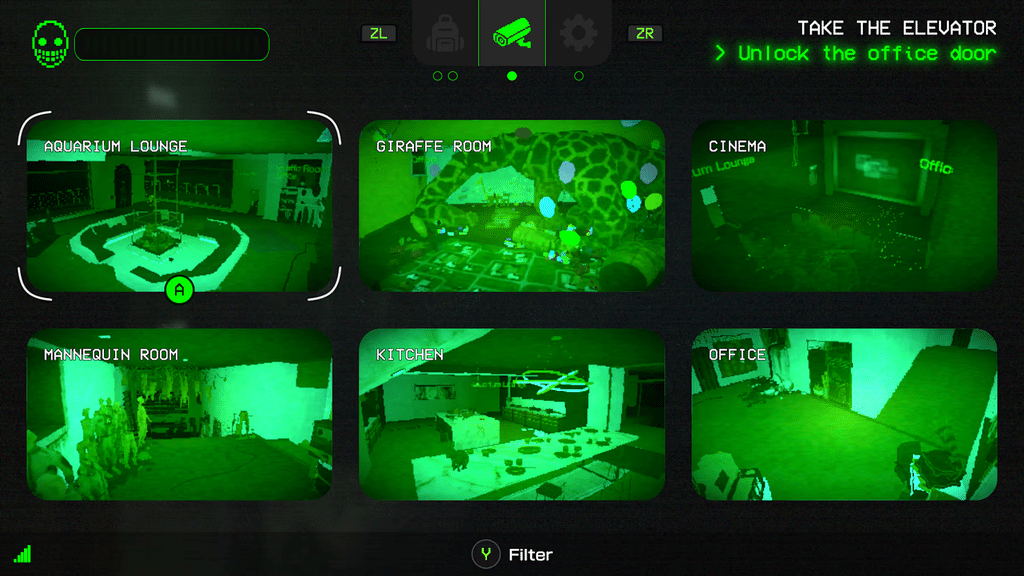
One player experiences the horror from a first-person perspective, scrambling to find a way out of the complex while being actively hunted by a mysterious monster. The other player tries to assist with navigation and provides warnings via a second Switch if they spot something. The entire concept revolves around this dynamic, and I have to say, it works flawlessly. The trick is that one player sees what the other cannot. If you are playing in first-person (the Explorer), your partner doesn’t see your screen; you have to constantly communicate and explain your surroundings if you get stuck. That doesn’t mean they can’t “see” you, though. The second player views the game from an entirely different perspective, through security monitors as the so-called Overseer. From this vantage point, it is true that the Overseer can spot things the Explorer might miss, but communication is paramount because you practically complete each other’s senses to achieve a shared goal.
Unlike most co-op games where players basically share the same experience, that is not the case here. Everything hinges on communication. If you play as the Explorer, you must constantly narrate everything you see to the Overseer so they can build a mental map of your surroundings and figure out how to help you. This means the Overseer won’t just be hearing, “Okay, I’m here, now I need to do this or that.” It is highly likely they will also be listening to your terrified screams and visceral reactions to whatever is jumping at you in first-person. Even though the Overseer doesn’t witness the horrors directly, the tension built through this auditory disconnect is masterfully crafted. I don’t think I’ve ever communicated this much with a co-op partner in any game I’ve played before.
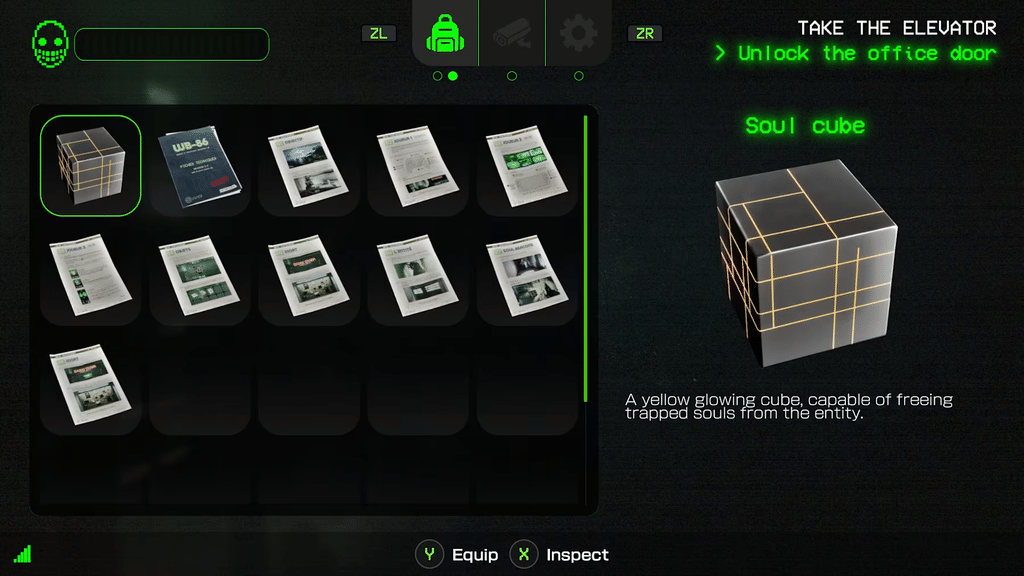
On the flip side, the Overseer isn’t just passively watching the first player and listening to their terror through the Switch 2 Game Chat, they can actually see the faces you make, gathering prime blackmail material for later because a “video game” scared you! Jokes aside, they aren’t just mutely observing. The catch is that the Overseer has access to crucial information, documents, notes, and blueprints, that will help the Explorer solve specific puzzles, figure out where to go next, and know exactly when to hide from the monster. Imagine this experience as a co-op version of Alien: Isolation, where one player runs from the Xenomorph while the other monitors the situation from a top-down view, guiding them to safety and advising them on what tools to use for the next encounter. The entire game orbits this concept, and it is executed brilliantly.
If the Explorer reaches a dead end, gets confused, or lacks the critical information only the Overseer’s perspective provides, the second player jumps in to collaboratively solve the problem blocking their path. Some might say this sounds like a tabletop mystery game where you have to vocalize your problem-solving, and the best part is that is exactly how it functions. You are never left guessing blindly; you work through trial and error together to overcome obstacles, which is incredibly cool. And if you fail a puzzle or simply don’t manage to escape, you start over. That reset is practically the core of the entire experience.
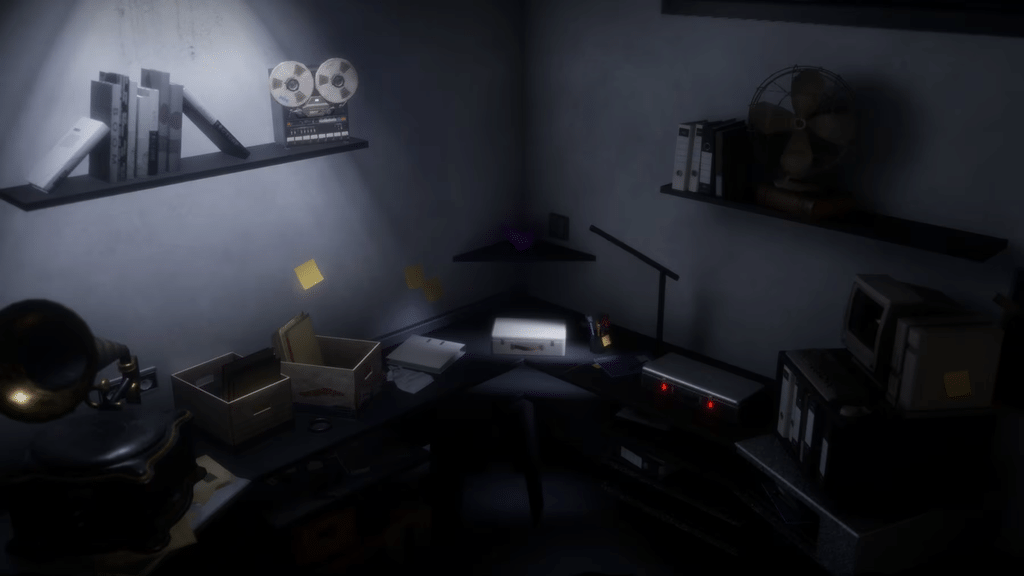
When you die, you receive a recap of all the rooms you explored and the items you found, so in your next “run,” you don’t start entirely blind. You carry over the knowledge and experience gained from your first, or dozenth, life. I have to admit, early on, when you don’t fully grasp how everything works, failures will be frequent. You simply won’t know what you are supposed to do, leaving you and your partner in a shared state of bewildering panic. But as time goes on, starting a new run doesn’t feel like a tedious chore. Instead of groaning, “Ugh, here we go again,” you feel highly motivated to crack the puzzle that killed you. The constant communication inspires you to push through. There were countless times when I played as the Overseer and desperately wanted to dive into the first-person view myself, but simply couldn’t because I was locked into the monitor feed on my Switch. It forced me to meticulously interrogate my partner about exactly what was happening, what they had walked past, how a mechanism looked, and how it functioned. Because as cool as the security monitors are for an overarching view, they are incredibly impractical for detailed exploration and spotting micro-details. That limitation is the fiery core of this cooperative mystery.
Now, there is a second way to play this: you can invite someone over who also owns a Switch 2 and play together on the couch, both looking at the TV. I have to be honest: this is not how this game is meant to be played. We tried it, and you completely lose that creeping, mysterious dread that constantly simmers for the Overseer player. The entire premise is built on the fact that the second player cannot see what the first player sees. The mystery and the Overseer’s powerlessness to be “in the room” with the Explorer is a fundamental pillar of the experience. That disconnect is what forces players to constantly vocalize their actions and brainstorm solutions. If both players are sitting on the same couch, it felt like both were trying to grab the steering wheel. One player ends up telling the other what to do based on what they can physically see on the screen, rather than communicating based on the Explorer’s spatial reality. Mystery is baked into this game’s DNA, and the Overseer’s inability to see the Explorer’s perspective is exactly how it is designed to work best. Even if the Overseer’s “gameplay” might look boring to an outsider, since they are mostly staring at menus, items, and feeds lacking deep interactivity, it is crucial for the Explorer’s survival.
However, it’s not enough for the Explorer to simply listen to the Overseer and follow his instructions, as he also needs to be pretty good at avoiding The Gloam. The game features a sound mechanic, or rather, a noise system, meaning that if The Gloam hears you, there’s a good chance it will catch you. I have to admit that it takes a little while to get your head around how this system works, and it can be a bit frustrating at first, but after some time, everything starts to fall into place. You also have Decoys at your disposal, and I honestly recommend making good use of them to draw the creature’s attention away from you.
That said, I do wish the Overseer had a little more freedom when it comes to interacting with the environment. I would have loved to see him manipulate objects around you and distract the monster himself, rather than leaving all the work to you. For example, he could open doors, set up distractions, or turn devices on and off to create additional noise, keeping the creature occupied while the Explorer tries to find a way out of a dangerous situation. It feels like a missed opportunity, especially considering how much more engaging the experience could have been if both characters had a more active role in avoiding The Gloam.
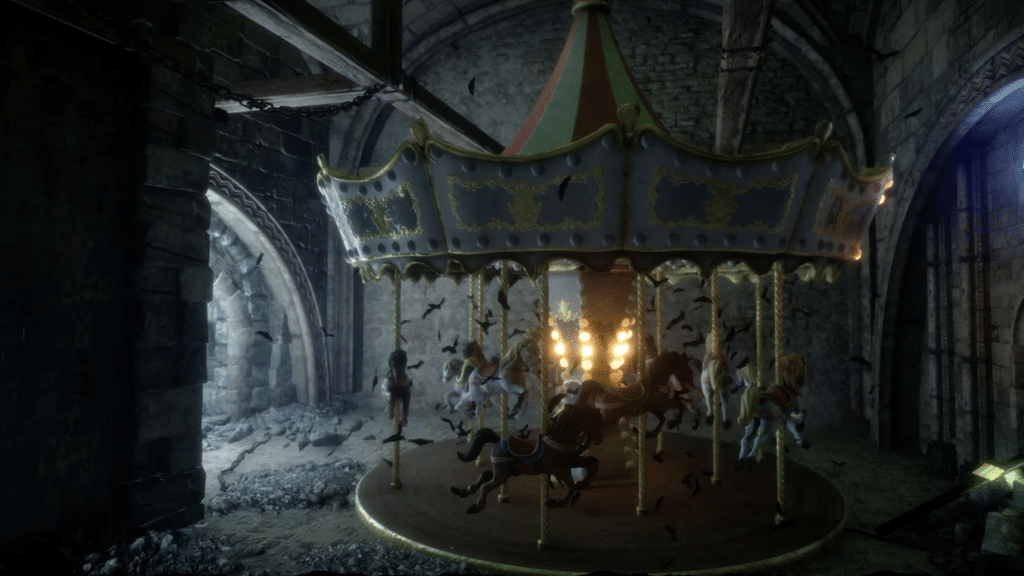
I have to mention one more way to play. As I said, it is entirely possible for someone to join via the Friend’s Pass on their own Switch 2. But if the person you want to play with doesn’t own a Switch 2, you can use Gameshare. It’s a feature probably no one actually uses, but Beyond The Dark: Nightwatch might just be the first game that forces you to dust off your original Switch console. Until now, as far as I know, Gameshare hasn’t functioned by broadcasting two entirely different screens from a single game instance. You almost always got a mirrored feed of what the host was seeing. Now, Atlantis Studio, in collaboration with Epic (since the game runs on Unreal Engine), has managed to utilize Gameshare so that you broadcast a screen that has absolutely nothing to do with what you are seeing on your own display. That is incredibly cool. It means the game is rendering two distinct perspectives across two devices, and apparently, the Nintendo Switch 2 handles this without breaking a sweat.
Everything I’ve written so far wouldn’t matter if the horror element wasn’t actually good. Thankfully, it is masterfully executed. It isn’t just a basic haunted house simulator with doors opening on their own, objects falling, and shelves rattling. It’s heavily carried by an omnipresent, oppressive ambient sound design that slowly drags you into its terrifying atmosphere from the very first minute. The trick here is that this isn’t a gory slasher; it relies entirely on the dread cultivated by its level design, sound effects, and ambient score. I was genuinely blown away by it. Early on, it might seem somewhat “tame” compared to other horror games, but that is a massive deception. The deeper you delve into the house, the more you realize it is genuinely terrifying. Though “terrifying” is subjective, the game absolutely succeeds at generating a pervasive sense of unease, anxiety, and internal dread, both for the Explorer experiencing it firsthand and the Overseer who has to listen to the panic, left only with their imagination. And as we all know, the mind can amplify terror far worse than any visual ever could.
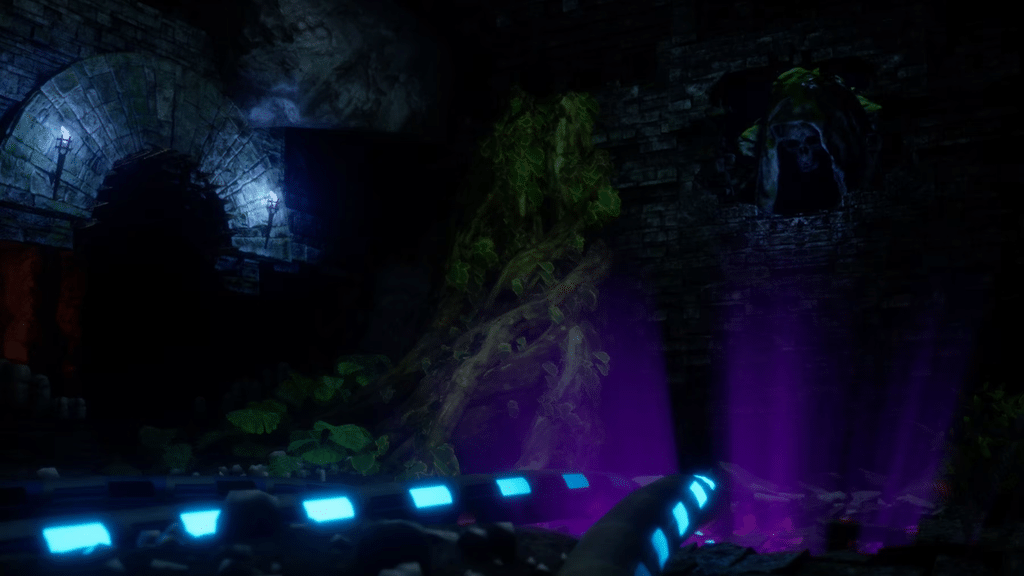
Graphically, everything perfectly aligns with the 80s retro aesthetic dominating the game. There is nothing hyper-realistic or technically groundbreaking about the visuals, but it looks more than satisfactory. The fact that the game frequently takes place in pitch-black rooms illuminated only by your narrow flashlight beam certainly helps hide any graphical shortcomings. However, given that it utilizes Unreal Engine, I have to commend Atlantis Studio for a highly optimized job. In an atmosphere this tense and horrifying, very few players are going to stop to analyze texture resolution or minor technical flaws. The entire focus is on the sheer experience, which serves as a flawless distraction from any potential technical hiccups, assuming there even are any.
Beyond The Dark: Nightwatch (Nintendo Switch 2)
Beyond The Dark: Nightwatch completely caught us off guard during an already packed season of stellar releases, and I have to admit I was quite skeptical when I first booted it up. How do you convince someone to stare at menus and security feeds just to talk you through a level? Everyone always wants to be "the main character," but this game is absolutely perfect for players who might be a bit easily frightened, maybe not the entire game, but definitely the Overseer role. Because of this, even though it is a deeply effective horror game, you can play it with someone who typically avoids the genre, making it a fantastic experience for literally anyone. Naturally, you need two Switch consoles, a Switch 2 and, as I mentioned, practically any other model, even a Switch Lite. Atlantis Studio has brilliantly designed this asymmetric experience. The horror elements never feel cheap or boring; they genuinely affect the players. But what happens on screen is only half the experience, the frantic communication between the two players amplifies the tension and unease exponentially as the run progresses. I have to admit, that is a remarkable achievement. The game costs only $20 or 20 Euros, so absolutely keep it on your radar. This is a highly unique experience you won't soon forget.
