
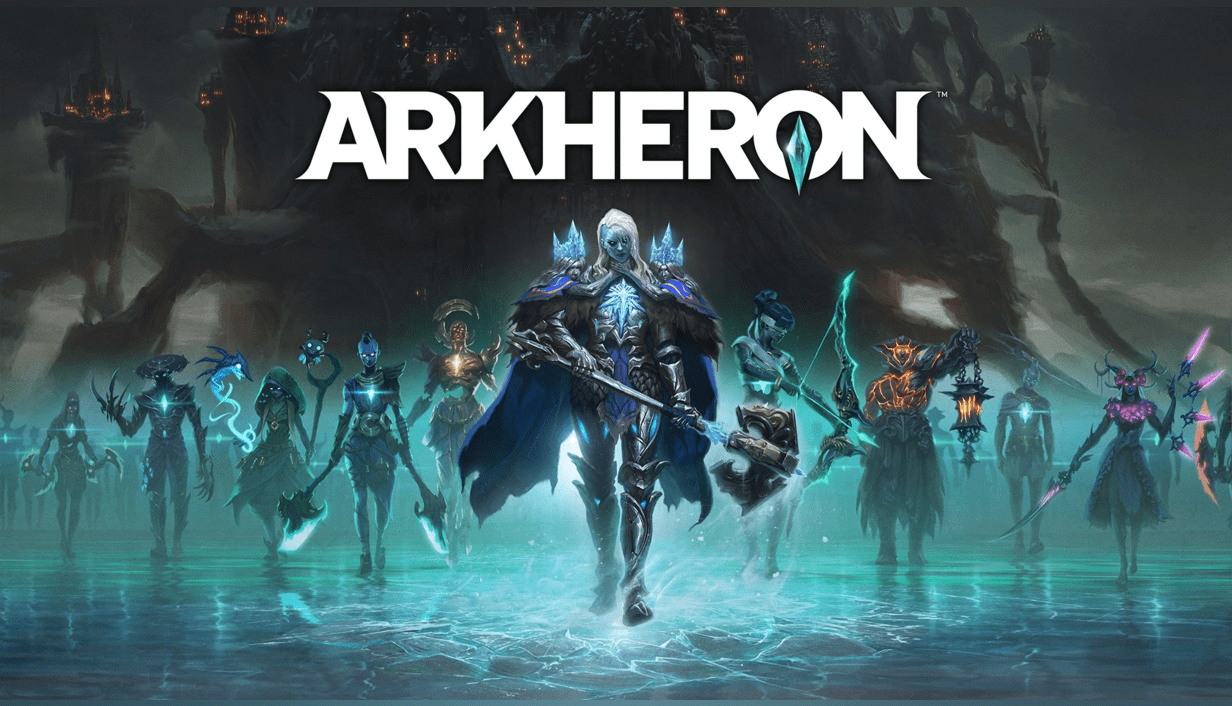

Just a day after our interview with the folks from Remedy Entertainment, we had another highly interesting conversation. Our guest was Rob Pardo, co-founder of Bonfire Studios, who is currently working on the game Arkheron. However, what will be even more interesting to gaming fans is that Rob was one of the key figures in creating some of Blizzard’s biggest hits. Namely, he was at Blizzard from 1997 all the way until 2014. StarCraft: Brood War, Warcraft III, Diablo III, and World of Warcraft are just a few of the Blizzard hits Pardo worked on. Not only that, but his influence shaped all of these games and, it’s safe to say, created market blockbusters. For this very reason, it was a huge privilege to speak with Rob Pardo at Gamescom about his new game, Arkheron, as well as his experience at Blizzard that he has passed on to all his colleagues at Bonfire Studios. Let’s dive in.
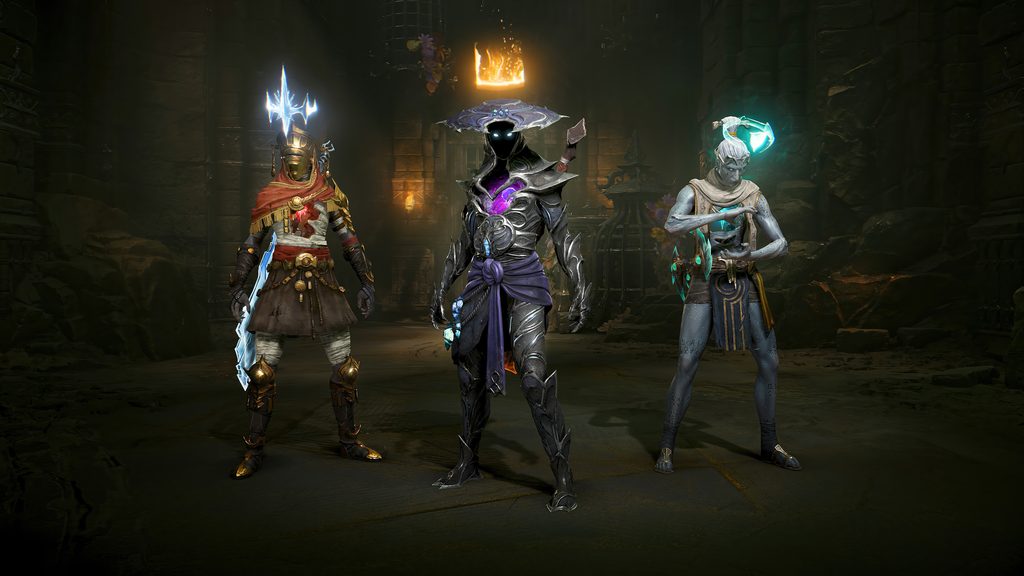
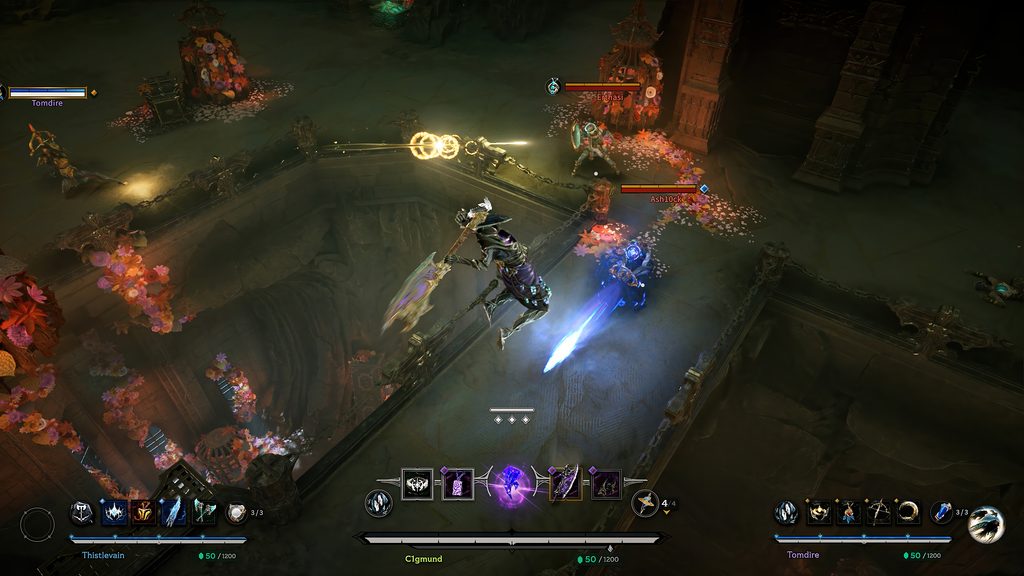
Milan: Honestly, I hadn’t had the chance to play Arkheron before, so I sat down with your colleague yesterday just to feel the magic. Though I have to admit, when I was watching Min Kim (former CEO of Nexon America, now at Bonfire Studios), I was like: “Okay, I know it’s like Diablo, but isometric. I mean, the same isometric perspective, but PvP.” And he told me: “It’s not like Diablo, everyone thinks it’s like Diablo, but it’s different.” Then I played it and realized it’s completely different.
Rob Pardo: Yeah. That’s been our biggest marketing challenge.
Milan: Yeah, yeah, I know. I can imagine it’s hard to differentiate it, especially since you come from Blizzard. But you worked on World of Warcraft?
Rob Pardo: I worked on a lot of things. Yes, I was on the first StarCraft. I was the lead designer for Brood War, lead for Warcraft 3, and then for World of Warcraft. Then Blizzard kind of exploded, and I took on more of an executive role for future games, like Diablo 3, Hearthstone, and Overwatch.
Milan: That is fantastic! I can’t deny being a bit starstruck (which is why my English was so broken during our chat). But let me start with this question. Given that you were at Blizzard for years, what was the biggest reality check when you started your own company, when you co-founded Bonfire Studios?
Rob Pardo: I think the hardest part is probably more recently with… well, there are a couple of things. The first one, of a more recent date, is that we have to build a player community literally from scratch. We knew that when we founded Bonfire, but it doesn’t mean you don’t miss that massive Blizzard community, because we built it over so many years. From StarCraft, Warcraft 3, and Diablo, every game brought new players, but a large number of our existing players would also continue playing our future games. So, when you start over, you’re like: “Oh, we have to build a community all over again.”
Milan: If it’s not too touchy of a question, what was the reason for your departure from Blizzard and founding Bonfire Studios? Did you want to make something you always wanted to, but couldn’t do there, or was it something else?
Rob Pardo: I think it was more… A lot was changing at Blizzard at the time. We had grown abnormally large. The company’s values were also changing quite a bit. And when I left, I didn’t leave with the intention of founding Bonfire. It wasn’t like: “I’m tired of Blizzard, I want to start a new company.” It was actually more that… I took a real break, a sort of sabbatical from everything I was doing, and I think it was only during that following year off that I slowly started thinking about starting Bonfire. A good portion of that was less about the game itself and more about the values that Blizzard used to have: a true focus on the team, creative development, and simply making games. What started happening at Blizzard was that as soon as the games became successful, there was enormous pressure for those teams to grow into massive entities that would be a bit more profit-motivated. I read about how Blizzard somewhat lost its connection with players and strictly focused on whether a game makes enough money or if it’s a failure. So, I think it was more about a desire to lean on those old philosophies of team building and game development, and carry them over into something new. Because I believe the way we made games back then was truly special.
Milan: I grew up on those games. I played Blizzard games, I think ever since Warcraft 2; I played it during the war years in Serbia. I remember spending a ton of time on it, that was around 1996.
Rob Pardo: At that time, I was actually at the first gaming company I worked for, Interplay Productions, and I was playing a ton of Warcraft 2. And after that, I mean StarCraft, we played that over a dial-up connection… yeah, it was crazy.
Milan: What about the game Arkheron (the H is silent!)? How did that idea start? What did you want to make when you first founded the company? Was the vision the same as it was ten years ago?
Rob Pardo: We founded the company 10 years ago. And when we started, we didn’t want to immediately begin this specific game. In the beginning, we were just building the nucleus of a team capable of making a game. We made some prototypes, but what we actually did the most was give everyone the opportunity to pitch their ideas. Many people hadn’t previously had the chance to pitch game concepts, for instance, Min is a funny example here; he had never pitched games, and he had a very unique way of doing it. We went through a phase where we had maybe around 35 ideas, which were all very short but highly interesting concepts. From there, we picked the top seven that we decided to flesh out into a larger pitch deck. We had two-to-three-week sprints as a team where we all worked together on the same idea. Ultimately, we ended up with seven such fleshed-out ideas. From those, we had to decide which game we were actually going to make. Initially, that decision wasn’t unanimous at all. Everyone was interested in different titles for different reasons. But in the end, I asked everyone: out of all these ideas, which one could this team, considering its passion, skills, and experience, execute in the best possible version? And that’s where we reached a nearly unanimous decision, which ultimately birthed Arkheron.
Milan: What I noticed is that many of the people you hired early on had a ton of experience developing RTS games, from Company of Heroes…
Rob Pardo: No, it’s actually mixed. I mean, Josh Mosqueira worked on Company of Heroes, but at Blizzard he was also the Game Director for Reaper of Souls, the Diablo 3 expansion. So he worked across multiple fields… What I mean is, it’s a mix. I’ve worked across many genres, from RTS to action RPGs to MMO titles.
Milan: Given that you worked on so many games at Blizzard, what did you want to deconstruct, reconstruct, and repurpose in Arkheron? How did you make the decision for it to be an isometric, third-person game with twin-stick controls and that kind of aiming?
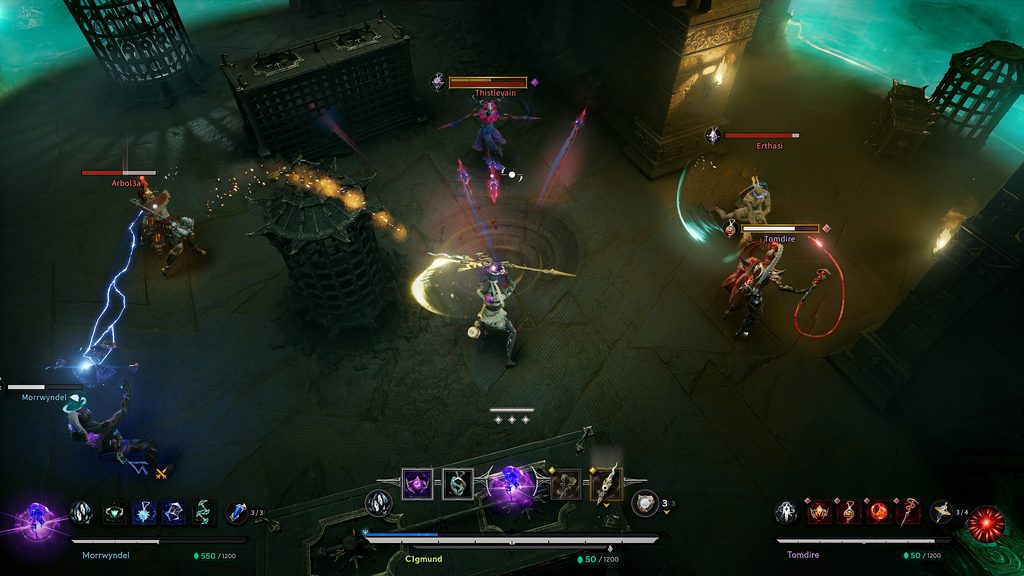
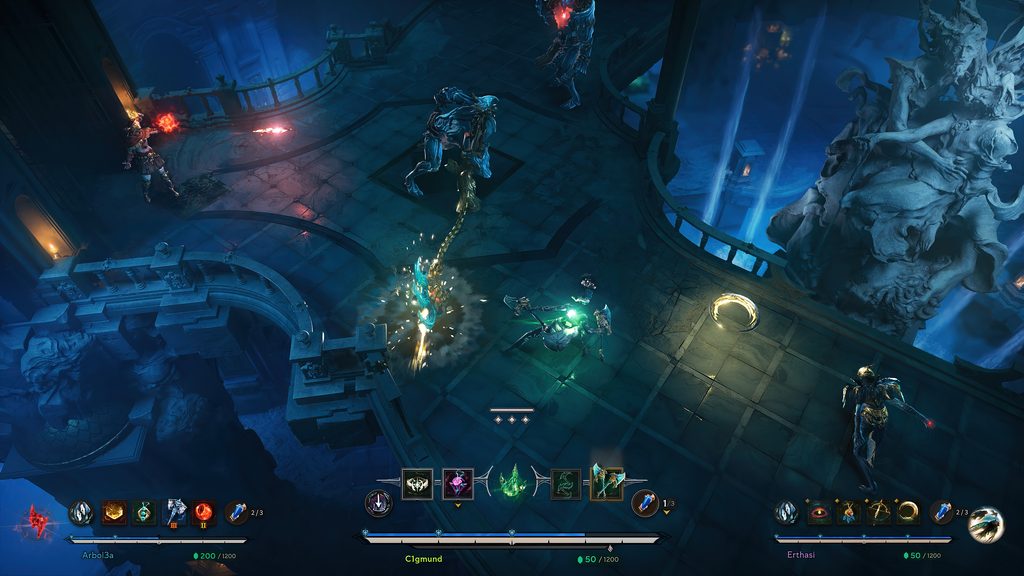
Rob Pardo: At the very beginning, we had a rough idea that it could be a game for Diablo players who put PvP first. That’s where our inspiration lay. We were also really excited about the Battle Royale games that were starting to appear on the market; PUBG, for instance, had just come out. We thought that mixture would make a truly great game. That’s where we started from. But in development, it always happens that you build the game from the inside out. What is the most foundational part of the game that we can stand up, start iterating on, and begin playtesting around? It was clear to me that in Arkheron, that would be the combat. We spent a lot of time testing different combat models. The first one was more in the Diablo style, top-down, point-and-click combat. But we didn’t feel like we would manage to build a truly excellent PvP game with that. Then we moved to a second model, something more akin to MOBA games, or Battlerite and the like. However, that didn’t feel like a bullseye either. We started experimenting with mechanics more in the style of Dark Souls… that didn’t work either. And then our new Game Director somehow “hacked” the camera into the version that is currently active and allowed us free rotation. And when we tested that, we thought: “Okay, this could be really, really interesting.” The problem was that our engineering team had been quietly building the network infrastructure for that first model. So we had to have an open heart-to-heart with them. And the engineers were like: “Hey, if you are absolutely certain that this is what we’ll ship with, then we have to shut down the engineering team for 9 to 12 months to go back to the very beginning and rebuild the network layer to function more like a predictive model for shooters.” We made no compromises, we made the call. But there you go, that’s how we arrived at what we have today. Which is very different from “let’s mash this or that together.” It’s really about trying to find the heart and soul of the game and then simply continuing to build around it, from the inside out. And once we understood that, and once we realized that the game would revolve around items, from that moment on we never again mentioned Diablo, PUBG, or any of those games, because it simply became Arkheron.
Milan: You became something completely different, something of your own and unique, and that is absolutely fantastic. Many years have passed since you started working on the game, and today’s players… crave worlds and the way the world reacts to their presence. How dynamic is that system in Arkheron, and how much freedom do players actually have in shaping that world while they play?
Rob Pardo: At its core, this is a competitive PvP game, so we always try to keep that aspect front and center. Honestly, I think if you’re a competitive player, what you care about most is being in tune with what other players are doing, rather than what the world itself is doing. Still, there is a backstory and a narrative that develops gradually in the game. And those things will come to the fore only once we launch the game and enter our live service model. Because, to go back to how the Eternals work, we will have sets of four items. Our seasons are called Chapters, and you have three chapters in one Book. That’s also how we frame our version of a battle pass, which is called a Collection. What will happen is that two Eternals will rotate out, and two will rotate in. Players will see how many quests in the game change, and there will also be different versions of treasure rooms that we call Memory Rifts. This gives us the opportunity to change the world over time and slowly introduce people to the narrative and the story behind the game, while making sure it stays in the background, not in the foreground. You know, we always caution people, this is evidently not a narrative game. But yes, players appreciate the richness and the franchise standing behind the game.
Milan: Yes, that’s why I ask, because considering your portfolio, every game had deep lore and story. And it’s good to know that it will develop through the live service.
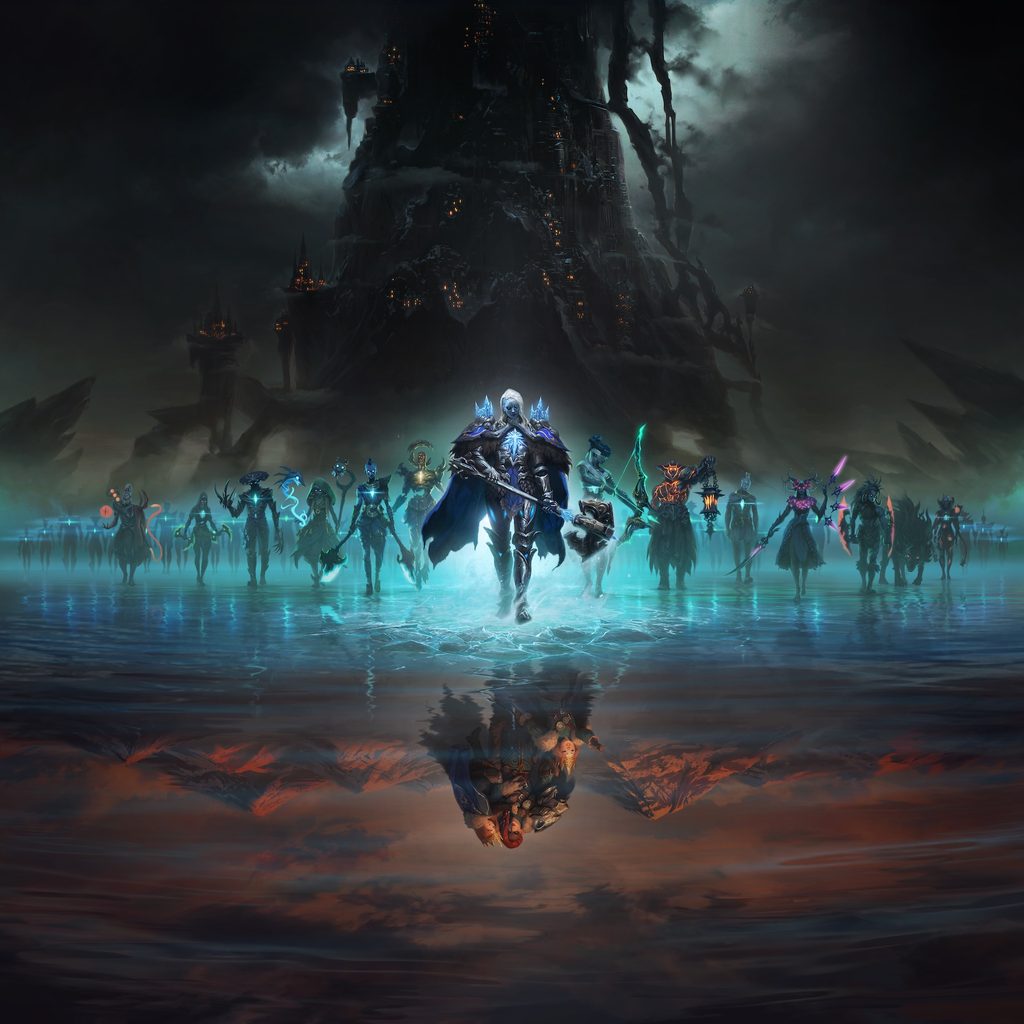
Rob Pardo: For example, you saw that key visual with the character of Irena, the Ice Knight. Yes, so when you look at her reflection… that is what she was in the living world. And this now is what she has turned into, this unfinished business. So, she was the guardian of those twin princes, she failed them, and they all met their end in a frozen lake. Thus, in the tower, those princes are actually choking her, they are the burden she now carries. So all the characters have a truly deep lore.
Milan: It’s great to hear that, and it really seems layered. I like that it’s so subtle. It isn’t shoved in the player’s face. It makes you think a bit deeper about everything. I know it’s sometimes hard to strike the right balance for players who are beginners versus hardcore players. How do you plan to crystallize that part of the game, so that it’s appealing to those who might be casual, new players, but at the same time challenging and engaging for hardcore players?
Rob Pardo: That is where the most work awaits us right now. I think you had the chance to play a bit of Spires and a bit of the Ascension mode yesterday?
Milan: I did try the game… I mean, we played the tutorial, and after that probably Spires but with bots, because unfortunately I was short on time, and it was unplanned, but honestly an intriguing experience.
Rob Pardo: Yes, the thing we worked on a lot is the onboarding, how to bridge that massive gap from the moment you first hear about Arkheron to the moment you actually play a match of Ascension? That’s why we definitely focused the most on tutorials and the onboarding process, and we added a completely new game mode called Spires, which is a 3v3 arena mode. What’s great about it is that it narrows down the amount of things you have to learn about the game right away. This gives you more repetition through combat itself and you learn the controls more easily, and you have much more freedom in choosing the items themselves. Our idea is that a player can grind out a lot of Spires matches, get familiar with the control system and items, so once they jump into Ascension where items have to be chosen on the fly and they start learning how beacons work, they’ll be much more prepared.
Milan: Personally, I really like the feel of the game. When you first jump in, it looks familiar, it feels like something you’ve already played. Then you start collecting loot and you’re like: “Okay, this is different.” Then you get into combat, you start taking down opponents, I mean, in my case, bots, and you think: “This is awesome, I’m really strong.” But I believe if I jumped into a match against real people, I’d very quickly realize: “Okay, this is seriously hard in PvP.” It requires time to fully master.
What technical achievements of Arkheron are you most proud of? Considering that you started working on this about 10 years ago, and in the meantime, technology has advanced insanely. What are you most grateful for that happened in technology over the last decade, without which Arkheron wouldn’t be what it is today?
Rob Pardo: Honestly, I don’t know if there is a specific technological thing that changed so much for us. I think we’ve reached a point with video games where technology used to constantly bring completely new forms of gameplay or graphics day by day, and today we simply don’t see that at the same pace. So I don’t think anything crucial has changed there. What has radically changed is distribution and how you build a relationship with players, because all of that is aggregated on the platforms themselves today. Therefore, I think what is the biggest challenge for a developer today is: how do you even reach an audience?
Milan: And speaking of the audience, how does their feedback shape the game? For instance, during previous playtests… I know the game is available for the Xbox Insider program…
Rob Pardo: Yes, we actually only did lighter testing. We had a closed beta phase primarily for people who signed up during Steam Next Fest. To rewind to that for a second… during Next Fest, we received a massive amount of feedback, mostly regarding performance, game stability, and the aforementioned onboarding. It was extremely important to us to prioritize those things in that July test, so that players from the waiting list could see: “Hey, they really heard us, they implemented fixes,” and could feel it hands-on. That was critically important to us. And the second thing we did was slowly start letting Xbox Insiders in. But we mostly did that to get those players in and set the stage for our next big step, which is our crossplay beta. Well, that’s when we’ll bring in a significantly larger group of Xbox and PlayStation players simultaneously. That kicks off on September 25th.
Milan: Really? Awesome! I can’t wait, it’s going to be really fun.
Rob Pardo: Then you have to tell everyone to go and sign up!
Milan: Yes, I absolutely will!
And that was also the end of our interview. Unfortunately, I didn’t have more time because, as is usually the case at Gamescom, every minute counts, and I couldn’t afford to be late for my next meeting. I hope you enjoyed this interview as much as I enjoyed talking to Rob Pardo. I must mention once again that it was a huge honor to speak with an industry veteran of this caliber. And if you haven’t already, wishlist Arkheron on Steam and sign up for the Closed Beta testing that will take place on September 25th across all platforms!
