
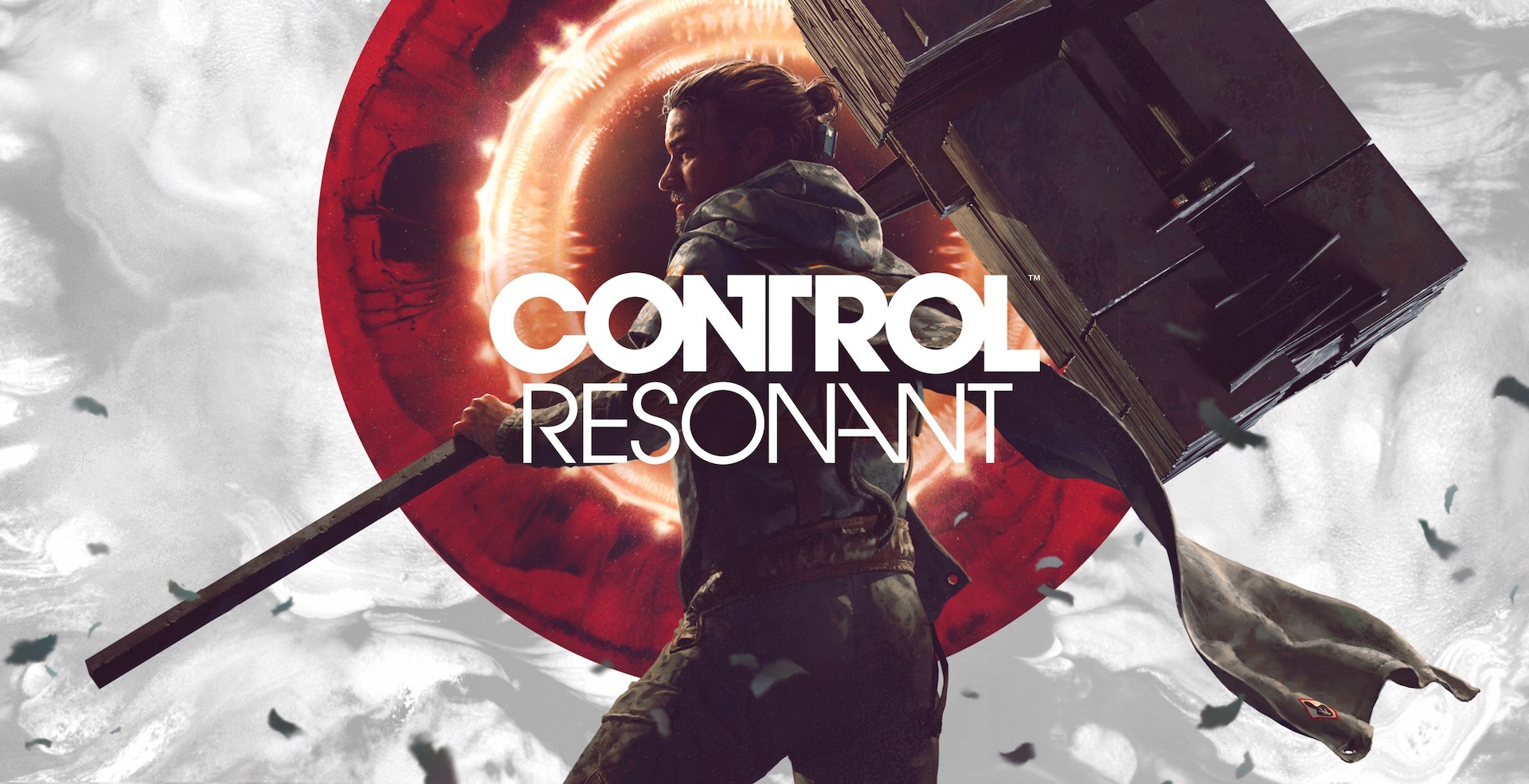

What better way to kick off the post-Gamescom period than with a great interview we conducted at the world’s largest gaming convention? We might have been a little quiet over the past few weeks, but in reality, we’ve been preparing a lot of exciting content for you, our readers. And back to this great interview. At this year’s Gamescom, we had the opportunity to sit down with the folks from Remedy Entertainment and talk a bit about their upcoming game, Control Resonant. Our guest was a Senior Level Designer who joined Remedy Entertainment near the end of Control’s development to bolster the team and take a lead role in designing this fantastic world outside The Oldest House.
The interview flowed beautifully, feeling like a natural conversation with Arhi, a fantastic guest who was more than willing to chat with us about both the history of Remedy games and what he has been working on all these past years in preparation for what is arguably the biggest Remedy Entertainment launch next to Alan Wake 2. Because of that, this won’t be a strictly formatted interview, but rather an easy-to-read article—like reading a script or just a casual conversation between two Remedy fans. Let’s begin.
Milan (Editor-in-Chief of Virtualni Kutak): First of all, thank you for taking the time in what I imagine is a very tight schedule for you at this year’s Gamescom. It means a lot to me to do this interview with you because… I mean, I’ve been a Remedy fan since the first Max Payne. Or even before that, to be more precise, since Death Rally, but Max Payne was my first true love. I remember not being able to run the game on my computer, so I would go over to my friend’s house to play on his PC overnight. Good ol’ times…
Arhi Makkonen (Senior Level Designer at Remedy Entertainment): You’re welcome, it’s a pleasure to talk about the game we’re working on. Wait, really? That’s awesome! Haha, yeah, I think a lot of people had the exact same experience. The game was really, really demanding back then.
Milan: Yeah, yeah, many of my friends couldn’t play it, they just read about it in magazines, or the lucky ones searched the internet. But fast forward a few decades, regarding Control, for me, it’s one of the best games ever, not just when it comes to Remedy.
Arhi: Yeah, oh. That’s great to hear. I know, when it came out, it was something completely new and different.
Milan: Did you participate in the development of Control?
Arhi: I did. I joined the team in the final year of development, then I worked on both DLCs, and after that, I jumped straight into Control Resonant. Yes, I’ve been here from the very beginning.
Milan: Did you also work on The Ashtray Maze then? I have to ask, because I believe anyone else would do the same if they had the chance to sit down with you and talk about Control.
Arhi: No, no, I didn’t work on The Ashtray Maze. Of course, I did fix some bugs there towards the end and things like that… I mainly worked on the Maintenance Sector, but I know the Ashtray Maze perfectly well and I know how it was made. But yeah, it’s one of the most memorable parts of the game.
Milan: Yeah, especially when you play it for the first time and see it for the first time, simply put, it blows you away…
Arhi: Yeah, and I think the real magic is the exact moment it happens in the campaign. It comes at the perfect time. It essentially marks the beginning of the end of the game. After that comes the final mission and you’re just like: “Oh my god, this is incredible, this is a turning point for everything that’s about to follow,” you know. Before and after that, it’s like a sharp cut where you’re just rushing towards the resolution.
Milan: And I get the feeling that the Ashtray Maze is one of those moments in the game where you actually realize: “I am powerful now.” Before that, you were constantly struggling, and then you realize: “Okay, I have all the powers now, let’s go, rock and roll.” I mean, the game like… Really, Control blew me away. I simply couldn’t stop playing. I still can’t find the words to describe that feeling while I was playing. I mean everything, from the characters to the level design and everything else—it was perfect. The way you managed to connect every level into one massive world inside The Oldest House, all in one place, is just perfect.
Arhi: That’s what we tried to do in Control Resonant as well. We really want to maintain that same feeling that it’s an interconnected world, just like in the first game.
Milan: What I really love is how that mold… spilled over from The Oldest House right into the real world. And that brings us to the first concrete question for Control Resonant, because Control, at the end of the day, was a pretty enclosed game… In a way, it was 3D Metroidvania.
Arhi: Yeah, yeah, it was.
Milan: And Control Resonant is now an open world.
Arhi: Yes, this is more an open-ended action RPG. What we mean by that is… we have these open hubs and open areas, but around them, there are slightly more linear paths, so you have multiple routes, shortcuts, and the like. But you still have complete freedom in how you explore the world and where you go first; so it’s not a fully open world, but I think our open-ended approach feels fresher and somehow more “handcrafted” in that sense.
Milan: But it is open nonetheless. Definitely much more open than Control am I right?
Arhi: Even more so, much, much more.
Milan: And how did you combine that with the people working on the story to implement it into the game? Because the story in Control, Alan Wake, and other titles was mostly direct and linear. You go there, complete the task, and that’s it. Here, you can wander around, do all sorts of things, and then the problem arises of how to tell that entire story.
Arhi: There is a main campaign through the main missions, and that’s something you actually have to find in the world. It’s not always as obvious as in Control, in the sense that we aren’t constantly pushing you toward the next main objective; we want you to explore on your own. But the story is equally deep, if not deeper than in Control, so we really have a lot of story and a ton of those narrative-driven missions. If you just want to push through the campaign, it’s up to you to find that main path, but beyond that, alongside it, you always have the freedom to find various side content and side quests that are also packed with narrative.
Milan: How did it feel when you realized you were going to be working on an open-ended world? Because I imagine that initial feeling can be quite overwhelming.
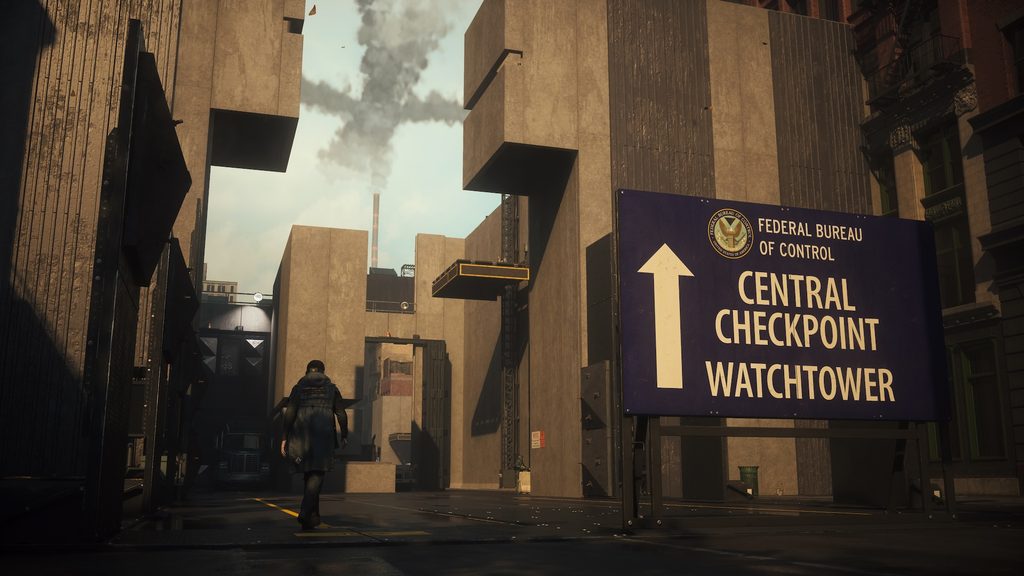
Arhi: Exciting, very exciting. Because Control already had some seeds of all that. Now we could finally go all in. And now, since we’ve stepped outside, the biggest thing is that, for example, we can finally have huge landmarks! And gorgeous vistas! Because doing that inside The Oldest House was incredibly difficult to pull off. We always struggled with that, because it was always, “I want to show the player something off in the distance.” And we simply couldn’t.
Milan: I have to admit that even though there were no major landmarks and deep scenery in Control, it looked beautiful; the team did a fantastic job considering they had limited space in designing everything.
Arhi: Yes. There was always just that one door there, and we had to work really hard to find a way to guide you to it, but out here, we can simply say: there’s a tower in the distance, feel free to do whatever you want, but sooner or later, you’ll want to go there yourself.
Milan: What was the biggest challenge in translating everything from the first game into the design of this more open world?
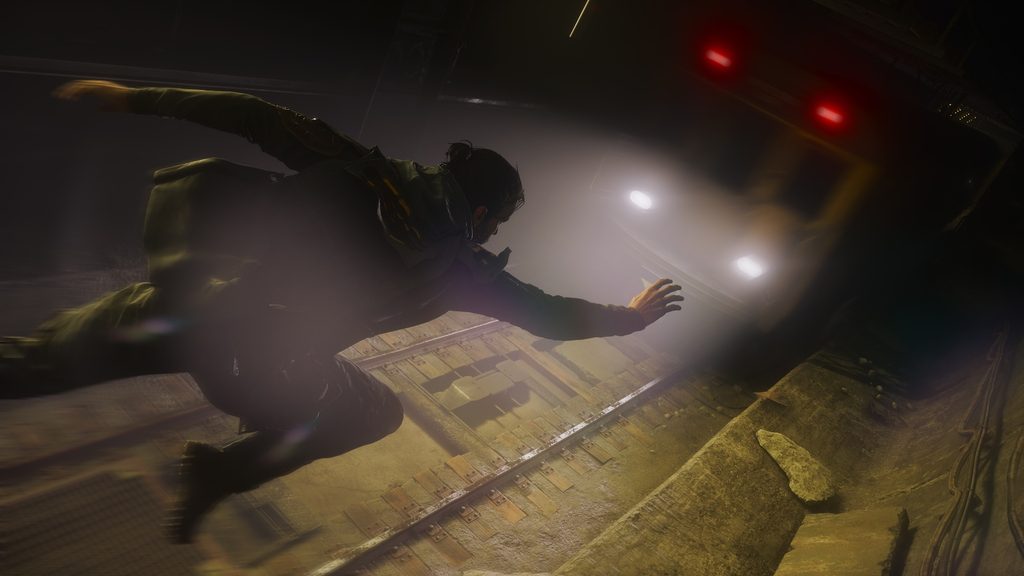
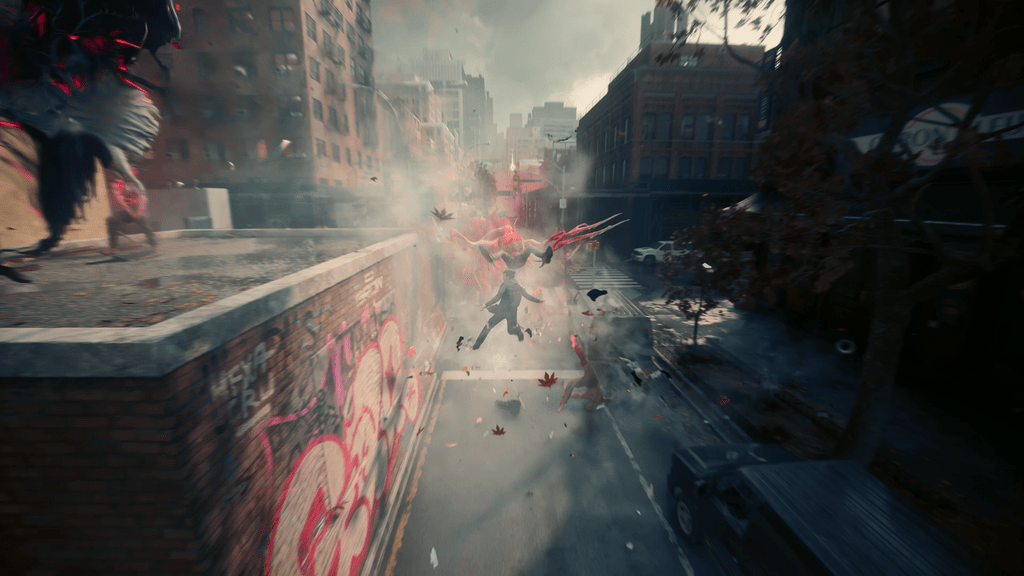
Arhi: Uh, one of the biggest challenges lies in the fact that Dylan is very agile. He can levitate, has a double jump, can run incredibly fast, and can walk on walls, ceilings, and rooftops. We wanted, for example, to create moments where you are first down on the street, and only then do you find a way to the walls which are, you know, at 90 degrees relative to the street, and then again on the ceiling for another 90 degrees. And every time we wanted to block the player from immediately jumping onto the walls or ceilings right away, it required massive communication with various teams currently working on the game. Every time we create such routes, we try not to insert too many obstacles, because our goal is to give the player as much freedom as possible. Of course, we have to place them somewhere due to the pacing of the story, a different rhythm in the level, and encounters that ultimately unlock further parts of the world. So that involved a lot of conversations with, say, the Art team along the lines of: “Hey, you can’t put scaffolding there even if it looks visually great, because the player can just levitate up to that sign and simply jump over to the roof.”
Milan: Yeah, that must definitely be complicated, because unlike the first game and many other games where you basically have one plane of movement, here you now have four plus walls you can walk on. And I was just thinking about that, it’s very specific… how did you approach the gravity problem and how did you overcome the challenge of making every space you can walk on feel like...
Arhi: Oh yes, that was complicated, but I think we handled it well and we have a bunch of those situations in the game. And this doesn’t just happen on the main critical path, there are massive areas with side content and exploration zones where you have this. There’s quite a lot of it, but yeah, as a level designer, your brain gets seriously tangled up at first, because the entire perspective changes the moment you switch to new gravity; suddenly you see completely new things from that new angle. At first, we thought it would be too confusing for players, but we just needed to add better visual guidance and test it thoroughly. I feel that we now have a version that’s pretty easy to understand while playing, and at the same time, it gives the levels an unprecedented amount of verticality.
Milan: What about the technical challenges? You have the Northlight Engine, and I assume this is your first time using it in such open and massive spaces? I mean, Control was more open than Alan Wake 2, but Alan Wake 2 was still much “denser” in terms of what is physically in the level—all those tiny details, forests, buildings, and everything you see… And it looked beautiful, but was designing this open world for the first time in Northlight a big challenge?
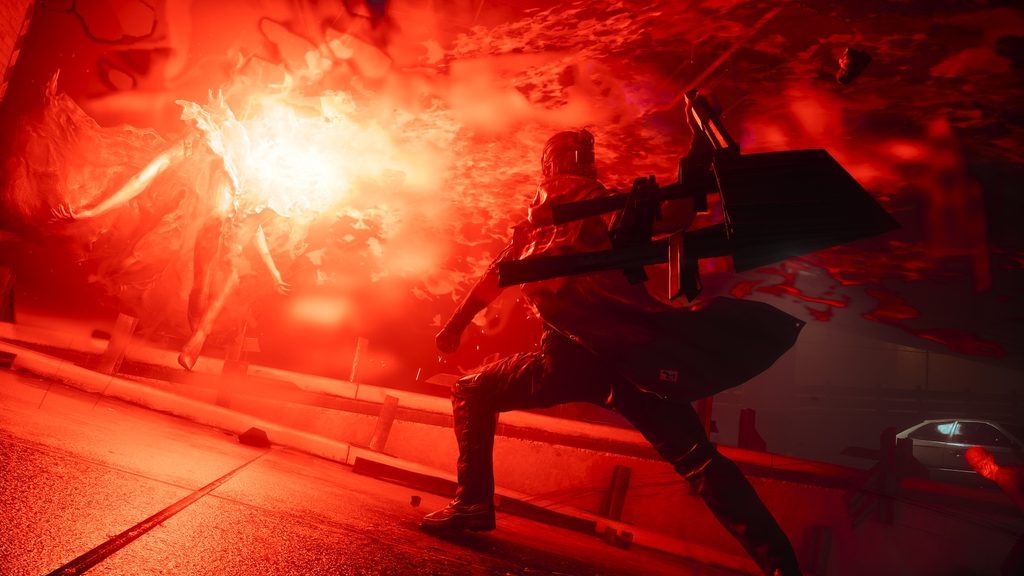
Arhi: Yeah, yeah, of course, we learned a tremendous amount in the beginning. But one of the fantastic things is that the people working on Northlight are literally on the same floor as us. I can walk over to their room at any time and chat with them. They truly follow us on the game team every step of the way to successfully deliver what we need. For Control Resonant, we even had completely new world editor tools, so we were simultaneously learning them and helping to develop them. As the process moved forward, those tools kept getting better. They were designed to allow us to test what kind of world we could even build, so we constantly had checks like: “Ah, so this is the size now, can the engine handle this? And now it’s this big, can this be managed?” And we literally pushed the engine to its absolute limits. I think we managed to achieve excellent performance in every zone, but we simply couldn’t make them too massive because we really wanted to cram in absolutely everything the technology currently allows. Honestly, the Northlight team helped us achieve that because they really understand what we need and are capable of hand-tailoring the tools for us.
Milan: I have to admit, that sounds absolutely fantastic.
Arhi: Yeah, absolutely!
Milan: Was the open-ended approach to world design in Control Resonant known during or immediately after the development of Control? Did you initially just want to expand on what you had already done with Control, or did it suddenly dawn on you and you said: “let’s make something totally different now”?
Arhi: It was crystal clear even during the development of the first game that we wanted to give players immense freedom. That remains our most important pillar—great gameplay through exploration and a sense of player freedom. If you want to go over there and check out what twisted thing is hiding around the corner, you can do it. That was clear to us. When we started developing Control Resonant, we just wanted to take that idea to the next level and test how far we could go with this new Manhattan setting. This is now our version of Manhattan, where we can be as crazy as we want. And on top of all that, we have that supernatural layer which can make everything even more bizarre. All of this gave us so much freedom, and from the very beginning, we agreed: we won’t keep the player in a box, and we won’t dictate how they should play. We’ll give them maximum freedom to create their own build, find their own path, and complete quests in whatever order they please. There are things and quests that unlock later, but a ton of them are available at the same time, and in fact, the vast majority of the entire world opens up very early in the game, after maybe two or three hours.
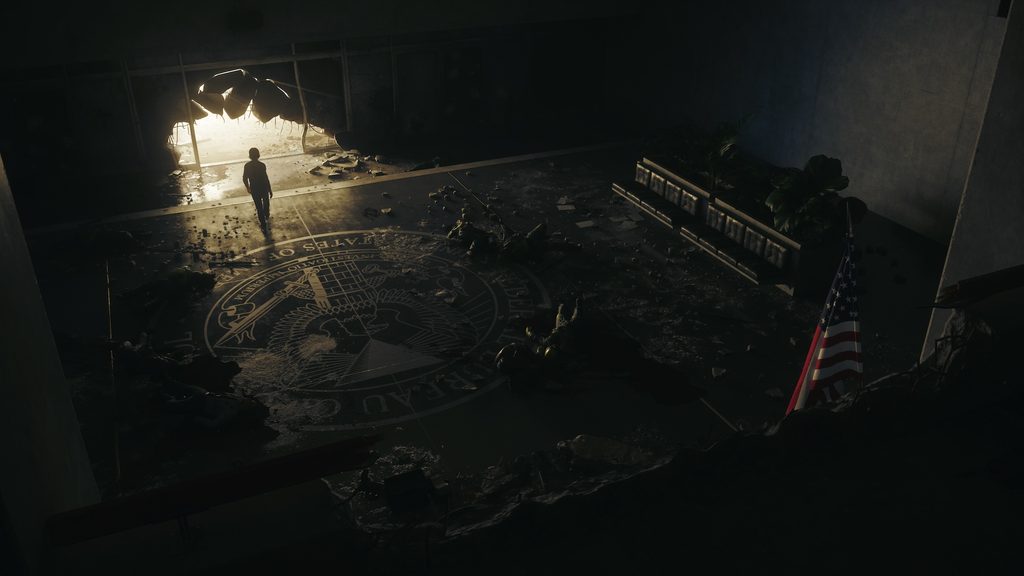
Milan: In games, we usually see Manhattan in a state of ruin, completely overgrown or destroyed by some viruses. Here, we’re dealing with mold and the Hiss. What was your core idea when designing a Manhattan overrun by all these things? How did you decide things like: “Okay, this goes here, we’ll flood this area with mold, and this will become a Hiss zone”? What did that look like?
Arhi: Yeah. We essentially like to paint zones with very bold colors. My goal was that when you see just one screenshot, you instantly recognize: “Ah, I’m in this zone right now, or I’m located in that zone”. So the color palette, the overall theme, and the general vibe are completely different in each level. For example, that Park you saw, the one overrun by mold… In the first game, it seemed really cool when you saw that large cave covered in mold, but I thought, “how brilliant would it be if the buildings actually started sinking under it, and there was so much of it that you could call it a valley of mold.” After that, we tested it out in prototype levels…
Milan: I remember in Control, you walk into a room, and whatever you see right in front of you, well, that’s it, but it wasn’t bad at all, I must admit. But now, when you zoom out a bit and look into the distance, you see a real landscape of it. You see all those buildings and streets completely destroyed by that mold, simply swallowed up.
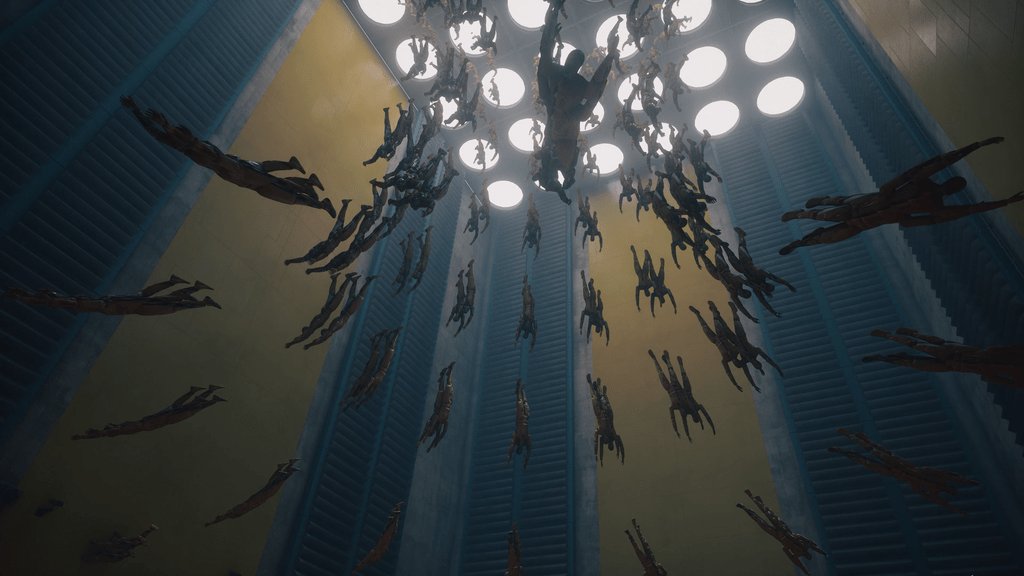
Arhi: Yes, there were no wide vistas there. Here, because of that, the Park zone is by far the most organic in shape compared to anything we’ve done so far. Considering we previously had that rough, brutalist style, and Manhattan itself is composed of straight lines, we tried to break that up wherever we could. Consequently, the whole zone brings a new atmosphere. We had a beautiful time putting all of that in, so it now looks completely overgrown, and as you noted earlier, it’s no longer strictly brutalist.
Milan: Honestly, I loved Control the most precisely because of that strict brutalist design. In Serbia, we actually have a ton of that brutalist architecture from the 70s and 80s, so Control itself made me feel like, “okay, this is phenomenal!”. But at the same time, I really like that you’re stepping away from it a bit now with the help of the mold and other elements, as it provides a specific and different feel, likely varying from region to region.
Arhi: Yes, exactly. Though we still have parts of The Oldest House inside, there are quests that take place right in it, so brutalism still lives there. When you think about it, modern architecture also relies in a way on straight buildings and street lines, there’s a lot of symmetry, but this now is something completely different.
Milan: Was it difficult to essentially combine these two completely different design languages? I mean, on one hand, you have that sharp brutalism, and on the other, a completely organic form.
Arhi: Well… I think some of the artists on the team would answer with a ‘yes’. There was a huge challenge there, but at the same time, it’s very exciting because that way you create a fantastic contrast between the two styles. Our Art department is simply incredible. Many of those people already worked on the first Control, they know it inside out, so designing The Oldest House was easy for them; it served as a sort of baseline. But everything else was a massive and entirely new challenge for them. I believe they absolutely nailed it.
Milan: I believe there were a couple of statements from the team that worked on Control saying that the original idea for Control was actually to be a full action RPG. They wanted to go maximally in that direction, but ultimately abandoned the idea. How do you feel about this whole thing with RPG elements now (given what the world is like and everything it offers), now that you’ve gone full-in with builds, weapons, artifacts, and the rest?
Arhi: Yeah, yeah, yeah. The essence is that we really wanted this to be a pure action RPG because Control is an action-packed game where you dash back and forth across the arena during enemy encounters. So, the seed of that RPG was already planted in the original Control, and now we’ve pushed it to the max. The feeling is extraordinary, because player choice and the sense of freedom play a key role here, and a genre like this gives it true meaning. Why would we give the player only one weapon form if we can easily leave it up to them to choose their abilities and customize their perfect build? And since I’m a level designer, I personally enjoy that immensely. I’m definitely not in the group of designers who like to micromanage what the player does every second, telling them, “hey, look, you can exclusively use only this shotgun right here.” No, no, we set the challenge before the players, we create incredible things, and it’s solely up to you to choose how you’ll approach them! I can’t wait to see the different approaches players take once they get their hands on the game; I’m sure there will be pleasant surprises like, “man, I didn’t even know it was possible to pull this off with that build!”.
Milan: I have to admit, it’s great to hear that you simply aren’t locked into one way of playing and that you had a totally open approach in designing this beautiful space and, of course, navigating it. Are there secrets hidden across the world… I assume you were involved in that lore aspect as well; are those pieces of lore now scattered every step of the way on the map so the player simply has to figure them out?
Arhi: It’s largely reminiscent of the first game, but now there’s far, far more of it. We went all-in when it comes to narrative collectibles and other side content; and there is genuinely an abundance of secrets waiting for you. It’ll be really fun for me when people start exploring all of that.
Milan: Since we’re already talking about the incredible lore and its placement in Remedy games, I just have to touch upon this question: What were you personally most happy about, or rather, what were you most excited about when you first got the job at Remedy? You know, it’s Remedy after all, the company behind numerous legendary titles… You mentioned you jumped in only during the final year of Control’s development. How did you adapt to all of that right at the start, since they are known as a company with a rather unique approach to level design?
Arhi: Oh man, yes, it was total chaos. When I joined them, there was quite a bit of chaos surrounding Control, the game’s development was nearing its end, meaning chaos everywhere, but there was an abnormal amount of work to tighten everything up and finish it by the end of the year. When I booted up the game for the first time, I just thought: “well, this has absolutely nothing to do with Quantum Break, what on earth is this?!” Because somehow I expected it to be similar. But on the other hand, I secretly wished for it (to be totally different), and then I was greeted by this incredible freedom and adventure right before my eyes, though a good chunk of that deep narrative hadn’t yet been implemented into the build I tested, so I literally imagined parts of the story in my head. The first time I went down to the Maintenance Sector and stumbled upon the Furnace… I was literally like: “Wow, what is happening here?!”. I came back so thrilled that my onboarding essentially boiled down to “hey, jump in and figure out what’s going on.” I love that brutalism we talked about earlier. I grasped the game’s atmosphere instantly and felt at home right from that very second. From that moment on, working with the team and generally working on the game itself went as smoothly as butter. The team is incredibly friendly, and despite the fact that we were constantly facing deadlines and insane workloads, if you start asking them questions one by one, absolutely everyone will kindly listen to you and make an effort to answer in detail. I wouldn’t trade that moment of joining the team for anything in the world.
Milan: And how did the moment you transitioned from Control to Alan Wake after that go for you?
Arhi: Actually, I never worked on Alan Wake. Namely, we work on multiple projects in parallel in-house; we’re scattered across a bunch of areas. First, I worked on Control, then on its DLCs, and then without hesitation, I switched to working on Resonant, while another team was concurrently making Alan Wake, and I would just watch from the sidelines and comment: “phew, you guys are cooking up a wicked game over there!”.
Milan: Ah yes, forgive me, but you did work on the AWE DLC for Control, which is in a way a crossover of the two universes. That is essentially what I wanted to ask you. How incredible was that for you? I mean, on one hand, Control is a vastly different type of game than Alan Wake, and your job description happened to include implementing the pre-existing lore of a world you otherwise aren’t even working on?
Arhi: Oh yeah, that is absolutely true! Yes, it was a very good experience. It opened up a huge space for learning for me, as up until that point I wasn’t particularly familiar with the lore and universe of Alan Wake. All of that had yet to be studied. Besides, in the DLC we have that behemoth of a boss, Dr. Hartman. Finding the right balance and incorporating the narrative of a game like that into a gameplay loop like Control’s was truly an unforgettable process.
Milan: Let’s talk a bit about gameplay now. At what exact moment was the idea born that you wanted to focus on a “melee” system here primarily? Because look, in the original Control we only shoot, same thing in AW, and even Max Payne; it all revolved around shooting from a distance, whereas here in Resonant, the action is served up close and personal. I assume that prompts a totally different way of thinking in your level design department?
Arhi: Practically, that was our plan from day one. I think even during the original Control, there was this crazy idea simmering about how the famous Service Weapon has multiple forms, which led to that familiar question: “hey guys, can the weapon change into a melee form, like a sword?” In Control, such a move and such a radical shift in how the weapon functions made absolutely no sense, but as soon as Control Resonant hit the table, absolutely everyone on the team knew we wanted Dylan as the protagonist here. That decision was locked in from day one. And you see, there’s a perfect symmetry there between Dylan and Jesse (two different games); with Jesse in the first game, the action was based exclusively on distance, while with him, it relies entirely on raw strength up close! The feeling during gameplay is incredibly more aggressive and much faster-paced because of that melee approach. It has that close-quarters vibe you got used to in the original since you run back and forth across the arena very quickly. In the first game, you paid less attention to aiming precisely at the enemy and thought much more about… let’s say, positioning. And this is literally the exact same thing now.
Milan: I think this kind of combat leans beautifully into who Dylan naturally is. Unlike her, who is all polite, calm, and composed, he is the exact opposite!
Arhi: Yes! I absolutely agree.
Milan: But similarly, everyone expected Jesse to return in the second part, and then after the first concrete announcement, we see a different protagonist, namely Dylan. Dylan, who was in a way the villain in the first game.
Arhi: Yes. We like to hit people with the element of surprise, and we mostly try to share such “bombshells” with the world exactly when we think the time is right. Right now, talking about his character lined up perfectly for us. He intrinsically stands out from her, and all that bite and rage he bottles up inside is tailor-made for a bloodthirsty and powerful melee combat system. He literally roams the map tearing everything apart. You see that symmetry with the first game again, we use all the same elements, but in a completely different way. Now she is officially the Director, but the main protagonist you’ll be wrecking the map with is him.
Milan: Yes, the good old dynamic and the universally familiar love-hate relationship between brother and sister.
Arhi: Exactly! It’s time to see Dylan in real action for the first time too, not just locked up in The Oldest House. Jesse is there as well, but in what form, you’ll have to wait a bit to see.
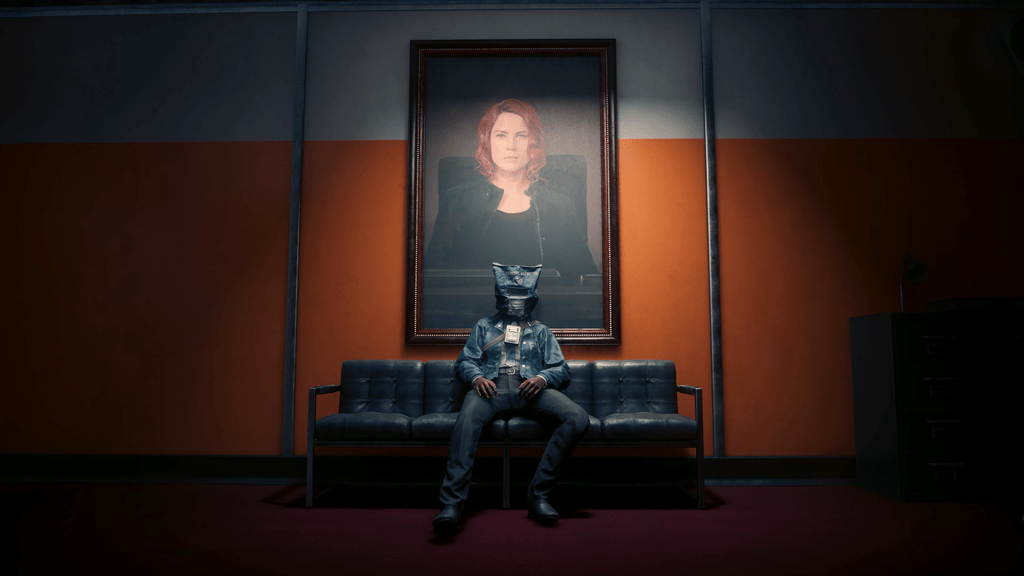
Milan: Well, I for one can’t wait to see that. Especially since we spent the entire first game desperately searching for him, only for him to make an entrance like this in the sequel! I’m counting down the days to see how their new situation unfolds!
Arhi: Yes! We share the same opinion, it’s going to be great.
Milan: Would you like to continue working on the Control franchise, because after the first game where you had a small role at the end of development, you now have a significantly larger, more important role? I know this is a “tricky” question for anyone at Remedy, but do you think you might know? In the long run, will Remedy continue developing the Control franchise or titles from that group? Especially since you told me that Resonant was known about even towards the end of Control’s development.
Arhi: For starters, let’s just finish this nicely and wait for the game’s release, and then we’ll figure out the rest. To be honest, I absolutely love my job as a Level Designer at Remedy Entertainment, and I truly enjoy doing what I’m doing right now, but let’s first wait for this game to launch and then we’ll see what happens after that.
Milan: Hey, if nothing else, at least I tried to squeeze something out! I hope you don’t mind. And thank you for talking with me about this fantastic game coming out this month.
Arhi: Haha, of course, and you’re very welcome! I always love talking about this game, so it was a pleasure. And don’t forget to let me know what you think of the game after you beat it!
Milan: Oh, definitely. I honestly believe I’ll enjoy it at least as much as I enjoyed playing Control, both on the Xbox at launch, and on all the other platforms after that, even on my iPhone here! Once again, thank you for the time you set aside for us, and I wish you all the best of luck in the upcoming release period and, of course, beyond!
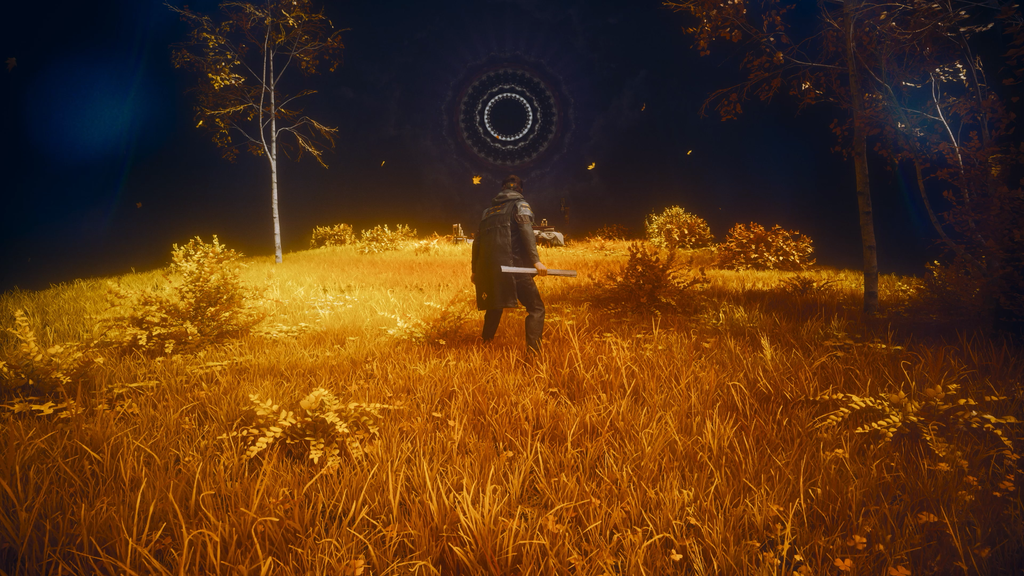
And that’s where we wrapped up our conversation with warm regards and best wishes from both sides for the post-interview period. To be honest, this was one of the most interesting interviews I’ve done so far, because it revolves around Control Resonant, or rather, the incredible universe that Remedy Entertainment is building before our eyes. Had I had more time, I believe Arhi would have gotten bored of me and my theories about the game and the Remedy Connected Universe. But truth be told, it is always extremely fascinating to talk to someone who worked on your favorite game or is working on its sequel. So I must admit I was honored to speak with the fantastic Arhi Makkonen!
Control Resonant is coming out on September 24th this year, which means just about three weeks left until launch. Based on everything we heard and saw at Gamescom, another fantastic title from the Remedy kitchen awaits us. And if you haven’t preordered the game yet, what are you waiting for!
