
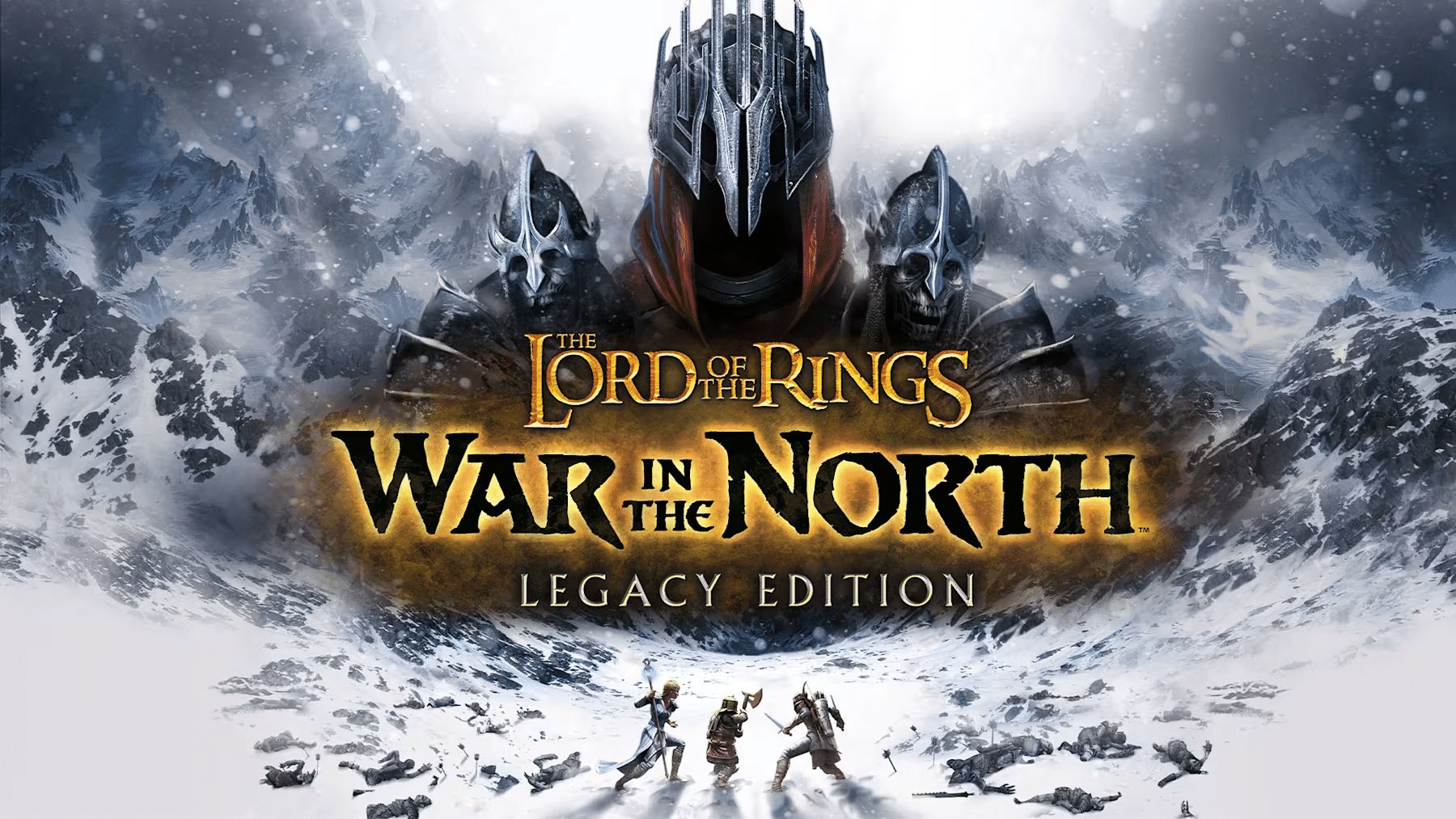

It’s been a long time since I first played The Lord of the Rings: War in the North on the Xbox 360 console. I remember pre-ordering the game and eagerly waiting for it to arrive so I could finally dive in. Because, believe it or not, LotR: The Two Towers was one of my absolute favorite games on the original Xbox, and this is effectively a spiritual successor to that vibe. In fact, I still own a physical copy of this game for the X360, alongside the digital version, and I actually booted it up recently just to remind myself how games used to be simpler, focused on one single thing: fun. No massive open world, no overcomplication, just a fairly straightforward experience. Precisely because of that, I couldn’t wait to play it again on the Switch 2 and grab someone to run through local co-op with me. So, let’s see what makes this game so fun and, I dare say, timeless.
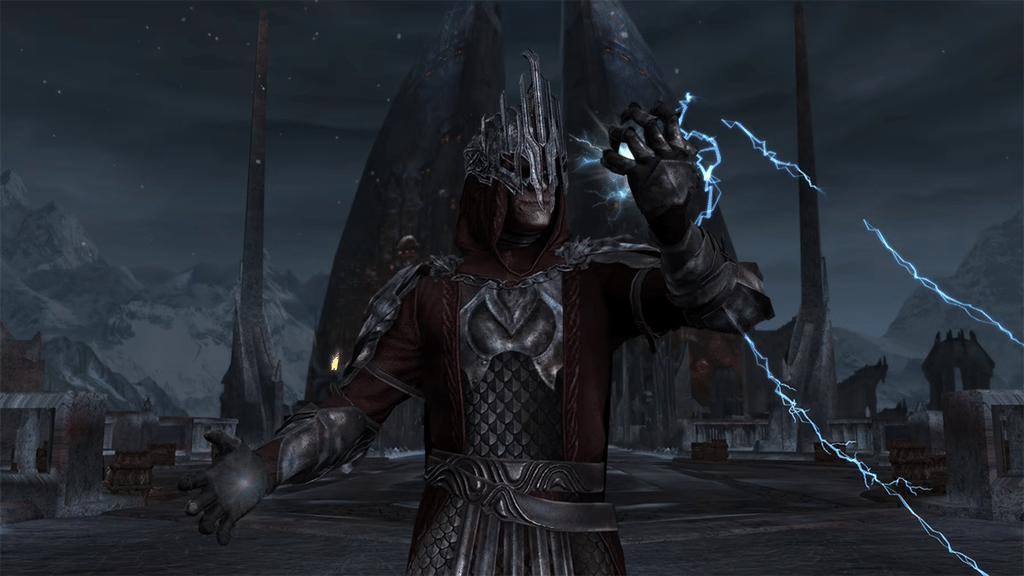
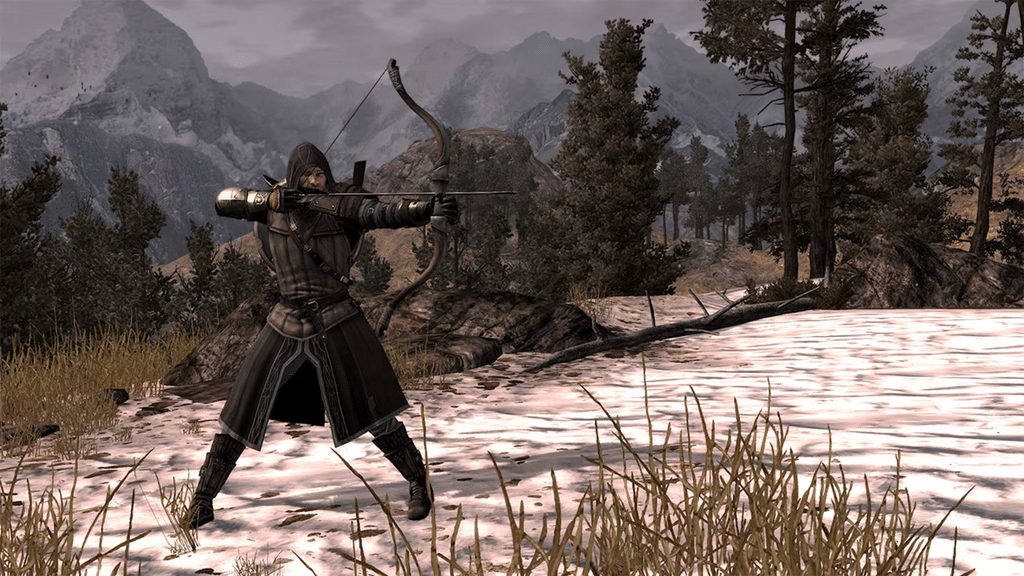
The story runs parallel to the events of the main trilogy, following an entirely new fellowship operating in the northern regions of Middle-earth while Frodo, Sam, and the rest of the Fellowship of the Ring wage their war against Sauron. The main problem in this game and the region where it takes place is Agandaur, a Black Númenórean and servant of Sauron amassing a massive army in the ruins of Fornost. Consequently, Gandalf gathers three heroes who must stop this threat before it spreads far enough to endanger the entire North. And I have to admit, that is a fantastic idea for a Lord of the Rings game; it allows you to be part of well-known and beloved events without trying to re-tell a story we all already know. The characters you play as in this adventure are Eradan, a Dúnedain Ranger; Andriel, an Elven Loremaster; and Farin, a Champion among the Dwarves, a massive feat! Each of them features a drastically different playstyle. Eradan is primarily focused on bow and arrows, swords, and stealth; Andriel uses magic, healing, and AoE attacks; while Farin is your classic Dwarven tank, capable of absorbing serious punishment and dishing out even heavier strikes. This trio is exactly one of the best things War in the North has to offer, because the game didn’t just create three distinct characters for the sake of it; each one feels different enough that you will eventually start swapping favorites depending on the situation.
An even better feature in the Legacy Edition is the ability to swap between these three characters at any moment during gameplay. If you are playing solo, the AI controls the rest of the party, but you are no longer locked to just one hero. You can take over Eradan when you want to pick off enemies from a distance, switch to Farin when you get swarmed, or grab Andriel when you desperately need magic and support. On paper, this sounds like a minor tweak, but in practice, it significantly shifts the pacing of the game and is one of those features that makes you wonder how the original launched without it.
War in the North is fundamentally an action RPG with a highly straightforward focus on combat. Do not expect the complexity of a modern Diablo or some deep souls-like mechanics. Everything here is much simpler. You enter a room, a group of Orcs spawns, you start bashing them, then more Orcs arrive, then a few more, then a larger enemy shows up, and finally, you move on. And so on, over and over again. However, I have to admit that this simplicity carries a certain charm. The feeling of slaughtering Orcs is highly satisfying, enemies react nicely to impacts, and when a dozen or more foes surround you, you get that specific rush native to classic hack-and-slash games when you successfully wreak havoc through the hordes. It’s a good old PS360-era game. Having said that, the problem is that the game quickly starts showing its age. Fights often drag on longer than they should, enemies tend to spawn in massive waves, and their variety simply isn’t wide enough to keep these encounters engaging throughout the entire adventure. After a few hours, you know exactly what to expect. A new enemy type is always welcome, but the core principle rarely changes. The game buries you in enemies, you use your character’s abilities, and you try to wipe them off the screen as fast as possible. As I said, anyone who loves games from this era and appreciates a bit more simplicity, or simply played the original, will feel right at home.
Because of this, War in the North is vastly more fun when played with friends. The whole premise of a new fellowship naturally leans into cooperative play, and the Legacy Edition on the Switch 2 features a really cool addition here: you can play local split-screen with another player, while online allows for groups of up to three. Local co-op on the Switch 2 is awesome because this specific version actually received split-screen support, a feature the original Switch lacks. When you have one or two other players, the three classes finally start functioning like a proper little fellowship. Farin can dive into the fray and draw aggro, Eradan can pick off targets from afar, while Andriel keeps the team alive and uses magic for crowd control. It’s not the level of synergy you’d expect from a modern co-op RPG, but for a 2011 game, it works surprisingly well. Even when it all devolves into simple enemy-bashing, there is a distinct satisfaction in watching three different characters complement each other.
The RPG elements are also quite old-school, but precisely because of that, they hold a certain appeal. As you progress, you gain experience, unlock new abilities, and find increasingly better gear. Weapons, armor, and other items alter your stats, so you will very quickly find yourself digging through your inventory to see what fits your current build best. There isn’t a ton of complex systems here, but there is enough room to push each character in a specific direction. I thought it was really cool that the abilities differ enough so that character progression isn’t just about making a number go up. Eradan can become deadlier with a bow or stealth, Farin can become even tankier and more lethal in direct melee, while Andriel can specialize in offense or support. It is not a particularly deep skill tree by today’s standards, but when you remember this is an action RPG from the previous console generation, it is crystal clear why it worked so well back then.
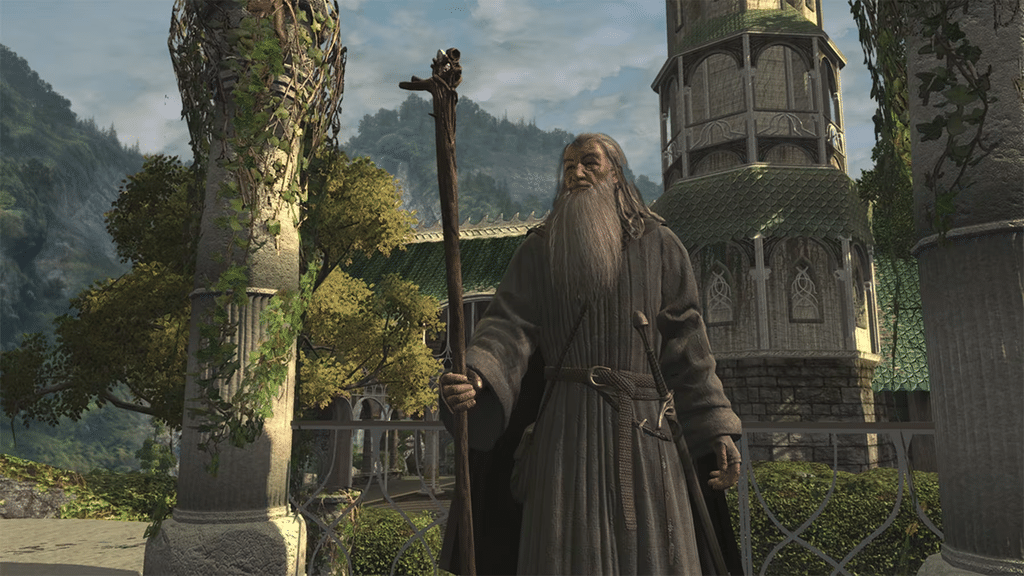
However, the absolute best part is that War in the North genuinely strives to be a proper Lord of the Rings product. This isn’t just a game that coincidentally slapped Tolkien names onto generic enemies. You travel through the northern parts of Middle-earth, visit iconic locations, and run into characters we all know from the books and movies. Gandalf, Aragorn, Elrond, and other famous heroes aren’t the main focus of the story, but their presence gives the adventure a grounded feeling that it is genuinely taking place somewhere between the events we already know. It features what I would call “fan service,” but in the best possible sense. The game is packed with details that will mean so much more to someone who loves Tolkien’s world. The locations, enemies, weapons, music, dialogue, and how certain events are framed all carry that recognizable vibe. Even when the story itself isn’t particularly spectacular, there is something inherently comforting about finding yourself in Middle-earth, embarking on an adventure that isn’t just another re-tread of the exact same movie scenes. Similarly, that very story can be an issue if you aren’t a massive Lord of the Rings fan. The dialogue is quite extensive, there is a lot of exposition, and characters often speak as if they are actively trying to convince you of the gravity of everything happening. For a Tolkien fan, that can be charming and even really cool, but to someone not particularly attached to this universe, it might just feel like a wall of text between two fights.
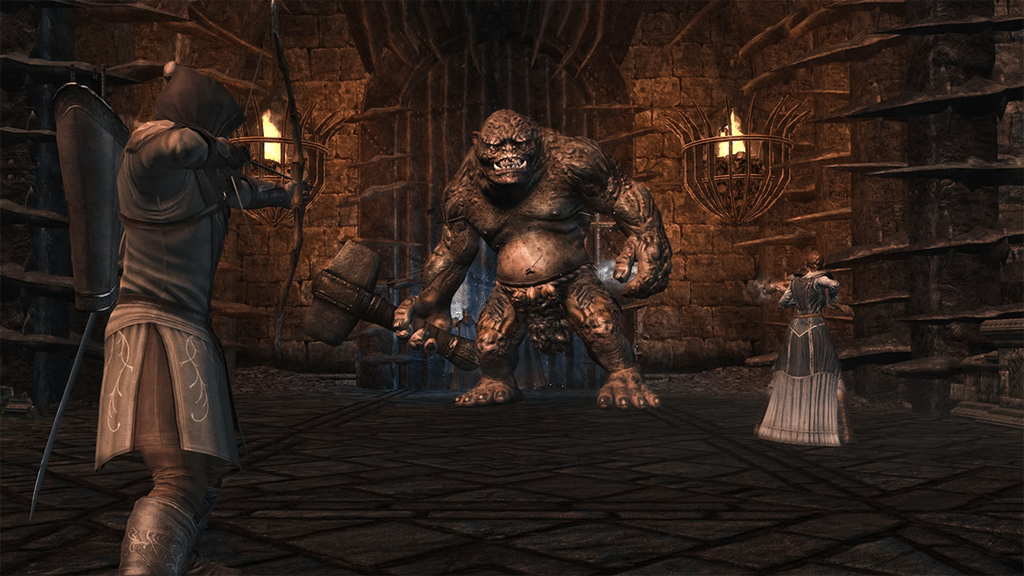
I must emphasize that this is not an open-world game, which is the current industry standard; it is quite a linear experience. But linearity doesn’t mean there is no exploration. Throughout the levels, there are hidden passages, chests, and secrets to uncover, and the ability to swap between characters further aids this, as specific heroes can trigger things others cannot. The Legacy Edition made another highly useful quality-of-life improvement here, making certain information and functions tied to discovering secrets much clearer than in the original. It also features an improved UI, a party stat display, upgraded enemy lock-on, and an autosave system.
And then we come to the Switch 2 version. This is not a full-blown remake or remaster that will make you wonder if you’re looking at a brand-new game. First and foremost, Aspyr took the original and made it much more palatable for modern hardware. Resolution and performance have been boosted, with the Switch 2 targeting 60 frames per second. In practice, this makes combat and traversal significantly smoother than if the game had just been dumped onto the new console without any under-the-hood tweaks. The Switch 2 version also gets gyro aiming, which feels particularly nice when using Eradan’s bow. Having said that, do not expect it to magically look like a modern game. The character models and facial animations very clearly betray their 2011 origins. Environments can look perfectly fine when viewed as a whole, especially when the game needs to render a larger location or a massive number of on-screen enemies, but the character models, textures, and certain effects simply can’t hide their age. Honestly, that doesn’t even bother me that much. It bothers me more when the game tries to look modern, only for you to encounter an enemy animation or AI behavior that instantly yanks you back to the PS3 and Xbox 360 era.
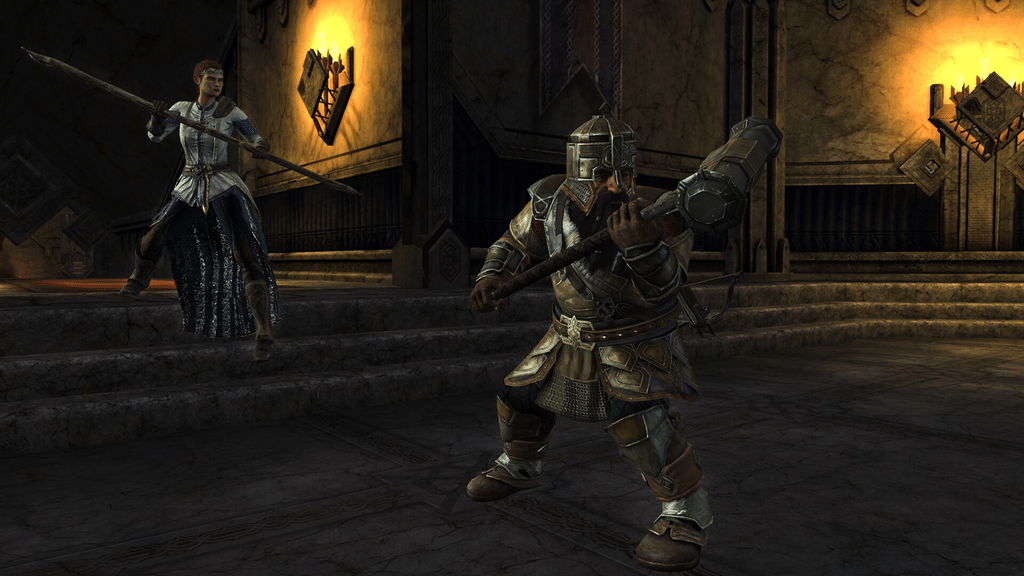
Audio is an interesting story. The music and voice acting can actually be surprisingly good, especially considering the game’s age. War in the North features a ton of voice-acted dialogue, and you can tell serious effort went into making the characters sound like they truly belong in Tolkien’s world. The problem is that some versions suffered from audio mixing issues, with several reviewers reporting that dialogue was unusually quiet compared to the rest of the game. It’s another one of those details that doesn’t ruin the experience, but can definitely pull you out of the atmosphere.
The Lord of the Rings: War in the North - Legacy Edition (Nintendo Switch 2)
The Lord of the Rings: War in the North – Legacy Edition on the Nintendo Switch 2 is therefore not a game I would recommend to absolutely everyone just because it has Lord of the Rings printed on the box. If you expect a modern RPG, an open world, or a massive graphical overhaul, you will quickly notice its age. But if you love Tolkien's world and miss action games from an era when massive franchises received entirely new, original side-stories, you will find something here that practically doesn't exist anymore today. Honestly, this is a very cool experience even for those who are just looking to step into the Lord of the Rings universe, because that simple gameplay and straightforward, no-nonsense storytelling is, I think, the perfect way to taste this world for the first time. It gets even better if you have someone to play with; then the fun is endless, and you will frequently want to come back to the game simply because it is, well, fun!
