
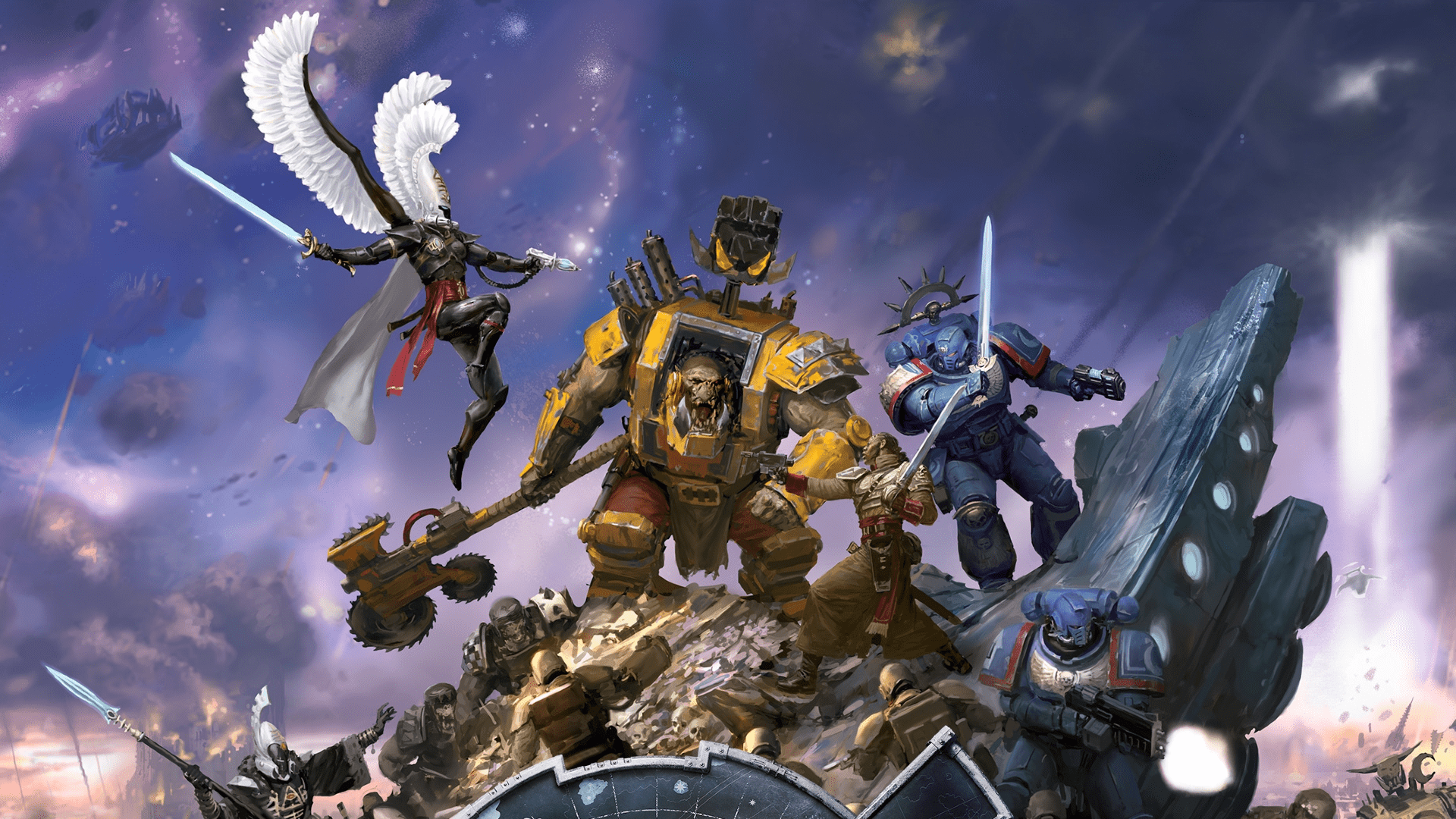

On the first day of Gamescom we had the pleasure to visit SEGA and try out Creative Assembly’s newest Total War title, Total War: Warhammer 40,000 for an hour. Fans of Warhammer 40,000 and Total War long dreamt about this game and Creative Assembly didn’t just copy Total War: Warhammer and call it a day, but aims to improve on the known formula to bring the Total War series not only to PC, but also to consoles.
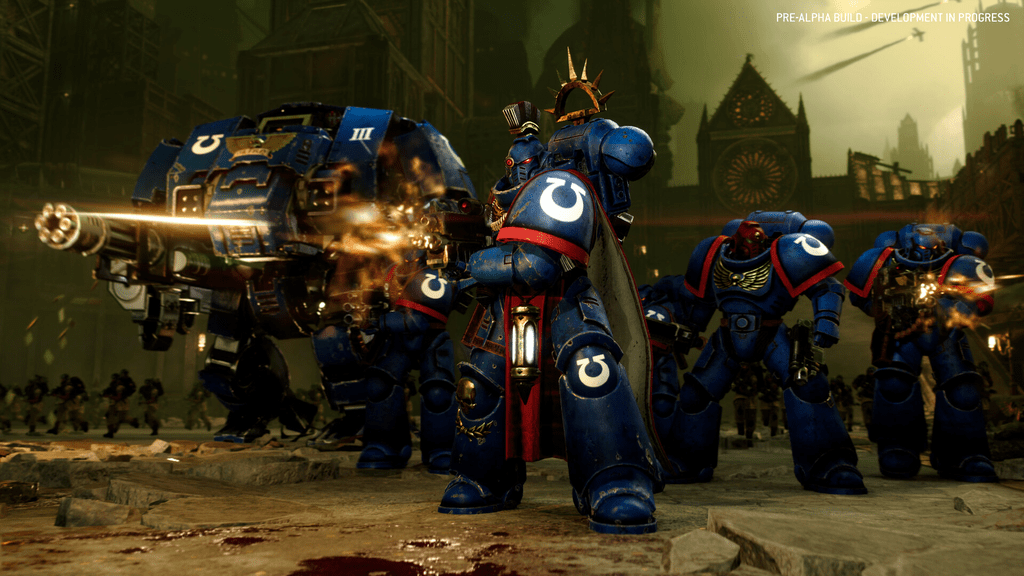
In our one-hour hands-on session, we got a short presentation about the game focusing on the major changes of the game.
First and foremost, they made clear that they try to make Total War: Warhammer 40,000 as accessible as possible for new players, without compromising the complexity and depth of the previous title. It was explained that they try to achieve that by using the first campaign and the prologue of the game as an expanded tutorial, that is even worth playing as a Total War veteran, as a lot of systems changed compared to Total War: Warhammer. However, while campaigns are important, they pointed out that the sandbox gameplay is still the main focus.
When it comes to factions, at first, it looks like Total War: Warhammer 40,000 starts with a surprisingly small roster, given how many factions there are in Fantasy and in the 40k universe. But the Space Marines, Astra Militarum, Orcs and Aeldari are supposed to play absolutely different, more so than ever before. The developers are focusing on making each new faction as unique as possible. But of course, we can expect new races through DLCs and expansions, so it will only be a time until you can find your favourite faction playable in the game. And they are already hinting at Chaos in one form or another.
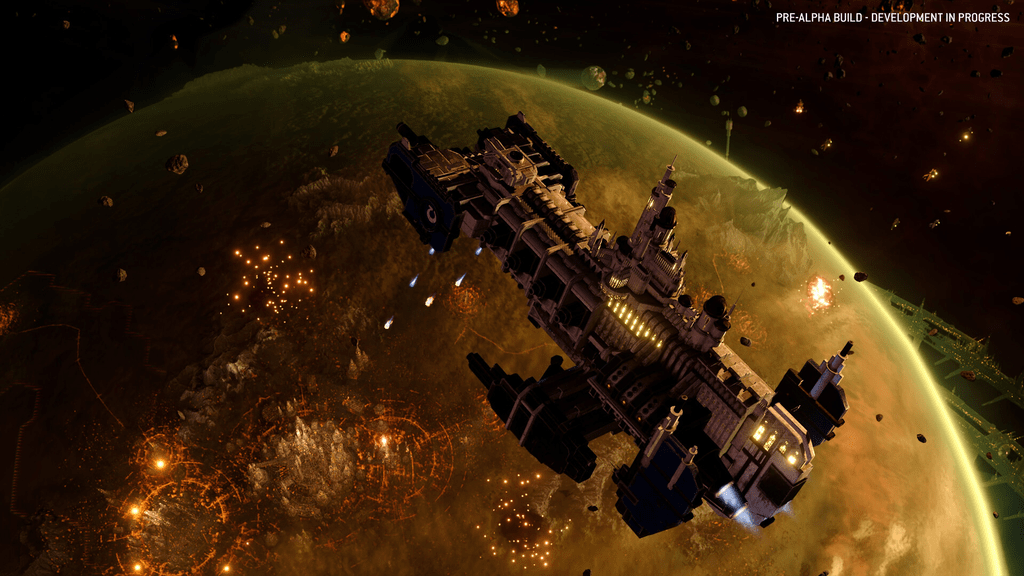
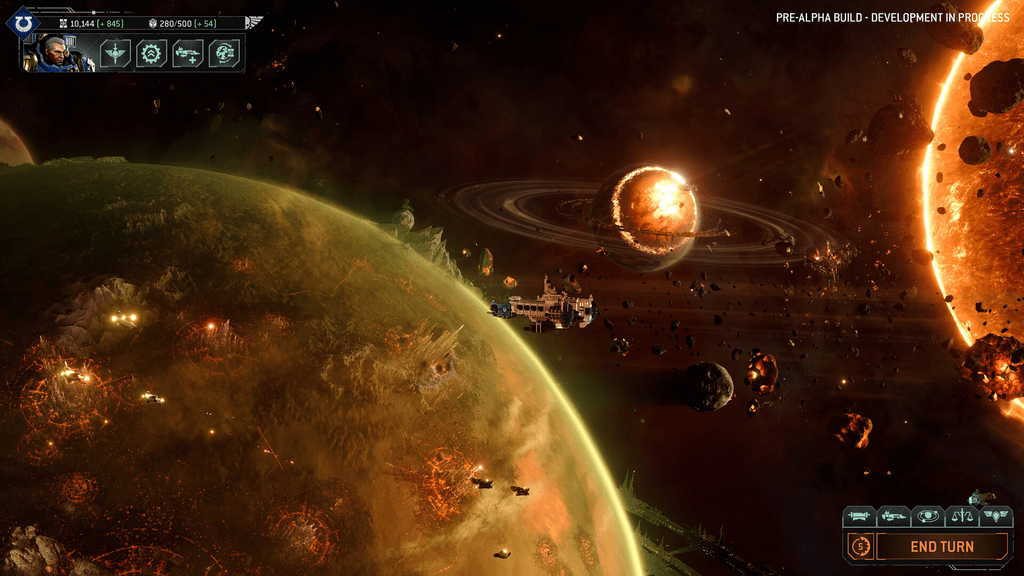
The third and probably most obvious highlight was the new Engine. The game looks nothing but spectacular. Zooming in and out of the battlefields and planets feels incredible. The Armageddon sector, in which Total War: Warhammer 40,000 plays, looks dense and atmospheric with all kinds of colours and effects and then you can zoom in from out of space, where your frigates are hovering over planets ready to bombard it, onto the planets, where your structures and units walk around.
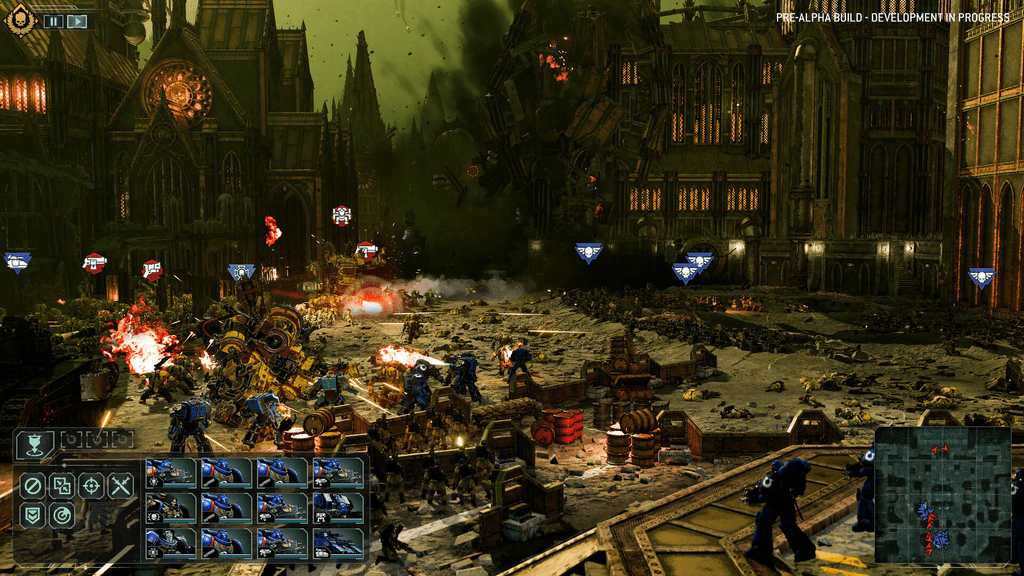
More breathtaking even is the scale of combat. In the one-hour hands-on, we got the chance to play three different scenarios. A tutorial that showed the basics and let us move around our Space Marine on a small map and do a tutorial fight against some orcs. Then a short campaign mission with a more advanced combat scenario, a city fight and ultimately a hard combat scenario.
The tutorial was made quite well and explained the general controls of the game and already highlighted important strategies in the combat, such as height differences, cover and how formations worked. This all felt natural and the information on screen was always very readable.
As someone who has played several hundred hours in previous Total War games over the last 2 decades, but never to the point of being absolutely deep into them, except for Total War: Warhammer and the Immortal Empires campaign, I felt right at home, but was still surprised by how much more fluent everything felt.
In the campaign mission, I started to expand my city with some buildings and had to make choices which build paths to follow and expand the city with, while also building new tanks and mechs for my army that was on the way to fight for a city in a different sector. Ending my turn, even in this mission, there were over 20 factions doing their work in the background already.
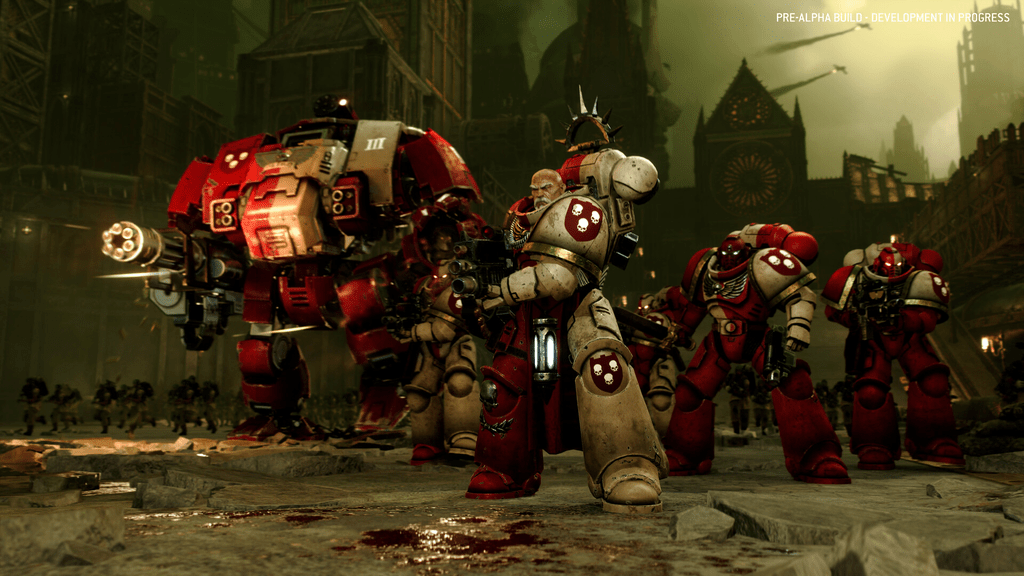
The combat was especially fun here, as my Space Marine army was a lot larger than in the tutorial. I had several squads with bolters, machine guns, a couple of tanks and mechs, all with their own little special attacks and additional formation commands and utility commands such as orbital lasers and bombardments. My favourite ability was to command a squad not to die for a certain amount of time, despite being sure to die.
At first the fight against the Orcs looked really good but then came another wave of multiple squads with a boss and some crazy looking vehicles that totally crushed my sideline. I flew in some shock troopers from orbit that nearly defeated most of the Orcs, thanks to some precise bombarding, but ultimately lost against the boss, despite my command not to die.
All throughout the fight I was amazed by how good the game looked. The new engine does an incredible job on all models on the battlefield and the battlefield itself. Zooming in and out of it, it was unreal to see the detail on all models and the effects of their attacks.
After my defeat, I attempted the mission again because I couldn’t leave with a defeat. Unfortunately, I only had around an hour to play, and my time was nearly over. I couldn’t try the last mission but I saw it on the PC right next to me, and the scope and scale were impressive.
Time flew by so quickly, and I honestly could have played Total War: Warhammer 40,000 all day if they had let me. Campaigns are supposed to stretch across multiple planets across regions of the Armageddon Sector, and I am absolutely curious how the large-scale management of multiple planets at once will feel in the full game. I can’t wait to fly my frigates around the region to bombard cities and bring much-needed reinforcements to one planet or another.
Total War: Warhammer 40,000 is coming out in 2027 on Steam, PS5 and Xbox Series consoles and I can’t wait to spend my weekends with it.
