

At this year’s Gamescom, we had the pleasure to finally getting our hands on the new title by Ryu Ga Gotoku Studio thanks to SEGA. RGG Studio, known for their Yakuza or Like a Dragon games, spent the last two decades refining their game formula with fast-paced combos, brawling and over-the-top cinematic heat actions on the streets of Kamurocho and Osaka and multiple other places. However, they didn’t shy away from reinventing themselves with the shift to the Like a Dragon games (Yakuza 7) and turning combat into a fully fledged classic turn-based JRPG combat system.
However, based on the gameplay demo of Stranger than Heaven showcased at Gamescom, we can say that action is back on the table, but not as you expect. Stranger than Heaven is doing its own thing.
Set to launch in only a couple of months, on January 15th 2027, the game is a 50-year-spanning action-adventure saga that acts as a prequel to the Yakuza/Like a Dragon franchise. It follows Makoto Daito, a Japanese American outcast whose desperate struggle for a home ultimately leads to the founding of the Tojo Clan, we all know from the Yakuza series.
In the demo, we were able to play three different combat scenarios, highlighting differences in the new combat system. Before diving into it, though, we got an introduction video that explained how the new system worked. Combat isn’t button-smashing and abilities anymore, like in Yakuza. In Stranger than Heaven, you use R1/R2 for your right-side light and heavy attacks and L1/R2 for your left-side light and heavy attacks. There were also dedicated left- and right-hand blocks or a full block altogether. In general, the combat felt slower and more impactful than in the old Yakuza games. Positioning was important as well, as you had to watch out for other enemies while committing to your tacks. Doing a heavy attack and missing? Your other side would be wide open for enemy attacks. Daito’s attacks feel impactful and the animations elaborate. Button mashing might defeat some goons, but not the more difficult enemies.
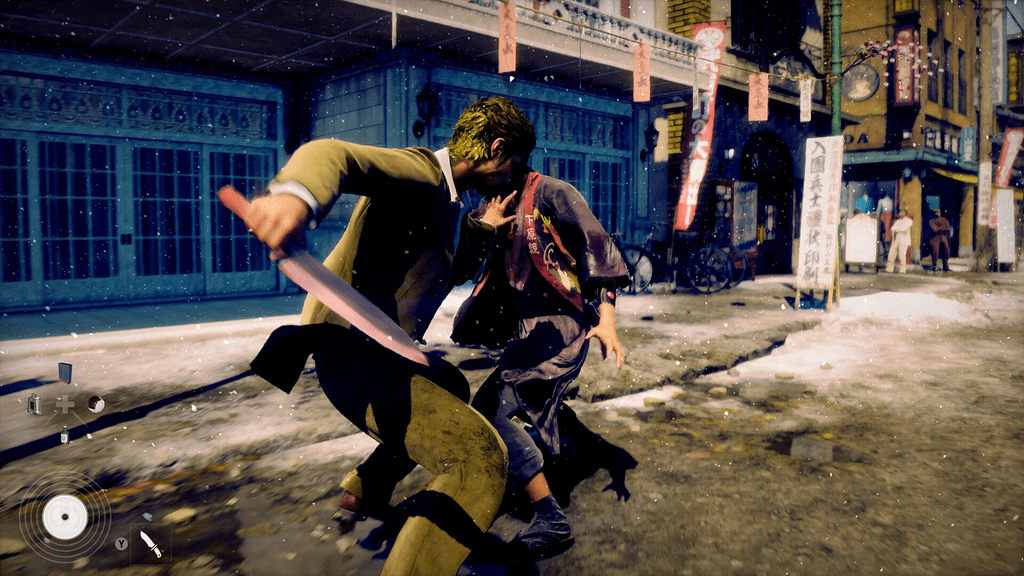
Left, right, left right, kick, right, left, right, the tutorial said over and over again. Find your combat rhythm.
Additionally, Daito could also wear different weapons, such as knives and crowbars to keep the enemies in check, but not all enemies are suited for all kinds of weapons, as the demo showed us.
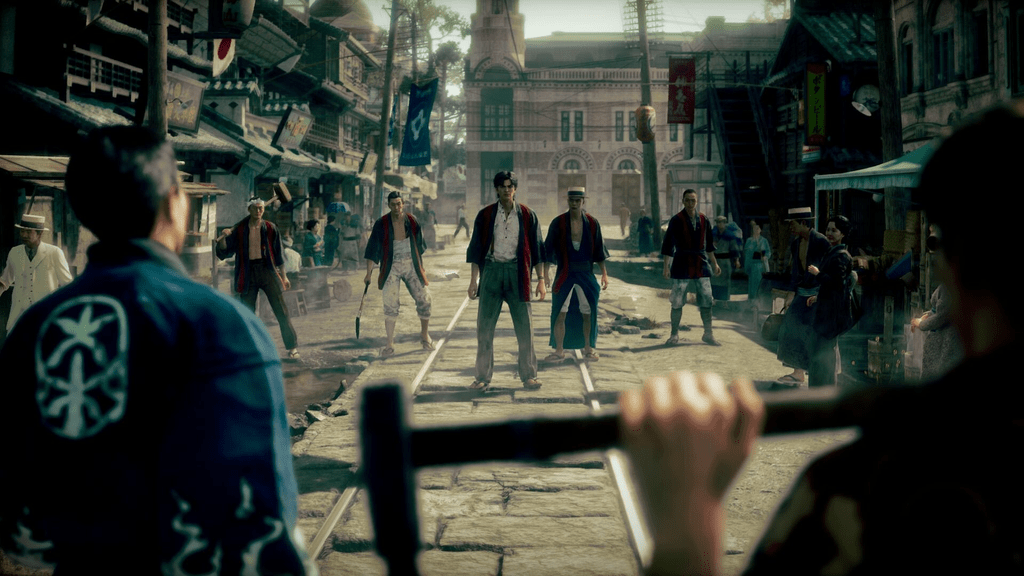
The first scenario threw us into the town of Kokura in Fukuoka during 1915, where some troublemakers harassed a young version of Makoto. The little we were able to see of Kokura looked stunning. But the combat encounter was easy to solve and gave a good idea about how to approach regular goons and beat them. It almost felt like old Yakuza games, just that you mashed R1/L1 instead of your regular square/triangle/circle/x buttons.
The second scenario was set in the streets of Kure in Hiroshima during 1929, a gang of regular enemies and a massive guy towering way over Makoto. Here it got a bit more challenging, as you had to handle multiple enemies with different kinds of fighting styles that tried to circle you. Positioning was key for the regular enemies, and the use of the crowbar was great to keep them in check and finish some of. The massive guy, however, required you to read his attack patterns and avoid them. I usually waited for his charge and then backstabbed him with quick knife attacks until I beat him. It wasn’t easy as I used up all my healing items, but on my second attempt, I managed to kill him.
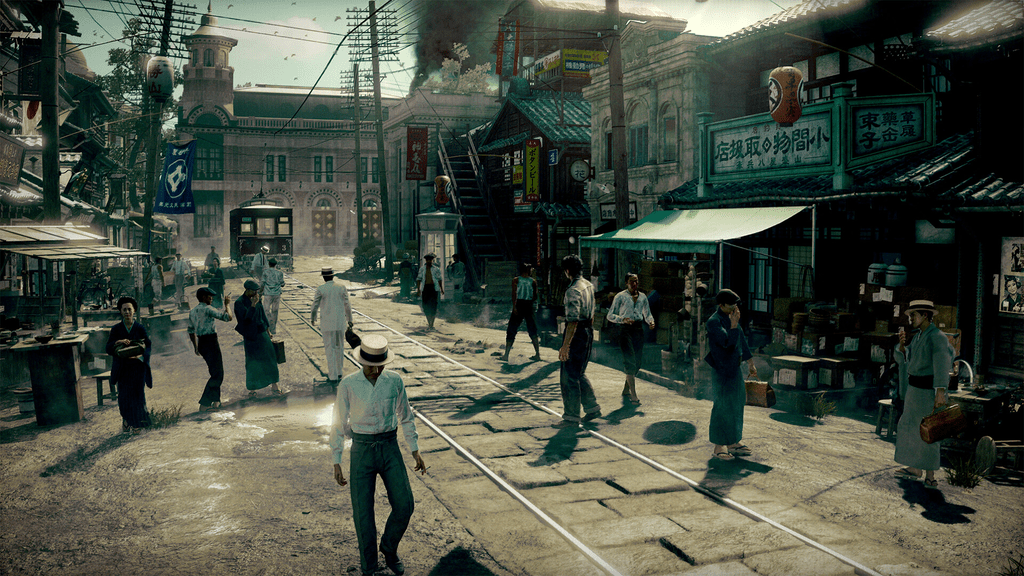
The third scenario was in Osaka during 1943, and there was just a single enemy in the street. A nimble swordsman was waiting for us. He was quick with his sword, and proper dodging and parrying with the weapon of choice was required for me to beat him. It took me around ten tries until I finally beat him. But not without some sweaty attempts before. His attack patterns were clear after a couple of tries: quick forward moves and attacks to parry, but then he barely left any proper window to attack him at first. I tried it with the knife, as this was my way to beat the brute in the scenario before, but I lost myself into the button-smashing, and the swordsman used that window to deal massive damage. When I thought I had him for the first time, he got me knocked down and killed me with a massive one-shot attack that took around three-quarters of my health.
After banging my head, or rather Makoto Daito’s, against the wall, I switched to the crowbar again and bullied the swordsman hard. Some good dodges and parries later, I was able to get him into a street corner to manage a finisher move. Very satisfying.
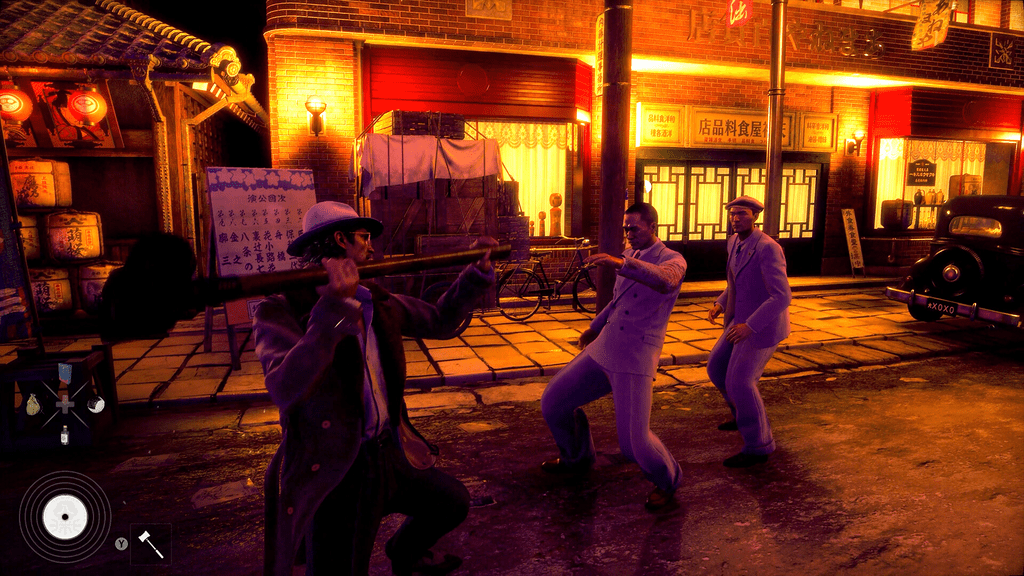
I was really surprised by how different combat feels in Stranger than Heaven, compared to the Yakuza games. I expected a button-smashing spectacle again, but Stranger than Heaven uses a more delicate and slow-paced combat system, that requires positioning and precise movement and attacks instead. The three combat encounters gave a good overview of how different the combat can feel, from easily defeatable goons to tougher enemies that require some strategy, all the way to almost souls-like feeling bosses.
I am very curious what this will look like in the full game, when you encounter Yakuza-like boss fights and beat your arch enemies in Stranger than Heaven. But that is something we will find out in January 2027, when Stranger than Heaven releases on PS5, Xbox Series and PC!
