
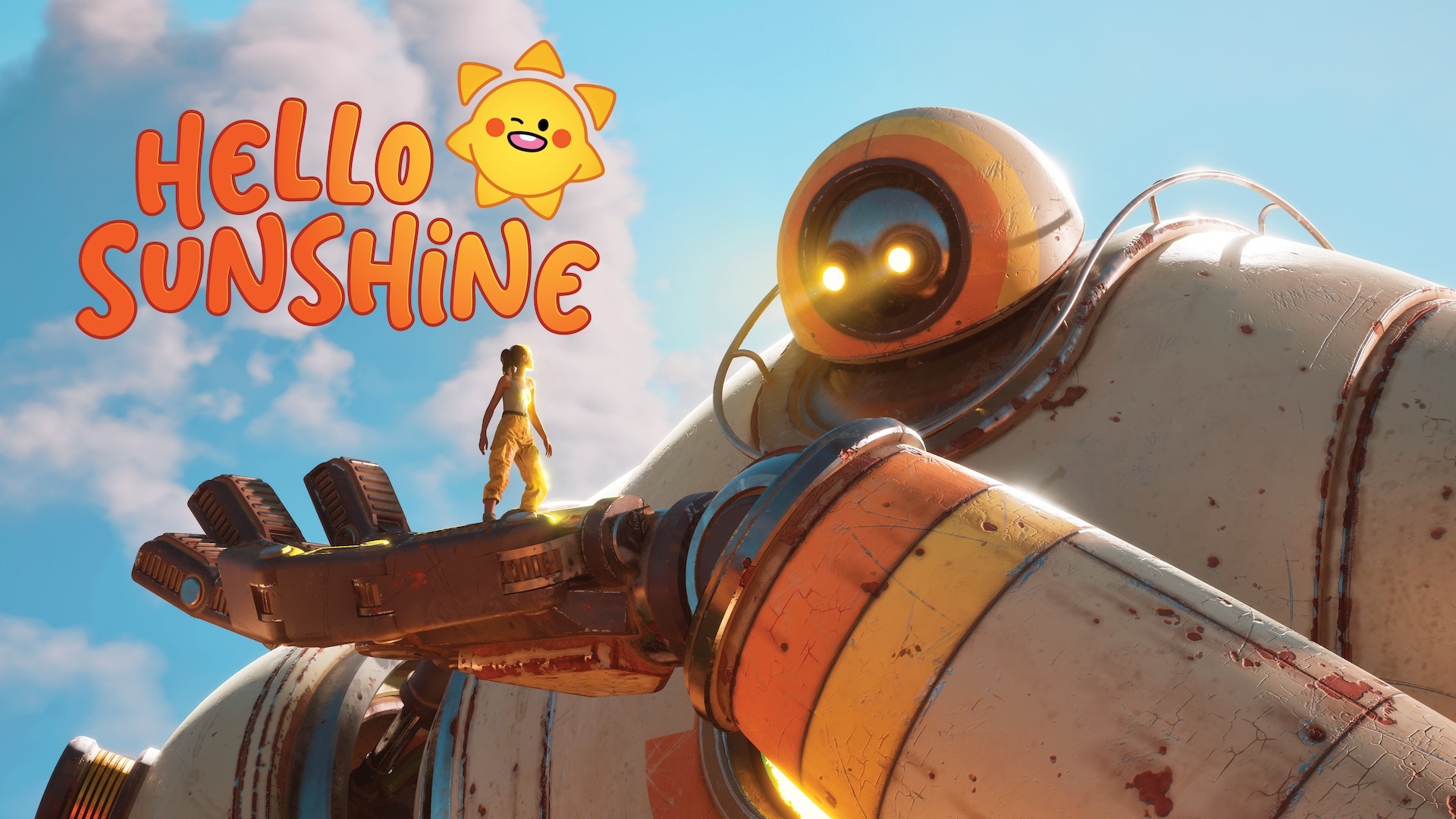

When you look at the list of survival games we’ve gotten over the last few years, you quickly come to the conclusion that the genre has exhausted almost every trick in the book. We have zombies, aliens, monsters, hunger, thirst, cold, heat, radiation, cannibals, and practically every other conceivable way a game can remind you that life is hard. That’s exactly why I approached Hello Sunshine at Gamescom 2026 without massive expectations. Just another survival title, I thought, only with a different setup. And then I saw what Red Thread Games was actually trying to pull off. It turns out that here, the sun actively wants to kill you. Yes… And I don’t mean that in some metaphorical sense. It’s not a metaphor for climate change or corporate greed. If you step out of the shadow of the colossal robot guiding you through the desert, direct sunlight will scorch you to death in mere seconds. Your entire day, therefore, becomes a meticulous calculation of how far you can stray from your only protector, what you can scavenge, and how fast you must sprint back to its shade. And that simple fact completely flips everything we thought we knew about survival games on its head.
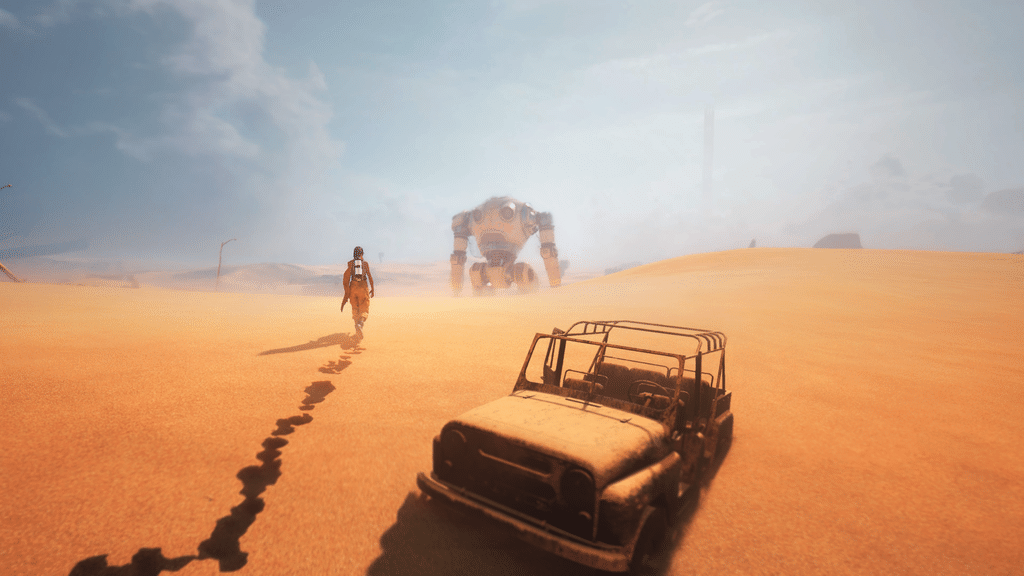
Hello Sunshine is the new title from the Norwegian studio Red Thread Games, known for games like Dreamfall Chapters and Dustborn, and it’s set in a post-apocalyptic world left in the wake of a collapsed corporate empire. You play as the last employee of a massive corporation, tasked with walking alongside a giant war machine to reach a tower at the end of the road and piece together what exactly happened to this world. The official synopsis describes a world still governed by machines that refuse to shut down, while the puzzle of its past is slowly assembled through exploration. Yep, the robot will be your primary companion, and without it, you simply wouldn’t survive. And we’re not talking about some cute little droid that sits on your shoulder and occasionally spouts advice. We are talking about a machine the size of a multi-story building slowly trekking across an endless desert. Its massive chassis casts a shadow that serves as your only safe zone during the day. Consequently, you will spend the vast majority of your time in its immediate vicinity, tracking its progress as it marches toward its destination. This is both the core gameplay loop and the game’s most fascinating concept.
When the robot moves, you move. As it slowly plows through the desert, you can step out of its shadow to hunt for resources. That’s where the risk factor kicks in. You have to gauge exactly how much time you need to reach a ruin, find what you need, and make it back. The further you are from the robot, the less time you have. If you misjudge its speed or linger too long, the sun will simply fry you. This is an incredibly cool mechanic, and I have to admit, one I haven’t seen executed quite like this in other games. It’s not like I personally held the controller—the Megabit producer played it “for me”—but the tension was palpable every single time he ventured out to scavenge while your “little robot” continued its relentless march across the unforgiving wasteland. Because of this dynamic, suddenly, a mundane water run turns into a harrowing micro-adventure.
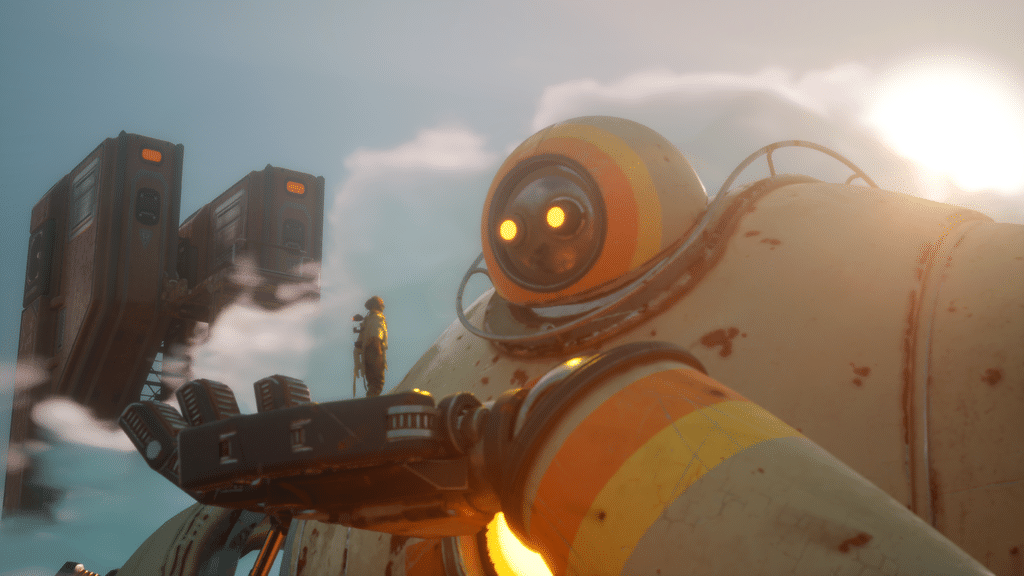
During the Gamescom demo, we got to see the beginning of the game and how this core loop evolves. First, you have to scavenge resources to keep your robotic companion functional. The robot isn’t just a mobile building whose shadow you hide in; you have to actively repair and care for it. When night falls and the robot halts to recharge, the paradigm shifts entirely. The desert heat dissipates, temperatures plummet, and what was actively trying to kill you during the day suddenly becomes your salvation. At night, you need the robot for a completely different reason: you have to stay close to its chassis to keep warm. The day kills you with heat. The night kills you with cold. And in between all that, you have to keep your towering metallic companion alive. It is a highly elegant solution because the game doesn’t need to bog you down with twenty different survival meters to evoke a sense of danger. The sun, the cold, water, limited resources, and a robot that doesn’t exactly wait around for you to finish your errands are more than enough. And on top of all that comes the exploration.
The desert is far from empty. Hidden within the ruins of the old world are resources, scrap, food, water, and items that let you upgrade your gear. During the day, you dart out of the shadows, plunge into ruins, and try to hoard as much as possible before sprinting back. This creates a compelling dilemma: do you retreat now with what you have, or risk just a little more exposure to find something highly valuable? It’s a classic survival trope, but tying it to a moving shadow gives Hello Sunshine a distinctly different flavor. You can’t just pitch a tent anywhere. You can’t hide in a cave and wait for the danger to pass. You can’t build a house in a safe zone and turn it into an impenetrable base. Your base is walking, which means you have to walk with it.
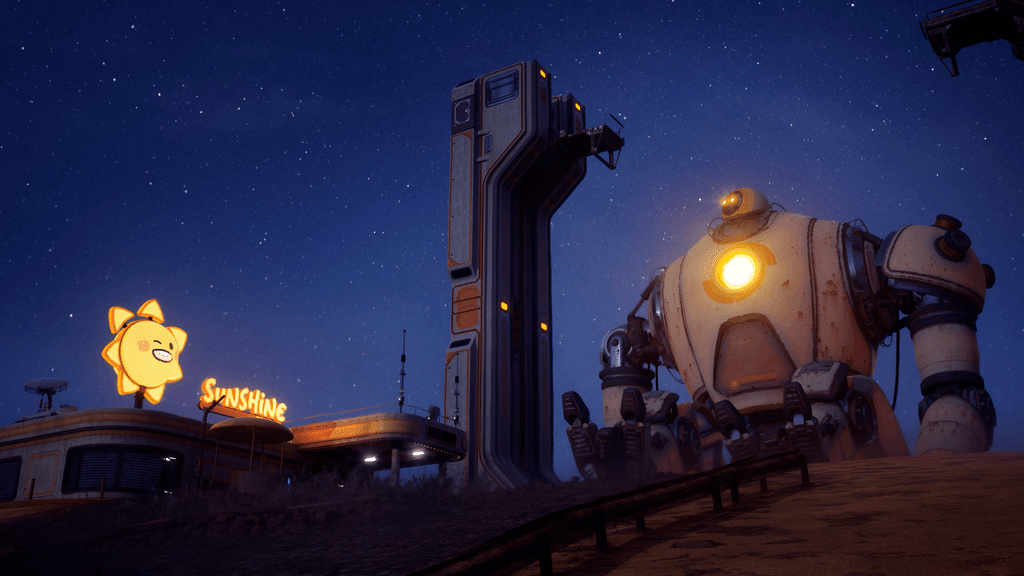
The Gamescom demo also proved that the game doesn’t want to rely solely on hoarding resources. There’s crafting, upgrading, maintenance, and various systems that unlock as you progress. The official pitch mentions crafting new gear, upgrading abilities, and repairing the robot, while the hands-off presentation showed that there will be plenty to occupy your time between daily expeditions. One of the more intriguing systems we saw was cooking. And it’s not just your standard “throw three items in a pot and get soup” mechanic. Visually, the system in the demo was highly reminiscent of the cooking in Breath of the Wild, where you experiment with ingredients to discover which combinations yield useful buffs. A successful dish might grant you a bonus for the following day, like a slower thirst depletion rate. But here, another fascinating choice comes into play. If your cooking attracts desert wanderers, they might ask you to share your food. If you oblige, a portion of your meal’s bonus is reduced, but in return, you might gain valuable lore about the world or tips on what to explore next. According to the concept shown, the full game will also feature the risk of these strangers being hostile, opting to rob you instead. I find this system brilliant because it shows Red Thread Games isn’t just making a game about how long you can stay alive. They want you to make choices. Do you hoard resources for yourself, or share the scraps you have with someone else? Is a piece of intel worth sacrificing a survival buff? Is the stranger you just let into your camp a potential ally, or a thief waiting for an opening?
And this is where Hello Sunshine starts to feel exactly like a game made by the creators of narrative adventures. Red Thread Games has already proven they love building a story through world-building, characters, and choices, so it’s no surprise that the survival mechanics here serve a grander mystery. Who exactly are you? What happened to the world? Why does the giant robot keep walking? What lies at the end of the road? And why are the machines still operating long after human civilization has effectively vanished?
Visually, the game also sports a very distinct identity. The desert landscapes are vast, empty, and somewhat depressing, but that only makes the robot look even more awe-inspiring. When you see a tiny human standing next to a colossal machine trudging through the dunes, the sheer scale of the world becomes a defining visual pillar. An earlier gameplay slice specifically emphasized just how crucial it is to constantly gauge your position relative to the edge of the robot’s shadow.
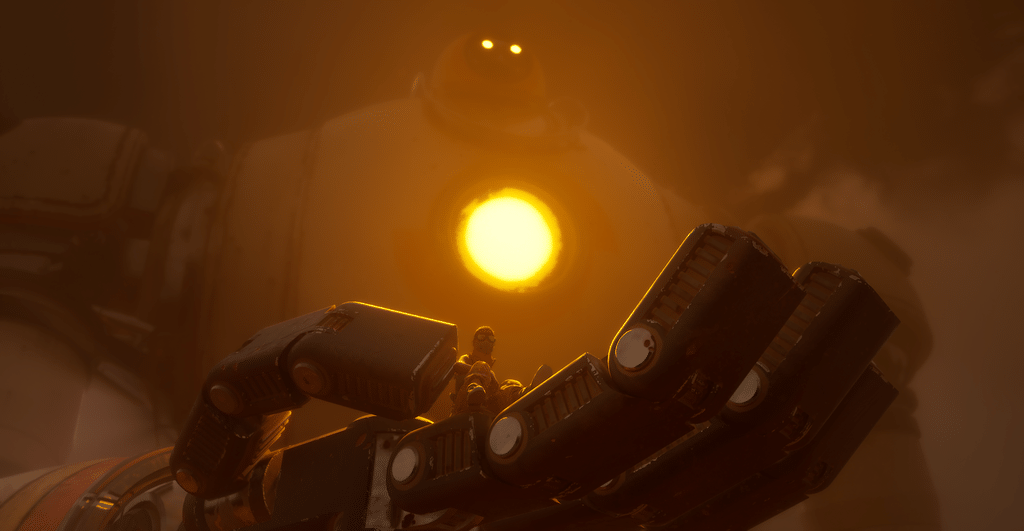
There is something deeply unsettling about realizing the sun is so aggressive that you physically cannot stand out in the open, while a gargantuan machine escorts you through the remnants of civilization. There are no zombie hordes ambushing you every thirty seconds. The very nature of the world is the threat. Of course, that could also be the game’s biggest risk. The survival genre can easily fall into a monotonous rut. If it all ultimately boils down to “scavenge, run back to the robot, craft, repeat,” the initial hook won’t be enough to carry the game. Therefore, Hello Sunshine must consistently introduce new scenarios, mysteries, characters, and hazards that actively change how you interact with its core loop.
What I saw at Gamescom looks extremely promising, but Hello Sunshine is clearly keeping a lot of its cards close to its chest. And with a Red Thread Games title, the narrative might just be the deciding factor between simply enjoying the survival mechanics or genuinely yearning to discover what waits at the end of that road.
We still don’t even have a concrete release date. Steam currently lists it as “Coming soon,” though it is confirmed to hit PC first. Red Thread Games also confirmed that it is a PC title designed for one or two players, with other platforms potentially coming down the line.
