
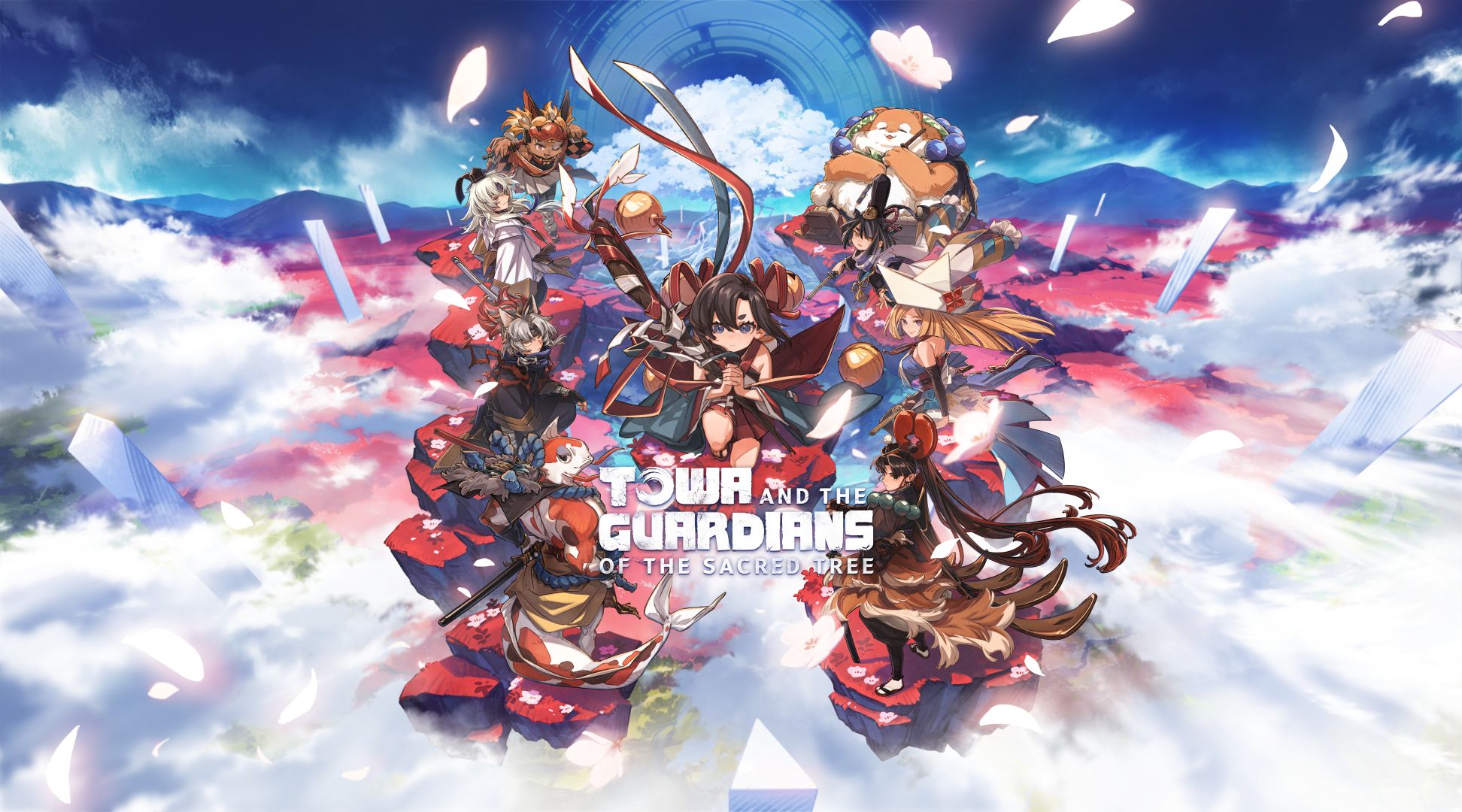

Some games just grab your attention the moment you see them, even if it’s just a short trailer or a name on a showcase list. For me, Towa and The Guardians of the Sacred Tree was exactly that when it popped up at Summer Game Fest this year. The mix of vibrant anime visuals, Japanese folklore-inspired mythology, and the promise of something fresh in the roguelite genre was enough to land it straight on my “must play” list. Turns out, my instincts weren’t wrong.
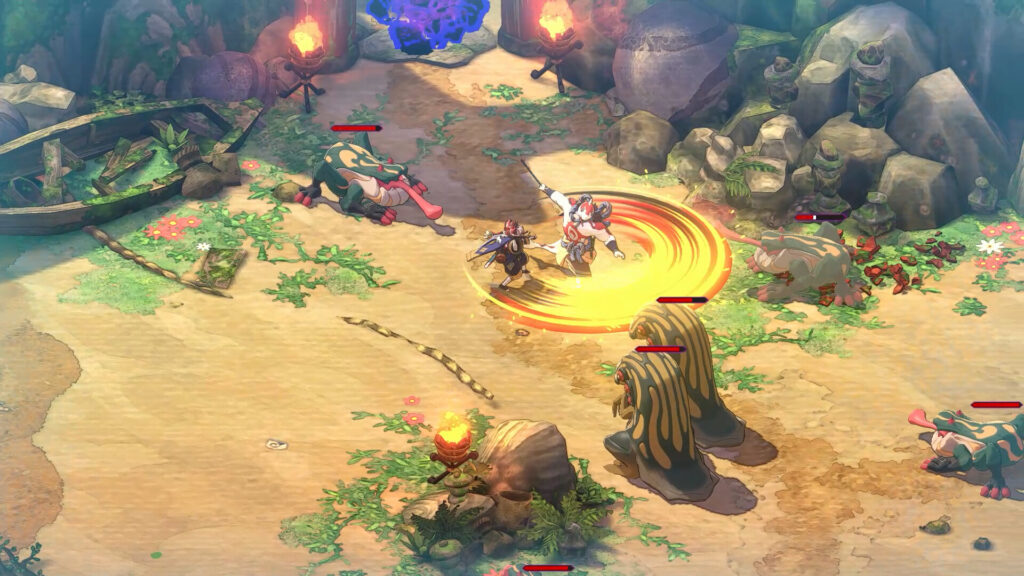
Developed by Brownies Inc. and published by Bandai Namco, the game already signals a mix of creative vision and serious production value. But the real question is: can Towa stand out in a space dominated by roguelite giants like Hades or Dead Cells? After spending dozens of hours with it, I can safely say that not only does it stand out—it does so in its own original way.
At its core, the story is straightforward, but it’s presented with style. In a world woven with myth and symbolism, an ancient evil named Magatsu threatens to corrupt everything. A young priestess, Towa, is chosen as the guardian of the Sacred Tree Shinju, tasked with purging the world of corruption and ultimately facing Magatsu himself. She’s not alone—eight companions join her journey. The narrative unfolds through striking illustrations inspired by traditional Japanese art, voiced narration, and in-game animated sequences. It’s not overly complex, but the atmosphere is strong enough to pull you in almost immediately.

The gameplay loop splits neatly into two halves: downtime in the city hub and action-packed missions. In town, you control Towa, chat with NPCs, and prepare for your next run. There’s a dojo master, a blacksmith, shrines, merchants—even a fishing pond if you just want a breather. Conversations and interactions make the hub feel alive, like a proper community rather than just a menu disguised as a village.
Everything you gather during missions comes back with you. Resources can be invested into upgrading companions at the dojo or forging weapons at the blacksmith. The forging system was a pleasant surprise—it’s much deeper than a simple “click to craft.” You need rare ores, careful timing, and decisions: do you go for a devastating but fragile blade, or a sturdier one that won’t hit as hard but will last much longer? Small details like this add meaningful depth.

The biggest twist, though, is that you don’t actually fight as Towa. Before each mission, you pick two companions: one steps into the role of Tsuguri (a swordfighter), while the other becomes a Kagura (a magical support). Each of the eight companions comes with unique animations, abilities, and combat styles, and mixing them up opens huge room for experimentation.
Both companions are active in battle. Kagura generally follows smartly on their own, but you can take direct control if you want precision or better targeting. The AI does its job well, rarely making mistakes, which is a relief in a game this demanding.
Combat itself is layered. You wield two blades—Honzashi and Wakizashi. When one dulls, you seamlessly switch to the other, unlocking new attacks and combos. Each companion handles them differently. Rekka, for example, slashes fast and aggressively with Honzashi but uses Wakizashi for powerful charged blows. Nishiki prefers slower, heavy strikes that hit like a truck. On top of that, every companion builds toward devastating special moves that can wipe groups of enemies at once.

Meanwhile, your Kagura brings magic into the mix—ranging from energy orbs to lightning strikes and wide-area spells. As you progress down their talent trees, new variants and combinations open up. The early hours of combat feel chaotic—you’re juggling sword swaps, specials, magic, dodges, and enemy patterns all at once. But when it clicks, it transforms into an exhilarating, almost dance-like rhythm that feels incredibly rewarding.
Missions take you through varied regions filled with enemies, boss arenas, survival challenges, and specific objectives. There are quieter moments too—merchant encounters or small dialogue exchanges between companions that flesh out their personalities. This dynamic gives Towa the same kind of charm you might associate with Hades, not just in style but in the strength of its writing and performances.
Then the game throws in an unexpected mechanic—companion sacrifice. After you defeat a boss, your companions perform a ritual to channel its mana into the Sacred Tree. In doing so, one of them sacrifices themselves and is removed for the rest of that run. The first time it happened, I was stunned—especially because I had just heavily invested in Nishiki, only for Rekka to sacrifice him unexpectedly. It’s a gut-punch moment that forces you to rethink how you build and value your teams.

Thankfully, progress carries over between runs, so upgrades aren’t lost forever. But this system pushes you to constantly rotate companions, try new builds, and form different attachments. Like Supergiant’s Pyre, the act of sacrifice adds a layer of emotional weight that makes Towa stand apart from its peers.
At first, the sheer number of systems can feel overwhelming. But as the hours pass, the layers start to click into place. I expected “anime Hades,” but what I got was something far more distinct—an experience that borrows from the familiar while confidently standing on its own. The story might move at a slower pace, but the mechanics keep you engaged, and the companions grow into characters you genuinely care about.
That’s why I found myself playing Towa not just on the big screen, but also during trips and casual sessions on the couch. It’s a perfect fit for the Steam Deck.
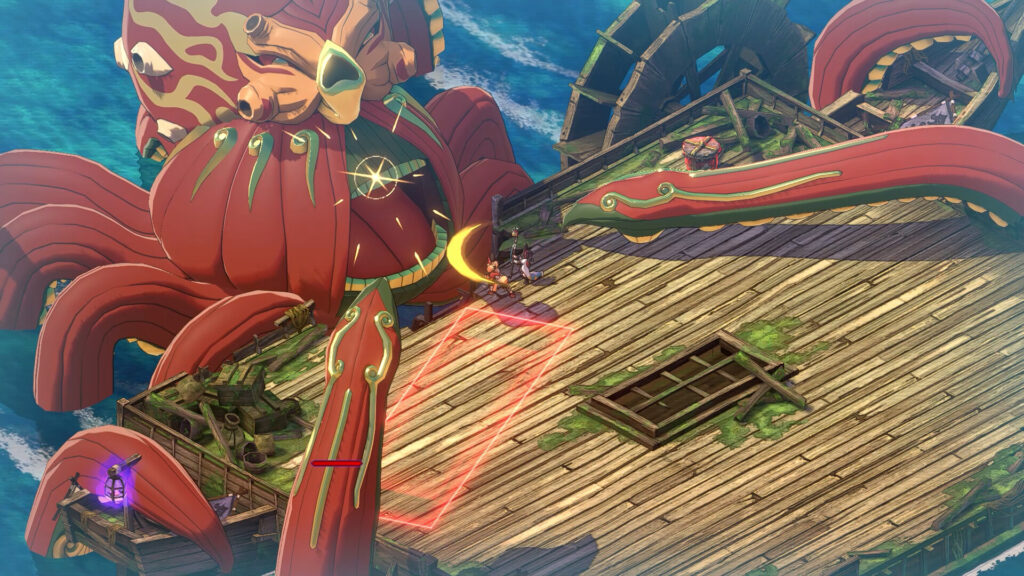
Launching on September 19 for Steam, PlayStation, Xbox, and Nintendo Switch, it’s a game well worth the attention of any roguelite fan.
We would like to thank CD Media Greece for providing us with a copy of the game for review purposes.
Towa and The Guardians of the Sacred Tree (PC)
In the end, Towa and The Guardians of the Sacred Tree isn’t afraid to experiment. Its colorful visuals and enchanting atmosphere pull you in, but it’s the inventive combat systems, emotional bonds with characters, and addictive roguelite loop that make it stick.
