
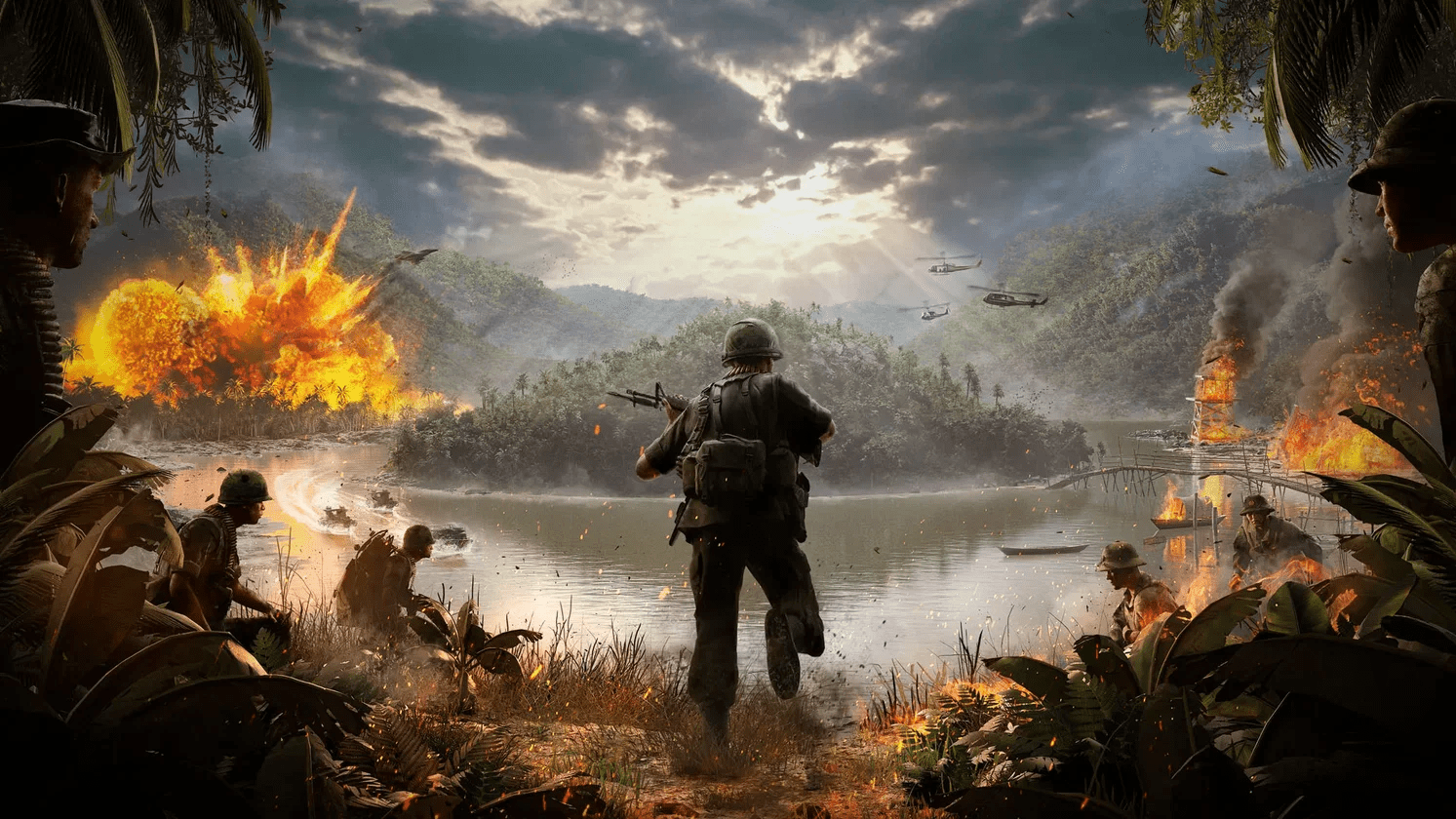

The history and evolution of simulation shooters are intrinsically tied to personal computers. Over the decades, home consoles have been primarily shaped around accessibility, arcade-style gameplay, and controller-friendly mechanics. In contrast, the complexity and possibilities offered by a mouse and keyboard created a natural habitat for shooters leaning toward uncompromising military realism, where war isn’t experienced as a fast-paced spectacle, but as a cold, slower, and more methodical process. Unlike modern arena shooters that rely on individual reflex speed, tactical military simulations have fostered a culture where verbal communication and planning are just as critical as the rifle in your hands. This breed of shooter rejects the philosophy of instant gratification in favor of deep immersion, cooperation, and collective triumph over the “Rambo” lone-wolf mentality. Hell Let Loose: Vietnam falls squarely into this category.
From European Trenches to the Vietnamese Jungle
Hell Let Loose: Vietnam is the sequel to the highly popular and beloved original game, which took place across various fronts of World War II. At the time of its release, the first game offered a perfect balance between harsh simulation realism (where I’d place Arma and similar titles) and the accessible, team-oriented pacing of franchises like Battlefield. Hell Let Loose is defined by massive 50v50 team battles where every bullet is incredibly lethal, and the frontline is always precisely defined. Supply chains, garrison placements, and chain-of-command coordination dictate the outcome of battles across beautiful open European plains and war-torn cities.
Hell Let Loose: Vietnam serves as an organic sequel and evolution of that first release. The core philosophy and the sheer feel of the game remain practically identical. All the previously mentioned elements, communication, garrisons, teamwork, and the shifting frontline, are still very much present. The tug-of-war game mode remains the one that makes the most sense, with the most obvious visual shift being the European landscapes swapped out for the lush greenery of Vietnam. I have to admit, I was highly skeptical about whether this type of environment could offer enough variety, given the sheer overabundance of green and tropical jungle that always comes to mind when I think of Vietnam. However, the game pleasantly surprised me with a smart blend of vegetation and various structures scattered across the terrain, just enough to break any potential monotony.
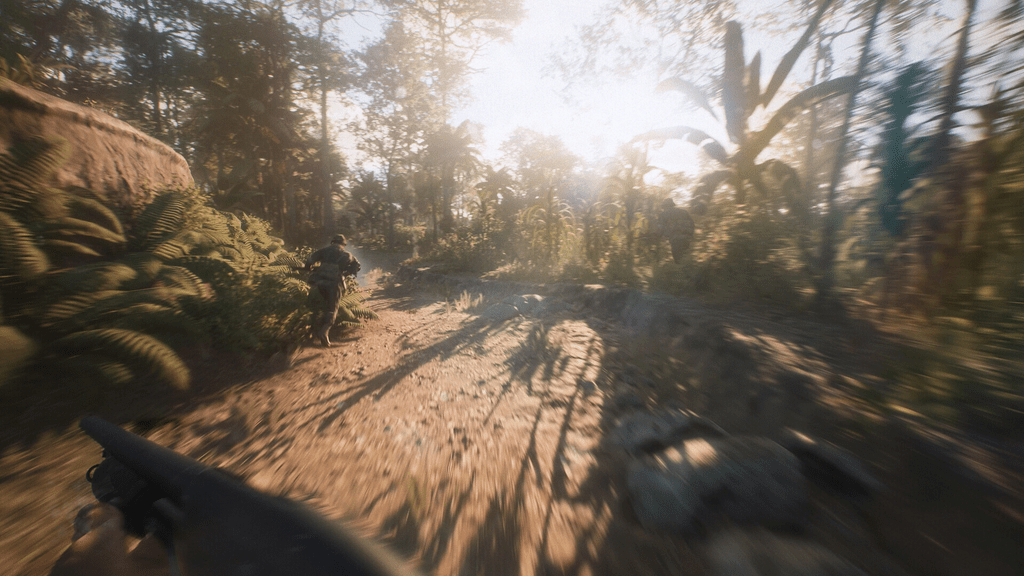
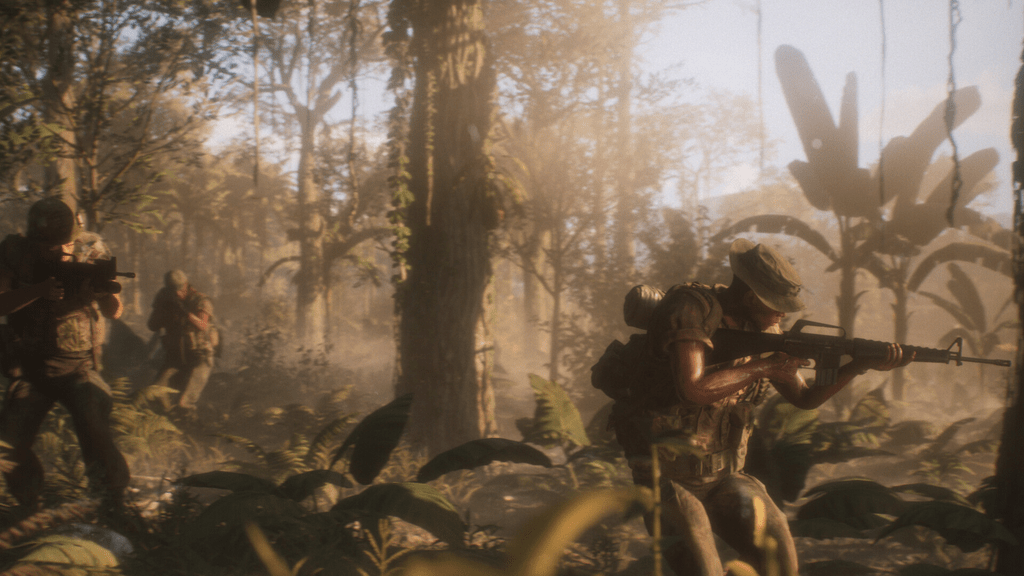
What this environment immediately brings to the table is significantly higher tension. Visibility is much lower. Nature, particularly the dense tropical vegetation, provides far better camouflage for enemies, meaning I frequently found myself suddenly face-to-face with an opposing soldier. While this happened in the first game too, these close encounters are far more frequent here.
What really stands out compared to the original is, of course, the presence of more modern automatic weaponry. While automatics existed before, not every class had access to them, and those who did had to wrestle with heavy recoil. The approach here is completely different. Assault rifles like the M16 and AK-47 are standard issue for both factions, and controlling them is significantly easier, ultimately resulting in even deadlier firefights than in the first game. In the original Hell Let Loose, a single round was usually enough to drop you, but here, facing the power of a full burst, you simply stand no chance. This widespread access to automatic weapons somewhat dilutes the distinct classes available in the game. Positioning and map movement are more crucial than ever before. Sometimes it feels less about shooting efficiently and more about finding a superior position to ambush the enemy. Ambushes carry more weight now, and a slow, methodical approach to both offense and defense is absolutely vital.
An Asymmetrical Front
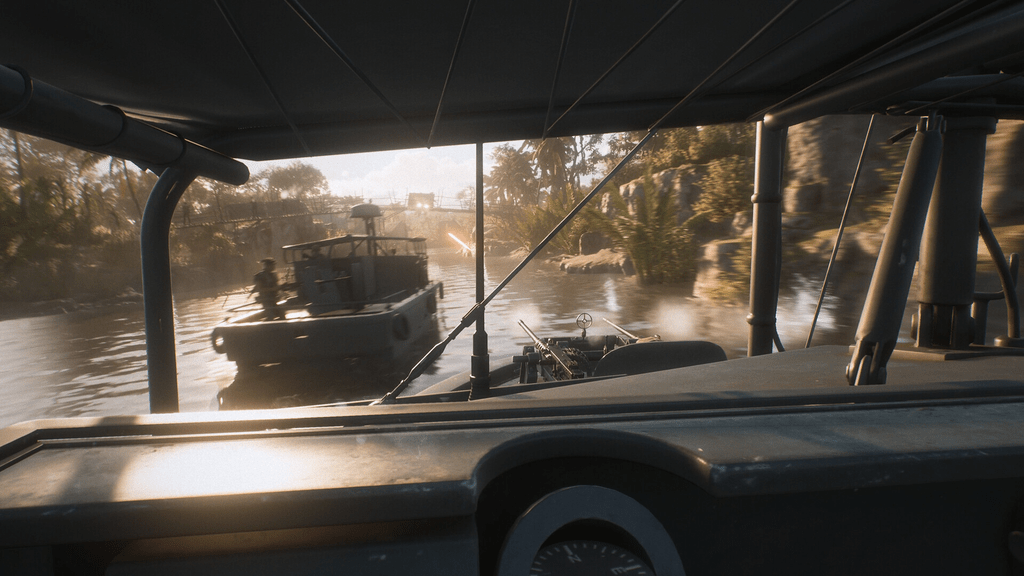
The game features two factions: the US Forces and the North Vietnamese Army (NVA). They are distinctly asymmetrical. When playing as the Americans, you rely on sheer firepower, patrol boats, and above all, the air superiority provided by the legendary Huey helicopters. Thwump, thwump, thwump, thwump… we all know the iconic sound of this metal bird’s rotors, if not from games, then from cult-classic films and series. Hearing that rotor chop as it flies low over the jungle canopy under enemy fire delivers that authentic Hollywood Vietnam War stamp. The pilot’s role is incredibly important, demanding surgically precise coordination with squads on the ground. In the first game, you didn’t have the luxury of an aircraft transporting you directly to the frontline; as a result, the time from respawn to direct combat is noticeably shorter here, getting you into the thick of the action much faster.
Conversely, when playing as the NVA, you have to compensate for your lack of air power with camouflage and a quiet, stealthy approach. Your main advantages lie in the ability to remain unseen, utilizing booby traps, and above all, building tunnel networks. Tunnels function as dynamic, hidden respawn points that, in the right hands, can completely flip the frontline through sudden flanking maneuvers.
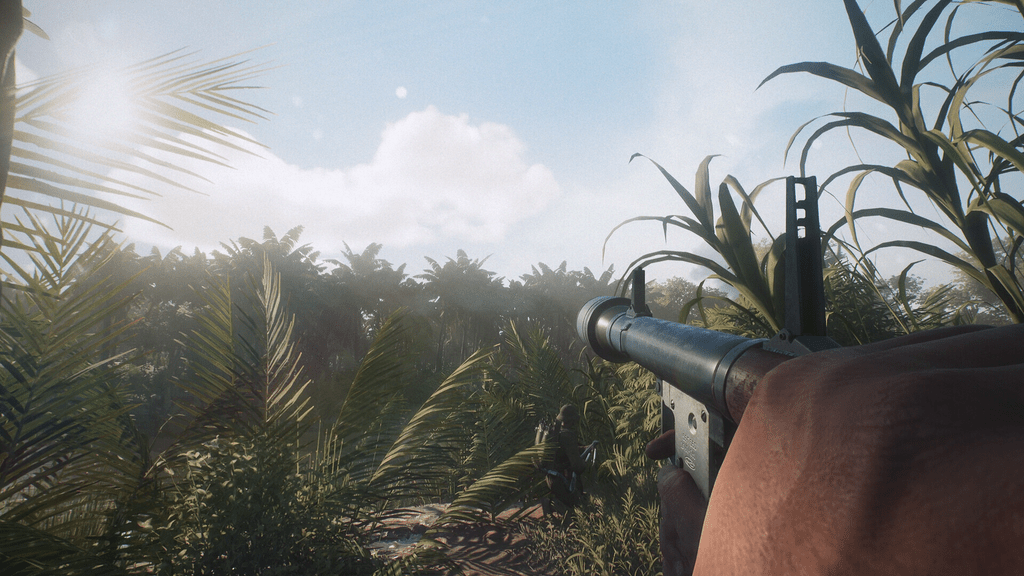
The movement mechanics have also been modernized. New features include swimming, fast-crawling through dense vegetation, and dragging wounded comrades to cover, a mechanic that has become a genre standard in recent years (largely thanks to the Battlefield series). This drag mechanic makes playing as a Medic significantly more interesting and dynamic. The various playable classes include:
- Command: Commander
- Infantry: Squad Leader, Rifleman, Assault, Engineer, Medic, Specialist, Machine Gunner
- Recon: Spotter, Sniper
- Armor: Tank Commander, Crewman
- Helicopter Unit (US Forces only): Logistics Officer, Pilot
- Mortar Squad: Spotter/Fire Director, Support, Gunner
Unfortunately, as I mentioned earlier, once you’re actually out on the field, since nearly everyone is packing an automatic weapon, these distinct roles end up feeling quite diluted.
UE5 Presentation
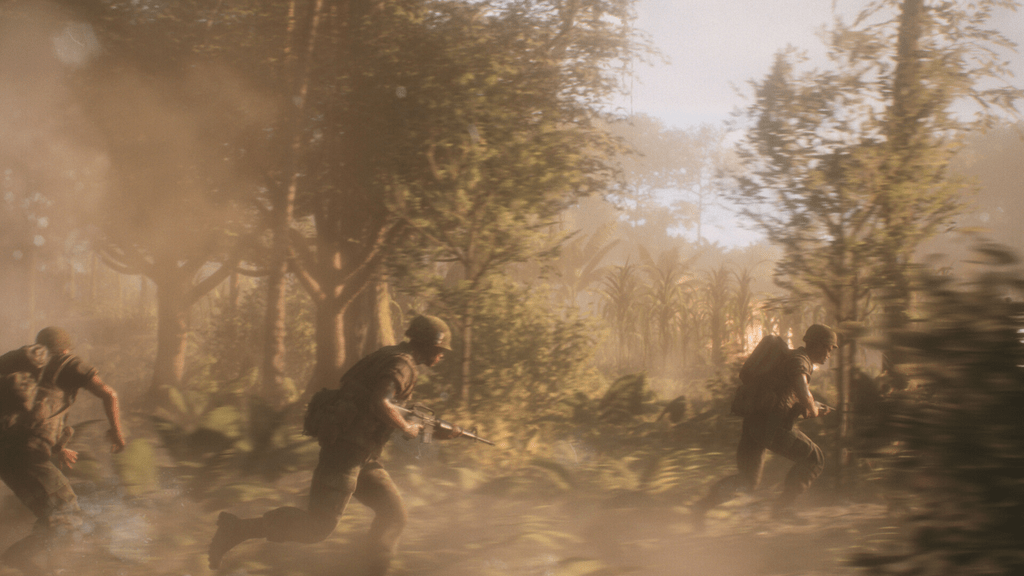
The audiovisual presentation powered by Unreal Engine 5 is top-tier. The density of the jungle and the volumetric lighting look fantastic, though for now, unfortunately, they come at the cost of poor, or at best, mediocre, performance on the PC platform. Visibility is, as previously noted, intentionally limited; this is a conscious design choice that reflects the reality of warfare in this terrain. Often, the only thing giving an enemy away is the brief muzzle flash peeking through thick leaves or bushes. The weapon audio for the AK-47 and M16 is loud, raw, and sounds phenomenal. All the other audio details elevate the tension: the rumble of heavy artillery, bullets whizzing through the foliage, the screams of comrades, and the indispensable radio and VoIP communication within the team make the entire experience incredibly convincing.
The game is currently receiving regular patches, and admittedly, the developers at Expression Games still have a lot of work to do to bring the performance up to a satisfactory level. Framerate drops and stuttering are still present, meaning your experience will vary wildly depending on your hardware configuration.
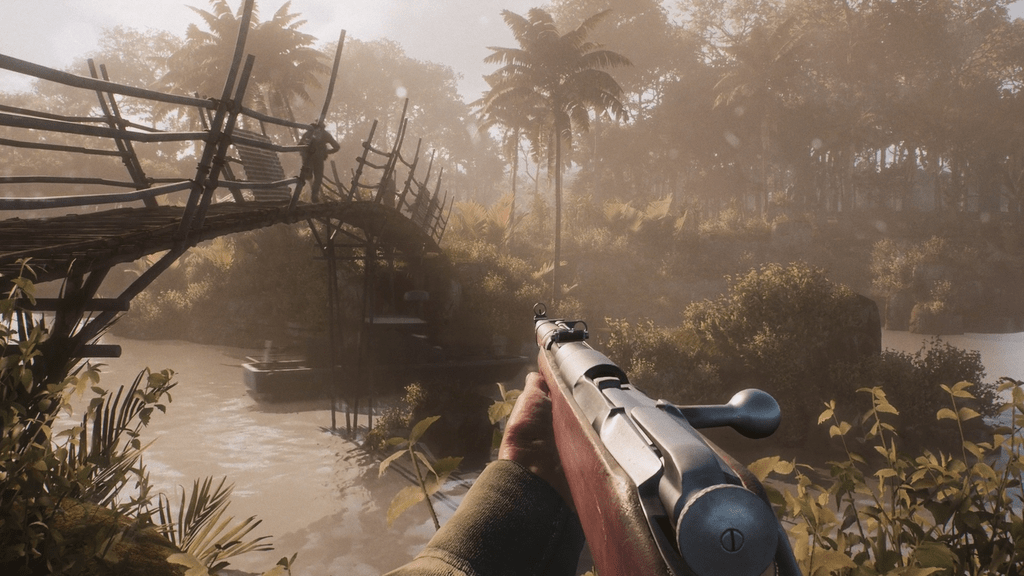
Hell Let Loose: Vietnam is a very solid sequel to a cult-classic original. Even though I still feel the Vietnam setting might not be the absolute perfect fit for a 50v50 tactical multiplayer shooter due to the natural visibility constraints, the developer did a better job than I expected, pleasantly surprising me with a level of variety I couldn’t have imagined for this terrain.
The overall experience is a faithful audiovisual spectacle, exactly what you’d expect from this title, and at its core, this is undoubtedly a full-blooded Hell Let Loose game. There are no radical departures in mechanics; the franchise DNA is instantly recognizable. If you are a fan of the original, the only things that might currently sour your experience are the unstable performance and a few minor balancing issues, though these are flaws that can be ironed out over time.
We would like to thank Team17 for providing us with a copy of the game for review purposes.
Hell Let Loose Vietnam (PC)
I don't know if Hell Let Loose: Vietnam will achieve the cult status of its predecessor, but all the prerequisites are there. The community will ultimately deliver its final verdict, and we will see how the game is embraced after a somewhat rough initial launch. At the end of the day, a healthy player base and an engaged community are what dictate the longevity of titles like this. The potential is absolutely there, and I believe it will find its loyal audience. Most importantly, this is an uncompromising Hell Let Loose experience regardless of the change in scenery, and that is a fantastic starting point.
