

Elden Ring was never really my cup of tea. Or rather, no FromSoftware souls-like game was, even though they basically invented the subgenre. It never clicked with me, it was either too slow, or I simply lacked the most essential trait required for this type of game: patience. However, when we got the offer to review the Switch 2 version, I couldn’t pass it up. I knew that if I didn’t buckle down and beat the game now, I never would. There were no more excuses left not to fully play through this now-cult classic. So, about ten days ago, I stepped into Elden Ring: Tarnished Edition, the Switch 2 version that bundles the base game with the Shadow of the Erdtree expansion, and started my agonizing adventure all over again from the beginning. And I have to say, my impression of this title completely flipped right from the start, for the better, of course, not the worse. Because only now did I begin to appreciate the freedom Elden Ring gives you. Only now did I begin to appreciate that sense of adventure, of getting lost in this fantastic world, exploring, and simply losing track of the hours in the real world around you.
The biggest thing about Elden Ring is that it gives you freedom almost from the very beginning, yet it never forces you to use it in a specific way. You step out of the starting area, gaze upon Limgrave, and you can practically go wherever you want. Sure, there are paths that feel more natural and areas the game will indirectly recommend, but no one stops you from wandering off in a completely different direction. You can follow the main story, head out to explore, discover a cave, end up in the underground world, stumble upon a brand-new boss, or simply ride off into an area you are completely unprepared for.
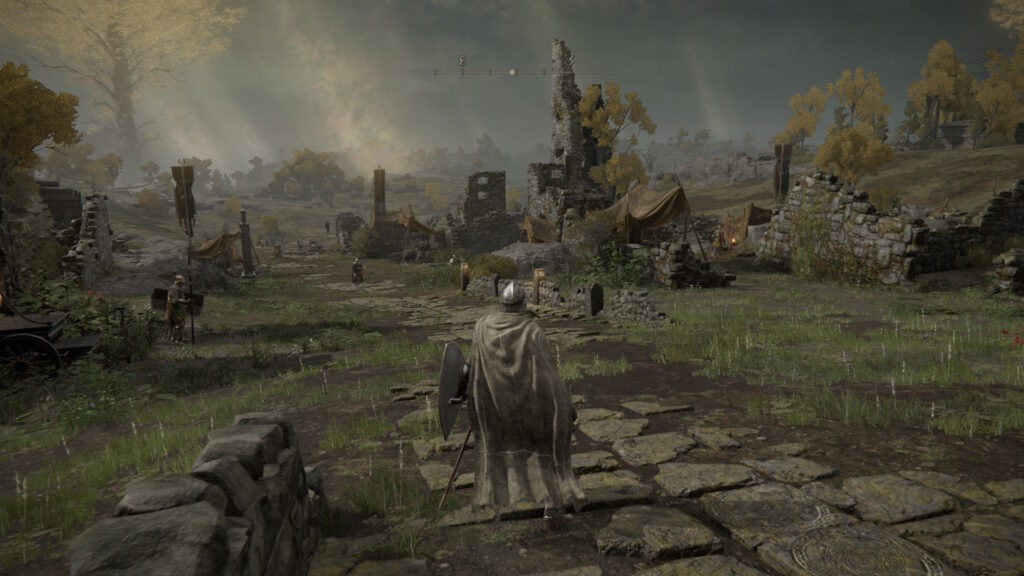
And that is perhaps the biggest difference between Elden Ring and many other open-world games. The Lands Between wasn’t designed as a massive space that constantly bombards you with icons and activities. The game very rarely tells you that something is important. Instead, it expects you to spot something in the distance and decide to go there yourself. See a ruin? Maybe there’s a merchant inside. Maybe it’s a hidden cave. Maybe you’ll find an underground elevator that takes you miles beneath the surface. Or maybe you’ll just find a few enemies and an item you have absolutely no use for at the moment.
And that is what Elden Ring does better than almost any other game. It doesn’t reduce every exploration effort to a guaranteed reward. Sometimes you will head in the completely wrong direction. Sometimes you will lose a ton of runes. Sometimes you will kill an enemy and get an item that has zero value for your current build. But exactly because of that, the moment you find something genuinely important carries so much more weight. There is no feeling that the game is tossing you a new reward every few minutes just to keep you interested. You have to find it yourself.
Because of this, multiple times during my playthrough, I kept coming back to the exact same feeling I had when Elden Ring first came out: you head somewhere without a specific plan and end up somewhere else entirely. You want to find a specific location, but along the way, you spot a castle. You go inside. After a few fights, you find a tunnel. The tunnel leads you to a completely different region. Then you spot a massive elevator going even deeper. A few hours later, you realize you’ve completely forgotten why you set out on that journey in the first place. Moments like these are the reason Elden Ring still works so incredibly well today.
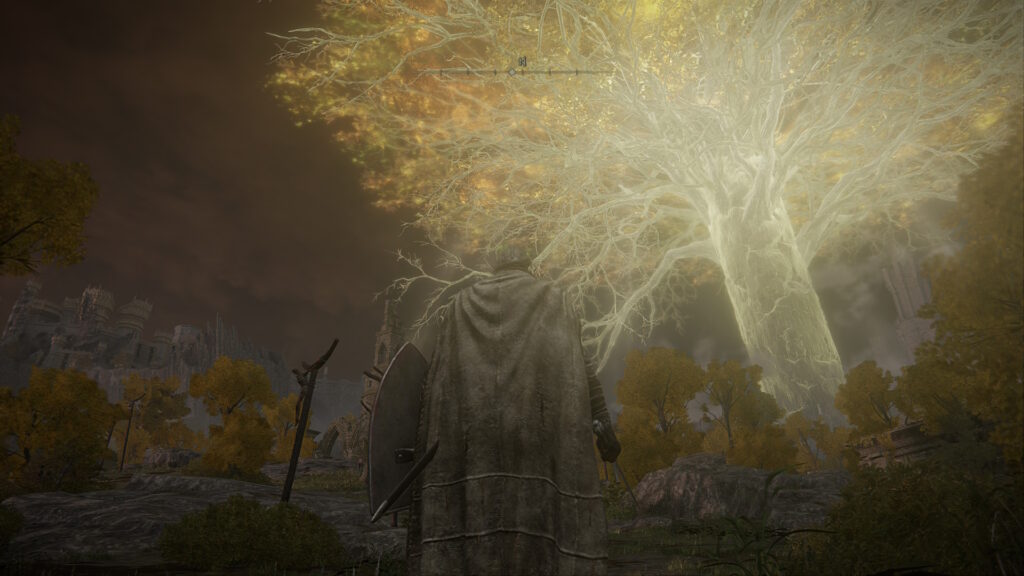
If you’ve played Dark Souls, Bloodborne, or Sekiro, the core principle will be familiar to you. You attack, block, dodge, manage your stamina, and try to learn the enemy’s attack patterns. However, Elden Ring grants far more freedom than the studio’s previous games. You can play with a colossal sword, fast twin blades, a spear, a hammer, a bow, magic, the incantation system, or practically build a combination of all of them. And here lies one of the game’s greatest strengths: I believe every player can find their own playstyle, even me. If you want a classic melee build, you can make one. If you want to keep your distance and use magic, that’s possible too. If you want to be fast and constantly dodge attacks, you can craft a Dexterity build. If you want a massive weapon that chunks off huge portions of health with every swing, the game gives you that option. And if you want to mix multiple styles, Elden Ring basically tells you to feel free to experiment.
Ashes of War further expands this combat system. Instead of every weapon being locked to one specific special ability, you can swap out certain skills and tweak how your arsenal behaves. This means finding a new weapon isn’t just a matter of checking its base damage. Its form, speed, reach, or synergy with a specific Ash of War move might completely change your build. Then you have Spirit Ashes, one of the most important additions Elden Ring brought to the Souls formula. You can summon various spirits to aid you during certain fights. Some are practically extra fighters, some use magic, some serve mostly as distractions, and certain summons can become so useful they completely turn the tide of specific boss battles. It is exactly here that you see how much more accessible Elden Ring is compared to previous FromSoftware games, without losing its signature difficulty. If a boss is too hard, you don’t have to just sit in front of the fog gate and retry the same fight twenty times. You can go somewhere else. You can find a better weapon. You can upgrade your Spirit Ash. You can change your build. You can summon another player. You can even just give up on the fight and return much later. That is a freedom Elden Ring utilizes in an exceptionally smart way.
The difficulty is still… well, it’s hard. You will be disappointed if you think the game will become a breeze just because you have more options. Bosses can kill you in seconds, regular enemies can catch you off guard, and a single miscalculation during a fight can mean losing a massive amount of runes. However, now there is almost always an alternative. And precisely because of that, Elden Ring rarely feels like a brick wall.
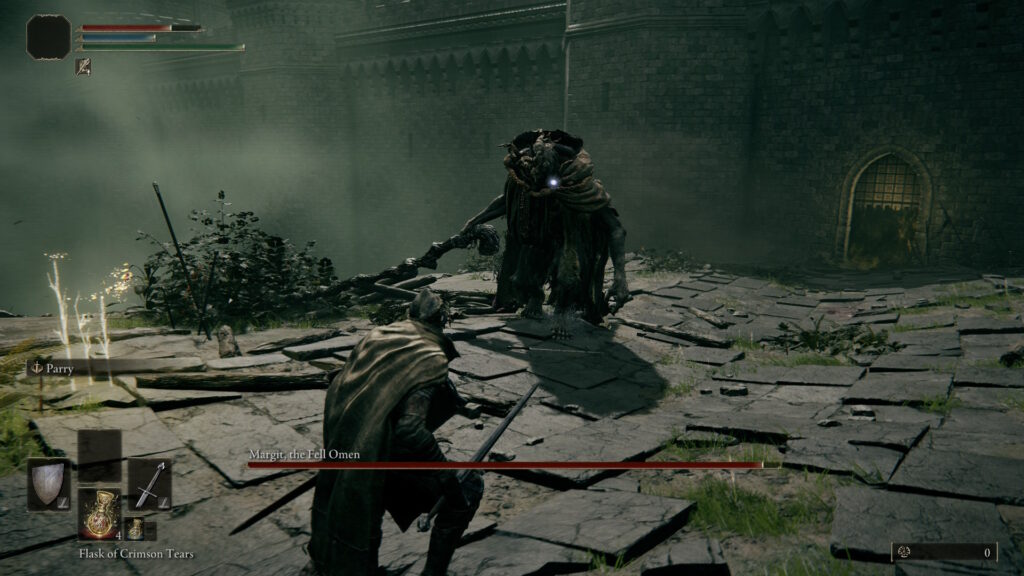
Maybe you can’t beat Margit. That’s okay. Because I couldn’t beat him on my first try either, on any platform. Head in a different direction, explore a bit, level up, find materials to upgrade your weapon, and then try again. This approach might sound simple, but it fundamentally changed how FromSoftware can design a challenge. Instead of there being only one path forward, the game constantly offers different options. You still have to learn the combat, but you don’t always have to solve it the exact same way.
Bosses, of course, remain one of the main reasons people play Elden Ring. From the first major encounters to the late-game fights, FromSoftware has crafted some of the most impressive boss battles and designs we’ve seen in modern gaming. When you first lay eyes on a colossal opponent and the music kicks in, the feeling is still fantastic. The best bosses are the ones that force you to become a better player. You die a few times, start noticing the patterns, figure out when you can attack and when you need to back off. Then, you slowly inch closer to victory. When you finally succeed, that feeling is something very few games can replicate. The best part of the whole adventure is that you never know what awaits you around the next corner. One moment you’re fighting a relatively standard group of soldiers. The next, you end up facing a massive dragon. After that, you find an underground city so vast you start wondering how you managed to miss the entire area in the first place. The game is packed with moments like that.
The Lands Between functions like one giant, sadistic puzzle. The surface world is only one part of it. Beneath it lie entire underground regions, caves, catacombs, and secret locations. Sometimes you will find a small passageway leading into a space larger than several complete maps from other games. This is one of the reasons Elden Ring left such a massive impression on critics, exploration isn’t just side content between main missions; it is the very foundation of the experience.
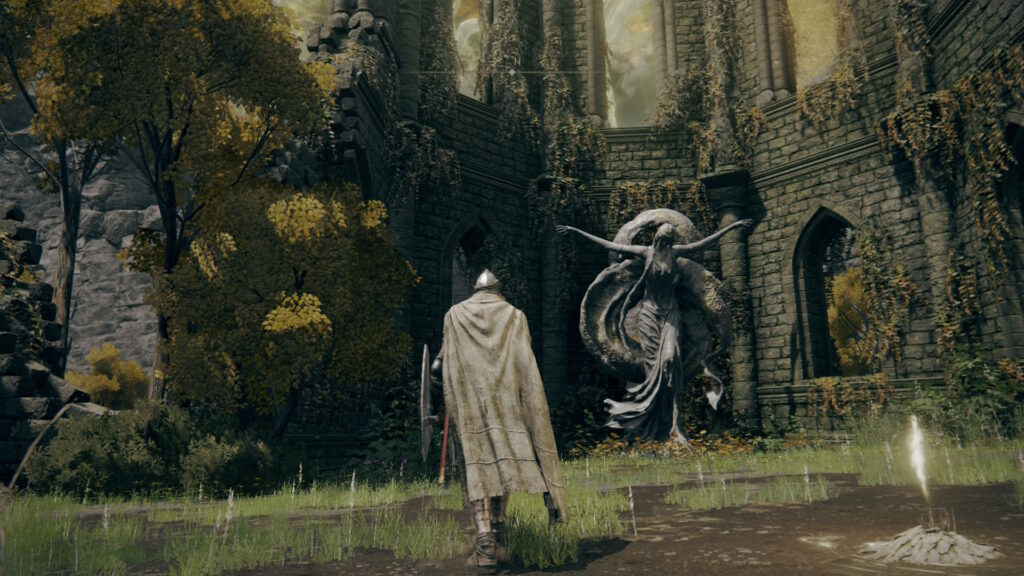
The story, as with most FromSoftware games, is a completely different beast. If you’re expecting a classic RPG narrative with a clear protagonist, lots of long cutscenes, and meticulously explained events, Elden Ringis not that. You are the Tarnished, a warrior returning to The Lands Between after the Elden Ring was shattered, leaving the world divided among powerful demigods. Your goal is to find the Great Runes, defeat the key rulers of the world, and ultimately decide the fate of the Lands Between. But that’s just the surface. The true story of Elden Ring is found in dialogues, item descriptions, locations, and details you could entirely miss. George R. R. Martin built the foundation of the world’s mythology and history, while FromSoftware turned it all into their famously fragmented style of storytelling. You won’t get the whole story handed to you at once. You’ll have to piece things together yourself. That won’t appeal to everyone. Even after finishing the game, it’s highly likely you’ll be left with many questions. But it’s exactly this approach that gives the world its distinct atmosphere. It feels like you’ve stepped into a story that began long before you arrived and will continue regardless of how much of it you understand.
The characters are also a perfect example of this. You meet them at different moments, help them or ignore them completely, and their stories often unfold through questlines that are incredibly easy to miss. Some NPC quests are so obscure it’s hard to imagine the average player finishing them without a guide. This is one of the rare moments when FromSoftware’s philosophy can become unnecessarily frustrating. But then again, when you manage to connect a few clues yourself and find the next step of a story, the feeling is fantastic.
Shadow of the Erdtree further expands on all of this and is much more than just a standard DLC. The Land of Shadow is a new area that is simultaneously massive and somehow much more densely designed than the bulk of the base game. Instead of just creating another large expanse, FromSoftware heavily emphasized the verticality and interconnectedness of the world here. A location you see in the distance might not be accessible via a direct route. You have to find a cave, scale down a cliff, navigate through ruins, or discover a completely hidden passage. And this is exactly where the DLC proves just how much FromSoftware learned from the base game.
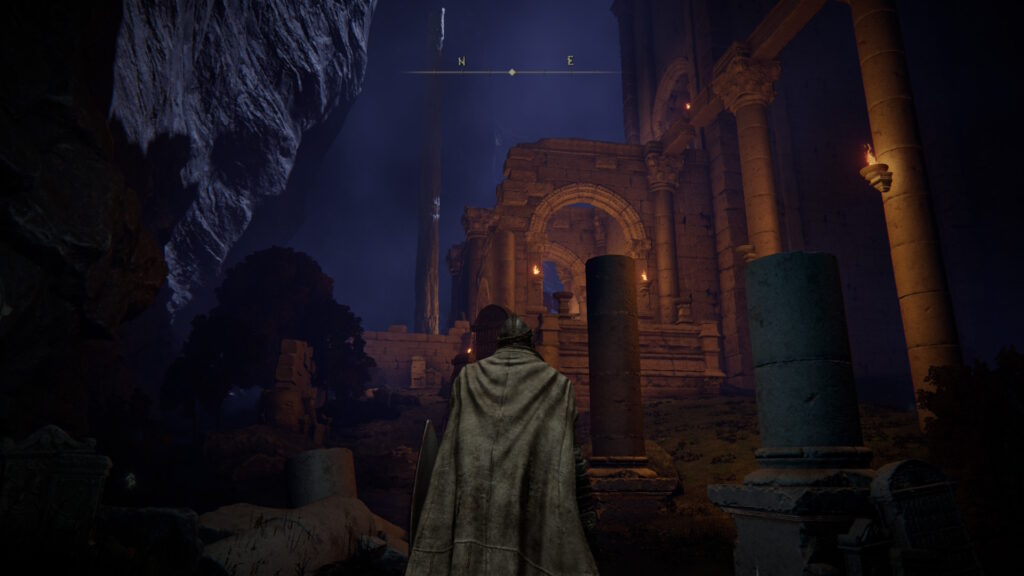
The Land of Shadow feels less like you’re just traversing vast distances between points of interest. You will much more frequently end up in a spot where one discovery leads directly to another. You walk down some stairs, pass through a tunnel, and suddenly find yourself in a totally new region. You set out to explore a small chunk of the map, and a few minutes later, you realize you’ve found the path to a massive new location. It captures that same sense of discovery Elden Ring had from the start, only concentrated into a noticeably smaller footprint. And of course, the DLC is even harder than the original base game. Even though you can enter with a character who is already incredibly strong, Shadow of the Erdtree introduces its own progression system via Scadutree Fragments and Revered Spirit Ashes. The former boosts your attack power and damage negation, while the latter upgrades Torrent and your Spirit Ash summons within the Land of Shadow. Because of this, your character level and the number of runes you’ve hoarded aren’t enough to completely trivialize the challenge.
This is one of the best decisions FromSoftware could have made. Had the DLC simply bumped up enemy scaling, over-leveled players would have breezed through it without any real sense of danger. Had everything simply become brutally strong, newcomers might have been utterly crushed. This way, the progression system brings the focus right back to exploration. Want to get stronger? You have to explore. However, this system does have one flaw. Scadutree Fragments are so crucial that the game can sometimes feel unfair if you haven’t found enough of them. If you rush straight to a specific boss without serious exploration, the difficulty spike can be monumental. It’s completely in line with the game’s philosophy, but it isn’t always ideally explained.
On top of all that, there are new weapon types, martial arts techniques, various types of magic, and additional options that can completely overhaul your build. The most interesting part is that Shadow of the Erdtreedoesn’t just try to add a few more swords with higher damage numbers. Many of the new weapons genuinely change the feel of combat. Hand-to-hand styles, new movesets, and unusual combinations further demonstrate just how much room Elden Ring still has for experimentation. Meanwhile, the bosses in the DLC are even harder than the DLC itself is harder than the base game, if you get what I mean. They are faster, more aggressive, and often have much longer combo strings. Some encounters feel like FromSoftware wants to test absolutely everything you learned during the base game. Reactions from other reviewers were highly positive precisely regarding these major fights, although there were also criticisms that certain bosses cross the line from challenging to frustrating.
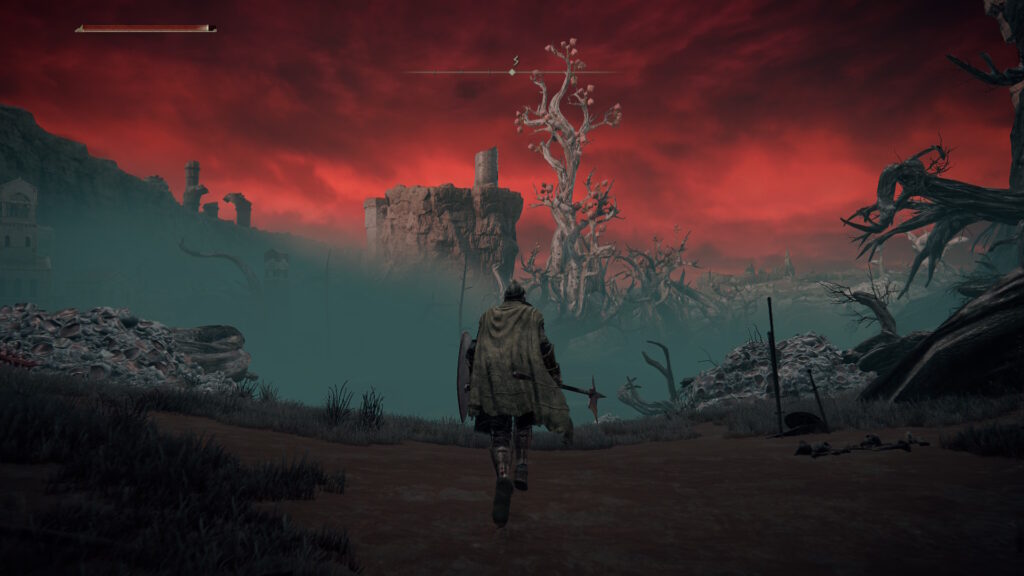
I would say this is where you can most clearly see who Elden Ring is for. Because if you found the base game too difficult, Shadow of the Erdtree will likely crush you completely. This is not a DLC designed to be a gentle victory lap to end the adventure. It expects you to utilize every system the game has. Spirit Ashes, diverse builds, upgrades, and Scadutree Blessings. If you try to brute force every fight the exact same way you played 100 hours ago, you’ll very quickly realize you might not be flexible enough anymore. But once you accept all of that, the DLC becomes an incredible experience. The Land of Shadow features some of the best locations FromSoftware has ever created. Massive legacy dungeons, ruins, dark forests, mountain passes, and areas that completely shift the game’s atmosphere. The best part is that the DLC manages to recreate that feeling of not knowing what awaits you. That might sound strange, considering Elden Ring already has a massive world you spent dozens of hours exploring. But Shadow of the Erdtree manages to take you back to that very first moment you stepped out into Limgrave. You see something in the distance again. You try to figure out how to get there again. You descend into a cave again, with absolutely no certainty of what waits on the other side. And that is exactly why the DLC feels like a natural conclusion to the entire adventure, rather than just content glued onto the base game.
Visually, Elden Ring still boasts an incredibly strong identity. FromSoftware might not make games that constantly blow you away with bombastic graphics and next-gen effects, but their art direction is something else entirely. Every part of the game, every map, if I can call it that, has its own identity. Both in the base game and in Shadow of the Erdtree. It is simply mind-blowing how much variety exists across this massive map, which at first glance never seemed that oversized or imposing to me. But only when you start playing do you actually see and feel how gargantuan, grotesque, brutal, and naturally beautiful and compelling this world truly is. And now, for the most important question: how does it run on the Switch 2 console?
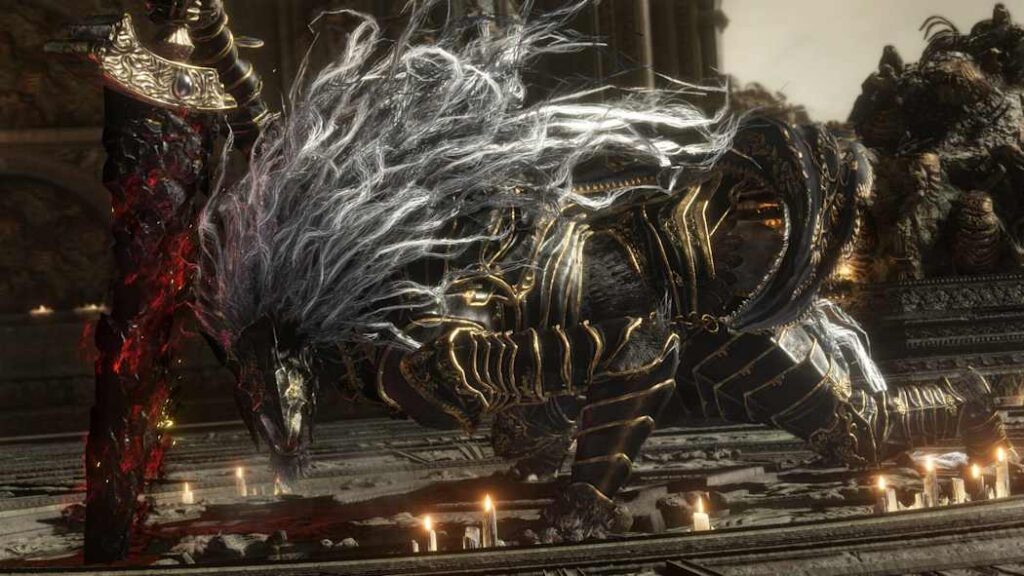
I remember when I shared the news in the newsroom that I was working on the Elden Ring Switch 2 review, everyone asked me, “Why are you doing that to yourself?!” And honestly, it’s because I simply love playing the inferior versions of games. Because let’s be real, the Switch 2 version is inferior to the Xbox Series X and PS5 versions of the game. And obviously the PC version, but that goes without saying. The biggest thing that interested me was portability, and how FromSoftware managed to iron out the performance issues that were notoriously shaky during preview events, which had everyone terrified that the game would fall apart on the Switch 2 console.
BUT! The game runs tangibly, fantastically well! I was simply blown away by how stable and satisfying the experience was. I find it incredible that FromSoftware ported the entire game to the Switch 2 with all of its content and got it running like this. Let’s be clear, it runs at 30 frames per second, but in 99% of cases, it is a rock-solid 30 FPS. At least to me, and my now-aging gamer eyes. There are moments when the framerate dips to, say, 15, but those are split-second drops when a boss slams into the ground and kicks all the particle effects into the air. It literally lasts for just a few fractions of a second. There is one other scenario, or type of scenario, and that’s when you exit a cave or an underground area. The game might drop a frame here and there during that transition, but as I said, it never impacts the gameplay or what is happening during combat.
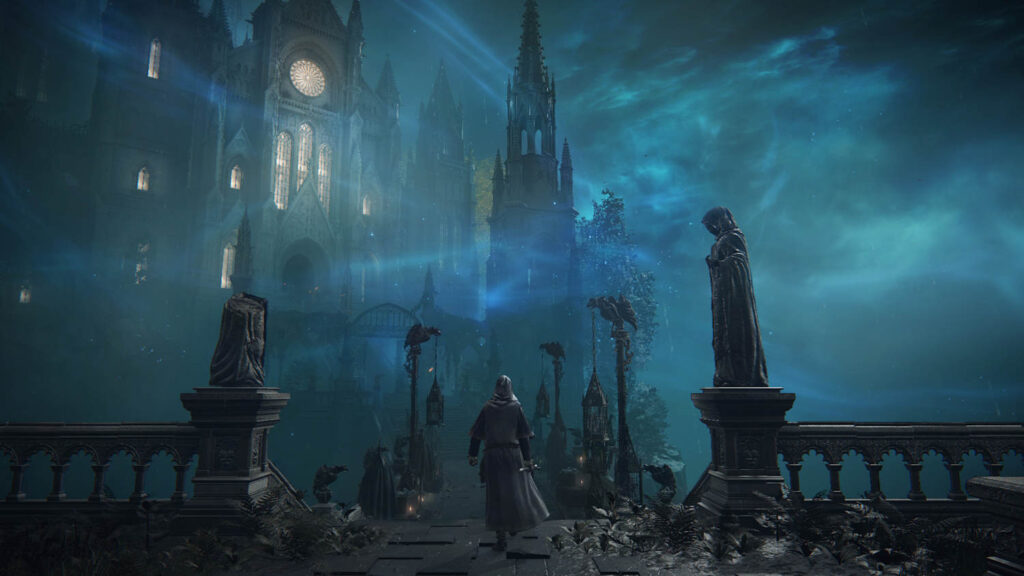
It’s incredible to me that FromSoftware pulled this off. The entire time I was playing, I almost forgot I was playing on a Switch 2 console,on a portable device. Just to prove it to myself, I would frequently pick the console up to play in handheld mode. And the experience is identical, or rather, fantastic for this console. And yes, just so this isn’t purely a 30fps praise-fest: I did notice a few moments when the Switch 2’s DLSS solution simply stopped working quite as well to hide the lower resolution. These were moments when practically nothing important was happening on screen, and regardless of whether that part of the map was “demanding or not,” the game would just slightly stumble with its upscaling for a second or two before stabilizing. But aside from that, everything is fantastic.
Elden Ring: Tarnished Edition (Nintendo Switch 2)
In the end, Elden Ring: Tarnished Edition is perhaps the biggest surprise of the year for me when it comes to ports. One of the absolute biggest surprises. Not because it "flies" at "30 frames," but because FromSoftware managed to bring the whole game over, as I’ve said several times now, and not just port it, but make it 100% playable without a single crash (at least in my case, even during 5+ hour sessions), with all of its content, its fantastic world, amazing soundtrack, and flawless gameplay. The fact that Switch 2 players can finally experience this incredible souls-like adventure is reason enough to celebrate, and anyone who wants to torture themselves on the go, or simply never played Elden Ring before, no longer has any excuses.
