
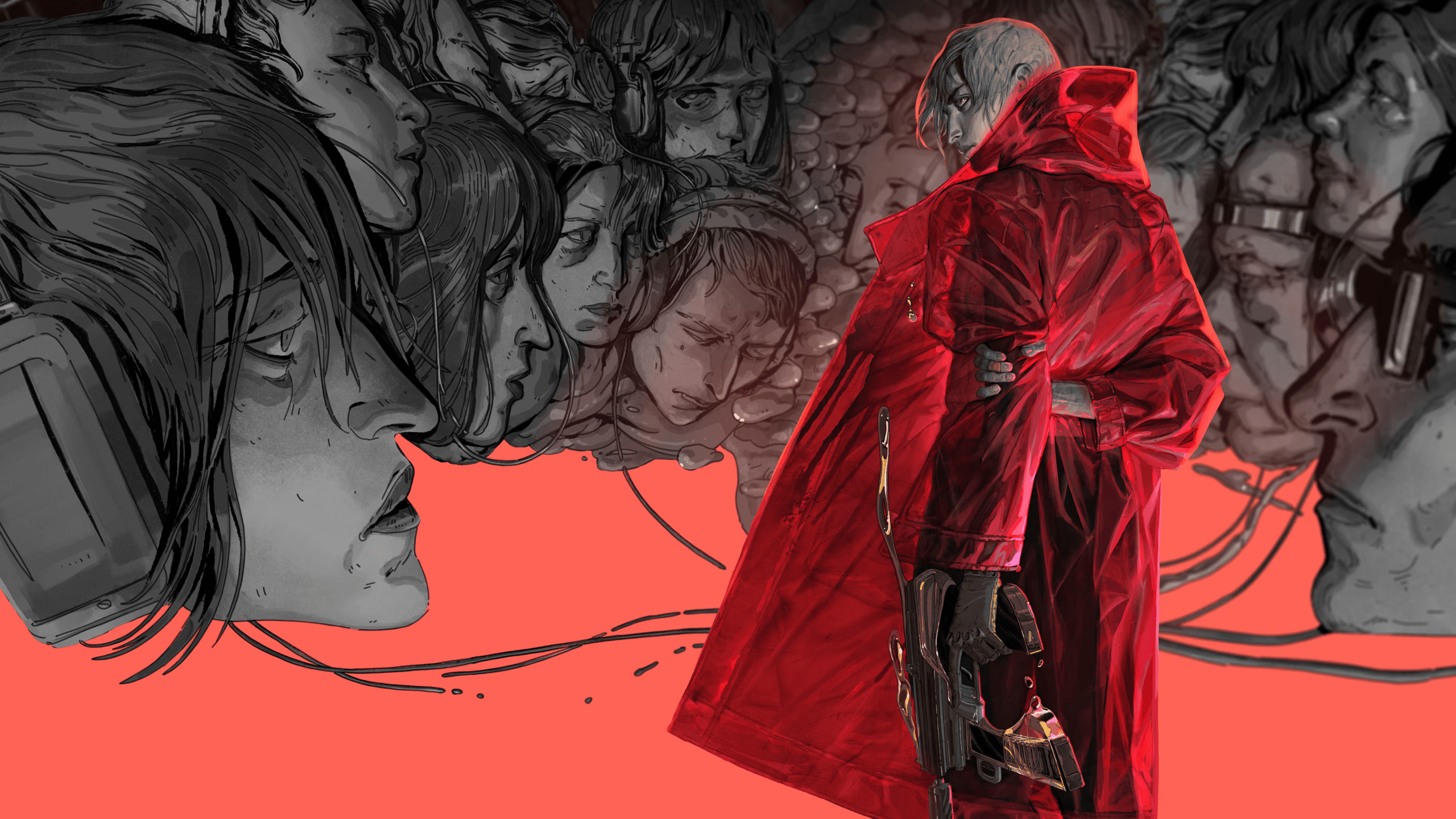

In a world where espionage usually comes down to suppressors, fast cars, and cool gadgets, Zero Parades: For Dead Spies offers a radically different vision, one where the most dangerous battlefields are actually the corridors of one’s own ruined mind. The game greets us with a highly stylised, almost painterly aesthetic, something resembling oil on canvas, turning Portofiro, the central setting of the game, into a melancholic isometric postcard. What immediately sets it apart from genre competitors is its deliberate rejection of traditional action in favour of patient and methodical investigation, where success is not measured by reflexes, but by psychological endurance and the weight of every spoken word.
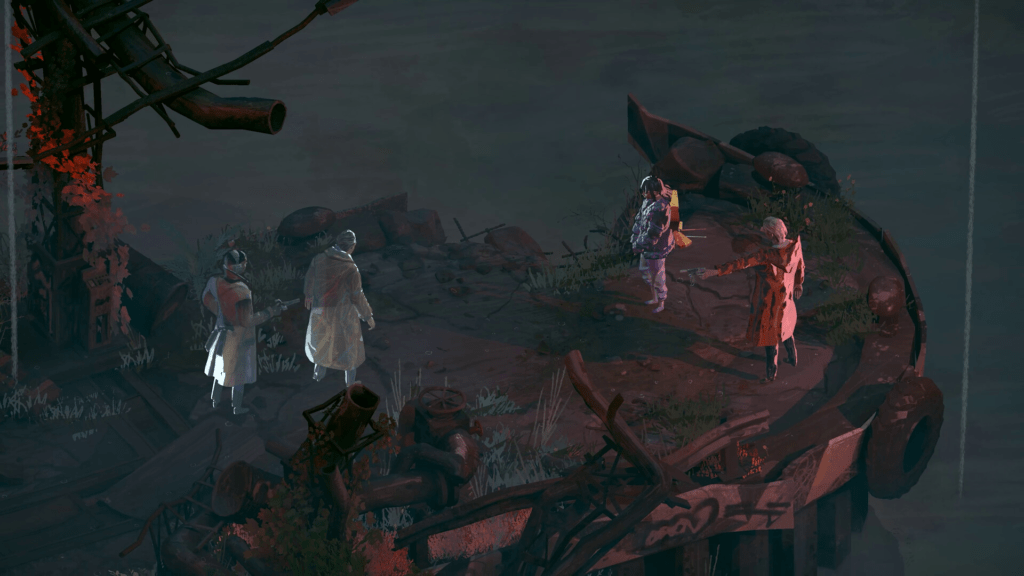
However, it is impossible to dive into this title without feeling the enormous shadow of Disco Elysium looming over every dialogue and ideological conflict. Public expectations are, to say the least, stratospheric, as ZA/UM must prove with this project that their “RPG without combat” formula remains relevant even after major internal turmoil within the studio. What we have in front of us is not just a spy thriller, but an attempt to repeat an intellectual triumph that redefined narrative design in modern games. In the end, the question remains whether this “complex spy dance” is original enough to step out of the shadow of its own legacy.
THE NETWORK OF LIES IN A TANGLED PORTOFIRO
From the studio that brought us Disco Elysium comes ZERO PARADES, a spy “text-based” CRPG adventure. You are a brilliant but haunted operative on one last, desperate mission. Assemble your broken network, unravel a web of lies, and prove yourself on the global espionage stage. Brilliant, burned out, and possibly cursed, you play as operative Hershel Wilk, alias KASCADE. Five years ago, you led your team into the abyss, and ever since, you’ve been haunted by your own failures. Now you are called back into service for a mysterious assignment that could give you a chance to redeem yourself and clear both your name and conscience.
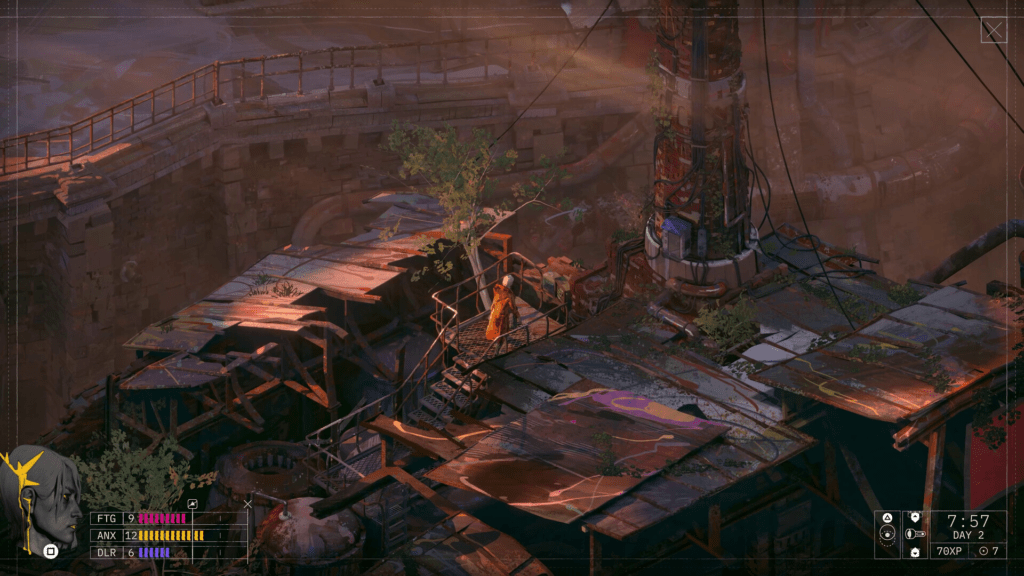
From the very beginning, the game places you in Kascade’s shoes with no clear explanation. The initial mystery quickly branches into dozens of new ones, all interconnected like a complex diagram. The recognisable Disco Elysium style immediately hits you in the face as well. If you played the previous hit from this studio, you will instantly feel at home and know exactly what to expect. Alongside movement and exploration of Portofiro, most of the gameplay revolves around familiar systems, constant reading of dialogue, choosing responses, and following the narrative, creating the feeling of an interactive novel.
A NEW TONAL IDENTITY
Zero Parades for Dead Spies brings a noticeably more restrained and serious tone compared to Disco Elysium, and direct comparisons between every aspect of the two games are inevitable. Its predecessor was so unique, distinctive, and beloved that it is impossible not to place them side by side in order to measure their relative standing. Geopolitical struggles and espionage serve as a fantastic foundation and a strong setting for the story and the soul of the game. In some areas, this works brilliantly, while in others it diverges from what we saw in Disco Elysium, and whether that is for better or worse will likely depend on the player.
Sharp satire and eccentric dark humour, once a trademark of the developer, have here been replaced with more subdued forms of wit that only occasionally land effectively. Side conversations and world details sometimes feel like they overstay their welcome. However, if you enjoy the world and its characters, you will likely have no problem listening to every side story. Even the protagonist’s inner voices, once one of the most engaging parts of the narrative, sometimes feel less interesting and lack a distinct identity that separates them. Zero Parades undoubtedly offers a functional and competent story, but it remains overshadowed by its past, as it lacks the artistic boldness and eccentric charm that once pushed the genre forward. Where Disco Elysium constantly delivered absurdity at every turn, here everything feels more grounded and toned down, which is not necessarily a bad thing, it is simply different.
FREEDOM OF MEDITERRANEAN RETRO-FUTURISM
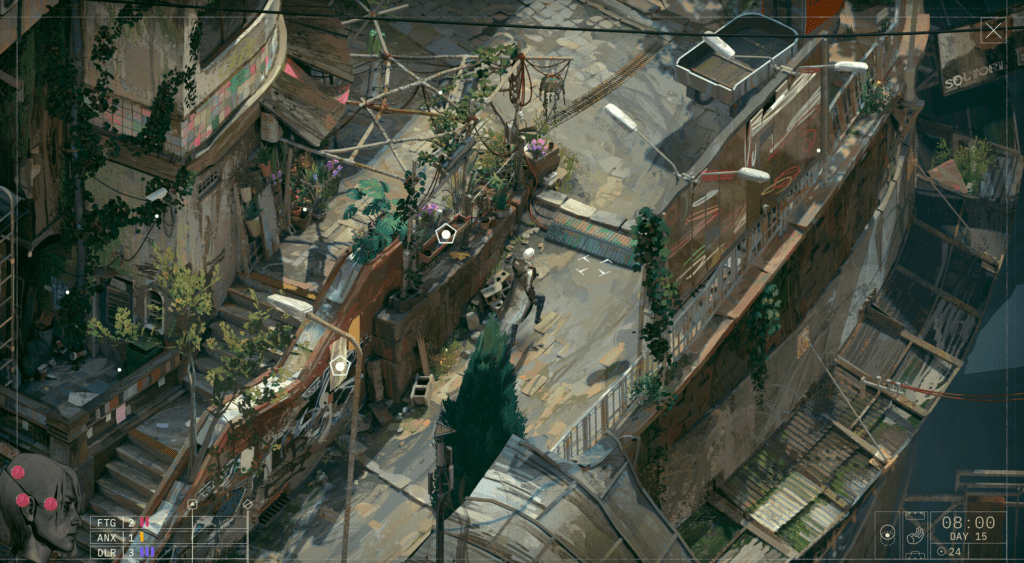
The setting of Portofiro presents a dense urban landscape hiding secrets around every corner and in every shadow. The physical space is significantly expanded, and the nonlinear network of quests directly draws from classic RPG traditions. This new scale offers multiple, completely unique paths toward the same goal, heavily influenced by character stats and how you interpret clues.
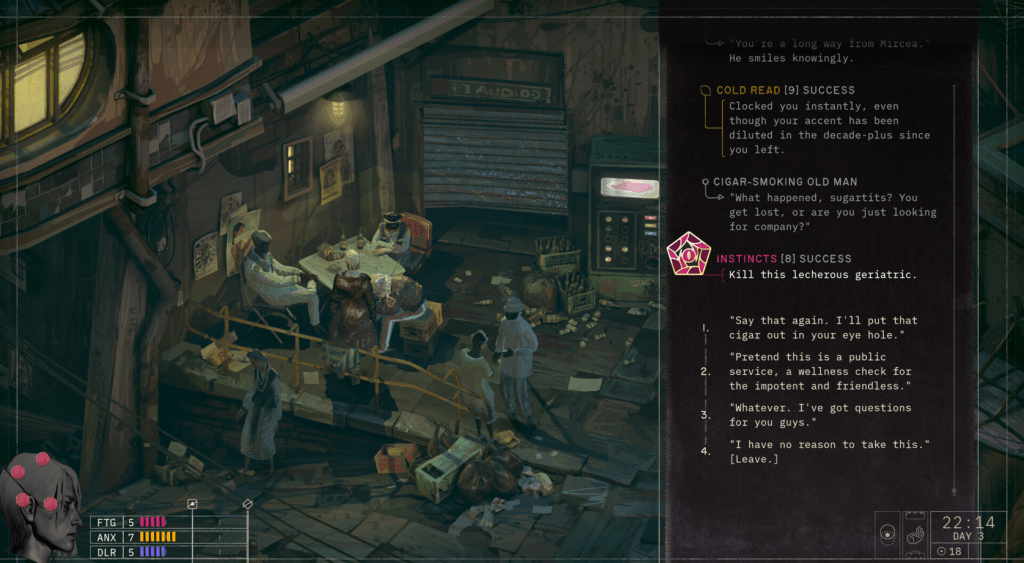
While this freedom of choice confirms the game as a highly reactive and capable RPG, navigating through countless intertwined threads can sometimes create a sense of overwhelm as you try to determine your next step. The game’s map feels complex at first glance, though it becomes easier to understand with time and quickly becomes an essential tool for navigation. The inhabitants of Portofiro are as colorful and vivid as the game’s visual palette, and the developers have done an excellent job of populating the world with a seemingly endless number of memorable characters. This colorful microstate exists under the influence of various external forces, one of them being La Luz, a techno-fascist military power whose presence is deeply felt throughout Portofiro. Other ideological and military blocs, as well as ominous corporations, are also referenced later in the game.
CREATING YOUR SPY AND DISTRIBUTING YOUR CARDS
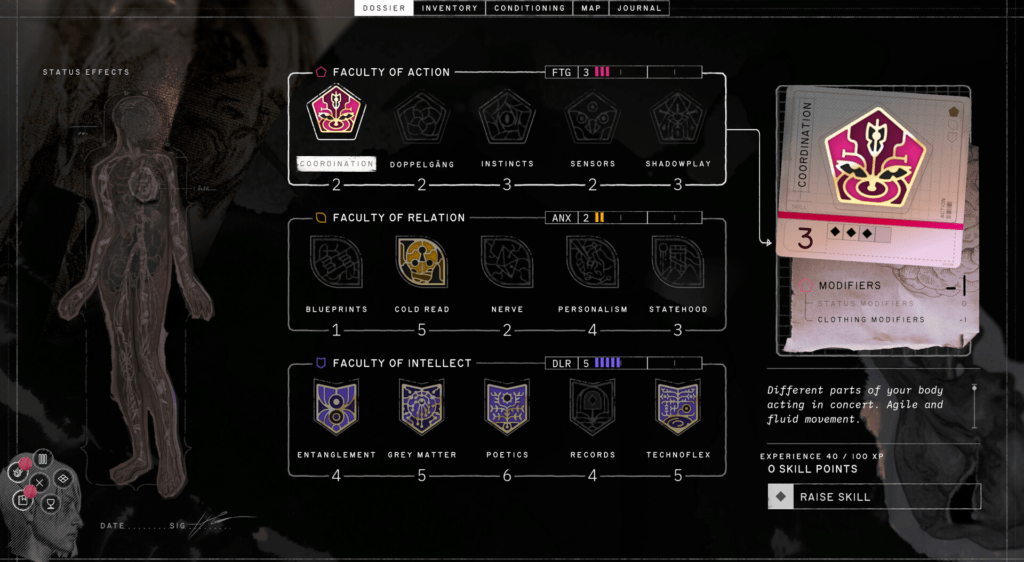
At the start of the game, you define your character’s nature. Several presets are available, or you can fully customise your own character and allocate stats exactly as you envision. Available archetypes include, for example, a charismatic operative, a physically dominant agent, or a highly intelligent analyst.
If you choose to fully customise your spy and shape your own version of Herschel, you are given the option to distribute skills across physical, mental, and social ability categories.
MENTAL PRESSURE AND DICE ROLLS
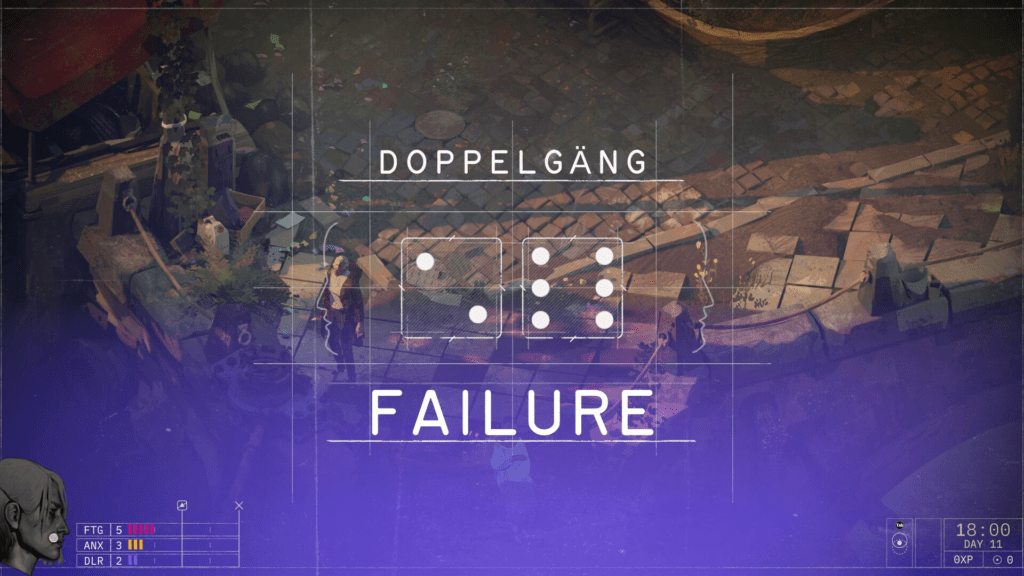
As Kaskada, your health system is divided into three layers: Fatigue, Anxiety, and Delirium. While engaging in conversations across Portofiro, you will often leave them with varying degrees of success or failure. If a dialogue pushes your character into fear or uncertainty, your Anxiety level rises. The same applies to situations where a phone call spirals into panic, the Anxiety bar immediately increases.
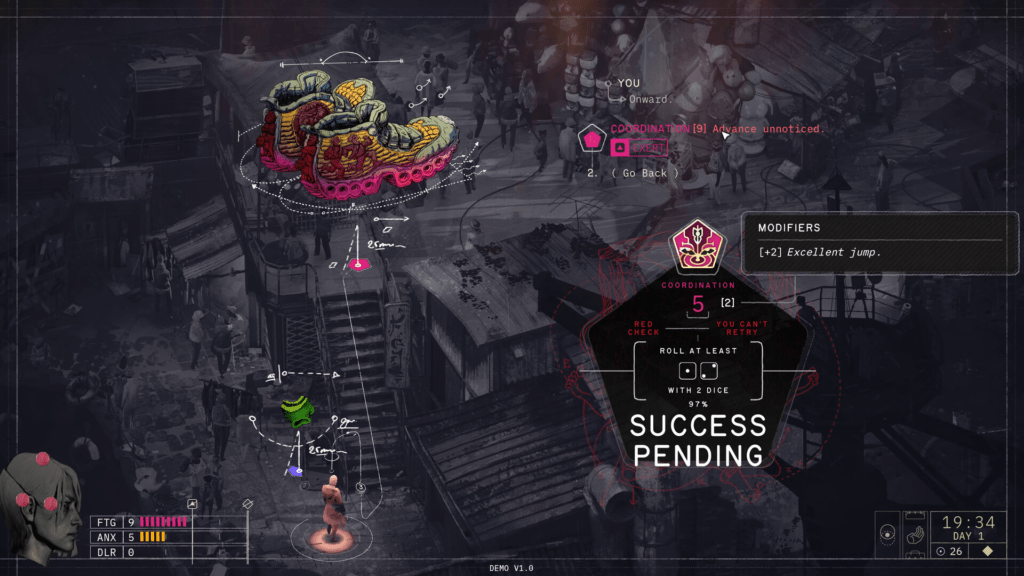
The dice roll system, familiar from Disco Elysium, returns in a similar form. During skill checks, you can consciously choose to push yourself and increase the number of dice to three, improving your chances of success in conversations. However, while this boosts your odds, it negatively affects one of your three health bars. All these systems come together into a single loop where your main goal is to actively balance and manage these forms of stress.
Stress can be reduced by finding various items in the world, such as food, drinks, or cigarettes. For example, smoking cigarettes will lower your Anxiety and give you another chance to successfully navigate difficult conversations. Alongside consumables, you also find clothing and other items that directly modify Herschel’s stats.
CONDITIONING OF THE MIND
One of the most important parts of character progression is the system called Conditioning. This is a sort of evolution of the Thought Cabinet from Disco Elysium, but with several mechanical changes. By exploring Portofiro and talking to people, your spy encounters certain ideas, political ideologies, or memories that can be internalised.
These thoughts allow you to break past the initial skill limits set during character creation. The system can also lead to bigger mechanical changes. The game can literally unlock entirely new options in the settings menu, granting permanent bonuses to specific skill checks. Other thoughts can directly affect your inventory capacity and similar systems.
TECHNICAL ASPECTS AND HANDHELD EXPERIENCE
In terms of presentation, if you play Zero Parades on a handheld device such as the Steam Deck, the game feels like a perfect piece of interactive reading in the form of a gripping spy thriller. However, from a technical standpoint, in this early pre-release version, the game is not fully optimised for this type of experience. Movement with analogue sticks feels slightly sluggish and requires further tuning from the developers, although it does not significantly harm the overall enjoyment. During my time on Steam Deck, I also encountered a few game crashes, which are worth mentioning, but again, nothing that completely broke the experience. I also noticed missing audio segments and voice lines during conversations, which I assume will be addressed in a post-launch patch.
Portofiro is a fantastic spy playground and a strong attempt by ZA/UM to recapture the feeling we had while playing Disco Elysium. Zero Parades: For Dead Spies will, to be fair, partially remain in the shadow of its predecessor, as the distinct dark humour and unforgettable characters of that game hit harder. Nevertheless, despite the expectations and the studio drama surrounding the project, this is far from a disappointment. What we have here is an excellent CRPG spy thriller in the form of an interactive painted novel, filled with vivid characters, a more grounded atmosphere, and a web of espionage, deception, and constant distrust.
We would like to thank ZA/UM for providing us with a copy of the game for review purposes.
ZERO PARADES: For Dead Spies (PC)
Zero Parades: For Dead Spies stands as an easy recommendation for fans of Disco Elysium. However, it is also a game that carves out its own identity and will undoubtedly find its own dedicated audience. Rather than being a “Disco Elysium 2,” it is a creative vision of new developers choosing to build something on their own terms, refusing to remain trapped in the shadow of past success. When viewed as a whole, like an intricate painted canvas where characters and spy intrigues blend into a new tonal identity, it becomes clear that this is a strong and memorable experience. With a rich world offering hours of deep exploration, Zero Parades: For Dead Spies delivers a compelling narrative journey full of intrigue, psychological depth, and fascinating character studies.
