

“CASH IS KING… when every bullet has a price, and a three-front chess match becomes the most addictive shooter of the year…”
Very often, launching a first-person shooter into Early Access comes with a lot of drama, nervousness, and dissatisfaction. Games are frequently in a very rough state, conceptually and technically unpolished. Playing them usually means enduring all sorts of janky byproducts, but hey, that’s early access, many would say. “We give you access to an early version of the game, and in return, you give us feedback and facilitate further development so we can achieve the best possible result with the 1.0 release.” Sounds great, right? The water gets a bit muddy when we throw money into the equation, and developers ask you to pay just to be allowed to test an unfinished product. In a normal world governed by sound logic, that sounds insane. You invest in something hoping that your investment will eventually bear fruit and that in return, one fine day, you will receive a complete product that you somehow helped create. Still, thousands of gamers accept this deal every day, and I am often one of them. Sometimes, when you look at a product, you don’t just see what is currently in front of you; you see the game it could potentially become one day. That is exactly how thousands of players approached the latest phenomenon, the game WarDogs.

CHAOS ON THREE FRONTS
WarDogs is the latest project from the studio BULKHEAD, and although its potential could be sensed a long time ago, in its Early Access period, it has exceeded our expectations, and even the expectations of BULKHEAD themselves. In a sea of titles clinging to the well-tested binary formula of “one team against another,” the classic battle royale recipe, or the latest extraction obsession, WarDogs attempts something that is simultaneously old-school but vastly more ambitious: a massive clash of a hundred players divided into three factions, where every mistake is paid for dearly (literally), and every success is measured in hard currency (again, literally, you’ll understand why soon).
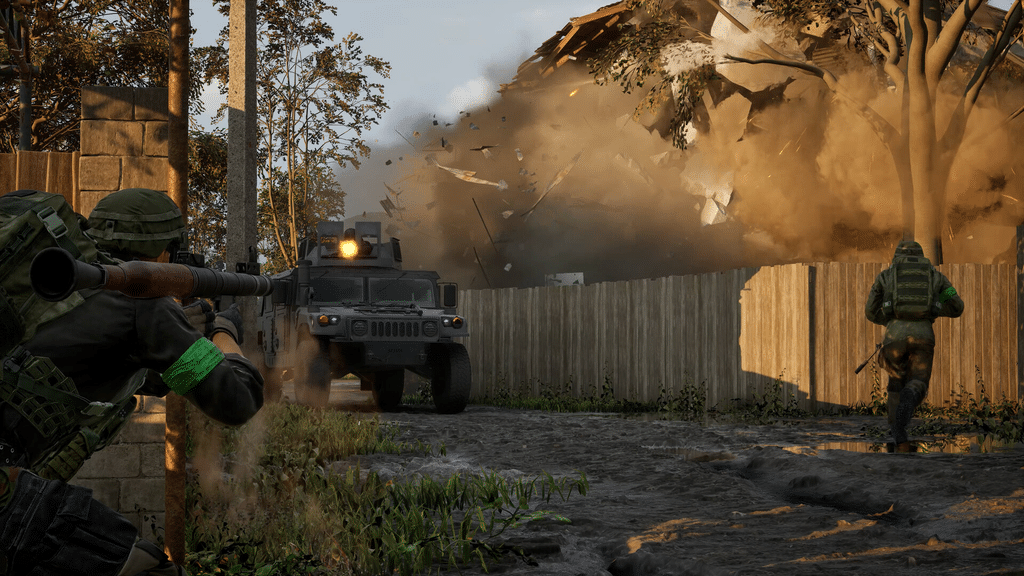
Described in a single sentence, WarDogs is a three-front first-person shooter featuring a hundred players and an economy at the core of its gameplay. The basic concept drops three teams, red, blue, and green, onto a massive, fluid battlefield where traditional frontlines do not exist, or at least are extremely dynamic. In most shooters, you have at least some idea of which direction the enemy is coming from; the dynamics injected into WarDogs throw you into total unpredictability. An attack on an enemy stronghold, base, or FOB can easily turn into a trap if the third team decides to flank you while you are spending ammo and resources on your primary target. This balance of power demands constant communication within the team and squads.
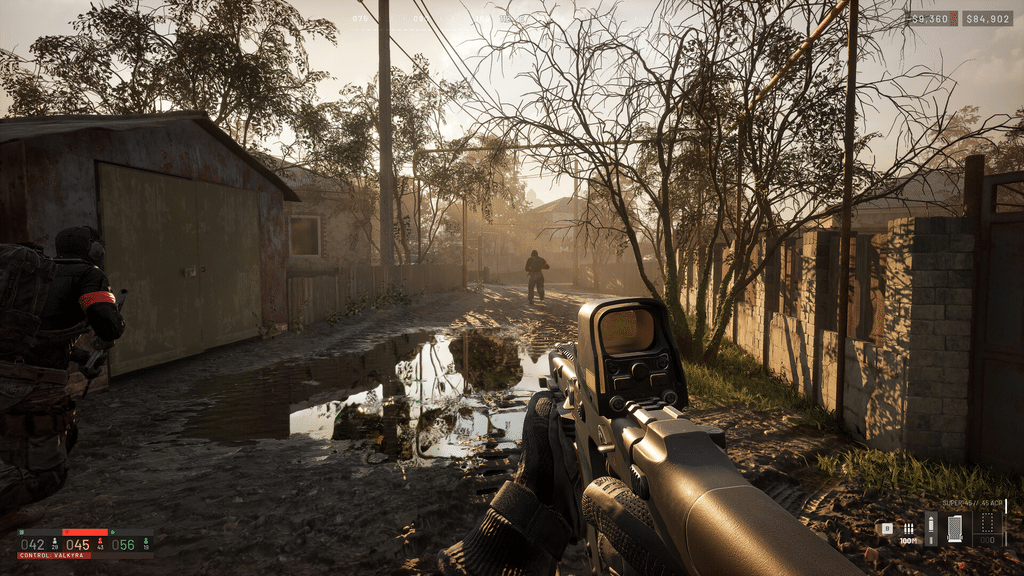
The gunplay is slower, more grounded, carrying real weight, and the time-to-kill (TTK) is utterly relentless. Granted, it’s not quite as brutal as in some one-shot, one-kill simulations. By the developers’ own admission, WarDogs is inspired by Battlefield, Arma, and similar titles, but it tries to find the sweet spot and a fine line of balance between accessible arcade and unforgiving simulation. That is why the TTK, while quite harsh, still affords you enough room in many situations to tactically retreat, escape, or execute an alternative maneuver if your initial plan is thwarted by enemy fire.
CASH IS KING
The economy is the beating heart of WarDogs’ gameplay, and that is fundamentally what separates it most clearly from other games. Instead of passively earning points or locking equipment behind a senseless multi-week grind (though there is a bit of that here too), every useful team move is immediately rewarded with good, old-fashioned cash. Almost everything you do that contributes even slightly to your team’s better positioning on the battlefield earns you in-game dollars. Capturing strategic points, neutralizing enemies, logistics, reviving and healing, spotting, building bases, transport, all of this directly dictates your future combat readiness thanks to the money earned. Money is used to buy better weapons, equipment, and tactical support on the field, which creates constant tension. Do you risk your acquired capital on a better loadout right away, or save it for a coordinated counterattack with the whole team? This system turns ordinary skirmishes into a very high-stakes game of chess.
So, for example, if you are a straightforward player like me, and your only goal is jumping into a match, shooting enemies, and capturing flags, you can play it like any other shooter. The gunplay feels extremely satisfying, but this style requires a heavy dose of caution. If you get eliminated immediately upon entering combat a few times in a row, and every decent loadout costs, say, five to ten thousand dollars, do the math yourself. You very quickly end up “broke,” with nothing effective for the next push. Of course, the game thought of these situations: you always have the option to take a free basic kit, a simple rifle, a handful of ammo, and that’s it. This is often more than enough to get you back on your feet.
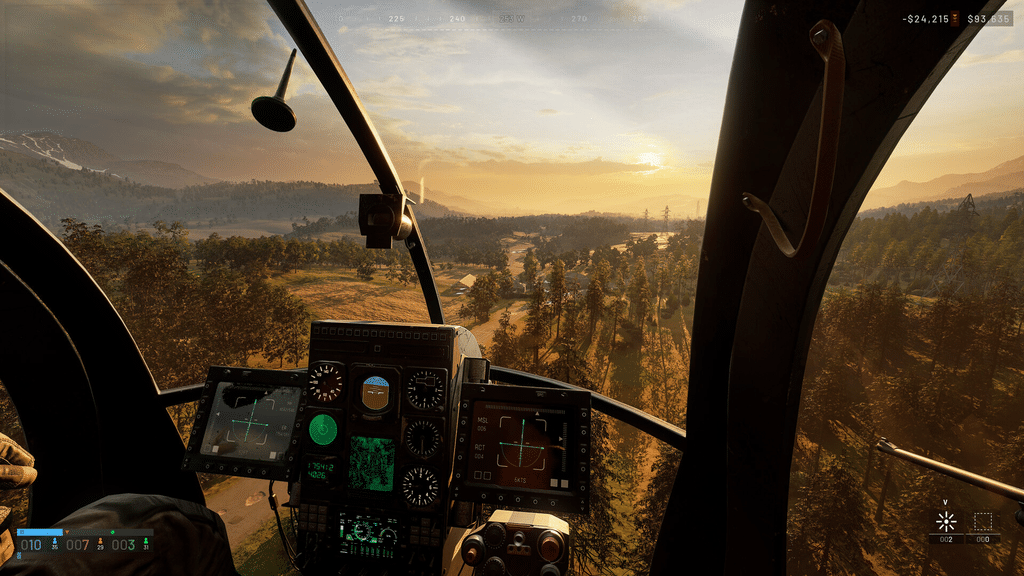
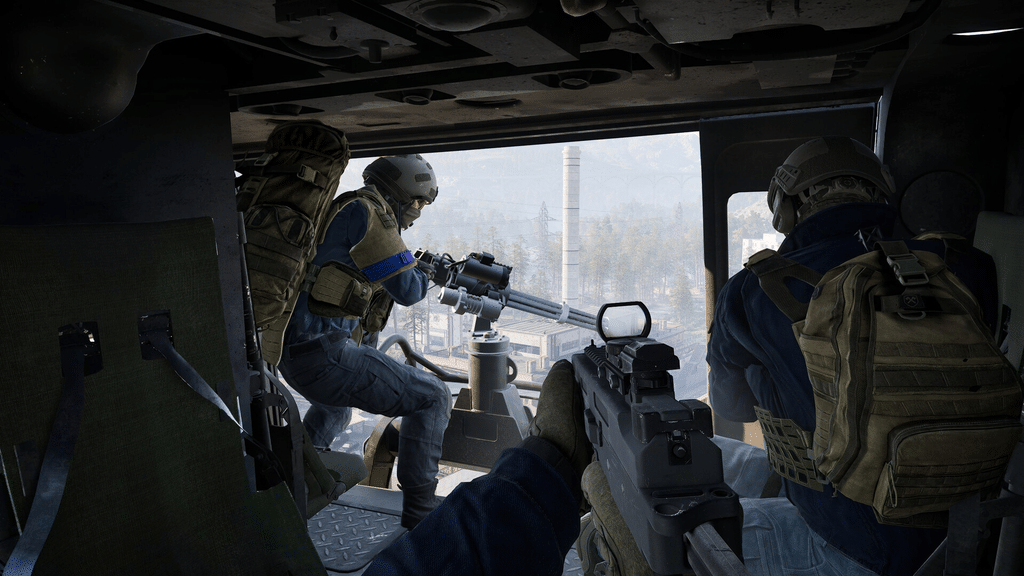
Similar to Arma, you can theoretically play a whole match without seeing a single enemy player, while earning a ton of money and practically getting rich (at least by this game’s standards). You can, for instance, just buy a pair of binoculars, settle into a strategically advantageous position, and simply spot enemies. Every spot puts money in your pocket, and if a teammate eliminates that enemy, the reward is even bigger. You can also dedicate yourself purely to transporting teammates from the base to the frontline, where not only are you systemically rewarded for driving, but there is also a “tipping” mechanic where passengers can drop a few coins in your jar for a job well done. You can do logistics only, or build fortifications if that’s more your style. You can practically ignore the enemies and not buy a single rifle throughout the entire match. Sounds pretty unusual for a first-person shooter, right? Yet, this works flawlessly and significantly strengthens team spirit. The strongest teams are precisely those that have a diverse mix of all these roles, where everyone does what they love, and the synergy brings ultimate victory.
WINNING POINTS
Ultimately, the winner of the match is still decided by points. Each of the three factions fights for dominance over key sectors. The more strategic hubs your team holds, the faster your point balance grows. The map clearly shows who controls which zone, while in the bottom left corner, you can see the troop presence of each faction in that area. The team with the majority racks up points on a shared meter, and whoever reaches 100 points first wins. The winner also gets a highly enticing cash bonus, so it pays off massively to stay focused until the very end. The matches themselves can be quite long, and their duration depends directly on the dynamics of the conflict, meaning some matches can easily be measured in hours.
Weapons are unlocked proportionally to your player profile level. Even though roles like medic, engineer, and recon formally exist in the game, nothing is rigidly forced upon you. Depending on what you do in the field, you are rewarded through specific skill trees. You can freely mix your gear: bring a medkit to heal teammates, but also pack binoculars for scouting. By reviving comrades, you develop the medical tree and unlock advanced medical kits; by observing through binoculars, you upgrade your scouting skills and get better recon gear. Once you unlock options, you aren’t locked into a rigid mold, you choose exactly the pieces of equipment that best suit your personal playstyle.
On the technical front, WarDogs is phenomenal. It was openly tested across a wide spectrum of configurations, and I haven’t heard a single teammate complain about performance. Having participated back in the early alpha phase and followed the project through to its Early Access release, it was always obvious that the primary goal was balance: the game looks perfectly solid and decent, but without pretensions of being a generational aesthetic showcase. Instead, the focus is placed on stable performance on almost any somewhat modern PC, without players having to rack their brains over how to squeeze out an extra frame just to make the game playable. A stable 60 frames per second is the bare minimum BULKHEAD accepts as a standard, which is absolutely the right approach for a competitive shooter.
A “DAD SHOOTER” WITH A CLEAR VISION
From the very beginning, BULKHEAD has fostered a direct, no-bullshit approach to development and community communication. Sometimes it might even be a bit too raw, bringing a slight dose of secondhand embarrassment, but overall, it feels incredibly refreshing. They always present the state of affairs openly and transparently, without trying to sugarcoat the problems. They admit their own mistakes without beating around the bush and speak directly about their plans. It is truly a pleasure to see this kind of relationship, and the community is clearly responding excellently to it, especially when compared to the sterile corporate platitudes of typical AAA publishers.
BULKHEAD is guiding the project with a firm hand, and the game itself has an extremely clear identity. Not for a single moment did I get the impression that the developers were wandering or didn’t know what they wanted to make; on the contrary, you rarely see such a firmly established vision. Furthermore, the studio enforces a zero-tolerance policy against players exploiting money and XP glitches, as well as against cheaters, who represent a chronic ailment of modern PC shooters.
Their stance on monetization deserves special praise: they have made it crystal clear that there is no place for pay-to-win mechanics in this game. WarDogs is planned to remain in Early Access for one to two years, which leaves more than enough room to iron out the balance, maps, netcode, and all those little details that elevate an average shooter to a top-tier one, all through organic community feedback.
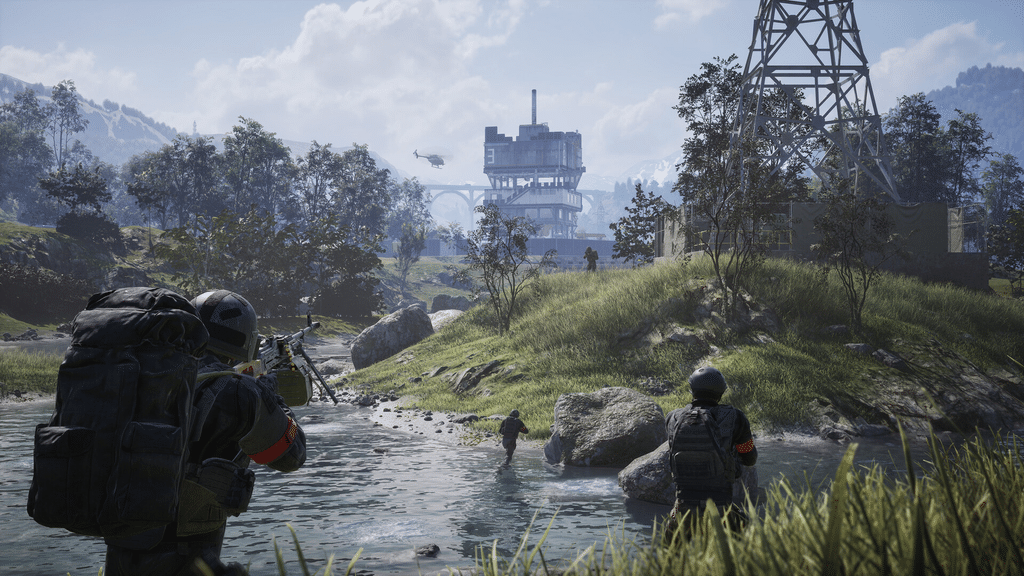
WarDogs is currently dominating the Steam charts with an impressive number of active players and massive community engagement. This is another great representative of the so-called “dad shooter” genre, there’s no crazy sliding, wall-running, or silly, neon skins here. With a crystal-clear vision and a first season full of new content already right around the corner, WarDogs is one of the easiest Early Access recommendations I have ever given. This is what you get when you have a clear goal and a fair relationship with gamers. Of course, WarDogs isn’t for everyone, but despite that, it is perfectly clear what this game is, what it isn’t, and what it wants to become.
Jump into the WarDogs Early Access and see for yourself why the game is currently so popular. Console players will have to be a little more patient, but the good news is that work on the console versions is already underway, with a planned release in 2028.
