
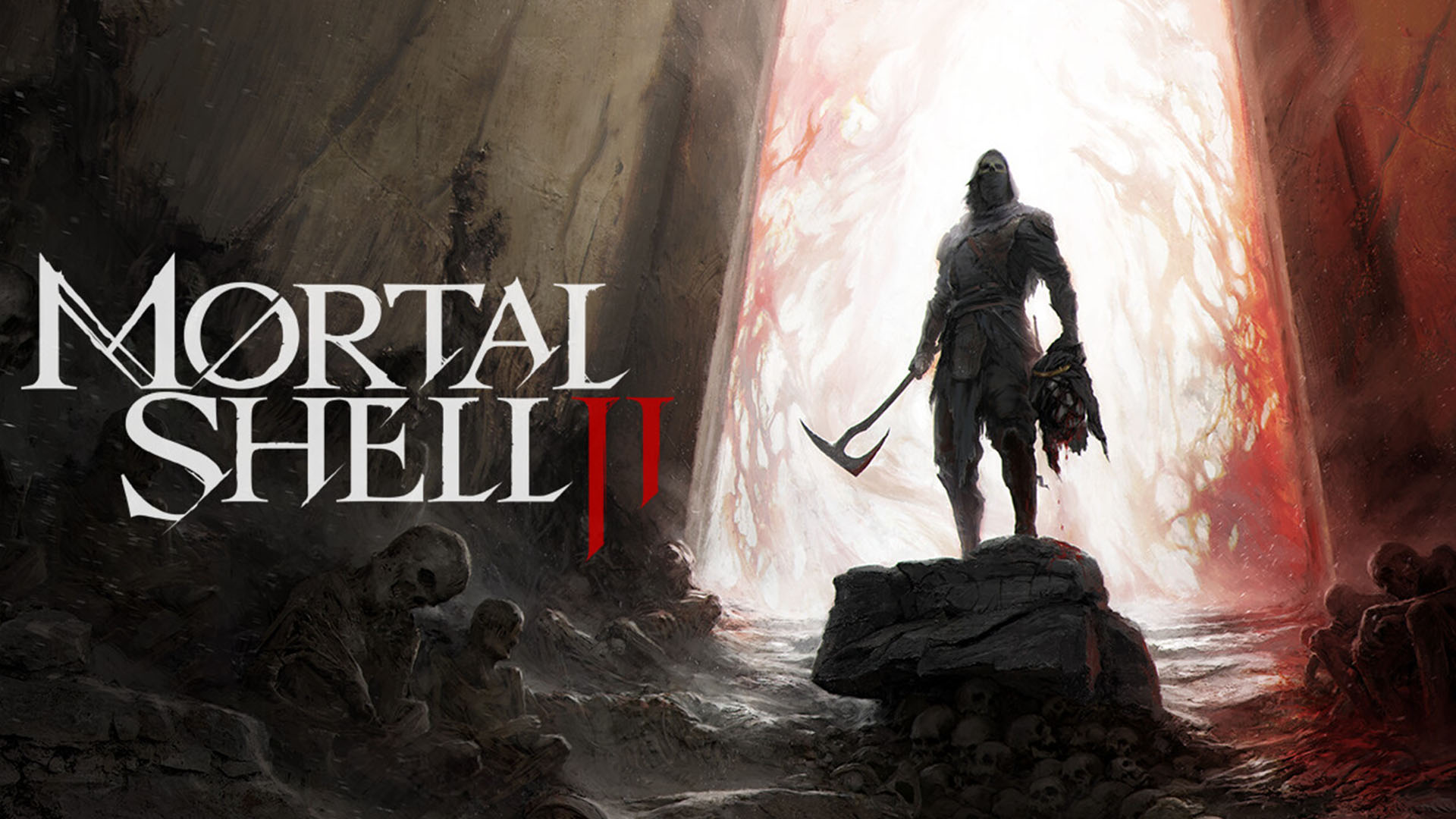

I honestly can’t remember exactly when or how I first heard about a game called Mortal Shell. What I do remember clearly is the period when I was waiting for Elden Ring to release and devouring practically every souls-like that crossed my path and looked even remotely interesting. Still, Mortal Shell managed to stand out thanks to its incredibly intriguing concept, where you played as a humanoid being capable of discovering fallen warriors and inhabiting their long forgotten shells.
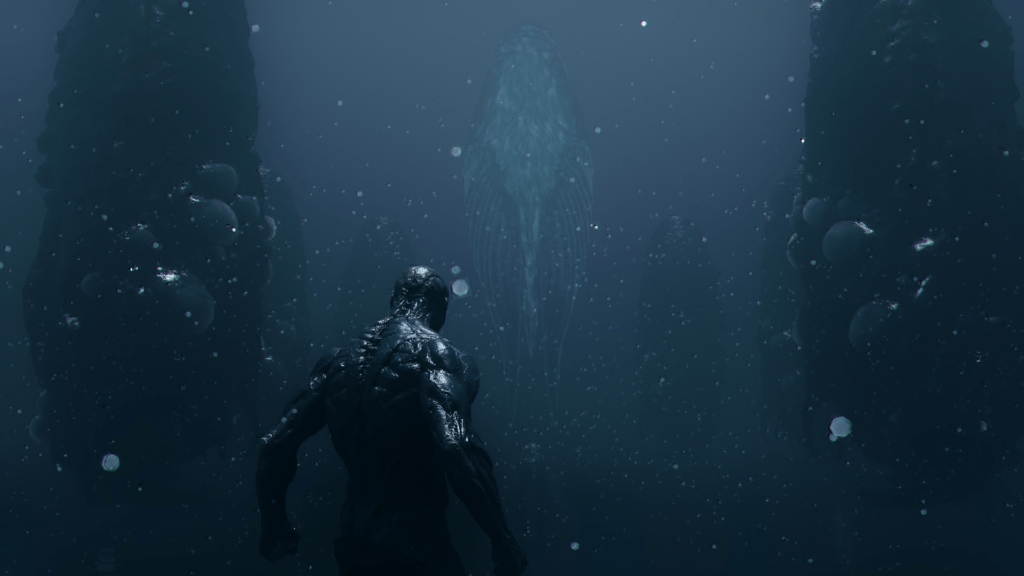
Instead of choosing a traditional class at the beginning and investing points into attributes associated with it, Mortal Shell allowed you to discover different warriors and inhabit their bodies, with each one offering something unique, whether that meant more health, an enormous stamina bar, a particular ability, or something else entirely.
Not only that, but Mortal Shell also gave you an opportunity to learn more about the bodies you inhabited, who these warriors once were, what their purpose had been, how they died, and much more.
The game also featured fascinating lore built around the belief that consuming a certain substance could lead to a form of enlightenment, allowing a being to transcend mortality itself. At the center of these beliefs were mysterious creatures known as the Revered, for whom people built temples and whom they worshipped in hopes of obtaining their precious nectar and taking their first steps toward immortality. However, Mortal Shell cleverly suggested that behind all those promises of enlightenment and eternal life might lie not divine truth, but a carefully concealed deception.
Taking all of this into consideration, despite its somewhat clunky combat, the original game showed tremendous promise. Six years later, we have finally received its sequel, with Cold Symmetry presenting Mortal Shell II as an adrenaline fueled standalone sequel.
The Effort Definitely Pays Off!
The beginning of Mortal Shell II somewhat resembles that of the first game. Once again, you awaken as a strange humanoid creature, but instead of the familiar Foundling, this time you take control of a being known as – the Harbinger. Your mission revolves around an entity known as The Undermether. Her Ova (something akin to reproductive cells) have been stolen by grotesque creatures scattered throughout the world, and it is your task to find them, defeat those who possess them, and recover what was taken. Once again, at the center of the story stands a seemingly divine being around whom various cults and beliefs have formed. However, whether her divine nature is truly what her followers claim it to be is something you will have to discover for yourself. The truth is never handed to you directly. Instead, you gradually piece it together through conversations with NPCs, item descriptions, notes and various writings scattered throughout the world, as well as countless environmental details waiting to be noticed.
Cold Symmetry has done a fantastic job with the story in this regard. You don’t need to play the original Mortal Shell to enjoy the sequel, but if you do, many characters, and even certain locations, will already feel familiar.
More Freedom, Even More Brutal Combat
From its opening moments, Mortal Shell II welcomes you with an interestingly designed tutorial that gradually introduces its core mechanics without disrupting the atmosphere of the world you have just entered. The NPCs give this introduction a particular charm, with their unusual comments and interactions injecting a dose of dark, occasionally absurd humor into the experience. This contrast between the bleak surroundings and unexpectedly funny moments gives the game a distinct personality that fits its morbid world perfectly. Your Harbinger is introduced to his first Shell, Harros, who possesses the ability to temporarily turn enemies to stone. This leaves them vulnerable long enough for you to follow up with a heavy or light attack and deal Riposte damage, creating an opportunity to inflict devastating amounts of damage.
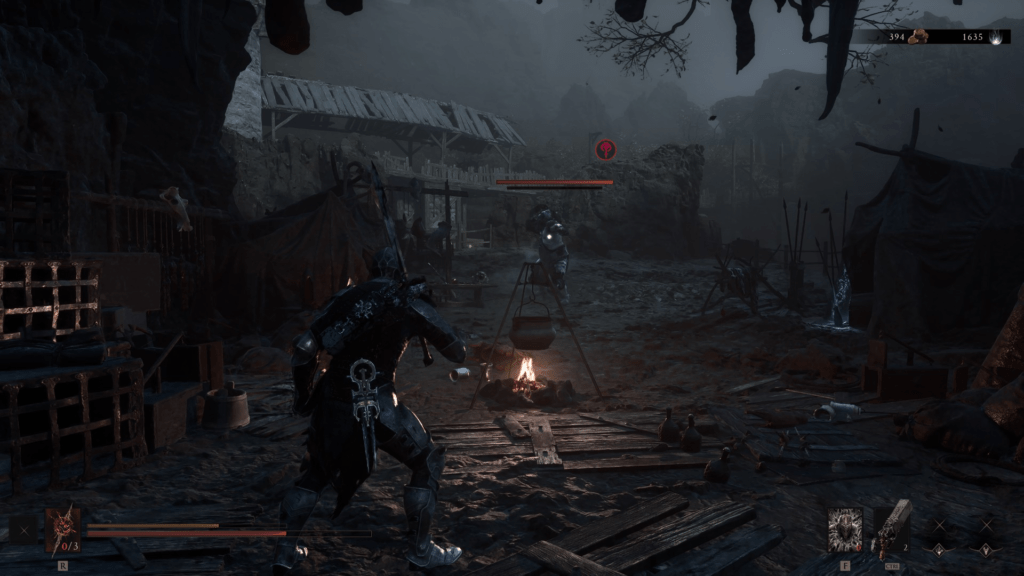
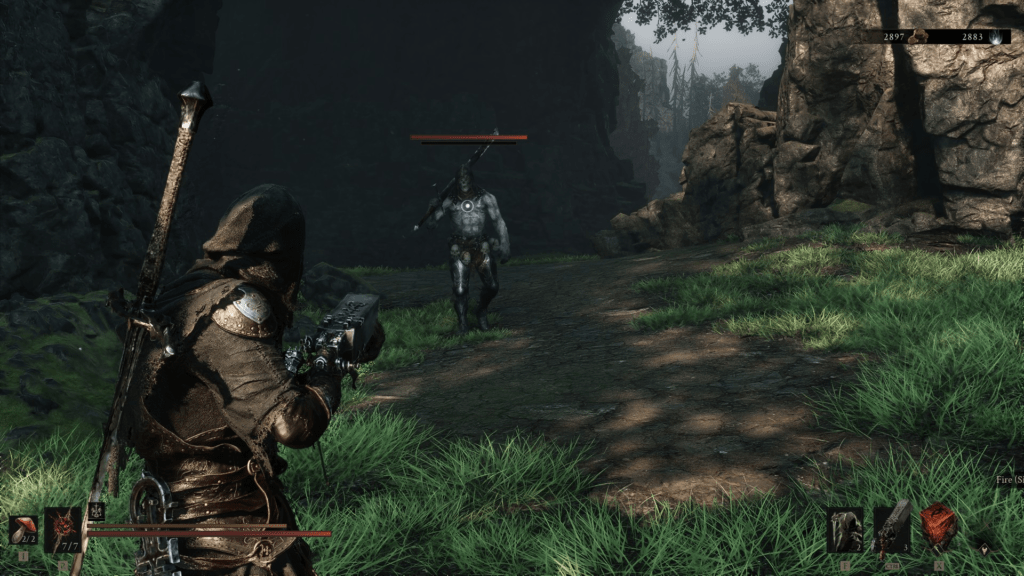
Two things immediately become apparent during the opening minutes, there is no stamina bar whatsoever, and combat gives you considerably more freedom in how you approach encounters. Alongside traditional melee weapons, your starting weapon being a longsword, the game almost immediately gives you access to a rifle, allowing you to combine close range combat with ranged attacks. Using ranged weapons requires Resolve, a resource that gradually regenerates as you land attacks on enemies. Resolve isn’t reserved exclusively for ranged combat, however, as it plays an important role throughout the entire combat system. The same resource is also used to activate certain Tarstones, as well as special abilities associated with your Shell.
Tarstones are divided into several categories such as: Support Tarstones can improve your melee or ranged attacks, increase the number of coins dropped by fallen enemies or increase the amount of Gloom you receive, which is the currency used for leveling. Some can even allow you to absorb a certain percentage of incoming damage. Then Combat Tarstones make fights significantly more brutal, providing effects such as a chance for enemies to explode after being killed with your rifle, a guaranteed critical hit after five attacks, or the ability for your weapons to inflict status damage. Infusions grant weapons specific status effects, including Frost, Bloodcurse, Lightning and others, while Abilities allow you to spend Resolve to perform incredibly powerful attacks. Every Tarstone can also be further upgraded by Franz.
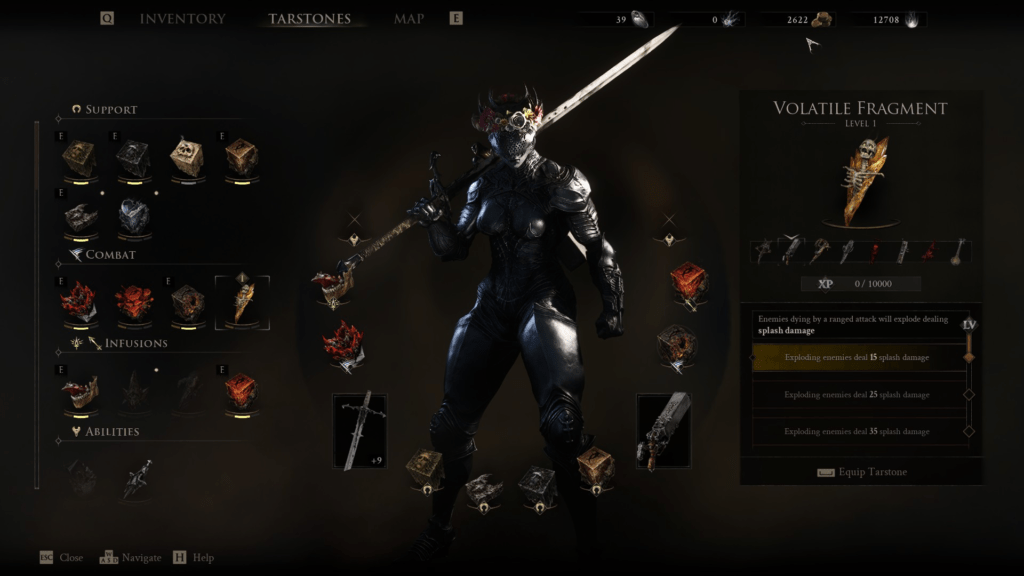
It is also worth mentioning that the final version of the game differs somewhat from the open beta players previously had an opportunity to try. Enemies are no longer quite such easy prey, meaning combat requires more attention and careful decision making. The developers have also continued polishing the overall experience, adding or changing certain elements while relocating others within the game world.
After completing the tutorial, you arrive at your HUB, known as Marrow’s Keep. Here, you’ll encounter plenty of interesting NPCs. Franz, with the help of his machine, can upgrade both your weapons and Tarstones. Merrick serves as a merchant from whom you can purchase maps that clearly reveal where specific weapons can be found, as well as various materials you may need. You can also sell him certain objects you discover in exchange for additional coins, which I personally spent primarily on upgrades. Then there’s Zhirelle, who provides access to Shell Bonding and Shell Abilities. You can exchange Glimpse to improve your Shells and unlock their memories, while Shell Points can be used to obtain and upgrade their abilities. Glimpse can also be exchanged to reveal the locations of different Shells on the map, making them considerably easier to find. Finally, alongside several other interesting NPCs, the familiar Sister Genessa makes her return, offering a combat tutorial where you can experiment with the game’s different parry options.
When it comes to parrying, you have access to the Untarnished Seal and Infinite Seal, each providing a slightly different defensive approach. With the Untarnished Seal, timing your blocks correctly is crucial. Miss one and your Guard Meter begins to fill. Once it reaches its maximum, you become vulnerable and enemies have an opportunity to stun you. Successfully block an attack at exactly the right moment, however, and you’re rewarded with an opportunity to perform a powerful Riposte, making precision and learning enemy attack patterns particularly important.
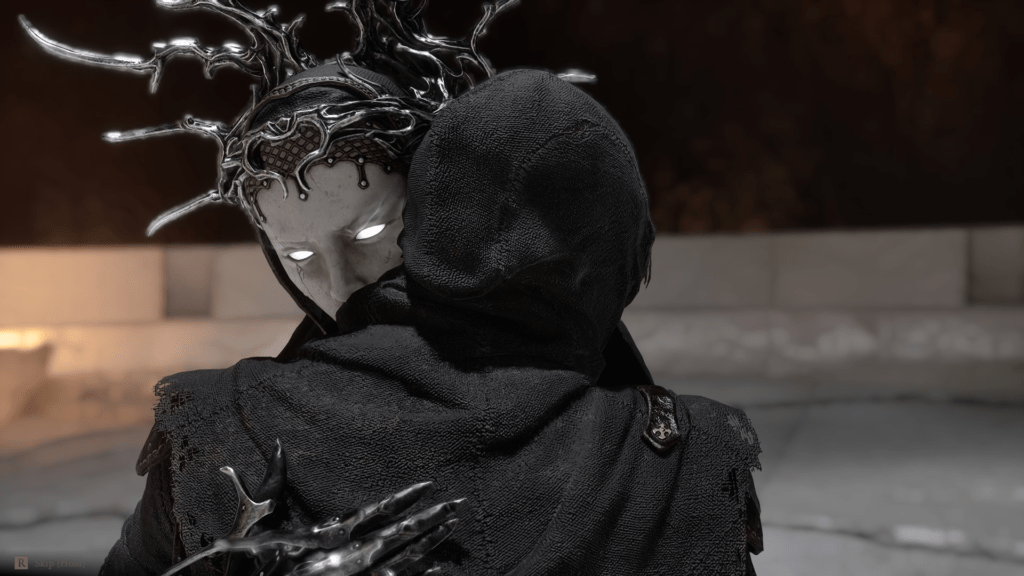
The Infinite Seal is slightly more complicated and follows more of a high risk – high reward philosophy, demanding more precise timing while rewarding you with greater break damage against enemies.
Personally, I used the Untarnished Seal throughout practically the entire game. Its parry window feels perfectly reasonable, and getting used to enemy attack patterns isn’t particularly difficult. Whenever I wasn’t confident enough with a boss’s moveset, the perfect dodge proved incredibly useful. I’m also fairly certain you’ll love the sheer number of finishers available, to the point where even players who usually avoid parrying might find themselves doing it considerably more often.
Leave Safety Behind and Step Into Chaos
The real fun begins the moment you climb to the top of the HUB and discover fast travel.
Mortal Shell II manages to turn even something as simple as fast travel into a visually fascinating and completely unconventional spectacle. When you step into a fast travel point, the skin separates from your skeleton before your body transforms into something resembling a meteor, hurtling across the world at tremendous speed before violently crashing into your chosen destination. It’s a small detail that doesn’t have a major impact on gameplay, but it perfectly encapsulates the grotesque aesthetic and unusual identity Mortal Shell II is trying to establish.
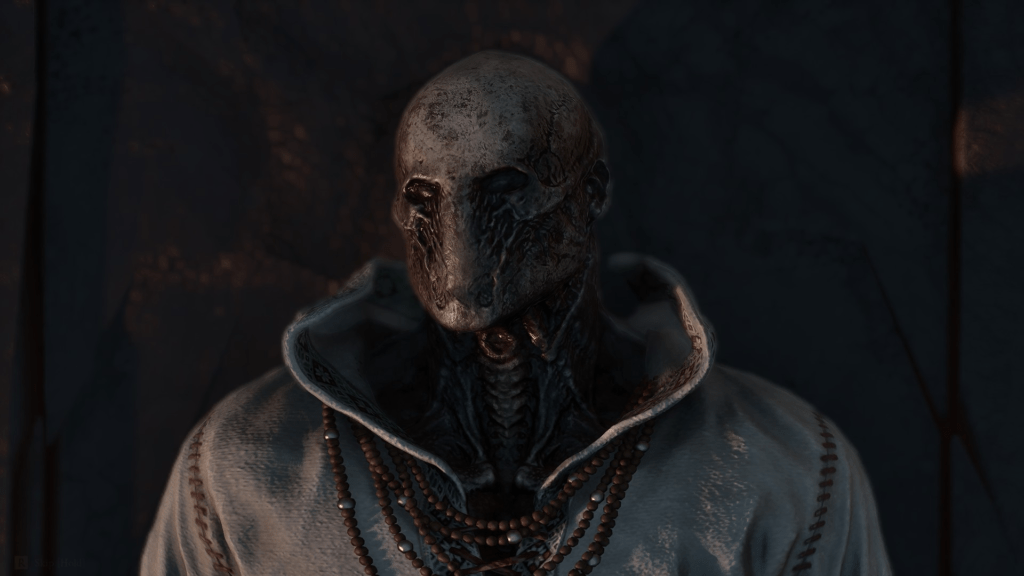
Your checkpoints throughout the game take the form of Beacons.
Some Beacons scattered around the world have been corrupted, preventing you from immediately taking advantage of everything they offer. To cleanse them, you’ll have to venture inside and complete a challenge, usually involving groups of enemies and occasionally considerably more dangerous mini bosses. The risk is generally worth taking, however, as successfully cleansing a Beacon rewards you with various benefits. Beacons usually allow you to level up, change your Shell and weapons, and access Mether’s Pulse, where you can upgrade your healing item.
The map is considerably larger than the one found in the first game, and practically none of it feels empty. Different items are scattered throughout the world, including Permanent Pickup items. The more of these you collect, the greater your familiarity with those particular items becomes, consequently increasing the effectiveness of their active abilities.
The map itself is divided into two major sections, each containing several visible gates that you must reach in order to encounter the game’s bosses. Opening these gates usually requires cleansing the Beacon located nearby.
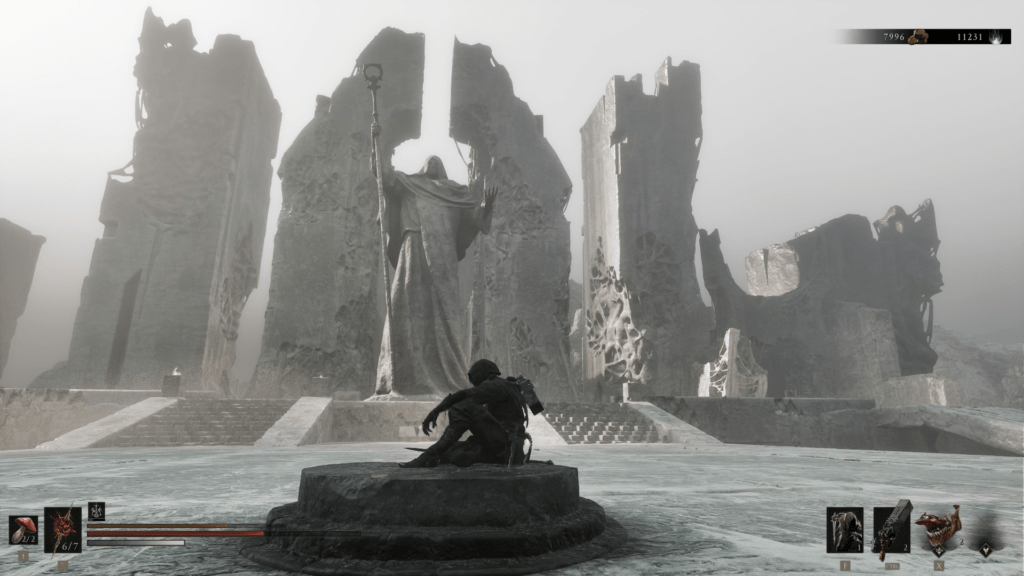
Once you’ve successfully purified one and return to the HUB, you’ll find a device called the Gloom Siphon. Using it rewards you with Gloom as well as various other rewards, usually including materials for upgrading your weapons, giving you even more incentive to cleanse every Beacon you encounter.
In addition to Beacons, there are also dungeons that you can explore whenever you wish, hiding valuable rewards for those persistent enough to overcome their challenges. From time to time, you’ll also come across various trials, where the game throws several enemies your way that you must defeat. These encounters usually involve tougher opponents, but the rewards make them well worth the effort.
One Being, Countless Faces
One of the things I found particularly interesting about the original game was the fact that practically everyone wanted to become immortal, while an immortal being casually wandered around borrowing the bodies of fallen warriors. The game essentially treats the human body as a temporary shell, something most of its characters desperately want to escape. It is ultimately up to you to decide whether you want to participate in their pursuit of immortality or recognize that perhaps the pursuit itself is actually… a trap.
The sequel offers significantly more Shells this time around. Tiel and Eredrim return, but they’re joined by Proxima, Lazlo, Sariel, Smert and Gragu, alongside the possibility of taking control of Genessa’s Shell. Every Shell possesses unique abilities that require Resolve to activate. Each also has its own story, which can be uncovered through Zhirelle. Certain NPCs will even react differently depending on which Shell you’re currently inhabiting. Sometimes, the Shell you’ve chosen will unlock an entirely new piece of dialogue and it may even earn you a valuable item.
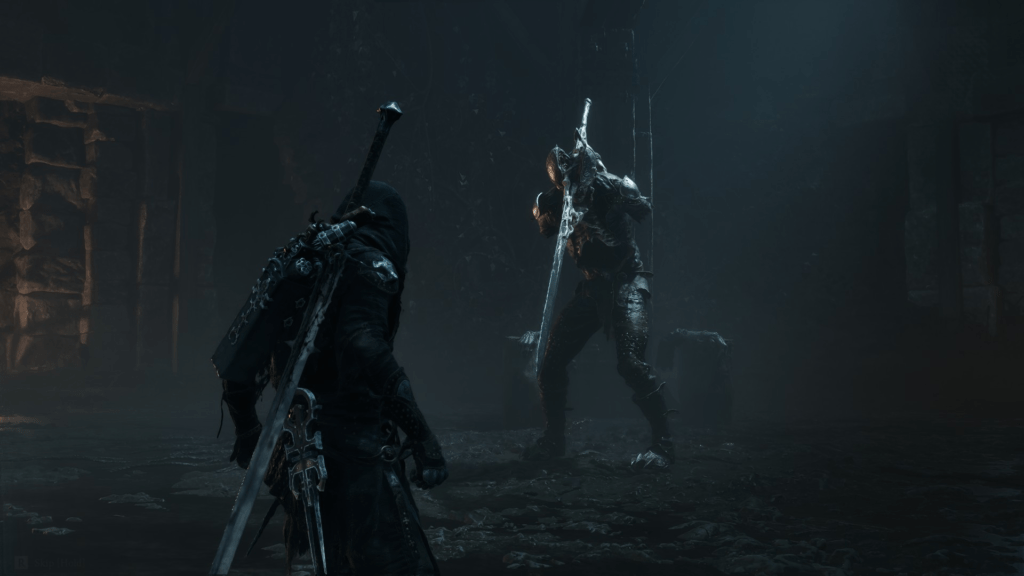
When your Shell’s health reaches zero, it collapses, leaving only the Harbinger, who is considerably more vulnerable without the protection of a Shell. To reclaim it, you’ll have to continue fighting in this exposed form and land enough attacks on enemies to gradually restore its energy. Once it has been fully replenished, the Harbinger can leap back into the same Shell and continue fighting.
However, the Harbinger isn’t simply a helpless form existing between the two lives of a Shell. His attributes can be upgraded separately, and leveling them rewards you with Shell Points.
The Greatest Threats in This Brutal World
The entire purpose of your character is essentially to hunt bosses and recover the Ova, and whenever you finally reach one of those gates, you can be fairly certain that a spectacle is waiting on the other side. Before each boss encounter, a bird like creature named Ruk appears to tease your imagination by revealing a few details about the creature you’re about to face. Most boss battles also allow you to summon one of the game’s Shells as an ally, even if you don’t currently possess that particular Shell. Unfortunately, I found these companions to be relatively useless. They either die far too quickly or simply disappear once the fight enters its second phase. What helped me considerably more was learning each boss’s attack patterns so I could nail the parry timing as consistently as possible. Of course, that didn’t always work, forcing me to combine dodging with carefully selected Tarstones and my rifles. My personal favorites were definitely the starting rifle and the Triarch Repeater. As for the melee weapon, I stuck with the longsword I got in the beginning, only upgrading it whenever I had the chance and using the leap attack to close the distance between myself and the enemies and deal even more damage. Once you reach the second part of the map, bosses become noticeably more aggressive and their attacks deal considerably more damage. One particular encounter genuinely traumatized me, as just two hits were enough to kill me, leaving very little room for mistakes.
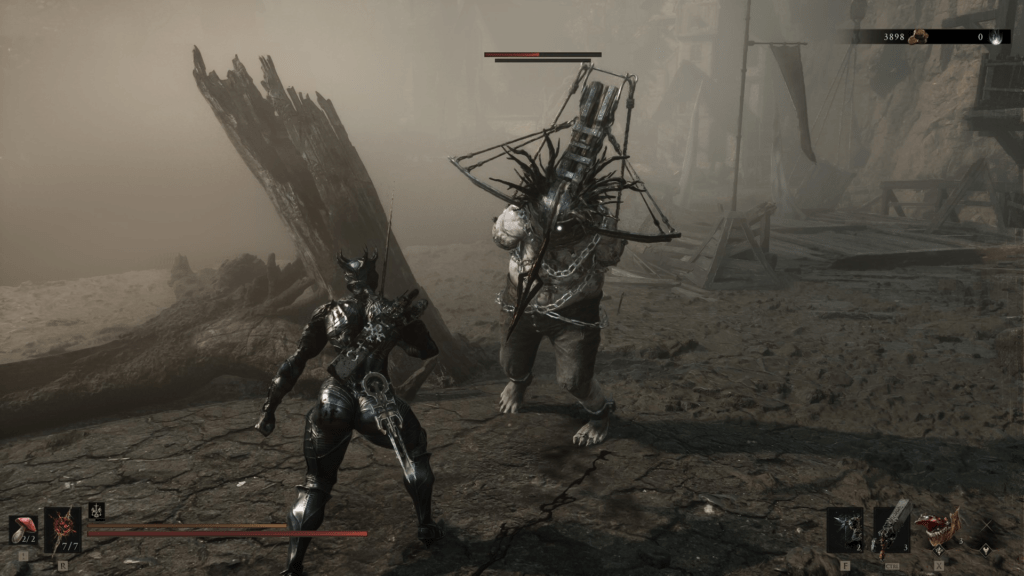
Nevertheless, the bosses themselves are beautifully designed, something that becomes particularly noticeable toward the end of the game. One thing that could have significantly improved these encounters, however, is the music. It often felt as though every boss battle used either the same track or something extremely similar.
Grotesque Beauty in a World on the Brink of Collapse
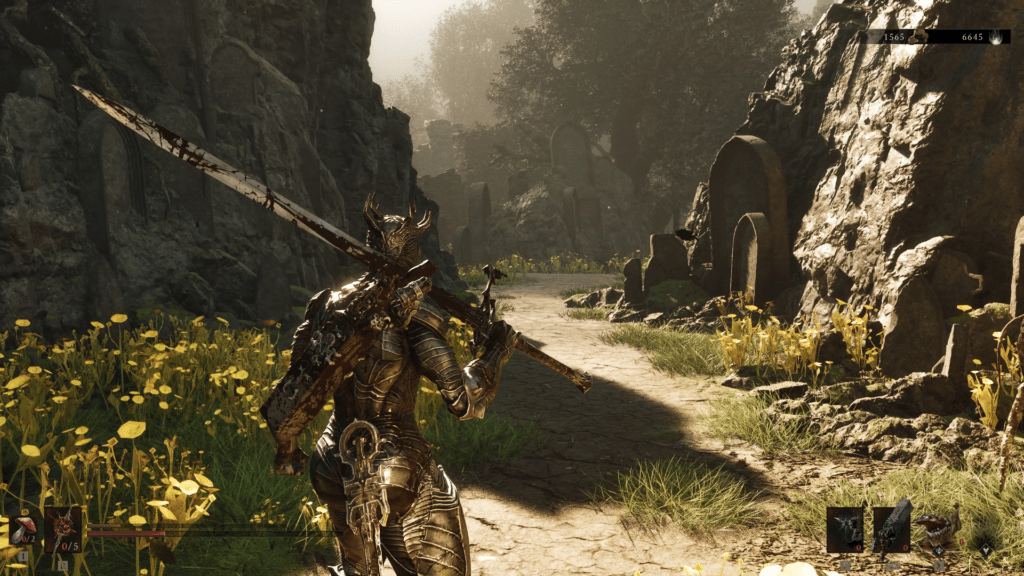
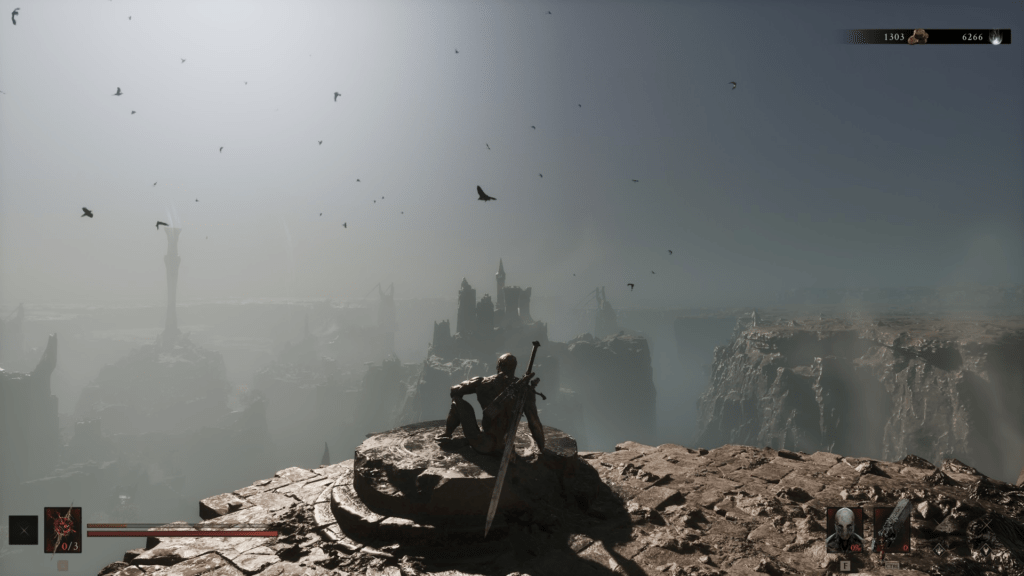
Visually, Mortal Shell II remains faithful to its dark fantasy aesthetic, but everything now feels richer, more varied and considerably more ambitious. The map is dominated by locations that initially appear almost completely devoid of life, filled with crumbling architecture and muted gray tones. However, the game cleverly breaks up that bleakness with villages overgrown by greenery, where you can encounter some surprisingly friendly characters, a tavern where you can play your tambourine alongside another musician, and even one location that personally left me speechless, filled with vibrant red foliage and enemies whose designs perfectly complement their surroundings. In some ways, that particular area reminded me of a location I always love seeing in Lords of the Fallen (2023).
Not a single moment feels boring or empty because Mortal Shell II constantly presents you with a world that is simultaneously beautiful, morbid and deeply unsettling. The original game already demonstrated that the developers knew exactly how to build a distinctive atmosphere, but the sequel takes this aspect to an entirely different level. Thanks to more varied locations, richer environmental detail and striking world design, practically every corner manages to catch your attention while reinforcing that constant sense of unease and mystery that suits Mortal Shell’s identity so perfectly.
The sheer number of NPCs also contributes enormously to the atmosphere, making the world feel considerably more alive despite its bleak nature. Their unusual personalities, often bizarre dialogue and the quests they give you create some of the game’s most memorable and entertaining moments, while simultaneously providing additional fragments of lore and helping you better understand this strange world.
Is It Time for Mortal Shell to Stand Among the Greats?
Even during the beta, it was clear that Mortal Shell II had enormous potential, and the final version demonstrates that the developers have managed to capitalize on it in practically every area. Every aspect of the original formula has been taken to another level, from the significantly larger and more varied world to the improved combat system, numerous Shells, richer story and an atmosphere that constantly encourages you to discover whatever might be waiting around the next corner. Together, all of these elements turn Mortal Shell II into a genuine spectacle and, perhaps more importantly, an unforgettable journey that demonstrates just how far this series has come since its original appearance.
Once you understand how each Shell works, discover which Tarstones best complement your playstyle and begin experimenting with the genuinely impressive selection of weapons available, you’ll find it incredibly difficult to put the game down. Mortal Shell II constantly encourages you to experiment with new combinations and adapt your approach to combat, creating a sense of progression that rarely disappears. Simply completing the game will take approximately 30 to 40 hours, but thanks to the variety of its world, combat and the sheer number of possibilities it provides, practically none of those hours feel boring or unnecessary.
I’m particularly happy to see a game with such an interesting concept finally reach its full potential. The original Mortal Shell established excellent foundations and demonstrated that there was plenty of room for its unusual Soulslike formula to grow, but it also left the impression that the developers hadn’t quite managed to realize everything they had envisioned. Mortal Shell II is exactly what I wanted from a sequel – a game that doesn’t discard what made the original special, but instead takes its strongest ideas, expands upon them and finally gives them enough room to truly shine.
We would like to thank PlayStack for providing us with a copy of the game for review purposes.
Mortal Shell II (PC)
The result is a sequel that feels bigger, more confident and more ambitious in practically every respect, without sacrificing the distinctive identity of the series. Instead of simply trying to become yet another souls-like, Mortal Shell II has a much clearer understanding of what it wants to be and why it deserves its own place within the genre. And that's exactly why it's so satisfying to see a game built around so many great ideas finally become the experience it always had the potential to be.
