
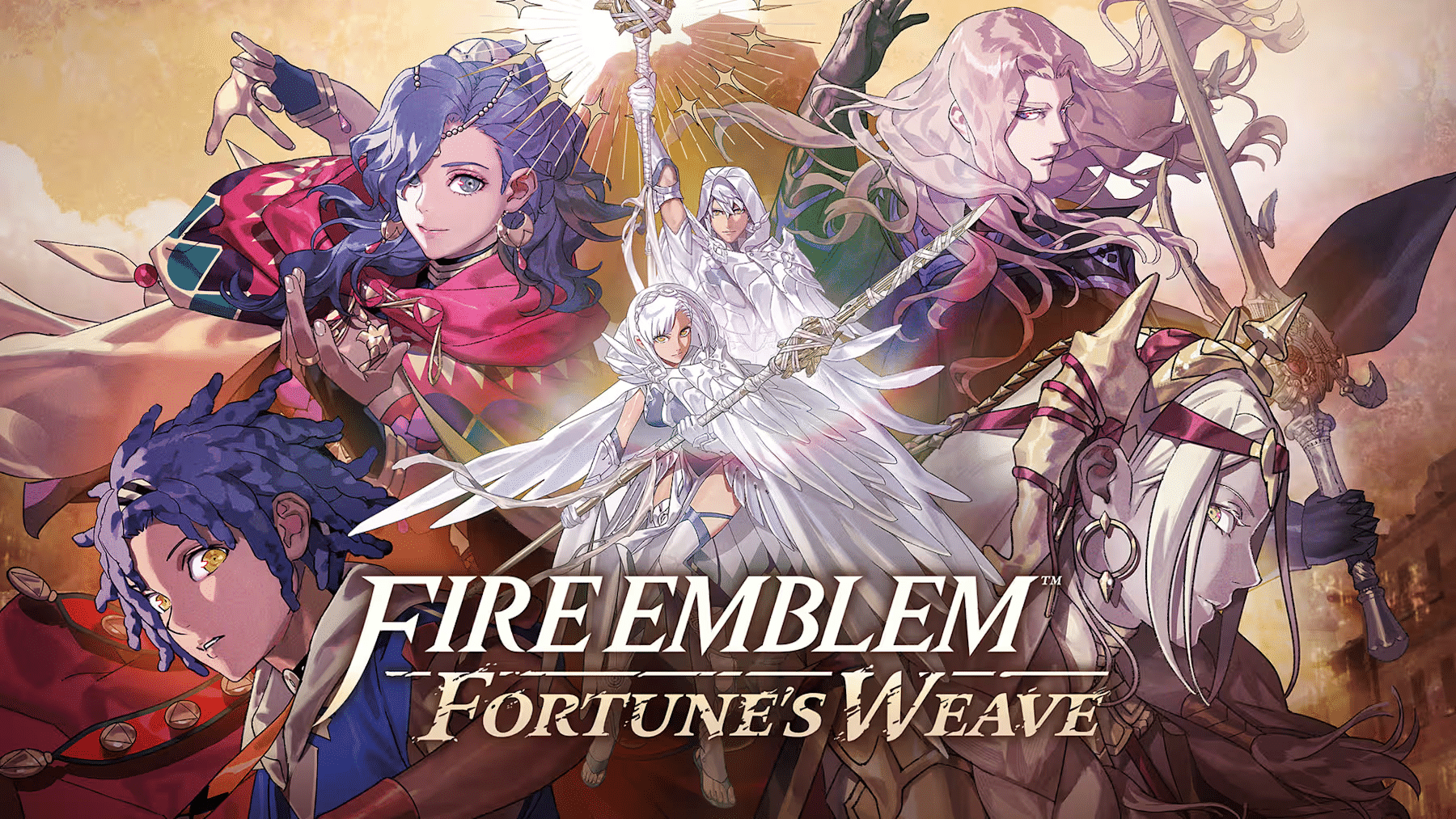

Following the success of Fire Emblem: Three Houses, Intelligent Systems delivers another tactical RPG with memorable characters, meaningful decisions and a combat system capable of keeping players occupied for dozens, if not hundreds of hours. Rather than repeating the formula of its predecessor, with already multiple paths to play, the studio has created something considerably even more ambitious for the Nintendo Switch 2 debut of franchise. Fire Emblem: Fortune’s Weave is an expansive adventure across the Dagdan Empire that connects four new protagonists, several distinct gameplay systems and a story about changing the course of history.
A Familiar World, But New Adventures Await
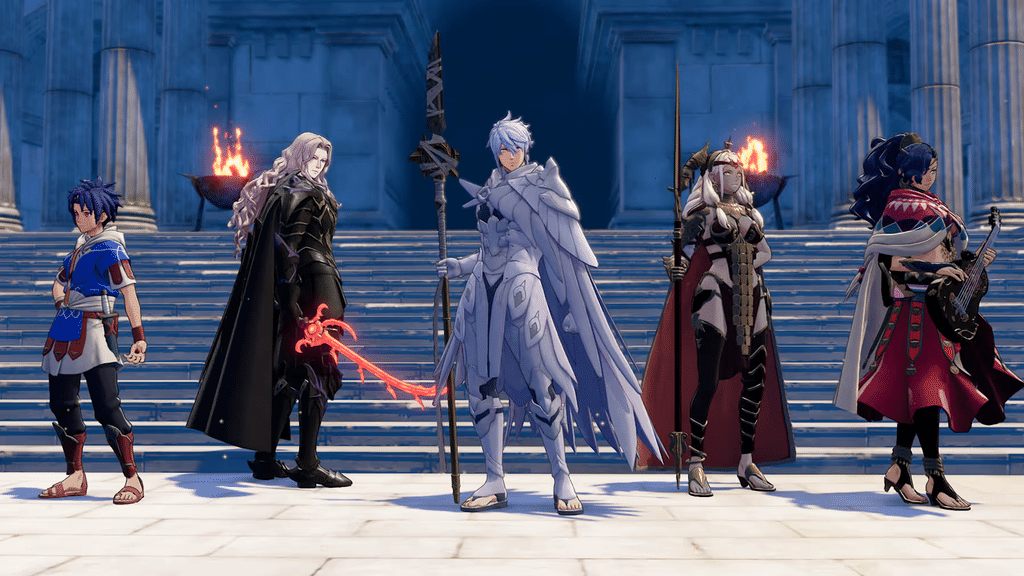
Set in the same world as Fire Emblem: Three Houses, Fortune’s Weave takes players to Dagda, a different continent inspired by the ancient Mediterranean. Its architecture, clothing, political structures and religious traditions evoke a civilization in which gods coexist with humanity and hold considerable influence over everyday life. Unlike Fodlan, with its familiar medieval European atmosphere, Dagda feels warmer and more vibrant. The setting gives the developers an opportunity to explore a different corner of the Fire Emblem universe without making familiarity with the previous games a prerequisite.
Although returning fans will recognize connections to Three Houses recognize connections to Three Houses, Fortune’s Weave is not a direct sequel. The relationship between the games is primarily one of shared history and world-building, with Dietrich, a native of Fodlan, providing one of the most noticeable connections. The story stands largely on its own and much of its appeal comes from discovering how the societies, beliefs and personalities of Dagda fit into this wider world. The four protagonists’ separate journeys eventually converge into a shared outcome.
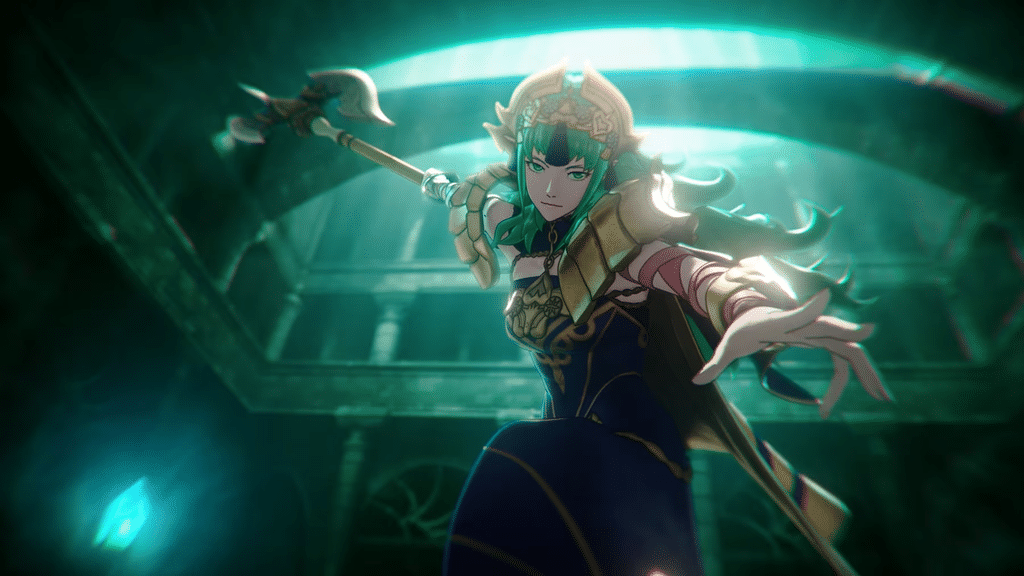
The opening establishes the stakes immediately. IN the year 1454, the Dagdan Empire faces destruction as Balor, a resurrected god of the underworld, unleashes hordes of undead through portals connecting the living world to the realm of the dead. Humanity is on the verge of defeat and the situation appears hopeless. Into this devastated future arrives Eshmel, a customizable protagonist sent on a mission by divine forces. The goddess Fortuna offers a way to prevent the catastrophe: Travel into the past, save four legendary warriors from their original fates and bring their combined strength into the final confrontation with Balor.
Eshmel follows in the tradition of previous Fire Emblem avatars, particularly Robin and Byleth. The character possesses an established role in the narrative while remaining flexible enough to serve as the player’s representative. The customization is more about more about personal identification than creating a completely independent character, but Eshmel provides a useful anchor for a story involving many different personalities and competing motivations
After a short tutorial introduces the fundamentals of tactical combat, the game presents a compelling choice. Players can begin rescuing the four Flame Lords, following their lives five years before the apocalypse or attempt to confront the final threat without any help at all, never even touching the stories. The latter option is possible, but it demands an intimate understanding of the mechanics, considerable patience and a healthy dose of luck. For most players, the real experience lies in uncovering the histories that make the eventual confrontation possible.
Four Heroes, Four Stories, One Expanding Campaign
The first part of Fire Emblem: Fortune’s Weave forms the heart of the adventure. Players return to the past and experience the events leading to the Dagdan Games, a gladiatorial competition in which warriors from across the continent fight for the promise of having a wish granted. These games provide the narrative framework for introducing the four Flame Lords, whose seemingly separate ambitions gradually become part of a much larger historical drama.
Cai enters the competition to save his imprisoned father. Coming from the peaceful village of Ribeira, he initially appears to be the most grounded of the four protagonists. His journey offers a personal entry point into Dagdan society, while his family history hints at deeper connections to the empire’s gods and temples.
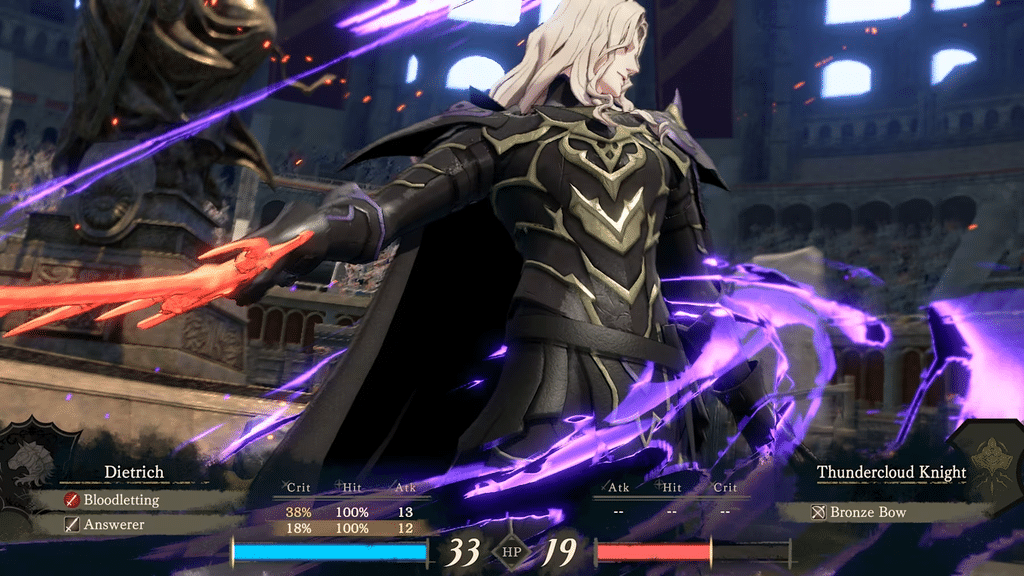
Dietrich, in the meanwhile, is a warrior from Fodlan whose appetite for challenging opponents drives him towards the games. His ties to the world of Three Houses make his route particularly interesting for returning fans, but his story also explores the culture and conflicts of Dagda from the perspective of an outsider.
Theodora, the queen of Saramis, approaches the competition with the ambitions of a ruler. Her responsibilities extend beyond personal glory, involving the future of her kingdom, its religious beliefs and a complicated history connected to Dagda’s founding god. Her route adds political intrigue to the broader narrative.
And finally, there is Leda, a dancer seeking revenge for the murder of her father. Her investigation into the killer develops into a search for the conspiracy surrounding his death, giving her story a more grounded and personal, mystery-driven direction.
These different motivations prevent the campaign from ever feeling like four repetitions of the same adventure. Instead, each route provides different perspective on the same historical period, gradually revealing the ambitions, relationships and conflicts that shape the empire. The result is an extensive cast whose members are connected by more than their eventual participation in the final war.
One of the most important structural decisions is that the player can switch between the four storylines rather than committing to a single route for the entirety of the campaign. Those who prefer to immerse themselves in one protagonist’s story can do so, while players eager to see the complete can alternate between the different stories. Completing chapters can be replayed, making it easier to revisit particular events or explore unfinished content.
This flexibility is a welcoming change, especially given the sheer amount of content. Nevertheless, the four stories are best experienced with some consideration for their narrative momentum. Switching constantly can interrupt the flow of the individual character’s journey, whereas completing routes one after nother allows their developments to breathe.
Part two escalates the conflict into a continent-spanning war against the undead, expanding the consequences of the character’s early decisions. Part three then brings Eshmel and the Flame Lords together in the present, where the heroes have aged through five years of warfare. Their experiences recruited allies and accumulated resources become essential to the final campaign against Balor. With revealing the later twists, this progression provides a satisfying reason for the game’s immense length. The conclusion brings together much of what players built across the preceding journeys.
Tactical Combat That Rewards Experimentation
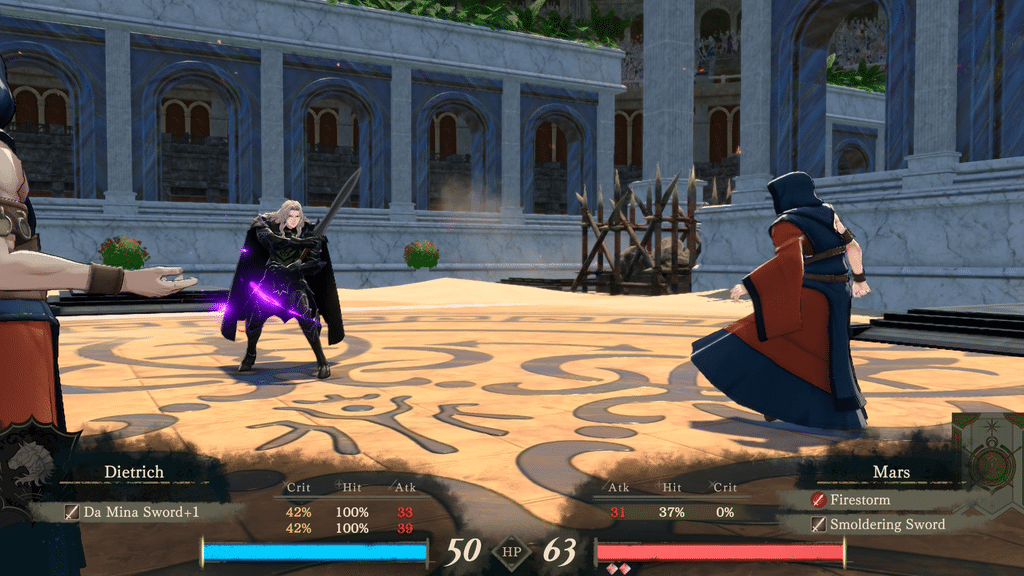
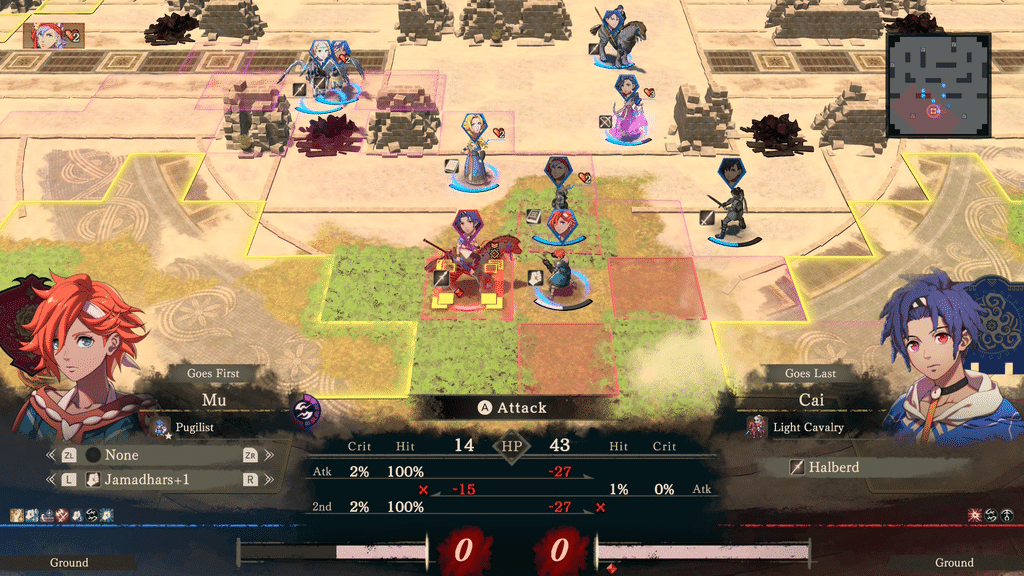
For all its narrative ambition, Fire Emblem remains a strategy game at its core. Fortune’s Weave understands this and keeps its central combat system focused on positioning, movement, unit specialization and careful assessment of enemy threats. Battles take place on the usual grid-based maps, where a poorly positioned character can quickly become vulnerable and a well-planned formation can turn an overwhelming encounter into a manageable victory.
The most significant change is the replacement of the traditional weapon triangle with a system that emphasizes the characteristics of individual weapons and classes. Axes are heavy but offer dependable damage, while swords prioritize speed and can deliver additional damage through follow-up attacks. Other weapon types and classes have their own advantages, encouraging players to consider the composition of their army rather than relying on a simple hierarchy of counters.
This makes combat feel familiar without being entirely predictable. Understanding an enemy’s capabilities and positioning remains crucial, but the new system provides more opportunities to develop personalized tactics. Instead of treating unit classes as interchangeable answers to particular enemy types, players can experiment with different combinations and build an army around the strengths of their preferred characters.
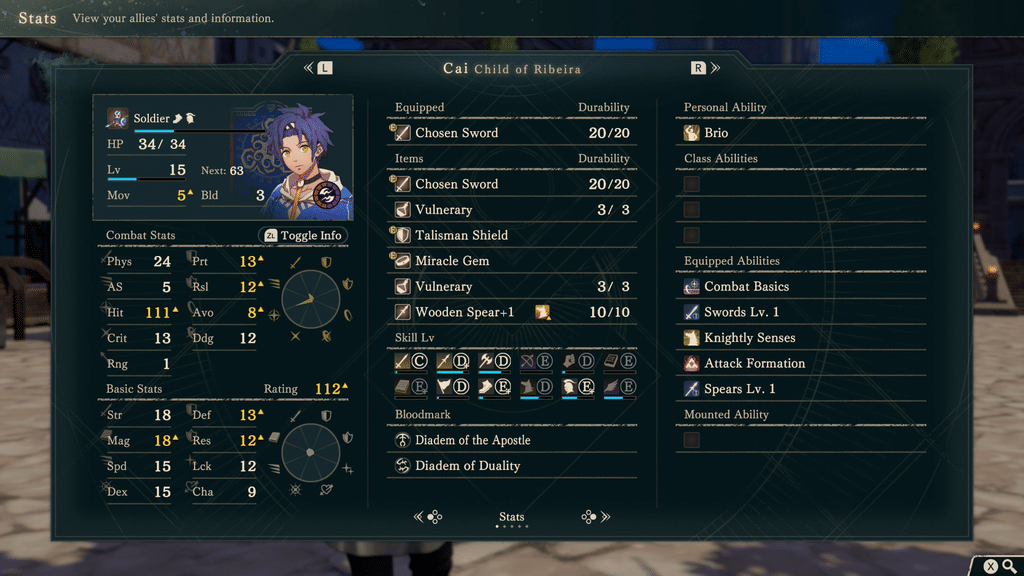
Weapon durability also returns, although it works differently from the system of earlier Fire Emblem instalments. Ordinary attacks do not continually consume the durability of a weapon in the same way that players might expect from older games. Instead, durability is primarily spent when using weapon arts. This distinction makes powerful equipment more enjoyable to use while retaining an important resource-management consideration, repeatedly relying on special techniques can leave a unit without the tools needed for later encounters.
The result is a satisfying balance between freedom and restrictions. Better weapons feel like rewards rather than temporary luxuries, but players still need to think carefully about when an especially powerful attack is worth its cost.
Class progression provides another layer of customization. Characters can promote into different classes as long as fulfil the demanded weapon-skill requirements. Although individual characters have proficiencies that make certain paths more natural, they are not restricted to a single role. Each character also posseses a personal skill, giving units individual advantages even when they share the same class.
This flexibility creates numerous opportunities for experimentation across the campaign with its large cast of characters. A familiar character can become something unexpected, and an army can be reorganized to accommodate new recruits or prepare for a difficult encounter. With so many possible combinations, developing a team can almost be as engaging as leading it into battle.
Blaze Arts and the Individuality of Each Flame Lord
Fortune’s Weave adds another major tactical layer through the Flame Lords’ unique Blaze Arts. Each hero possesses a special ability that distinguishes them in battle, alongside an individual gameplay mechanic that affects exploration and army development.
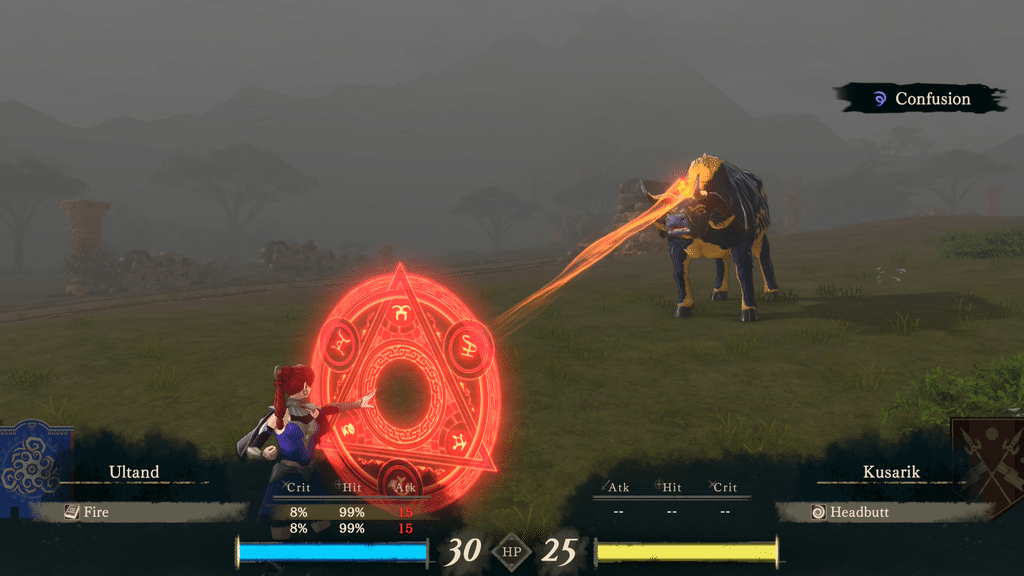
Cai can summon and manipulate flames, allowing him to strike enemies from a distance and obstruct their movement. Beyond combat, his experience as a farmer lets him tame mounts and build relationships with animals. These mounts grant additional abilities and statistics to the characters who equip them.
Theodora focuses on battlefield control and military organization. She can hurl large rocks across considerable distances to hit important targets, while her ability to recruit battalions gives her access to units reminiscent of the Gambits introduced in Fire Emblem: Three Houses. This combination makes her particularly useful for players who enjoy coordinating large-scale engagements and disrupting enemy formations.
Dietrich offers a different approach. His short-range teleportation allows him to move around the battlefield in unconventional ways, with his abilities later expanding to include stunning nearby enemies. Outside combat, he can fight special opponents to collect materials and upgrade weapon arts, creating a progression loop built around challenging encounters and increasingly effective techniques.
Leda, by contrast, brings a more supportive style to the party. Her music grants bonuses to multiple allies across a wide rea and she can even summon a demonic beast to fight alongside the army. During exploration, she travels between cities and performs in taverns, unlocking and improving songs that can later be used again in combat.
Each route changes more than the identity of the protagonist. It changes how players spend their time, collect resources, develop their units and approach the world. The differences are particularly satisfying in the final part of the game, when the abilities associated with all four Flame Lords become available together. Having access to their combined systems creates an extensive strategic toolkit that rewards the time invested in the earlier chapters.
Exploration, Dungeons and the Life Between Battles
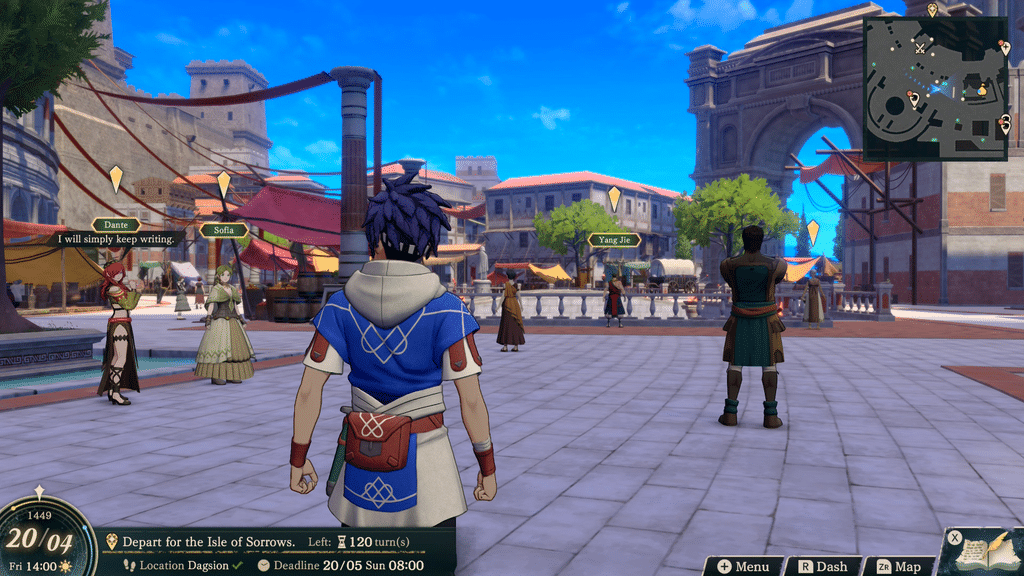
The game is not simply a sequence of tactical encounters. Between major story battles, Fortune’s Weave offers periods of free time in and around Dagsion, the capital of Dagda. Players can train their skills, share meals to improve relationships, gather resources, recruit additional allies, unlock promotions and explore the surrounding countryside.
This structure recalls Three Houses, but the broader world and the individual mechanics of the four protagonists give these sections their own identity. Free time becomes and important part of preparing for the next battle rather than merely a collection of optional diversions. An upcoming encounter might encourage the player to strengthen a particular character, acquire better equipment or spend time developing relationships with potential new recruits.
The city itself serves as a central hub, while the wider world offers additional activities and discoveries. Depending on the protagonist, exploration can revolve around different pursuits. Cai tends to animals and works the land, Theodora recruits’ soldiers, Deitrich develops combat techniques and Leda performs for audiences. These activities help each route fee distinct even when the general structure remains the same.
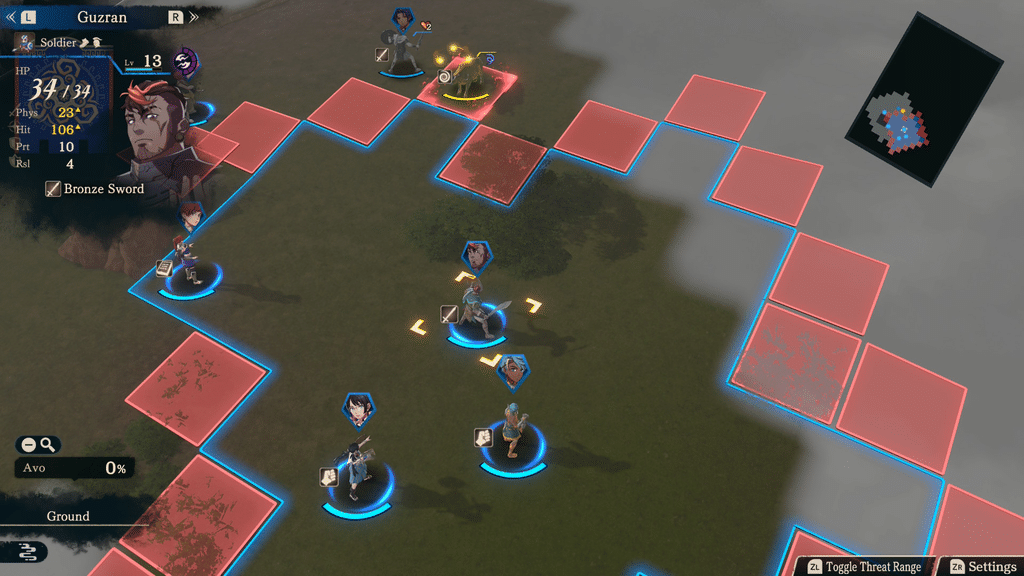
Dungeon exploration provides a welcoming diversion. Similar in concept to the dungeons of Fire Emblem Echoes: Shdows of Valentia, these areas contain enemies, materials and useful items that can help players upgrade or repair equipment. Their turn-based encounters provide a change of pace from the more elaborate grid battles.
However, this alternative combat system is less compelling than the tactical battles. Its simpler structure offers a pleasant change of rhythm initially but does not provide the same degree of strategic depth. Dungeon quality is also inconsistent, with some environments feeling like simple variations of existing fort layouts while others offer a more distinctive design.
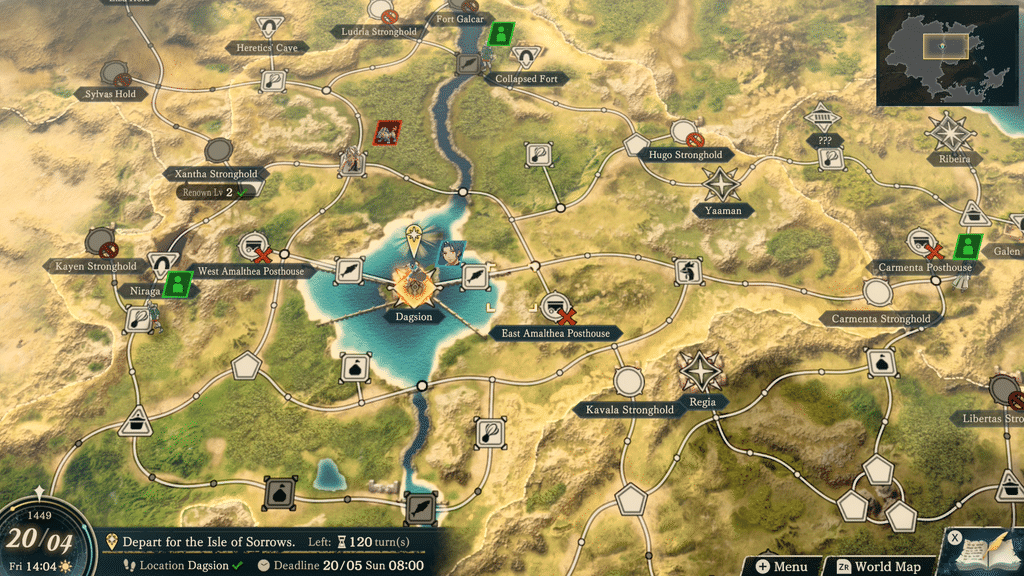
Paralogues, optional side battles, often with unusual conditions and additional context for specific characters, also expand the experience. Recruiting units, raising the standing of an army and completing these side stories create a steady stream of objectives between the main chapters. Players who enjoy building a comprehensive understanding of the world will find plenty to do.
Characters, Relationships and Presentation
A large cast is only as valuable as the personalities that distinguish its members. Fortune’s Weave features a wide variety of designs and backgrounds, ranging from ordinary villagers to aristocrats, warriors, performers and representatives of different nations. The visual language of each group reflects its place in Dagdan society, with Theodora’s entourage favoringelaborate clothing and Leda’s companions drawing inspiration from traveling performers.
The designs are a notable improvement in visual detail over Fire Emblem: Three Houses and the ancient Mediterranean inspiration give the cast a more varied appearance than the standardized academy uniforms of the previous game. Character artist Chinatsu Kurahan, who also worked on Three Houses, helps maintaining a recognizable visual identity while adapting it to the new setting.
The English voice acting is another highlight. The cast brings considerable energy to the dialogue, helping characters remain memorable across such a lengthy campaign. Cassandra Lee Morris gives Fortuna a convincing presence, while Zeno Robinson acts excellent as Cai.
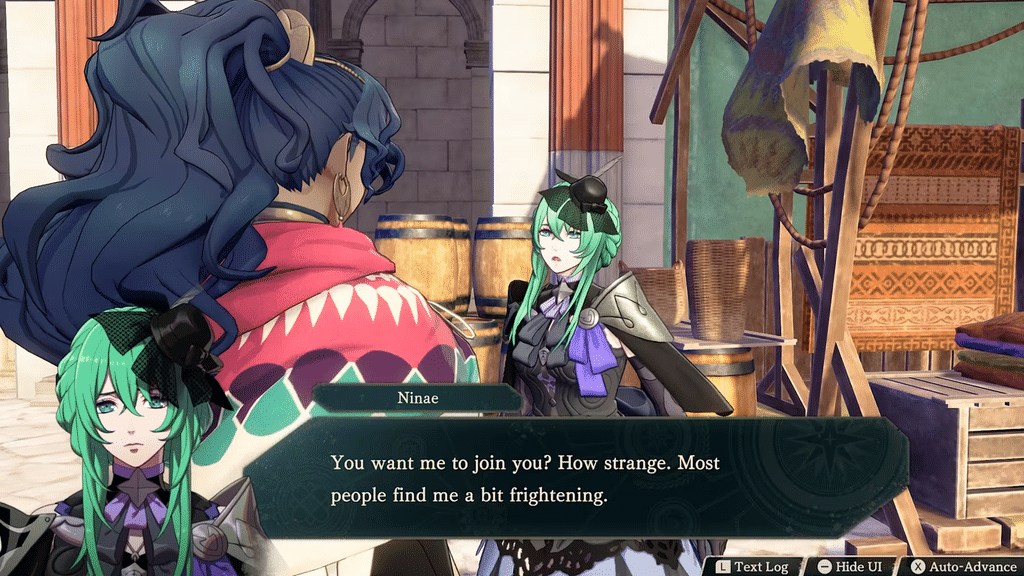
Relationships in Fortune’s Weave are handled more conservatively than in some recent Fire Emblem entries. Support conversations remain important, but characters general have a more selective range of interactions with members of each Flame Lord’s core group receiving more attention. Given the size of the cast, this make sense from a practical perspective, yet it can leave secondary recruits feeling less developed than the most prominent members of the party.
Romance also takes a back seat. S-rank support is limited to s ingle choice for Eshmel, while ending slides can still offer paired outcomes, including romantic possibilities in certain cases. This restrained approach may disappoint players who particularly enjoyed the relationship-building and matchmaking aspect of Three Houses. On the other hand, the reduced emphasis keeps the experience focused more firmly on the four protagonists and their journeys.
The soundtrack is arguably one of the games’ highlights. Flamenco inspired melodies, expressive percussions and remixed version of familiar Fire Emblem themes give Dagda a distinctive musical identity. Each Flame Lord has a recognizable musical motif, and these themes eventually begin to intertwine as the protagonists’ stories converge. That musical structure reinforces the central idea of four separate destinies becoming a shared one.
Technical Performance and the Cost of Ambition
As a Nintendo Switch 2 exclusive, Fortune’s Weave benefits from a noticeable improvement in graphical detail over Three Houses. Character models are more refined. The setting is more expansive and the capital of Dagsion feels like a substantial place rather than a decorative backdrop. Its combination of architecture, inhabitants and explorable space, gives the empire a stronger sense of scale.
During my playthrough, the game performed without notable technical problems on Nintendo Switch 2. The visual presentation is nevertheless uneven, Dungeon are the most obvious weak point, with their large number producing considerable variation in environmental quality. Some locations feel repetitive, while others introduce far more distinctive environments, including unusual technological elements that contrast with the empire’s mediterranean appearance. This contrast fits the game’s wider world-building, but not every environment enjoyed the same level of polish.
There is also the question of the sheer volume of content. Fortune’s Weave contains so much to do that the supporting activities can occasionally compete with the main story for attention. Lengthy strategic battles are central to the appeal, yet the repeated cycle of exploration, training, recruitment and preparation may become tyring for players who would prefer a more direct narrative. The freedom to approach routes in different orders helps, but it cannot entirely eliminate the feeling that the game is asking for another investment of time before the story can move forward.
Still, this ambition is inseparable from what makes the game special. The exploration, class systems, individual Flame Lords mechanics, character recruitment and overlapping storylines are designed to reinforce one another. A mount acquired through Cai’s activities, a battalion recruited by Theodora or an improved combat art learned on Dietrich’s route can all contribute to the larger campaign. The game’s many systems are at their strongest when players recognize these connections and use them to prepare a more capable army.
Verdict: A Massive and Rewarding Evolution of Fire Emblem
After dozens of hours of playtime, Fire Emblem: Fortune’s Weave has earned its place among the series’ most substantial and ambitious entries. Its four protagonists provide different perspectives on an intriguing historical conflict, while its tactical combat flexible class progression and distinctive Blaze Arts give players numerous ways to develop their armies.
The narrative benefits from its structure, gradually bringing together characters and experiences that initially seem unrelated. The transition from the Heroic Games to a continent-spanning conflict and ultimately the battle against Balor creates a strong sense of escalation. Meanwhile, the soundtrack, character design and vibrant setting establish an identity distinct from Thee Houses without abandoning the elements that make Fire Emblem compelling.
Not every part of the experience is equally successful. Dungeons vary in quality, their battle system lacks depth compared to the main tactical encounters and the more selective support system leaves opportunities for a deeper character development. The campaign’s enormous length is a strength for dedicated players but can also become an obstacle when optional activities begin to weigh down on the pacing.
But the achievements outweigh these shortcomings. Fortune’s Wave offers an expansive adventure in which exploration, character development, tactical experimentation and storytelling genuinely support one another. Its final chapters demonstrate why investing in the four Flame Lords matters, turning the dozens of hours spent developing induvial armies into a unified confrontation that feels earned.
Fire Emblem: Fortune's Weave (Nintendo Switch 2)
For long time fans, it is a substantial new chapter in the world of Fire Emblem. For newcomers, it offers a large self-contained story with an accessible starting point, even if mastering its many systems takes time. And for anyone who enjoys tactical RPGs built around careful planning and long-term character development, there is an extraordinary amount to discover. Fire Emblem: Fortune’s Weave is a confident, content-rich evolution of the series. Occasionally unwieldy, sometimes inconsistent, but ultimately an exceptionally rewarding strategy RPG whose four intertwined destinies make its enormous journey more than worthwhile.
