
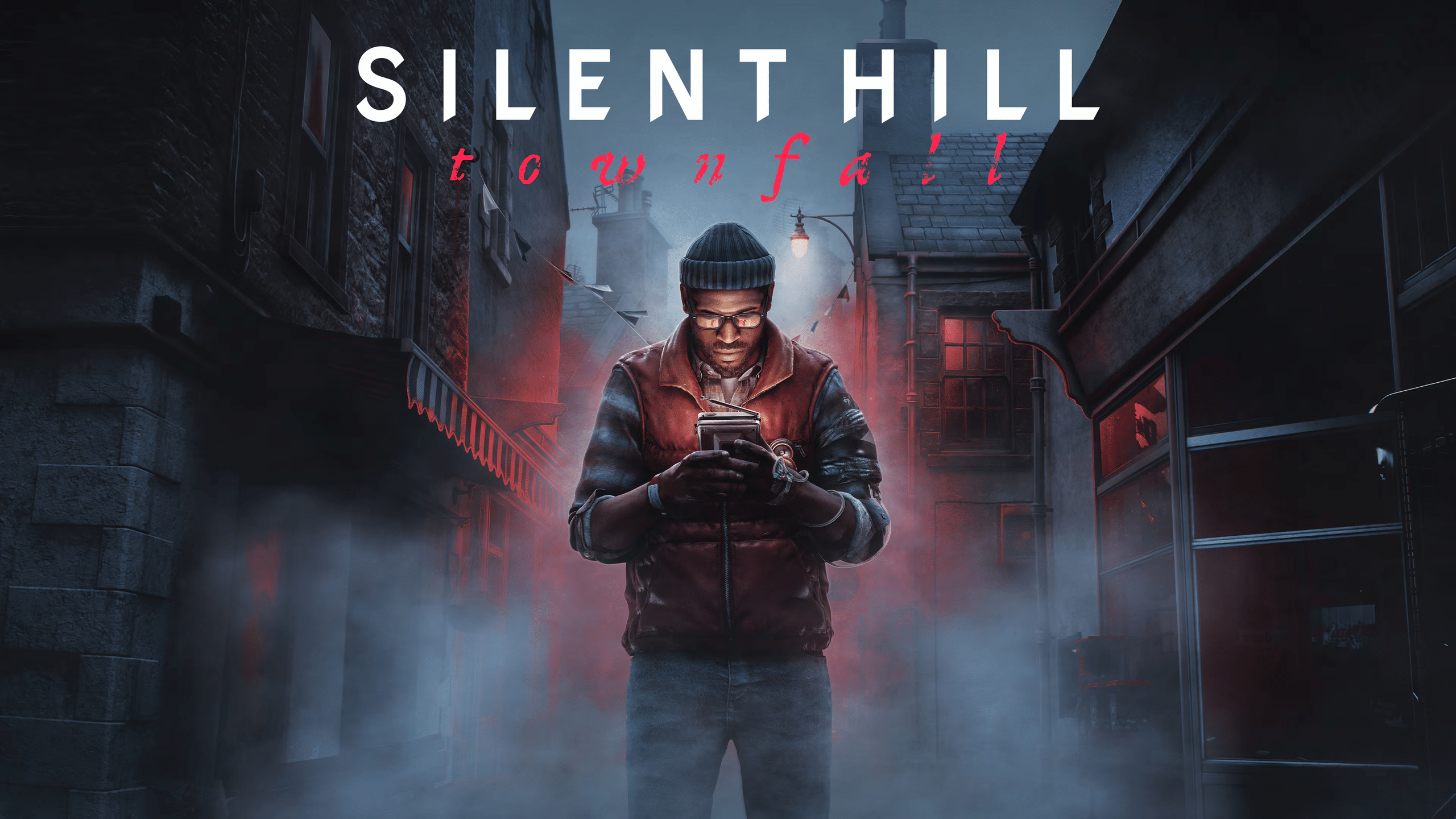

I love stories. I love good psychological horror and games that don’t hold your hand, but instead force you to put the pieces together yourself, pay attention to details, investigate things outside the medium itself, and figure out what the game is actually trying to tell you. That is exactly why Silent Hill 2 is one of my favorite video games. I consider it one of the most complete horror games we have ever received, and I also have a great love for Silent Hill 4: The Room.
Although I had never had the opportunity to play Silent Hill 1 and Silent Hill 3 before, I found a way to familiarize myself with them before Townfall’s release, and I certainly don’t regret it. And then, of course, there is P.T., probably one of the most influential demos in video game history.
Naturally, I also played the Silent Hill games that I didn’t particularly enjoy, such as Homecoming and Short Message, which were more accessible to me at the time than some of the others. Then there is Silent Hill f, which I genuinely enjoyed, although in the end it still feels like a game of its own. Don’t get me wrong – Silent Hill f is an excellent psychological horror game that combines psychological horror with body horror extremely well. Its combat may not be its strongest aspect, especially since the game often forces you into combat, but its story about generational trauma, the loss of identity and freedom that comes with arranged marriages, as well as domestic violence, creates an incredibly strong foundation for psychological horror.
Even more importantly, although Silent Hill f initially appears to be a completely separate story, there is one little detail that connects it beautifully to the series – White Claudia. For fans of the franchise, this plant carries a special meaning, and its presence in Silent Hill f is one of those details that rewards you for knowing the lore. If the plant is unfamiliar to you, Silent Hill’s main antagonist is Dahlia Gillespie, whose cult used White Claudia to create a hallucinogenic substance known as PTV. In Silent Hill f, we learn that the plant is one of the ingredients found in the pills you use to heal yourself. Brilliant! On top of that, the game even explains how the plant actually made its way to Japan.
And then, of course, there are the three Silent Hill movies, none of which are particularly faithful to the games (which is, unfortunately, quite common when it comes to video game adaptations), and the last one was so bad that watching it genuinely felt insulting.
And after all of this, we finally arrive at the newest Silent Hill game – Silent Hill: Townfall. Which immediately raises the question – did Townfall manage to preserve the identity of the series, and how much is it really worth as a Silent Hill experience?
Let’s start from the beginning.
Every Secret Finds Its Way to the Surface
Townfall puts us in the role of a man named Simon Ordell. Simon suddenly emerges from the water and climbs onto a dock. When he reaches a sign covered by a cloth, the wind blows it away, cleverly revealing the words – St. Amelia.
St. Amelia is a fictional town located on an isolated Scottish island, inspired by a real place called St. Monans, and the game takes place in 1996. Because of this, the world is filled with details that perfectly fit the period: cassette tapes, floppy disks, old computers, CRT technology, telephones, and keyboards that will awaken a sense of nostalgia in many players. However, what impressed me the most was how real St. Amelia feels and how clearly you can see the amount of love, care, and effort that went into creating this place.
There is no feeling that the town was created simply to serve as a stage for a horror game. It feels as though it existed long before we arrived. It has its own history, its inhabitants, and its own soul. Every detail contributes to the feeling that we are exploring a place that was once alive and is now left behind with nothing but its memories.
Everything is presented with so much care that I genuinely consider this little town a character in its own right, because it has a soul.
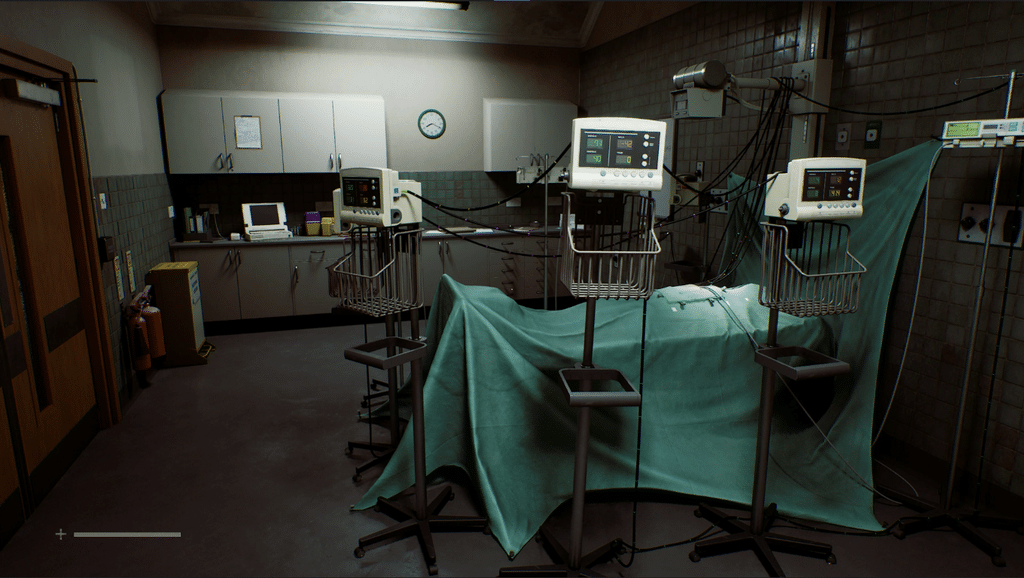
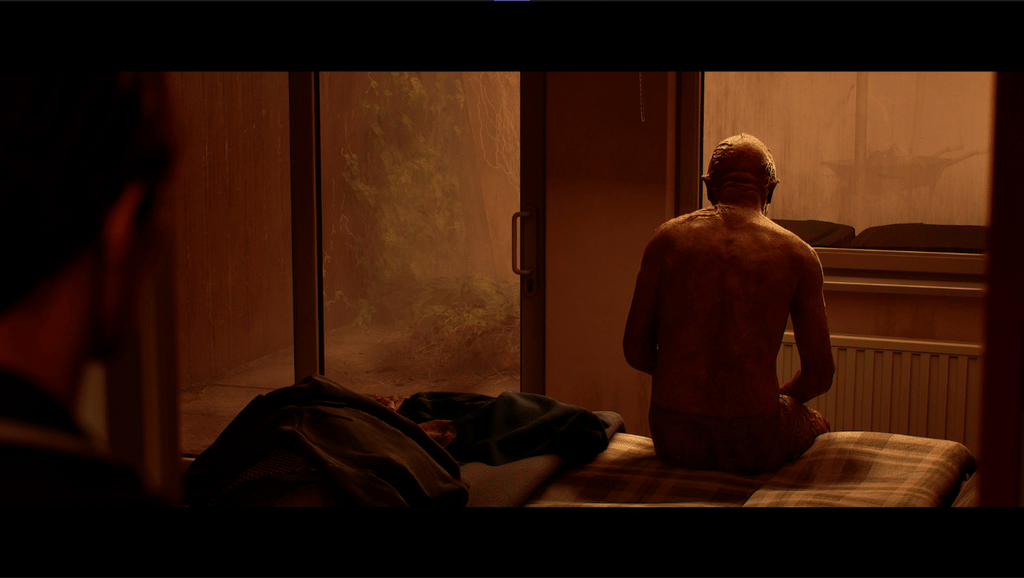
Simon wakes up with no memory of what happened to him. He doesn’t know why he is here, what he is supposed to do, or, more importantly, why he has an IV attached to him. Soon, he hears a telephone – or rather, a voice telling him to return to the town and ,,fix things”. He then meets Zoe Ellis, a nurse trapped inside a room who is apparently trying to isolate herself from the world around her. With the help of his portable CRTV, Simon begins piecing together fragments of the story and tries to understand what happened in St. Amelia, what his connection to this place is, and what exactly is expected of him. And this is where Townfall begins doing what Silent Hill does best – giving you just enough information to make you want more.
Maybe Not Every Enemy Was Meant to Be Killed
Unlike previous Silent Hill games, Townfall is played from a first person perspective. The game relies heavily on stealth, exploration, and limited resources, while the CRTV is one of the most important tools Simon has at his disposal. Through his CRTV, Simon can see where enemies are when he finds a specific frequency, and sometimes he can watch videos that help him piece together parts of the story.
When it comes to combat, you start with a simple wooden plank and later acquire a metal pipe. The problem is that weapons deteriorate, so you have to carefully consider when you actually want to engage an enemy. Later, you also get a revolver and a flare gun, while playing as the other characters gives you access to a different arsenal. You can make stealth easier by throwing bottles and bricks to attract enemies attention and create an opening for yourself, but then the game introduces moments where it really wants to punish you. There is one enemy you simply cannot kill. You can’t even stun it. Your only option is to avoid it, and this is where stealth becomes extremely important. The enemy’s AI can be ruthless. It will hear your movements, notice you if you make a mistake, and once it grabs you – it’s over. Several times, I carefully explored a room to collect everything I could, only for an enemy to suddenly appear out of nowhere, kill me, and send me twenty minutes back. In moments like these, the game demands an enormous amount of patience.
Thankfully, Simon has infusions that function as a sort of second life. In your inventory, you can combine IV bags with IV fluid, and if you have antibiotics, you can add them to give yourself more health after death. There are also bandages that can be combined with alcohol to make them more effective.
And, of course, there are puzzles.
I have to admit that most of them are very well designed. There is that wonderful feeling of satisfaction when you finally connect all the pieces yourself and figure out the solution. I particularly enjoyed the cassette puzzle, where inserting different recordings changes your surroundings. It is probably my favorite puzzle in the entire game, and honestly, I wish there had been more like it.
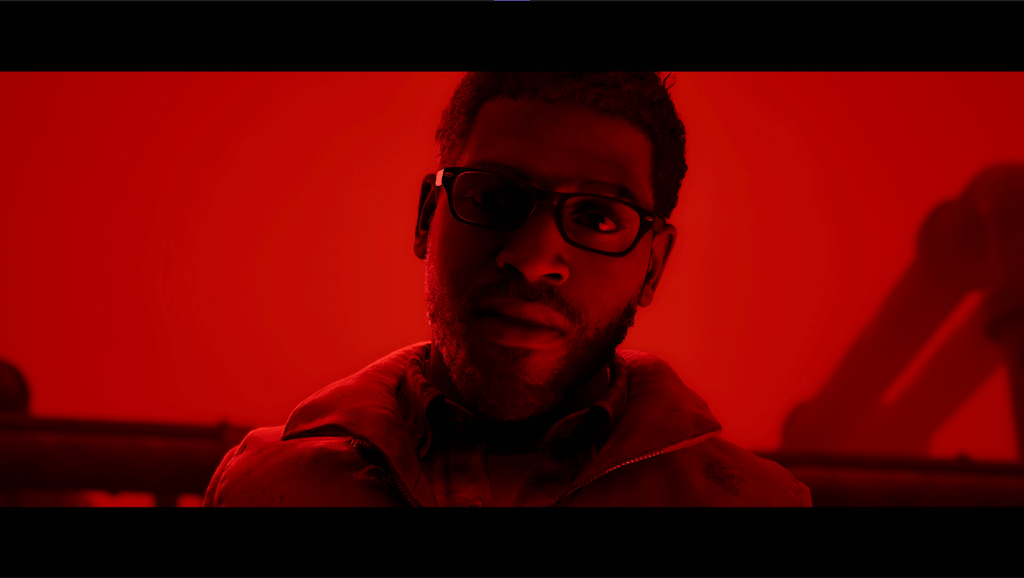
Another interesting aspect is the fact that we don’t only play as Simon. Zoe and Richard are also playable, and switching between characters brings certain gameplay differences. Zoe relies more heavily on stealth, Simon combines exploration, combat, and sneaking, while Richard feels more aggressive and more willing to pull the trigger. Simon has his CRTV, while Zoe has a pager, which is another small detail that works beautifully within the context of 1996.
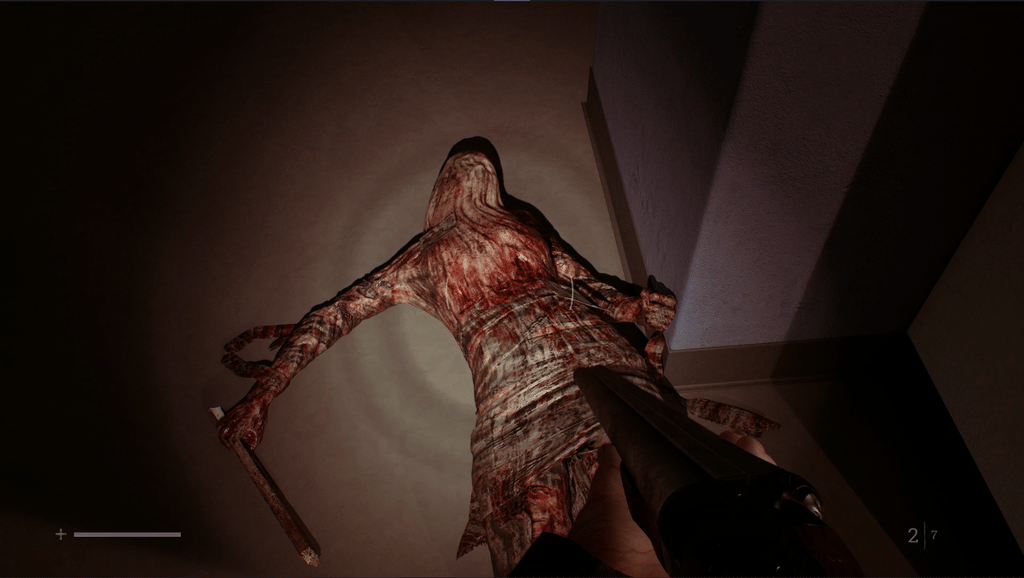
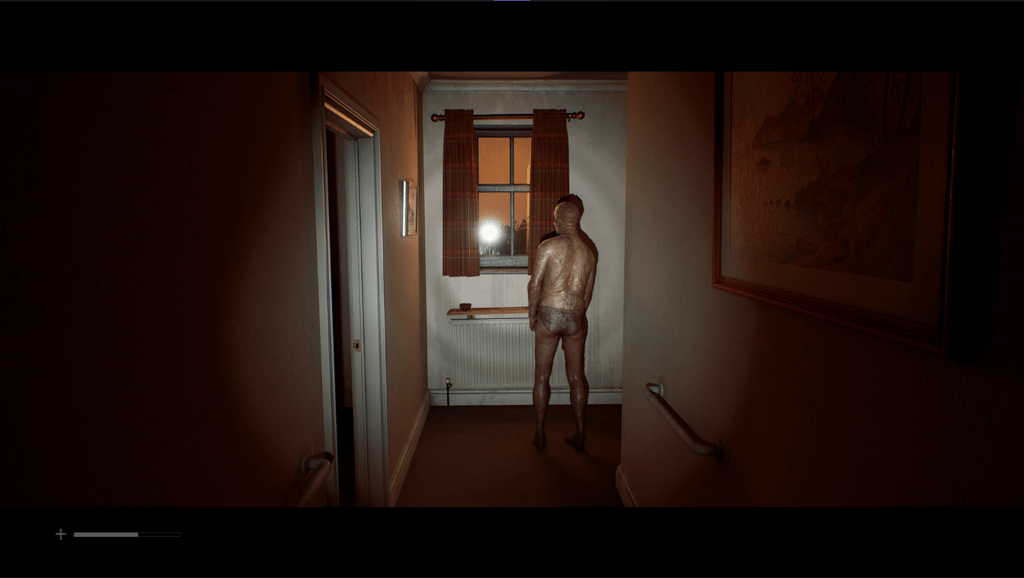
The enemies may be the most fascinating part of the entire game for me. Their designs are disturbing, but their true value becomes apparent once you finish the game and decide to start NG+. You begin looking at things differently and thinking about what you actually saw during your first playthrough. Many enemies don’t have recognizable faces. Some are naked, some are bound, while others wear torn clothing and photographs of unknown people.
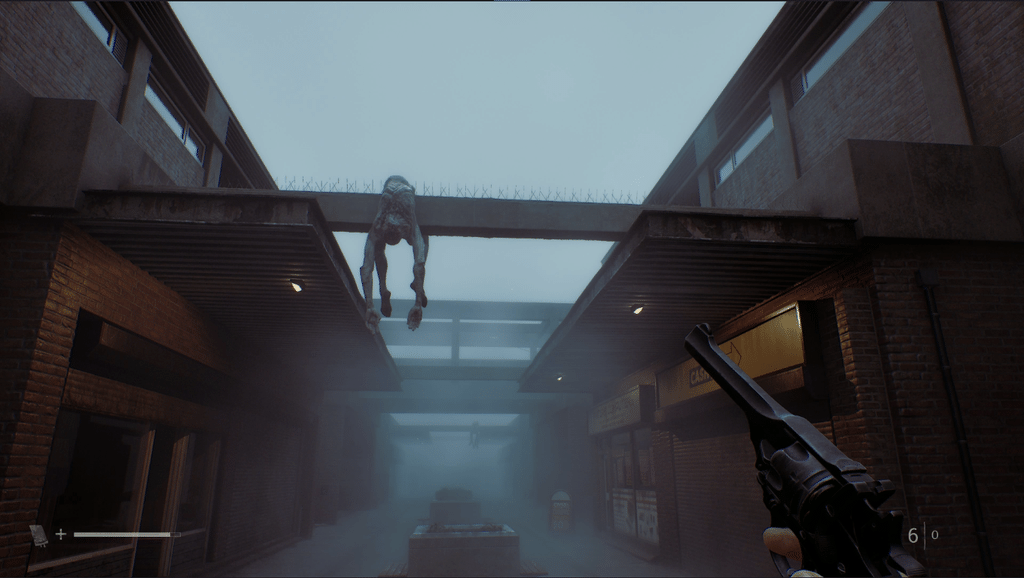
And then there is The Weight – an enemy you have to avoid, which looks as though it was created by fusing multiple bodies into one horrifying creature. Combined with the fact that ammunition and healing items are relatively scarce, the game forces you to carefully consider what you spend and what you save for later.
A Town That Breathes Through Silence
The way the story is told and gradually built was fantastic to me. The game gives you crumbs. You receive pieces of information that you have to connect yourself, but I never felt like the game was deliberately frustrating me. Quite the opposite – almost every section rewards you with another piece of the puzzle, making me increasingly eager to discover what had actually happened. The problem is that the ending failed to leave the same impression. Townfall has multiple endings depending on your behavior throughout the game, including your level of aggression, but regardless of which ending I received, I was left with the feeling that something was missing. The ending isn’t bad, but compared to everything that came before it, it felt somewhat underwhelming to me. I have a similar problem with Simon. I understand that he suffers from amnesia and that this is supposed to be part of his characterization, but throughout most of the game I never managed to feel his personality in the same way I did with Zoe or Richard. I often felt like he was simply watching the events around him rather than truly experiencing them.
On the other hand, St. Amelia is fantastic.
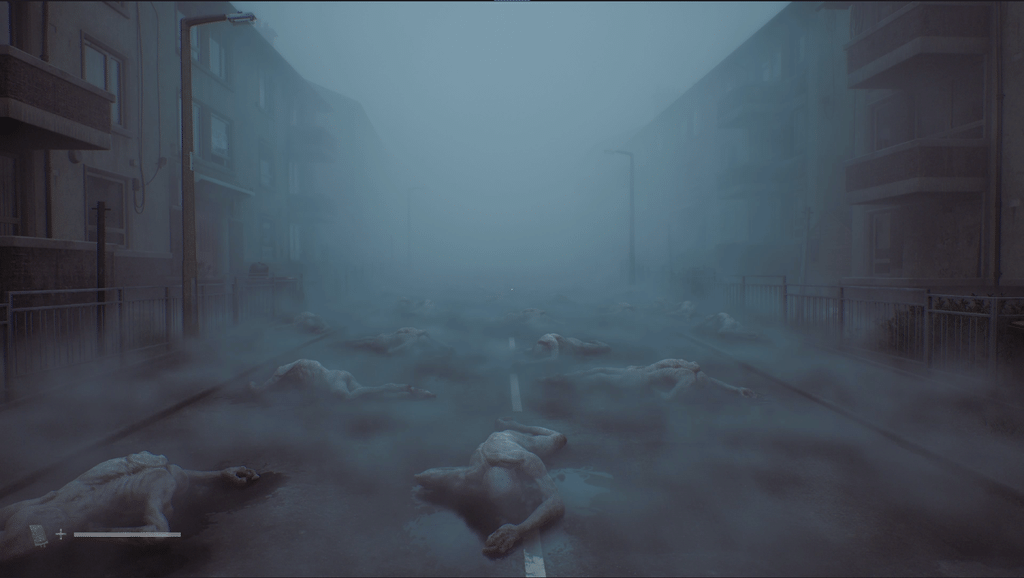
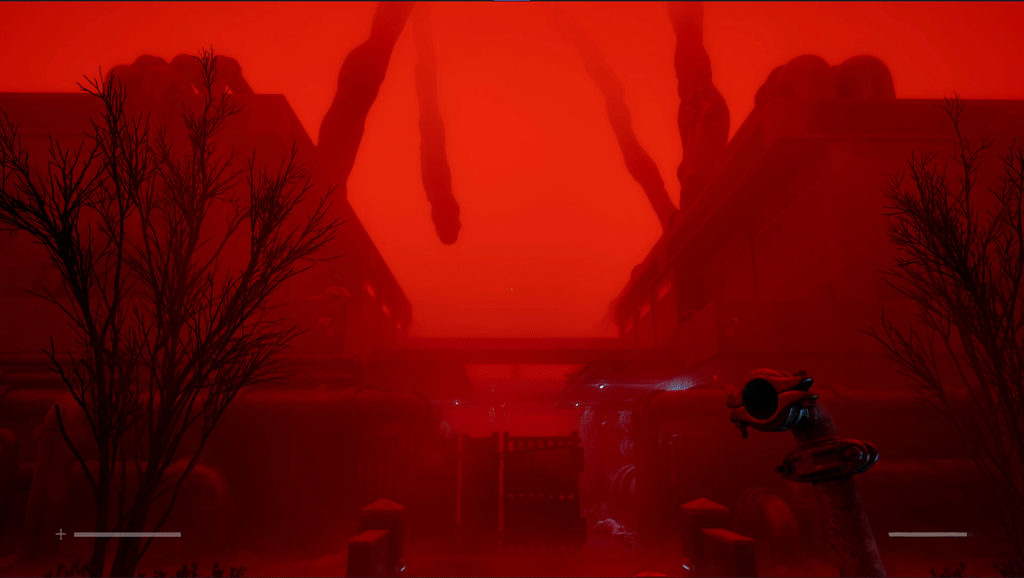
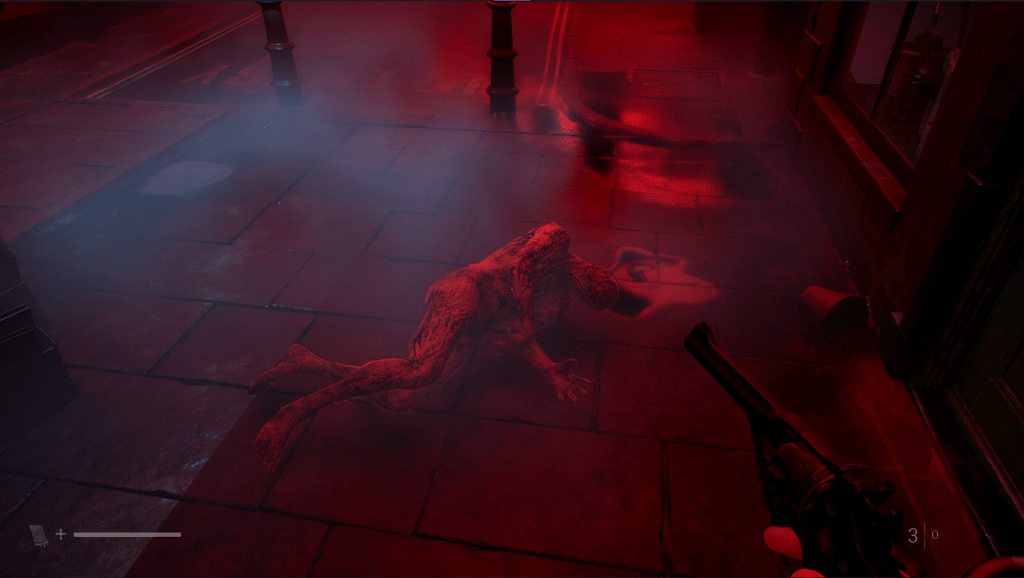
The town may be the greatest achievement of the entire game. The loneliness filling its streets, the silence, the fog, and the feeling of complete isolation create an atmosphere that is incredibly easy to fall in love with. Blue and red begin to intertwine in a way that will immediately catch the attention of longtime fans, while small details such as the clock constantly showing 8:19 further reinforce the feeling that everything here has a meaning. I would have liked the ,,Otherworld” sections to be bolder, though. They aren’t bad, but I wanted something more morbid, sharper, and more uncomfortable. There is one section where you find yourself on a street filled with bodies, some of which suddenly leap at you. You don’t know who is dead and who is alive, and that moment works incredibly well because it uses something Silent Hill has always done best – uncertainty. I wish the ,,Otherworld” had more moments like that.
The sound design, however, is absolutely fantastic. As you walk through empty streets, you can hear flickering lamps, the CRTV picking up an enemy signal, their quiet moans in the background, the sound of a bottle being picked up and thrown, windows breaking, and the footsteps of an enemy slowly catching up to you in the darkness. Even when nothing is happening, the sound keeps you on edge.
The ambient music further amplifies the feeling of emptiness. Long corridors, bright colors, silence, and then the sudden sound of a body hitting concrete – all of these elements come together to create an atmosphere that can be genuinely unsettling.
Still, we arrive at the question that kept circling around in my head throughout the entire game – Did Townfall manage to preserve the identity of Silent Hill?
In my opinion – not completely.
And this is where we arrive at a problem that is much harder to explain than whether the game is good or bad. Because Townfall is a good game. A very good one, in fact. But throughout almost the entire experience, I felt like I was playing an excellent indie psychological horror game rather than Silent Hill. Many people will compare it to Alien: Isolation because of its stealth mechanics and the enemy that pursues you, but while playing, I kept thinking more about Still Wakes the Deep. Not because these games are the same, but because Townfall gave me a similar feeling – the game has its own identity, its own ideas, and its own atmosphere, but it is missing that specific Silent Hill philosophy. To me, Silent Hill was never just about the town. It is a place that different people experience in different ways. A place that functions as a mirror of their subconscious, their sins, trauma, and guilt. It isn’t necessarily an evil entity that simply wants to punish everyone who enters it. It forces its characters to confront themselves. Then there is the cult, religion, rituals, and the way something that may have started as faith can become a source of horror. That combination of psychological and supernatural horror is what made Silent Hill so special. Townfall also wants to force its characters to confront what they carry deep inside themselves. The problem is that it doesn’t go deep enough. The themes are there. The ideas are there. The story is there.
But it is missing that subtlety that makes Silent Hill become more frightening the more you learn about its characters and the place itself.
Instead, Townfall relies more heavily on traditional horror mechanics, stealth, and occasional jumpscares. Its Otherworld, while visually interesting, doesn’t have the creative bizarreness I expected from Silent Hill. Even Silent Hill f, despite being completely different, felt closer to the identity of the series in that regard.
If we look at Resident Evil, we can see just how much it is possible to change a formula while still preserving the identity of a franchise. The gameplay changed. The camera changed. The pacing changed. But certain elements remained – puzzles, storytelling, atmosphere, a recognizable world structure, and perhaps most importantly, the feeling that you are still playing Resident Evil.
With Townfall, I had the opposite problem. The game is good enough that I would recommend it to someone who enjoys psychological horror, stealth, and narrative driven games. But when I place it next to the name Silent Hill, the expectations change. Because Silent Hill isn’t just a name. It is a particular way of telling stories, a particular way of creating horror, and a particular way of making the player question what they are seeing. And that is why I find Townfall so difficult to judge conclusively.
If I removed “Silent Hill” from the title, I would probably find it much easier to accept what the game offers me. I would see an excellent atmospheric horror game with a very interesting storytelling system, fantastic sound design, creative puzzles, and brilliantly designed enemies. But the name Silent Hill carries enormous weight and enormous expectations. And because of that name, I kept waiting for something that never came. Not another jumpscare, not another enemy, but that feeling that the game is saying something about me while I am trying to understand what is happening to its protagonist.
And that is where Townfall ultimately remains incomplete.
When the Fog Is No Longer the Same
Silent Hill: Townfall is a strange game to review precisely because its biggest problem isn’t its quality. The problem is the expectation that comes with its name. This is a well made psychological horror game with excellent atmosphere, fantastic sound design, interesting enemies, creative puzzles, and one of the best designed towns I have had the opportunity to explore in this franchise. St. Amelia has character, and the feeling of isolation the game manages to create stays with you long after you finish certain sections. But Silent Hill has always been more than atmosphere to me. It was a story about people, their guilt, trauma, fears, and the way their own minds can become the most terrifying place they could ever visit. Townfall touches on these themes, but it doesn’t explore them deeply enough to leave the same mark that the best games in the series have left.
Because of that, I can’t say that Townfall is a bad Silent Hill. Quite the opposite – I think the problem is precisely that it is such a good game on its own.
Silent Hill: Townfall (PlayStation 5)
And perhaps that is the biggest question this franchise will have to ask itself in the future: how far can it move away from its roots before we stop recognizing what made us love it in the first place? Because sometimes the problem isn't that the fog has changed.
The problem is when we can no longer see what lies behind it.
