
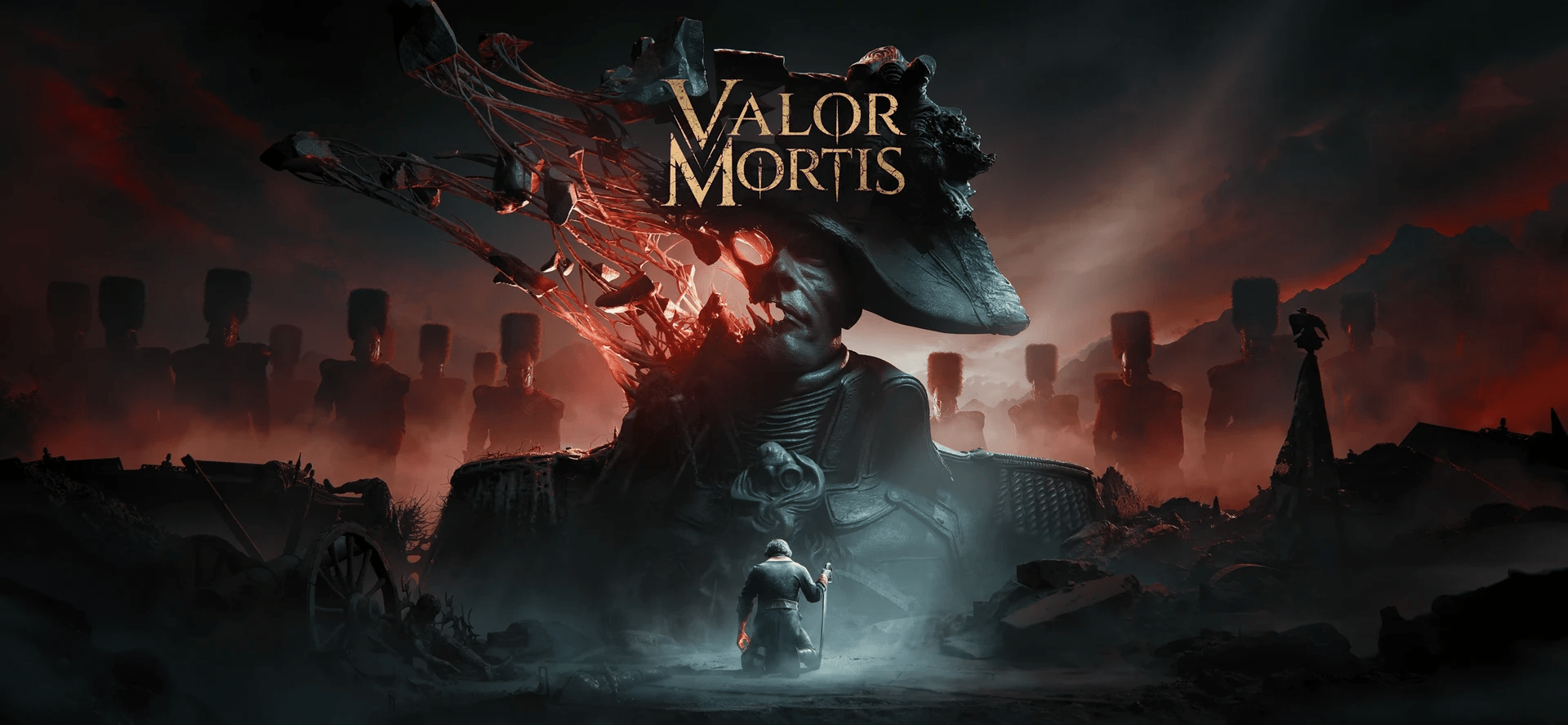

This time, the team called One More Level, who previously worked on the Ghostrunner games, presents their new title called Valor Mortis. This is a first person soulslike game in which you step into the role of a former soldier of Napoleon’s army, and with your new abilities, you will fight through terrifying enemies while gradually uncovering the details of a conspiracy that threatens to destroy humanity. The demo currently offers Chapter I – Revival and Chapter VII – Witch Hunt.
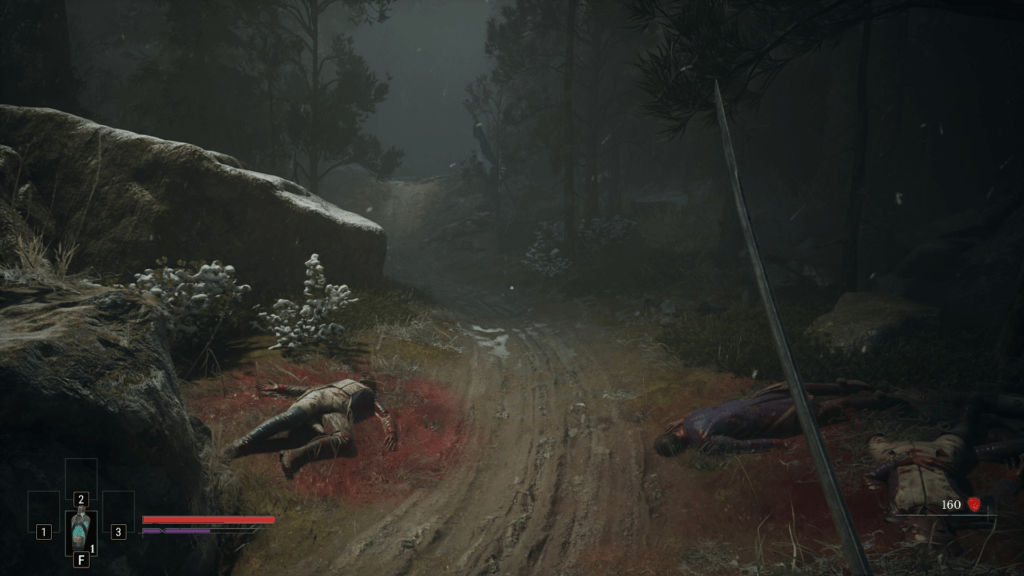
Your name is William Dowsett, and the game begins at the moment you wake up surrounded by the decaying bodies of your comrades. As you try to understand what happened, where you are, and how you even survived, it quickly becomes clear that something is seriously wrong. The soldiers around you no longer appear human or sane, their eyes are empty, their movements unnatural, and the only thing driving them is the desire to tear you apart.
After the first clashes and a struggle for survival, something even stranger happens. A voice echoes in your mind, someone you would least expect to hear from – Napoleon Bonaparte himself. As you push through this grim world, his voice repeatedly returns, offering advice, commentary, and encouragement to keep going despite all the horrors surrounding you.
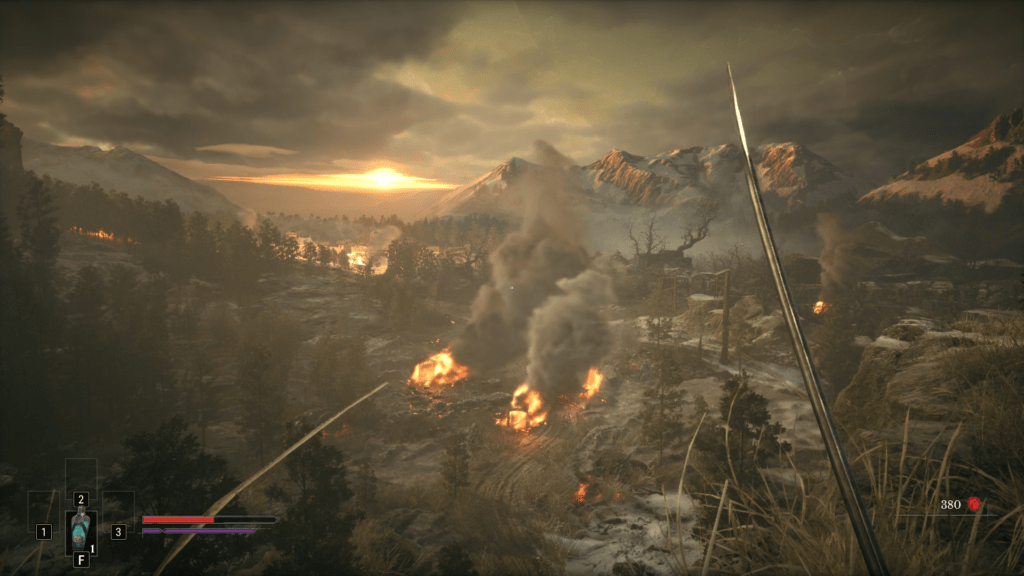
At the very beginning, your main weapon is a sabre. It features a primary attack, but also a charged strike which, although it consumes a significant amount of stamina, deals heavy damage in return. The game also introduces you to the parry system. The parry window is quite generous, much wider than in Lies of P, in my opinion, making it relatively easy to learn enemy patterns and use parries to fill up their posture bar and open them up for a critical attack. Simply blocking attacks also comes at a cost. Each hit you take gradually drains your health, but the game gives you a short window to recover that lost health by playing aggressively and striking back. Of course, not all attacks are meant to be blocked. The most dangerous ones are clearly marked with a red glow, signaling that you must dodge and quickly move sideways or backwards.
Later on, you also obtain a pistol. It is useful for two reasons – first reason is that some enemies have weak points that are clearly visible and can be destroyed using the pistol, and it can also be used to break various obstacles. Some time later, you gain a completely new ability through a very interesting scene. Here you unlock Fire Transmutation, where using Nephtoglobin, obtained from fallen enemies if you previously shoot their weak points, you can deal fire damage and also melt obstacles you encounter. After getting familiar with the combat, the Rekindle mechanic is introduced. You encounter this system when you approach a strange lamp. When lit, the lamp serves as your last checkpoint after death, but it also offers more than that.
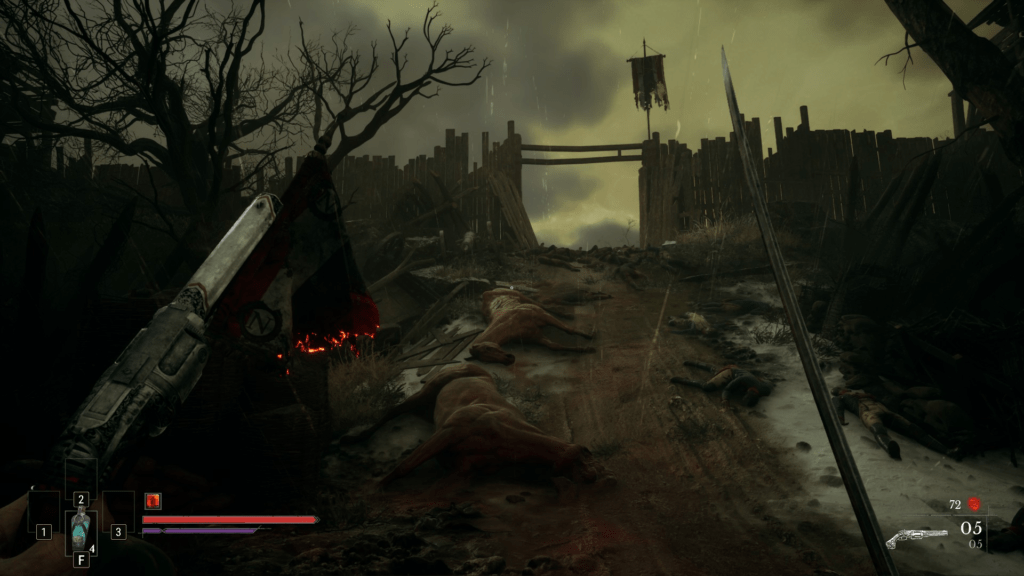
Besides functioning as a rest point, it allows you to upgrade your skills through a skill tree. Some skills are quite interesting but initially locked, meaning you must level up certain abilities first before accessing them. Some of the more intriguing upgrades are directly tied to combat. Skills are unlocked using Catalyst, which serves as the game’s currency and is obtained from enemies. After some time and several upgrades, you unlock a new slot where you can insert amber, giving you additional ways to make the game easier, for example, some amber gradually restores health, while others trigger a massive explosion after destroying an enemy’s weak point, and so on.
All of this is put to the test when you reach the first boss arena. The boss forces you to combine everything you have learned across its two phases. I instinctively started by shooting its weak points to deal posture damage, then focused on blocking more attacks to create openings for critical hits. Afterward, the boss needs a moment to recover, giving me a perfect opportunity to apply fire damage, which builds up and can briefly stun the boss. Although this may sound easy, it wasn’t quite that simple. I occasionally failed to dodge certain attacks due to insufficient stamina, sometimes missed a parry timing, and at other times got caught off guard by new attack patterns. Still, the challenge felt fair and, at the same time, very exciting, as it rewards patience, learning, and persistence.
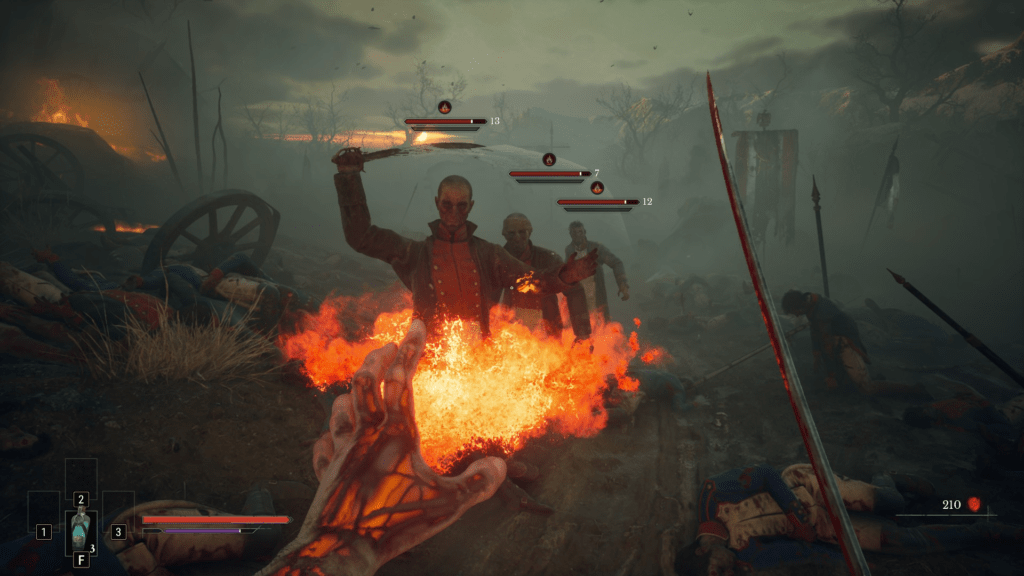
Chapter VII is significantly different, offering a new weapon, new abilities, a new location, and a deeper glimpse into how far the story actually goes. While it does contain minor spoilers, it’s worth noting that the abilities you gain include grapple and wall run mechanics, which make the gameplay even more interesting.
Across both chapters, there was a constant sense of unease, which often made me sneak around or carefully listen for footsteps and enemy voices nearby. From a first person perspective, it’s clear how this war torn environment has been transformed into a nightmare. However, the game occasionally creates a strong contrast between darkness and beauty. One area may be filled with death and despair, only to be followed by a breathtaking view of massive mountains bathed in sunset light, a moment that feels like a breath of fresh air after a fight. The effects are very well done, especially when using Fire Transmutation, as you can clearly see sparks and flames engulfing enemies, creating a striking contrast against the mostly cold atmosphere. The voice acting is also of a very high quality and contributes greatly to the immersion. William’s deep and calm voice successfully conveys the weight of his situation, and as the journey progresses, you meet other characters whose voice acting is equally convincing and engaging.
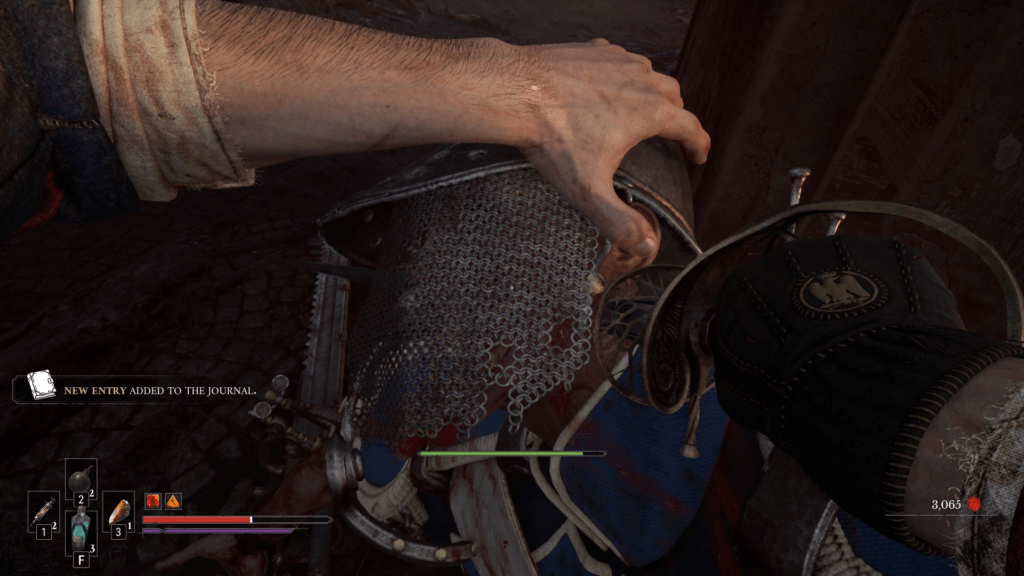
Of course, the game is not without flaws, although most of them seem like things that could be relatively easily fixed. During gameplay, I occasionally encountered enemies failing to register certain attacks, which can disrupt the flow of combat, but it never became a serious issue that significantly affected the overall experience. What did stand out, however, was the boss design. After a very strong first encounter, the second boss did not manage to deliver the same level of challenge. The fight was simple enough that I didn’t really get the chance to fully use all the abilities I had unlocked, which makes me slightly concerned that later boss fights might become too similar or predictable. Still, after only two chapters played, it would be unfair to draw final conclusions. It remains entirely possible that later bosses will offer much more spectacular encounters. For now, this is more of a minor concern than a serious criticism.
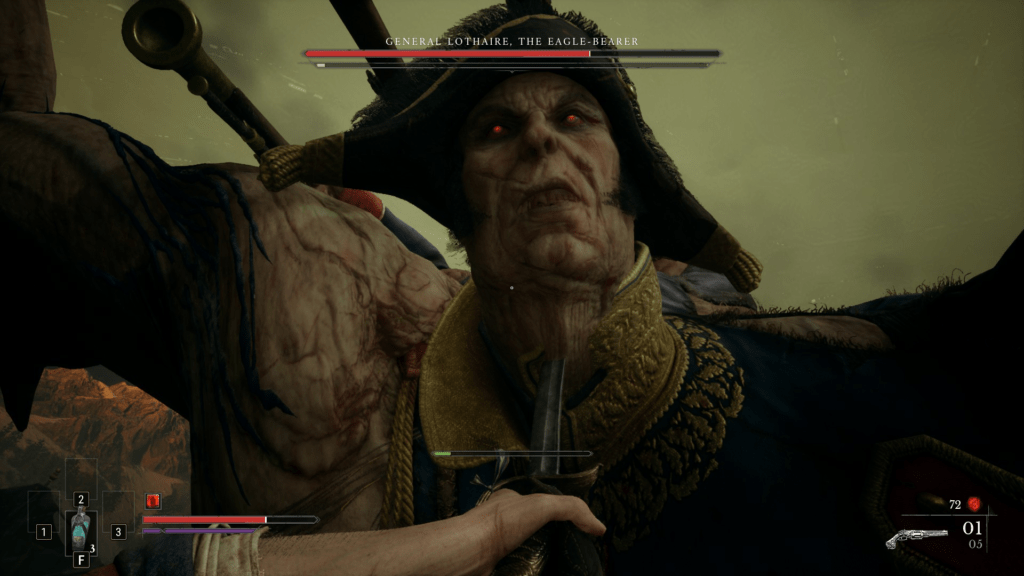
In a genre filled with many soulslike games that often rely on already tested formulas, Valor Mortis shows enough of its own identity to attract fans of the genre, especially with the occasional introduction of parkour mechanics, which is not surprising given the team’s previous work. If the rest of the game manages to maintain the quality seen in these two hours of gameplay (with careful exploration), One More Level could deliver one of the more interesting surprises for fans of this type of game. Valor Mortis is scheduled for release on September 24, 2026, for PC, PlayStation 5, and Xbox Series X/S.
