

When Tales of Arise first appeared in 2021, it marked the moment when one of the longest-running JRPG series finally made a serious step forward. A step that I honestly really liked. After years and years of relying on a proven formula, Bandai Namco managed to create a game that kept everything fans loved about the Tales series, while also managing to attract a completely new audience. And just to be clear, I’ve loved every Tales game I’ve had the chance to play so far, but Arise was something special, a game I got completely lost in and genuinely fell in love with. A few years later came the Beyond the Dawn expansion, which I unfortunately skipped, and now on Switch 2 we get a complete edition that bundles the entire adventure into one package. For anyone who missed the original release or the expansion like I did, this is probably one of the best ways to experience one of the most important JRPGs of the last generation. And trust me, you won’t be disappointed.
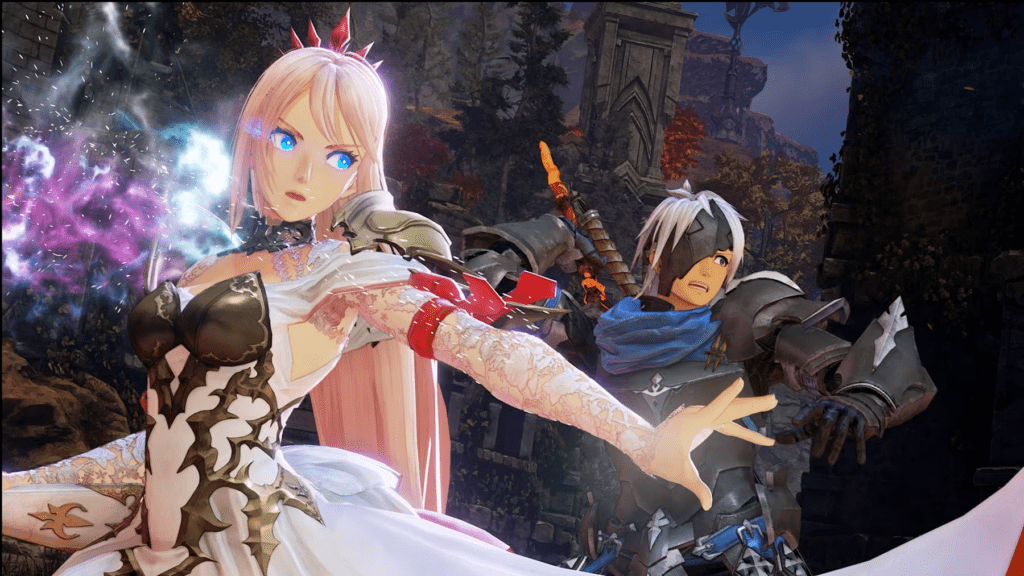
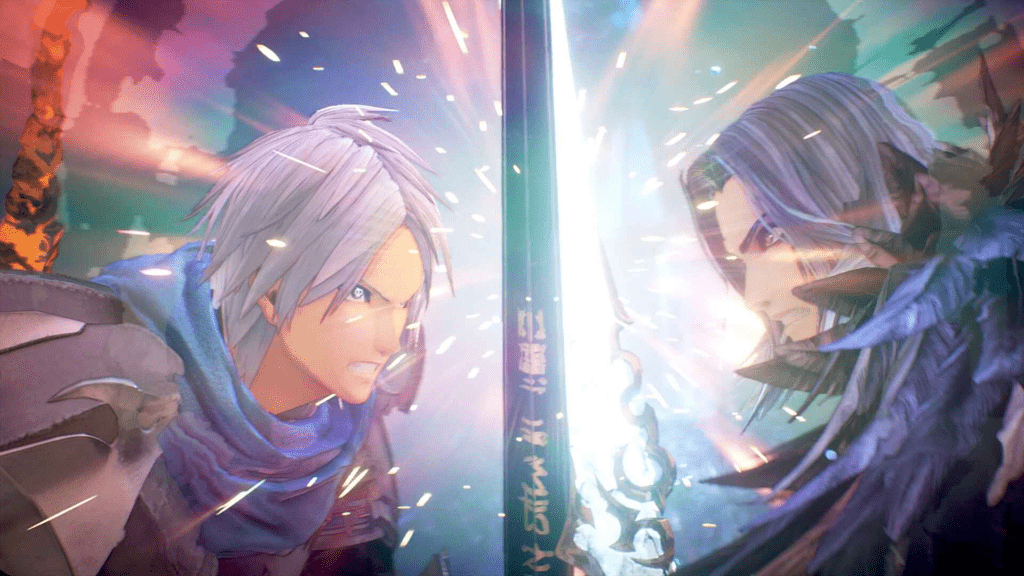
The story begins on the planet Dahna, a world that has been under the occupation of a much more advanced nation from the planet Rena for centuries. The Dahnans live as slaves, forced to work for their masters while their planet’s resources are being drained for the benefit of five Renan lords. The whole story revolves around Alphen, a mysterious man who cannot feel pain and wakes up without memories of his past. Ah, the classic twist in most games of this type, but it works! His path crosses with Shionne, a Renan woman cursed in such a way that any physical contact with her causes unbearable pain. Shionne is a Renan, but there is something hidden within her, a hatred toward her own people, a feeling that she simply doesn’t belong where she is, things that slowly get revealed as time goes on.
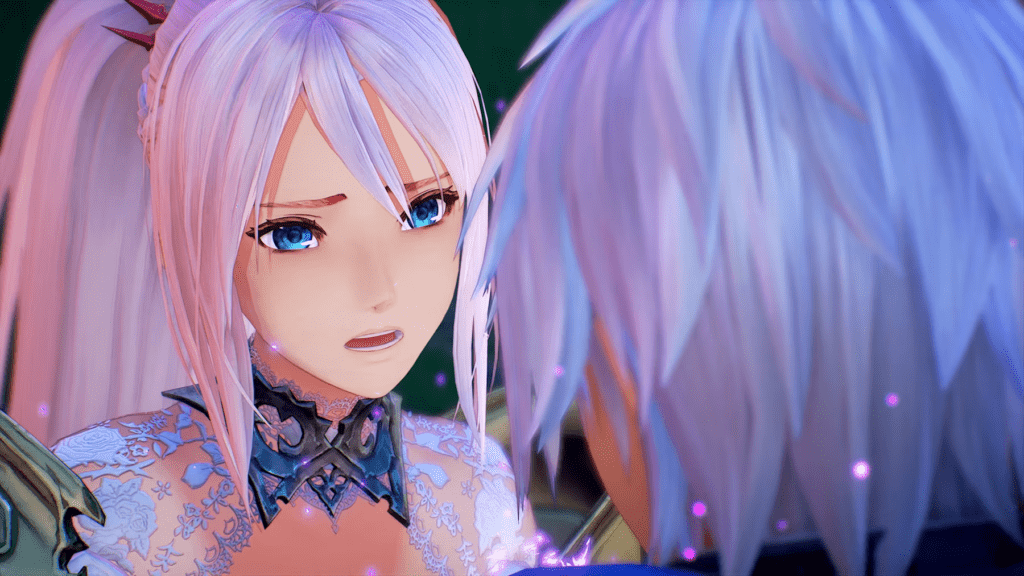
What initially looks like a simple story about rebellion against oppression and suffering quickly grows into a much deeper, more complex adventure. During the story, you meet the rest of the party, explore different regions of Dahna, and gradually discover that the conflict between Dahna and Rena is nowhere near what it initially seems. That constant sense of uncovering new information and new pieces of the story is one of its greatest strengths. Every new region brings fresh knowledge, new characters, and a new perspective on a war that has lasted for centuries. The biggest strength of the story, however, isn’t political intrigue or mystery, but the cast itself. Alphen and Shionne carry most of the narrative on their shoulders, and their relationship is the central pillar of the game. What starts as a forced partnership that neither of them wanted slowly evolves into one of the better-written romances we’ve seen in modern JRPGs. And that development never feels forced or artificial. Quite the opposite, the game spends dozens of hours building their bond, which makes later emotional moments hit much harder.
Of course, it’s not just the main characters who are well written. Law, Rinwell, Kisara, and Dohalim quickly stop feeling like side characters and become real members of your party. Each of them goes through their own development, faces personal trauma, and has their place within the story. I especially like how the game uses the familiar Tales “skit” system to further develop the characters. Throughout the journey you constantly unlock short conversations between party members that don’t always directly affect the main plot, but help you connect with them much more deeply.
Still, while the story has a lot of strong points, it’s not without flaws, not in a way that makes you stop playing, but in a way you might notice if you dig deeper. The first thirty or so hours are among the best the Tales series has ever offered, but later the pacing starts to slow down. As you approach the ending, the game becomes much more focused on explaining lore, cosmic mysteries, and a large amount of information delivered through longer dialogues and cutscenes. It’s not enough to ruin the story, but it can feel a bit tiring for some players, and you definitely get the sense that the final part doesn’t have the same rhythm and energy as the beginning. Which is somewhat understandable, but the pacing choice might not have been the best planned for the ending.
When it comes to gameplay, Tales of Arise remains one of the best action JRPGs of recent years. The combat system is a perfect combination of simplicity on one hand, and depth on the other. At first glance it seems very straightforward: basic attacks, dodge mechanics, special Artes abilities, and the ability to control any party member. However, the more time you spend with the game, the more you realise just how deep and complex the combat really is. Easy to learn, a bit hard to master, but not in the sense that it’s difficult to be good, rather that you need to invest time to fully understand all its mechanics.
Each character plays completely differently. Alphen is an aggressive melee fighter focused on powerful attacks that can break enemy defences. Shionne relies more on ranged gun attacks and support. Law plays as an ultra-aggressive combo character that rewards constant pressure. Rinwell uses magic and has a unique ability to steal and interrupt enemy spells. Dohalim combines mid-range combat with party support, while Kisara acts as an almost unbreakable tank.
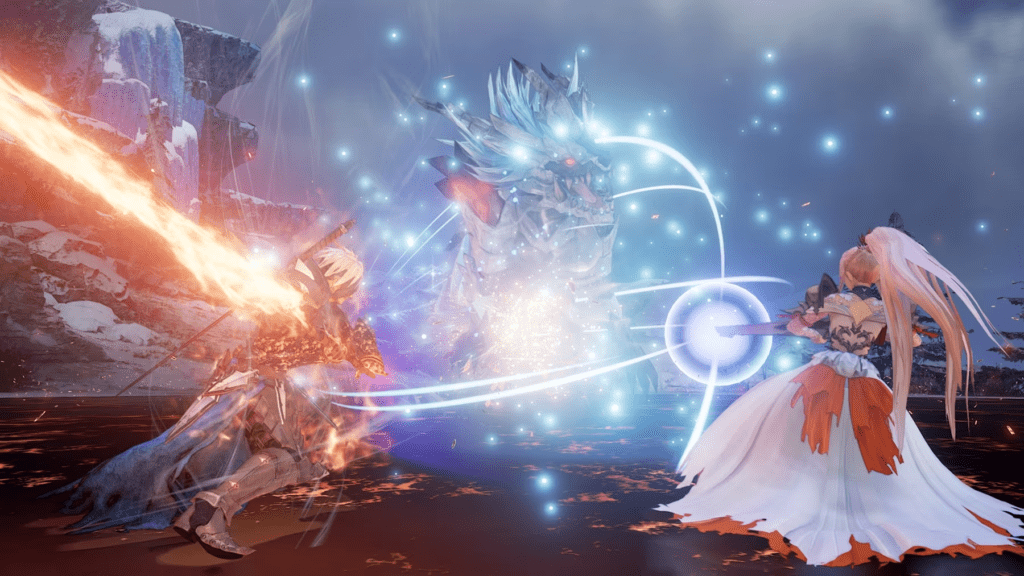
One of the biggest changes compared to older Tales games is definitely the Boost Attack and Boost Strike systems. Each character has special abilities that are particularly effective against certain enemy types, some knock down flying enemies, others break shields, and others interrupt spellcasting. This means you can’t just mash buttons and expect to win. You need to understand enemies and properly use your team’s abilities. Combat is incredibly fast and fluid. The dodge system rewards precise timing, and a successful perfect dodge often opens the door to devastating counterattacks. When everything clicks, Tales of Arise delivers a combat flow that very few JRPGs can replicate. Battles become almost like a dance between attacks, dodges, and team combinations.
The progression system is another area where the game works really well. As you progress, you unlock new Artes, passive bonuses, and additional skill panel systems that allow gradual customization of each character to your playstyle. It’s not the most complex RPG system out there, but it has enough depth to constantly make you feel like you’re progressing and learning new things. Weapons and gear also play an important role. Throughout the adventure you collect materials used to craft better equipment. The crafting system isn’t overly complicated, but it works nicely as an extra motivation to explore and fight stronger enemies.
One of the things I especially liked is how the game balances the main story and side content. Side quests may not reinvent the genre, but they often serve to further develop characters and the world, which is a nice touch. Some of the best boss fights in the entire game are actually hidden in optional content and quests you encounter after finishing the main campaign. And that’s a great feeling, because the game pushes you to keep playing even after the credits. There are also Spirit Temple dungeons that really test everything you’ve learned throughout the main and side content. Even after the story ends, there’s still plenty to do in the endgame.
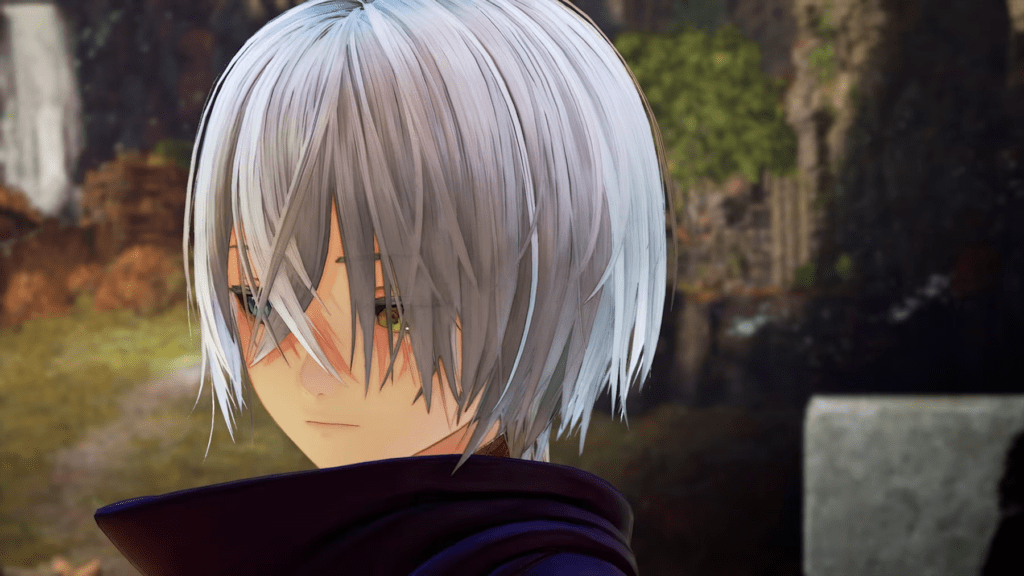
But when it comes to the Beyond the Dawn content, things get a bit more complicated. The expansion takes place one year after the events of the main story and focuses on attempts to reconcile the people of Dahna and Rena. The central figure of this new story is Nazamil, a girl who represents the bridge between the two worlds and who finds herself at the center of new political and social conflicts.
The problem isn’t that the story is bad, because it simply isn’t, and some of its emotional moments work very well. However, Beyond the Dawn never manages to reach the scale of the base campaign, you never quite get that same feeling you had while playing through the main game. Most of the characters have already completed their arcs during the main story, so the expansion often feels more like an extended epilogue rather than a fully new adventure. For fans of the original, that’s still a perfectly valid reason to return, but it’s hard not to feel that the DLC never quite reaches the same level of excitement as the core campaign, at least in terms of narrative impact.
That said, the story isn’t the only new thing here. There are also new mechanics, the most interesting of which is Astral Artes, special combined abilities that activate when certain characters have high compatibility and bonds. This encourages you to think more carefully about who works best with whom in your party, adding a different layer to combat. On top of that, you also get new regions to explore, new bosses, some of which are genuinely challenging and, thankfully, not just reskins of old ones, new enemies, and a solid amount of side quests that actually feel worthwhile because they naturally fit into the ongoing events of the world. Completing the expansion will take around 15-20 hours if you also engage with side content, and there’s additional endgame content, an improved crafting system, and a lot of new costumes and weapons. Nazamil, for example, is a fully playable character, and it’s genuinely fun to build a team around her.
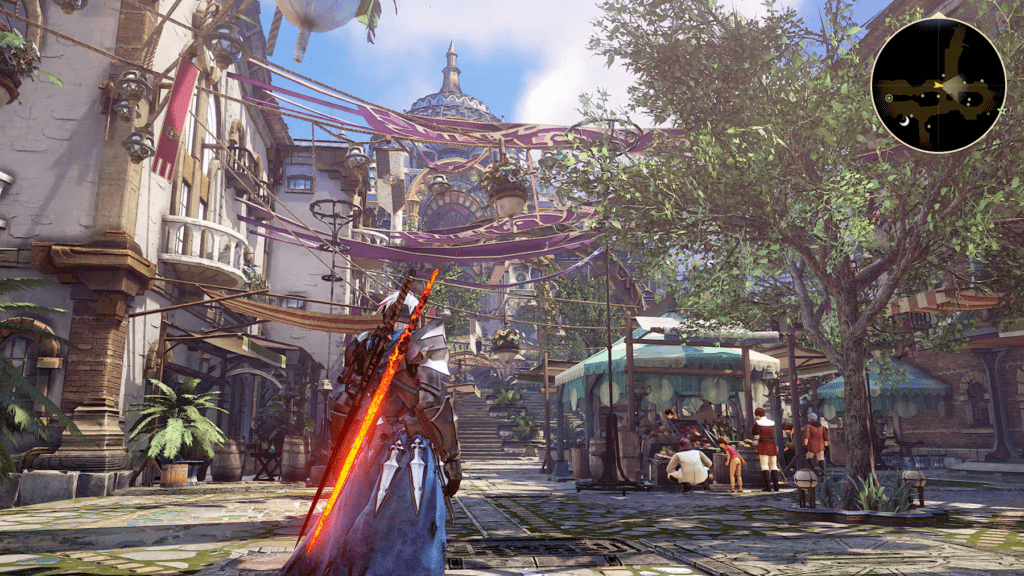
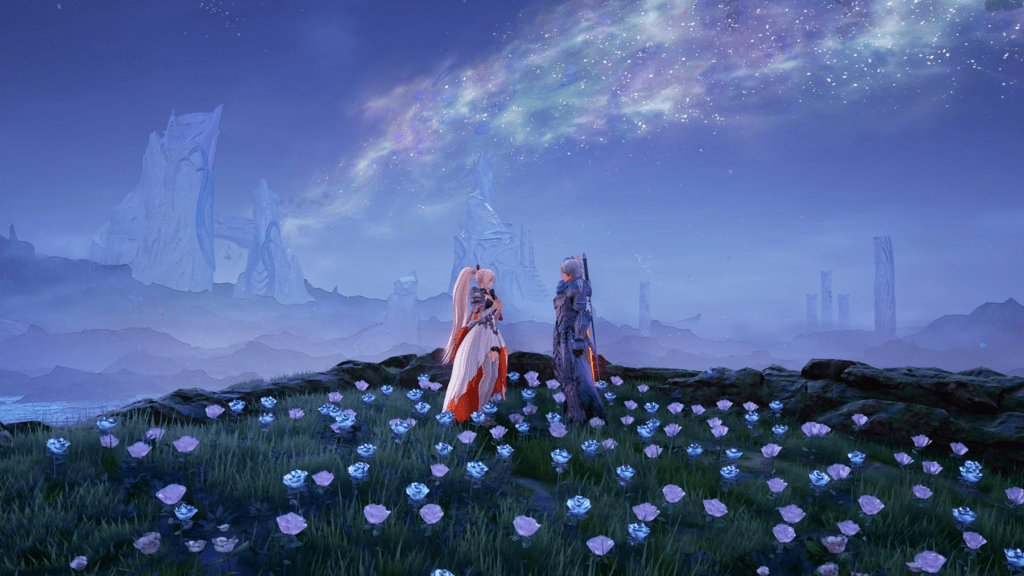
In terms of visuals, Tales of Arise still looks fantastic. Even several years after its original release, the art style continues to leave a strong impression, both on players and on me personally. Every region has its own distinct identity, from the desert landscapes of Calaglia to the frozen regions of Cyslodia and the more luxurious cities you visit later in the adventure. The Unreal Engine presentation allowed the series to make a huge visual leap compared to previous entries. Enemy and boss design also deserves praise, many encounters look spectacular and manage to leave an impression even after dozens of hours of gameplay, especially in the later stages where battles reach almost epic proportions.
The music may not be as legendary as the soundtracks of some Final Fantasy or Persona games—since those are the benchmarks you naturally compare JRPGs to, but it still fits the atmosphere perfectly. Battle themes push you into the right rhythm, while more emotional tracks strongly support key story moments. Voice acting is generally very solid, especially for the main party members. That said, my recommendation is to play with Japanese voiceovers for authenticity, as the chemistry between characters really shines through the performances.
As for the Switch 2 version itself, this is a very solid port. The game looks impressive on the handheld device, and performance is stable overall. The only downside, if you ask me, is the lack of a 60fps gameplay mode, cutscenes run at 60fps, while gameplay is locked at 30fps. That transition feels a bit odd, just when the game impresses you with smooth cinematic presentation, it drops you back to 30, and you’re left wondering why. Still, the best part is that you get the complete experience on the go without feeling like you’re playing a stripped-down version, because that’s not the case here. The 30fps is stable with no noticeable drops, and interestingly, the game runs at 1080p both docked and in handheld mode.
We would like to thank Bandai Namco for providing us with a copy of the game for review purposes.
Tales of Arise Beyond the Dawn Edition (Nintendo Switch 2)
In the end, Tales of Arise: Beyond the Dawn Edition remains one of the best JRPG packages you can currently find on Switch 2. It’s true that the story pacing slows down in later hours, and the DLC never quite reaches the quality of the main campaign. Still, when you look at the full picture, it’s hard not to appreciate how much this game gets right. From its fantastic cast of characters, to one of the best action combat systems in modern JRPGs, to its huge amount of content and beautifully crafted world, Tales of Arise remains an adventure that’s easy to recommend to any fan of the genre. And if you somehow missed it until now, the Switch 2 version is a great opportunity to finally see why this game is still held in such high regard. And if you’ve already played it, Beyond the Dawn may not change your opinion of the original, but it does give you another reason to spend dozens more hours with one of the most charismatic JRPG parties in recent years.
