
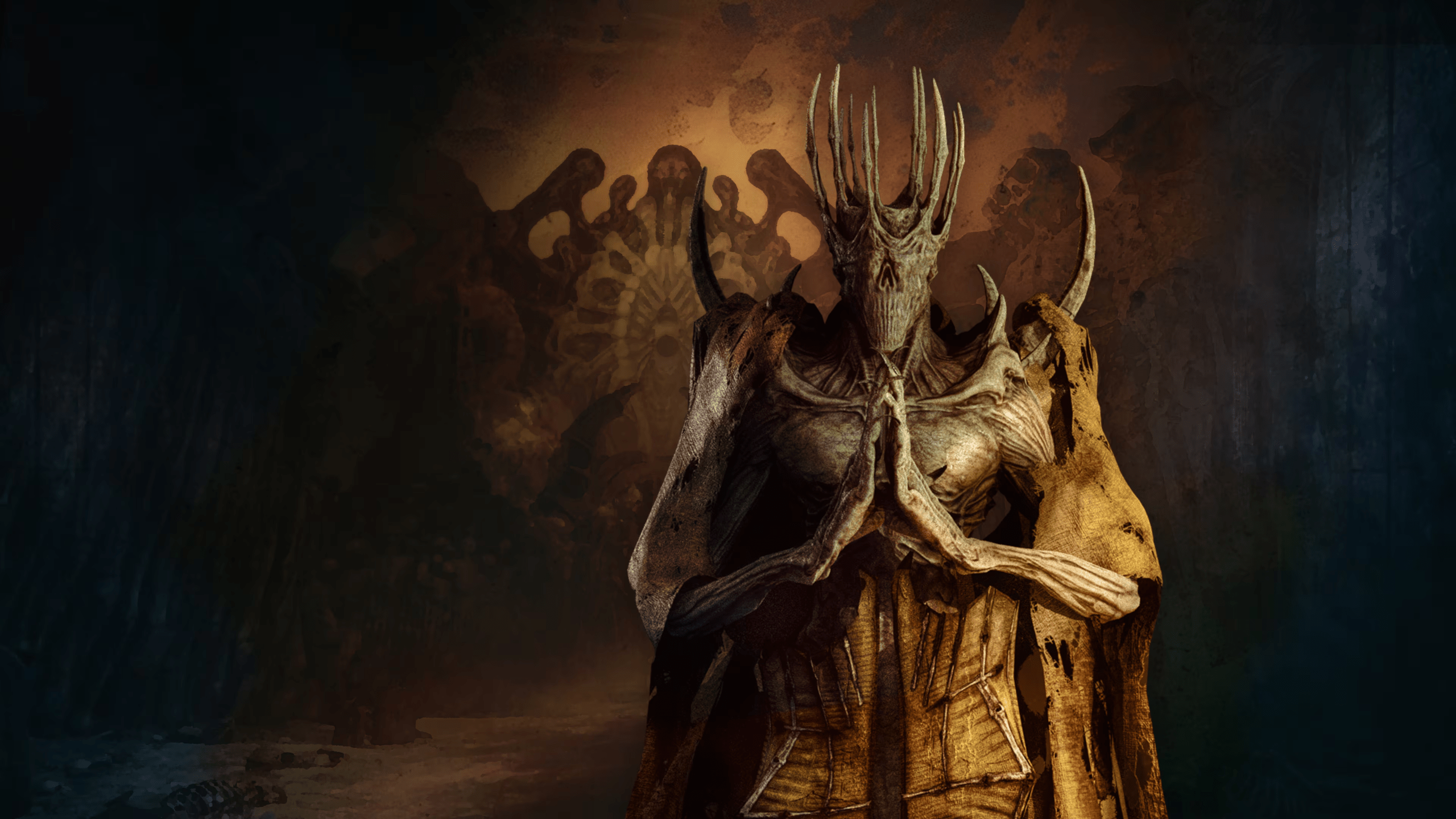

I’ve played countless of games and stepped into many roles – from the Bearer of the Curse, to a federal agent, a prisoner without a past until Uriel Septim tells me I’ve been appearing in his dreams, a high school girl with the power to rewind time, a husband wandering through thick fog in search of his wife, yet never before have I had the chance to become Consciousness itself…or the Subconsciousness. And that is exactly the role Necrophosis: Full Consciousness places me in, which alone is enough to spark the imagination of many players.
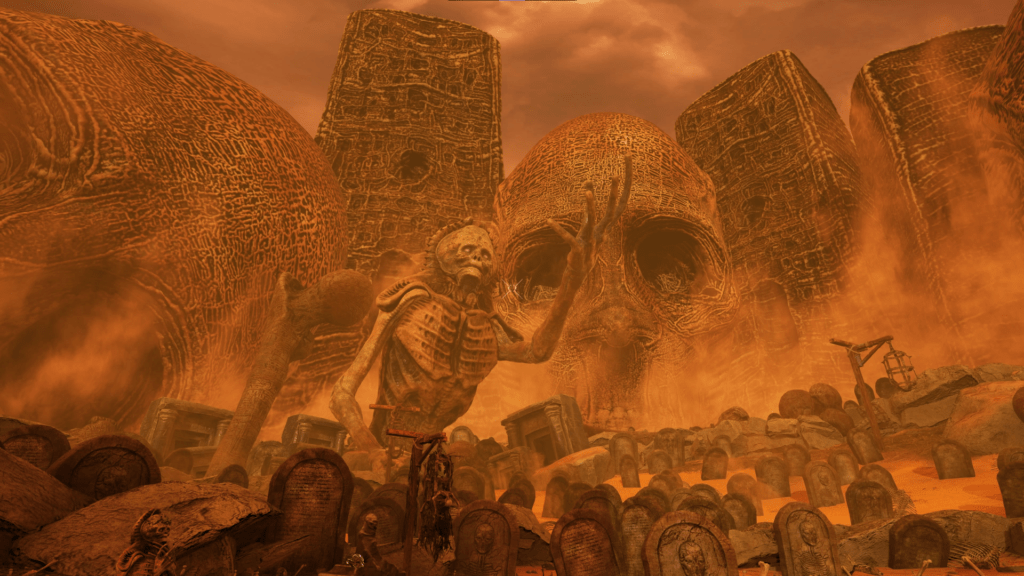
This game draws heavy inspiration from the works of Zdzisław Beksiński, the Polish painter, sculptor, and photographer. His art is renowned for its disturbing, surreal, post-apocalyptic imagery. Interestingly, Beksiński avoided explaining or analyzing his own work, refusing to impose meaning on the viewer. Another fascinating detail is that many of his inspirations came from his subconsciousness and dreams and he often described his art as ,,photographs of his dreams”. Themes of death, destruction, and the fragile emptiness of life are deeply woven into his later works. Alongside Beksiński’s influence, just like in The Shore (coming to us from the same team, Dragonis Games), this game is once again inspired by the Lovecraftian mythos.
Necrophosis is a first person horror adventure set one billion years after the end of the universe, but there’s a catch, and it reveals itself immediately at the very start of the game.
Normally, when starting a game, we’re greeted with a New Game option, but Necrophosis instead offers New Cycle, subtly hinting that this is neither the first nor likely the last time we’ve found ourselves in this situation.
At the very beginning, you hear an unfamiliar voice, followed by a strange being placing something into your skull that strongly resembles the ,,Philosopher’s Stone”. In Carl Jung’s psychology, the Philosopher’s Stone represents the ultimate stage of psychological development, the reconciliation of the conscious and unconscious into a single, unified whole.
This philosophical interpretation on my part serves a purpose and that is to demonstrate just how much attention this game pays to symbolism and metaphor.
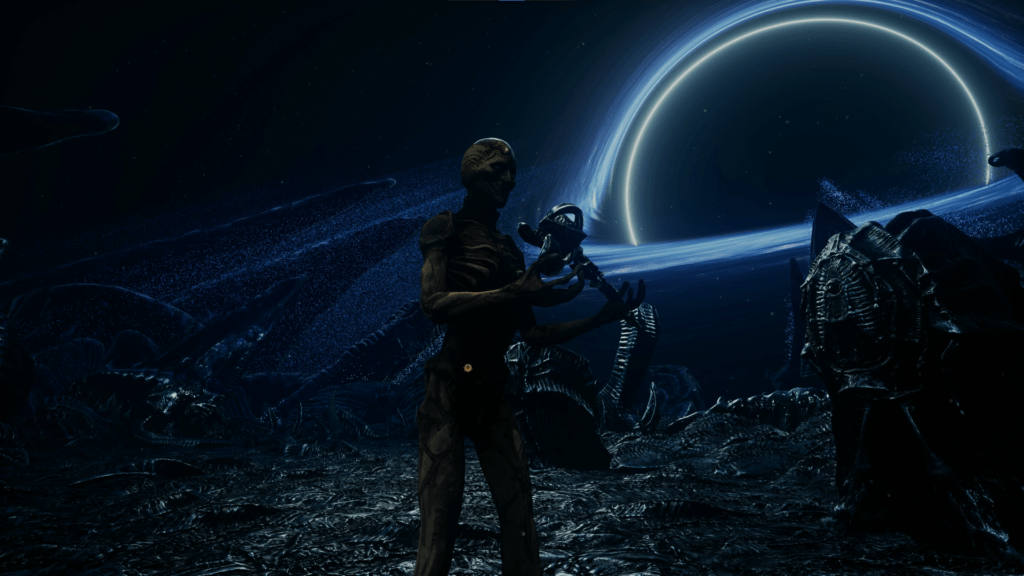
Here, you exist outside of time itself, in a place where even gods suffer. Yet despite being labeled as a horror game, nothing hunts you, there is no combat, no need to defend yourself. Your purpose is a quiet, almost ,,spiritual” journey through the remnants of time in order to restore existence itself. Death in this game is not simply physical death, but the death of a future, the death of a hope for a new universe.
At the very start, another entity greets you by reciting the sonnet ,,Ozymandias”, a poem about the downfall of great rulers and humanity’s inevitable submission to time. Around you stand enormous statues surrounded by decay, death, and silence, interrupted only occasionally by the agonized groans of wandering creatures. And that is where your story truly begins.
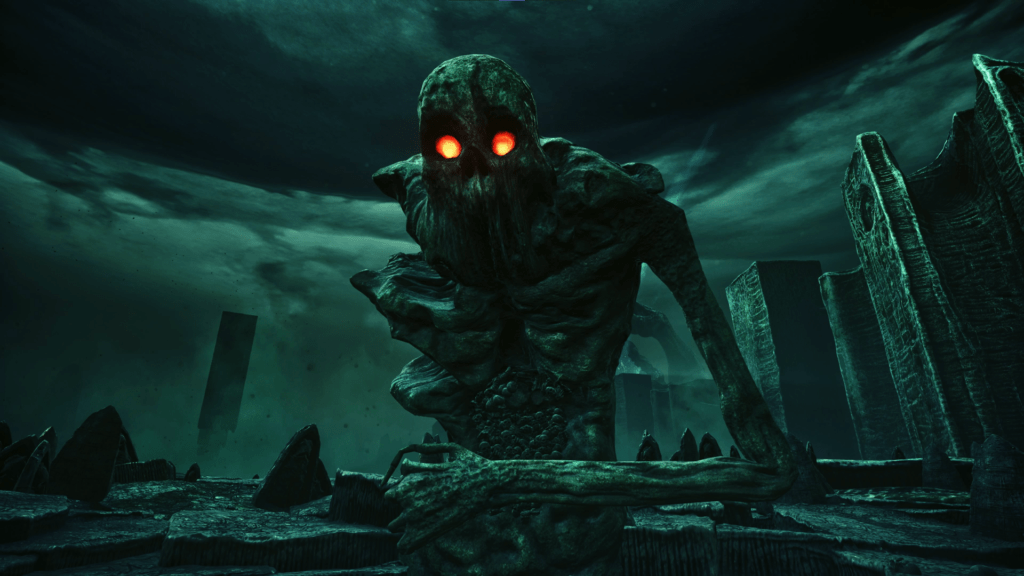
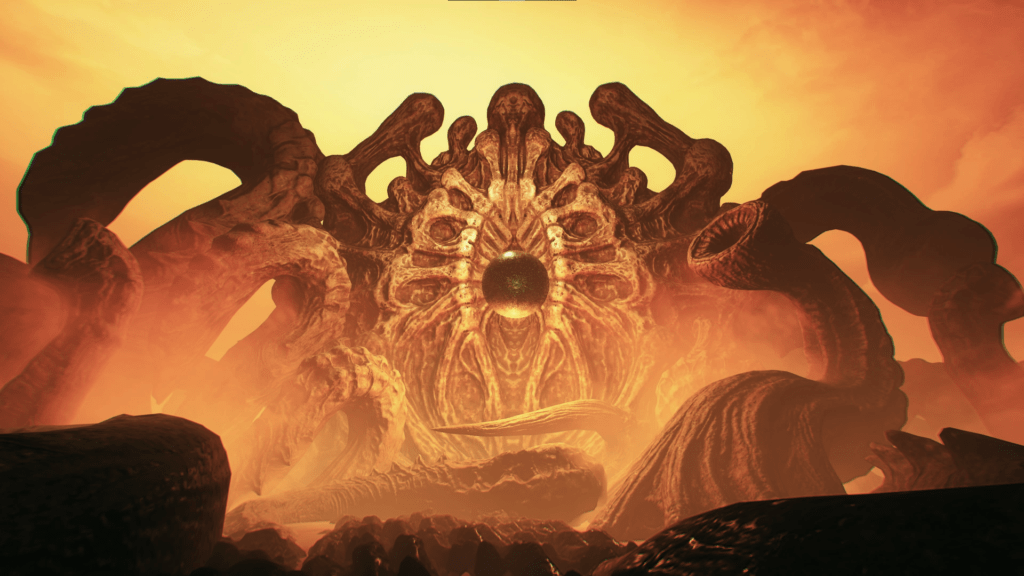
Once you reach the end of the game, you unlock chapter select as well as the DLC included with the Full Consciousness edition. The DLC is very short, and while the main game places you in the role of Consciousness, here you play as the Subconsciousness, confronting what Consciousness itself has forgotten and left behind. You encounter a being known as the Dreamer and its all seeing eye, endlessly observing and yearning for meaning, though you cannot reach it until you gather the ritual items required to proceed.
Since the game relies primarily on its narrative, the gameplay itself is simple. You explore this ruined yet strangely beautiful and comforting world, searching for items needed to solve occasional puzzles, usually highlighted with a faint blue glow. At times, you transfer your consciousness into certain creatures to access new areas or obtain key objects, and throughout the journey you discover skulls inscribed with lore about this world and its inhabitants. The puzzles are extremely straightforward, usually revolving around finding an item and placing it where it belongs and most required objects are nearby, as the map is relatively small and the game itself is fairly short. I only spent extra time on a single puzzle because I couldn’t immediately spot the missing item in a particularly dark area, and because of the puzzle simplicity, the game allows you to fully immerse yourself in its unique narrative and phenomenal atmosphere.
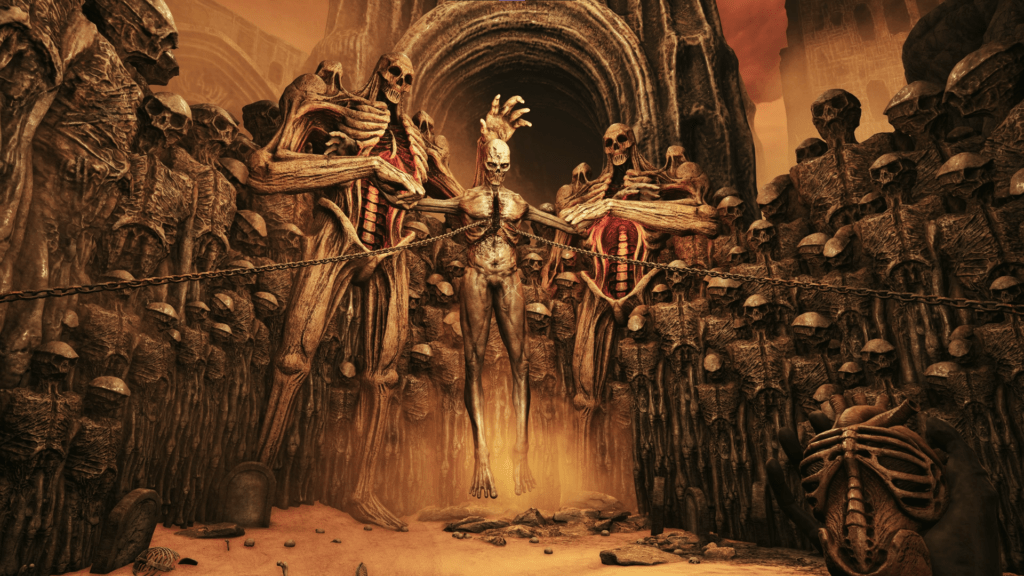
I often see people comparing this game to Scorn, but aside from a few superficial visual similarities, the two games are fundamentally very different.
The sound design is exceptional, from the crunch of your footsteps in the sand, to the wet squelching of brains and eyes being pulled apart, the labored breathing of broken creatures, and the sudden shifting of those towering statues in the distance. The voice acting is equally impressive. The characters sound exactly as they look, sometimes ritualistic and slow, other times calm and strangely comforting. Their dialogue often feels like poetry or philosophical confessions spoken through exhausted, uneasy voices.
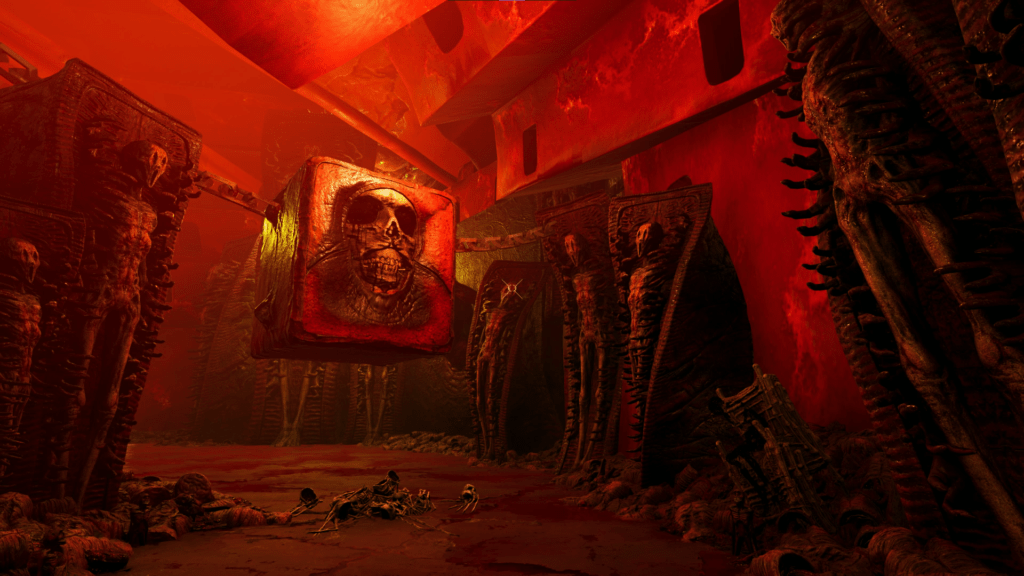
Visually, the game is pure art. Every frame resembles a dark art installation, from colossal stone faces and claustrophobic corridors covered in organic tissue, to the endless abyss filled with many stars. Necrophosis achieves both artistic spectacle and an unrelenting sense of dread that follows you every step of the way.
Dark Souls III is one of my favorite games of all time. My favorite ending is the one where you allow a cycle to finally end and let darkness consume the world. Yet despite how terrifying that sounds, your Firekeeper tells you she can still see tiny flames dancing within that darkness, hinting that one day the fire will burn again and the world will not remain lost in the darkness forever.
We would like to thank Dragonis Games for providing us with a copy of the game for review purposes.
Necrophosis: Full Consciousness (PlayStation 5)
Necrophosis delivers a unique and unforgettable experience that, despite its morbid and alien world, still carries within it a trace of hope, comfort, and meaning as well. Not all games are created merely to entertain us. Some exist to make us stop, question, reflect, and confront emotions such as sorrow, pain, disgust, and fear. As the game itself suggests, sometimes we must first discover pain in order to truly appreciate beauty, a spirit strong and passionate enough to create something enduring, and destruction that ultimately gives every creation its purpose and conclusion.
Art does not necessarily need to be beautiful to be meaningful. It only needs to awaken emotion within us, leave a mark, and force us to feel something, and that is precisely where Necrophosis truly shines.
