
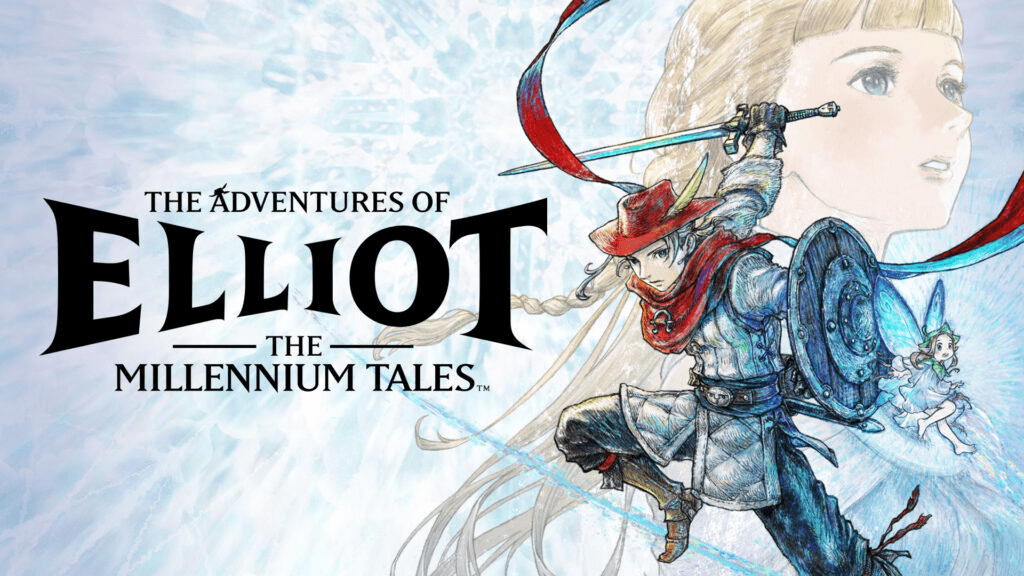

Back when Square Enix revealed Octopath Traveller a couple of years ago and introduced their so-called 2D-HD style, it was a revelation for fans of classic RPGs. The mix of 16bit sprites and modern 3D lighting and depth gave a new life to the traditional RPG genre. While games like the Octopath series, the Dragon Quest remakes, and Live A Live remained true to their turn-based JRPG formula, Square Enix also tried to apply the 2D-HD look to other games, such as Triangle Strategy during their big AA game rush, with titles like Valkyire Elysium or the underrated DioField Chronicles. However, with a lack of sales, Square Enix decided to slow down with games outside their AAA releases. But to a big surprise, Tomoya Asano and his team announced The Adventures of Elliot: The Millennium Tales during a Nintendo Direct in July 2025. Their take on action-adventure games of old, such as Secret of Mana, Alundra and The Legend of Zelda series.
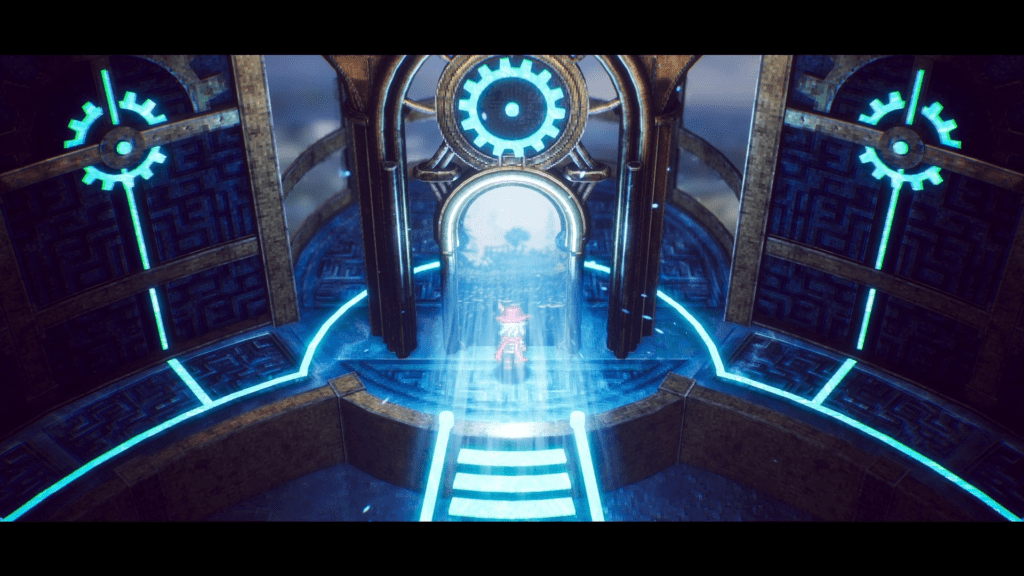
And with that, The Adventures of Elliot: The Millennium Tales was released by Creative Studio 5 and Claytechworks.
Fragments of a Torn Timeline
The story of The Adventures of Elliot plays in the world of Philabieldia. For centuries, the continent has been threatened by beast tribes, and humanity lives in a small, isolated kingdom. Thanks to a magical barrier that is held up by the princess Heuria, everyone is protected.
We play Elliot, a righteous self-proclaimed adventurer, who is venturing out into the world to earn money for the local orphanage in which he himself grew up after being found under a tree outside of town. The story starts simply; Elliot is summoned by the king to fight some beasts outside the barrier to protect the people. But the story escalates quickly, and suddenly the right hand of the king, Kaifried, betrays the kingdom and gains access to a powerful ancient relic that opens a portal in an old ruin, and he gains access to travel across the millennia. His plan: to rewrite history and become king himself.
As Elliot you chase after Kaifried through the portal and stop his plans. But just as Elliot reaches Kaifried in the depths of another ruin, Kaifried gains access to a powerful magical sword and kills Elliot. But the game isn’t over. In the realm between life and death, Elliot is rescued by the fairy Faie, who brings Elliot back to life and becomes his companion for the rest of the game.
A Journey Through Time
Being alive again, Elliot’s journey takes him through the different eras of Philabieldiashistory. From the ancient past to the dark future. To stop Kaifried’s plans, Elliot and Faie must find the origin of an old curse, rescue the princess and explore every era and solve their issues.
The story is pretty straightforward, but thanks to the time travel aspect, always interesting. If you change something in the past, it will have consequences in the future. From geographical changes to NPCs and quests, it is always exciting to see what changes and where you get new access to. The game avoids having a true good versus evil scheme; instead, it even explores Kaifried’s motivation and gives him depth.
Gameplay and Combat
Probably the biggest surprise of The Adventure of Elliot: The Millennium Tales is the combat system. If you expect the typical Team Asano turn-based combat, you will be surprised. There is no party management, no turn-based combat, no big summons, no classes. Instead, The Adventure of Elliot is heavily inspired by old action-adventure games.
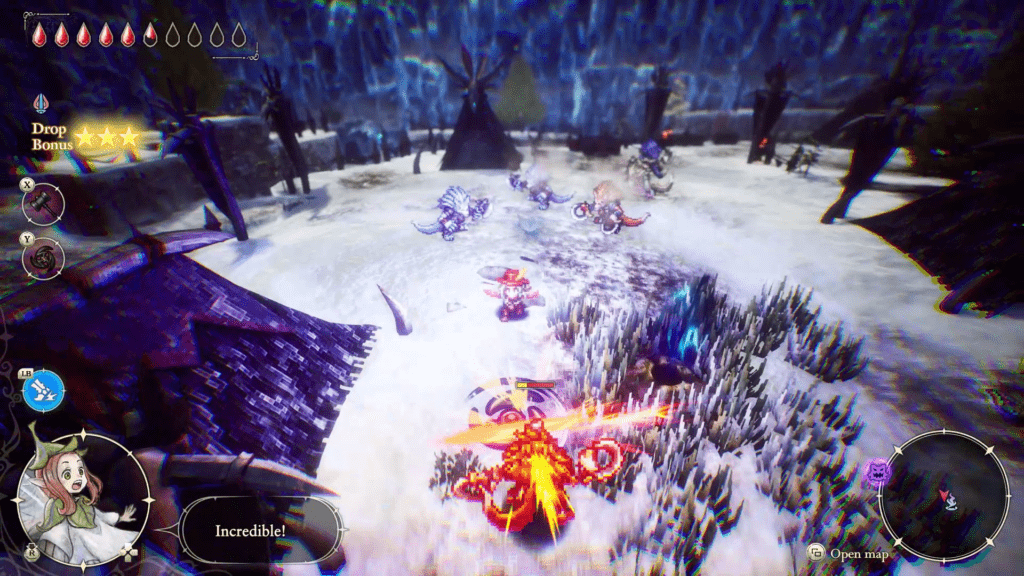
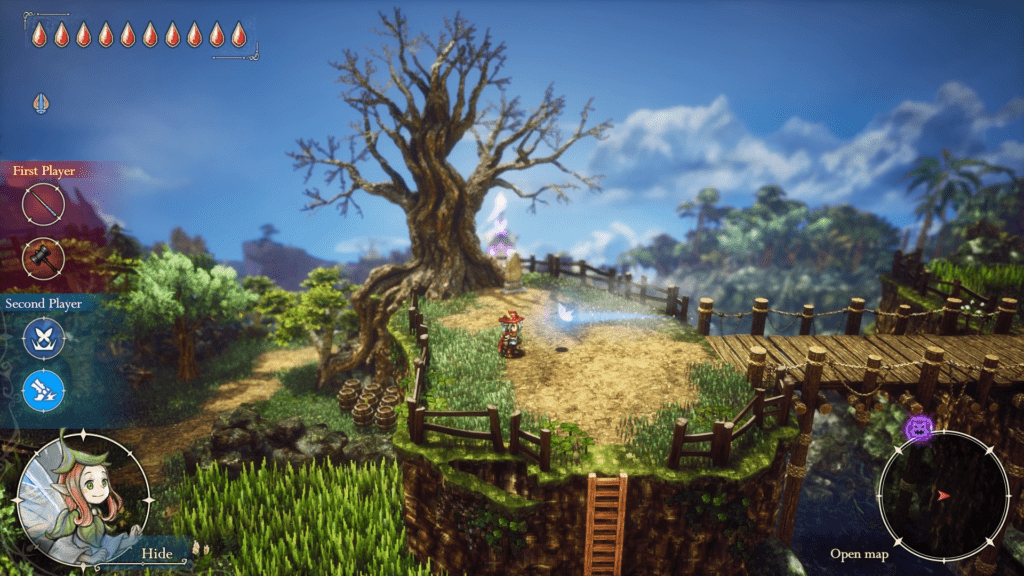
During his adventures, Elliot finds seven different weapon types. Each weapon has its own playstyle and weakness and strength. Elliot can equip up to two weapons or gadgets at once. The sword is your all-rounder weapon, with light attacks and charge attacks that mow through the grass and enemies. If you have ever played a classic action-adventure game, you will feel right at home. Combined with the shield, you can block even better than by default and can parry enemies.
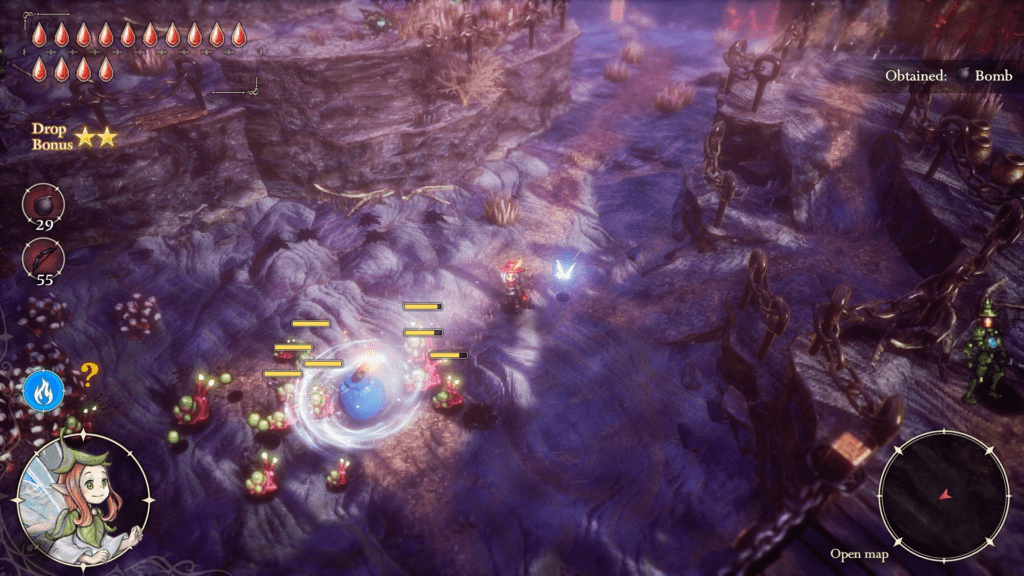
The boomerang and bows are your go-to ranged weapons, which can also be used during puzzles. The same goes for items like bombs, which can also give you access to new areas. Later, you find more advanced weapons such as the chains and sickles, which require a better understanding of animations and enemies, but can become powerful and can control groups of enemies. By combining these two weapons and the Faie’s abilities such as fire or warp, the combat becomes quite dynamic at times, especially during the challenging boss fights you encounter.
No Level Ups?
Another break with JRPG conventions is that there are no levels to gain in The Adventures of Elliot. Killing enemies does not give any experience; instead, not getting hit lets you earn more enemy drops over time. If you want to become stronger, you need to explore the world.
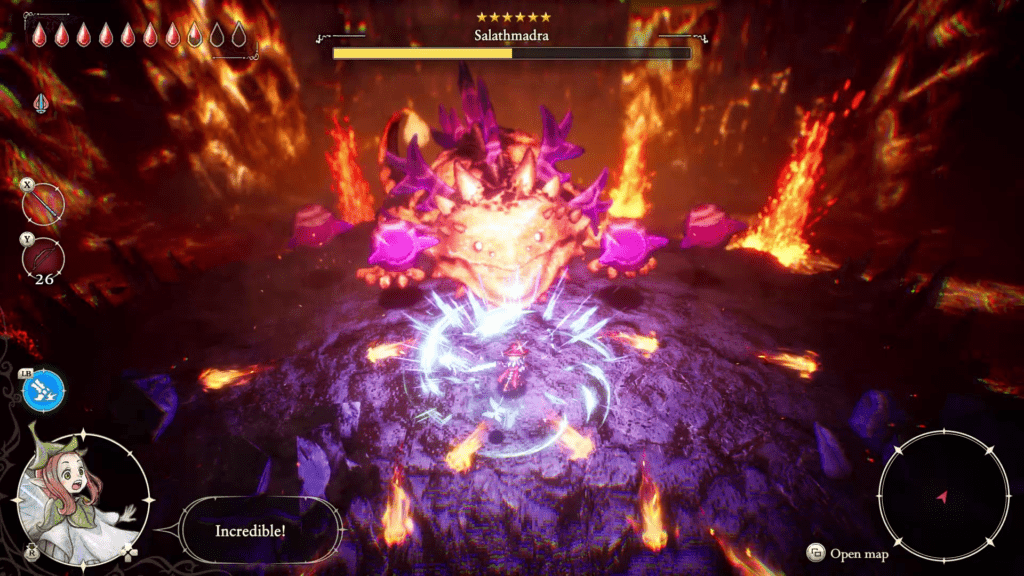
In all eras, you can find shrines and dungeons across the continent. Shrines are like The Legend of Zelda: Breath of the Wild, small and quick combat and dexterity challenges that either upgrade Elliot’s life or let Faie earn new abilities. The dungeons are usually a bit longer, with a small puzzle where you need to find several keys to earn more health upgrades or new or stronger weapons.
Even here the changing world applies. Sometimes you can enter a dungeon in every timeline but can’t progress. If you find the right timeline, the dungeon opens up a lot more so that you can finish it. These new weapons and upgrades feel fundamental, as enemies get progressively harder the more you progress the story.
Another way to customise and increase Elliot’s power is the Magicite system. Early in the game, you get a satchel that can hold a certain amount of magicite, small magical crystals that have passive stats and abilities for general use or specific to weapons. They can increase everything from attack power to critical hit chance, reduce cooldowns or add elemental attacks. At a special vendor, you can exchange crystals for more magicite and level up their power and increase the size of your sack to hold more of them.
Philabieldia through the Ages
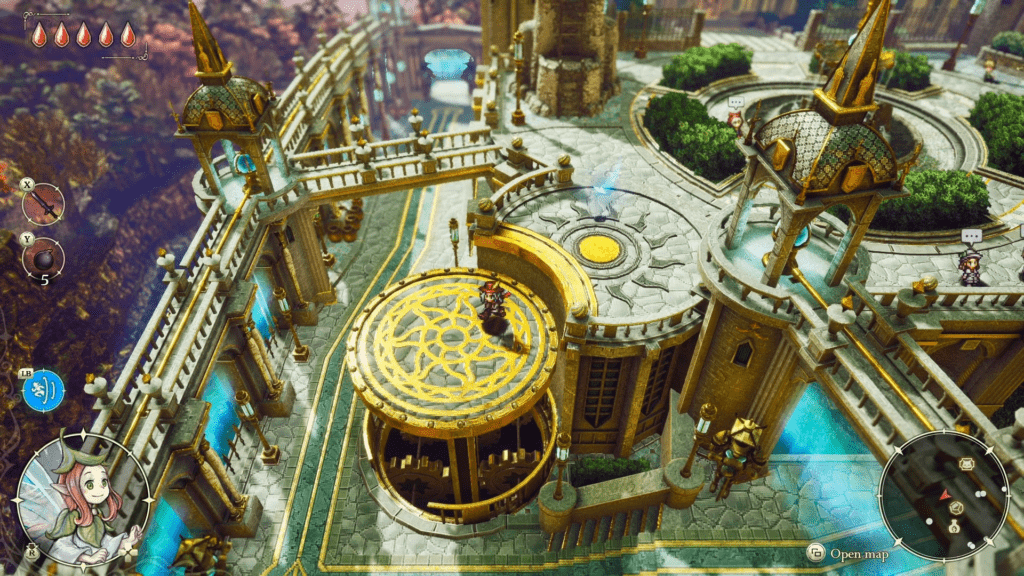
A true star of the game is the overall level design, from the changing overworld of Philabieldia through the ages to the dungeon design. A tiny sapling in the past becomes a full-grown tree in the future; a dried-up riverbed in the current time becomes a river if you change something in the past. The way you earn access to new areas is exciting.
Another highlight is the main dungeons. They require you to utilise your weapons and gadgets. Opening brittle walls with bombs, shooting the right plate with a ranged weapon. Or changing eras to gain access to new parts. The puzzles are not too complex overall, but it’s always exciting to see the outcome and changes. They reminded me a lot of games like The Legend of Zelda: A Link to the Past or Secret of Mana.
Cooperation with Faie
While The Adventures of Elliot is a single-player title at its core, there is an optional light coop mode. A second player can pick up a controller and control Faie for you. Instead that she follows Elliot around and is controlled by the right stick, the second player can use another controller to manually control her and use her abilities. If you coordinate it right, this can be quite powerful, almost to the point of game-breaking bosses. A good Faie player can do heavy damage with their abilities or be a very good helper with the warp ability in dungeons.
The Legend of 2D-HD
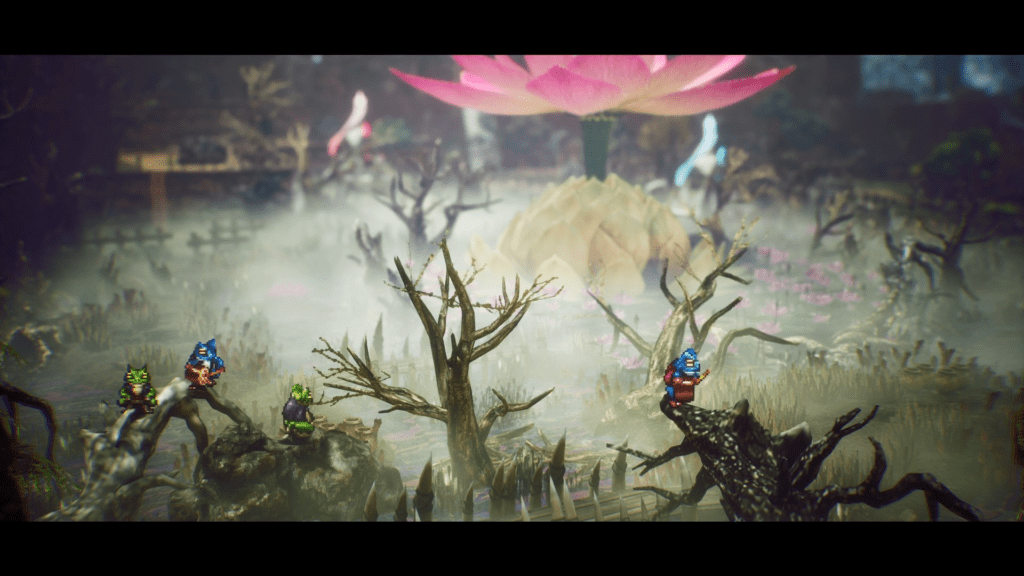
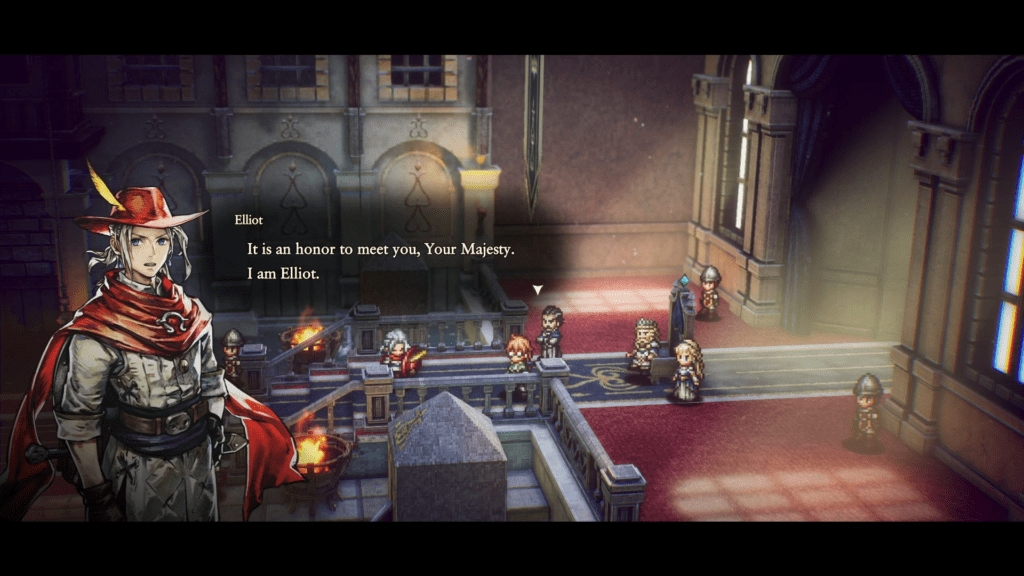
Technically, The Adventures of Elliot looks beautiful. The Unreal Engine 5 2D-HD graphics look gorgeous in high definition, and the game runs in 60fps on most systems. Especially the water effects and pixelated cloud formations looked stunning. And the lighting system in the dungeons and old ruins, combined with fog, creates a mystical atmosphere.
I played the game on Nintendo Switch 2 and PC, and barely noticed any drops on Switch 2. However, if you want to enjoy the game in 4k, you should get the PS5, Xbox Series X or PC version of the game.
Another highlight is the music. The music is always driving you forward and especially the variety between eras is beautifully supported, as each era has its own theme. Combat and boss music are also absolute bangers, from orchestral epics to synth-driven melodies.
Stop talking, please!
One of my biggest gripes with the game is Faie. Faie talks nonstop. It’s almost as annoying as Navi in Ocarina of Time. Even though Square Enix has put in an option to reduce the chatter of the little fairy, it’s still a lot. If you enter a room with a closed door? Faie is talking about it. You enter a puzzle room? Faie is soon to tell you the solution. Even though the voice performance is great, I can’t blame anyone for turning Faie off.
Another disappointment is the side quests. While some of them have true potential to be interesting, such as the wife of a fallen adventurer or the children and people of the orphanage, you barely get any background on the multiple named characters in the game. Instead, most of the side quests are classic fetch quests: find item x, kill enemy y. Here, the team could have really made some impactful side stories instead.
We would like to thank Square Enix for providing us with a copy of the game for review purposes.
The Adventures of Elliot: The Millennium Tales (PC)
The Adventures of Elliot: The Millennium Tales is a huge surprise. In times where The Legend of Zelda goes open world sandbox and the Ys series becomes more and more JRPG, a classic action adventure in the vein of The Legend of Zelda and Secret of Mana is truly welcome. With 30 to 50 hours, depending on how much you explore the world of Philabieldia and its clever time travel mechanic and urge to explore, The Legend of Elliot earns its place among the classics.
