
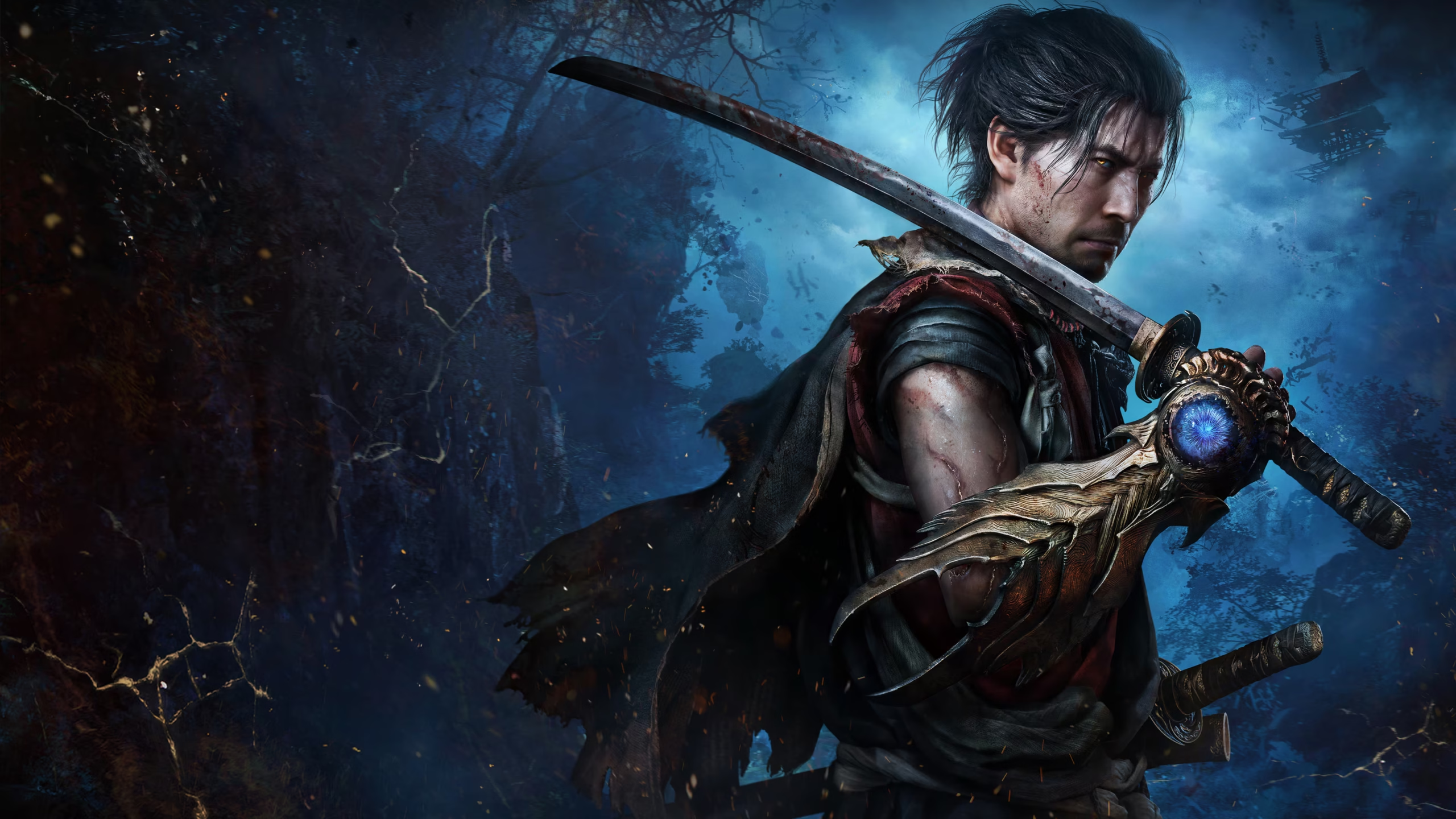

Capcom is currently having quite a good run this year. First, we got Resident Evil Requiem, then Pragmata, and we were all waiting for Onimusha: Way of the Sword to see if this legendary company could complete the Holy Trinity. Honestly, aside from Pragmata, this was the title I was looking forward to the most this year. After last year’s Gamescom, this was the game that left the strongest impression on me when it comes to action titles. Even back then, I absolutely loved everything about it, so I couldn’t wait to play. Unfortunately, that playthrough had to wait a bit, because even though we received the code on time, Gamescom prevented us from having a review ready right after the embargo lifted. Which is fine, because when we don’t rush, everything settles nicely and can be viewed objectively. But even despite that, and a few days after finishing it, Onimusha: Way of the Sword leaves a fantastic aftertaste. As I suspected, Capcom did indeed complete its Holy Trinity this year, with three fantastic titles that, when you look at them from a distance, make it hard to decide which is better and what you should play first.
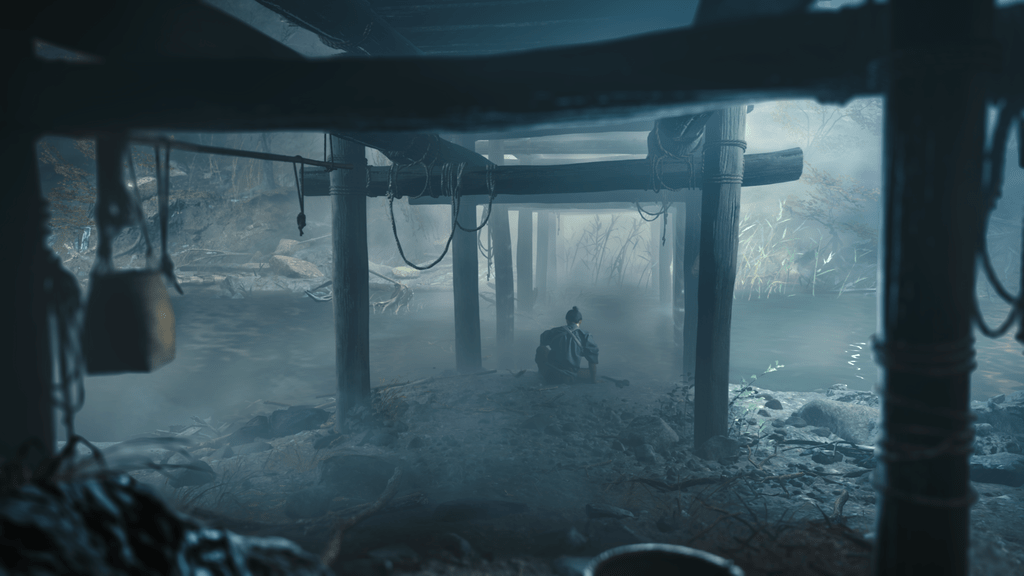
The Onimusha franchise was on a hiatus for about 20 years, and I have to admit that Capcom drew the ire of the franchise’s fans during that period. No one could understand why this legendary series hadn’t seen a new entry in all those years. But it seems Capcom was waiting for the right moment, and in a year already packed with fantastic games, they bravely decided to release a new Onimusha title after a couple of decades. And that is cool. What’s even better is that Onimusha: Way of the Sword is a standalone story. Yes, the overall theme and events will be familiar to all veteran fans, but it is equally welcoming for new players just entering the world of Onimusha.
In Way of the Sword, you take on the role of Miyamoto Musashi, a samurai traveling to Kyoto in search of anyone brave enough to stand against him. All to prove himself as the greatest and strongest samurai Japan has ever seen. However, he didn’t quite count on his fate being turned completely upside down shortly after his arrival. After a brilliant introduction and tutorial practically woven seamlessly into the story—which I absolutely have to praise—Musashi becomes an Onimusha. Essentially, a samurai who must defend the world of the living from an invasion of demons from hell, or more specifically, the Genma demons. That is the general setup, and I have to admit the story itself is interesting in moments, but more importantly, it serves its purpose and never prevents players from immersing themselves in the game. There are no overly long interruptions, no silly moments that drag you away from the fun and make you think, “Ugh, another one of these sequences.” Everything is beautifully planned and put together.
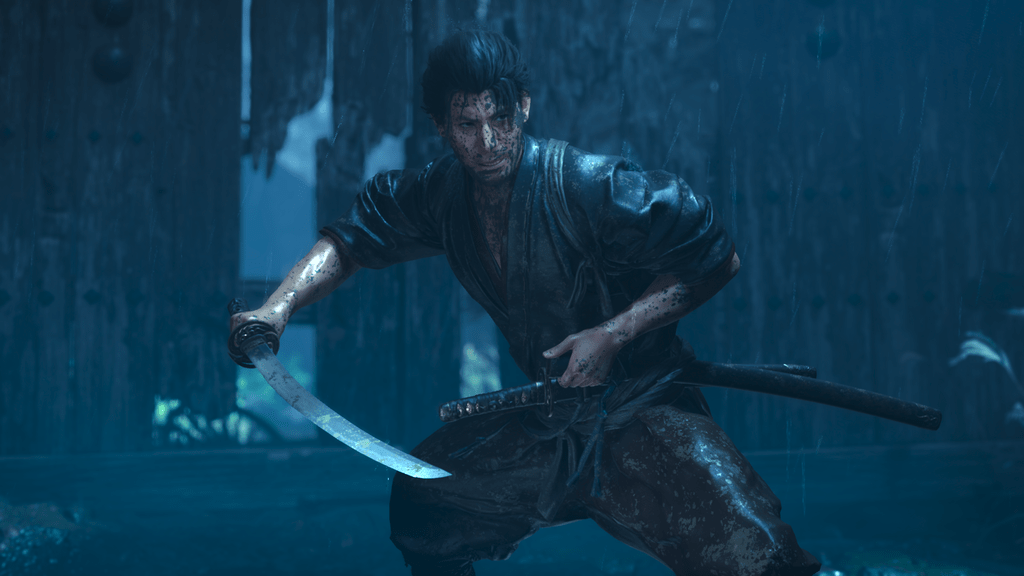
Throughout the playthrough, Musashi will meet other characters, Onimusha, and Oni who will aid him in his main goal: stopping the demons from breaching the world of the living, and saving anyone who can be saved along the way. Interestingly, all the characters are exceptionally well-written, and the game frequently delivers these “what in the world is happening now!” moments when you encounter random people, complete quests, and listen to others’ tales about what is going on in Kyoto. I have to say that Onimusha has retained its recognizable style—serious storylines sprinkled with quirky, comedic scenes here and there. Musashi helps a lot in this regard, with his unexpected remarks and totally random things he is capable of saying or faces he pulls, just to make you laugh and momentarily distract you from Kyoto’s grim fate. Generally speaking, the entire story, everything that happens, the characters, and of course Musashi, are vital parts of this game. I must admit it’s been a long time since I enjoyed an action game’s narrative as much as I did in Onimusha: Way of the Sword, and Musashi is the main “culprit.”
However, the absolute best thing about the game is undoubtedly the gameplay, which simply shines from the very moment you grab the controller. It is incredible how Capcom managed to nail the perfect formula to make this title incredibly fun, yet challenging when it needs to be. Right from the start, while getting acquainted with Musashi, the story, and the characters, the game explains all its mechanics quite nicely. The first thing you will notice is the absolutely flawless animations of every character in the game, especially Musashi. Musashi has weight to him; you never feel like you are controlling a character sliding on ice. It takes time for him to turn around or swing his sword. But exactly that weight, combined with stellar animations, delivers the perfect feel during gameplay. It’s the little things that will blow you away—like when you swing your sword a few times, step to the side, and just as an enemy tries to skewer you, you hit block for a perfect parry. Musashi won’t miraculously teleport or turn around at warp speed; instead, he will smoothly shift his blade over his shoulder to block the incoming strike. Every animation feels so natural, and I cannot overstate how much it contributes to the overall enjoyment and the gameplay itself.
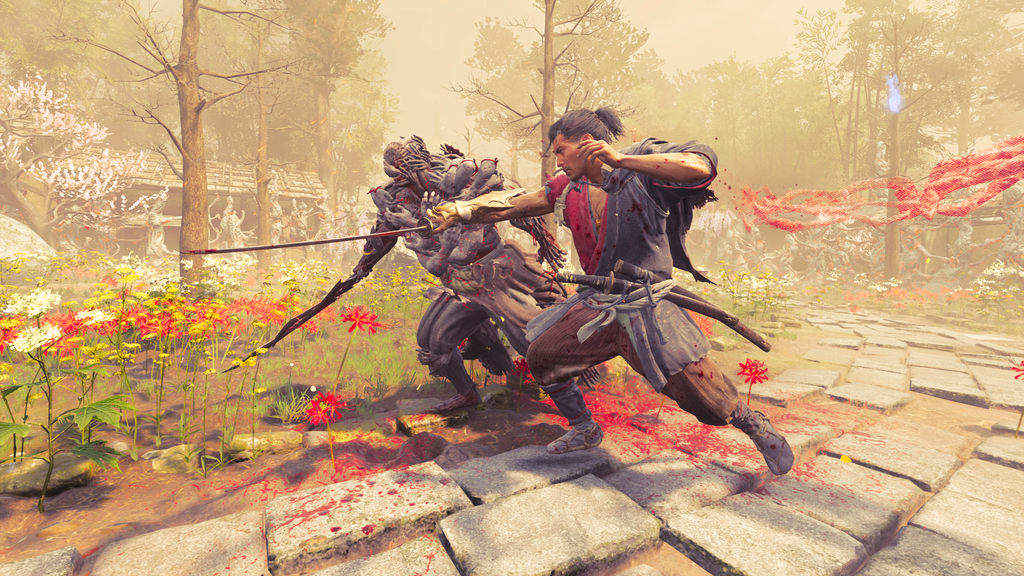
And the gameplay, in this case, is excellent. This is primarily an action game, not an RPG, but it does feature light elements like weapon and gear upgrades, which we’ll touch on a bit later. The core mechanic revolves around filling the enemy’s stagger bar. Once filled, Musashi can deliver a lethal blow and obliterate the foes standing in his way. You have Block, Parry, and Deflect, and every single move serves a distinct purpose in combat, especially when fighting tougher enemies and bosses. Additionally, there is a dash and a perfect dash—timing the latter perfectly opens the path for an even more devastating counterattack. Now, this might all sound like it’s too much, but it isn’t, because the game introduces new mechanics gradually, so nothing ever feels overwhelming, but rather like a natural progression of events in Onimusha: Way of the Sword. A bit later, you unlock a bow and arrow, which significantly changes your combat approach and makes engaging long-range enemies far more fluid. Then there are the Oni weapons you unlock as you progress through the story. These are the most powerful of all, though you must fill a gauge to use them. Unleashing them always provides a specific bonus and often serves as the perfect lifesaver in sticky situations.
Besides slaughtering Genma enemies, there is also some light puzzle-solving when you find yourself in the realm between the living and the dead. The bow and arrow will often come in handy during these moments, particularly for manipulating objects. Aside from these segments looking absolutely fantastic, everything is crafted with such incredible style. Every puzzle is intuitive and simply engaging, even if they don’t test your brain to its absolute limits—which is a very good thing, considering this isn’t a Resident Evil game.
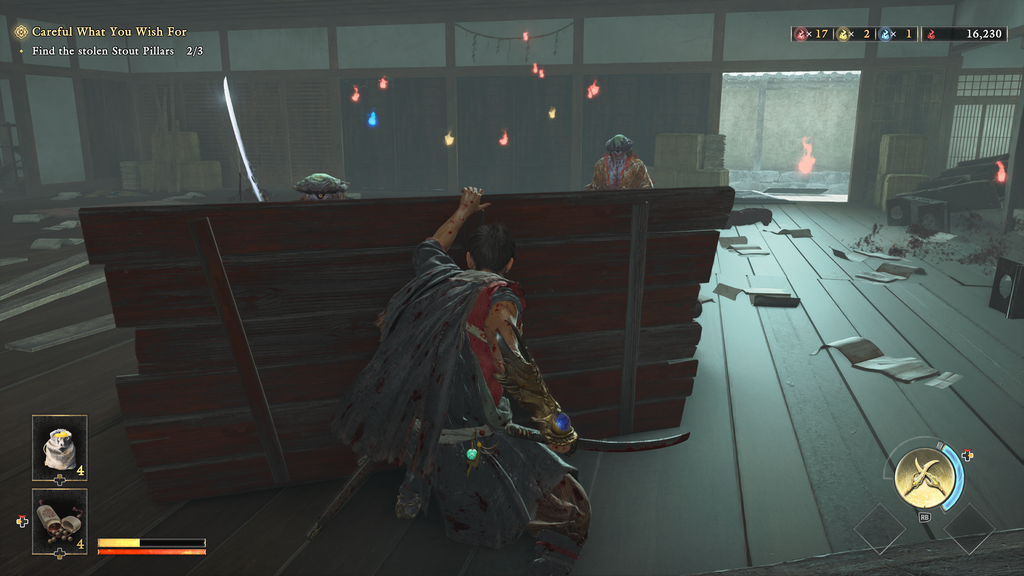
Onimusha: Way of the Sword is not an open-world game. You can explore Kyoto and complete side quests and random events, but the overall experience is much more focused compared to games that try to cram everything and anything onto a massive map. At the beginning of the game, when I saw a tiny map devoid of a single icon, I thought, “Okay, is this it? The game only takes place here?” But as time goes on, the game gradually expands. It never abandons that initial sense of a tightly focused experience, but it introduces elements that broaden your activities and expand the map. Crucially, the map never becomes massive or overwhelming; it grows just enough to let you have fun, explore, and get to know this mystical, perfectly realized version of Kyoto. I have to admit I really loved this direction Capcom took. The game introduces new elements and expands both the story and the map exactly when the player needs it. Gradually, carefully measured, and with style—just as it should be.
As time passed, the entire concept of this world and how it was tailored grew on me more and more. That initial “is this it?” feeling quickly vanished, and the game completely pulled me in, to the point where I couldn’t wait to progress further just to see how the playable space would expand and what secrets this version of Kyoto actually held. To be clear, you aren’t strictly obligated to explore, but doing so yields materials you desperately need for upgrading your gear, weapons, talismans, and everything else. This mostly comes from side activities that pop up from time to time, or by completing side missions that unlock later on, which generally involve helping the city’s residents and solving their mysteries. Interestingly, none of this ever feels boring; it effectively pulls you even deeper into the game, just like every other element of Onimusha: Way of the Sword.
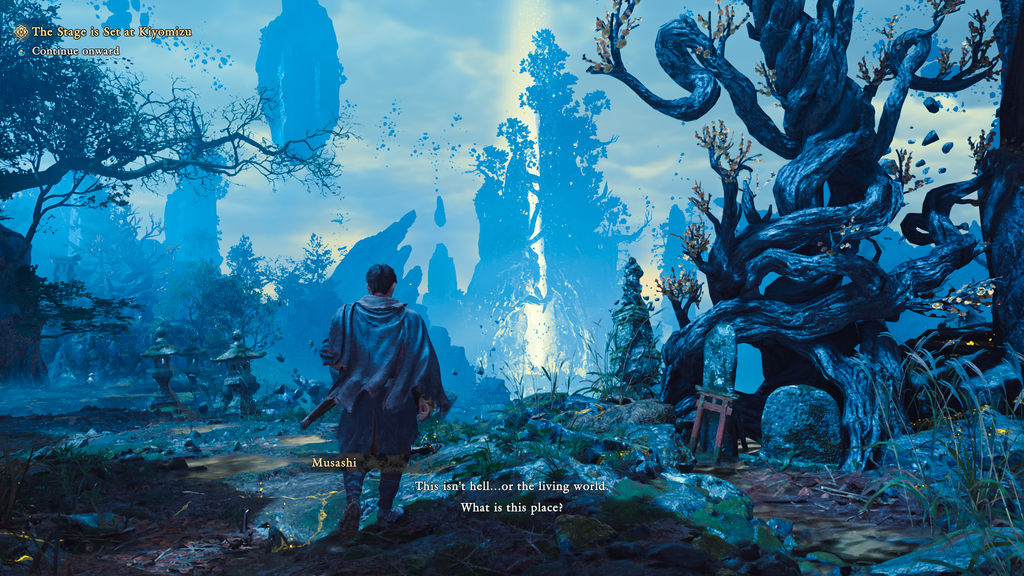
With this, Capcom managed to create a highly engaging world, narrative events, and environments in Onimusha: Way of the Sword, all without relying on the familiar, overused tricks currently trending in the industry. As with all their releases this year, they always find a way to uniquely craft a game without borrowing ideas from other popular titles—which, let’s be honest, almost everyone does nowadays. It is precisely because Capcom somehow manages to remain unique in any given genre or subgenre with each new title that they manage to squeeze so much brilliance out of their games.
Since we already mentioned gathering materials and everything required for upgrades, let’s dive into that segment of the game for a bit. Onimusha: Way of the Sword is not an RPG, nor does it try to be—which deserves praise—but it naturally features light upgrade mechanics. Musashi collects red Genma souls with his gauntlet, which serves as the primary upgrade currency. However, you can’t upgrade everything using just souls; you need to find other materials as well. This is especially true for talismans, late-game sword upgrades, cloaks, bows, and naturally, unlocking skills. The game always clearly lists exactly what and how much you need to upgrade a specific item, and even if you don’t actively hunt for these materials, they will come naturally as you progress. The game is well-balanced, so if you go a few missions without upgrading your gear, it’s completely fine—the game won’t punish you for it. This largely stems from the fact that this is an action game first and foremost, as I mentioned when discussing the gameplay.
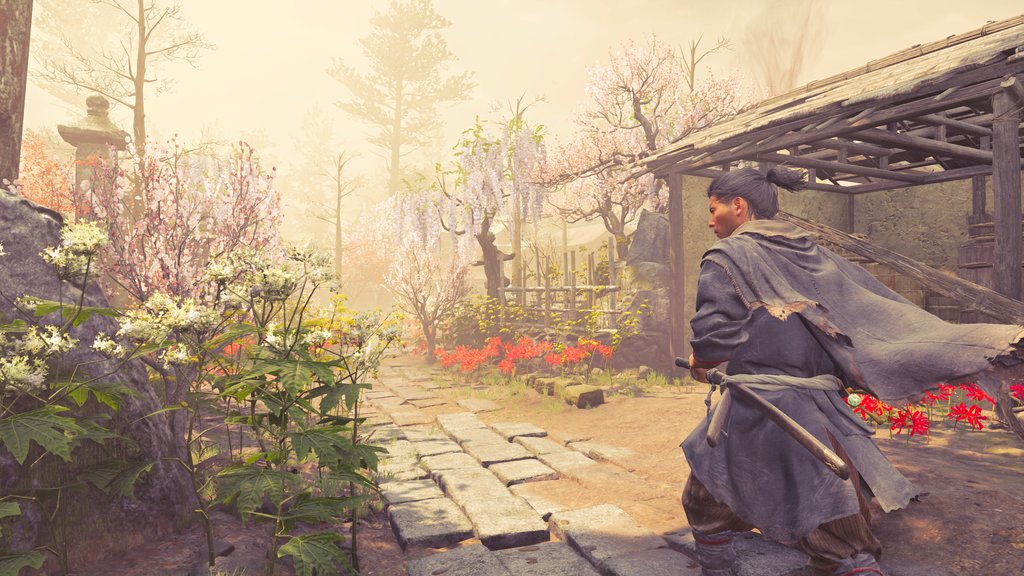
The great thing about the upgrades is that they actively enrich your playstyle over time. New skills, new moves, new Oni weapons and their abilities—everything somehow falls perfectly into place as you progress. Because of this, the gameplay and your progression never feel tedious, because, as I said, you don’t have to farm random nonsense just to get stronger. All the upgrades exist to serve the player and spice up the gameplay even further, which is fantastic, because that is exactly what they accomplish. As time goes on, you’ll find yourself eagerly waiting to unlock a new skill just to see how it alters—or rather, complements—the gameplay mechanics.
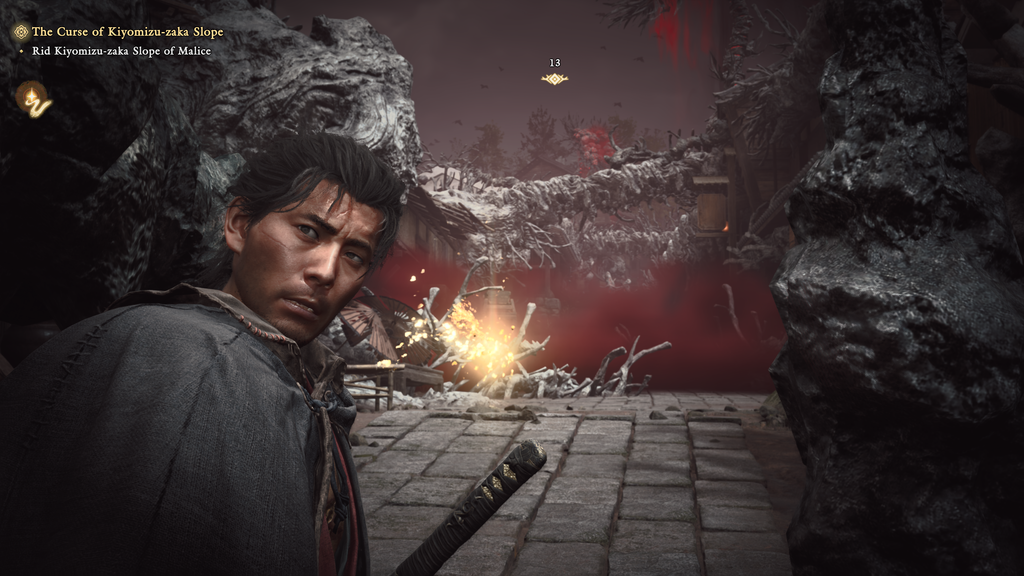
As for the graphical presentation, I think it goes without saying that this is yet another RE Engine game that looks absolutely fantastic. The character animations, the clothing worn by Musashi and the enemies, the surreal creatures, and their realm suspended between the living and hell—it is incredible how brilliantly it is all executed and how simply beautiful it is to look at. Kyoto, on one hand, looks serene, dominated by the brown tones of woodwork and the gray shades of mud and dirt, with touches of nature visible here and there. But when you battle Genma demons in their realm, everything flashes with red, black, and other dark hues, giving this game a highly distinct flavor—unique in the gaming industry, yet instantly familiar to all Onimusha fans. Furthermore, the game runs flawlessly on the Xbox Series X, where you can choose between several modes: Quality, Balanced, and Performance, while users with 120Hz displays can also play with an unlocked framerate.
We would like to thank Capcom for providing us with a copy of the game for review purposes.
Onimusha: Way of the Sword (Xbox Series X)
In the end, it comes as no surprise to me that Onimusha: Way of the Sword is yet another victory for Capcom, but I couldn't wait to see the complete product after playing slices of this title on multiple occasions over the past year. Best of all, Capcom managed to exceed even my expectations. This is a brilliantly crafted, tightly focused game that will appeal just as much to old Onimusha fans as it will to those just entering the series. I sincerely hope Capcom just keeps going at this pace, because this year has been simply phenomenal for them.
