


This time, THQ Nordic is bringing players a brand new IP called Fatekeeper. It’s a first person action RPG that allows you to freely combine different weapons and magical abilities, tailoring your combat style to your own preferences. The game is being developed by a small team called Paraglacial, consisting of just thirteen people, and is currently available in early access on Steam.
I remember one day when youtube randomly recommended me a video for a game called Hellraid. Its dark atmosphere immediately caught my attention, as did its fantastic looking combat. Blood was flying everywhere, enemies looked horrifying, and you could hurl lightning bolts, launch sharp icicles, wield a variety of weapons, and send foes flying across the battlefield. Every now and then, you’d also encounter a powerful boss. Unfortunately, Hellraid was eventually canceled before later being used as a DLC for Dying Light. Thankfully, it’s more than obvious that Fatekeeper draws a great deal of inspiration from Hellraid.
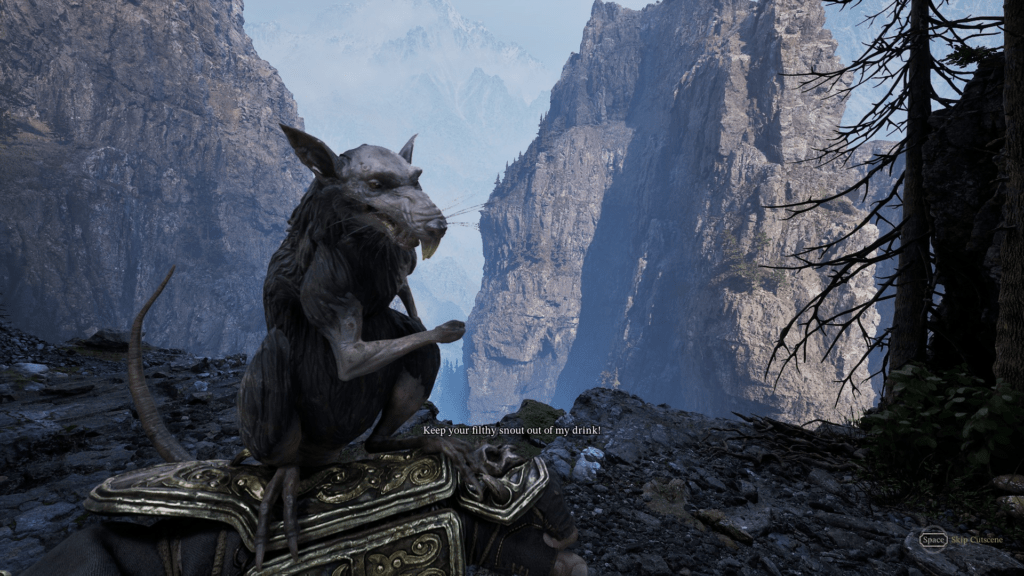
Since the game is currently in early access, it offers roughly four to five hours of content, while most of the story is delivered through loading screens. In short, you play as a druid belonging to an order known as The Druids of Repose. Your goal is to complete rigorous training and become the next warden, a protector tasked with bringing peace to the world. You won’t be traveling alone, however. Accompanying you on your journey is a loyal and wise talking rat. At the beginning of the adventure, you’ll find yourself in your personal HUB area, where your companion informs you that you must complete your training, kicking off the game’s tutorial.
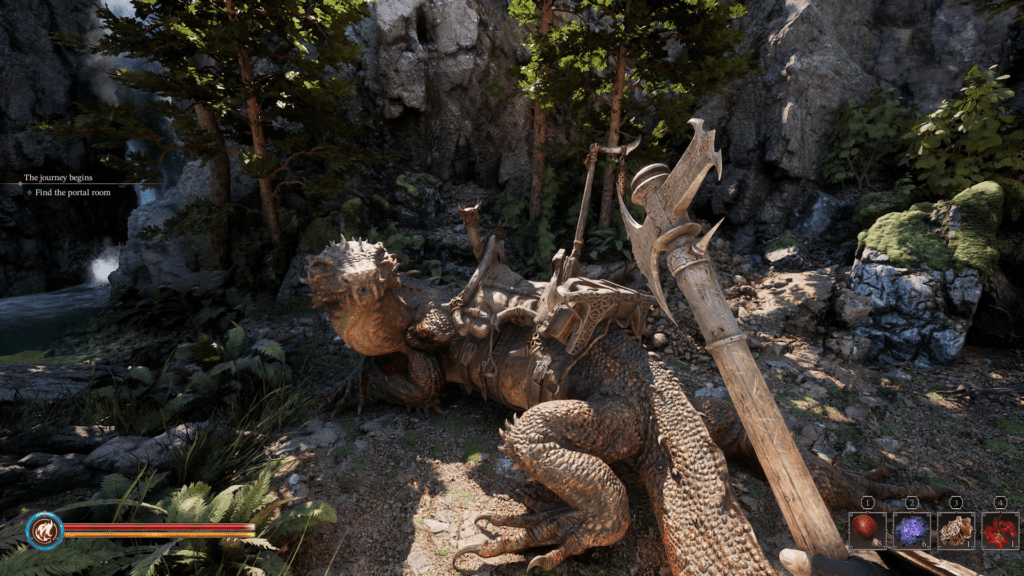
While fairly straightforward, this segment does an excellent job of introducing the core combat mechanics you’ll be using throughout the entire experience. Once your training is complete, the real adventure begins. You’ll set out along an ancient path filled with dangers, fighting your way through hordes of enemies, overcoming obstacles, and facing powerful bosses. However, combat isn’t the only thing Fatekeeper has to offer. Between battles, the game encourages you to slow down and take in its beautiful environments. From ancient ruins and stone pathways to vast sunlit landscapes, Fatekeeper invites players to both explore and fight in equal measure.
Combat, as usual, offers the familiar mix of light, heavy attack, kick, block, and dodge mechanics. You can even dodge while airborne. What makes the system particularly engaging is its four different schools of magic – you can hit enemies with fire, freeze and slow them with ice, or use telekinetic wind powers to either push enemies away or pull them toward you. Telekinesis is useful outside of combat as well, you can pull distant levers that would otherwise be inaccessible, grab explosive barrels, and launch them directly into an enemy’s face. The possibilities allow for a surprising amount of creativity. Kicks become especially valuable when enemies are standing near spikes or bottomless pits, letting you dispatch them instantly and fire, while personally my favorite spell, becomes even more effective when combined with environmental hazards.
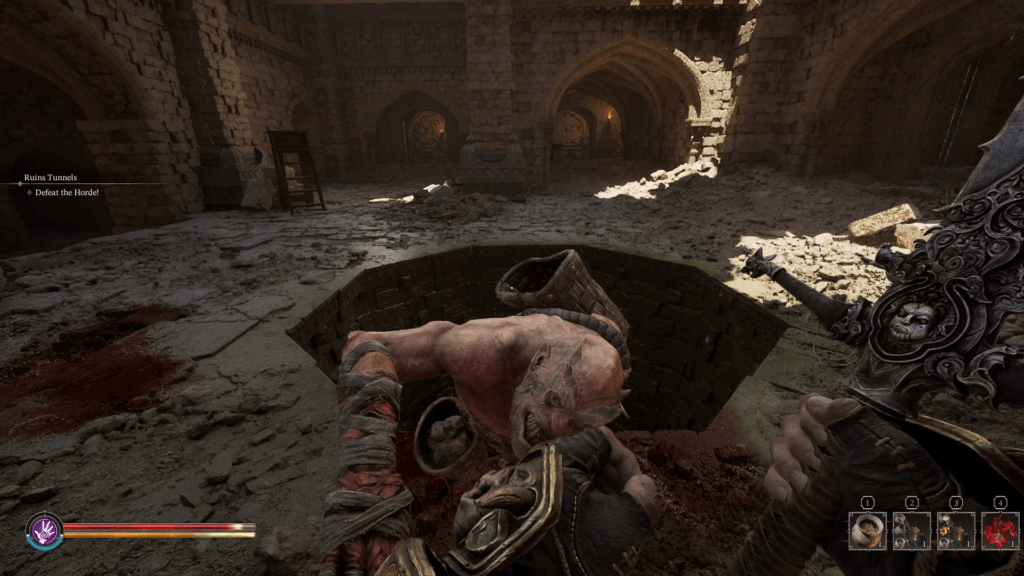
Pools of oil can be ignited, allowing you to burn multiple enemies at once. Early on, I encountered a large pit while a group of enemies had conveniently gathered on the opposite side. One gust of wind later, four of them were sent tumbling into the abyss. Every encounter can become significantly easier if you take a moment to look around and consider how the environment can work in your favor. If archers are firing at you from elevated positions, there’s no need to rush toward them, simply pull them down with telekinesis. If an enemy is carrying a shield, a quick kick will stagger them and leave them vulnerable to your attacks.
Fans of Dark Messiah of Might and Magic will likely find all of this very familiar. All in all you’re never forced into a particular playstyle, you can fully commit to melee combat, focus on magic, or create a build that suits your preferences. As for weapons, you can currently choose between swords and axes, both of which feature excellent visual designs. It would be great to see additional weapon types added as development continues. Spears, for example, would fit perfectly into the game’s combat system. Defeating enemies rewards you with XP that can be used to level up and invest in a sizable skill tree.
Choosing one specialization locks out others, encouraging meaningful decisions. Without realizing this mechanic at first, I invested heavily into melee damage and as a result, my attacks became faster and more powerful, and later I managed to unlock additional health related upgrades, however that happened while I was near the end of the game. Either way, you can always start a brand new game and choose different skills. If you focus on magic, you will discover an entirely different gameplay experience since certain abilities allow enemies to be transformed into frozen statues that explode upon shattering, while others cause fire spells to spread between nearby targets.
If you don’t want to restart your playthrough, you can return to your HUB area and reset your skill points. Beyond weapons, you’ll also find armor pieces and various rings that provide useful stat bonuses. You’ll additionally notice that plants and herbs can be collected throughout the world. This becomes especially valuable if you’re interested in alchemy. Near most campfires, which function as save points, you’ll usually find a cauldron where different ingredients can be combined into powerful potions. These potions can restore health and mana or provide potent weapon buffs. If you don’t wish to spend much time engaging with alchemy, you can still consume certain flowers and mushrooms directly for minor healing effects, though the difference in effectiveness compared to crafted potions is substantial.
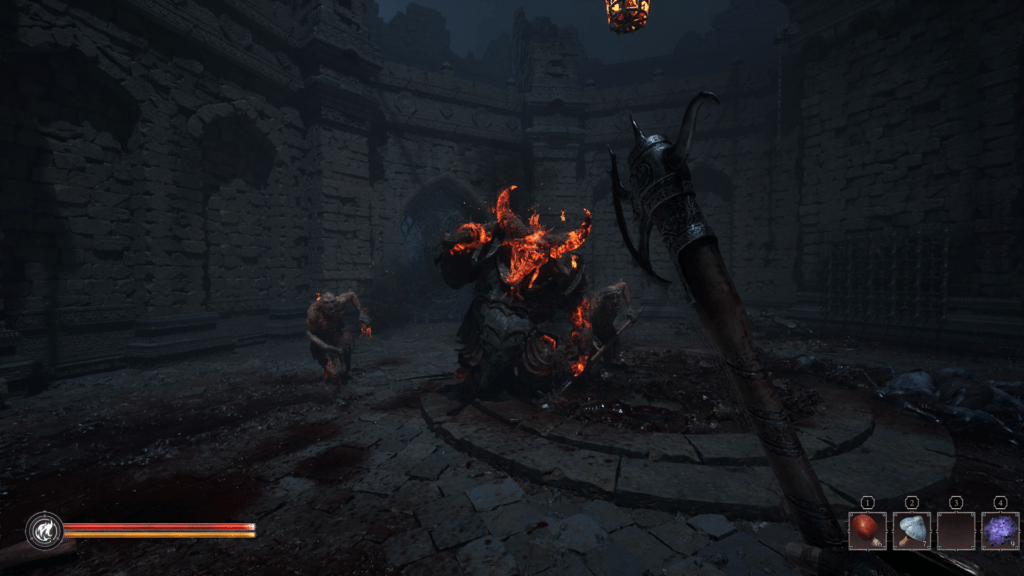
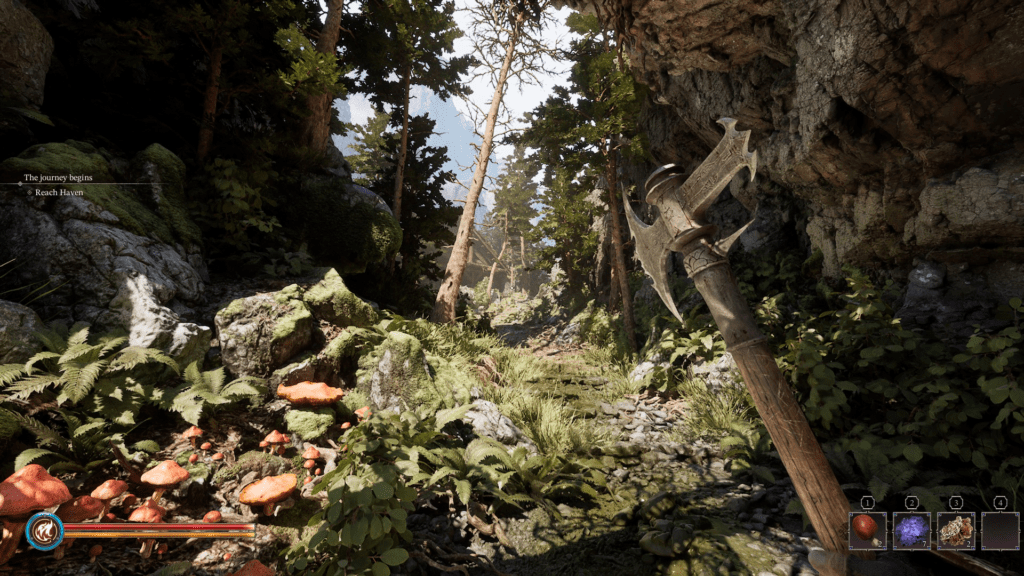
Visually, the game is stunning. Every area is packed with personality and constantly encourages exploration, whether you’re traversing beautiful overgrown ruins or venturing through dark caves littered with skulls where your torch serves as the only source of light. Sunbeams break through openings in the environment, creating beautiful contrasts between light and dark, while the more subtle lighting inside ruins successfully reinforces a sense of danger and mystery. The world feels richly detailed and rewards players who take the time to appreciate it. The soundtrack further enhances the atmosphere. During loading screens it feels calm and soothing, while becoming appropriately intense during combat encounters. Voice acting primarily revolves around your character and the talking rat, and listening to their interactions is surprisingly entertaining. Your protagonist sounds very much like the powerful warrior he is, while the rat’s rough, raspy voice makes him feel like an old man reluctantly tagging along and offering advice throughout the journey.
From the very beginning, Fatekeeper makes it clear that combat is the heart of the experience. Thanks to its wide variety of weapons, spells, and play styles, every encounter feels dynamic and rewarding and each new challenge becomes a test of creativity, adaptability, and your ability to utilize every tool at your disposal. Alongside its excellent combat system, the game offers a visually captivating world that rewards curiosity despite its largely linear structure. However, there are a few areas that could benefit from improvement. The biggest issue lies in how the story is presented.
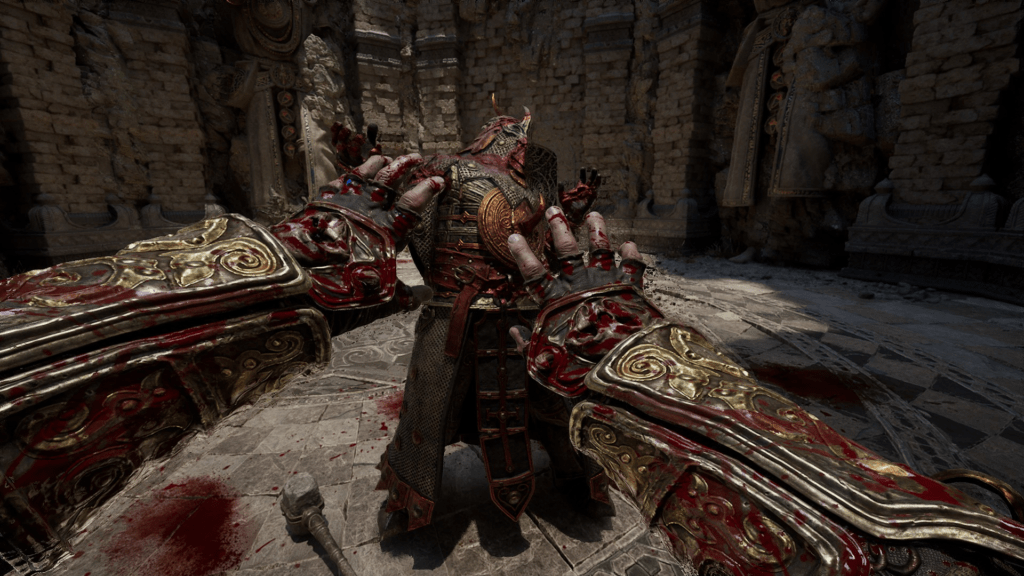
In the beginning, it’s difficult to gain a clear understanding of the world, its history, and the events that led to the current situation. While the developers regularly publish little blogs on their Steam page that expand upon the game’s lore, it would be preferable to see more of that information integrated directly into the game itself. Likewise, additional weapons, magical abilities, and expanded alchemy options would greatly enrich the experience. The same can be said for boss encounters, which would benefit from more memorable and varied arenas capable of delivering even more spectacular battles.
Still, one thing is certain: Fatekeeper has enormous potential. Although there is plenty of room for growth, for just 10e (with an additional 20% discount available until June 16.), the game delivers an experience that far exceeds its asking price. If you’re a fan of RPG adventures and experimenting with different combat styles, this is absolutely a title worth checking out.
And on top of all that, you get a free talking rat!
