

Oh, how thrilled I was when I saw we had a meeting with SEGA to play the new Crazy Taxi. Needless to say, I was one of those kids who spent days playing this mindless yet brilliant arcade romp back on the original Xbox, a time so long ago it feels like a different life. Seeing that Crazy Taxi: World Tour retained the exact same aesthetic as the original, and seemingly the same mechanics based on the trailers, I couldn’t wait to grab the controller and dive in. That’s exactly why our first day with SEGA was so exciting; after seeing their entire lineup, Crazy Taxi: World Tour served as the grand finale of our SEGA coverage.
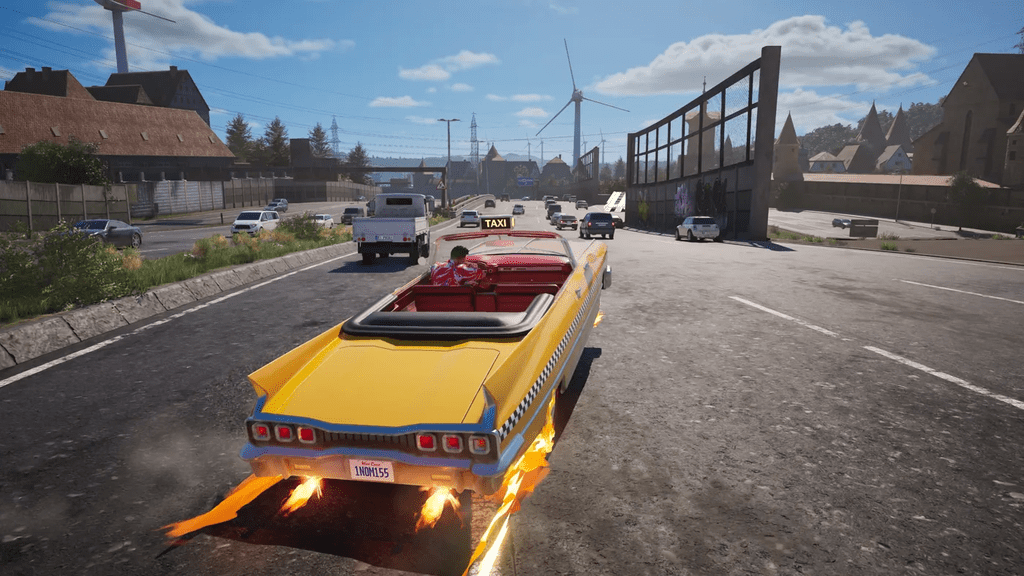
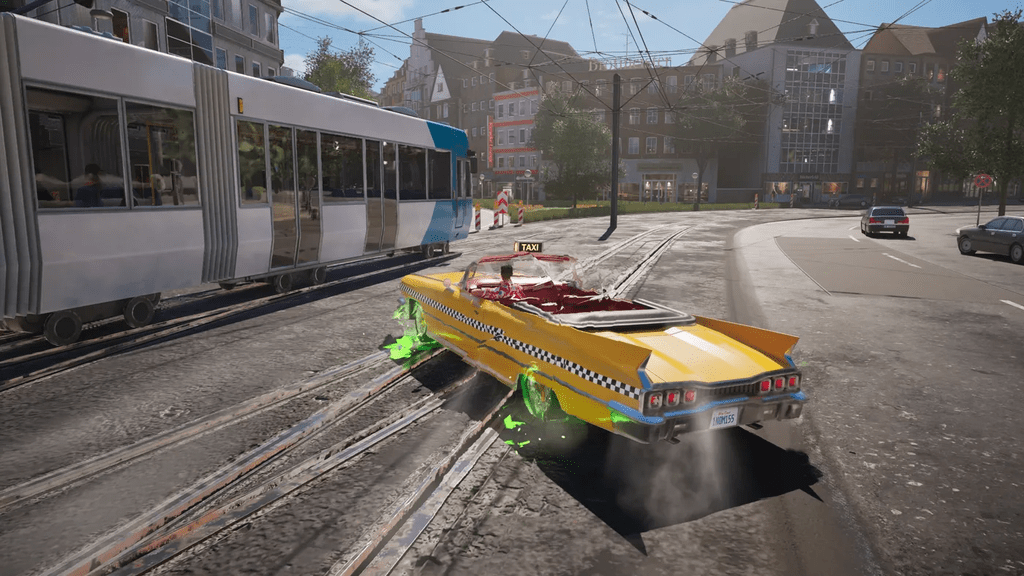
What I noticed in the early trailers is that the SEGA team didn’t strive to over-modernize this title. Instead, they aimed to deliver something instantly familiar, a simple, highly straightforward burst of fun. It was precisely because of this simplicity that I approached Crazy Taxi: World Tour with a heavy dose of nostalgia. The 1999 original was one of those pure arcade titles that didn’t try to explain its systems through a dozen menus, skill trees, or a half-hour tutorial. You sit down, hit the gas, and within seconds, you understand exactly what you need to do. That was my main motivation for trying the game at this year’s Gamescom. The demo lasted about half an hour and featured a map inspired by Germany, or rather, a city clearly designed to serve as Gamescom’s home turf.
The very first thing that brought an instant smile to my face was the music. The moment The Offspring kicks in and you hear that iconic “ya ya ya ya ya,” a part of your brain that’s been trapped in the PS2 and original Xbox era automatically reactivates. SEGA very consciously brought back the franchise’s signature musical identity, and I think that’s crucial for this title; the original charm of Crazy Taxi needs to be felt by as many modern players as possible. More importantly, the driving itself feels pretty great, at least on first contact. The car is responsive, drifting is a breeze to pull off, and the Crazy Dash practically forces you to learn how to thread the needle through every possible gap between buildings, traffic, and other obstacles. Throw in the Crazy Stop, and you have a handful of core tricks that form the foundation of the driving model. Best of all, after just a minute or two, you’re already tearing across the map, desperately hunting for the fastest racing line to your next customer.
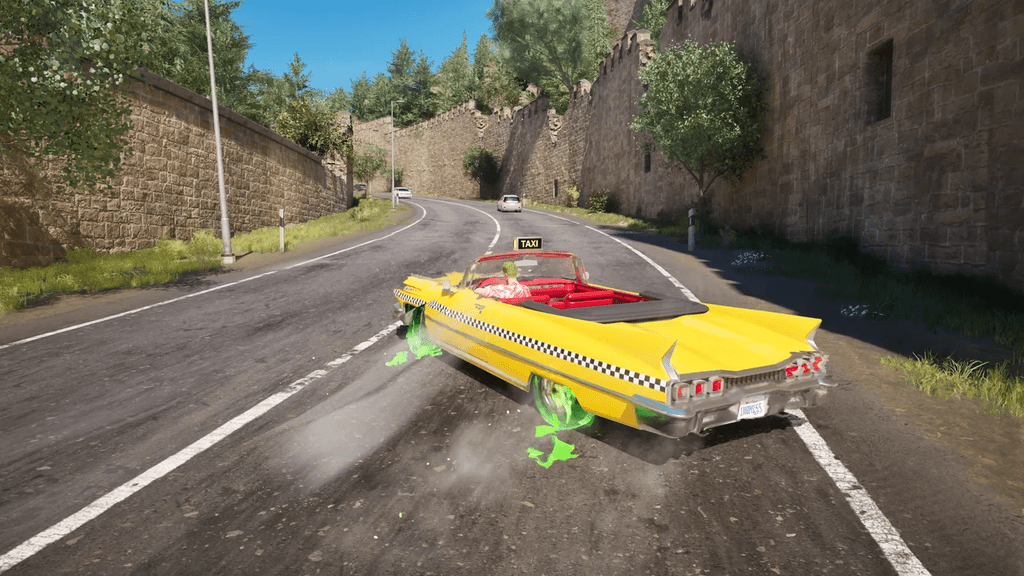
Now, the only issue I had with this demo is that it just didn’t feel fast enough. I don’t know how to explain it, but based on what my brain could dig up from the archives, the original wasn’t this slow in certain moments. In the classic game, everything was subordinated to one simple principle: find the next passenger and deliver them as fast as humanly possible. Once you picked someone up, you were already plotting where the next fare was. See a shortcut? Take it. Can you cut across the sidewalk? Do it. Need to slam into the car ahead to correct your trajectory? Hey, it’s part of the job. Every second mattered, and every single ride pushed you to be a little more aggressive. World Tour, on the other hand, is built as a much larger game. You get an open-world map that you can freely cruise around, dotted with various points of interest, missions, and side activities. At Gamescom, the map was based on Cologne and its surroundings, featuring an airport, an urban downtown, and a castle district, all connected by winding roads and massive stretches of highway. In classic Crazy Taxi, you had no reason to just “drive around.” Everything was tied to the ticking clock and the next fare. World Tour allows you to drive without any pressure and pick your own activities. That might be pleasant if you want to explore, but it kills a chunk of that frantic urgency that made the original so incredibly addictive. This is exactly why the game feels a bit too spaced out; it’s bigger, but as a result, there’s simply too much dead air between individual rides.
The Fare Missions are exactly what you’d expect. Pick up a passenger, get a destination, and race against the clock to get there. The faster you drive, the better your payout, with bonus seconds awarded for successful tricks and reckless driving. In the Gamescom demo, however, these rides were quite short. Which is fine, because in stark contrast to that slower open-world pacing, these moments inject urgency back into the game. You finish a quick fare, ignore the sightseeing, immediately pull up to the next customer, and the fun continues. But on the flip side, you can’t always seamlessly chain one ride directly into the next. Crazy Taxi was always a game where you did exactly that: ride after ride after ride. World Tour currently feels more like a game where you have short activities scattered across a massive map. When you manage to find the right rhythm, it’s a blast. The question is just how often you’ll actually hit that rhythm.
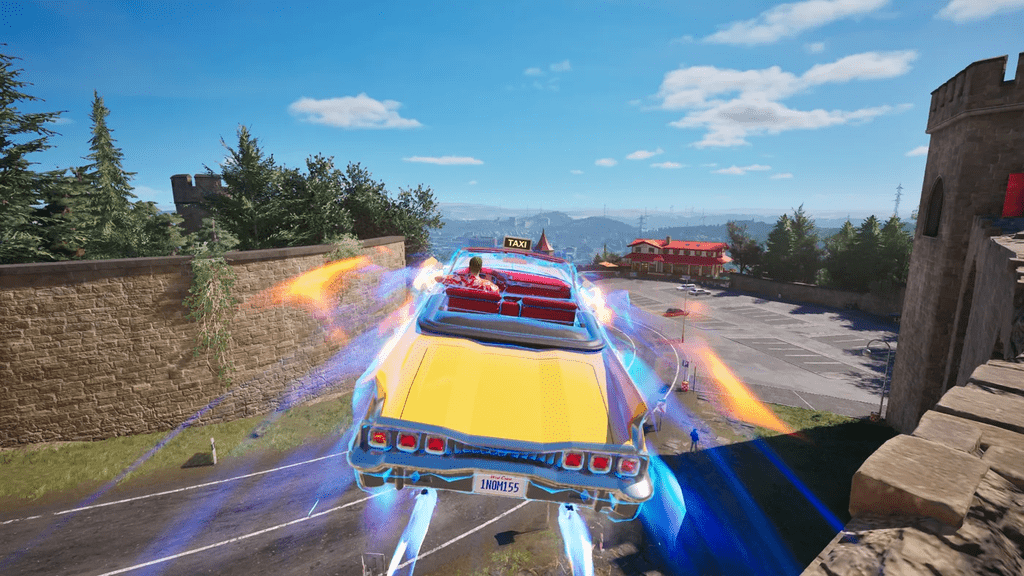
On the other hand, thank God SEGA didn’t just expand the classic fare missions and call it a day. World Tour introduces a whole slew of side activities that attempt to capitalize on the absurd nature of Crazy Taxi. The demo featured tasks like delivering pizzas, collecting recyclables, transporting people in Easter bunny costumes, and even helping a guy who actively wants to be catapulted into the air. I heard another journalist mention a mission where you have to help a customer literally catch an airplane, while another involved smashing into dumpsters so an NPC could vacuum up scattered paper. It was precisely in those moments that I felt Crazy Taxi: World Tour finally showcasing exactly what I wanted to see. Because when the game forces you to catapult your cab across the city to help a lunatic, the true spirit of the original comes roaring back. The problem is that, right now, those moments just aren’t frequent enough.
You spend a large chunk of the demo navigating the space between these interesting situations, driving from one map marker to the next. SEGA clearly wanted to create something closer to a modern open-world title here, featuring a map stuffed with activities and freedom of movement. But Crazy Taxi was never fun because it had a ton of content. It was fun because every single second between the start and the end of a ride was pure chaos. The map I played isn’t inherently bad. The Gamescom build featured distinct, interesting locations, from the airport to city squares, historical architecture, and the castle, all linked by massive highways. This actually makes me eager to see what the other maps will look like in the final release, because there is a ton of potential here to create something fantastic. The original Crazy Taxi didn’t need to show you a massive world. It gave you a perfectly designed playground that constantly forced you to make split-second decisions. Left or right? Cut through the park or take the long way? Should I attempt a Crazy Dash through oncoming traffic? Can I snag one more fare before the timer hits zero? In World Tour, you have an entire map filled with random activities, and I know that will alienate some players because it clashes with what Crazy Taxi fundamentally is. But once you accept that you are in a world that offers a bit of everything, not just an endless loop of fares, it all gets much better. Best of all, those crazy, iconic driving mechanics are fully intact, and they fit perfectly into this bizarre world and its wonderfully designed map.
Even with all these impressions, which I personally found to be great, it’s crucial to emphasize that the Gamescom build was far from the final game. SEGA has already announced that World Tour will feature five distinct cities at launch. Furthermore, they’ve teased a story mode following Axel on a global journey, whereas the demo was strictly focused on core gameplay and open-world activities. The online component is particularly interesting, as right around the time I’m writing these impressions, SEGA has announced a Closed Network Test. It will feature two multiplayer modes—Pickup Race and Cops ‘n’ Cabbies—with both ranked and custom matches. The test is scheduled for September 12–14, while the full game is still slated for a 2027 release.
At the end of the day, Crazy Taxi: World Tour feels like a true reincarnation of a classic, injected with a few new tricks that are simply mandatory for today’s market. I just hope the pacing tightens up a bit between the scattered activities, bringing back that relentless sense of urgency that kept players gripping their controllers until the sun came up. As I mentioned, Crazy Taxi: World Tour drops in 2027, so we won’t have to wait too much longer to fully dive into this modernized classic.
