

We all tend to define mobile games as “little games.” When we picture a game on a phone, the first things that come to mind are Angry Birds, Cut the Rope, Subway Surfers, and titles like that. Very rarely do we think of Monument Valley and other “more complex” games that found their home on mobile devices. But over the past few years, mobile devices have become much more than just phones, and we’ve received some fantastic titles such as Genshin Impact, Wuthering Waves, the recent NTE, Once Human, and so on. All of those games run great on phones, but until now we haven’t really had a true hardcore multiplayer shooter. Sure, there’s Call of Duty, but honestly, that feels more like a casual spin. It’s the classic CoD gameplay loop, just a bit more simplified compared to consoles and PC.
Then Ubisoft stepped in. They already had some solid, smaller mobile titles from the Rayman and Assassin’s Creed franchises, but they hadn’t attempted to bring their biggest multiplayer games to mobile until this year, or rather, until last month. In a short span of time, two games were released: The Division Resurgence, which we’ll cover in a separate article, and Rainbow Six Mobile, the title we’re going to properly dissect here to see what it really has to offer.
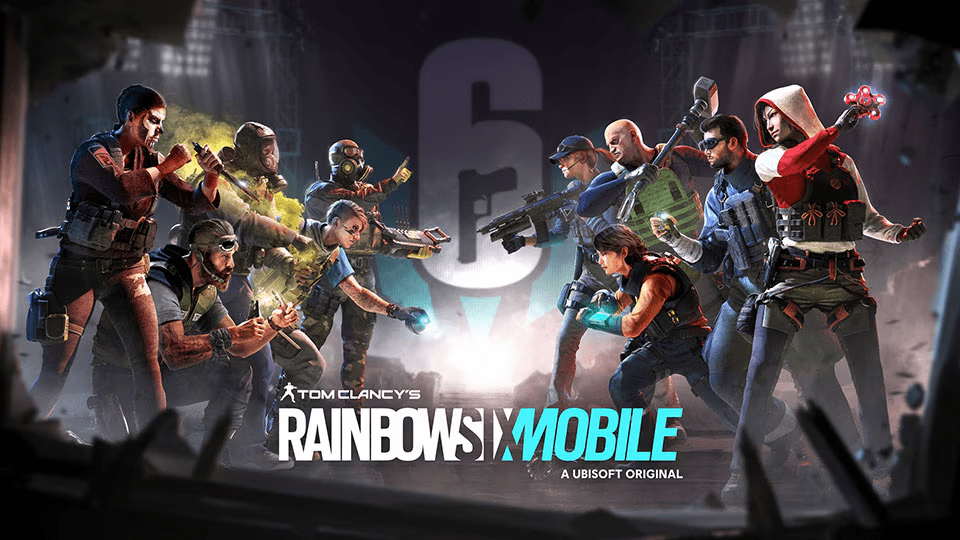
Rainbow Six Mobile is a mobile port of Rainbow Six Siege, Ubisoft’s most popular multiplayer title. Rainbow Six Siege is known for its hardcore approach and highly serious matches, where strong coordination on maps with your team is essential, and where you have to listen to every footstep, every sound cue, and watch every pixel. When Rainbow Six Mobile was announced, I was a bit skeptical, how were they going to translate all of that to a mobile device, with touch controls, a smaller screen, and everything that comes with mobile gaming? But after around 100 matches, I can confidently say that Rainbow Six Mobile might be the best competitive game currently available on the mobile market.
Ubisoft didn’t just bring the essence of the title to smaller devices, they made sure that the core mechanics and gameplay loop remained intact, which deserves real praise. Generally speaking, that’s commendable. But if we’re being honest, this is still a very slow, tactical, methodical game that simply won’t be for everyone on mobile, just like it isn’t for everyone on PC. So let’s start from the basics and try to frame this review as if new mobile players are considering jumping in.
Rainbow Six Mobile is a first-person tactical shooter where you take on the role of either an attacker or a defender on a map. Each map is a closed environment where the defending team tries to protect planted bombs, while the attacking team must find a way to breach the defense and disable them. Each team consists of five players, and both sides can choose one of 27 operators, divided into 14 attackers and 13 defenders. There are also two default Recruit classes, one for each side. Every operator has a unique toolset that defines their role. There are breachers whose job is to break through defenses using various tools, supports who focus on disabling defensive setups, intel gatherers tasked with locating enemy positions, anchors who are responsible for holding and defending key spots, and more.
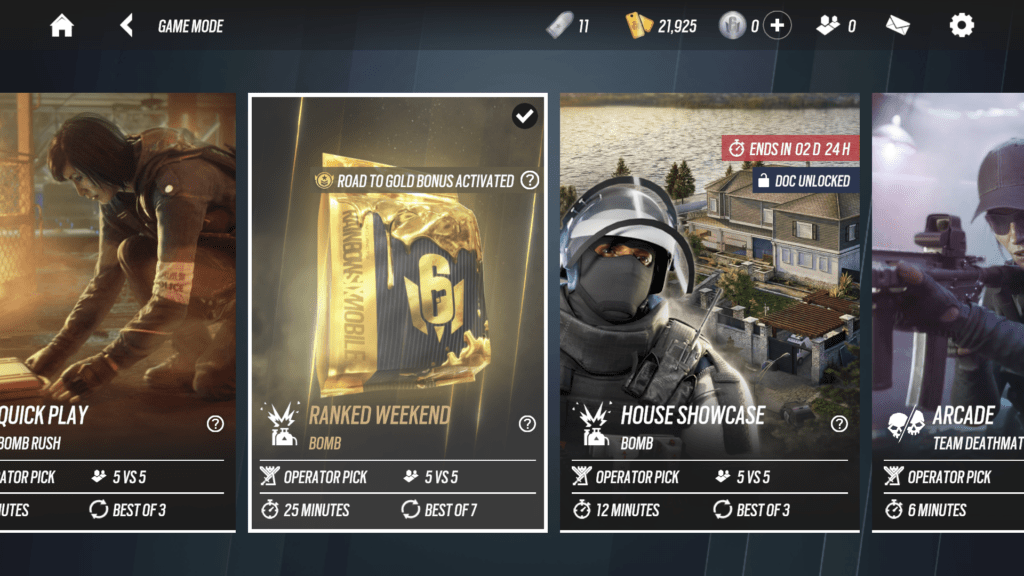
The number of rounds depends on the mode you’re playing. Ranked is usually played as best of three rounds. The standard non-ranked mode is best of two. There’s also Arcade Mode, which plays more like a Team Deathmatch, an excellent way to get used to the maps, shooting mechanics, and operators. A 3v3 mode is currently available as well, and Ubisoft frequently introduces less traditional modes to break the monotony for players who may not yet be comfortable with the classic 5v5 format played over two or three winning rounds.
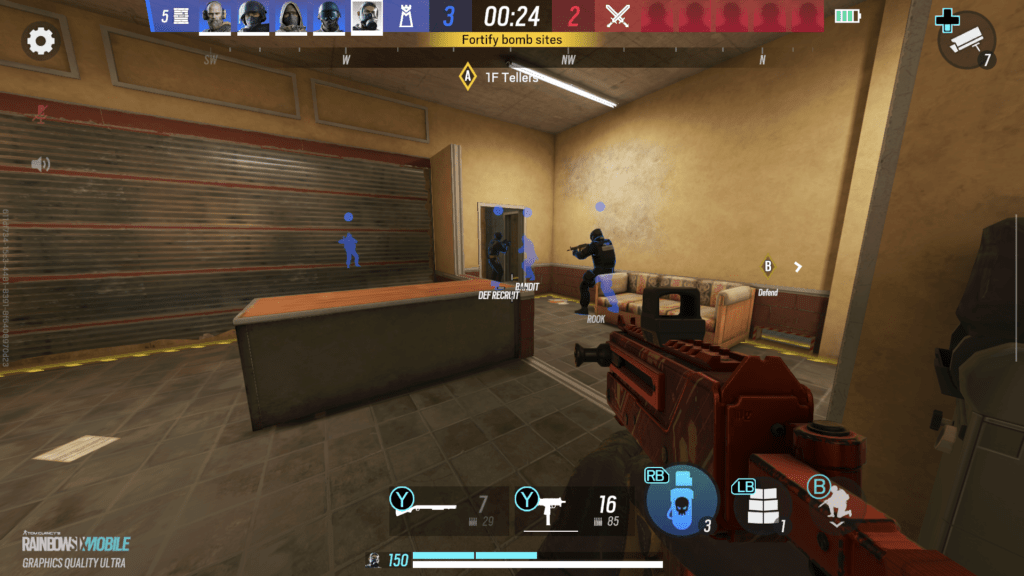
The Bomb mode consists of two phases. The first is intel gathering or defensive preparation, depending on which side you’re on. In the pre-match phase, attackers use drones to scout the map, locate the bombs, identify enemy positions, and see which operators the opposing team is using. Your strategy for breaching the objective should depend on that information. The defending team must set up the best possible defense, place traps, reinforce walls, and position themselves to surprise the attackers. In addition, defenders have access to cameras during the match to monitor attacker positions, cameras that can be destroyed by attackers.
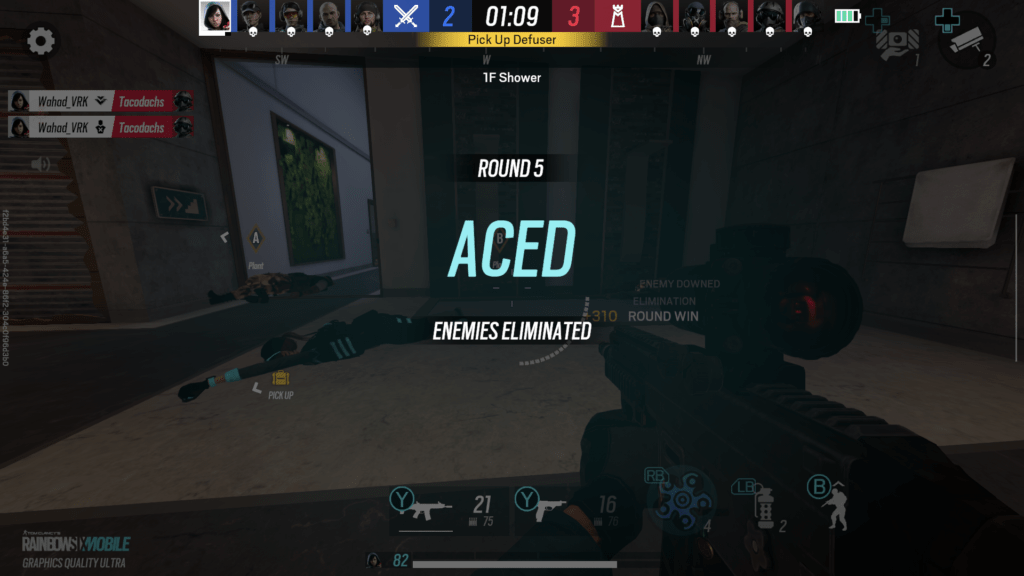
After that comes the main course: the gameplay itself. Each map is designed with multiple floors, usually two or three of them, most often a basement, ground floor, and upper floor. Verticality is extremely important in this game, as moving around the map and attacking from above through soft floors is one of the key tactics that can catch defenders off guard. The same applies to defenders. Because of this, this is not a game where you can simply enter a building, walk forward, and start shooting. You always need to know your position, what’s below you, what’s above you, and what’s to your sides. You never know when a bullet might come your way, whether from the floor beneath you or the ceiling above.
Experienced players will use every trick in the book, especially vertical play, since it’s one of the hardest tactics to master but also one of the hardest to defend against. That’s why learning the maps over time and understanding everything you can do within them is crucial. And yes, I almost forgot, the sound. Sound might be the most important element in this game. It’s so well implemented that simply listening to what’s happening on the map can reveal enemy positions. If you’re in the right spot, you can even eliminate someone through a wall next to you if you hear them, whether they’re above or below.
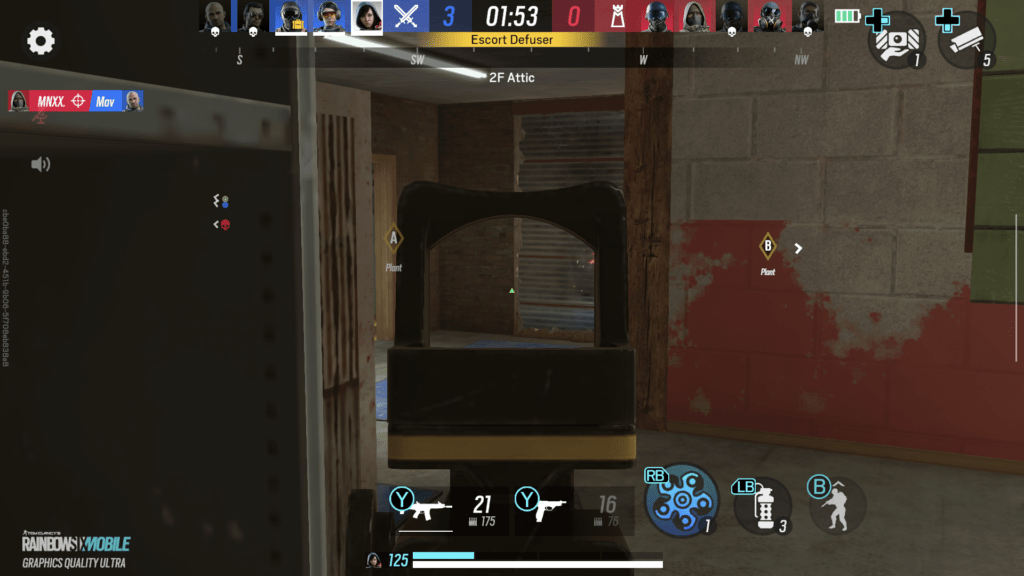
As mentioned earlier, there are soft floors and soft walls. Destruction is a defining feature of Rainbow Six Siege, and that carries over to Rainbow Six Mobile. Maps are filled with soft walls that can be destroyed, but also with hard walls that are permanent and serve as cover. The same applies to floors. To maintain the structural integrity of the map, floors cannot be completely destroyed, but damaging them allows you to see below or above without falling through, thanks to the supporting framework.
Wall-breaching tactics are a key factor for success in this game, whether you’re attacking or defending. That’s why the combination of good intel and well-timed wall penetration shots can look like cheating to new players, but it’s nothing more than smart positioning and map awareness from the opposing team trying to eliminate you.
Because of all this, the game allows you to play in virtually any way you want. You can sneak around and flank the attacking team once they’re inside the objective, hold a single position and camp behind a corner waiting for someone to peek, or run around making noise to confuse attackers or defenders. But no matter your approach, it’s important to at least understand what you’re doing and what your objective on the map is.
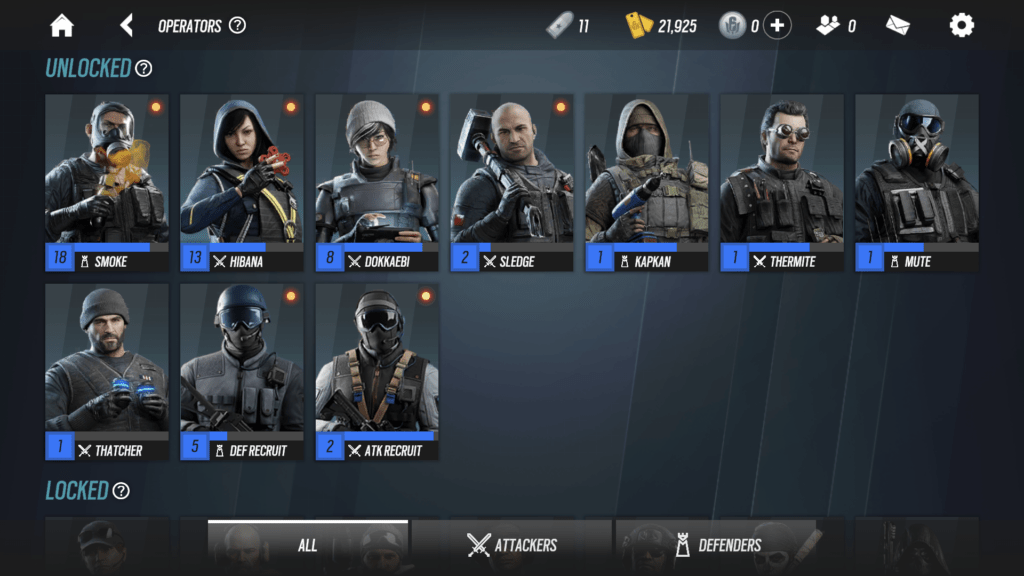
Rainbow Six games, Mobile in this case, as a port of Siege, carry that same complex, demanding mechanical depth that translates surprisingly well to mobile devices. At the same time, it can feel overwhelming for casual players, simply because most people aren’t used to this kind of tactical pace and structure in a mobile title.
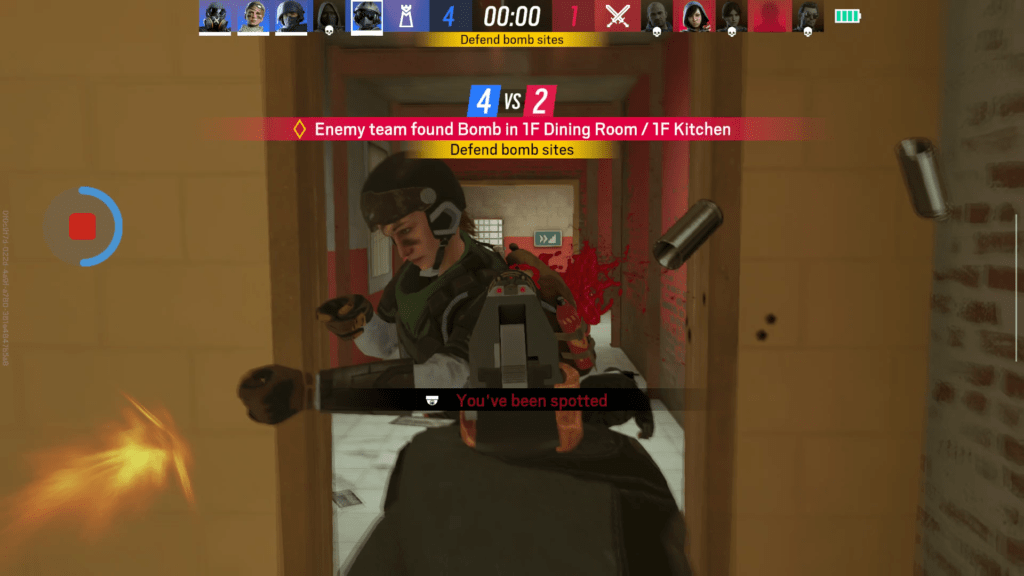
The gunplay has also been faithfully brought over from Siege. That said, I have to admit it’s a bit more forgiving when it comes to recoil control with most weapons. Recoil is definitely still there, but it feels closer to the console version than to PC. It’s far from nonexistent, just easier to manage. This is also a game where every bullet matters. It’s not a title where you can hold down the trigger and pray you hit something. One well-placed shot can decide an entire round, assuming proper aim and timing. And this is where the key difference lies in how you choose to play the game.
There are two control schemes available: touch controls and controller support. I personally played the entire time on an Android handheld device, specifically the AYN Odin 2 Portal. With a controller in hand, the experience feels very close to what the game offers on PlayStation 5 and Xbox Series consoles. You can imagine how that impacts recoil control, aiming precision, and overall gunplay. Every action requires a deliberate button press, which is an important detail and worth emphasizing.
The second control scheme, as mentioned, is touch. If you’re playing with touch controls, you can enable autofire, meaning you only need to aim at an enemy for your weapon to start firing automatically. This can be quite overpowered if someone truly knows how to aim and move efficiently using touch input. In fact, it can feel so strong that the game’s reaction time seems faster than that of the player you’re facing. While I didn’t personally use this scheme, I did play against it, and I saw firsthand how quickly you can die the moment someone drags their crosshair across you. The good news for controller users is that movement and aiming are generally more awkward on touch than on analog sticks. So controller players have the advantage in positioning, movement, and raw aiming precision. As for shooting? That depends entirely on your reflexes.
Since this is a mobile game, there are multiple progression systems in place. Weekly, you can earn up to 7,500 Renown points, which are used to unlock operators. You can earn roughly the same amount, or slightly more, through challenges, bringing the total to around 15,000 Renown per week. The issue is that most operators cost 30,000 Renown, with only a few available for 15,000. That means you’ll need about two weeks of playtime to unlock a single 30,000 Renown operator, or you can simply spend premium currency and unlock them immediately.
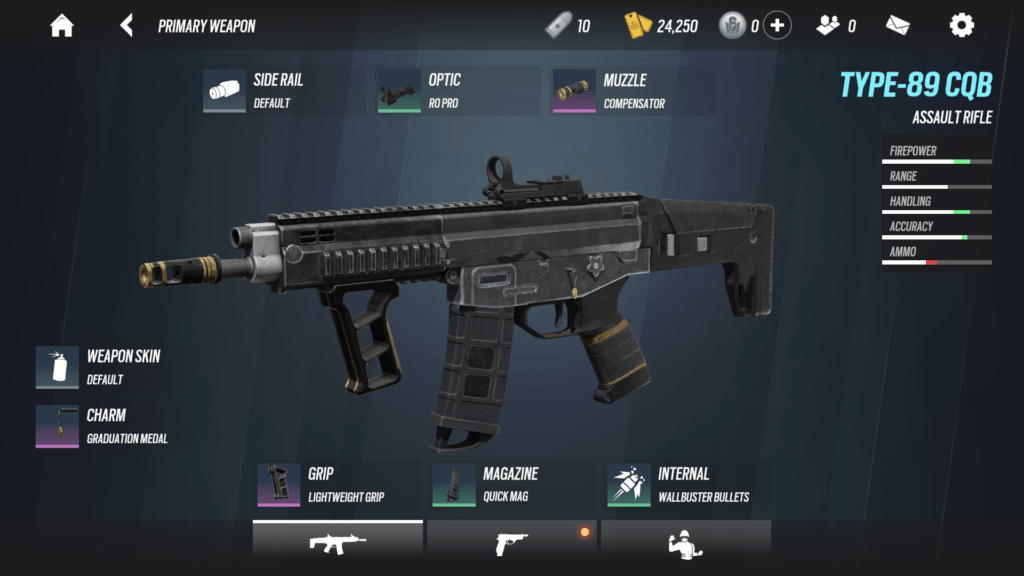
The good thing is that weapon attachments unlock naturally by playing with each operator. As you level them up, you’ll earn various attachments and upgrades to customize your weapons. And since there are no blatantly overpowered operators, even though the game subtly nudges you toward purchasing them if you want full access, there’s no pay-to-win monetization here, which is commendable. The key is finding one or two operators that suit your preferred tools, weapons, and playstyle. That’s more than enough to fully enjoy Rainbow Six Mobile. The point isn’t owning every operator, it’s mastering the ones that fit you best.
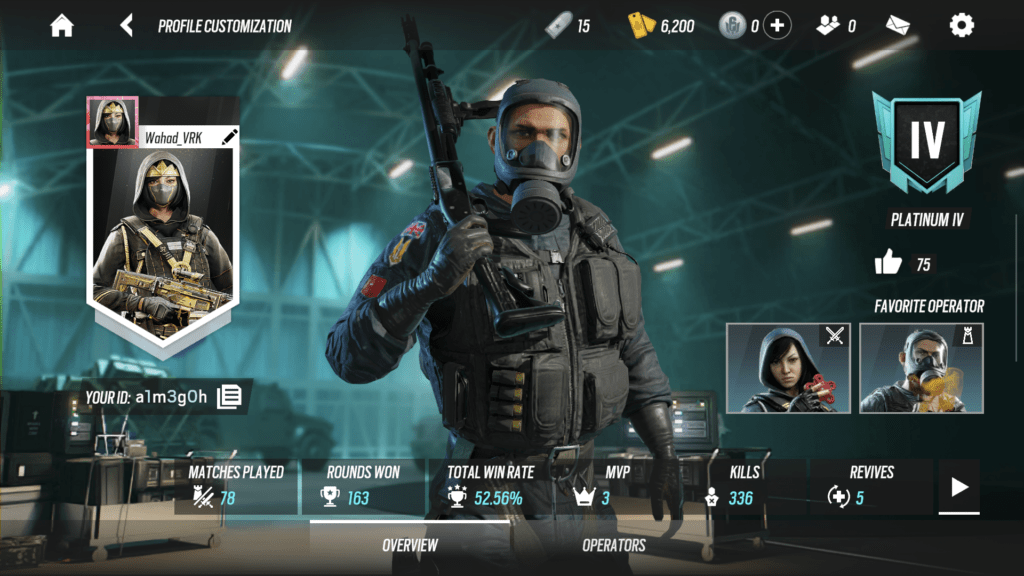
Another positive aspect is Ranked progression. Unlike how it used to work in Rainbow Six Siege (at least the last time I played on PC), you don’t simply gain or lose points in a traditional system. Instead, two factors are tracked: wins and performance shields. Wins push you toward a higher rank, while performance points protect you from losing progress. For example, if you have three wins and need four to rank up, and you’ve earned three performance shields, a loss will first consume a shield rather than deducting a win. Only after losing multiple matches and depleting your shields will you start losing actual rank progress. It’s a very smart system, and honestly, I don’t remember it working like this on PC, at least not last year. If I’m mistaken, my apologies.
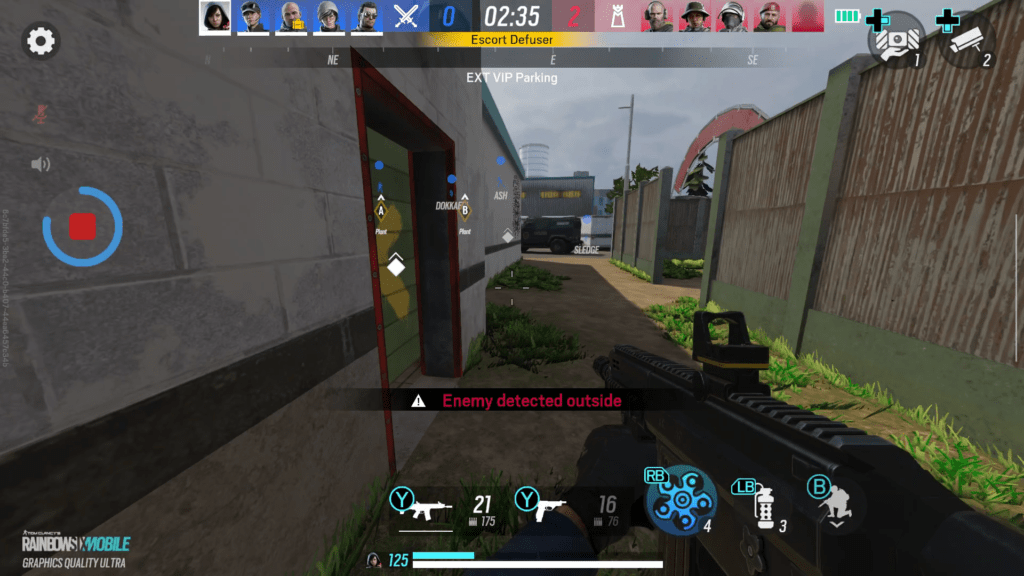
Now, let’s talk visuals. Graphically, the game looks genuinely impressive on mobile devices. Best of all, there’s even a 120 FPS mode, which significantly enhances the overall experience. Everything appears clean and sharp, with no major issues in visual clarity or object recognition on the map. There’s also an FOV toggle, something not even all PC games include, which is definitely worth praising. Even the touch controls are arranged in a way that leaves enough screen space to clearly see what’s happening, despite your fingers being on display.
One more important note: many new players will likely jump into this title without fully understanding what Rainbow Six is about, and that’s completely fine. However, it’s important to stress that the learning curve here is steep. The game demands time and commitment if you truly want to understand its mechanics. Fortunately, matchmaking is fairly solid, so in the beginning, until you learn how to play properly, you’ll mostly be matched with players who are just as inexperienced. My only issue was entering the game with prior knowledge, which made it frustrating to see teammates who didn’t understand what to do, but that’s perfectly natural. Not everyone starts with the same background. So if you’re just getting started, be patien, the game will reward you over time.
Rainbow Six Mobile (Android)
Rainbow Six Mobile is perhaps the most polished and competitive experience currently available on mobile devices, and Ubisoft has done a fantastic job translating it from console and PC to handheld screens. Honestly, I thought it would be an impossible mission, but I’m glad they proved me wrong. Rainbow Six Mobile carries everything its older siblings have: that indescribable adrenaline during matches, unmatched focus, and the brilliant vertical gameplay that demands maximum awareness of everything you see and hear. If you ask me, there’s no better multiplayer experience on mobile right now, even if it takes some time to fully adjust to its mechanics.
