
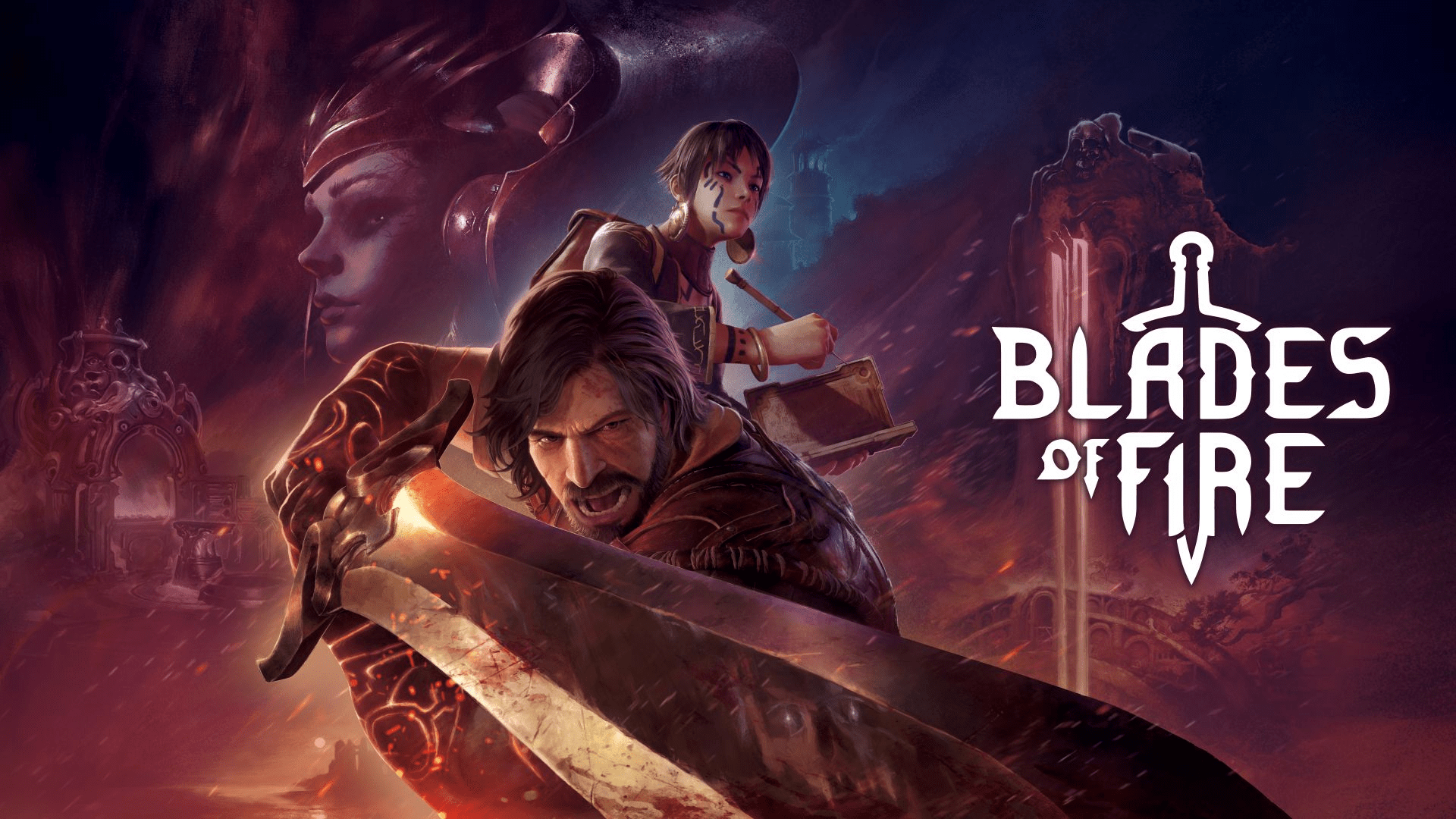

A year has passed since the release of Blades of Fire, the action-adventure title with strong 3D metroidvania elements that launched on May 20 last year for consoles and PC, exclusively via the Epic Games Store. And let’s be honest, that storefront alone likely pushed quite a few players to skip what was, in reality, a fantastic game. We all know how gamers feel about platform exclusivity on PC. But now there’s no excuse. If you didn’t play it on consoles, Blades of Fire is finally arriving on Steam, today. And that’s exactly why it’s the perfect moment to revisit what this game truly is and what it offers. Trust me, it offers a lot. Thanks to this gripping adventure and an even better combat system, it absolutely deserves your time. Before diving in, it’s worth mentioning the studio behind it. Blades of Fire is the latest project from MercurySteam, a team widely known for its work in the metroidvania genre. Unsurprisingly, that DNA runs deep in this title as well. But let’s start from the beginning.
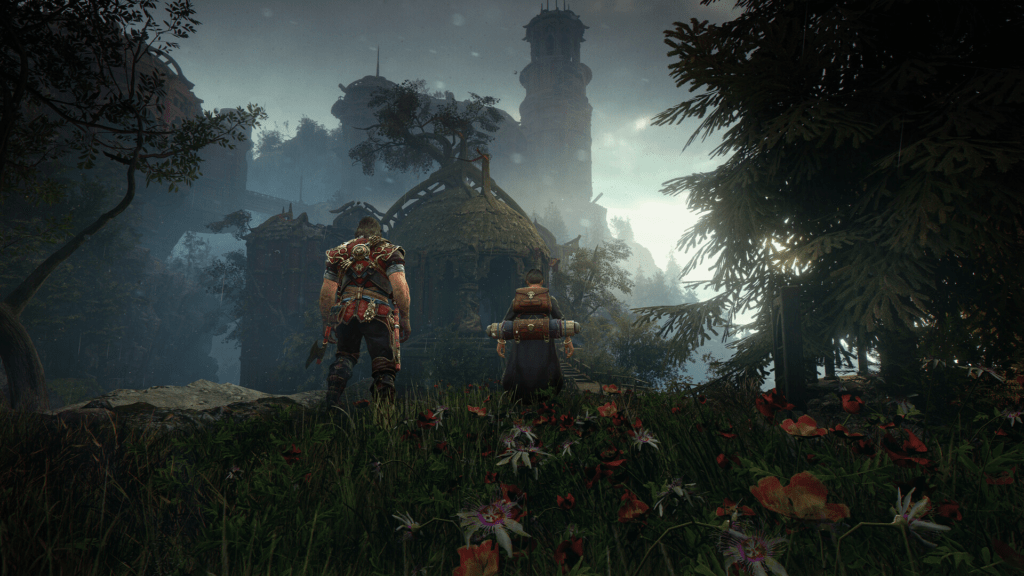
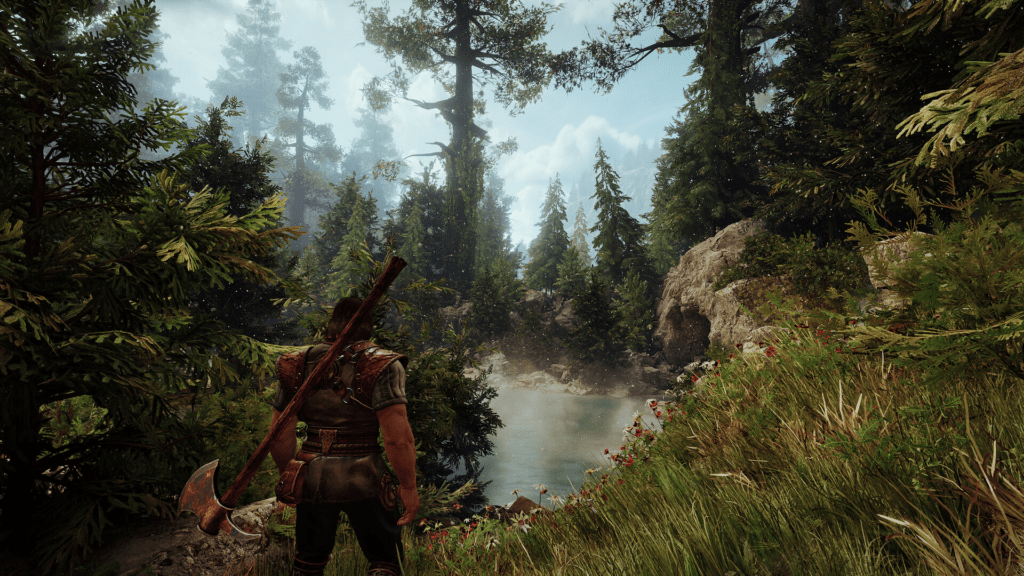
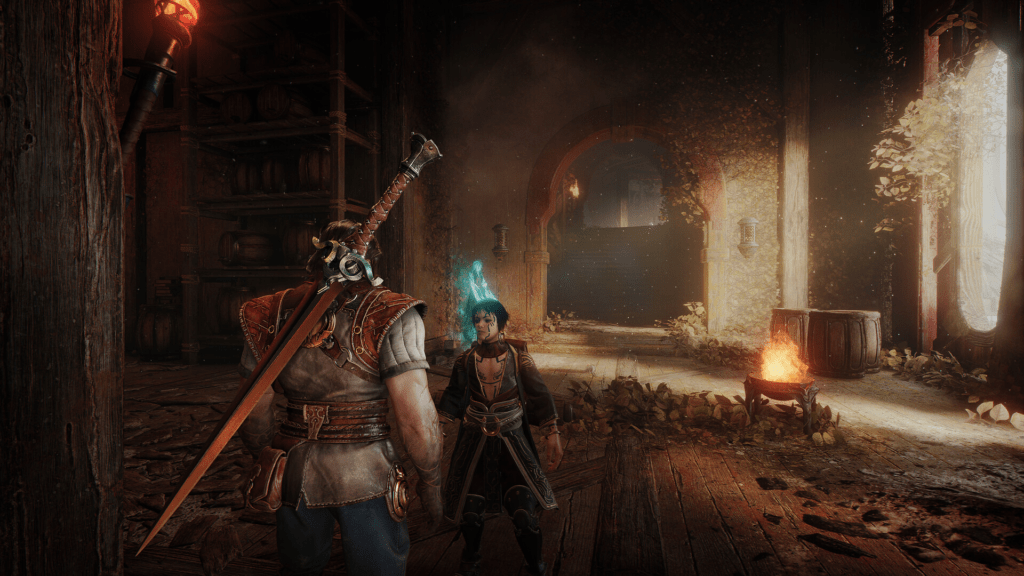
From the very first moments, the game places you in the boots of Aran de Lira, with no character creation or background customization. Aran is the exiled son of the royal army’s leader, a man who has sought peace far from the city, hiding away in the forests in an attempt to leave his past behind. That fragile peace, of course, doesn’t last long. When he senses that a close friend is in mortal danger, Aran answers fate’s call, but arrives too late. His friend dies in his arms, leaving him with an almost impossible mission: kill Queen Nerea.
As if that weren’t enough, a young scholar named Adso enters the story. A loyal companion to the fallen friend, Adso becomes Aran’s partner throughout the entire journey. And no, unlike in certain other games, he won’t constantly chatter in your ear.
While the story begins with a clear objective, the road to Queen Nerea quickly becomes complicated. As you progress, the narrative expands, branches out, and introduces a web of characters with their own agendas and struggles. It becomes clear that reaching the queen isn’t a straightforward march to the throne, but rather a series of interconnected objectives scattered across different regions.
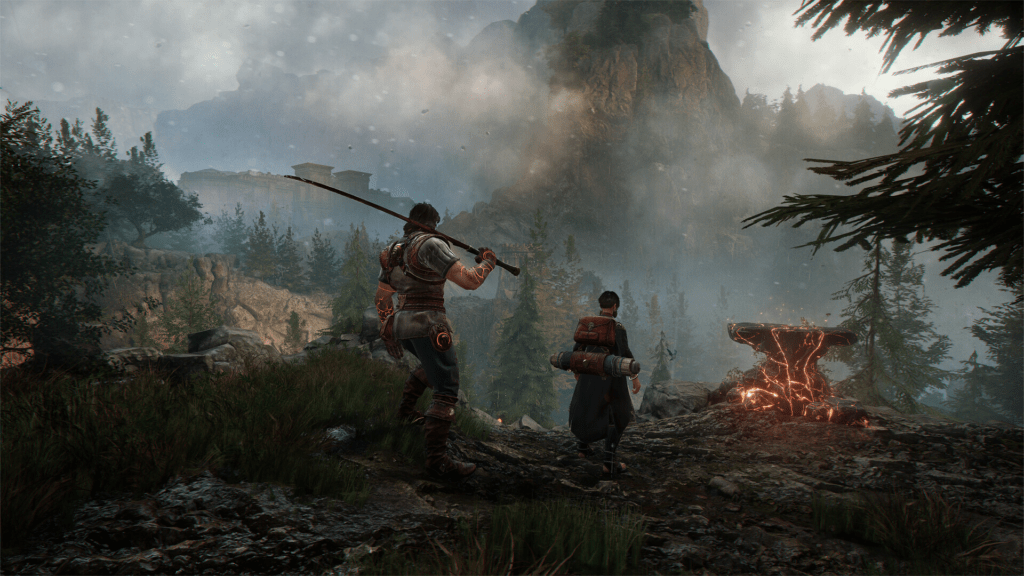
The map is divided into smaller, linked areas, each filled with its own obstacles and requirements you must overcome to unlock the next path forward. As a proper 3D metroidvania, Blades of Fire is packed with hidden passages, secret routes, and shortcuts that gradually open up, making revisiting old areas both meaningful and often necessary. Still, even with all shortcuts unlocked, certain sections can become so intricate that you’ll need to remember details, or even jot things down, to keep track of what you’ve discovered.
Adso is undoubtedly one of the game’s greatest strengths. The inspiration from the modern God of War titles is obvious, but here the concept feels far more measured and restrained. While Aran is raw, direct, and pragmatic, someone who doesn’t waste time philosophizing, Adso serves as his intellectual counterbalance. He documents everything, from the creatures you encounter to the mysteries you uncover.
His notes aren’t just flavor text; they organically build the world around you. What Aran overlooks or cannot interpret, Adso analyzes and explains. He doesn’t simply follow, he connects the dots, both narratively and within the broader world design. Their relationship develops gradually, and their personal backstories aren’t dumped on you all at once. Instead, you uncover them naturally through shared conversations and situations.
The puzzles in Blades of Fire aren’t overly complex, but they’re smartly integrated into the environment. Most rely on careful observation, with Adso often playing a key role in understanding what Aran cannot. That division of roles gives their partnership genuine weight. Unlike other games that attempt a similar dynamic, here the synergy feels natural. Even in the darkest and most brutal corners of the world, the two exchange occasional remarks or dry humor, adding a human touch to the entire experience.
The supporting cast also deserves praise. Some characters are brilliantly written and designed, leaving a lasting impression long after you leave their respective regions. And if, by some miracle, you grow tired of Adso’s company, though I sincerely doubt you will, you can send him back to camp to continue studying and documenting your findings while you venture out alone. The game gives you that freedom, yet makes it clear that their dynamic is the heart of the story.
What initially appears to be a straightforward tale of revenge and overthrowing tyranny quickly evolves into something far more layered. The simple objective, kill Queen Nerea, transforms into a complex network of relationships, intrigues, and clashing destinies. As the story unfolds and you meet more characters, each carrying their own motives and burdens, it becomes almost impossible not to get emotionally invested. I was genuinely surprised by how attached I became to the narrative and how eager I was to see where it would ultimately lead.
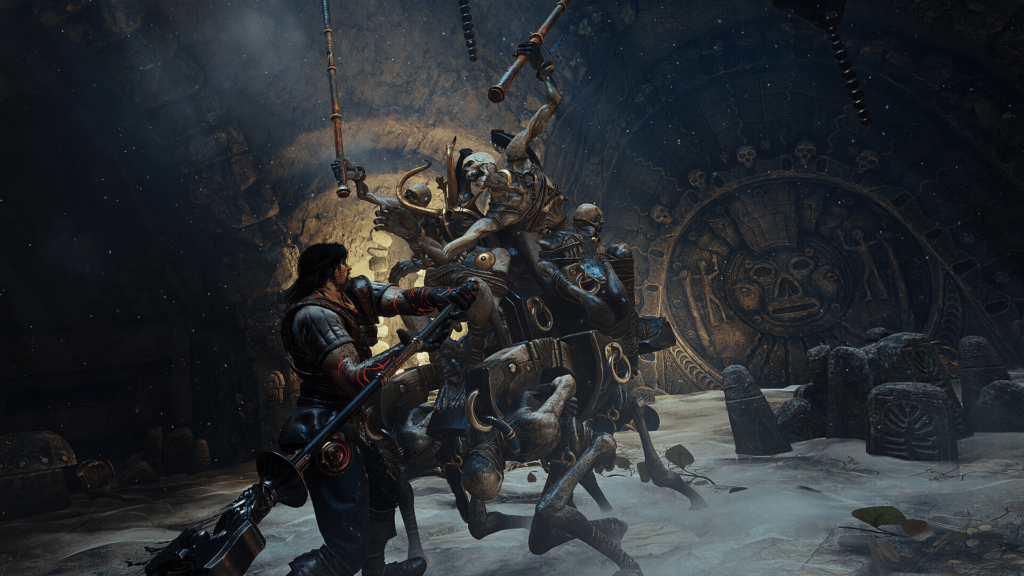
One aspect that may not be entirely clear at the beginning is the combat system. At its core, Blades of Fire blends a soulslike foundation with elements inspired by the modern God of War Ragnarök era. The game can bite back, especially on higher difficulties, but it never crosses into unfair or frustrating territory in the way classic Dark Souls moments sometimes do. The challenge is real, but it’s fair.
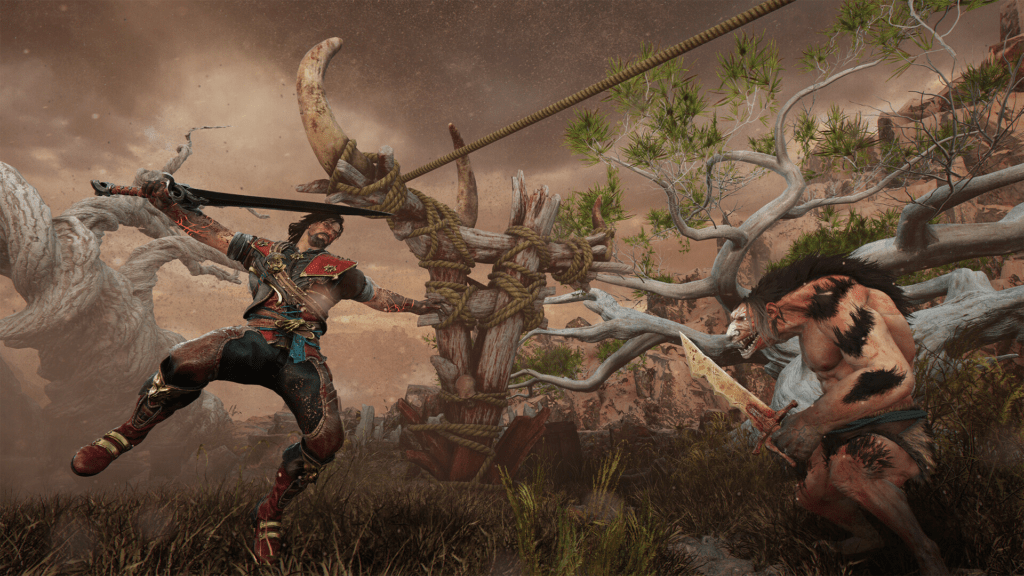
Controls are mapped so that each face button corresponds to a specific directional attack: head strikes, body blows, left-side swings, right-side cuts. There’s no mindless button-mashing here, every attack has intention and direction. Enemies are color-coded: green outlines indicate maximum damage from your current weapon, orange suggests partial resistance, and red signals strong resistance. This forces you to think on your feet and carry different weapon types, piercing, slashing, blunt, because you never know what awaits around the next corner.
Positioning is critical. Dashes, rolls, well-timed strikes, blocks, and parries all play a massive role. Parrying in particular demands precision and varies depending on the weapon you’re using, adding depth and complexity to the system. In the first few minutes, everything felt slightly chaotic and overwhelming to me. But once I clicked with the rhythm, I realized just how much freedom the system offers. From that moment until the very end, combat became one of my greatest joys in the game. Interestingly, during the first few hours, even on the highest difficulty, the game can feel manageable if you properly read enemy patterns and attack directions.
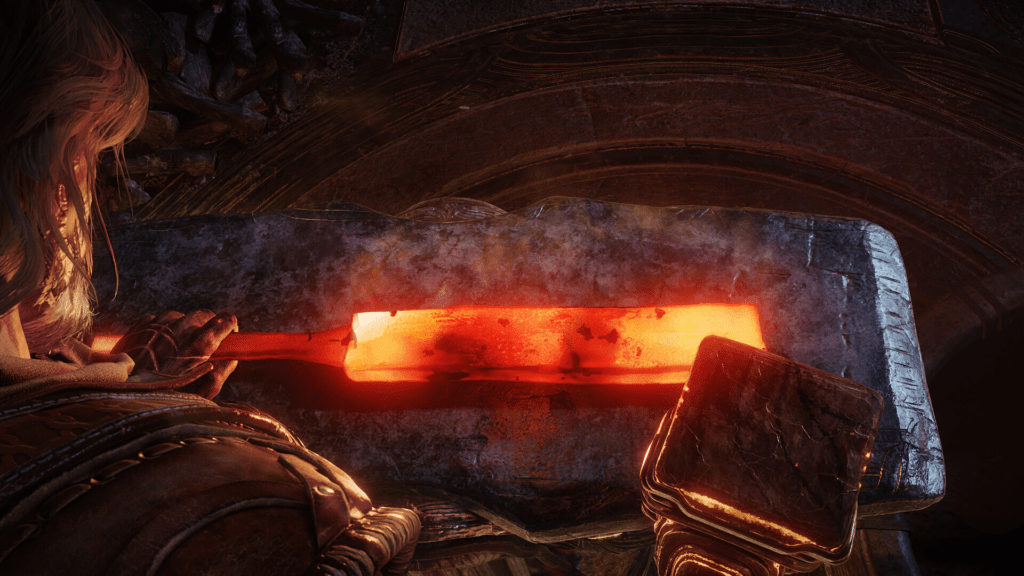
What truly elevates the experience is the weapon crafting system. You don’t simply loot weapons, you forge them yourself. Defeated enemies drop scrolls, blueprints for new weapons, meaning progression is directly tied to combat. Thankfully, the game doesn’t force pointless grinding. Everything it offers can be unlocked naturally through regular play.
Beyond blueprints, materials matter. As you progress, you unlock different types of metals categorized as offensive, defensive, or lightweight for increased mobility. The metal you choose directly affects speed, damage, block or parry chance, penetration, and weapon durability. What I especially appreciated is the transparency: the game clearly displays all relevant stats, even showing parry windows measured in milliseconds. There’s no guesswork. Everything is laid out in front of you.
The weapon system gains additional depth through the parts you discover at statues scattered across the world. Blade length, hilt type, edge shape, straight, curved, carved, every single element comes with its own strengths and weaknesses. You can craft a slow but devastating sword, or opt for a faster, more agile weapon that deals less damage but allows for safer play. The system practically forces you to experiment until you land on the combination that perfectly matches your playstyle.
Then we arrive at the Forge system. Crafting a weapon isn’t just a matter of pressing a button. After selecting a blueprint, materials, and components, you enter the actual forging process. You must shape the metal and follow the given template as precisely as possible. The more accurate you are, the more times you’ll be able to repair that weapon throughout its lifespan. Early on, that means two repairs, but through talents and progression, that number increases. Once all repair options are exhausted, you can dismantle the weapon for materials or offer it to the ancient blacksmith in exchange for other resources. The game naturally encourages you to rotate your gear and save your best pieces for serious encounters, especially boss fights.
In the original version, the Forge system felt somewhat complicated, mostly due to the raw materials required. More accurately, the system sometimes limited your ability to upgrade what you actually wanted, forcing you to farm specific resources. That’s why the Elements Transmutation system was introduced, allowing you to convert materials and making crafting and build experimentation far smoother, without constant grinding. This is just one of the additions in the new 2.0 version, launching as a free console update and arriving alongside the Steam release.
Because of all this, combat constantly feels fresh. There are no glowing indicators telling you which attacks can be blocked, nor clear telegraphs like in some other titles. Enemies won’t go easy on you, you must learn their patterns, track their movements, and react instinctively. Boss battles push everything even further, but once you grasp their rhythms, they become tests of patience and focus rather than pure punishment. And this is where Blades of Fire truly shines: challenging, dynamic, and never boring.
For those seeking a real test, there’s Titanium Difficulty, a brutal new challenge mode designed only for the most experienced players. Enemies gain significantly more health and armor, deal around 20% more damage, and boss fights are rebalanced with stricter timing mechanics. It’s not for everyone, but it offers a true opportunity to demonstrate mastery over combat and weapon handling.
Another major focus of the 2.0 update is replayability. Boss Revival Mode (also known as Anvil Trials) allows you to return to the arenas of defeated major bosses and face them again. Each encounter introduces new mechanics, tighter timing challenges, and rewards in the form of medals. Those medals unlock Arcana spells, powerful enchantments that can be embedded into weapons, adding an entirely new layer of depth to the combat system. Adso’s spells transform already familiar weapons into something deadlier and far more versatile.
In Blades of Fire, you don’t collect souls or any similar currency. The focus is strictly on materials and talent points invested into higher health, more stamina, better crafting, or additional healing flasks. When you die, you lose none of that. You respawn at the nearest “Anvil,” which functions much like a traditional bonfire in soulslike games. However, there is one thing that remains at the place of your death, your weapon. And without it, you’re in serious trouble. After dying, you must return to retrieve it, which becomes especially tense if you’ve invested time into forging a high-quality piece of equipment. The more frequently you use a specific weapon, the more its rarity and lethality grow, making you far more attached to it than you might expect. That’s precisely why retrieving it carries such weight.
When I first started playing and began stacking hours, I had no idea how massive this adventure truly was. Around the 30-hour mark, I was convinced I was approaching the end, at least the beginning of the final stretch. After a certain travel sequence involving the main characters, I thought, “Alright, one more region and that’s it.” Instead, an entirely new map opened up, just as complex and expansive as the previous one. I literally laughed at that moment because I couldn’t believe how much content the game offered. And then I began clearing that map as well.
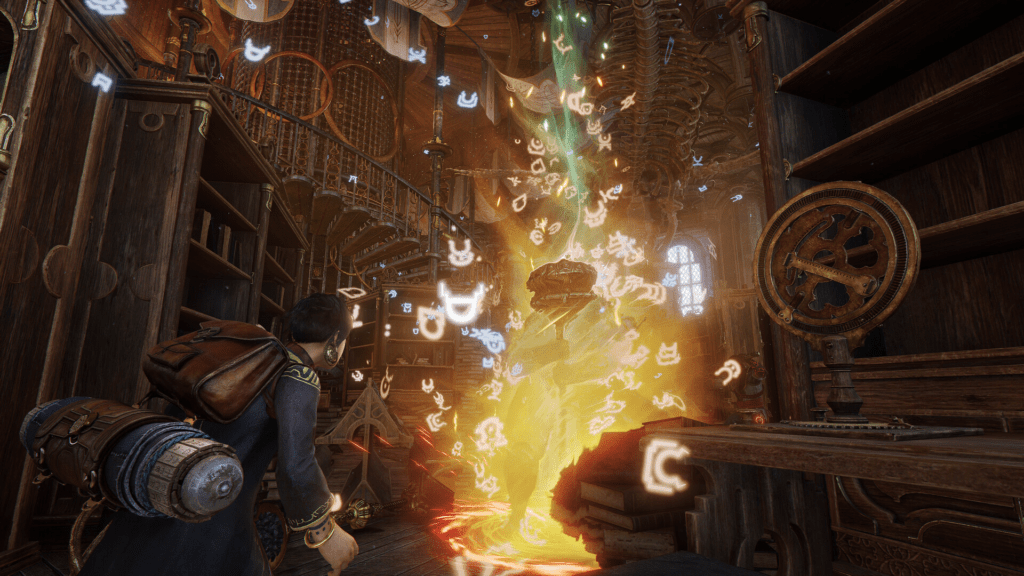
It’s incredible how much effort MercurySteam poured into building such a diverse world, my opinion hasn’t changed even a year after release. The world is filled with detail and constantly surprises you. Honestly, if the game had featured just one enormous map packed with all these events, I would have been satisfied. But once I realized there was still so much more waiting, it became clear that the adventure would last at least another thirty hours, if not more. On Steel difficulty, the highest in the game, over 60 hours for a full completion is a realistic expectation.
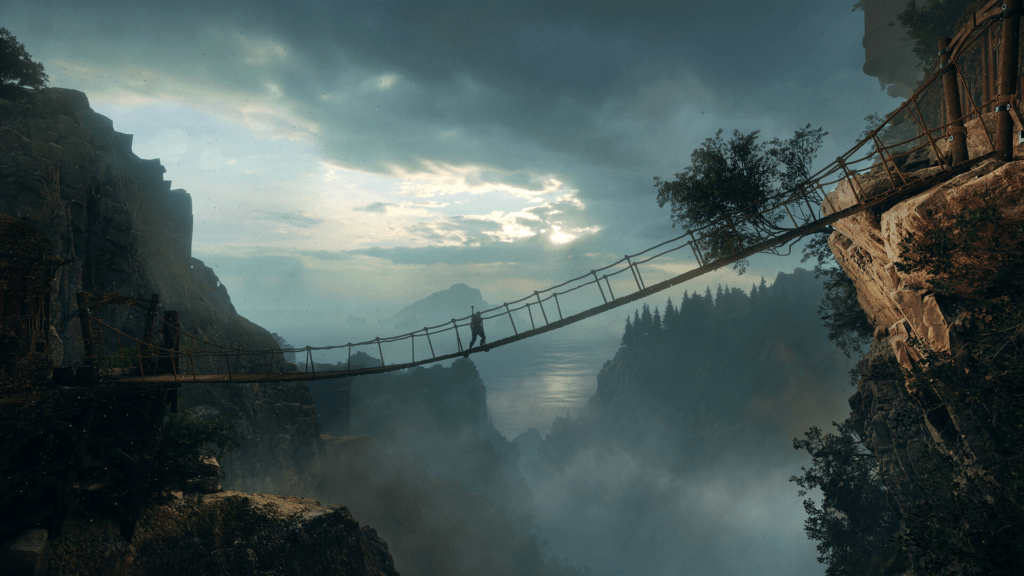
Since this is a metroidvania, progression through new talents and abilities naturally makes backtracking a core part of the experience. On the highest difficulty, the absence of map markers adds another layer of challenge. The map itself is presented in a 2D style, like an old parchment sketch, marking only key locations. Everything else you must uncover on your own. The world isn’t flat either, verticality becomes especially pronounced later in the game, making orientation a genuine challenge. If you play on Steel difficulty, you’ll need to memorize landmarks and rely on your own spatial awareness.
I genuinely believe that anyone playing on the highest difficulty will, at least once, need an extra dose of patience. The maps are true labyrinths, exactly as the genre demands. Personally, I loved that, it completely immersed me in exploration. Yes, there were frustrating moments, like the time I spent three hours searching for a single lost key, but that’s part of the charm of every metroidvania. That feeling of being stuck, and then finally discovering the solution, is simply priceless.
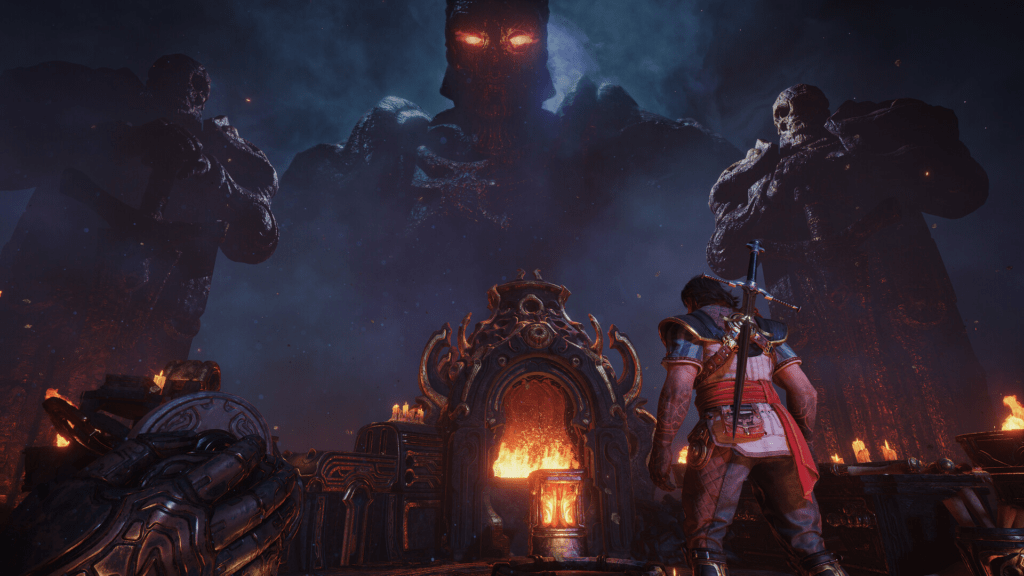
Because of all that, I would honestly recommend playing on the highest difficulty. The game doesn’t hold your hand, doesn’t serve objectives on a silver platter, but instead gives you the freedom to explore every corner of its world. Thanks to the lack of clear guidance and constant checkpoints, I managed to see almost everything and collect a huge portion of the content on my first playthrough. The game rewards curiosity, with additional talents and materials that later make a massive difference. So don’t be afraid to get lost. Wandering here isn’t a flaw; it’s part of the design and the very essence of the experience.
From a technical standpoint, the graphics may not be “top of the line” by today’s standards, but there are moments that truly take your breath away, primarily thanks to phenomenal art direction. At first, I didn’t have high expectations, but as time went on, I found myself stopping more and more often to take screenshots. The architecture, environmental detail, color palette, and lighting effects are all carefully crafted and harmonized. Interestingly, this time I played the game on the ASUS ROG Ally X PC handheld, and I have to admit I was genuinely surprised by how well it ran. Even in 17W mode, it consistently delivered over 40 frames per second on Quality settings, which, with Frame Generation enabled, climbed past 60 FPS. This type of game benefits from FrameGen, as there are no noticeable artifacts or visual anomalies. The only drawback is that reaching these performance levels requires using AMD FSR. Even so, the game still looked beautiful and pleasant, and it was a real joy revisiting this world. That said, because of the FSR upscaler, I didn’t include my screenshots. they simply don’t represent the true experience in static images the way the game does in motion.
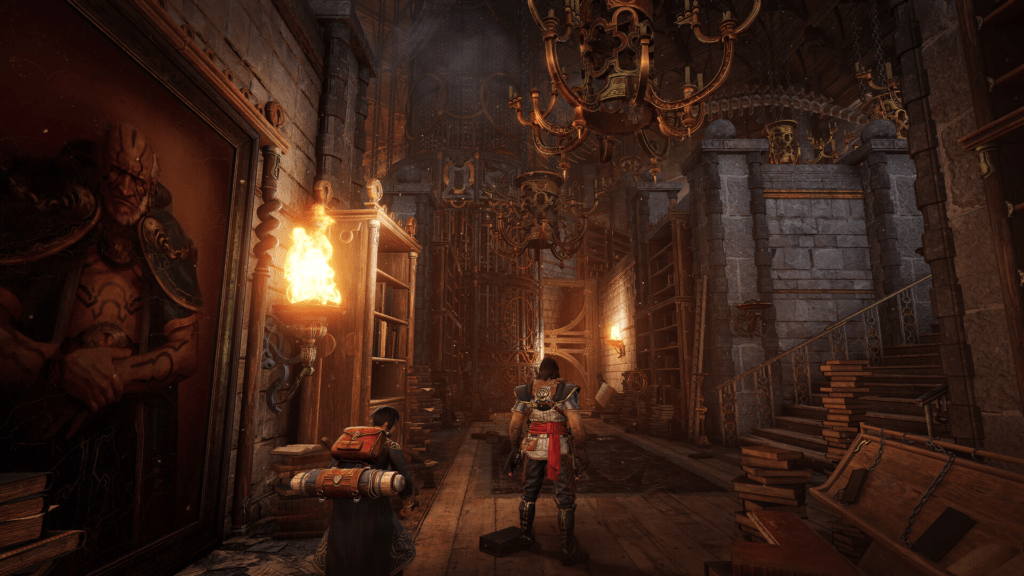
Blades of Fire also gains a special layer of depth through its music, composed by Óscar Araujo, best known for his work on Castlevania: Lords of Shadow and Castlevania: Lords of Shadow 2. Combined with very strong voice acting, the overall audiovisual presentation reaches an impressively high level. Whether you’re in the middle of an intense battle or simply exploring the quieter corners of the world, certain compositions leave a powerful impression and quickly get under your skin. It’s one of those soundtracks you’ll want to listen to even outside the game itself.
We would like to thank 505 Games for providing us with a copy of the game for review purposes.
Blades of Fire (PC)
In the end, all I can say is that it was a genuine pleasure to revisit Blades of Fire, this time on a handheld PC, though I’m convinced that anyone playing it on PC will enjoy it just as much. This was one of my favorites of 2025, still is, and I’m honestly glad to see how well it holds up even a year after its original release, especially considering all the outstanding titles that have launched since. That’s precisely why I truly believe Blades of Fire is one of those games you simply shouldn’t miss, especially if you love beautiful, massive worlds filled with things to discover, paired with genuinely excellent combat.
