
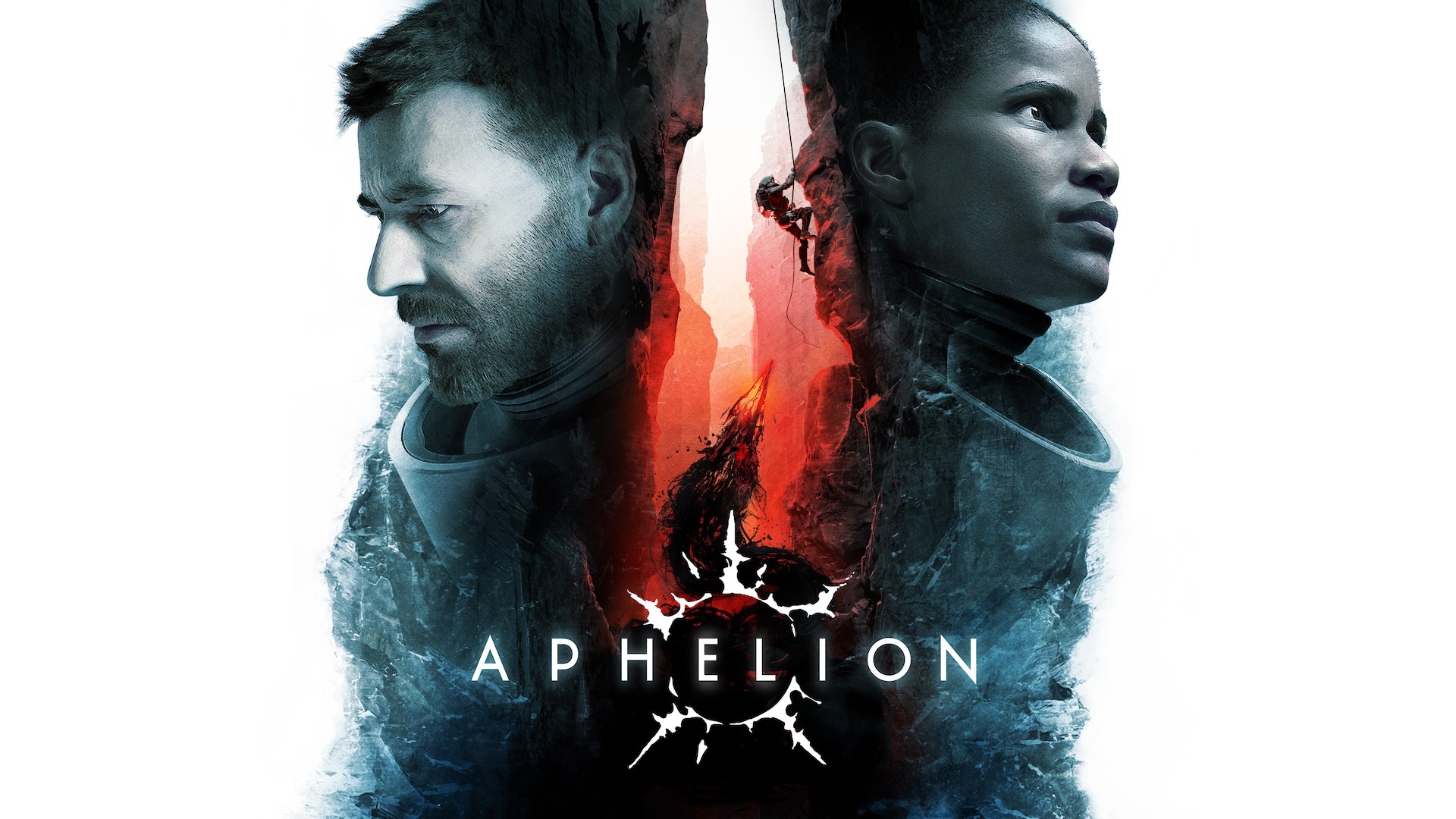

Ever since Aphelion was first announced, I couldn’t wait to get my hands on it. I actually did that a few months ago when we published our preview, and I was blown away, both by the stunning setting and the compelling mystery that constantly pushes you forward, inspiring you to keep going and never give up. And who does a gripping story and layered mystery better than DON’T NOD? That’s exactly why I was so eager to dive into the full release, to continue the adventure on the planet Persephone and uncover everything it has to offer. Even though I’m not usually a fan of narrative-driven games, because they tend to be too slow and often linear, I genuinely enjoyed Aphelion. The setup and presentation certainly helped, since I’m a sucker for sci-fi stories that feel somewhat plausible, grounded in reality. But overall, Aphelion is simply a great title with a strong story set in a breathtaking environment. So let’s talk about why that’s the case.
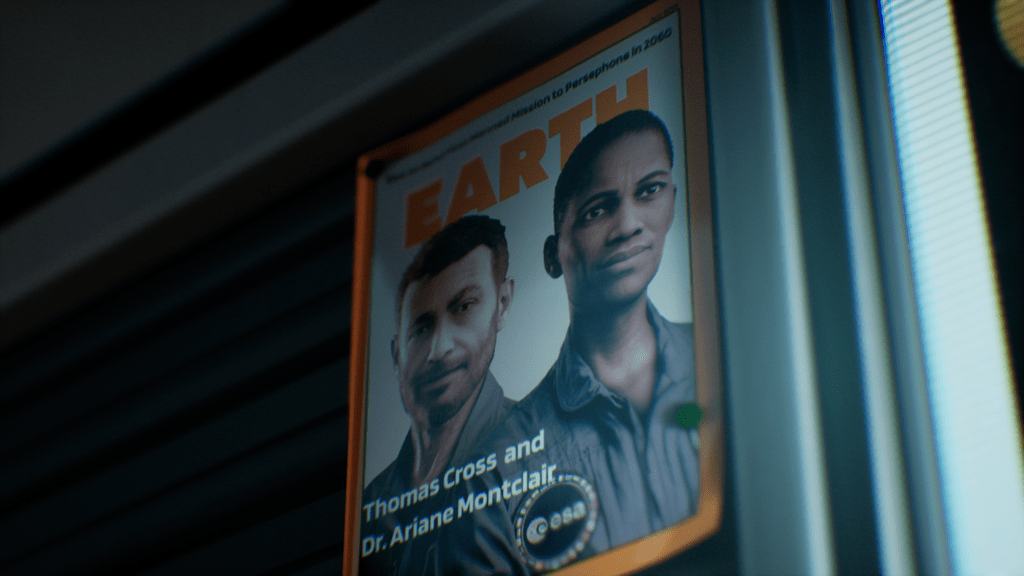
Aphelion takes place in the year 2060. Climate change has made life on Earth nearly impossible, prompting humanity to explore the solar system in search of a new home. Scientists discover a so-called “phantom” planet, Persephone, the rumored ninth planet of our solar system, which may have conditions suitable for life. Because of this, the first manned scientific mission is sent to the planet, led by European Space Agency astronauts Ariane Montclair and Thomas Cross. Their mission seems simple: reach Persephone and determine whether it can sustain human life. But just before arrival, disaster strikes. Their spacecraft breaks apart during approach. Ariane crashes on one part of the planet, while Thomas manages to reach an escape pod, landing somewhere else entirely. They may not be physically far from each other, but they don’t know that. And that’s where your journey begins. Your primary objective remains assessing Persephone’s viability for future colonization, while your second priority is finding one another.
One of the things that immediately intrigued me about Aphelion is that it presents itself as grounded sci-fi, as the developers describe it. Everything in the game was designed in consultation with the European Space Agency, meaning the scenario could realistically unfold in the future, based on current scientific knowledge and projections for the next thirty years. And you have to admit, it’s pretty exciting to know that an actual space agency contributed to the development of the game.
That said, I do need to point something out. While the foundations and the core premise are indeed grounded, the environmental collapse of Earth, the discovery of Persephone, even the mission itself, some of the events that unfold on the planet feel more “gamey.” I find it hard to believe that absolutely everything you encounter could realistically happen. My honest impression is that the ESA likely helped shape the scientific framework, the spacesuit design, and the technical aspects of how certain systems function, but that the narrative required a few elements that bend the rules of grounded sci-fi. Still, who am I to say what might be possible by 2060? Let’s move on.
At its core, Aphelion is a narrative adventure, perhaps best described as a slightly more complex walking simulator. You can run, slide, swing with a grappling hook, and engage in traversal mechanics that will feel familiar to fans of games like Uncharted. But above all, this is an adventure with zero combat. None at all. And that’s perfectly fine. DON’T NOD focused on what they do best and completely removed elements they weren’t confident would resonate with players. That decision pays off from the very beginning to the very end. Because DON’T NOD excels at crafting mysteries, character relationships, and emotional depth. And despite the story centering on just two characters, there is a surprising amount of emotion here, you feel it right from the opening moments.
Ariane and Thomas aren’t just generic heroes programmed to complete a mission. They share a complicated past, one that almost jeopardized the mission before it even entered its final phase. Their relationship runs like a thread through the entire game. Though they’re physically separated, and as DON’T NOD would put it, much closer than the player might initially assume, something binds them, something intangible, almost unexplainable. Call it a force, if you will. That connection becomes their driving motivation to find one another. It’s handled beautifully. I have to admit, certain segments of the game strongly reminded me of Interstellar, not just because of the space setting, but due to the powerful soundtrack that leaves a lasting impression from the very beginning, and specific moments on Persephone that echo themes from the film. Especially those scenes where the characters sense that someone is there, yet not there, but perhaps there in a way that transcends time and space.
You control both main characters, though not simultaneously. Each has dedicated chapters where their perspective and personal arc unfold. You begin with Ariane, waking up inside a collapsing spacecraft. She must find a way to survive and escape before it completely disintegrates around her. These opening moments introduce you to the core mechanics you’ll rely on throughout your journey across Persephone.
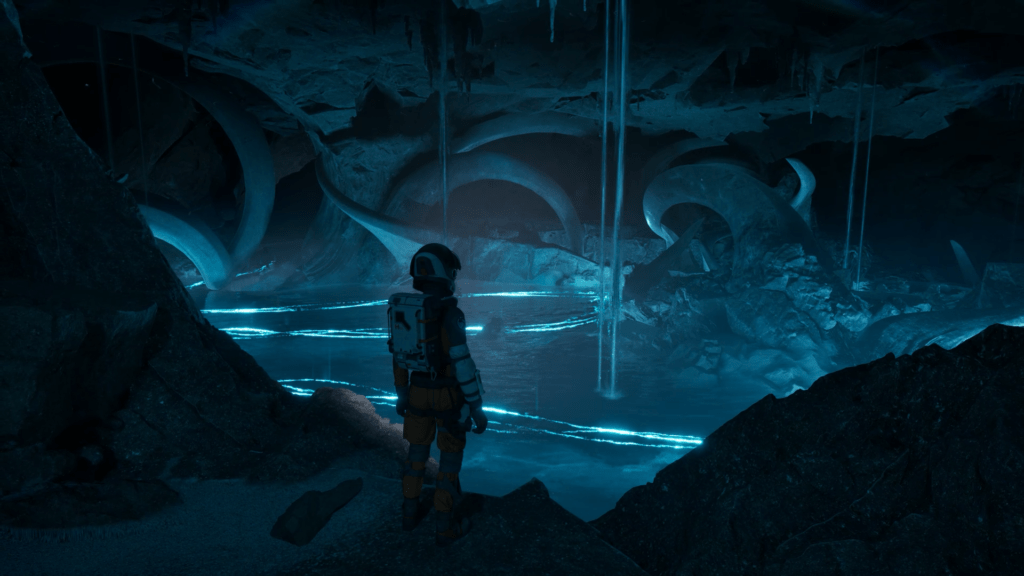
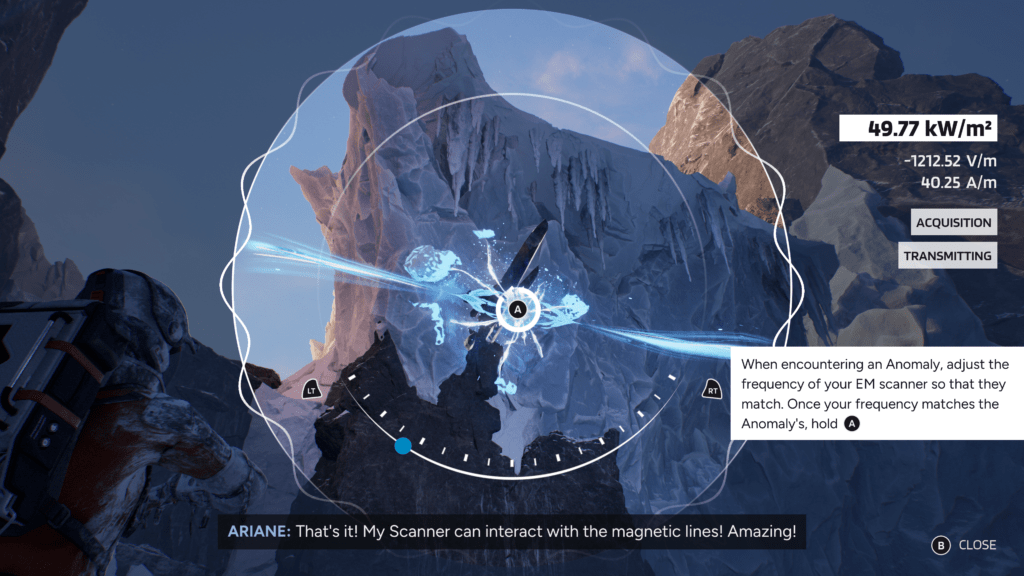
Ariane is agile, quick, and resourceful. Her gameplay leans heavily into those traits. She climbs in true Nathan Drake fashion, scaling anything she can to reach her objective. She runs to escape danger as the planet’s unstable surface crumbles beneath her feet. She uses a grappling hook to access areas that initially seem unreachable, along with a scanner to help orient herself on this alien world. Later, you’ll gain access to an EM (electromagnetic) scanner, which detects magnetic waves that lead you toward answers, while simultaneously raising even more questions. There’s also a mechanic that allows you to manipulate objects by tuning into the correct frequency. When aligned properly, Ariane can remove obstacles, uncover archaeological remnants, and gradually piece together the larger story. And that steady unraveling of mystery, both scientific and deeply personal, is what truly defines Aphelion.
Climbing in Aphelion is handled a little differently than in most other games. It’s not enough to simply jump toward a ledge or platform and expect Ariane to grab it automatically, you actually have to press X (on Xbox) for her to latch on. It’s a small detail, but it adds a welcome layer of dynamism to the experience, preventing traversal from becoming a mindless routine of just holding up, left, or right while the character does everything for you.
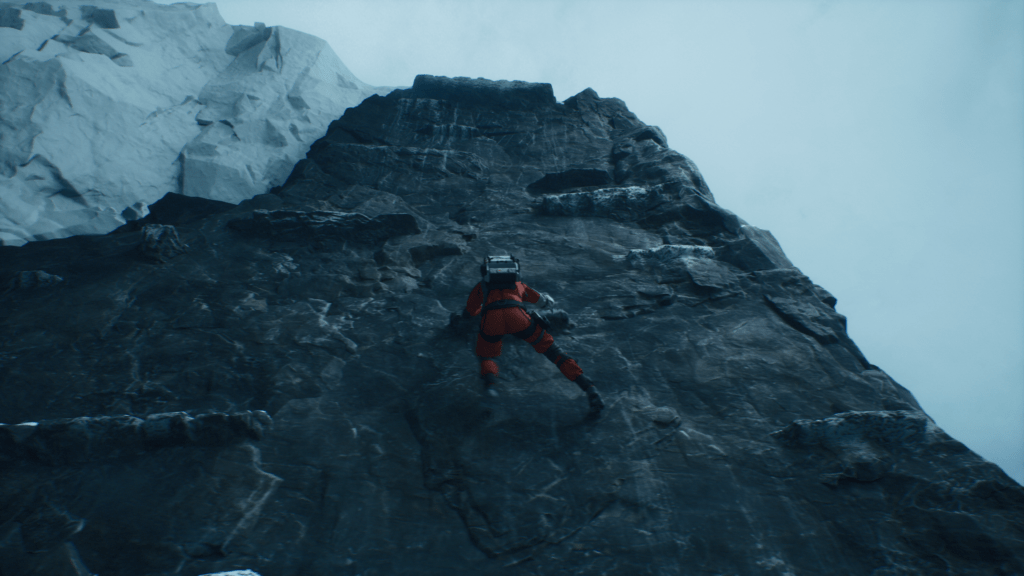
Ariane searches for the answers she needs, and the ones she personally wants to uncover, within the environment around her. In those moments, the world itself tells part of the story, and you’ll often hear Ariane’s thoughts as well. I found that to be a nice touch, because she is, at least on the surface, completely alone on this planet. Those internal monologues feel like a coping mechanism, something that keeps a person grounded in such extreme isolation, a small psychological trick to avoid losing touch with reality. And with everything she witnesses and encounters, it would be difficult for anyone to remain unaffected. Then again, I imagine that’s exactly why astronauts undergo such rigorous training and psychological evaluations in the first place.
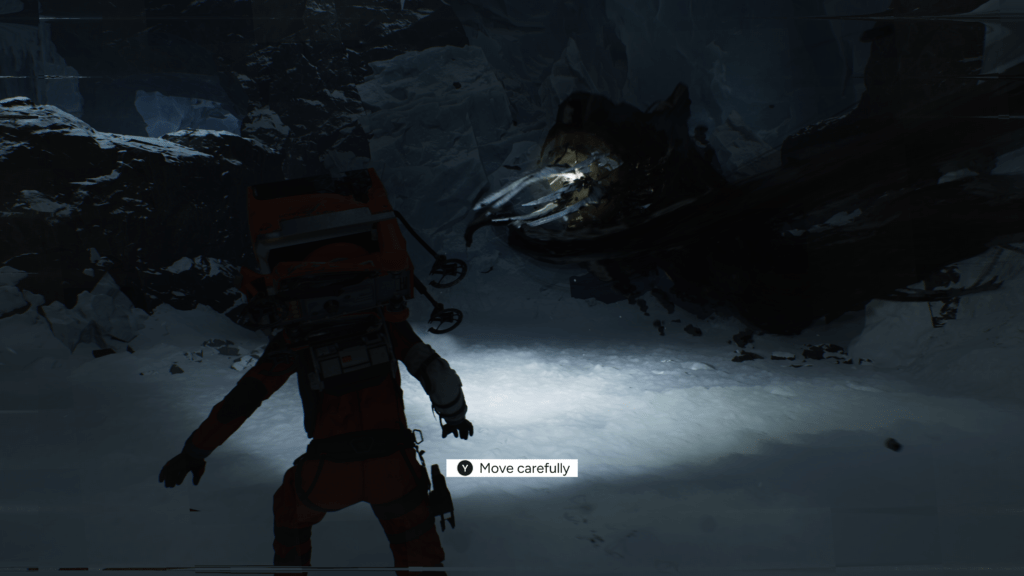
As I mentioned earlier, there’s no traditional action here, no weapons, nothing you can use to fight back. But that doesn’t mean you won’t face constant danger. Enter Nemesis, a creature native to Persephone, and one that clearly isn’t thrilled about your presence. Nemesis stalks you in certain sections of the game, actively trying to halt your progress, or simply destroy you. This is where another core mechanic comes into play: stealth. If you can’t defeat something, your only option is to hide, move carefully, and escape when the opportunity arises.
The stealth mechanics are exceptionally well executed. Nemesis is blind, relying on sound and vibrations to detect movement. That means you must remain as quiet as possible when it’s nearby. Interestingly, while it follows certain predefined movement patterns, those patterns can shift. If it hears you in one area and you manage to escape, it will adjust its route and behavior in that section of the level. What truly stands out, though, is the atmosphere Nemesis creates. When it’s close, your visor begins to glitch, Ariane becomes visibly unsettled, and the sense of isolation and helplessness intensifies dramatically. To be clear, that claustrophobic feeling builds steadily from the very beginning of the game. It doesn’t matter that the planet is vast or that the maps are beautifully designed to convey scale and openness, you are still alone, without answers or a clear plan. And whenever Nemesis is near, that claustrophobia, confusion, and vulnerability reach another level entirely. It’s one of those moments where the discomfort transfers seamlessly from Ariane to the player.
Although Nemesis is always lurking after your first encounter, it’s not constantly in your face. It doesn’t appear in every scene or at every turn. Instead, it emerges organically, often when Ariane least needs the added pressure, but sometimes precisely when she’s close to uncovering something important. Even though these encounters are genuinely frightening, Ariane remains driven by curiosity. She wants to understand this creature, to learn from it, to absorb whatever knowledge she can. That’s a compelling detail, because at her core, she is a scientist. And when I say frightening, I truly mean it, at times, it feels like you’re playing an Alien game, with the oppressive music, the dark atmosphere, and the constant sense of being hunted executed remarkably well.
On the other side, we have Thomas, the astronaut who suffers an injury during his emergency landing. Because of that, his gameplay differs significantly from Ariane’s. He’s slower, more fragile, and constantly dependent on oxygen, with the looming threat that he might not survive the next stretch if he miscalculates. However, he has tools at his disposal that Ariane does not. Most notably, a winch that allows him to lower ladders and platforms, tear down barriers, and manipulate various objects, essentially anything he needs to navigate this hostile environment.
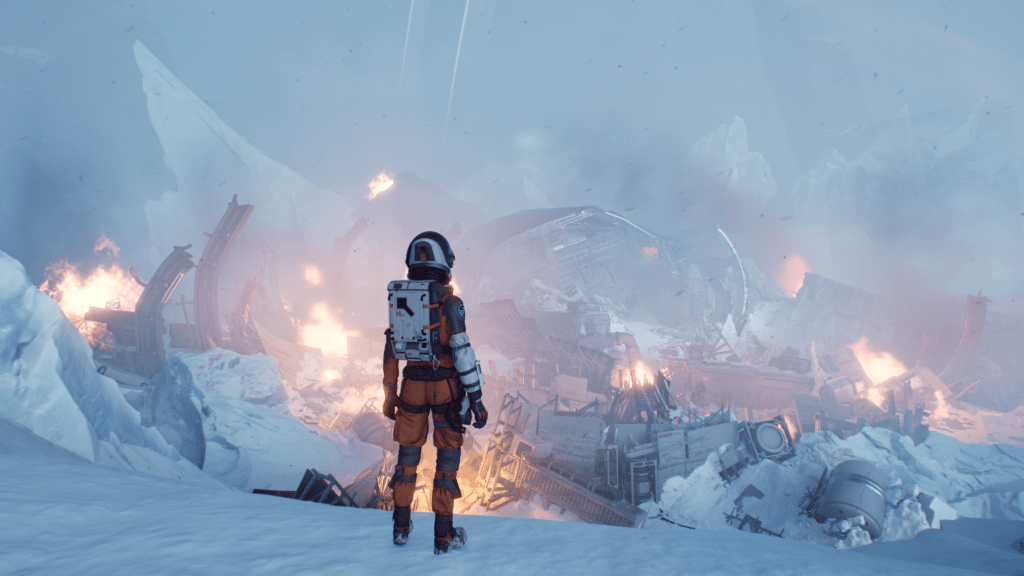
You might notice that some of these structures seem out of place on a remote planet. That’s because the ESA mission to Persephone wasn’t the first crewed expedition. Early in Thomas’s storyline, it’s revealed that another agency had already been there, without ESA’s knowledge, and they left behind equipment and installations that Thomas now relies on to survive. Most crucially, oxygen supplies are strategically placed throughout the levels, often appearing at the exact moment you begin to question whether you’ll make it through the next segment.
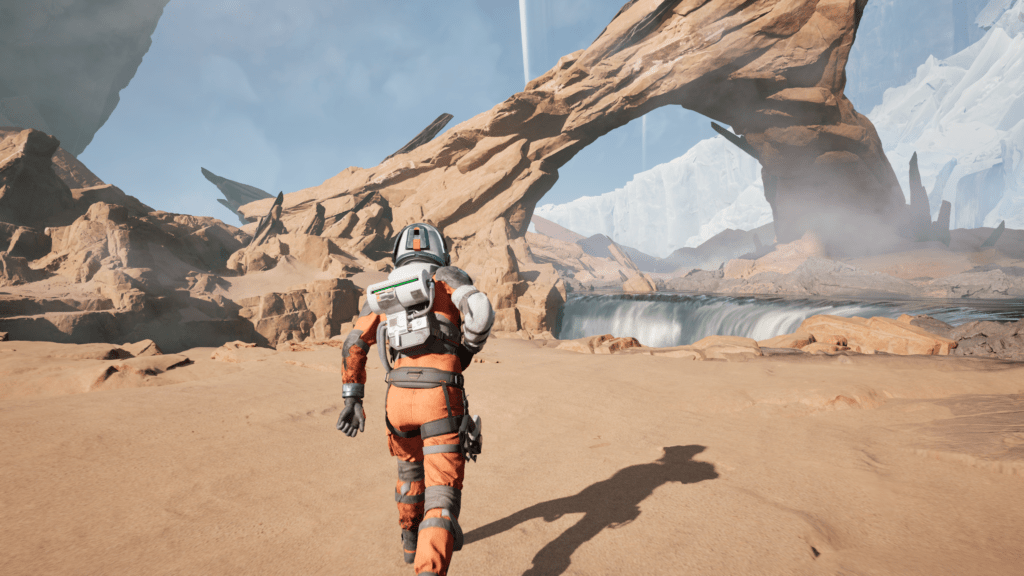
While Ariane’s sections are tense due to the environment and Nemesis relentlessly pursuing her, Thomas’s chapters are calmer in tone but introduce different types of dangers during traversal. Even though the game is entirely linear, you never quite know what awaits around the next corner. There are small gameplay variations, enough to occasionally send you down the wrong path and force a reload from the last checkpoint. Still, the game never truly disrupts your enjoyment, because at its heart, this is a narrative adventure.
If you ask me, the balance between Ariane and Thomas is handled extremely well, and the story benefits greatly from having two protagonists. As much as they want to understand the planet and survive its challenges, their primary desire is to find each other again, to explore Persephone together. That longing is evident in both of their monologues. The sense of isolation and the yearning for another human presence translate beautifully to the player. With each new chapter, you find yourself rooting for their reunion, even as their difficult journeys refuse to conclude easily. And that’s perfectly fine, because the feeling of the unknown, and the gradual process of learning about it, works wonderfully within the game. Whenever Thomas or Ariane are in awe of something, you understand why. When they marvel at the scale, the beauty, and the strange “nature” of this planet, you do the same, because everything is crafted with remarkable care.
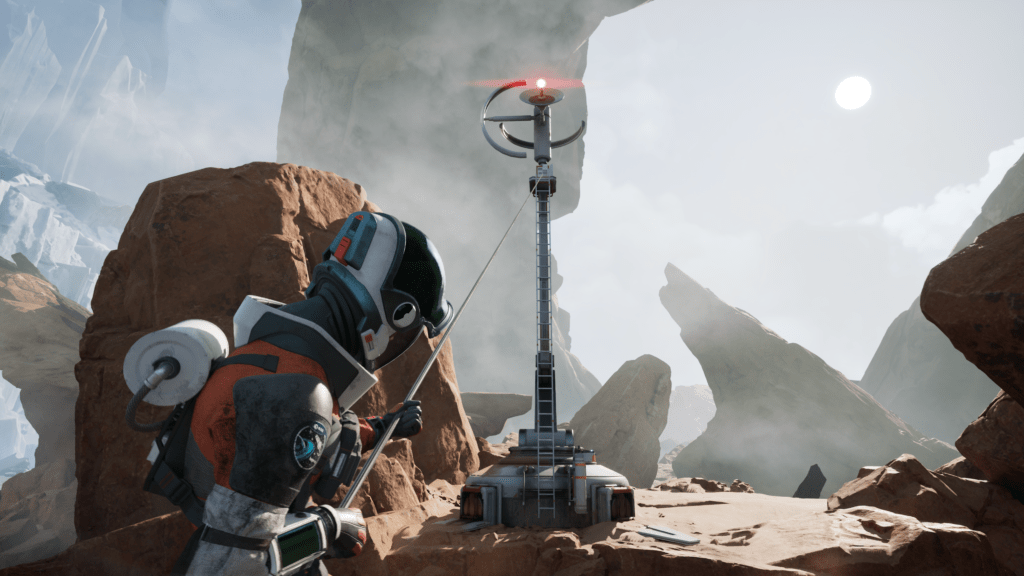
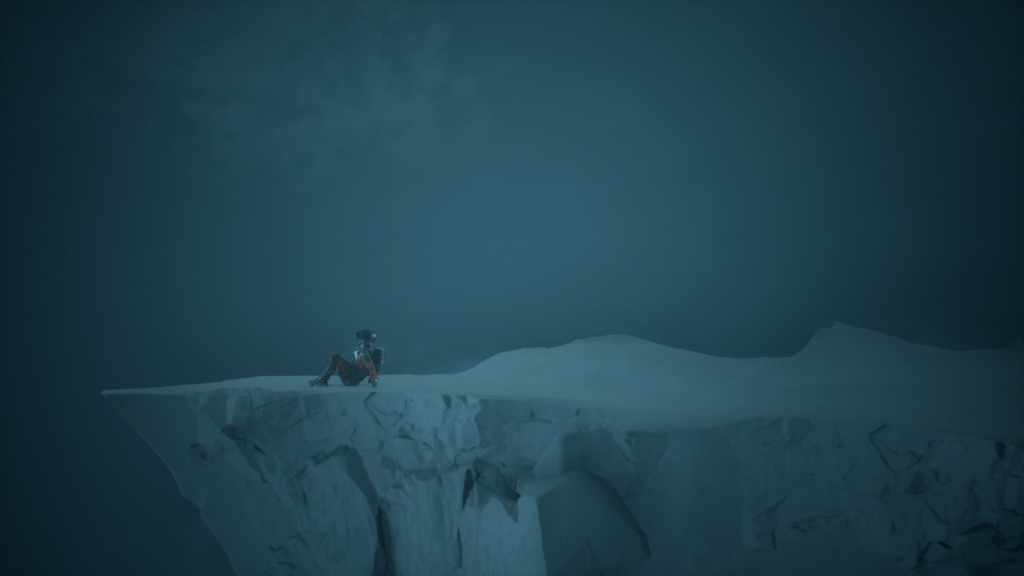
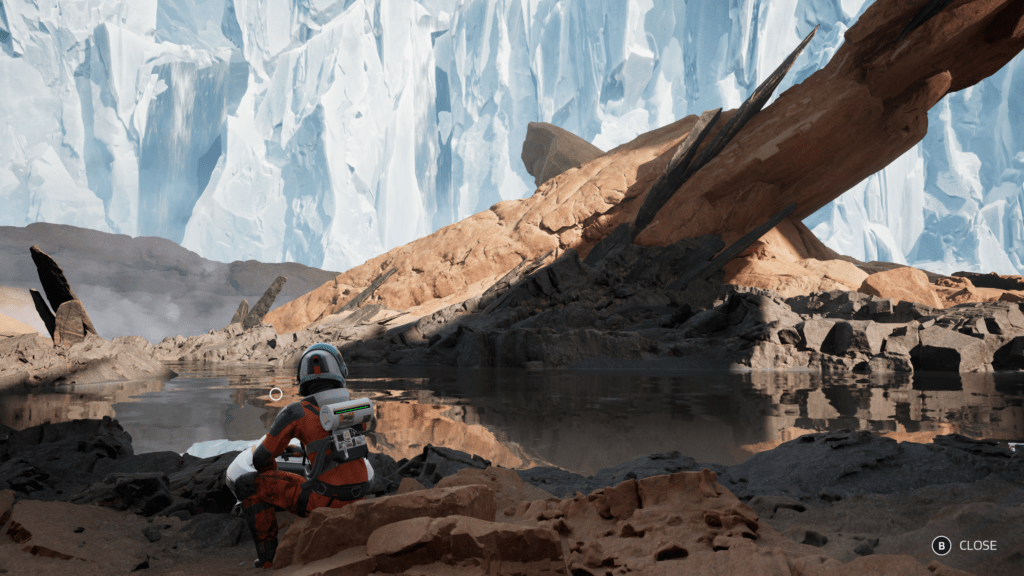
Even though I’ve said the game is 100% linear, a journey from point A to point B, that doesn’t mean the levels themselves are just straight corridors. There are always small variations, side paths, and quiet spots where you can simply stop and admire how beautifully everything has been crafted. Persephone, though fictional for now, is exquisitely designed. The feeling that you are the only human being on this part of the planet is executed brilliantly. The sheer scale of each environment, combined with that sense of helplessness and awe in the face of the unknown, is present at every step. At times, you might assume certain landmarks are just set dressing, only to discover later that you can, and must, reach them, where a new, breathtaking vista of this seemingly frozen world awaits. Above all, it’s the constant sense of mystery that drives the player forward, and I have to say DON’T NOD has done a remarkable job crafting this adventure and everything that unfolds within it. Not a single moment feels dull or uninspired, and trust me, you’ll spend plenty of time in the excellent Photo Mode, because almost every corner of the planet offers something worth capturing.
That brings us to performance. I played the game on Xbox Series X, and it looks phenomenal. There is, however, one minor drawback, at least during the review period, or perhaps I simply didn’t dig deep enough into the settings. The game runs at 30 frames per second on Xbox Series X, and honestly, for this type of experience, that isn’t a major issue. During our preview a few months ago, also on Xbox Series X, the game ran at 60 frames per second, but from what I could tell, the resolution was set to 1920×1080. In the full release, it seems DON’T NOD prioritized visual fidelity over fluidity, as the game appears to run in 4K resolution. And with good reason—the game looks absolutely stunning, and any visible pixelation or jagged edges would likely shatter the illusion of standing on a distant, frozen, yet undeniably beautiful planet.
We would like to thank DON’T NOD for providing us with a copy of the game for review purposes.
Aphelion (Xbox Series X)
In the end, Aphelion is exactly what I hoped it would be, perhaps not after the very first reveal, but certainly after playing the preview a few months ago. It’s a mature, compelling narrative adventure with gorgeous presentation, an intriguing mystery, and strong characters, even if there are technically only two of them… three, if we count Nemesis. DON’T NOD deliberately stepped away from combat mechanics in this title, focusing instead on what they do best: telling powerful stories, building immersive adventures, and conveying emotion, feelings of isolation, loneliness, and vulnerability. And because of that, Aphelion is an incredibly engaging experience, one you’ll genuinely enjoy from beginning to end, simply because it was crafted with that purpose in mind.
