
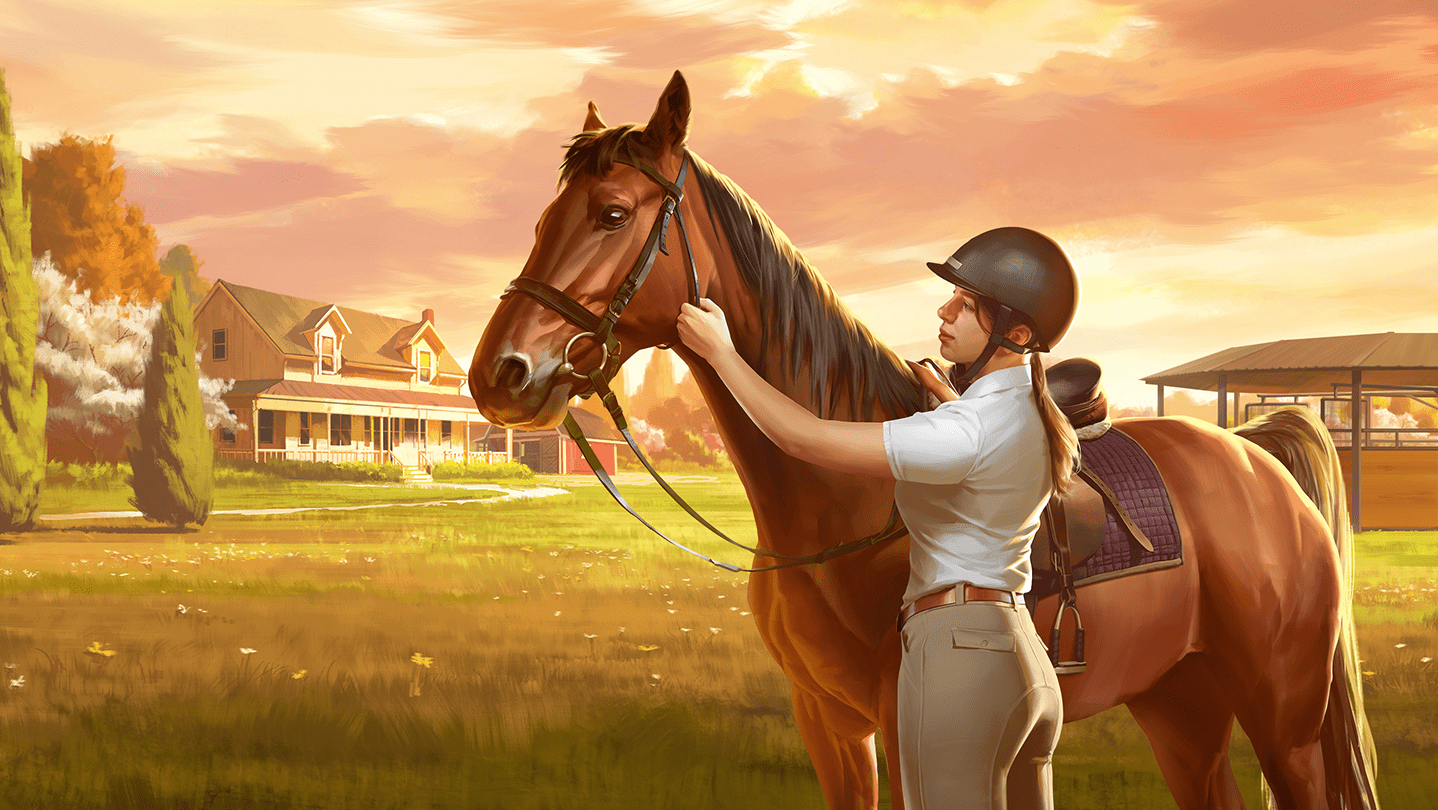

A few weeks ago, when I found out that a game about breeding horses, racing them, producing offspring—not your own, but the horses’—and expanding and upgrading your ranch was coming out at the end of April, I immediately knew how I’d be spending the last days of the month. Because if I can’t be Nikola Jokić in real life, I can at least roleplay, through a game, the thing he’s supposedly the best at in the world: being a horse breeder. I was even happier when we received an early code so we could have this review ready in time for the embargo. I’m one hundred percent certain we’ll be the only gaming outlet in Serbia, maybe even in the Balkans, with a review of this “Nikola Jokić” simulator. And so, over the past few days, I’ve been immersed in what I can freely call a highly addictive game.
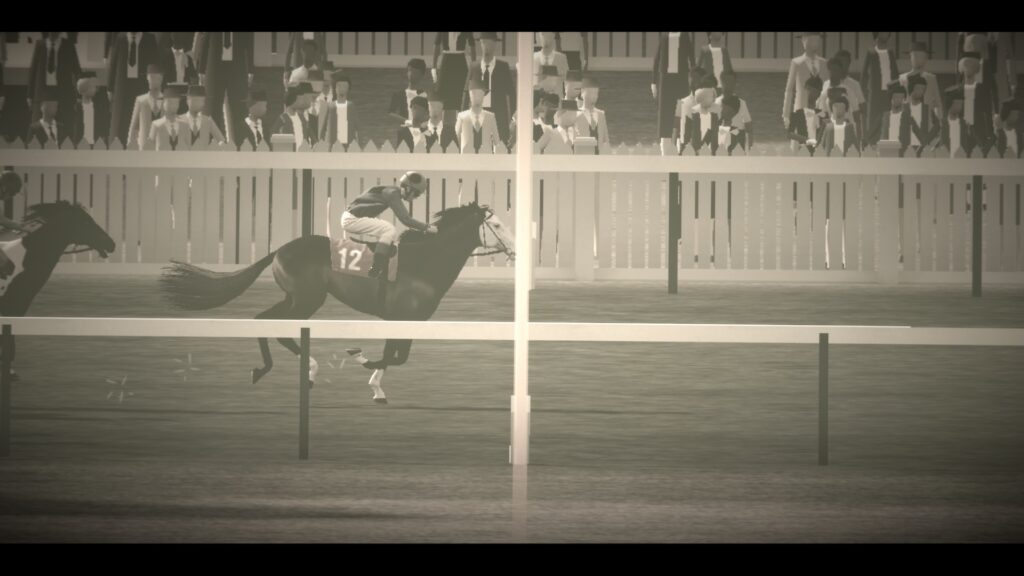
But let’s start from the beginning. There is a story here, don’t worry, and it differs slightly from Jokić’s imagined path to equestrian stardom. You come from a family with a pedigree in horse racing, something Jokić can only dream of, and after a small accident and a family tragedy, you’re invited by the people maintaining your family ranch to return and restore its former glory. And who better to do that than a Serb from Sombo… Niš! That’s where your adventure begins.
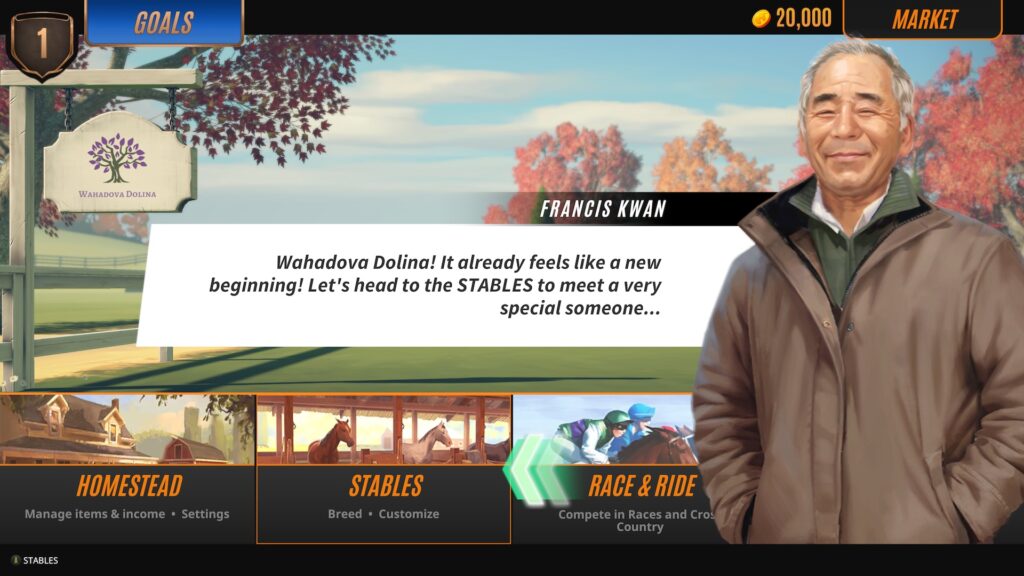
Right at the start, you meet the man who invited you back, Francis Kwan, who will guide you through the early stages of the game. The initial intro cutscene is voiced, but after that, there’s no voice acting during gameplay. Instead, the story unfolds through text presented in a comic-book style. Before I go any further, I have to point out something important. Rival Stars Horse Racing originally launched on mobile devices a few years ago. Until recently, I hadn’t had the chance to try it on mobile, but I did so briefly for comparison. Because of its mobile roots, the entire user interface is clearly designed with that platform in mind rather than consoles or PC. That might bother some people, but it didn’t bother me at all. I could lie back on my bed and enjoy the oversized UI elements that light up whenever something needs to be done, elements I might have missed otherwise.
Because of that, I have to say that Rival Stars Horse Racing is, above all, a very chill experience. There’s no real stress here, and there’s no way to truly be bad at what you’re doing. All it takes is time, a bit of reading, some clicking, and most importantly, the willingness to relax and enjoy yourself, assuming you’re into this type of game.
Moving on, Rival Stars Horse Racing is primarily a management game where you’ll race horses, ride around in free roam, and compete in multiplayer against other players, something I wasn’t able to test during this pre-release period. At the start, you can rename your ranch, create an emblem, and personalise your adventure in the usual ways. After that, you have to create a horse, because, well, you need a horse in this game. You choose its type, gender, bloodline, whatever the correct terminology may be in that world—and that becomes your first stepping stone.
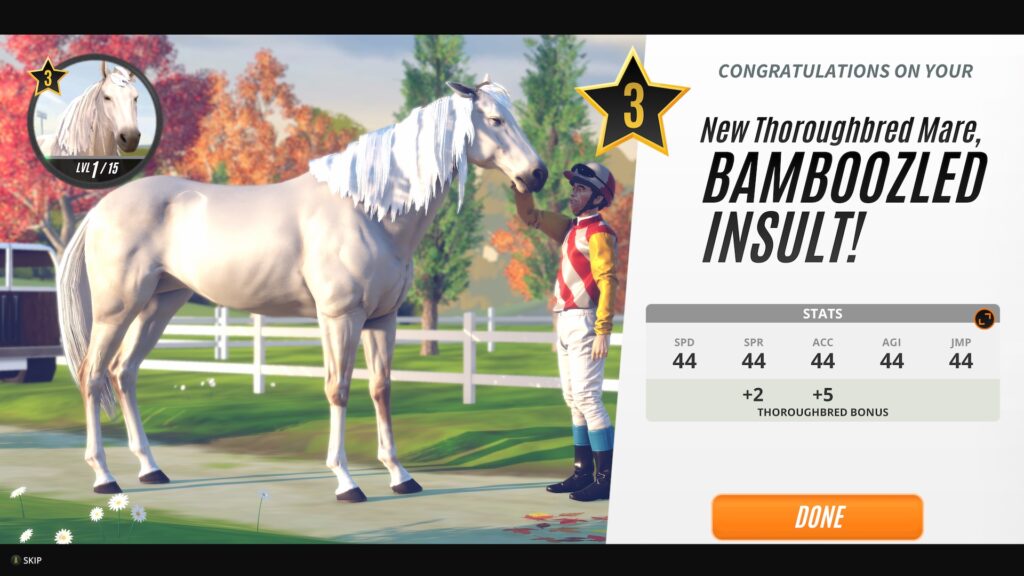
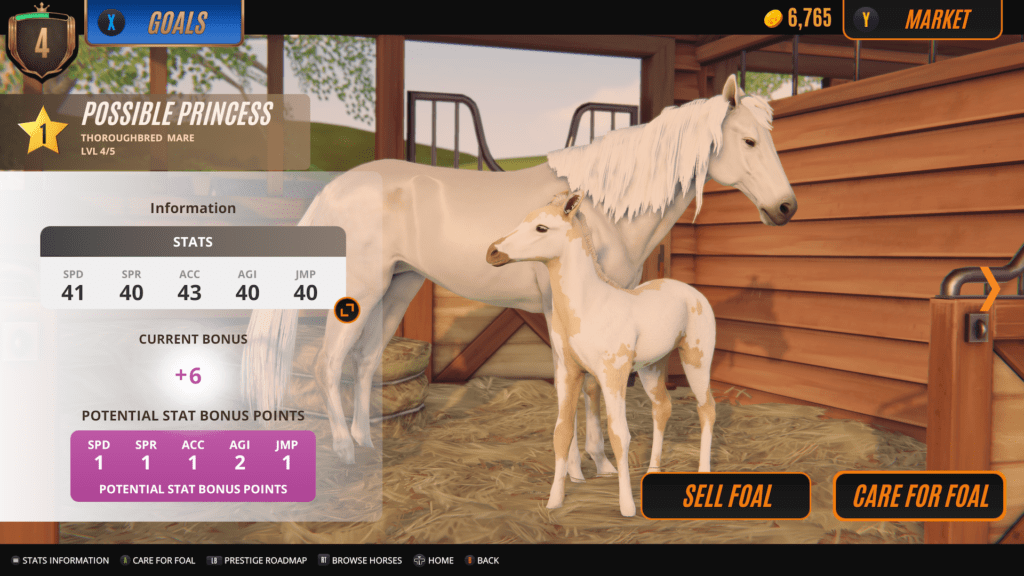
Horses are the central focus of the game and the key to progressing through Rival Stars Horse Racing. You’ll spend a lot of time reading about them, constantly upgrading them, and breeding them with other horses to produce new foals. The crucial aspect is building a legacy around a particular horse, focusing on it, improving it, and then pairing it with carefully selected partners. You’ll always be presented with ideal breeding matches, and by combining two horses, their types, ratings, and stats, you’ll produce a foal with mixed genetic traits.
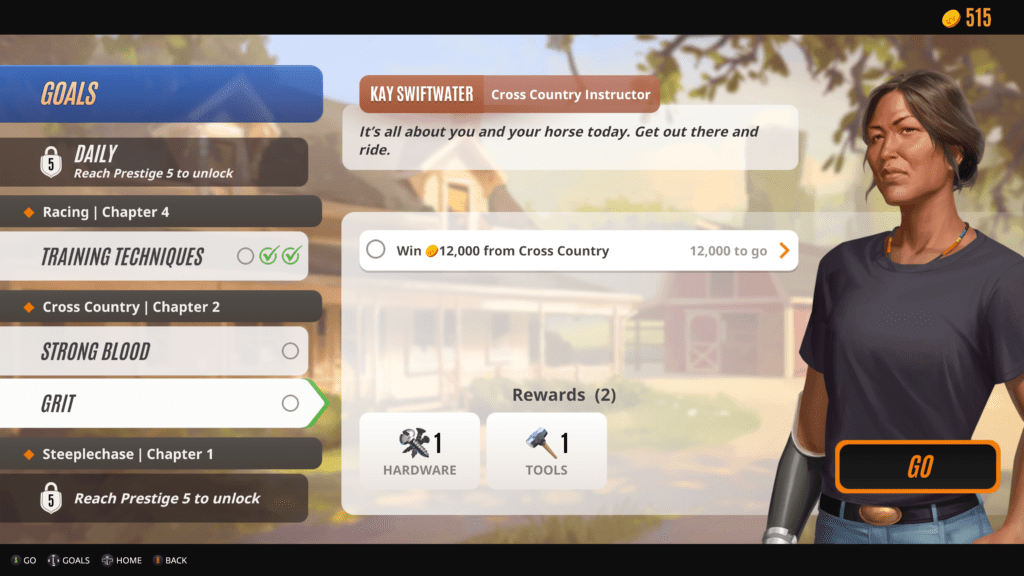
Horses are divided into classes. You start with a Grade 1 horse and gradually move up through levels by breeding with stronger partners. Each breeding attempt carries a percentage chance of producing a higher-class horse, depending on both your horse and its mate. You can also buy higher-class horses outright, but they’re simply too expensive early on. Through gradual breeding, you’ll obtain better classes, which means higher value. After investing money, resources, food, and time, you can turn a profit. Even more so if you race them and secure first-place finishes. Winning increases their value, meaning you can sell a strong horse and reinvest in another—perhaps one with more potential but less experience, which can grow into something even better if you dedicate enough attention to it. You have the freedom to approach things however you like, and the game doesn’t force you into overly demanding objectives. There is grind, yes, but it’s an enjoyable grind that keeps pulling you in to do just one more thing, and then another, and another.
I’m not deeply immersed in this world, at least not yet, but the game does a solid job explaining how genetics function within its systems. I doubt it’s exactly like real life, because if there’s one thing I do know, it’s that horse breeding and genetics are sciences in their own right. Still, the game presents these mechanics in an accessible and engaging way for players who might want to learn a bit more.
You’ll never completely run out of resources, since this is, as I’ve said, a chill game. You can always acquire more—either by purchasing them on the market if you have enough cash or by completing smaller tasks. Upgrade your training facilities for jumping, agility, speed, acceleration, and you’ll consistently earn something useful. However, the best way to progress is definitely through racing. Besides earning money, you gain experience points and skill points for upgrading your horse’s abilities. Early on, upgrades require cash and XP, but later you’ll also need those skill points and additional resources as your horse reaches higher levels.
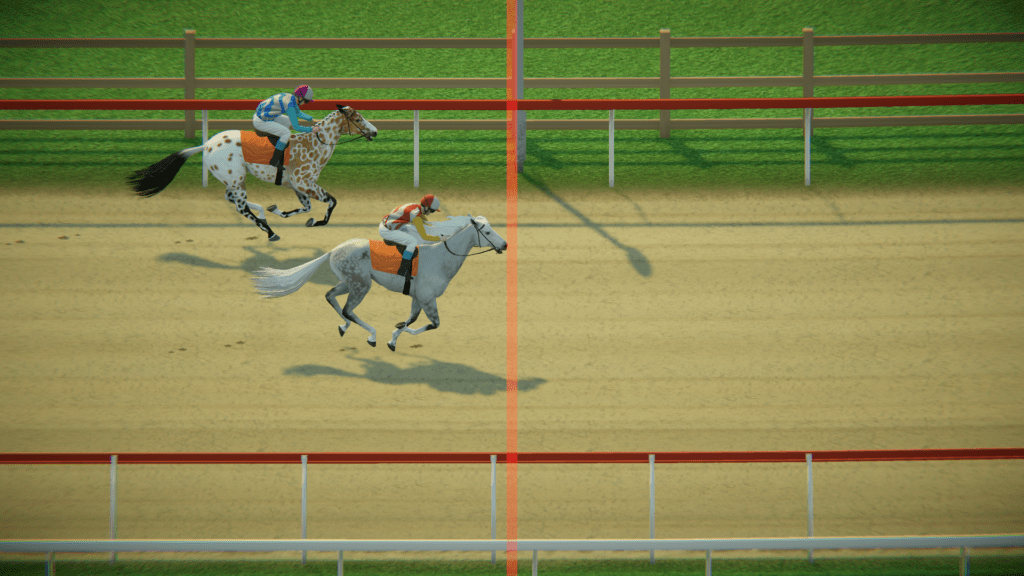
I’ve already mentioned some of the modes, but to recap: there are Flat Races, which are classic horse races; Cross Country, where you need to carefully manage speed, jumping, and balance to reach the finish line; Free Roam, where you can simply relax and explore; and Multiplayer.
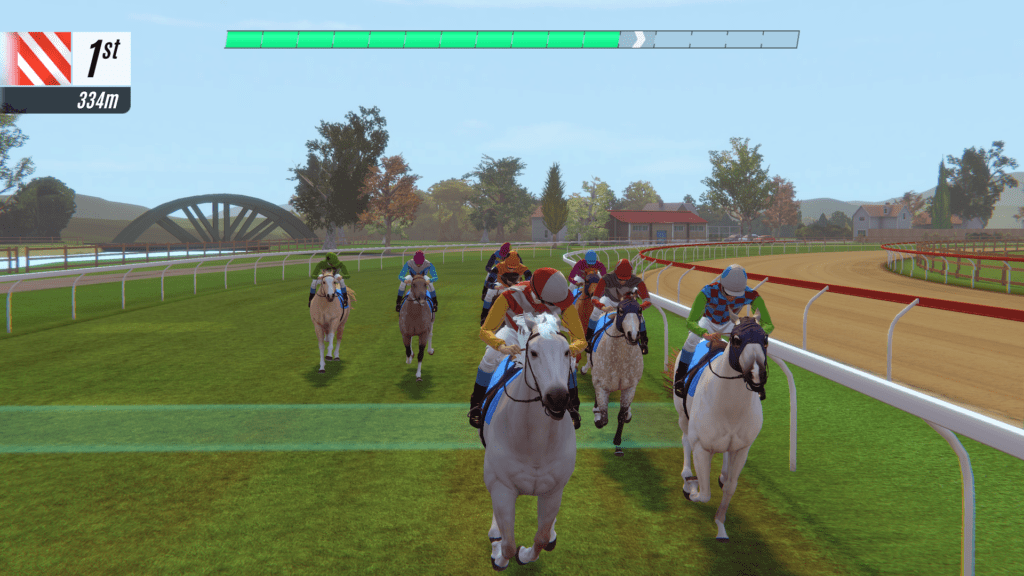
Now, let’s talk about the gameplay during races. There’s no deep philosophy or overly complex mechanics here—it’s all fairly straightforward. At the start, you’re presented with a timing bar where you need to hit the ideal spot to get the best possible start. After that, you race. In practical terms, you steer left and right and accelerate your horse. Some might think that sounds overly simple and not particularly exciting, but as you progress, it becomes more engaging than it initially appears.
Each horse has a preferred position on the track, and when it’s in that ideal spot, its sprint bar fills up faster. The sprint bar is divided into smaller segments, with each segment granting a burst of acceleration. Early on, you don’t really need to pay much attention to this system, but as the races become tougher, it becomes crucial to your success. Other horses use the same mechanics, which means you have to think strategically about when to accelerate, when to use a partial sprint boost, and when to unleash the full bar. If you time your button presses perfectly, you can trigger a “perfect” acceleration, essentially an even stronger speed boost on the track.
At the beginning of the game, there’s no real need to carefully plan how you’ll use these boosts. However, in later races against stronger opponents, you’ll need to observe their behavior, when they accelerate and how they position themselves, and adjust your tactics accordingly. Some horses perform best in the middle of the pack, where their sprint bar fills faster when surrounded by others. Some prefer leading from the front, while others thrive at the back. This gives you room to develop different strategies depending on the horse you’re using.
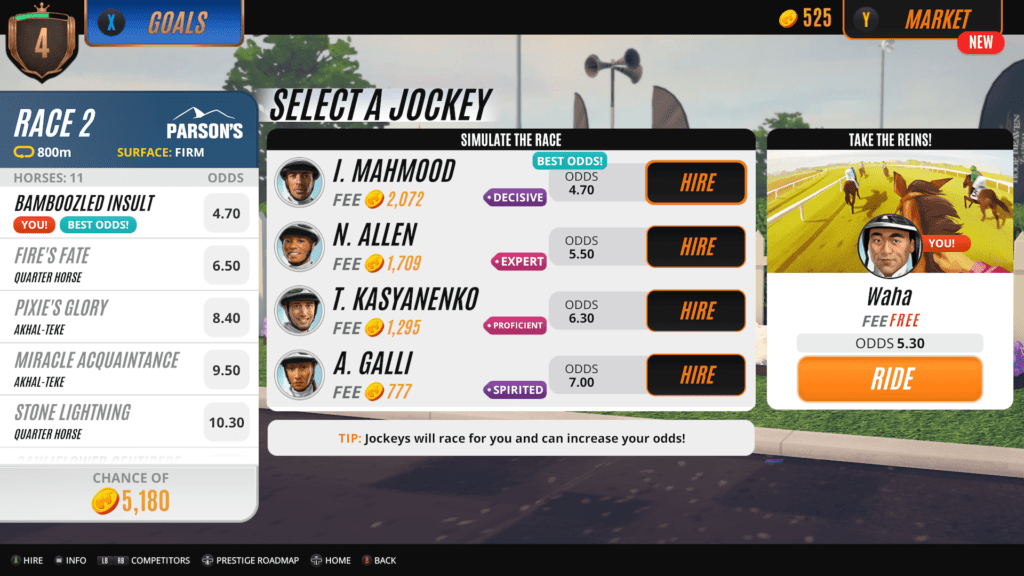
Could this system have been more refined? Definitely. But even in its current form, it’s quite enjoyable. The races are short and encourage you to jump into another one immediately, both for the money and the materials you earn for upgrades. And if you don’t feel like racing yourself, you can hire a jockey to do it for you. Of course, their services come at a cost, deducted from your race winnings.
Visually, it’s clear that this is a mobile port, and that’s neither inherently good nor bad. The game looks simple, but also pleasant and relaxing. It doesn’t overwhelm you with flashy presentation; everything is clean and straightforward. There are no overly complicated systems or graphical showcases, it serves its purpose well. Yes, the UI carries that mobile-style design, but it’s functional, intuitive, and most importantly, very fast, with minimal loading between actions and races, which is commendable. I played the game on Xbox Series X and genuinely enjoyed both the visual presentation and everything else it had to offer.
We would like to thank PikPok for providing us with a copy of the game for review purposes.
Rival Stars Horse Racing (Xbox Series X)
I initially picked up Rival Stars Horse Racing out of sheer curiosity, almost out of spite, thinking, “Let’s see what this is about and maybe create another nice exclusive for the site.” Honestly, I knew nothing about the game beforehand and had no idea what to expect. But as time went on, it slowly got under my skin. I think that’s largely due to its “carrot and stick” design philosophy, constantly motivating you to keep playing just to see what unlocks next: a new track, a new event, new activities, new horses. It’s extremely well structured in that sense, simple, yet highly effective. Above all, it’s an experience that delivers enjoyment on every level, especially in those calm, relaxing moments. It’s simply a fantastic game to pick up after a long, exhausting day and completely lose yourself in.
