
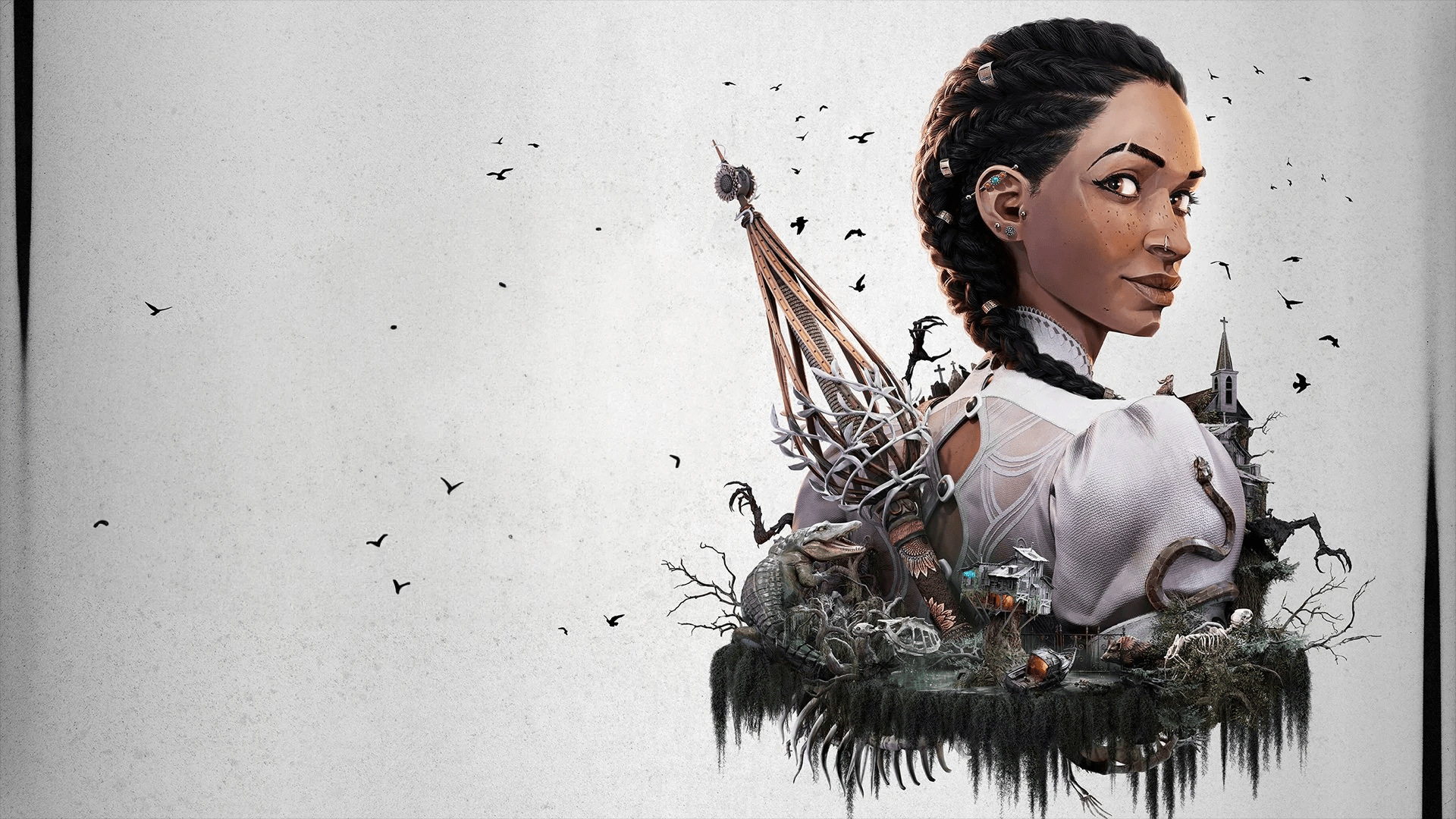

I first played South of Midnight last year when it was available on Game Pass. In the sea of many video games, this one caught my attention because of its art style, based on stop motion animation, which includes photographing and physically moving objects within a frame. When each frame is played in sequence, it creates the illusion that the objects are moving on their own. Because of this, the characters look more like they’ve stepped out of a cartoon than the hyper-realistic characters we’re used to today. Even so, their facial expressions are incredibly detailed.
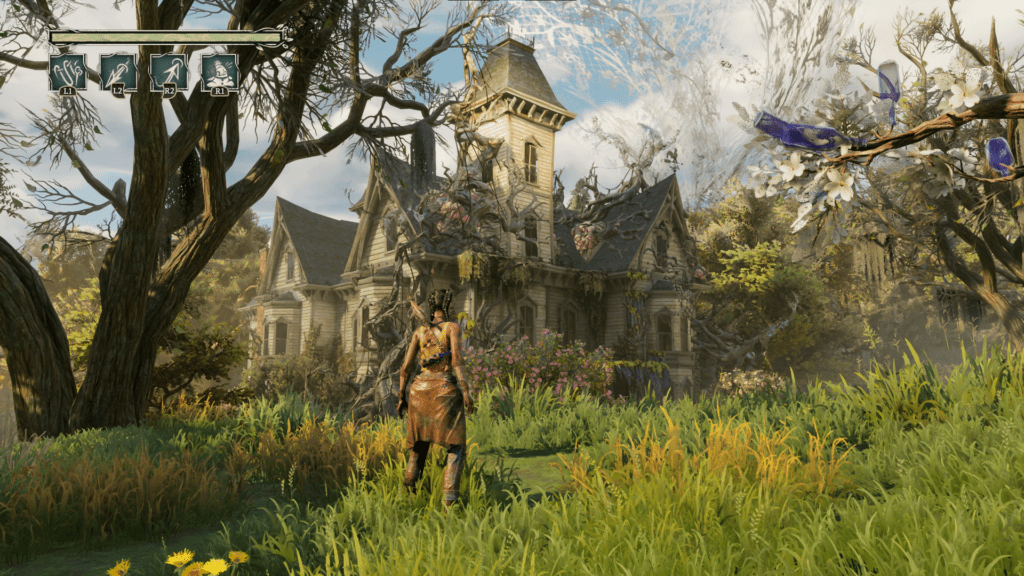
There were two more things that convinced me to try this game – first, it was developed by the creators of We Happy Few, a game with an absolutely phenomenal and unique story. The final thing that drew me in was the fact that the game is set in a dark fantasy world inspired by the myths and legends of the Deep South.
The story begins with an unknown narrator telling you about a group of people called the,,Weavers”, who have the ability to figuratively manipulate the threads that make up their reality. In this context, that means they act as healers of broken souls by battling and defeating their traumas.
You play as Hazel Flood, who lives with her mother, Lacey, in a place called Prospero, which is a rather ironic name for a town that shows no prosperity at all. In fact, it’s quite the opposite since greed has left it nearly desolate.
A terrible storm strikes Prospero, and while Hazel and Lacey are packing to evacuate, Hazel initially wants to go to her grandmother Bunny’s house. However, her mother refuses as Bunny and Lacey are not on good terms for some unknown reason. Before Hazel gets out to check on the neighbours, a misunderstanding between her and her mother escalates into an argument. Lacey is a social worker and Hazel feels that her mother pays more attention to others than to her own daughter.
After checking on the small, modest neighbourhood, Hazel witnesses the storm sweep away her home, with her mother still inside. She desperately tries to reach her, but falls into the water, only to magically appear on the shore. Determined, she decides to go to her grandmother, hoping Bunny can help her find her mother.
Right from the start, it’s clear that Bunny is no ordinary grandmother. She lives in a massive mansion with a servant and Hazel soon learns that Bunny also has powerful connections all around Prospero. When Hazel tries to explain that she has started seeing strange threads in the air, she suddenly passes out from exhaustion and falls asleep only to awaken in a bizarre place where she first discovers her powers.
As you explore your grandmother’s house which is shrouded in mistery and an eerie sense that something sinister is always lurking behind, you learn that Hazel lost her father a few years ago. You also discover a hidden passage where she acquires the weapons you’ll use throughout the game. Once she leaves the mansion, Hazel sets out on her own to find her mother.
At the beginning and end of each chapter, the same narrator returns, offering brief recaps of previous chapters or hints of what’s about to come in next chapters.
As mentioned earlier, the game draws heavily from Southern myths and atmosphere. You’ll encounter a variety of fascinating characters, each unique in their own way. Occasionally, you’ll also come across “memory objects” belonging to certain characters, which help you understand their emotions and motivations better and allow Hazel to connect with them easily. The game consists of 14 chapters and by the third chapter it already pulls you deeply into its story, showing you how emotional and impactful not only Hazel’s journey is, but also the stories of others. Although the game has a fairytale-like feel, the stories it tells are often quiet heavy.
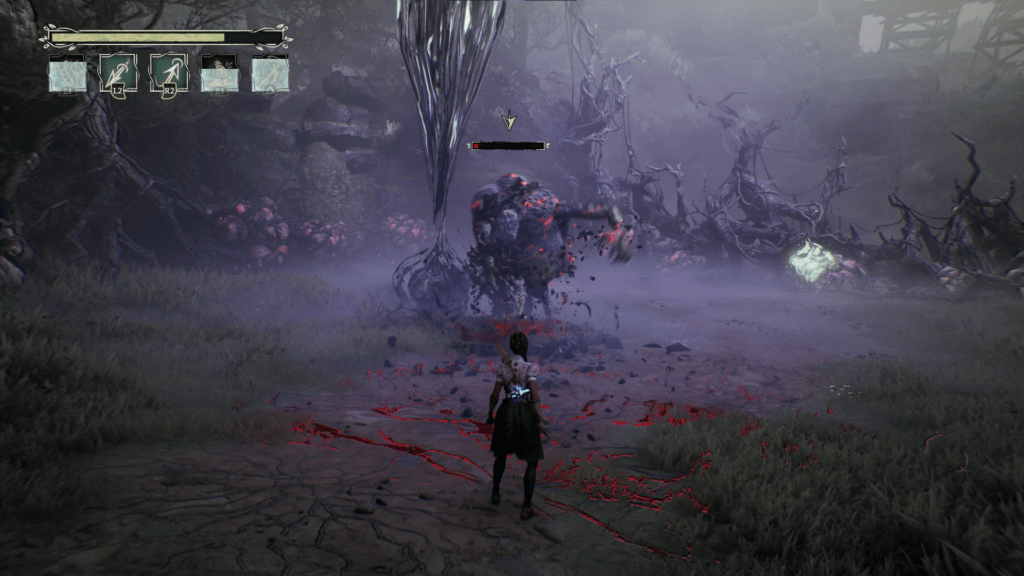
This third-person action-adventure game offers five difficulty settings at the start: story, easy, balanced, advanced and custom, where you can adjust things like player damage, enemy damage, etc. Combat initially consists of a five-hit attack combo plus a heavy attack, which you can charge for greater damage by holding the square button. There’s also a dodge mechanic that allows for a perfect dodge, as well, leaving behind an explosion that damages enemies, but also an unravel ability that defeats the enemies while also restoring a small amount of your health. You will mainly fight Haints, which are shown as evil, restless souls. After each battle, you will need to cleanse the ,,stigma” with your weapons, clearing obstacles like barriers made of thorns which are blocking your path forward. Enemies also have ,,unstoppable attacks”, indicated by a yellow glow, during which you need to avoid their attacks and during which they are immune to yours. The game includes a lock-on system and directional attack indicators, though the lock on can sometimes be frustrating as it switches targets unpredictably, making the fight infuriating from time to time.
After the battle, your health will fully regenerate. As you progress, you will unlock new abilities, like, for example, Distaff, which allows Weavers to see spirits and echoes of the past events, some of which involve unfinished business. You’ll also gain access to an upgrade system using a currency called Floof, which is scattered all over the place and easy to spot thanks to its glowing white appearance. Exploration is rewarded, and even foxes will sometimes subtly guide you toward hidden Floof. However, unlocking all abilities in a single playthrough is unlikely unless you explore thoroughly, as each ability has three tiers you can upgrade, except for your main weapon, which has a lot more.
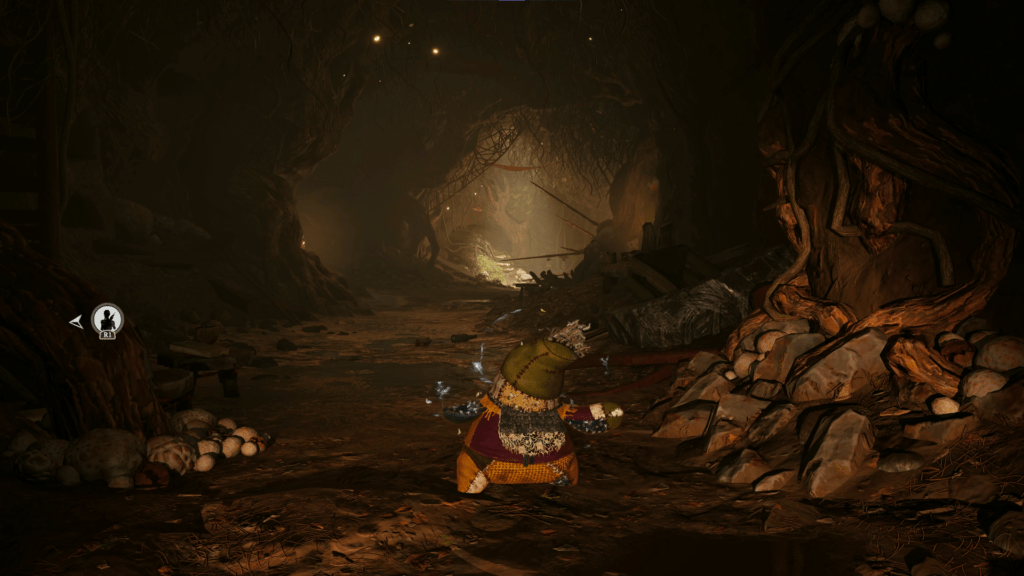
Something that will be a little harder to find are health fragments, which increase your health bar each time you collect three of them.
Other abilities include Weave Spell, which can temporarily solidify objects that help you traverse or freeze enemies in combat for a few seconds. You will also get Strand Push and Strand Pull which will help you manipulate your environment later on when you need to break or move something, but they will also help you in combat. After all of that, you will finally get Double Jump, Glide, Wall Run and Grapple, which make escape sequences where you need to run for a while especially exciting. If you ever get lost, although the game is pretty linear, at any given moment, you can press the R3 button to be guided by a thread showing you the correct path.
Combat is pretty fast – paced and allows you to create lots of combos with your abilities, but it can become quite repetitive over time.
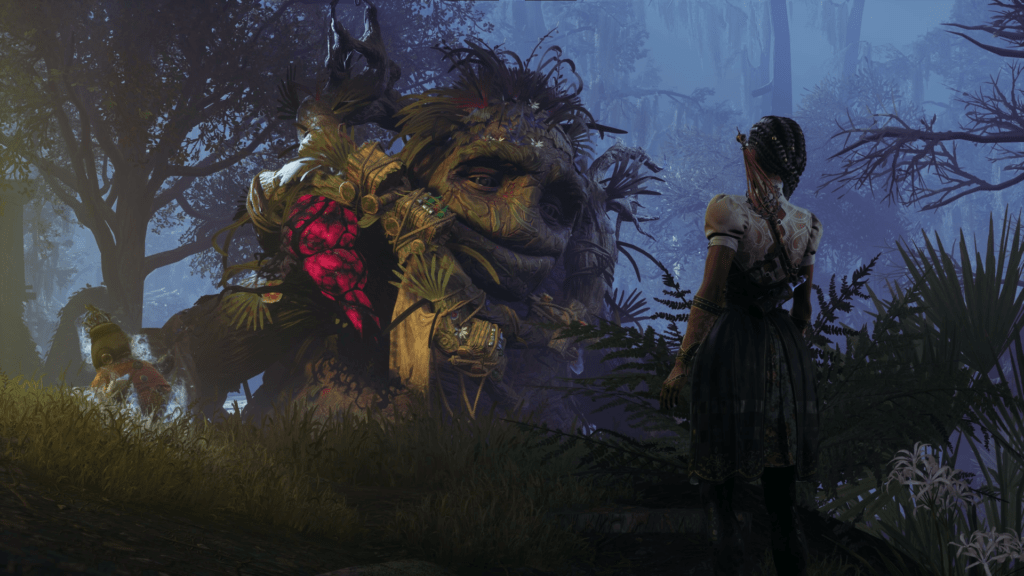
If you thought you were alone on this journey, you are wrong. Hazel has her little ragdoll companion called Crouton, given to her by her mother that mysteriously comes to life. Crouton can access areas Hazel is too big for and he can even control enemies in combat for a few seconds, turning them against each other. This game has five types of enemies, each with a special ability, and you can read about any one of them through your lore notes that you will collect through the game. Lore notes can also tell you more about places, characters and your abilities.
This game also has several boss fights, most of them are interesting because they have a few phases and instead of straightforward combat, these boss fights often require you to identify a certain weakness, exploit it and attack it until you destroy it.
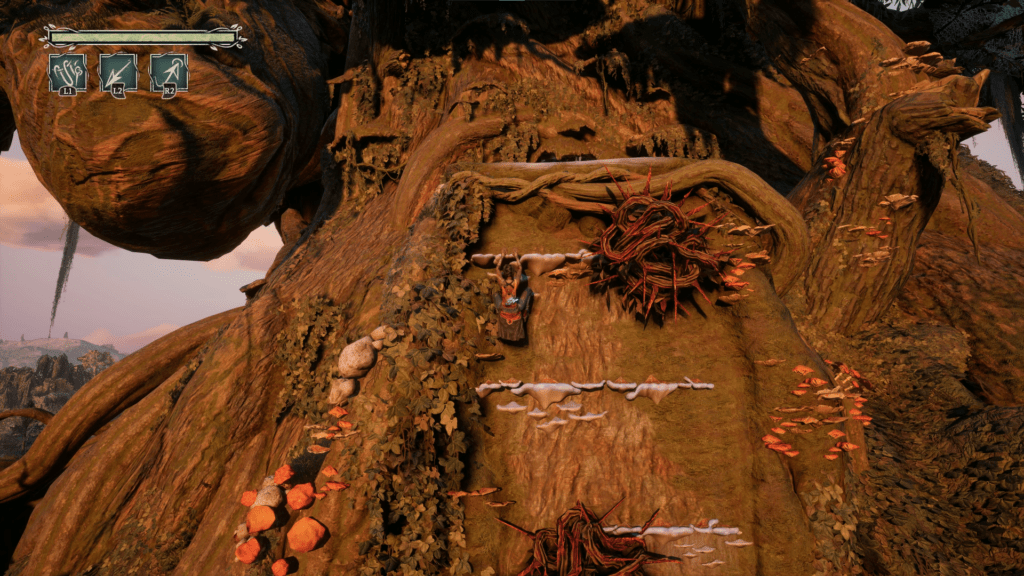
The game also includes platforming elements and very simple puzzles such as moving objects or clearing paths in certain ways to progress. Outside of combat, you’ll also have to worry about thorny bushes and exploding mushrooms.
At its core, the gameplay revolves around healing corrupted areas and uncovering stories tied to them. It’s more atmospheric and narrative driven than focused on hardcore action, and at times this game might remind you of Kena: Bridge of Spirits.
Collectables include, as we already mentioned, Floof, health fragments, but also notes left behind by various characters which Hazel always comments on. If you miss anything, the Chapter Select feature allows you to revisit any chapter you want to either relive to story again or get certain collectables if you’re aiming to get a platinum trophy which isn’t very challenging. The only challenge might be defeating certain bosses without getting hit.
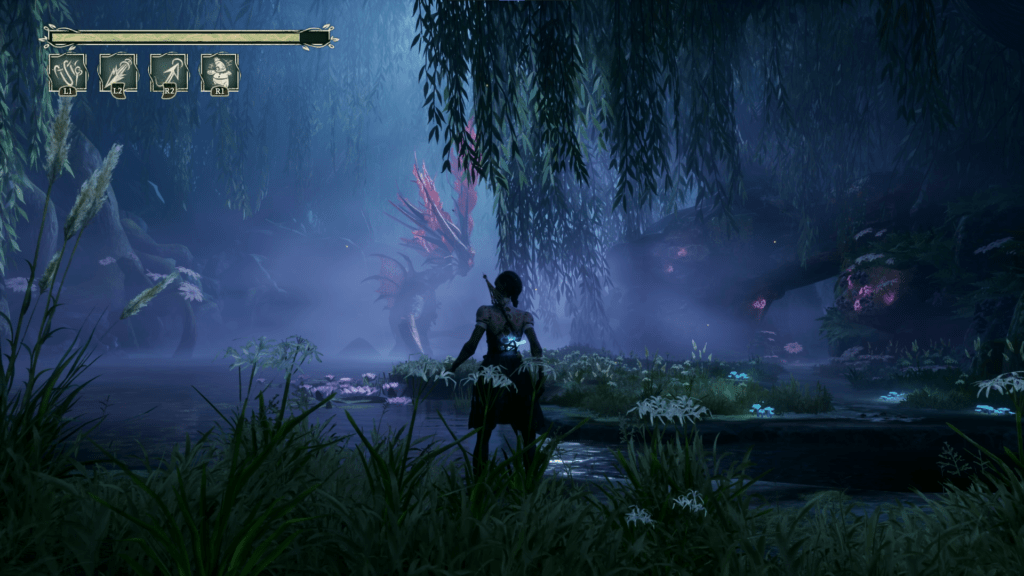
While the combat can feel repetitive, the music is absolutely divine at ALL times. It is so genius that sometimes it reflects the things you are fighting against making it worth to just stop somewhere and listen to it while taking in the surroundings. Toward the end, the soundtrack becomes so powerful, it fills you with adrenaline.
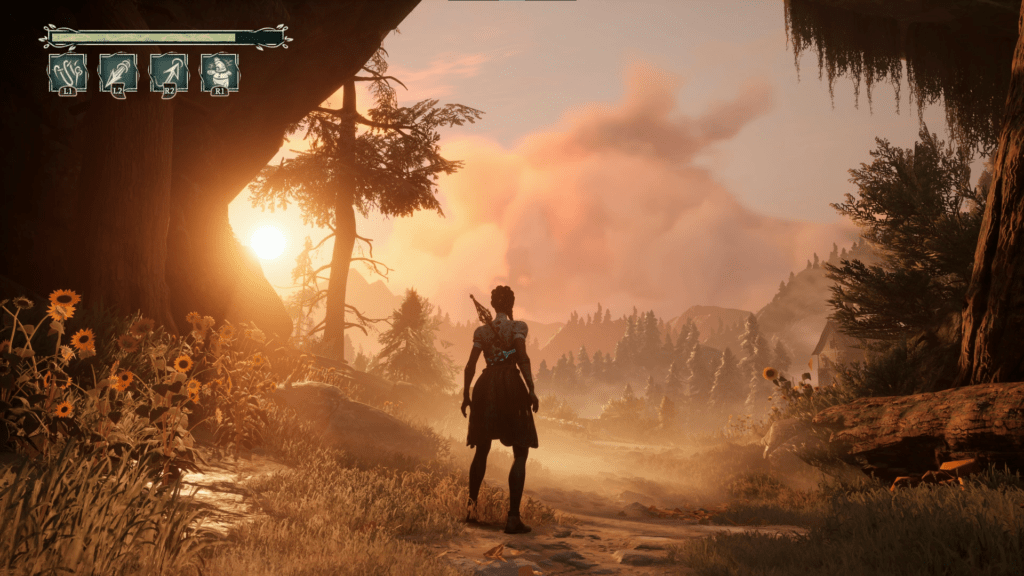
Despite its dark setting, the lighting is beautiful, therefore you will get the opportunity to see sunlight filtering through tress giving murky swamps a completely different vibe, glowing caves and, in general, a dreamy Southern gothic atmosphere.
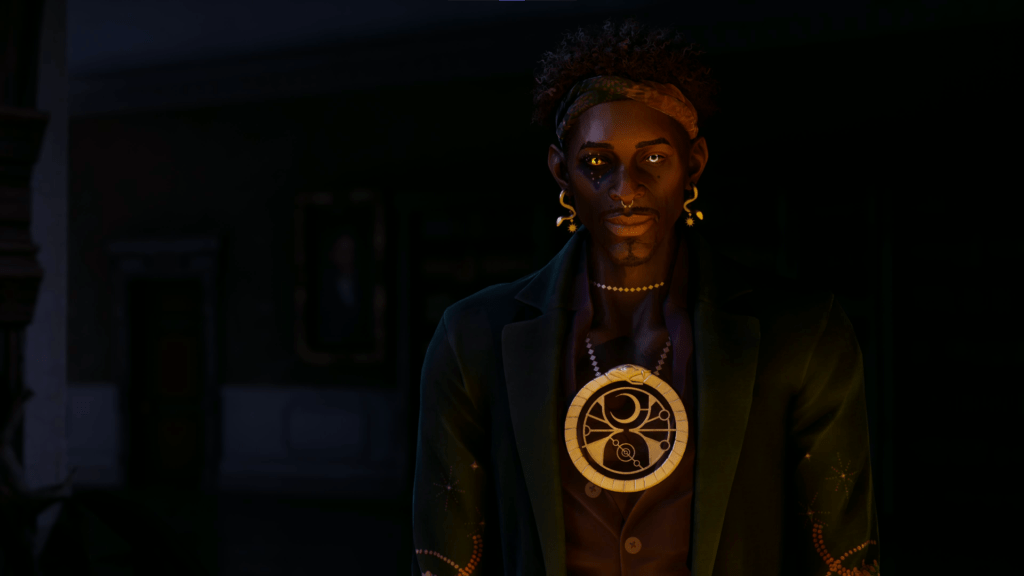
The character design is very interesting and you will meet many that will become very memorable and to make this impression even better, voice acting is phenomenal.
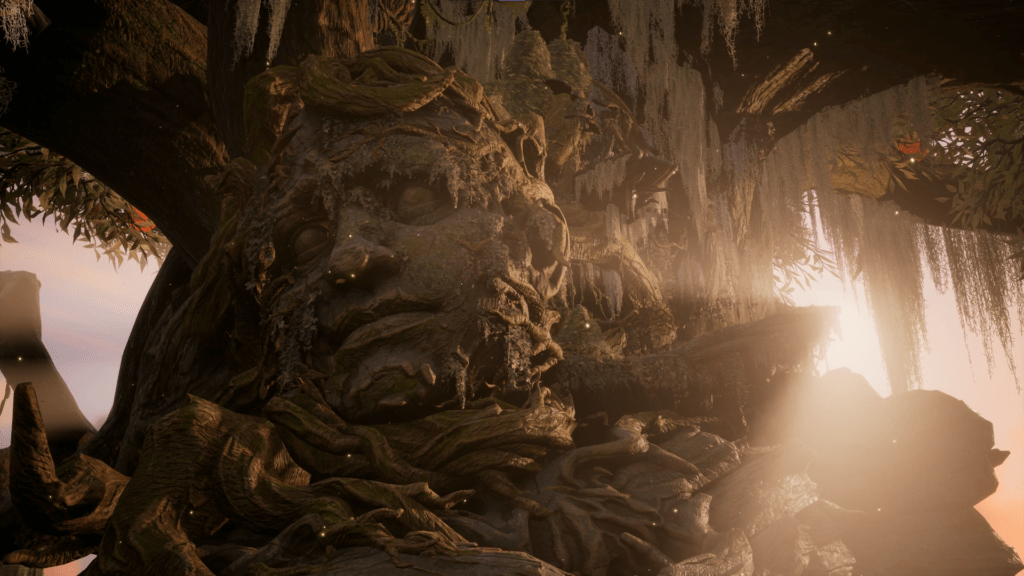
The crown jewel of this game is its story. It’s a deeply emotional tale about people, their pain, grief, and regrets. How these things affect them and shape them, what they are willing to do to cope and what happens to those who cannot let go of the past. It’s also a story about empathy, understanding and forgiveness, often drawing parallels between a Weaver and social workers.
We would like to thank Microsoft for providing us with a copy of the game for review purposes.
South of Midnight (PlayStation 5)
At the end of this beautiful journey, the only thing you're left to do is sit back during the end credits, listen to the beautiful song, reflect on everything you've been through on this adventure and also once again ask yourself - how far are you willing to go to save the ones you love?
