



We had all heard about Marathon even before it was released. A new title from Bungie, the studio that made its name with the Halo franchise and later with the Destiny games. And if you heard about Marathon, then you surely also heard about all the hate surrounding the title even before launch, as well as the development issues that followed it. Multiple delays, subtle shifts in style, moments when the game’s very purpose seemed unclear, and of course the question of which audience it was targeting. All of that created a sense of resistance toward the game as release approached. Honestly, I wasn’t impressed either with each showcase Bungie presented. Still, I decided to give it a chance, even though some colleagues, experts in the extraction shooter genre, followed broader public opinion and early reviews and chose to skip it. After more than a hundred hours spent with the game, I can only say that I would have made a huge mistake if I had listened to those reviews and the majority sentiment, because Marathon is a unique, fantastic, and brilliant title in absolutely every sense.

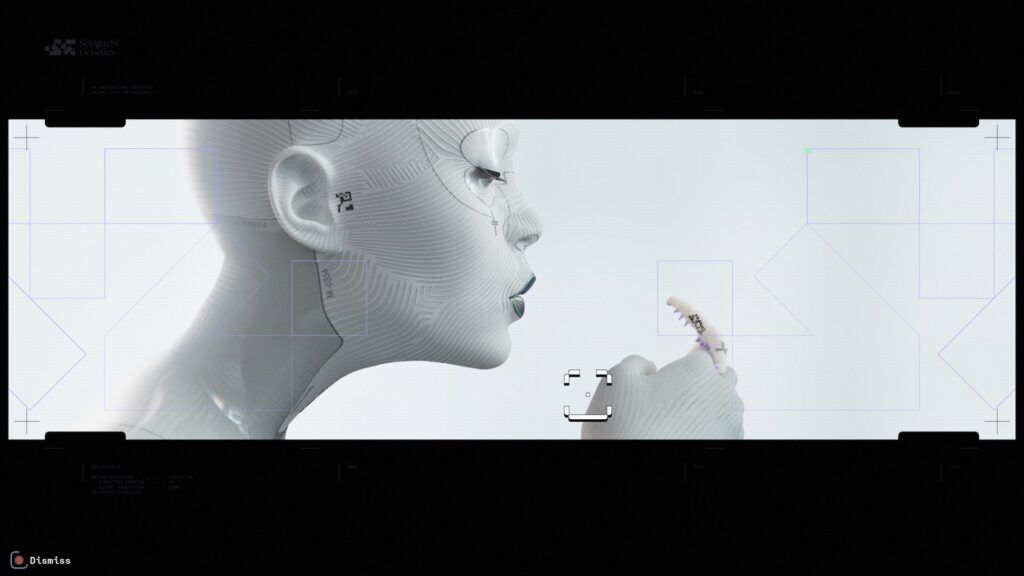
The story of Marathon is set on the distant planet Tau Ceti IV in the 29th century, where a once-prosperous human colony mysteriously vanished without a trace. Instead of a classic narrative campaign, the game builds its story through the environment itself, abandoned complexes, forgotten infrastructure, and the remnants of a civilisation that simply disappeared. Players take on the role of Runners, cybernetic operatives whose consciousness has been transferred into biosynthetic bodies, as megacorporations send them on dangerous extraction missions in search of resources, data, and answers. The disappearance of tens of thousands of colonists lies at the heart of the mystery, but the truth is not revealed through cutscenes; instead, it unfolds through fragments of lore, seasonal events, and discoveries the community uncovers collectively.
Marathon’s story leans on themes of transhumanism, identity, and corporate control, where death is no longer final, but merely a business expense. The Runner, that is, you, is not a hero in the traditional sense, but a tool in a broader economic and political conflict, and every mission represents a piece of a larger puzzle that evolves through PvPvE battles and seasonal narrative shifts in the world. Bungie builds the atmosphere quietly and gradually, through layers of mystery, where the question of what happened to the colony intertwines with the question of what it means to be human when body and consciousness are separated. Marathon does not tell its story in a linear way; it allows players to uncover it layer by layer through their own experiences on the dangerous surface of Tau Ceti IV.
Let’s start with the basics. Marathon is a hardcore extraction shooter that does not forgive even the smallest mistake, where you will encounter players who are utterly merciless toward you, and very often, that can be said even for those playing alongside you in your own team. There is no hesitation here: if you see someone on your screen, it’s best to take the opportunity and start shooting. There’s no socializing, no hanging out, no relaxed gameplay. The rules are fairly clear: six teams of three players enter the map, and the goal is to gather everything you can, complete the tasks you’ve taken on, but most importantly, survive and make it back to your base. That feeling runs through Marathon from your very first match and carries into every one after it, and that is what makes it a great game. Bungie consciously entered development with the idea that the game should be exactly what it is. A completely different philosophy from their previous games, especially the original Marathon titles.
The fact that it is a hardcore extraction shooter still does not justify the inaccessibility that radiates from the game when you first start playing it, and that may be Marathon’s only real flaw. That’s precisely why I want to mention it right away, because I believe the first few hours, five or six, for example, can drive players away. Marathon communicates very poorly what it fundamentally is and what it offers at the very beginning, and it’s not just the lack of an introduction or explanation; it’s reflected in every menu early on, and in every experience. Marathon throws players into its systems without any basic prior knowledge. What are you supposed to do? How do factions work? How does weapon upgrading function? What should you focus on? Where are specific menus located? None of this is explained. Players have to explore and learn everything about the systems of this excellent title on their own. That can be very discouraging at first, and many players I’ve teamed up with over the past few weeks have said the same. Essentially, you need to experiment on your own and learn through failure what Marathon truly is.
That somehow aligns with the brutality of the gameplay, but again, it’s not an excuse. A game that is difficult and unforgiving during matches does not need to project that same weight onto its menus. Still, after a few hours and many matches, everything clicks, and that’s when you begin to enjoy the game exactly as it was intended. That’s precisely why, in the first several hours, I didn’t care about the weapons I was collecting, losing, carrying, or using, nor about my overall loadout or the items I picked up, because nothing was clear to me. I didn’t understand anything, and why would I care about something I don’t understand and can’t connect with? Later, once you learn the core systems and understand what you should be striving for in the game, what your goal is before each match, everything starts to feel much smoother. You begin connecting with the game, with its systems, with its weapons, and slowly but surely, the game pulls you deeper and deeper.
There is something very specific about this title, because during that brutally overwhelming beginning, in absolutely every sense, your lack of knowledge about what you’re doing and what you’re seeing prevents you from appreciating everything the game offers, the entire world Bungie crafted so incredibly well, the excellent maps and all their secrets, the fantastic gameplay mechanics, whether it’s movement or top-tier gunplay. You search for meaning in everything you see, and at first your brain doesn’t allow you to truly feel what’s in front of you. But as I said, the great thing is that all of that soon changes for the better, and not just slightly, but drastically better. “Soon” is a relative term, of course; it all depends on how willing you are to fully commit to the game.
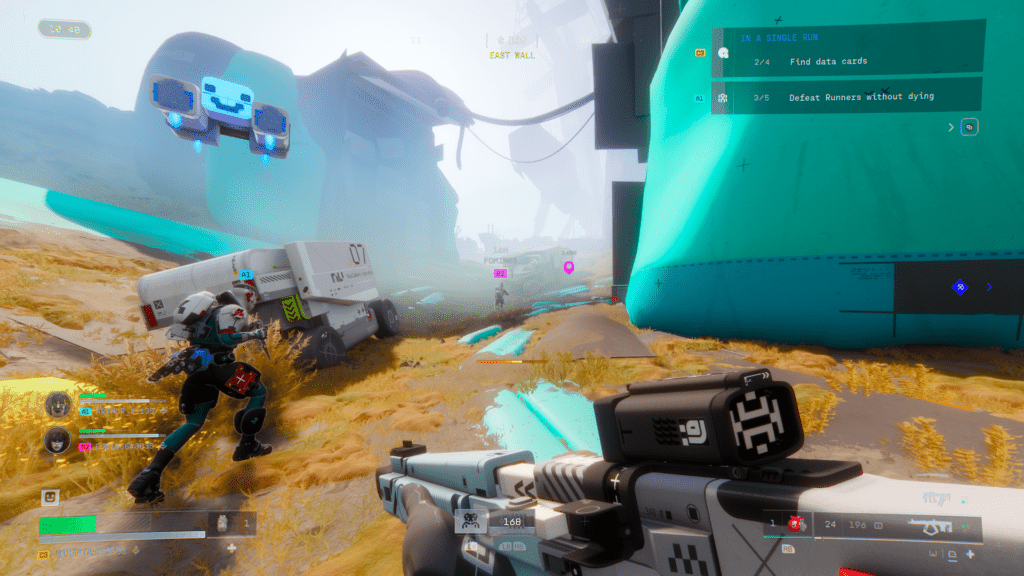
I don’t quite know how to explain it, but here’s a small example. Imagine having a strong headache all day, one that lasts for hours. Then suddenly it stops. You begin hearing everything clearly again, nothing bothers you anymore, you see colors as they truly are, the world around you feels right. That’s what Marathon is like, because only after that initial headache do you begin to see everything the game offers in its most beautiful and varied shades.
Very few games manage to strike a perfect balance between gameplay mechanics, gunplay, animations, and action the way Bungie does. But let’s be realistic, Bungie has been known for exactly that since the old Halo days. Every mechanic, that sense of weight in gunfights, the feedback from different weapons, it has always been top-tier, and that carries over into Marathon. Each of the more than twenty weapons you can find offers a great feel during gameplay. Every weapon can be upgraded with various attachments that determine its rarity. So if you have a gray weapon, its basic form, you don’t have to discard it if you like it. Instead, you can store it in your Vault and, once you find attachments for it, upgrade it. Depending on the quality of those attachments, the weapon’s quality will change as well. This is a system I really liked, but again, it’s not explained in the game, you have to discover it yourself.
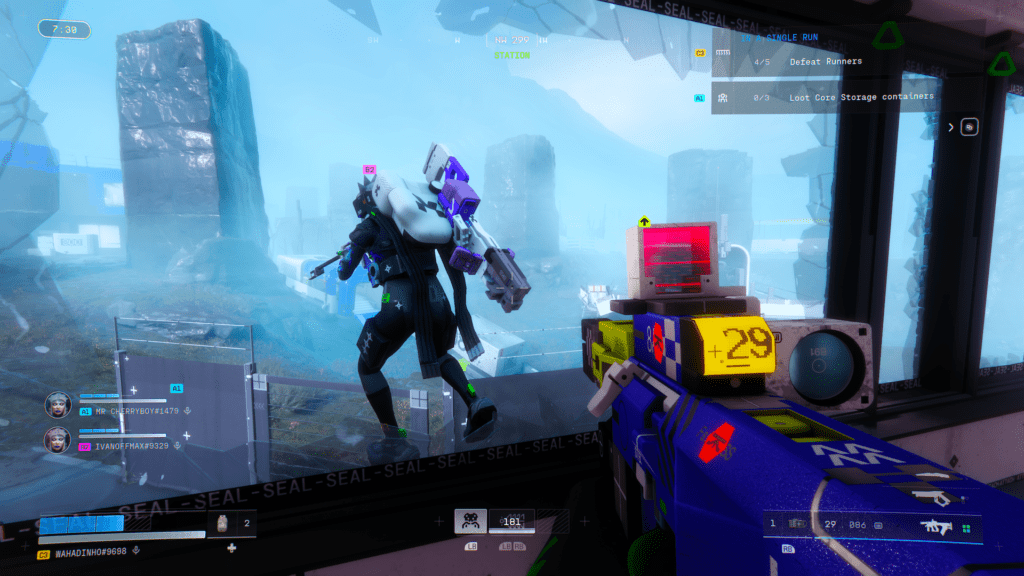
Weapons already feel excellent right from the start, but only once you upgrade them do you see their true, full potential. Those are the moments when you begin separating the weapons that suit you best and that are ideal for specific in-game situations. Likewise, the time required to take down other Runners is wonderfully balanced. The so-called TTK, or Time-To-Kill, is excellently tuned from the very beginning. It’s not too fast like in Call of Duty, nor is it “tanky” like in Overwatch, but somewhere in between. Most importantly, you get fantastic feedback when each bullet hits its target. You know exactly when someone is close to death, when you can push, and when it’s necessary to fall back and wait.
The moments when you begin to truly care about what you’re carrying in each Run mark the beginning of your real enjoyment of the game. That’s when you start feeling that every match means something to you, that you need to be more tactical and thoughtful than before. You carefully choose when you spot certain teams, who to engage, when to engage, and whether you’re willing to risk everything you’re carrying in order to potentially, or perhaps not, eliminate the opposing team. Everything you enter a match with, and everything you collect, is at risk the moment you start roaming the map, no matter which one you’re playing on. The adrenaline rush the game gives you when you wipe out a stronger team and take all their gear is incredibly powerful and addictive. In those moments, you feel so strong, so dangerous, as if you could clear the entire map. But at the same time, there’s something nagging at your mind, reminding you that just as easily as you eliminated one team, another can do the same to you.
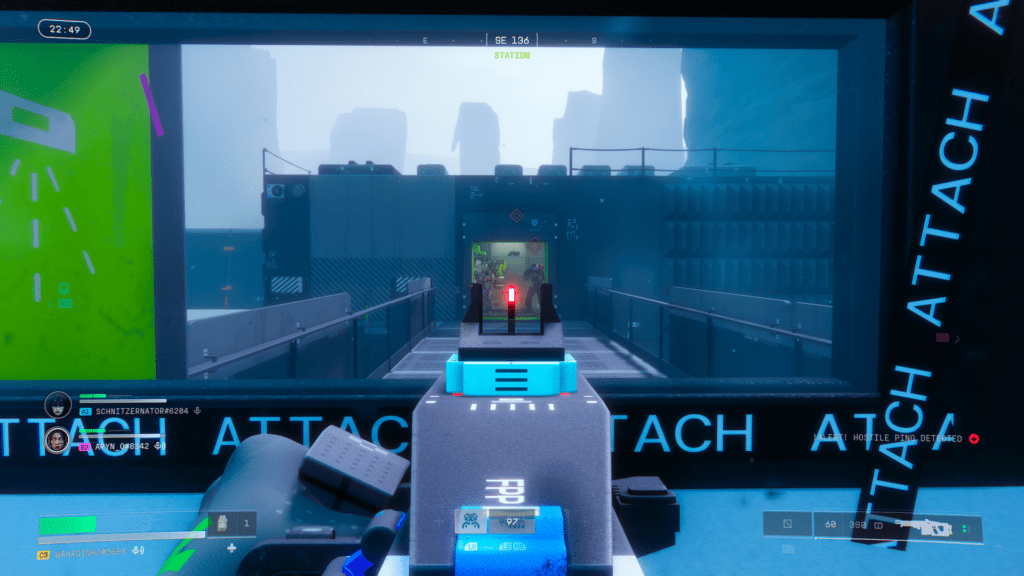
Marathon is a game where a single mistake, a misread situation, or one stray bullet fired at the wrong team can wipe out 20 minutes of “hard work” in the span of five seconds. That’s exactly why it’s crucial either to play with a team you can properly communicate with, or to know exactly what you’re doing even when things start falling apart mid-match. Check the map, locate the Exfil point, the place where you extract from the match, and carefully make your way there with everything valuable you’re carrying. And that’s what makes this game fantastic, of course for fans of this type of experience, because this is not a game the average CS player or someone who casually enjoys Arc Raiders would necessarily appreciate. The core idea of Marathon, the objective within each match, and the overarching goal of the game itself are fundamentally different from anything similar so far (not that CS is actually similar to this in the first place).
Marathon masterfully combines what used to feel like two incompatible elements in extraction shooters: lightning-fast, merciless action where you can lose everything in the blink of an eye, and a slow, tactical approach to everything happening in the game. While you’re exploring, looting, finding the items you need, and setting up positions, everything can feel deliberate, methodical, tactical, patient. But once the bullets start flying, the game transforms into something incredibly fast, chaotic, unforgiving, with zero room for error. None of that would be possible if, first, the gunplay weren’t so finely tuned, and second, if the weapons themselves weren’t designed so flawlessly. Of course, finding the weapon that truly suits your playstyle will take time, experimentation, failed runs, and, above all, a lot of patience.
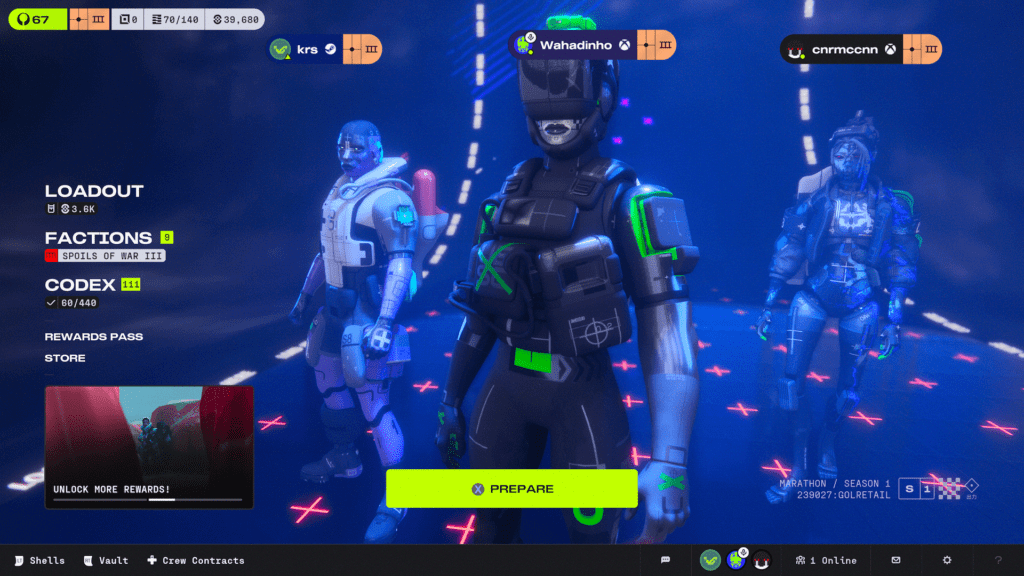
This entire brilliant gameplay loop revolves around the classes you can choose, which, unlike other extraction shooters, feel closer to hero shooters in structure. There are six classes in total, or Shells, that you can select before each run: Triage, Assassin, Recon, Destroyer, Vandal, and Rook. Five of these are designed primarily for squad-based play, and then there’s Rook. Rook is built exclusively for solo play, and with it you cannot complete the faction tasks and missions you can normally pick up at the start. Instead, you enter the map between the fifteenth and ninth minute of each round, well after the initial clashes and team distribution across the map, and scavenge whatever remains other teams have left behind. Essentially, you play like the scavenger-type NPC robots scattered throughout the match, and your only goal is to collect what you can and extract. The upside of Rook lies in its abilities, which fully support this solo approach. You can “blend in” with other NPC robots, and visually you resemble them as well. It’s up to you to adapt like a chameleon to any situation, gather what you can, and make it out alive.
In squad matches, team balance is important, or at the very least, having players who actually understand how to use their classes and abilities properly. If someone is playing Triage, you’d expect them to deploy Med-Bots to heal teammates (and themselves) whenever possible. If you’re playing Recon, you should be scanning key areas of the map to detect nearby enemies whenever you can. Destroyer is the brute class, capable of making a serious impact in firefights and protecting the team with a massive shield. Vandal is there to disrupt opponents and disable their abilities whenever the opportunity arises. Assassin is exactly what the name implies, a stealth unit designed to pick apart enemy teams when they least expect it. Assassin is also the class most commonly favoured by players who prefer to go solo.
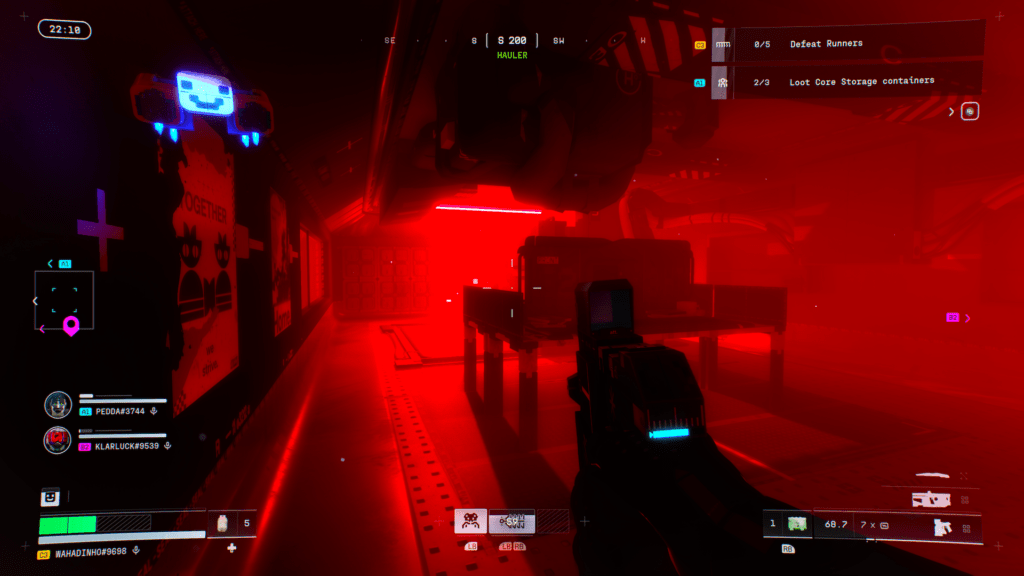
The game currently offers two main modes, three if we count Rook mode, which I already mentioned: Squad Runs and Solo Runs. When playing as a squad, you can queue with random players or with your own team. In Solo play, the game drops you onto the map alongside other solo players. In those moments, the tension ramps up significantly. It’s more stressful because there’s no one watching your back, no one to rely on. Everything depends on you and the plan you made before entering the match. Everyone else is there to ruin it, and of course, Rook players lurking for any opportunity to swoop in like vultures and deliver a fatal blow.
Speaking of Rook, who visually resembles an NPC character, it’s worth mentioning the enemy AI. After more than 100 hours in Marathon, I’ve noticed two distinct AI “modes.” One feels completely chill and relaxed, where enemies seem utterly unaware of what the player is doing and can be eliminated however you like. The other mode is the complete opposite: they actively chase you, position themselves intelligently, retreat when they’re close to destruction, wait for reinforcements to pressure you, and push you into corners. There were plenty of moments where I died to AI, not because I don’t know how to play, but because the AI can be genuinely brutal in certain situations. It all depends on what’s happening on the map, how long you’ve lingered in a specific area, and the overall flow of the match. Everything is dynamic, and that’s one of Marathon’s strongest qualities.
Currently, the game features four maps: Perimeter, Dire March, Outpost, and Cryo Archives. Perimeter is arguably the least complex of the four. It’s beginner-friendly, but if you end up in a match with highly skilled teams, it can quickly become problematic. It’s fairly open, with several “settlements” where you can complete faction missions you’ve accepted before each run. It’s ideal for patient snipers, but also excellent for players who prefer to lock down a complex, set traps, and wait for other teams.
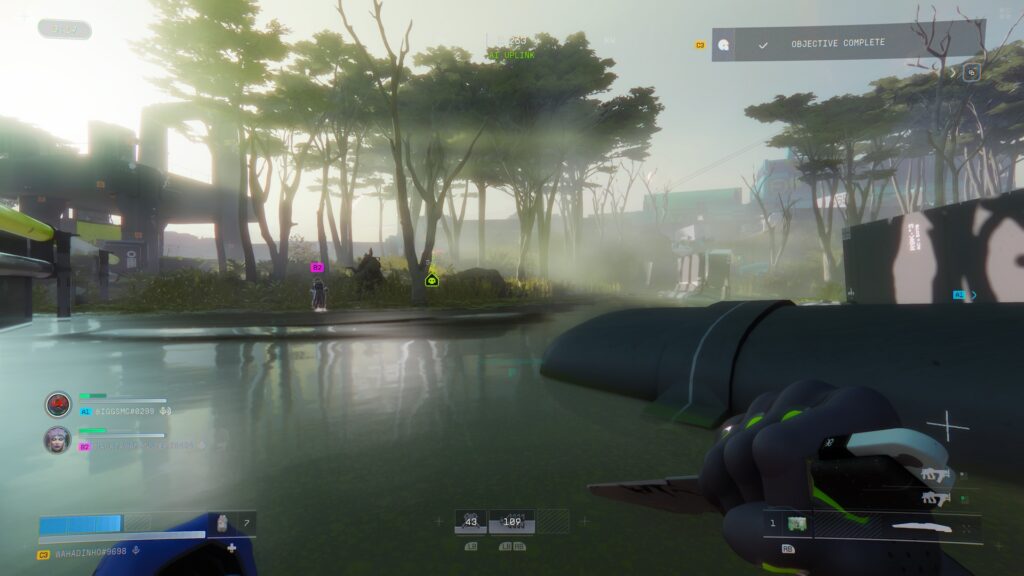
Dire March is perhaps the most visually impressive map, blending forests with looming complexes that rise from within them, along with underground sections that make navigation more complicated. At the moment, however, Dire March is the least desirable map to play due to problematic spawn positions and the risk of being eliminated almost immediately after the match begins.
Outpost revolves around a central base called The Pinwheel. It’s a complex map that introduces keycard mechanics to unlock armories, specific rooms, and vaults containing high-tier equipment and materials. This is the map that prepares you for the chaos that arrived last month with the so-called “End Game” map, Cryo Archives.
It’s also important to mention the dynamic weather system. None of the maps have static conditions during a run. Weather changes dynamically, one moment there may be heavy rain reducing visibility, another moment thick fog making it even worse, and later clear skies allowing you to see across the entire map from a single vantage point. This isn’t just a visual gimmick; it directly impacts gameplay. Depending on what’s happening on the map and whether environmental noise masks your actions, weather becomes a crucial factor in planning your approach to engagements, problem-solving, and even certain mission objectives.
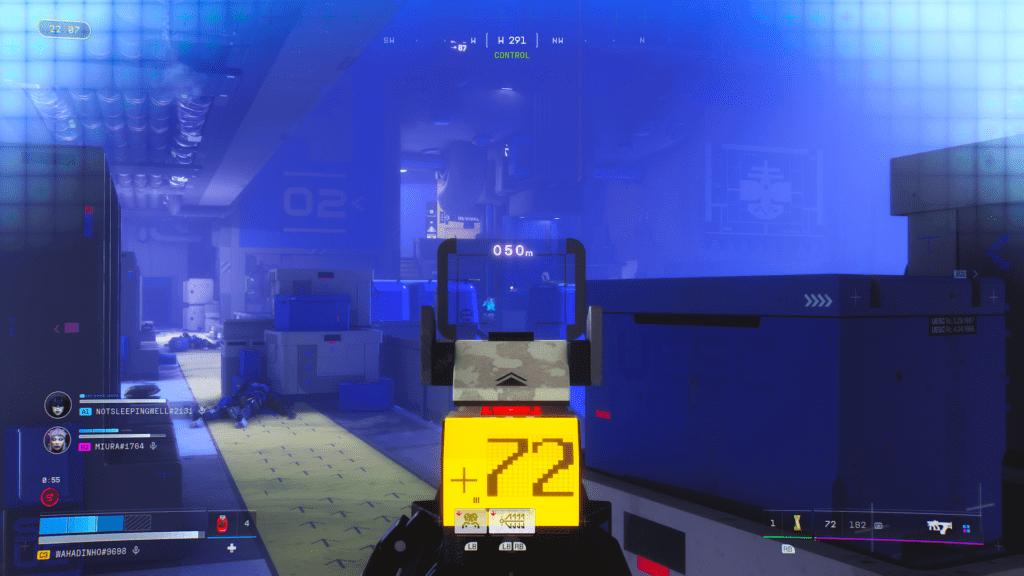
All the maps I mentioned have fixed Extraction Points where you can end your run. You simply approach them, activate them, wait for the extraction process to complete, and exfil. All except Cryo Archives.
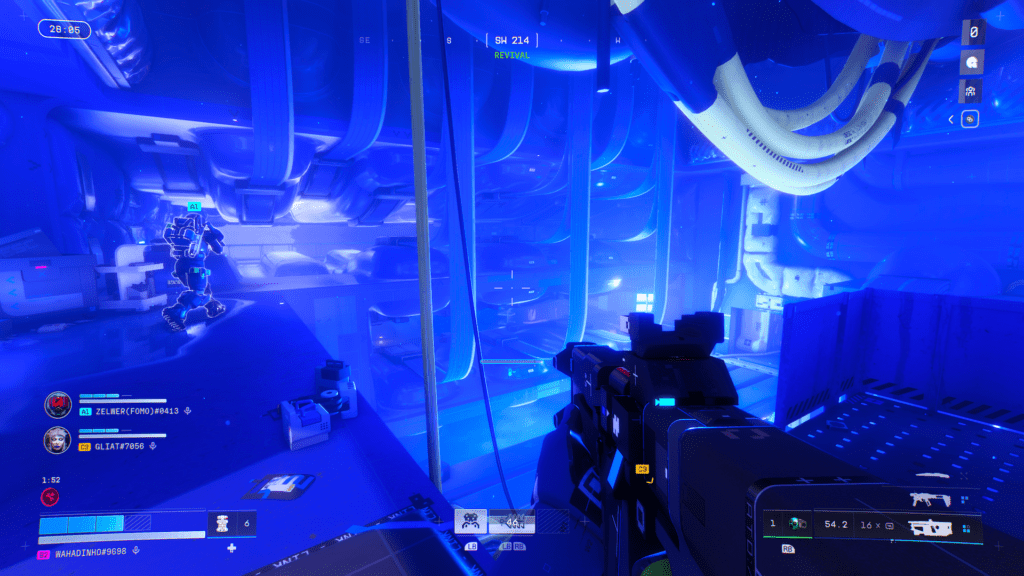
If the base game is brutally difficult and unforgiving, Cryo Archives is that multiplied by ten. The journey to the Marathon spacecraft, where you must solve puzzles to unlock the Vault and fight a boss guarding priceless loot, is incredible. And believe me, you need a communicative, coordinated team for this. This isn’t a map where you casually stroll around admiring the “scenery,” which practically doesn’t exist here anyway. AI enemies appear in overwhelming numbers at every turn, the map itself feels like a labyrinth, and every team that enters comes fully equipped with the best gear they’ve accumulated. On top of that, Extraction Points are not visible by default, you must complete several steps before they even appear on the map. Cryo Archives hides the greatest treasures and the most secrets, but for that very reason, it’s also the most punishing map in every possible sense, especially when you factor in other teams ready to eliminate you on sight and waves of elite AI units that never stop hunting you.
Finally, a brief word on missions. Believe it or not, they can actually be quite engaging, and by completing them you learn more about the game, its story, and the broader world in which Marathon takes place. There are six factions you can represent and complete tasks for, each with its own objectives on the planet, one focused on technological advancement, another on preserving biological samples, another on eliminating every Runner you encounter, and so on. Each faction offers a full set of missions, and your success rewards you with XP and gear. That can include weapons, augmentation implants to make you a stronger and more resilient Runner, tools and consumables that provide various buffs, healing items, and repair kits. Missions range from simple to extremely complex, sometimes forcing you to travel from one end of the map to the other to conduct different tests, you’ll genuinely feel like you’re running a marathon with your team across the map. The good thing is that missions are shared within your squad. If a teammate completes an objective required for your mission, it counts for you as well, you don’t have to personally perform that exact action. Likewise, if a teammate completes a mission for a faction you’re not currently working for, you still receive XP based on their success. It’s a genuinely cool system that eases progression in Marathon, something this game desperately needs.
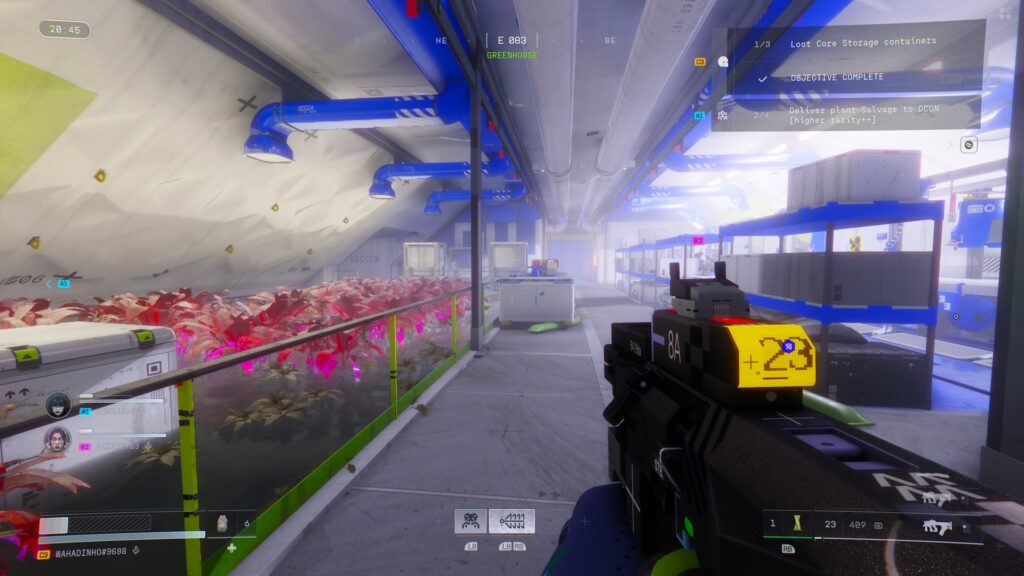
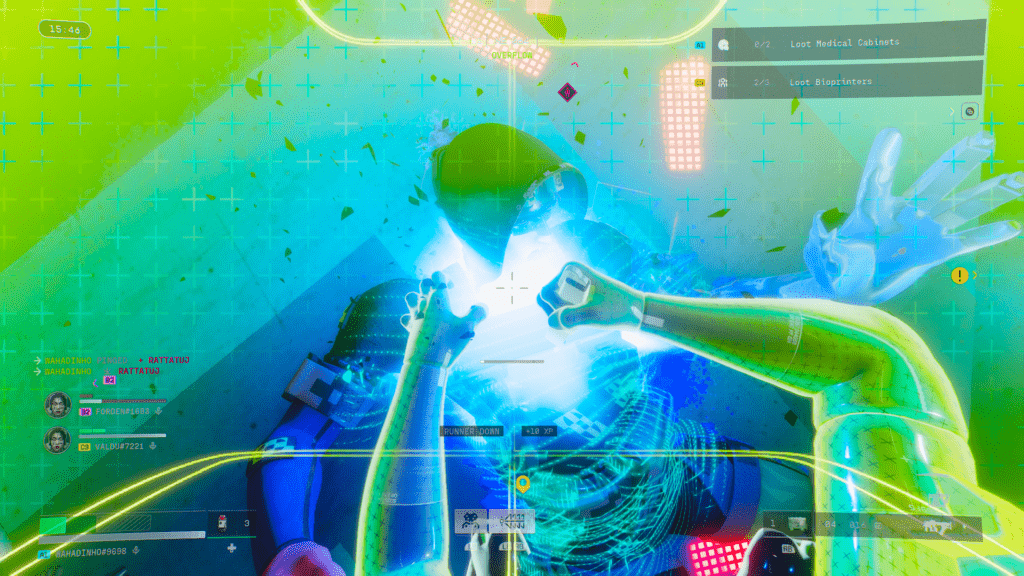
One thing that initially really bothered me about Marathon was its visual identity. When I first started playing, everything looked like a smeared graffiti canvas no matter where I turned. But over time, as I began to understand what the game actually is, what it offers, and what it’s truly about, I started noticing the beauty in everything Marathon delivers visually. The first thing that really caught my attention was that the entire architecture in Marathon is based on Nu-Brutalism (Neobrutalism). Unlike the Brutalism we’re more familiar with, rooted in monochrome tones, Nu-Brutalism embraces loud, vibrant, striking colors at every turn. So you have an architectural direction that feels somewhat familiar, combined with bold, modern color palettes that are very much “in” right now. Add to that all the other seemingly incompatible styles Bungie fused into one game, and you get a small visual masterpiece.
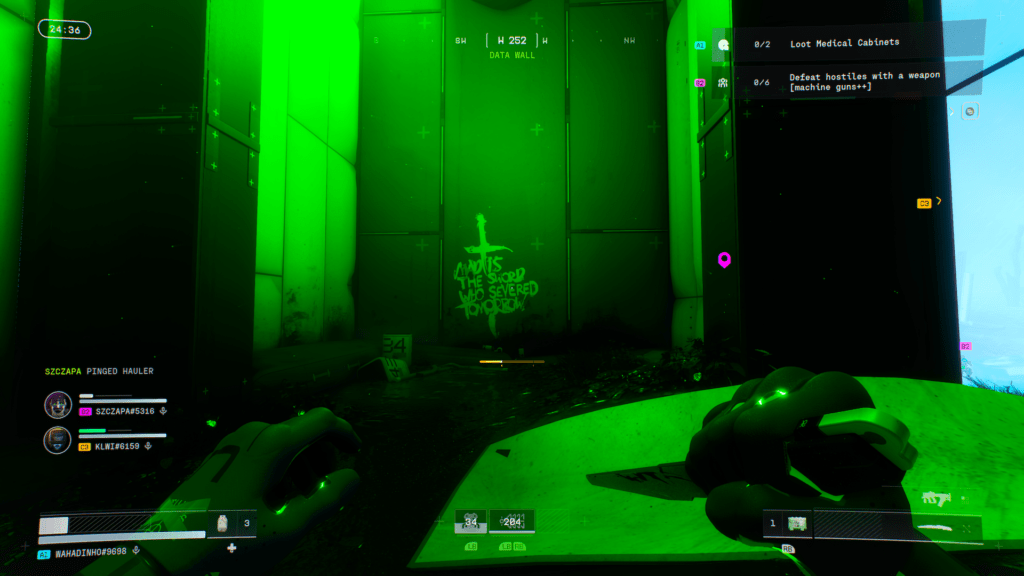
What fascinates me is how naturally it all comes together. After all, this is a colony that was home to countless people from different cultures (at least that’s what we can assume), and you can see that diversity reflected everywhere. The menus often feature completely different fonts, as do the loading screens, as if someone gathered every possible stylistic influence and blended them into one cohesive whole. And the best part is that, despite all those contrasting elements, the result feels defined and strong, leaving a powerful and lasting impression on the player. Performance-wise, the game runs smoothly on Xbox Series X, with excellent Dolby Vision support. At no point did I notice frame drops, even when absolute chaos was unfolding on screen.
Beyond style and visuals, sound design and music play a huge role in shaping the atmosphere. The sound is simply fantastic, because for a game like this, it has to be. Enemy footsteps are clear and directional; you can always tell where they’re coming from, whether they’re in the next room, above you, or below. They’re also distinct from other AI units, making them easy to recognize. The effects throughout the game are phenomenal as well. Combined with the dynamic weather system, they elevate the atmosphere to an entirely new level. Even when certain sounds become very loud, they never blend into a muddy mess with gunfire, footsteps, or looting sounds from other players. Everything remains crisp, readable, and separate, if I can put it that way.
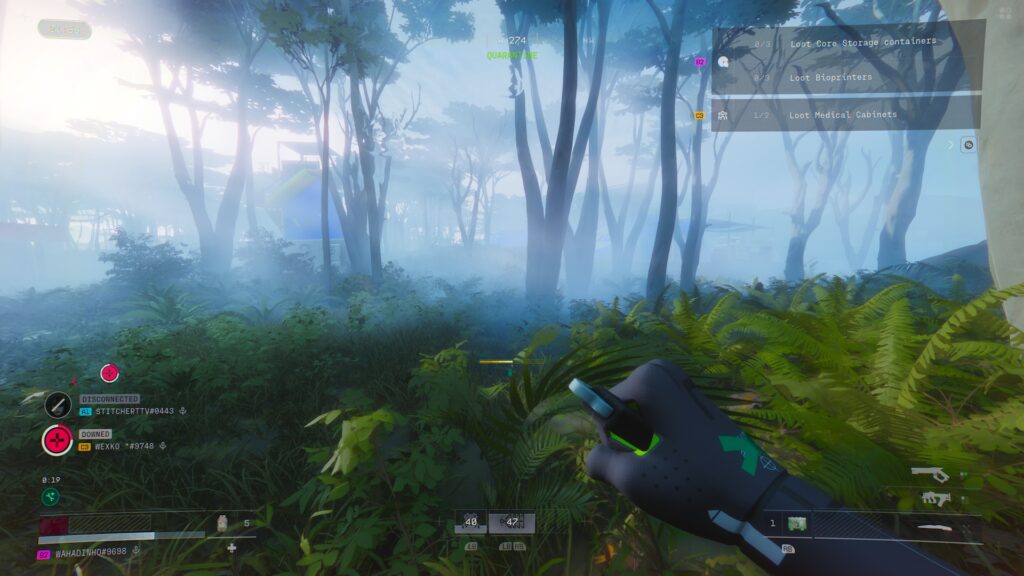
Marathon (Xbox Series X)
At the end of the da, and the weeks, Marathon is a game that feels unclear at first, both in terms of what it wants from the player and what it offers. Honestly, that’s not necessarily a strength. But with every passing hour, it slowly gets under your skin and begins to overshadow your desire to play anything else. It’s complex, and that’s a good thing. Brutally difficult and unforgiving toward all players, whether gaming is just a hobby for you or you’re fiercely competitive and striving to be the best. Yet I’ve rarely felt such a strong urge to keep playing something, to think about a game after a long exhausting day when I lie down to sleep, and to wake up with it still on my mind the next morning. No matter how many matches you lose, how many times someone tears you apart while your vital resources splatter across the map like paint on a canvas, you still want more, and more, and more, until you physically can’t keep going and promise yourself you’ll continue tomorrow. Marathon is a unique and brilliant title, no matter how overwhelming and complex it may feel at first. A game that values your attention, your skill, your effort, and the time you invest in it. Perhaps the best extraction shooter currently on the market, and one I sincerely hope will thrive for a long time to come.


