



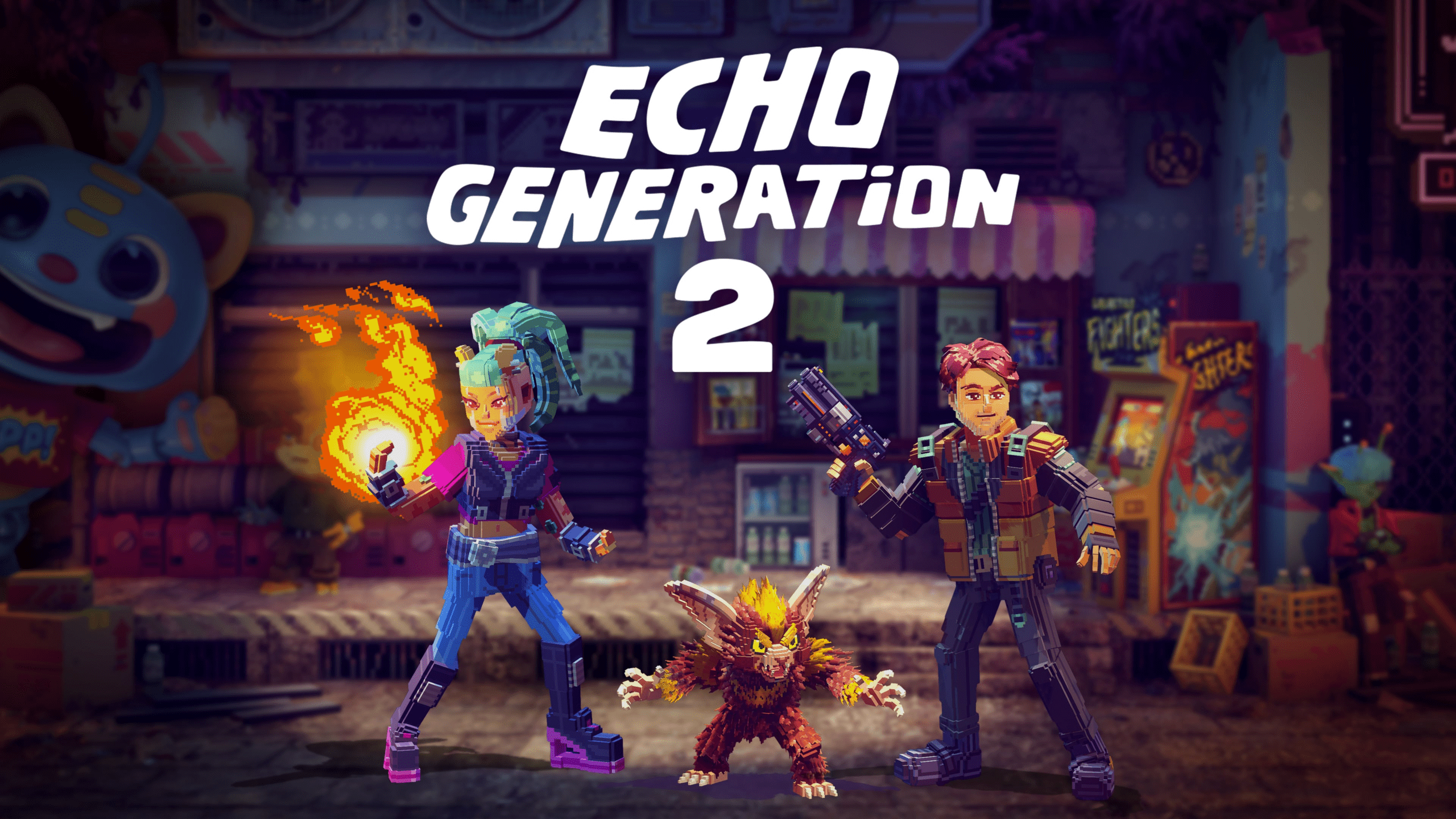


Cococucumber, the developer behind the first Echo Generation game, has finally released the second instalment of this sci-fi adventure series. Anyone who enjoyed the retro style of the original will definitely not be disappointed by the same retro charm returning here, only now in an even better version.

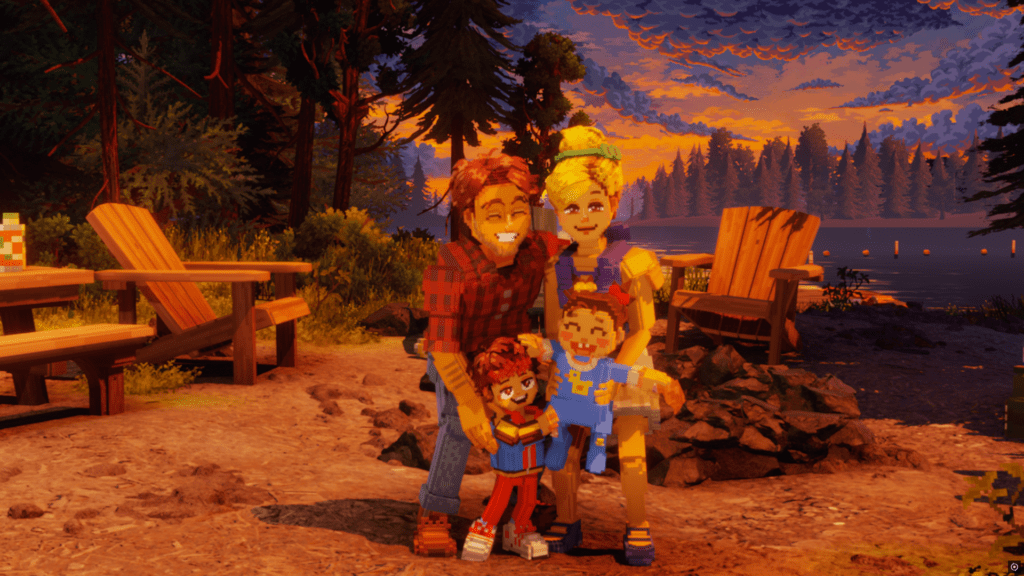
Echo Generation 2 is made up of several stories that ultimately form one larger whole. Without diving too deep into spoilers, the game revolves around the multiverse and a series of mysterious events that our main characters find themselves trapped in. Jack, the main protagonist, instead of enjoying a perfect sunset with his family, suddenly ends up in an alternate reality where, in order to protect his loved ones and survive, he must fight off hordes of zombies and uncover the mystery behind everything that happened in the first place. Then there is Marie, also known as Sister M, a young girl trapped inside some kind of laboratory, gifted with powers she barely understands herself, forced to battle soldiers while searching for her missing friends who disappeared without a trace. On the other side of the spectrum there is Annata Z, a zombie mother searching for her baby, with no memories and no sense of identity, wandering through a devastated wasteland. And then there’s a complete tonal shift with the cyberpunk city storyline following Noliva and Strix.
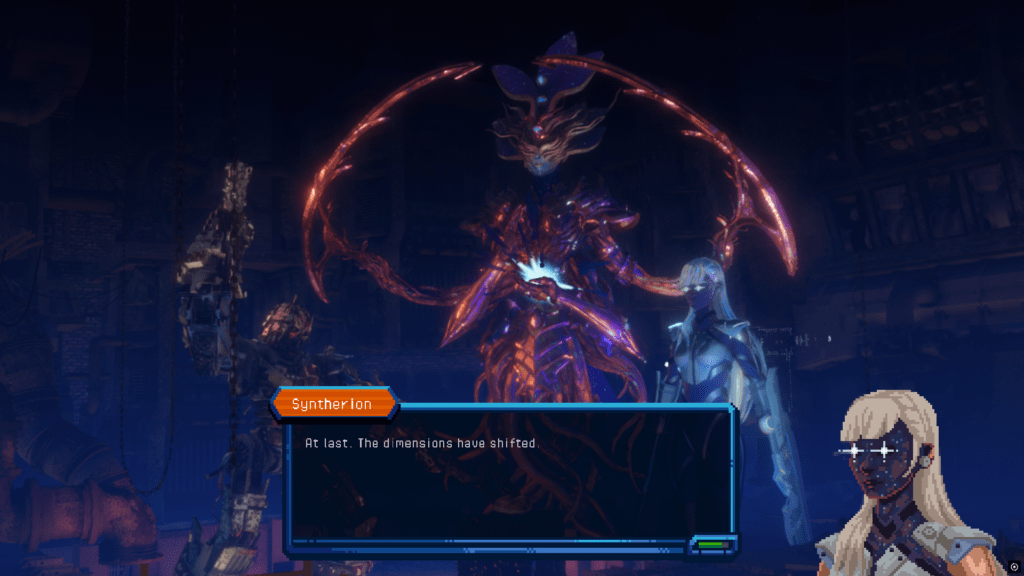
All of these stories, set across different timelines and dimensions, can honestly feel overwhelming at first while you’re trying to figure out how everything connects. How does any of this relate to each other? And on top of that, there are mysterious alien gods whose motives are only slowly revealed throughout the story. Everything is deeply intertwined and can sometimes be difficult to follow, but the longer you play, the more these seemingly disconnected narratives begin to make sense and form one cohesive whole. I also liked the fact that the game doesn’t try to immediately hand you every answer. Some things are intentionally left vague, encouraging you to piece everything together yourself through dialogue, environmental storytelling, and tiny details you could easily miss if you only focus on the main story. That constant feeling of mystery and questioning “what is actually happening here?” kept me engaged far longer than I expected.
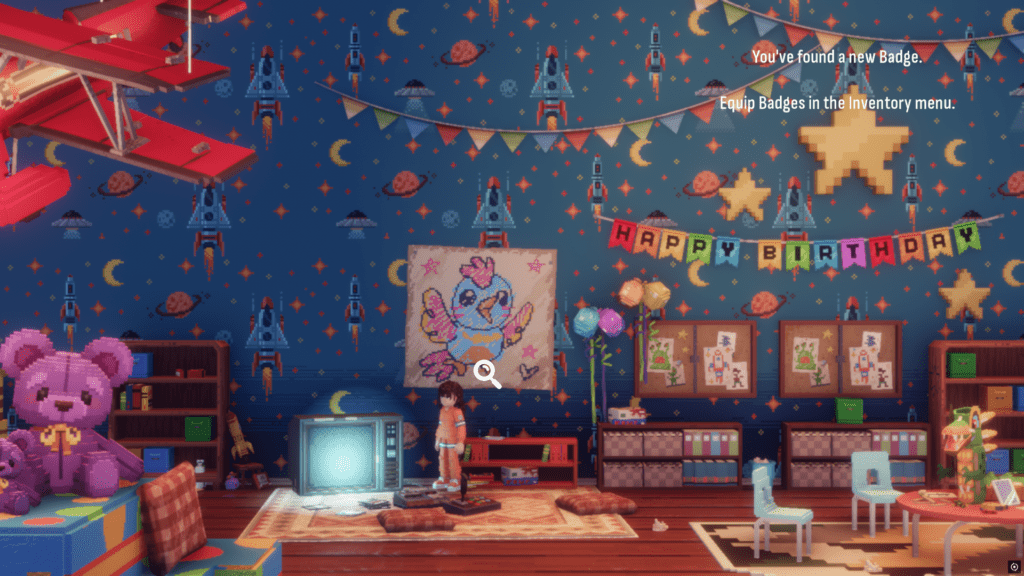
The world itself is absolutely fantastic and uses a creative 3D perspective combined with a pixel-art style. I personally haven’t played many games that mix those two approaches, so the combination felt really fresh and interesting. The colors are beautiful and fit perfectly with the retro aesthetic of the game. I would also highlight how every story, or rather every chapter, has its own distinct vibe, color palette, and soundtrack. There’s no map system, so in every chapter you’re left to navigate on your own, but since the environments themselves are not overly large and you never really have too many directions to go, exploration never becomes frustrating. In fact, I’d say it actually adds to the game’s charm because wandering around gives you opportunities to discover new items, badges, money, and additional bits of lore.
What I especially loved was how dramatically the visual identity changes from one chapter to another. One moment you’re wandering through desolate zombie-infested landscapes filled with ruined homes, and the next you suddenly find yourself in neon-soaked cyberpunk streets or sterile laboratories that look like they came straight out of an old-school sci-fi movie. The game does an excellent job of giving each dimension its own personality, so even though the core gameplay loop doesn’t drastically change, you constantly feel like you’re exploring something completely new.
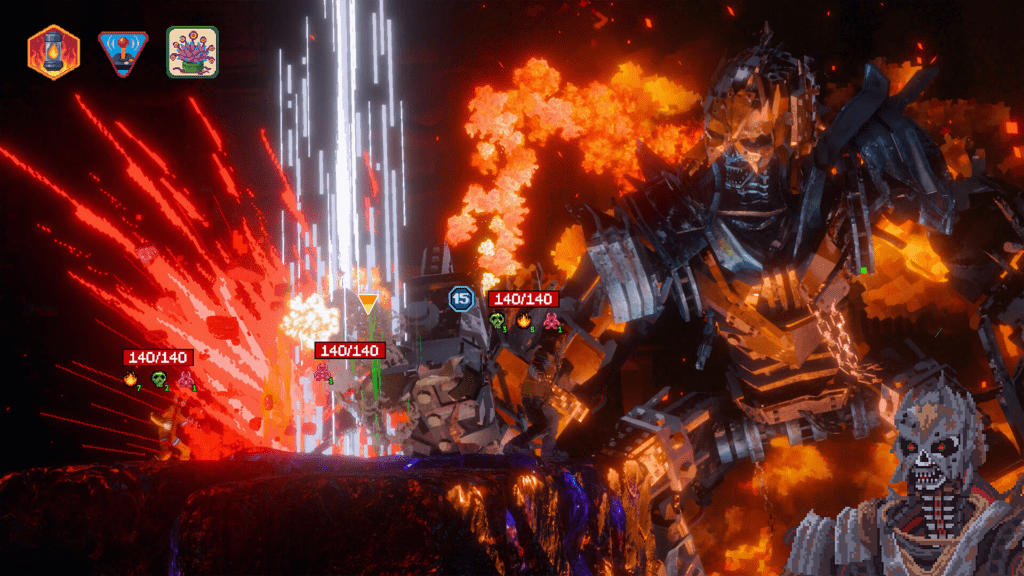
Still, I’d say the true star of the game is the deck-building system that serves as the foundation for the entire experience. Every character has its own unique cards and abilities. These cards range from basic melee attacks and ranged attacks to single-target or AOE abilities, debuffs, support cards like shields and healing, bonus attacks, and even cards with special effects such as poison, burn, and other status conditions. The cards are carefully designed to fit both the character and the chapter they belong to, and you can obtain them by finding them, buying them, or earning them after battles. At first, combat feels fairly easy, but as you progress, you quickly realise how important it is to carefully think about which cards you include in your deck and how you plan to use them.
I think it took me around ten attempts during the first truly “serious” battle before I finally figured out which card combinations worked best for that specific situation. Oh, and yes, I also completely forgot to spend my skill points in the skill tree section because, for some reason, I assumed the characters would just naturally improve on their own. So yeah, don’t forget the skill tree! It gives you extra HP, stronger shields, better damage, basically improvements across the board. And besides that, there are also badges, which I mentioned earlier. Those are important too because they provide additional bonuses, such as stronger attacks and other useful passive effects.
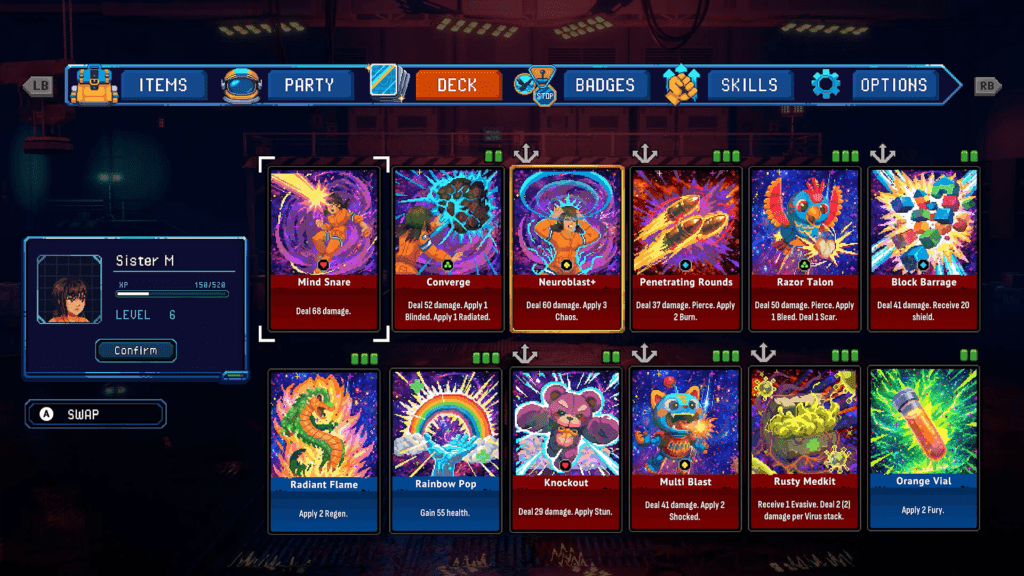
What I especially liked about the deck-building system is the way the game constantly pushes you to experiment. It’s very easy to make the mistake of stuffing your deck with cards that seem powerful on their own, but end up having absolutely no synergy together. It’s only when you begin combining buffs, debuffs, and cards that complement one another that combat truly starts to shine. Sometimes it’s far more important to carefully time your moves and save a specific card for the next wave of enemies instead of instantly throwing out the strongest attack you have.
As for the combat itself, it follows a classic turn-based structure. You have a limited number of opportunities to use the cards drawn from the deck you created, and your goal is to make the smartest possible use of them. Enemies attack after every completed turn, and right before their attack lands you get the chance to activate a defensive mechanic by pressing the F key, allowing you to soften the incoming damage. Trust me, even that won’t always save you, and you really have to think carefully about how you approach each encounter. Especially when fights don’t consist of just one enemy wave, but several of them. Or when you’re facing bosses with massive health pools and start wondering how beating them is even possible in the first place. Of course, it is always possible, but it requires a lot of strategy and trial and error.
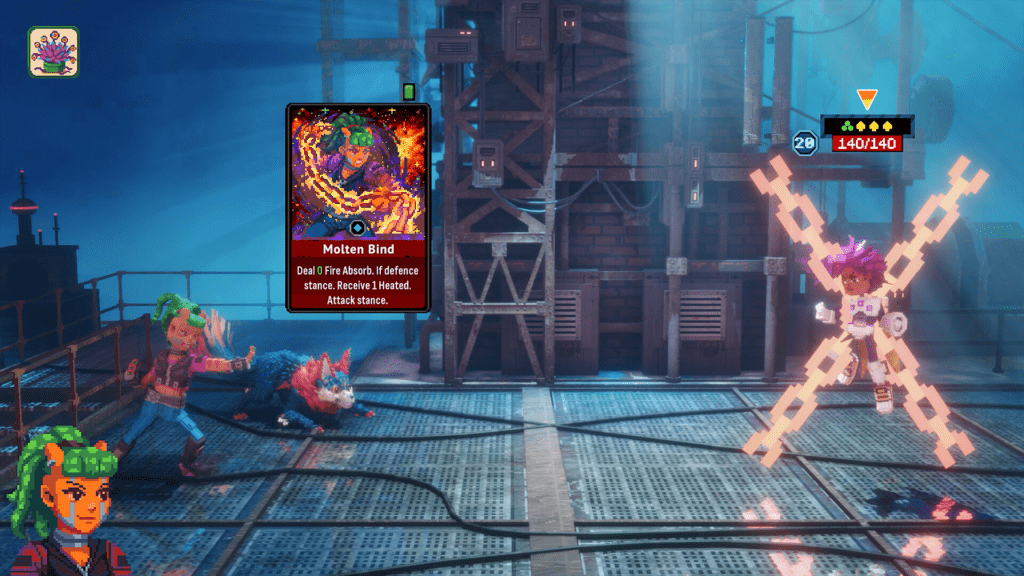
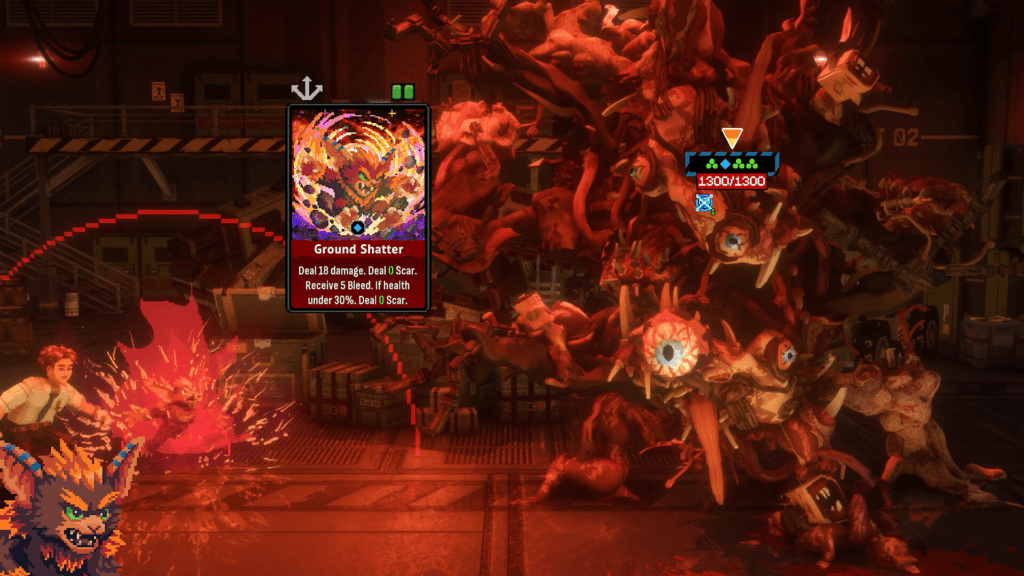
The boss fights were probably the most enjoyable part of the game for me precisely because they force you to completely change the way you think. It’s not enough to simply spam your strongest cards. You need to pay attention to attack patterns, manage your resources carefully, and sometimes even play far more defensively than you would normally want to. There were moments where I genuinely thought, “Okay, this is impossible,” only to eventually discover the right combination of cards after several attempts and finally win. That feeling of satisfaction when you overcome something that completely destroyed you ten times before is incredibly rewarding and very well executed here.
I think this kind of system is perfect for a game that doesn’t heavily focus on movement mechanics or flashy gameplay interactions. I was honestly worried that combat would end up repetitive and boring, but I was completely wrong. At times it even became genuinely frustrating, though never in a negative way, more in that exciting, addictive sense where you keep asking yourself: “How many turns would it take me to beat that enemy?” or “Should I use fewer cards next time?” or maybe “I should be more careful and stop accidentally burning myself alive while trying to destroy the enemy.”
Another important aspect of the game are the previously mentioned items. You can find them while exploring the world or receive them through progression. Most of them are used to unlock new areas or interact with certain objects. There are also small NPC conversations that help flesh out the story, as well as little lore dumps through environmental details, images, documents, and objects scattered throughout the game world. I really appreciated the fact that the game doesn’t overwhelm players with huge walls of text, but instead reveals most of its worldbuilding and history through subtle details. Sometimes it’s an abandoned apartment, a strange laboratory experiment, or just a short message left behind on a computer. These little moments may not be essential for understanding the main story, but they contribute massively to the atmosphere.
I also have to praise the soundtrack, which does an incredible job of supporting each chapter. The music can feel relaxing during exploration while also becoming appropriately tense during more difficult battles. This is especially noticeable in the cyberpunk sections, where the synth-heavy soundtrack combined with the neon atmosphere genuinely makes it feel like you’ve stepped into a completely different game. All of that further reinforces the idea that every dimension has its own identity and unique energy.
Overall, this second Echo Generation game feels like a very solid improvement over its predecessor. I believe fans of turn-based RPG adventures will be extremely satisfied with the combat system, the variety of characters, and the large number of playable cards available throughout the game. However, if having a massive open map is important to you in RPGs, or if you simply dislike turn-based combat systems, it’s probably best not to expect too much and to keep in mind that this type of game might simply not be for you.
We would like to thank Cococucumber for providing us with a copy of the game for review purposes.
Echo Generation 2 (PC)
That said, I do think you need at least a small amount of love for this kind of game in order to truly enjoy it. What ended up being exciting for me certainly won’t be everyone’s cup of tea. Still, I absolutely believe it’s worth giving it a chance because you never know, this might end up being the very game that serves as your gateway into this genre, especially when you consider the game’s visual design, intriguing narrative, and vibrant special effects filled with bright colors. And if you already loved the first Echo Generation, the sequel feels like a natural evolution of everything the original was trying to achieve, only now with far more confidence, more content, and much more interesting gameplay systems.


