



At the recent Steam Next Fest, the company ZA/UM finally released a demo for its upcoming game, Zero Parades: For Dead Spies, the long-awaited successor to the cult classic Disco Elysium. Considering everything that has happened in the company’s history, and the way the original creators of the game were treated, there will always remain a bitter feeling in the air about what a true sequel to Disco Elysium might have looked like with the original team leading the project.
Because of that, I approached this demo with an open mind. Zero Parades is being developed by the team consisting of initial game devs, and Final Cut ones, with some newcomers. They are working on the same goal of creating an entirely new setting and cast of characters. This new world carries scattered traces of the original game’s DNA, but it also introduces a few surprises that were not present in the initial title.
The game opens with a quote from the conceptual artist Jenny Holzer: “The beginning of the war will be secret” Holzer became famous for using text as her primary artistic medium and for exploring ways to present her work outside traditional galleries, where art is often confined and accessible only to visitors. She realized that those same words could appear on posters, billboards, and LED displays, reaching any passerby and turning them into participants in her ruminations. The quote clearly foreshadows the themes explored in Zero Parades: politics, the corrupting side of power, the nature of warfare and information manipulation, as well as deeper questions about human nature.

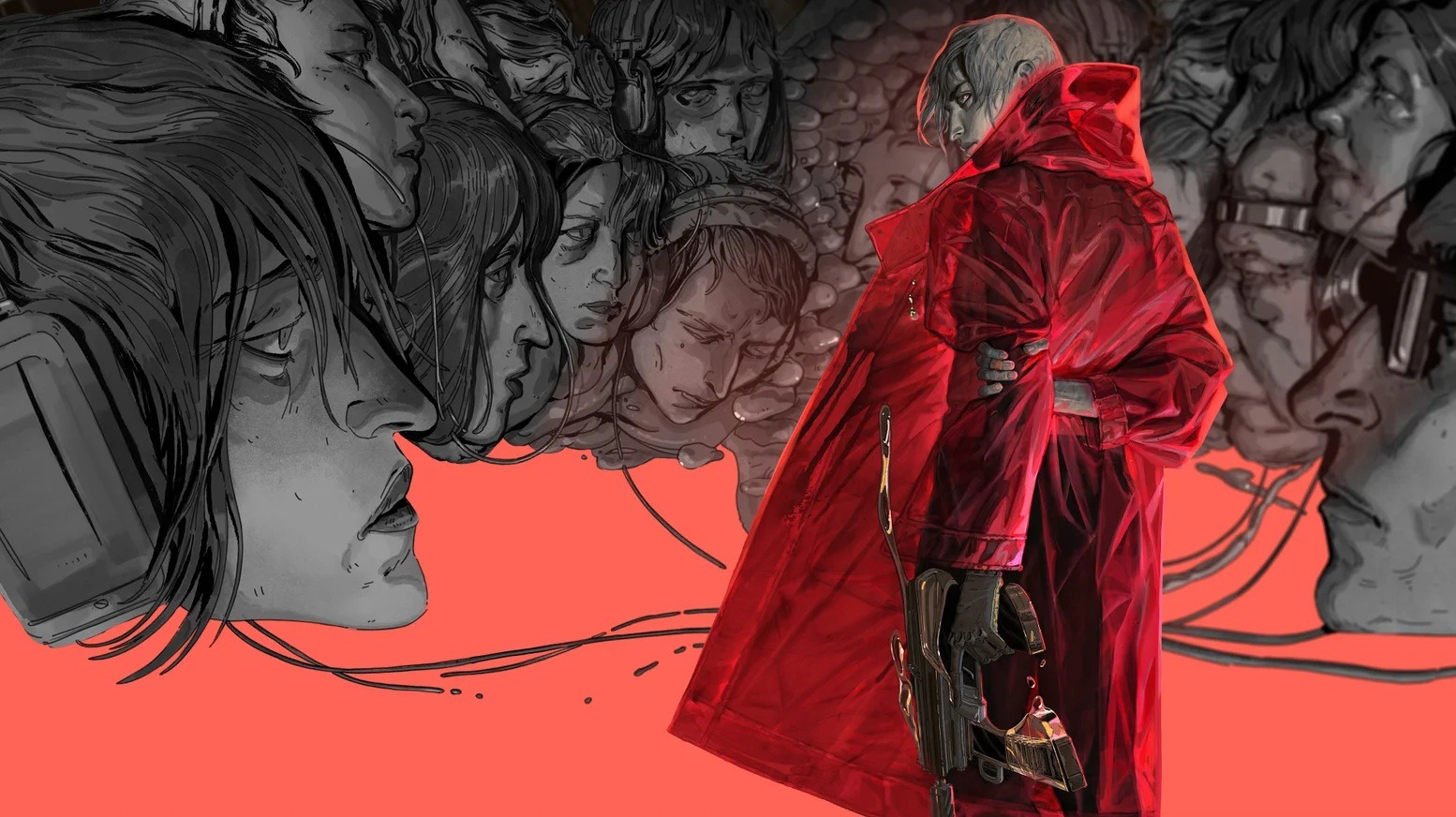
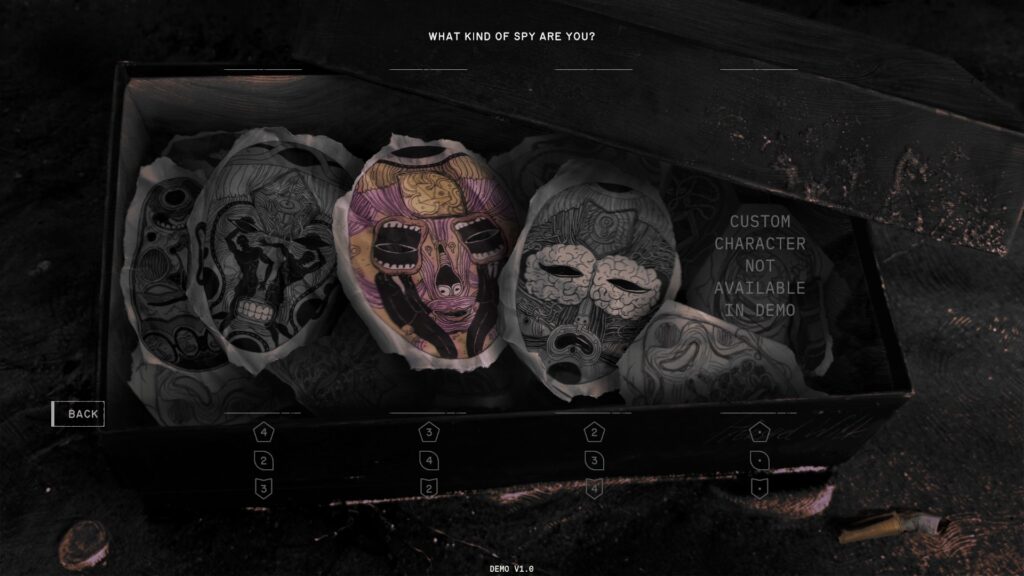
The game begins in a way similar to Disco Elysium, but this time, instead of a hero suffering from amnesia, we play as the heroine Herschel Wilk, codenamed Cascade, a spy. At the very start of the game, we are presented with a menu that allows us to choose between three different versions of the character, each with its own set of statistics and skills that heavily influence the abilities she will possess.
The menu itself has not changed much compared to Disco Elysium. From the illustrations that accompany each character archetype, it is fairly clear what kind of spy you are choosing to play. The interface has undergone some minor adjustments, and the skills now feature completely redesigned icons along with rather brief descriptions. However, after playing through the demo a few times, I quickly noticed similarities with the systems from ZA/UM’s first game. Unfortunately, the demo did not include the option to build a completely custom character from scratch, which suggests that the developers may still be refining that feature.
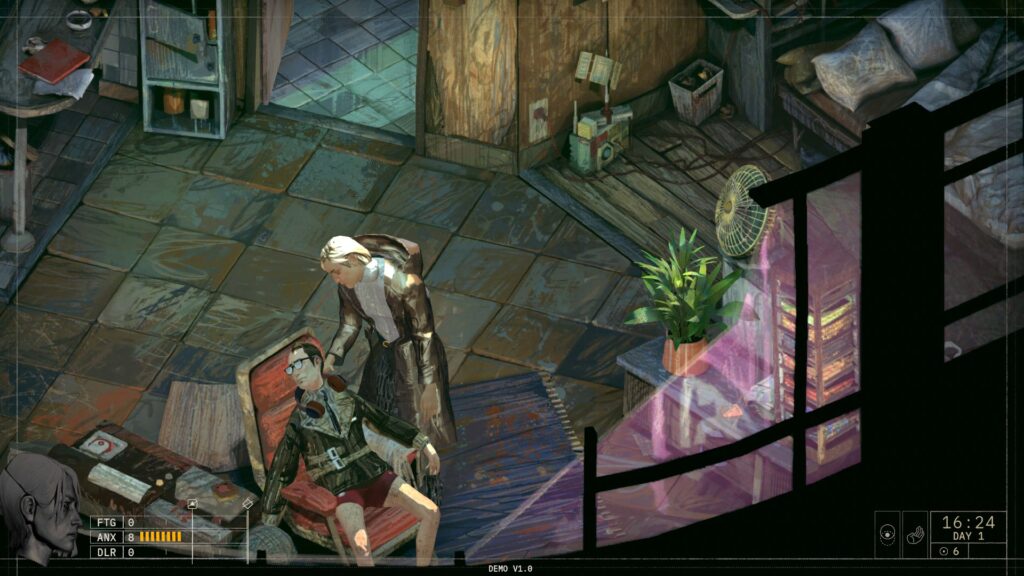
Herschel finds herself in a room where she discovers her colleague, Pseudopod, completely unresponsive, though still alive. Something has thrown him into a catatonic state, derailing the progress of their shared mission. From the very first moment, Herschel starts making rather forced jokes about the situation, although as the player you can choose to portray her in several different ways. What follows is essentially a race against time: to figure out what actually happened to Pseudopod, understand the true nature of their assignment, and learn how to navigate the unfamiliar territory she has suddenly found herself in.
Unlike Disco Elysium, where you are accompanied by one of the best-written partners in video games, Kim Kitsuragi, who acts as a moral counterbalance and helps the protagonist, Harry Du Bois, to find his own voice and yours as the player in his shoes. In Zero Parades: For Dead Spies you begin entirely on your own. You must navigate the fractured mind of Herschel, who carries the heavy burden of the mission as well as the many demons from her not-so-distant past.
Our heroine does have an internal voice, but it gives her mind a somewhat nagging and abrasive tone that I’m not entirely sure grew on me. I sincerely hope this aspect will be refined in the final version of the game. A similar principle to the one used in Disco Elysium is present here as well: depending on the skills and the version of the spy you selected, much of the sabotage will come from Herschel’s own mind. If you choose to follow its advice, it will be interesting to see, beyond the demo, whether this mechanic will later play a larger role in branching the story and shaping the choices you make, as well as how it will affect your interactions with the various inhabitants you encounter.
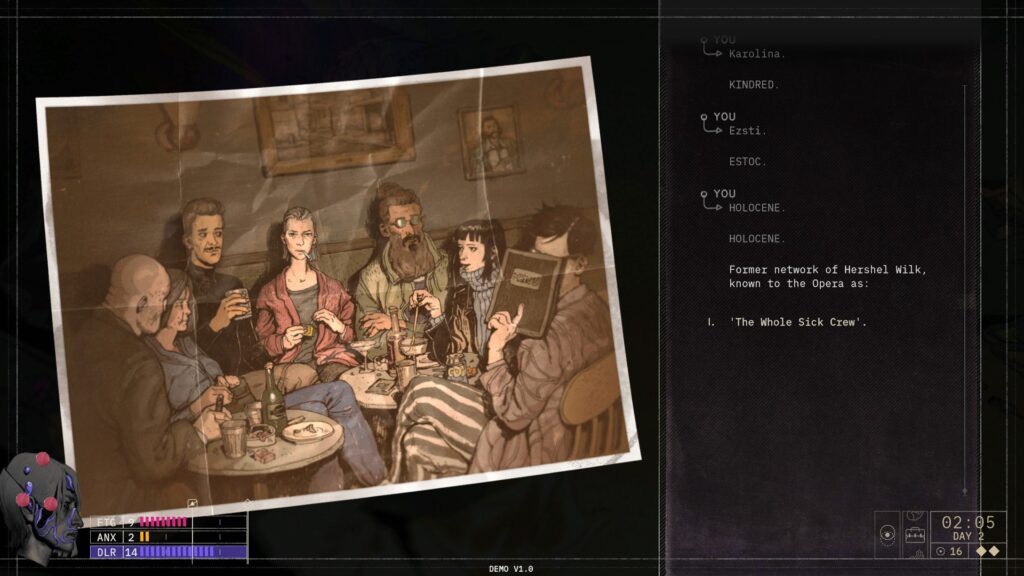
If, in the role of Harry, we began from a place of total mystery & gradually uncovering his character layer by layer, like peeling a banana to reach its core. The writing team at ZA/UM has taken a different approach with Herschel Wilk. From the very beginning, they hint at her background and personality. Unfortunately, it lacks the same depth. We learn that she comes from a bourgeois background but later converted to communism and joined the Operant Bureau. She once led a team known as “The Whole Sick Crew,” which ultimately ended in disaster. Because of that failure, Herschel received a reprimand from the Operant Burerau, and has since been relegated to handling trivial cases until she manages to redeem herself.
That premise alone sounds promising, but what exactly is this new world we find ourselves in? If you’ve ever read the novels of the postmodern American writer Thomas Pynchon, which are full of characters caught in strange quests and stumbling into bizarre situations along the way, or watched the legendary dystopian science-fiction film Brazil by Terry Gilliam, you’ll quickly sense a similar tone here. Absurdist humor and unconventional ideas shape the world-building through surreal and often trippy themes. That is perhaps the most promising aspect: once the writers warm up and step out from the shadow of the previous game, there are clear hints of ingenuity that could deliver a title with real potential, one capable of holding players’ attention above all else.
I must admit, however, that the dialogue didn’t strike me as particularly strong or memorable. Some moments feel structurally very similar to those in Disco Elysium. That isn’t necessarily a bad thing, after all, they were the first to do it that way, so small homages can be tolerated. What worries me more is the possibility that too much might be copied one-to-one. Still, I’m keeping my fingers crossed that this won’t be the case in the finished version of the game.
I got the impression that in moments when you have to roll the dice in dialogue, where you increase your chances by gathering information about the world and its characters. The game leaves very little room for a second attempt. Unlike Disco Elysium, which often allowed you to return to a check later or find an alternative path after failing, failure here feels more final: case closed, end of the road.
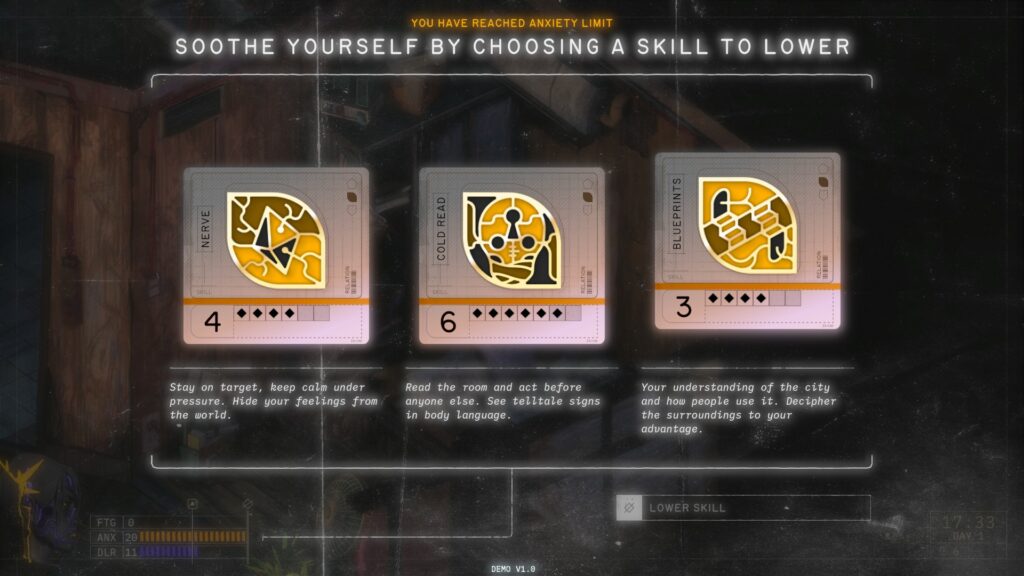
One new mechanic that actually excited me the most is that the heroine now has separate statistics for anxiety, fatigue, and delirium. When one of these meters reaches its maximum, it is supposed to significantly affect the character’s behavior. For example, when Herschel becomes exhausted, she starts breathing more heavily while moving across the map, a very nice and subtle detail. The problem, however, is that these conditions hardly seem to affect communication with other characters. If they were more deeply integrated into dialogue and decision-making, they could introduce entirely new situations and refresh the gameplay, even influencing how other characters perceive you depending on your current emotional and physical state.
An additional twist is that whenever one of these meters fills up completely, Herschel receives a penalty. She must choose between three skills tied to anxiety, fatigue, and delirium, and in order to recover from that state she has to sacrifice one skill point. I’ll admit this is the mechanic I’m most excited about, since failure was a big part of the narrative in Disco Elysium. And now, especially since the story revolves around spies, it has the potential to create genuinely difficult choices for the player. Imagine conducting an operation where you must avoid conflict, but because of these weaknesses you might end up compromising your partners, or getting yourself killed or exposed. It opens up many possibilities that I would love to see explored more fully in the complete game.
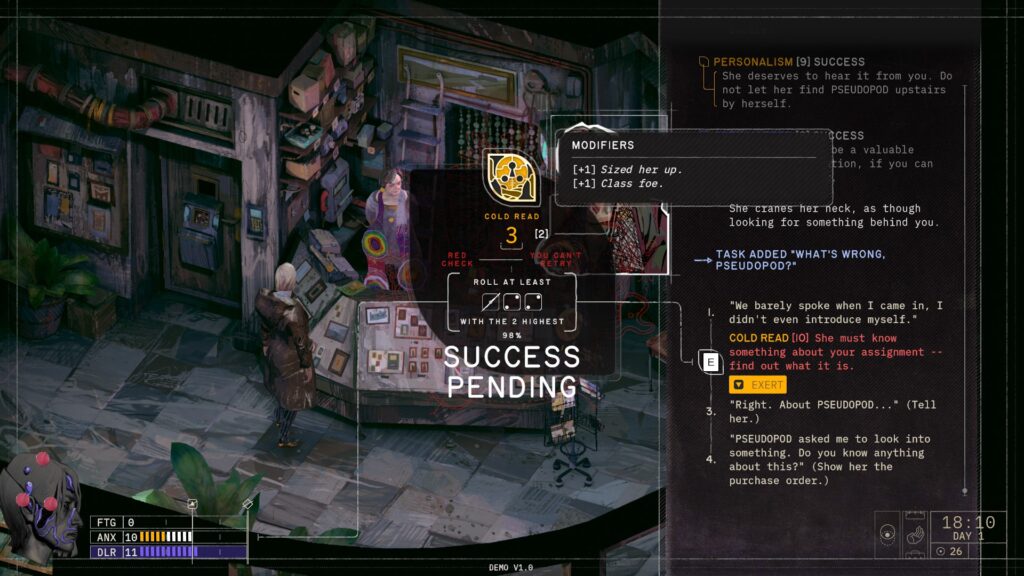
I have to admit that in the demo, only a few characters truly caught my interest, because it was clear that effort had been made to make them as authentic as possible in their conversations, conveying their ideologies and the world they inhabit. Pietro, the fascist disc collector, is a great example of how the game can & needs to shine, in order to hold our attention. It was fascinating to see his reactions to different versions of Herschel and how their verbal exchanges played out.
There are also plenty of strange characters scattered across the small map. For example, a group of elderly former pilots addicted to a sex hotline, or kids who swallow the propagandistic pop culture of an occupying force trying to indoctrinate them. These are all ideas that hint at great potential and could take the story in truly unexpected directions.
However, the way the dialogues play out often lacks energy and ingenuity; something feels missing. Some lines even come across as recycled, and the humor doesn’t always land, especially when discussing important topics about life in the fictional town or other serious themes the game addresses.
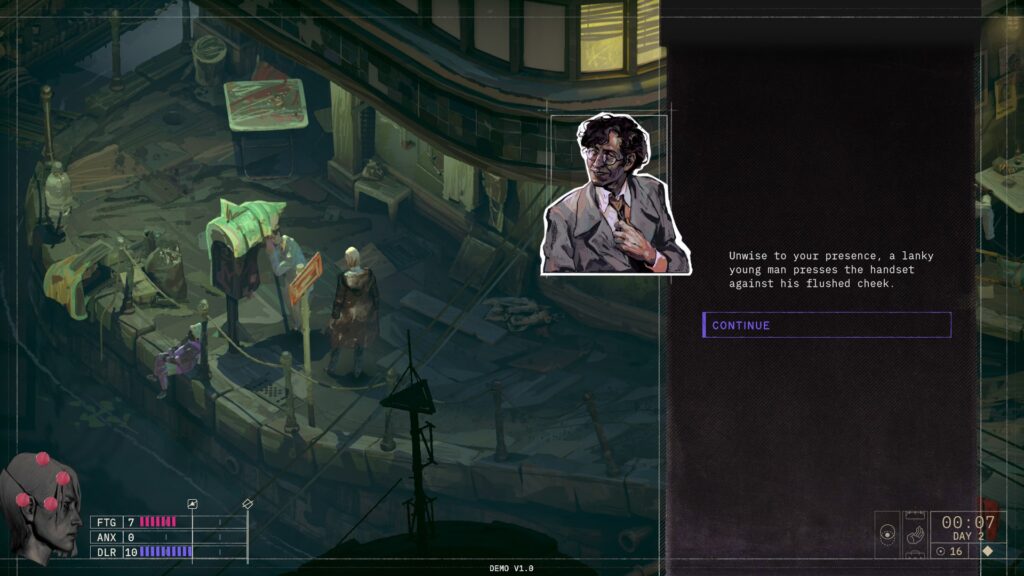
Another major drawback was that not all voice acting was of high quality. I’m confident this will be fixed in the final version of the game. A few bugs also occurred, though they didn’t affect gameplay. For example, when I walked past workers on the docks, the model would freeze and then move in a zigzag pattern up and down in various directions. A similar situation happened with one of the characters you talk to: they were sitting the whole time, but after triggering a line of dialogue, they stood up, spread their arms, and remained in that pose even after the conversation ended.
The map itself is small and divided into several districts. You’ll notice various cultures blending in this compact setting, and everything is in complete disarray—reflecting the state of our real world. The game is rich in detail both outdoors and indoors, touching on propaganda and local customs. It’s clear that this is a world where nothing works, individuality and national uniqueness are suppressed, and capitalism has triumphed, subjugating all residents and leaving them powerless.
What’s also missing is the music. Only at the very end of the demo did I catch a specific jazz track, which fits the spy-themed genre very well. Overall, though, the soundtrack feels bare, lacking that layer that would enhance the emotional atmosphere. As for sound effects, they were adequate, but I can’t say I heard or felt anything that stood out as exceptional.
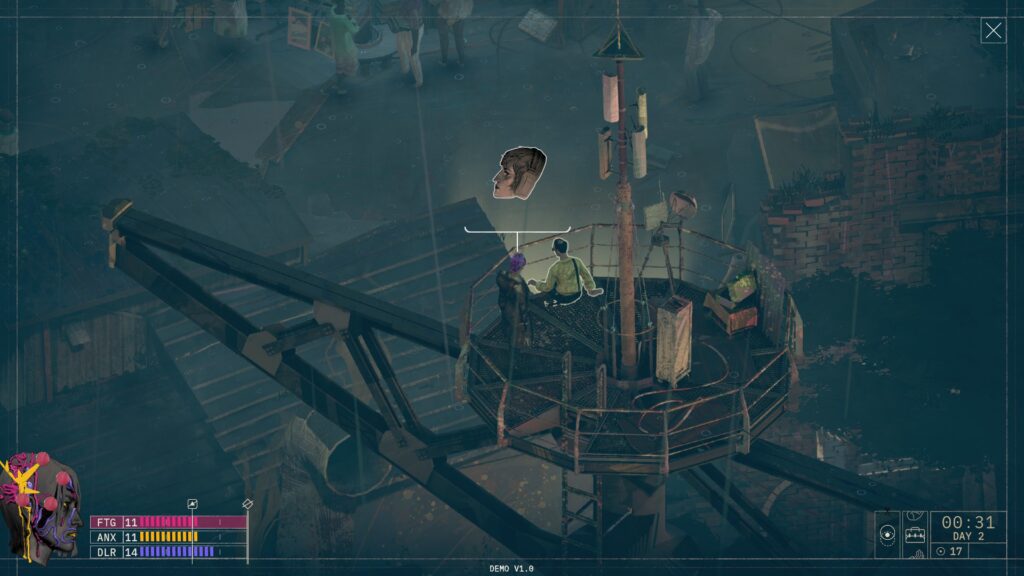
At the end of the demo, there’s a moment reminiscent of a “boss” moment, where you can put your spy skills to use. You can choose to sneak, scout to assess your opponent, face them head-on if you feel physically capable and skilled, or simply try to take a run for your life. But be aware that anything can happen during these attempts.
Although I have some criticisms, I wouldn’t write off the game prematurely. Disco Elysium casts a massive shadow that’s hard to surpass. The ZA/UM team will need to bring all their resources, creativity, and ideas to craft a game that can appeal both to longtime fans and to an entirely new audience, offering a fresh and unique experience.