



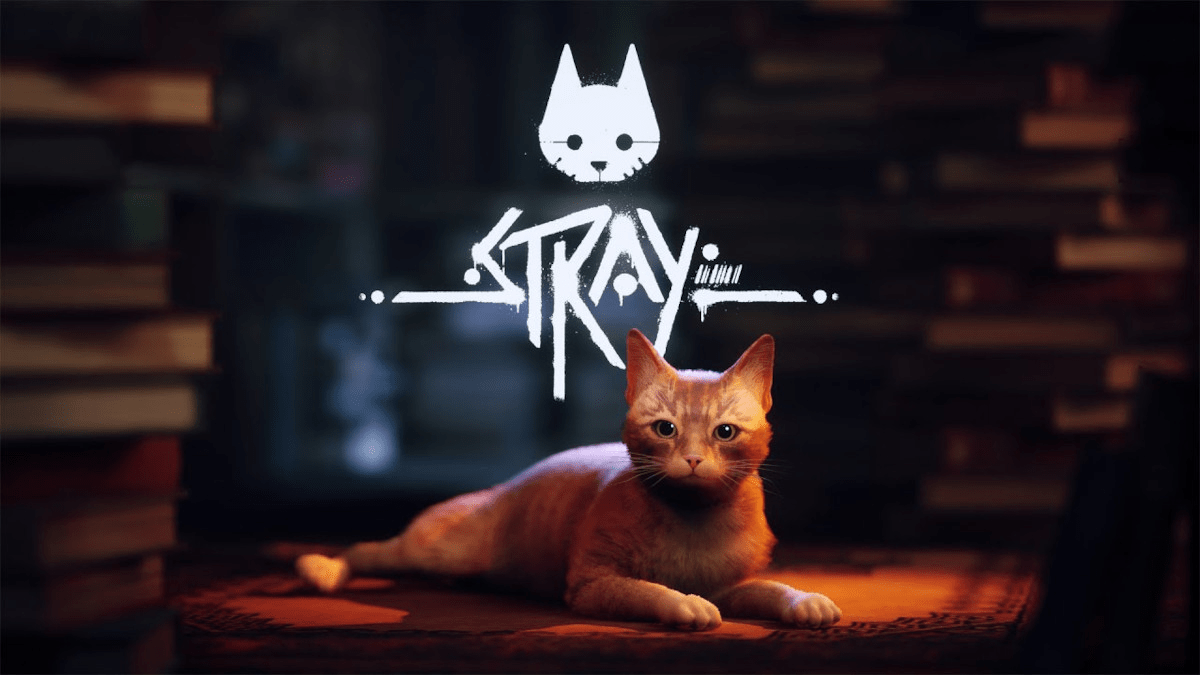


Would you ever think that a game putting you in the role of a cat could leave such a powerful impression on its players through its story and atmosphere?
Summer 2022. By some chance, I heard from some friends that a game where you play as a stray cat would be available Day One through Playstation Plus. Without particularly high expectations, but as a cat lover, I started playing it that very evening. Little did I know that it would soon become one of the most memorable games of that year.

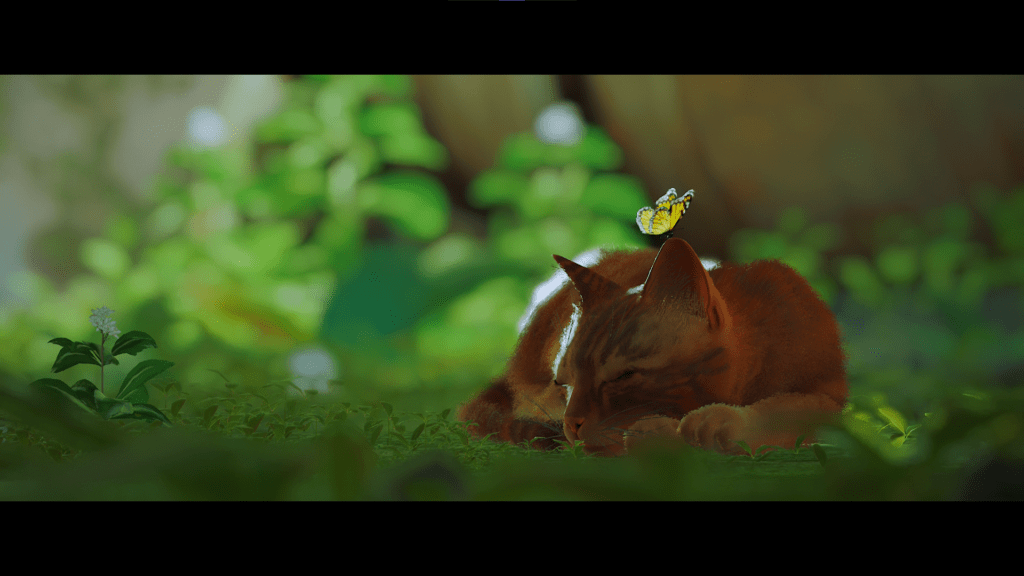
This year, on May 28, Stray was released for Nintendo Switch 2, and it felt like the perfect opportunity to look back at just how wonderful this game truly is. However, let’s start from the beginning so we could remind some players that Stray is absolutely worth revisiting and to inspire others to finally give it a chance.
This is a unique adventure in which the protagonist is neither a human nor a robot, but a cat. Right from the start, we meet our four legged hero as he spends time with his feline companions. Together, they explore abandoned passageways and search for food, skillfully navigating sewer pipes and crumbling structures left behind by a long lost civilization. The entire environment radiates a sense of abandonment. It feels like a place humanity left behind long ago, surrendering it to time and nature.
Every corner tells the story of how nature has slowly but surely reclaimed what once belonged to her. During one of these searches for food, a pipe collapses, and despite a desperate attempt to climb back up, your cat falls into an unknown place while the rest of the group watches helplessly from above. After some time, the cat miraculously survives and, though injured, continues onward through a recently opened doorway leading deeper into what appears to be an enormous underground city. The path eventually takes you to a strange city shrouded in darkness, quiet, lonely, and unsettling. As you wander its streets, you quickly realize something is wrong. Neon signs occasionally flash the word ,,HELP”, you come across the severed body of a robot that completely shuts down when approached and strange alien creatures scurry away whenever you get too close. Before long, however, you discover that these creatures are anything but harmless.
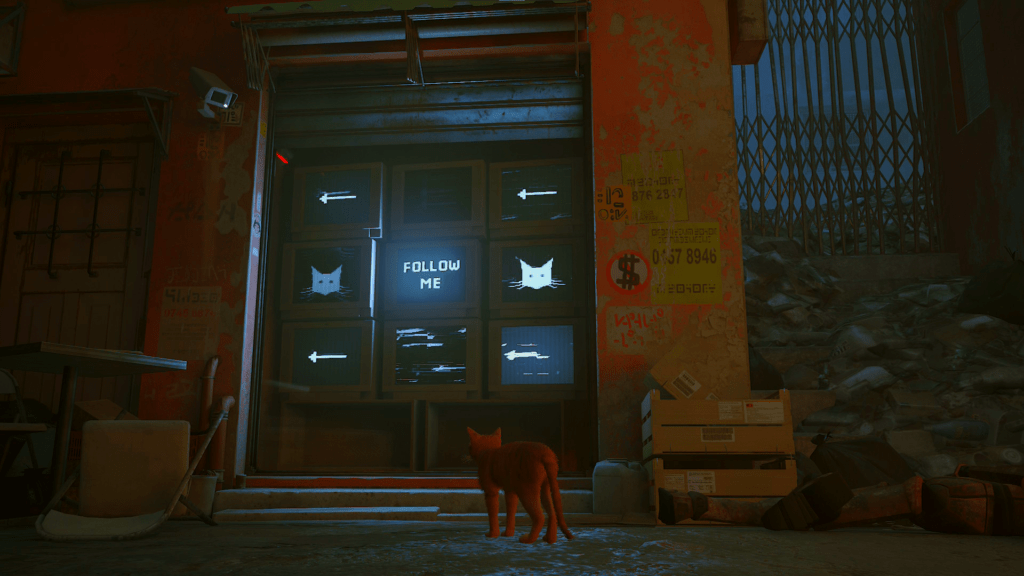
They begin chasing you relentlessly, forcing you to leap through a window into an apartment. Inside, several television screens display the words ,,Follow Me”, accompanied by arrows pointing the way forward. With no other choice, you climb across balconies and rooftops until you reach a room where a new friend awaits. A computer suddenly powers up and informs you that someone needs help. Since you are a cat, there is little you can do besides walk across the keyboard, sending a series of meaningless inputs instead of a coherent response. Fortunately, as the player controlling the cat, you can follow the instructions displayed on screen and doing so eventually leads you to a hidden laboratory where you meet your little robot companion, B12. B12 desperately tries to communicate with you, and although, as a cat, you cannot truly understand what he is saying, a bond forms between the two of you nonetheless, so together, you embark on a journey to save this Cyberpunk world while also searching for a way back to the surface.
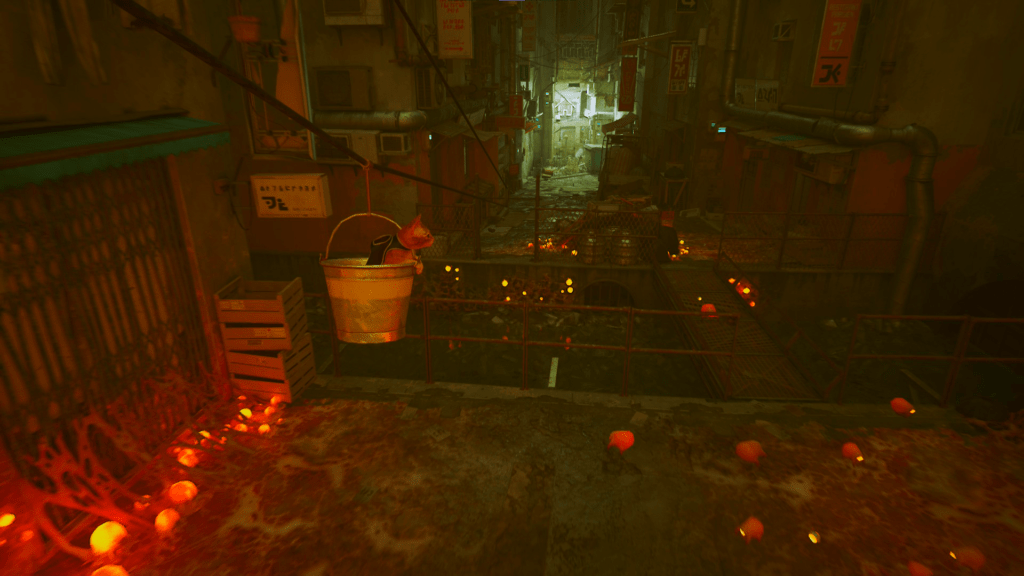
The gameplay is quite distinctive. You can leap to surprisingly high places, but you can also meow whenever you like, sometimes attracting the attention of nearby robots.
Also, the game relies heavily on environmental puzzles and stealth mechanics. Early on, your objective often involves finding specific items scattered throughout the city. To do so, you must carefully choose your jumps, follow conversations between robots that B12 translates for you, track neon signs leading to the apartments of important NPCs and discover codes hidden throughout the environment, etc. Whenever you find an item, B12 stores it for you, allowing you to later hand it over to various robots in exchange for useful information or clues about where to go next. B12 also assists by hacking computers, opening gates, and entering codes to unlock doors or safes.
Later in the game, you acquire a weapon capable of temporarily eliminating the small but incredibly dangerous alien creatures known as Zurks. This device functions similarly to a UV light, instantly destroying them on contact, although it requires time to recharge after use. In addition to this, the game features several exciting chase sequences where you must outrun enemies or quickly press a button if one of them manages to jump onto you. Sometime later stealth takes center stage. You’ll need to carefully sneak past deadly security robots while avoiding their searchlights. If they spot you and you fail to find a cardboard box to jump and hide in, they will shoot at you. Beyond all of that, Stray also embraces the simple joys of being a cat since you can knock objects off shelves and tables, scratch carpets and doors, or simply curl up somewhere cozy and take a nap.
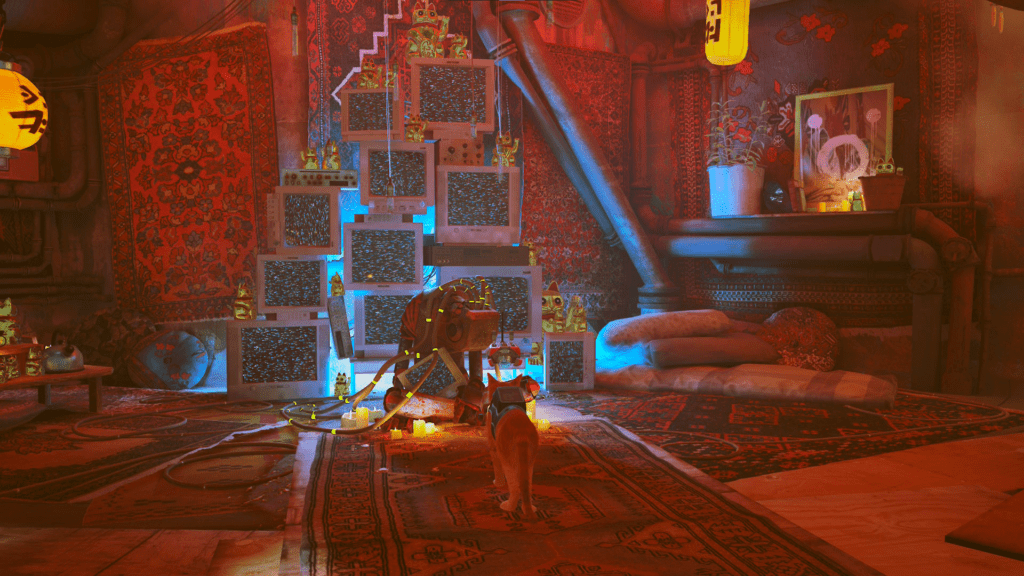
What truly elevates this game beyond its story and is absolutely fantastic is its atmosphere, which masterfully combines cyberpunk aesthetics with a postapocalyptic setting, all while incorporating an unexpected abundance of nature. One of its most striking features is the lighting, where neon advertisements cast a warm glow across an otherwise cold and abandoned world. The city is packed with details, and every corner tells a story about a civilization that disappeared long ago. This storytelling extends to the robots that inhabit the city, each of whom has adopted distinctly human characteristics. Another aspect that sets Stray apart is its feline perspective. Viewing the world through the eyes of a cat transforms familiar urban spaces into vast and fascinating environments.
Pipes, rooftops, and narrow passageways become natural paths for exploration, while every frame emphasises a sense of curiosity and freedom. The result is a breathtaking blend of cyberpunk aesthetics, postapocalyptic atmosphere and natural beauty. Stray is not merely a game you play, it is a world you enjoy observing. There is a common sense of melancholy throughout the experience, but it is never unpleasant, on the contrary, whenever you climb to a high vantage point overlooking the city, that feeling of solitude, combined with the warm lighting and soothing music, feels almost like a comforting embrace. The game features no voice acting (aside from the occasional meowing from our protagonist) meaning that even during its most intense moments, it never becomes overwhelmingly loud. Its soundtrack perfectly complements both the atmosphere and themes of the game, creating a calm yet emotionally resonant experience.
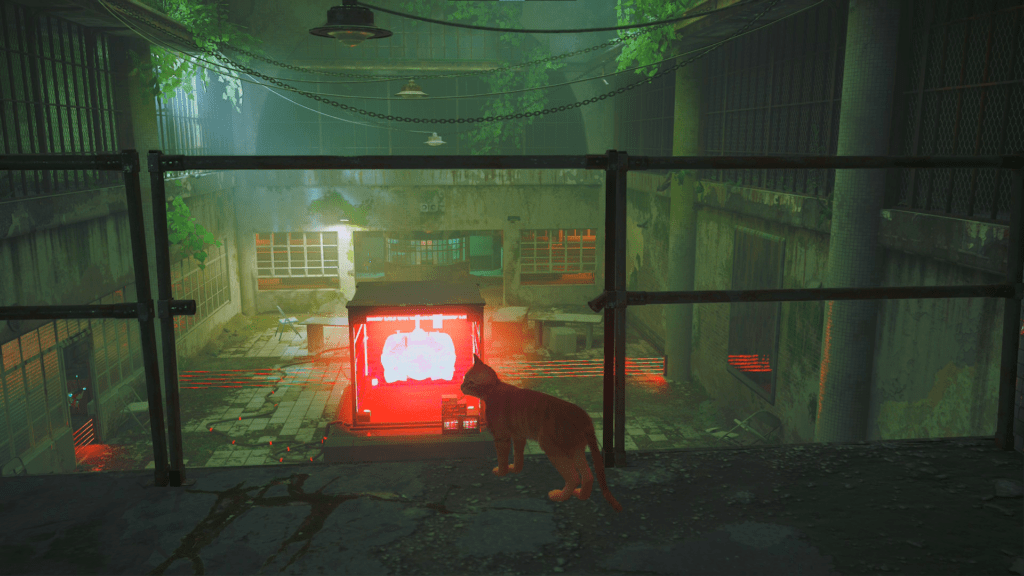
Another reason Stray stands out is that, despite its relatively short runtime, the developers managed to create an incredibly touching story centered on a cat and its robot companion while also building a surprisingly rich lore. We are accustomed to seeing robots portrayed as threats in games, yet the robots in Stray feel remarkably human. Interestingly, at the beginning of the game, they display many human traits and emotions. However, the closer you get to the surface, the more those traits begin to disappear. The robots gradually become what they truly are, soulless, imperfect beings created by equally imperfect creators. The game’s world building is equally impressive. Players who pay close attention to their surroundings will uncover countless details hidden within graffiti, robot names, environmental storytelling, and the behaviors of the city’s inhabitants.
Now for the question many of you are probably most interested in, which is how does Stray perform on Nintendo Switch 2. First and foremost, the game targets a stable and locked 30 frames per second. This is not an issue at all, as Stray does not require lightning fast reflexes or split second reactions, meaning the lower frame rate has little impact on the overall experience. The draw distance is impressive, and background elements retain a high level of detail while remaining sharp and clear. The game world looks excellent on Nintendo Switch 2, with environmental details remaining visible even from a distance. That said, vegetation and the cat’s fur can occasionally appear somewhat rough. However, if this is your first time playing Stray, chances are you will hardly notice these minor shortcomings.
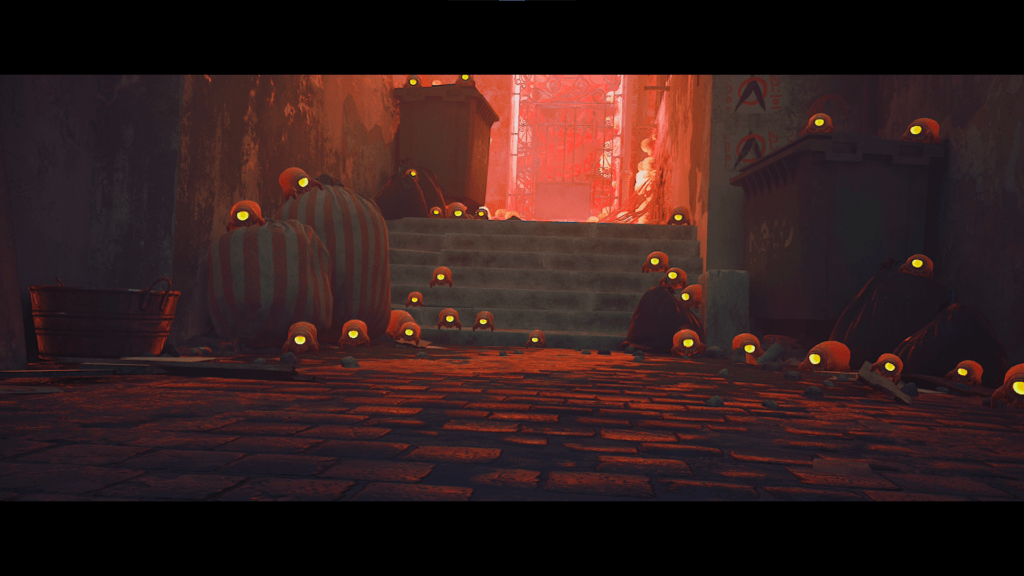
For players who already own Stray on Nintendo Switch, the Nintendo Switch 2 version offers a free upgrade while also providing a noticeable improvement in overall presentation. If you have missed Stray on other platforms until now, the Nintendo Switch 2 release is an excellent opportunity to finally experience this unique adventure.
I will never forget The Game Awards 2022. A small indie game found itself standing alongside giants such as Horizon Forbidden West, Xenoblade Chronicles 3, A Plague Tale: Requiem, God of War Ragnarok, and ultimately Elden Ring.
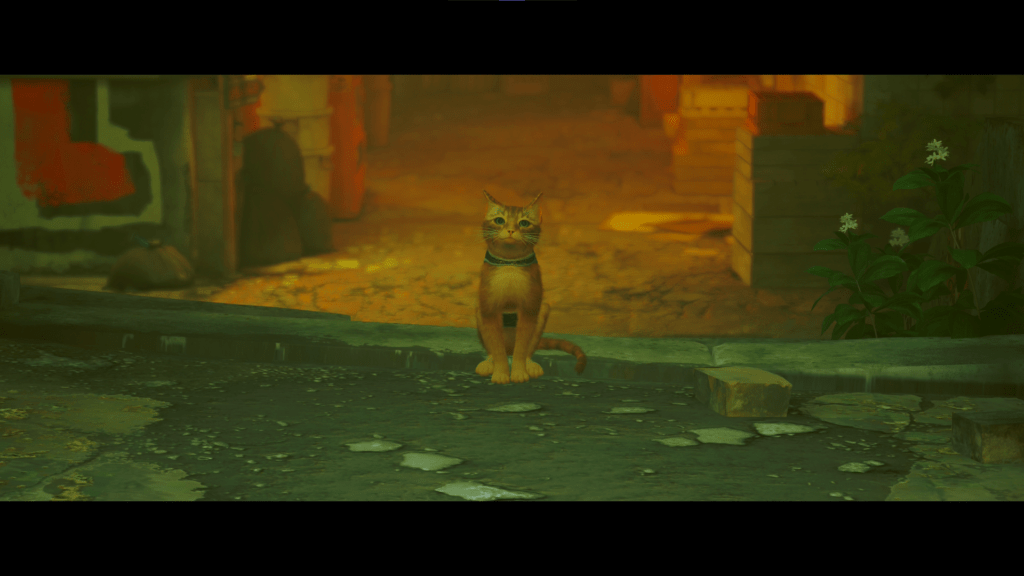
You know that moment when the orchestra performs a medley of music from all the game of the year nominees? Put yourself in the shoes of the developers of Stray and imagine what it must have meant to see their game represented alongside some of the biggest releases in the industry. Not only was this an enormous achievement for the team, but Stray also proved (little before Expedition 33) that a smaller indie title could stand shoulder to shoulder with massive AAA productions. The game went on to win several prestigious awards, including Best Indie Game and Best Debut Indie Game, inspiring countless indie developers in the process.
We would like to thank Annapurna Interactive for providing us with a copy of the game for review purposes.
Stray (Nintendo Switch 2)
In the end, Stray is much more than a game about a cat trying to find its way home. It is a quiet, emotional story about loneliness, belonging, and hope, set within a world that feels both cold and surprisingly warm at the same time. Through the eyes of a small stray cat, the game reminds us that even in the darkest places there can still be kindness, friendship, and beauty to be found. Whether you are experiencing it for the first time or returning for another playthrough, Stray remains one of those rare games that reminds us why we love video games in the first place, not because of spectacle, but because of the stories that stay with us long after the credits roll.


