






When you mention the name Splatoon, the first association for everyone is that totally crazy and chaotic multiplayer game from Nintendo. I have to be honest, I didn’t expect Nintendo to dive into multiplayer waters back in 2015, especially with a title like this. As time passed and Splatoon saw the light of day on the Switch, the title somehow became synonymous with multiplayer shooters on Nintendo’s console. But precisely because of that, anyone who has been playing since day one has practically mastered a game that looked so simple on the surface, yet was incredibly difficult to perfect. This created a massive rift between veteran players and newcomers trying to jump into the franchise. That was the case with the second game, and the third. Let’s be clear, I’m not saying they aren’t worth playing, they absolutely are, providing some of the best multiplayer experiences I’ve ever had, but the players populating this colorful, chaotic game are downright ruthless to rookies.

I believe Nintendo knows this, and I think that’s exactly why we got Splatoon Raiders. A Splatoon title entirely stripped of competitive multiplayer. Now, the first thought is naturally: how can this be good if you remove the very thing that made Splatoon what it is? Trust me, that was my exact initial thought. Why would I play something that is fundamentally a multiplayer game, only alone, against “bots” and the environment? Oh boy, was I wrong to doubt it. Splatoon Raiders makes the transition from multiplayer to a single-player (or optionally co-op) experience so smoothly and effectively that I couldn’t believe how addictive it was. And yes, I know our review is a couple of weeks late, but when this title sinks its claws into you, it doesn’t let go until you realize you’ve spent way too much time with it.
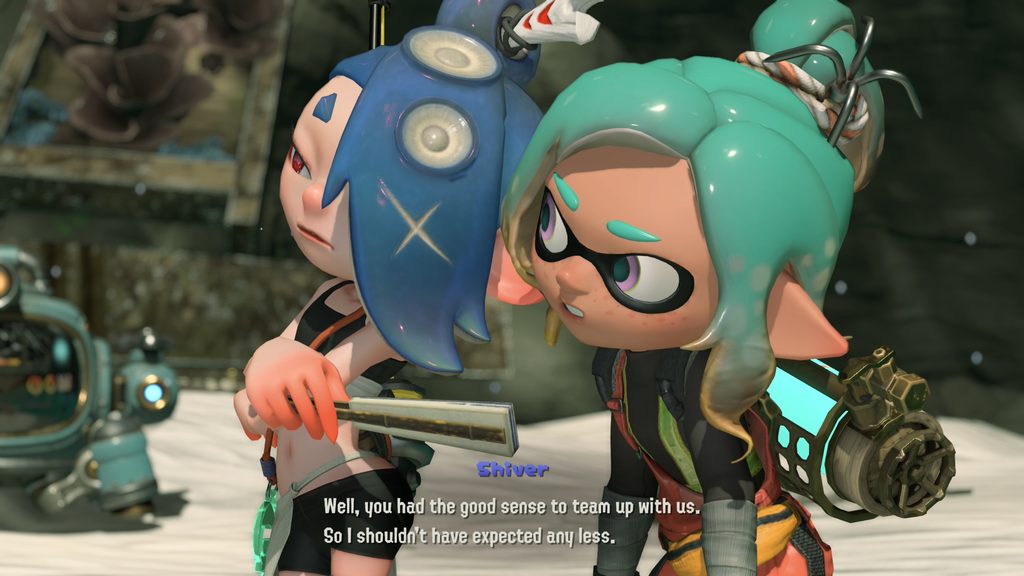
Because this is fundamentally a single-player game, it features its own distinct, equally wacky story and setup compared to the multiplayer titles. This time around, you play as the Mechanic, a character whose appearance you customize right at the start, who, alongside Shiver, Frye, and Big Man (aka the Deep Cut crew), ends up stranded on the mysterious Spirhalite Islands. Their helicopter gets caught in a bizarre storm, forcing a crash landing, and from there, the search for a way home begins. The problem is that the islands hide far more than meets the eye. There is a mystery surrounding Spirhalite itself, various breeds of Salmonids, unusual treasures, and a whole slew of locations you must explore to repair your ship and move on. Nintendo utilized Deep Cut incredibly smartly here. Shiver, Frye, and Big Man aren’t just familiar faces tossed in to give Splatoon fans something recognizable; they are your companions, aiding you throughout the adventure while simultaneously serving as guides for the game’s new systems. Nintendo even explained that this was one of the reasons Deep Cut was given such a prominent role, their personalities and penchant for adventure naturally fit into a story about treasure hunting. And I must emphasize that the story here isn’t just a “placeholder,” as some might assume. As time goes on and you dive deeper into the events on your ship, the Deep Cut crew pulls you further into this magical world. To the point where you eagerly await the next dialogue just to see what new things they have to say, check on the ship’s repair progress, or simply get a laugh and relax after a grueling raid.
Now, Splatoon 2 and 3 did feature solo sequences, little puzzle levels where the game introduced you to certain mechanics. They were well-executed, but they were never the focal point of those titles. Here, Nintendo cleverly repurposed new mechanics and built levels around them. We don’t get heavy puzzle elements like in those previous games; Splatoon Raiders is far more focused on combat itself. This means fewer classic platforming and puzzle sequences, and far more scenarios where the game drops you into a space swarming with enemies and tells you to deal with them however you see fit.
And once you start playing, it quickly becomes apparent that the heart of this game is its new gameplay loop. The machinery on your ship drops you onto an island, you receive your objective, run through the raid, slay Salmonids, gather loot, scavenge for materials, and return to your ship to upgrade your gear. Then, you pick the next raid, tweak your loadout, test out a new weapon, and dive right back into the action. Reading this, it sounds pretty basic, right? But in practice, it is wildly addictive. A single raid can be short enough to knock out in under ten minutes, but you can just as easily spend way more time if you want to explore every corner of the map, hunt for hidden treasure, or try to squeeze out better loot.
It is exactly that “just one more raid” feeling that makes Raiders so incredibly fun. You finish a mission, return to the ship, and score a new weapon. You look at it and realize you have a new mod that could entirely change your playstyle. You decide to test it out. The next raid drops another shiny new item, so you want to test that too. Before you know it, you’ve created a beautiful loop of fighting, looting, and upgrading. And then, after a while, you realize you’ve actually spent hours just “testing” every new mod, upgrade, weapon, or special attack you stumbled upon.
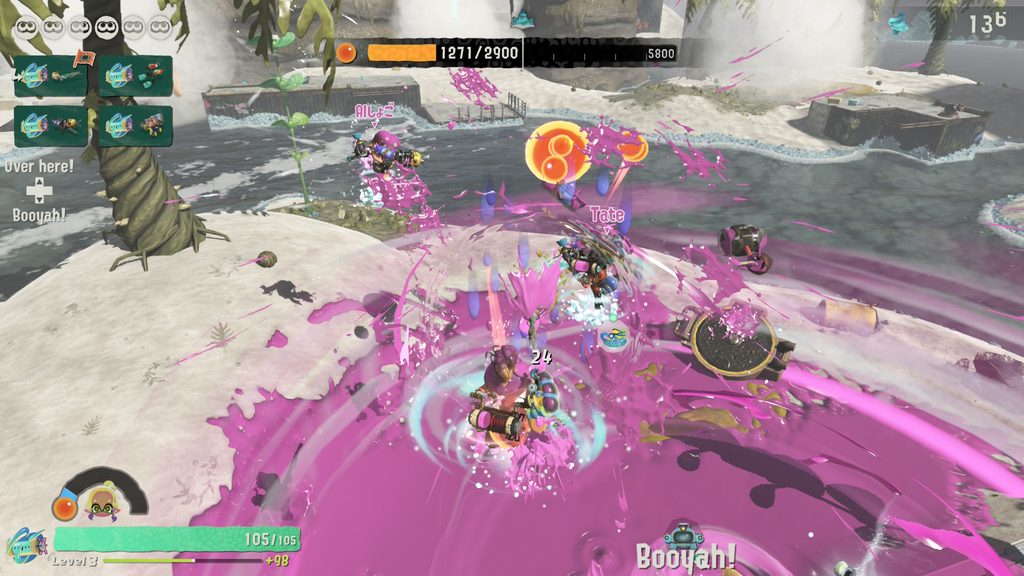
None of this would work so well if the signature Splatoon gunplay wasn’t as phenomenal as it has always been. That is something Nintendo didn’t mess up. Movement through ink is fast, fluid, and feels completely natural. When you cover a surface with your color, you can transform into Squid form and swim through it, moving faster, refilling your ink tank, and utilizing the terrain in a totally different way. Ink isn’t just ammo here; it’s simultaneously a tool for offense, defense, traversal, and exploration. You can carve your own path through the environment, swim up specific surfaces, and reposition yourself before the enemies even realize where you are. At the same time, ink is the absolute key to survival when chaos erupts on the map. You aren’t just fighting a couple of Salmonids; you are fighting an entire army. All at once, all rushing you, leaving you to navigate the madness in a level constantly shifting colors between your ink and theirs. That chaos, which you find yourself in shortly after starting a level, is unbelievably addictive. I’ve already mentioned the weapons, and there is a literal ton of them here. From familiar “guns” to completely new concepts and gimmicks. Best of all, every single one is super fun to use, at least the first time around, and if it doesn’t click for you, it’s effortless to fall back on what you know best and what makes you the most productive Salmonid slayer. You’ll also quickly realize that some weapons that dominated PvP in other Splatoon games don’t have the same utility in a PvE environment. However, when you raid in co-op, it’s a totally different story; weapons that don’t shine in solo play suddenly become incredible because you can properly define a build around your team’s composition.
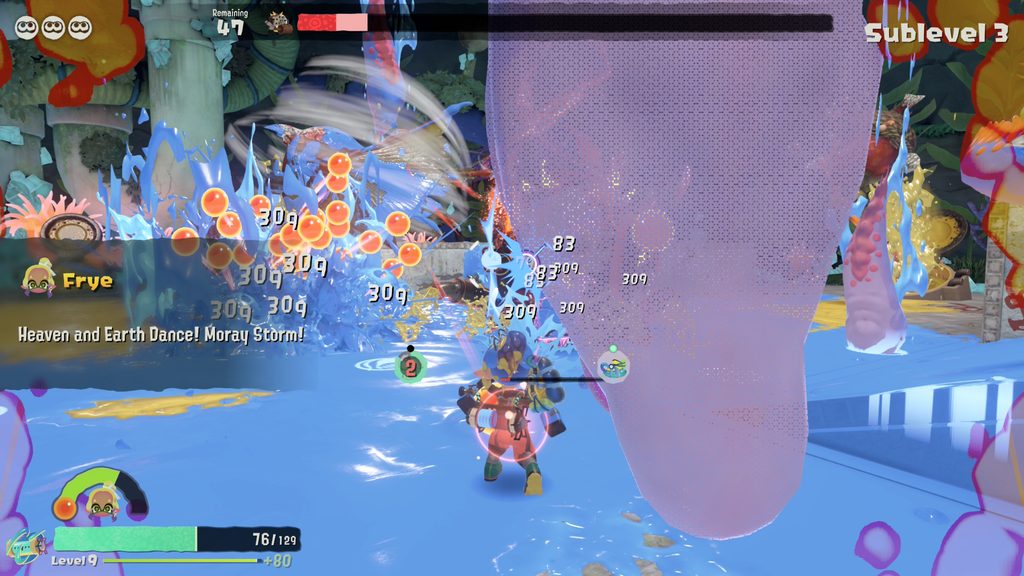
There isn’t a single “best” weapon you’ll just use throughout the entire game. You have gadgets, mods, and attachments that alter how your arsenal behaves, alongside special abilities that give you even more ways to craft a build tailored exactly to how you want to play Splatoon Raiders. Gadgets are particularly interesting because once you factor them in, the game starts feeling like a classic looter-shooter. They define your playstyle, and by combining the different effects they provide, you can create an absolutely lethal build. In the beginning, you’ll likely just use whatever the game hands you, but as you progress, you will start thinking much more critically about what you want to build. Naturally, as you learn everything the game has to offer, Raiders stops being just a cute Splatoon spin-off and starts functioning as a genuine build-based shooter.
The Showstopper is another system that makes combat even more engaging, providing you with an out when things get overwhelmingly complicated and swamped with Salmonids. When you have multiple massive enemies bearing down on you and the screen is plastered in ink and fish, these are the tools that can make the difference between a successful raid and returning to your ship empty-handed. Raiders is at its best when it forces you to utilize everything at your disposal, rather than just standing still and shooting. Speaking of returning empty-handed, I should mention that you get three lives per raid, but some raids are also strictly timed. If you burn through all your lives or the timer runs out, you head home with nothing but the XP, which is crucial for leveling up and unlocking things.
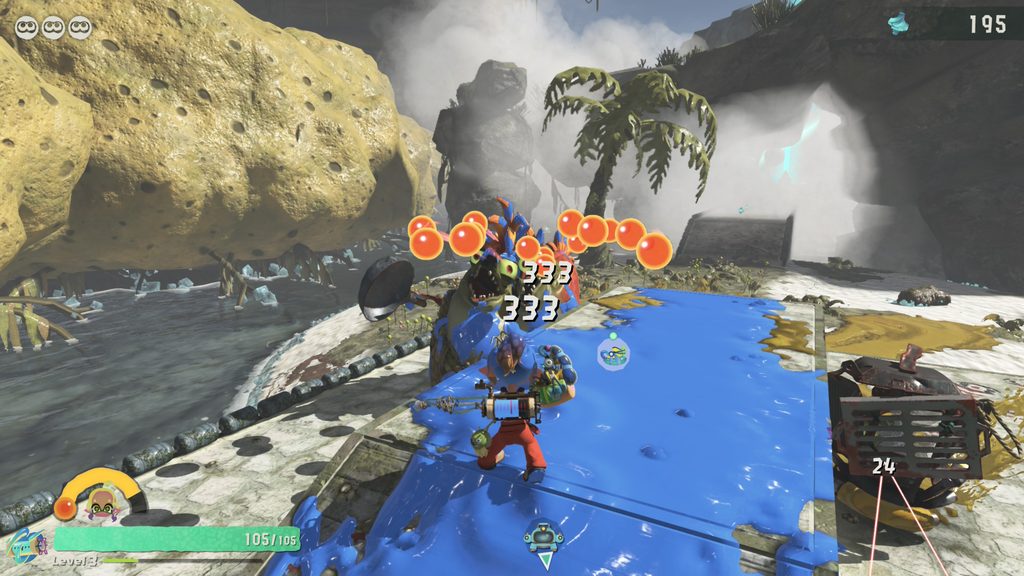
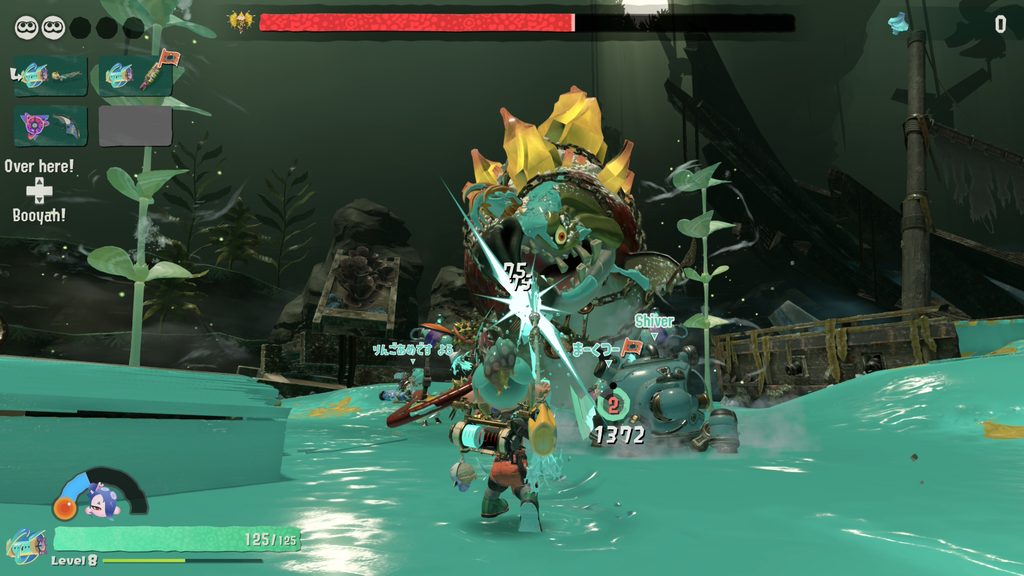
Something I thought was really cool is just how many different Salmonids they managed to pack into this game. You have the ones you’ve seen before in previous Splatoon titles, but there are also brand new ones, more interesting, larger, scarier, and far more lethal, making the fights against them a genuine spectacle. I’m mostly talking about the boss fights, which are absolutely fantastic. The large Salmonids have massive character models and attacks that cover huge areas, meaning taking them down often requires more than just basic shooting. Some demand precise shots to specific weak points, others force you to use the environment, while some simply require excellent spatial awareness and positioning.
Progression is arguably the most vital part of the entire game. Everything you do yields some sort of reward. You kill enemies, finish raids, find treasure, and earn materials used to upgrade your gear. When you finish a raid and return to the ship, you review your loot, tweak your build, and prep for the next expedition. This loop is incredibly well-paced because the game almost never leaves you waiting too long for a new shiny toy to upgrade or test out. The loot system is exactly what someone who loves Destiny, Borderlands, or similar games would expect, but it is streamlined enough to fit perfectly into the Nintendo philosophy. You won’t spend half an hour reading dozens of stat lines for a single gun, but you’ll still have plenty of reasons to inspect what you picked up and decide if it’s worth swapping out your current loadout. And then there is your ship, or hideout, which serves as your central hub between raids. Here, you inspect your loot, upgrade gear, chat with the Deep Cut crew, and prep for your next sortie. It isn’t a massive hub with hundreds of NPCs and dozens of shops, but it is functional enough to make you feel like your little expedition is steadily growing. Every upgrade to your ship or hideout brings something new to play around with and test in the next raid. Something new that will drive you to keep playing until you literally drop from exhaustion.
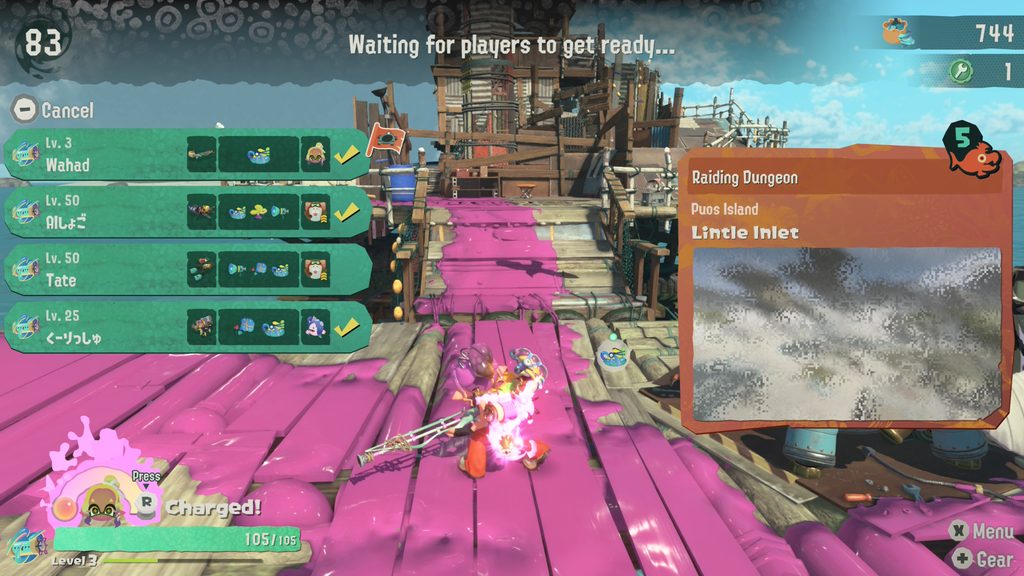
I previously mentioned co-op, which serves as a great added bonus. The game is primarily a single-player experience, but you can invite up to three other players, meaning you can run as a squad of four. My only gripe is that you can’t just click “play online” and instantly find a match; you have to input a keyword into the system to find specific player rooms. Another minor issue was that by the time I started playing, all the rooms were filled with Level 50 players, and it’s not like I was terribly late to the party. The good news is that if you get stuck on a raid, you can call for help, and someone can answer the call and drop in. Similarly, you can offer your services to players who are struggling.
I love that Nintendo didn’t make the mistake of trying to force Raiders into becoming a mandatory multiplayer title. You can finish everything completely solo. Co-op is there if you want to cause some chaos with friends, but it is absolutely not a requirement to enjoy the game. I think that is incredibly important, because for the first time, Splatoon gets an adventure that genuinely functions as a complete single-player game, rather than just an afterthought bolted onto a competitive multiplayer suite.
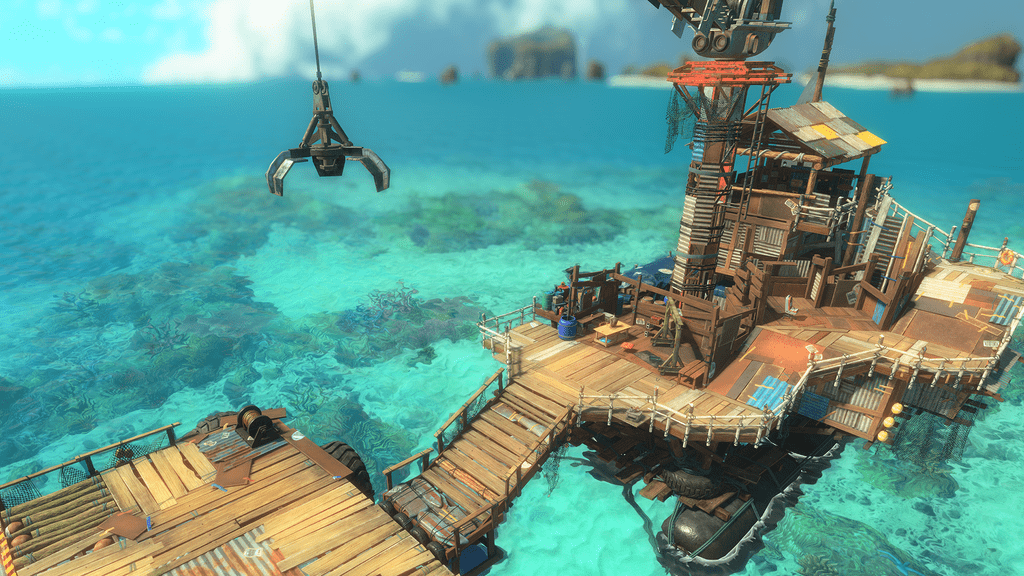
Regarding the technical side of things, it goes without saying that the game runs flawlessly on the Switch 2 console, and on top of that, it looks phenomenal! The levels are significantly larger than those in the first three Splatoon games, and consequently, much more diverse—especially since every island you explore looks different and is home to different Salmonids. I fully expected the framerate to dip at least a little when pure chaos erupted with over 50 enemies on screen, but no, that never happened. It was smooth sailing from start to finish, regardless of how many enemies were present or whether you could even comprehend what was happening on screen. The music, on top of all that, is pure psychedelia, just as it has always been in Splatoon games, but it fits perfectly with the on-screen action. From the calm melodies while chilling on the ship, to the bizarre yet infectious tracks that kick in when you’re fighting or trying to take down a boss. It follows your every step and complements the scene perfectly.
We would like to thank CD Media Greece for providing us with a copy of the game for review purposes.
Splatoon Raiders (Nintendo Switch 2)
In the end, I don't know what else to say other than to sing this game's praises. Best of all, I didn't feel this way at the start. It took me about a week to gather my thoughts, adjust to the game, and grasp its core essence, because I kept expecting what I was used to from Splatoon games: PvP multiplayer. Only when I finally relaxed—or rather, surrendered to the game—did it sneakily sink its hooks into me, refusing to let go for hours and days afterward. Whether I was playing solo or in co-op, there wasn't a single boring moment. After every match, after every raid, I wanted to jump straight into the next one without a second of hesitation, rest, or pause. And that is exactly what makes Splatoon Raiders so special.


