





Chinese mythology definitely has no intention of slowing down when it comes to massive action RPG projects. Following the incredible, yet well-deserved success of Black Myth: Wukong, more and more Chinese studios are attempting to introduce their legends, gods, and ancient tales to the rest of the world through highly ambitious AAA projects. One of the games that caught attention at this year’s Gamescom for that exact reason is Genigods: Nezha. At first glance, it’s very easy to lump it into the same category as Black Myth: Wukong, God of War, or even Devil May Cry. However, once I tried the game and learned about the incredible story from Chinese mythology that Genigods Lab is preparing, it became increasingly clear to me that Nezha could have plenty of its own tricks and, above all, its own distinct identity to make a strong splash on the market.

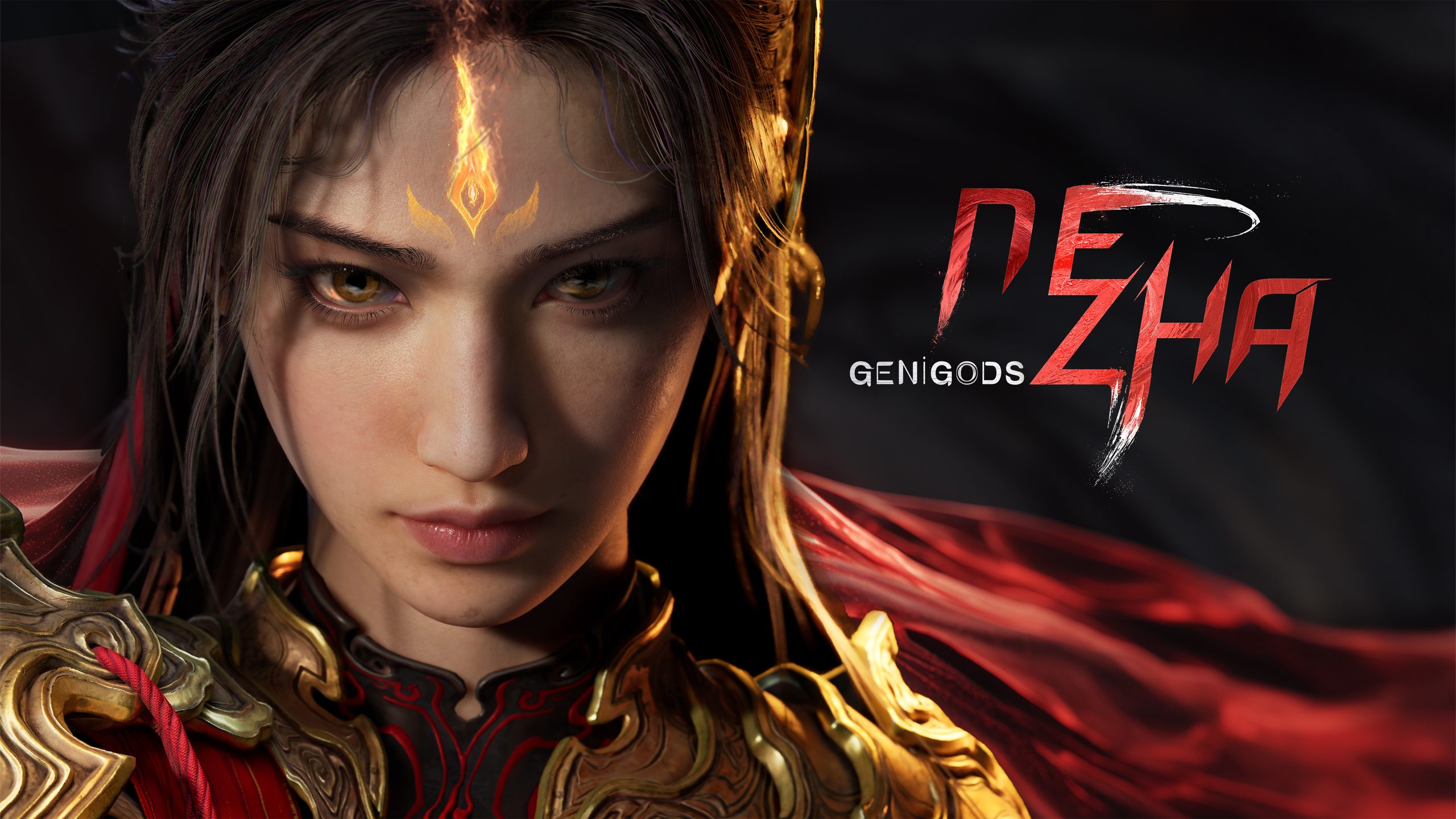
The story is rooted in ancient Chinese creation mythology, but Genigods Lab has chosen to reinterpret it rather freely. At the start, we don’t play as the classic version of the god or goddess Nezha as you might know them from other media, if anyone has even heard of this wonderful tale. Our heroine is Spirit Pearl, the first being crafted from earth, water, and fire by the goddess Nüwa. Throughout the narrative, she transitions through several phases of existence: from a primitive form, to the first human, and ultimately to the divine entity that will become Nezha. That very transformation is not just a narrative element; it is also meant to serve as the foundation of the progression system. By collecting various body parts and, later on, powerful artifacts, you gradually unlock new abilities and evolve from one state of existence into another. The only thing I didn’t quite like about this interpretation, and a detail I personally noticed, is that Nezha in this game doesn’t really look like a Chinese goddess. At least judging by the cover art and how she is meant to look in-game, her appearance leans far too heavily toward Western aesthetics. Previous games that have come out didn’t do this; they stayed true to their traditions and, I don’t know how to put this without sounding wrong, the anatomy of people from the Far East. I mean, the good thing is that in mythology, Nezha is never strictly defined as male or female, so their physical interpretation is always left to those telling the story, those listening, and those imagining them. Thus, in theory, Nezha can look however you imagine, which in a way justifies the decision to give the goddess a more Western-European appearance in the game. And I must mention: on the splash screen, the character didn’t look like she does on this cover art.
In the midst of all this turmoil is Pangu, a mythological entity whose death, according to legend, led to the creation of the world. His body became part of the world we know, but his soul longs to return, and that poses a threat to all of humanity. Therefore, Nezha must journey across the world and confront colossal divine beings to prevent his resurrection. Genigods Lab is planning a main campaign of at least 25 hours, while a full completionist run should require significantly more time. They have between eight and ten massive bosses planned, and the sheer scale of these adversaries is one of the game’s greatest assets.
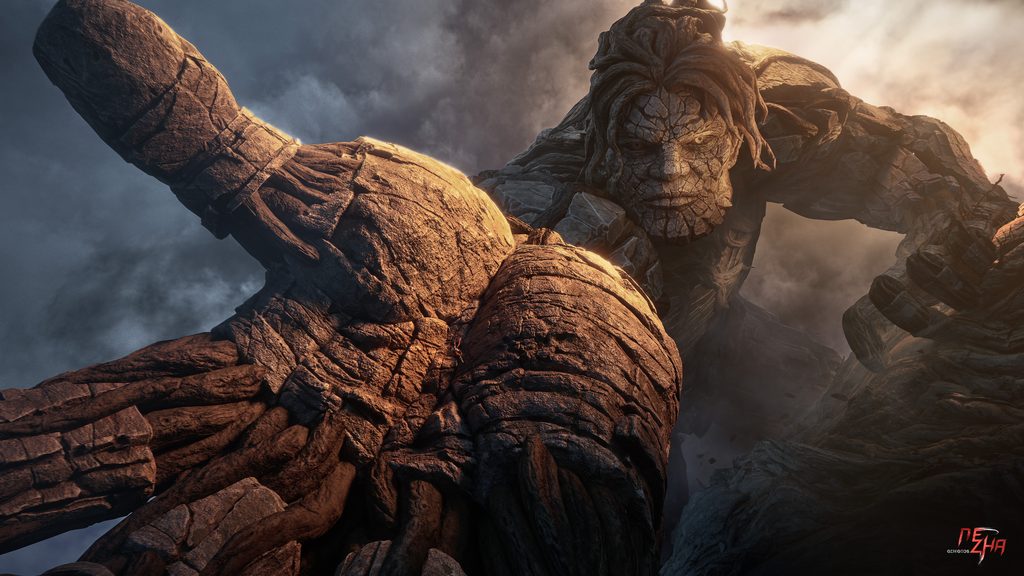
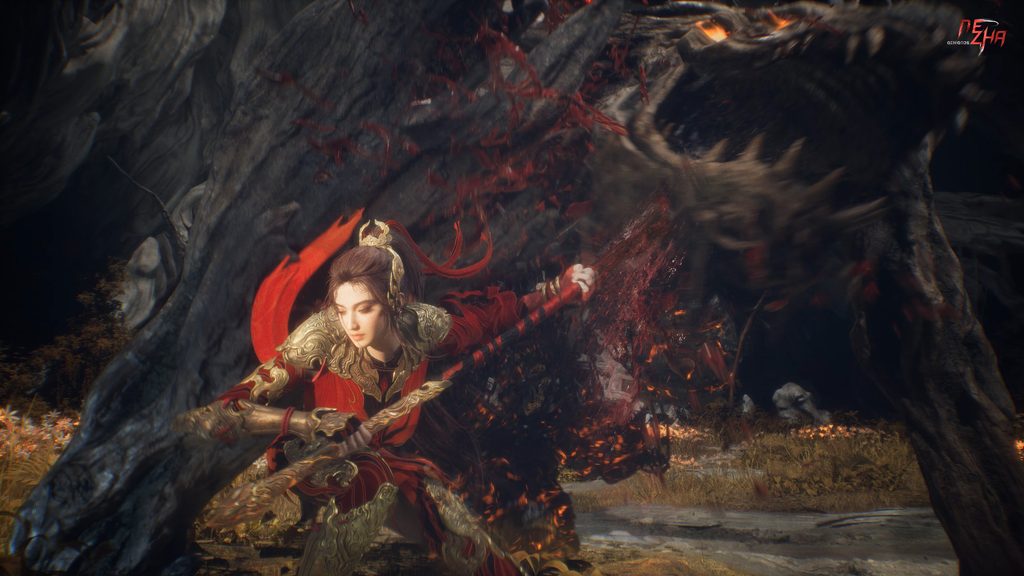
And this is where Genigods: Nezha becomes particularly fascinating. The boss featured in the Gamescom demo wasn’t just some standard giant enemy you have to pummel into the dirt. His body is practically an entire battlefield. At one point, you realize you are actually standing on the body of a gargantuan mythical creature, with certain body parts designed as distinct sandbox environments you navigate. Other bosses are supposedly going to be different, where you physically scale them, so it’s no secret the game draws some inspiration from Shadow of the Colossus. You climb colossal beings, search for their weak points, and try to bring them down while the entire battlefield shifts around you. As the fight progresses, the boss, or rather, the warrior you are fighting, becomes increasingly aggressive, alters his attack patterns, and gains new abilities. In the final phase, he even utilizes the surrounding sand to construct an even larger body, positioning his actual self on its head. What’s particularly interesting is that the fight isn’t just about chaining attacks until you deplete the enemy’s health bar. There is a dedicated status bar on the screen that functions like a tug-of-war between you and your opponent. Well-placed attacks tilt the advantage in your favor, while taking damage does the opposite. Once you dominate the exchange sufficiently, you can break through their defense and open up a window for a devastating finishing strike.
The combat itself attempts to blend several different approaches. On the ground, Nezha is slower and hits harder, while aerial combat becomes much faster and more acrobatic. It heavily evokes both Devil May Cry and God of War, but on the other hand, once you start playing, you forget all about those games. You can launch an enemy into the air, continue your combo while airborne, drop back to the ground, and launch them back up again, all alongside dodges, blocks, and various special attacks. Genigods Lab wants to focus heavily on this Ground-Air Dual Stance system, allowing combat to transition seamlessly between earth and sky. And I have to say they succeed quite well, at least in this early demo I played. It’s one of the core elements they want to use to stand out from other action RPGs.
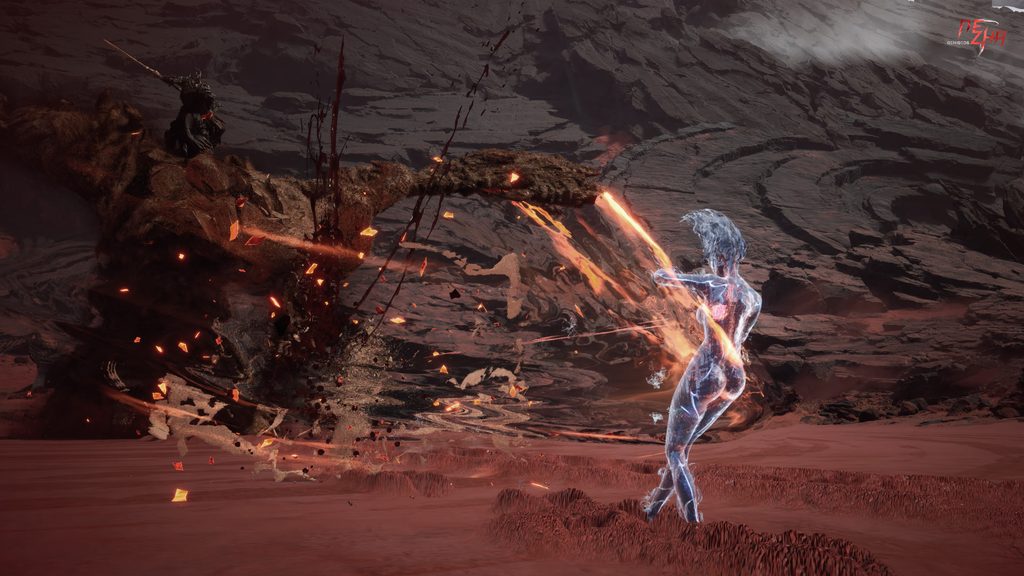
And I have to emphasize that the mechanics function quite well. After a few attempts, the combat system might start feeling like button-mashing, but there is a genuinely deep framework underneath it all, so no matter how much it feels like random button mashing at first, that isn’t really the case. Instead, the goal is for combat to be straightforward enough to pick up initially, while its depth expands through chaining diverse attacks, divine powers, and advanced abilities. It feels to me like the core idea is that a player who simply mashes buttons can pull off something visually spectacular, while more seasoned players have ample room to optimize their combos and exploit different systems. In the beginning, I had no clue how everything worked because the demo dropped me straight into a boss fight, but as it played out, I slowly found my footing and realized what I actually needed to do.
The idea that Nezha can essentially transform into water is particularly intriguing. That’s how it is in mythology, and it forms a core part of her identity and combat abilities. She can shift forms to evade attacks, rapidly close the distance to an enemy, or reposition herself mid-combat. It might sound like an unusual combination, but when you merge Chinese mythology, fluid combat, and the ability to turn your body into water, you actually end up with a very distinct mechanic.
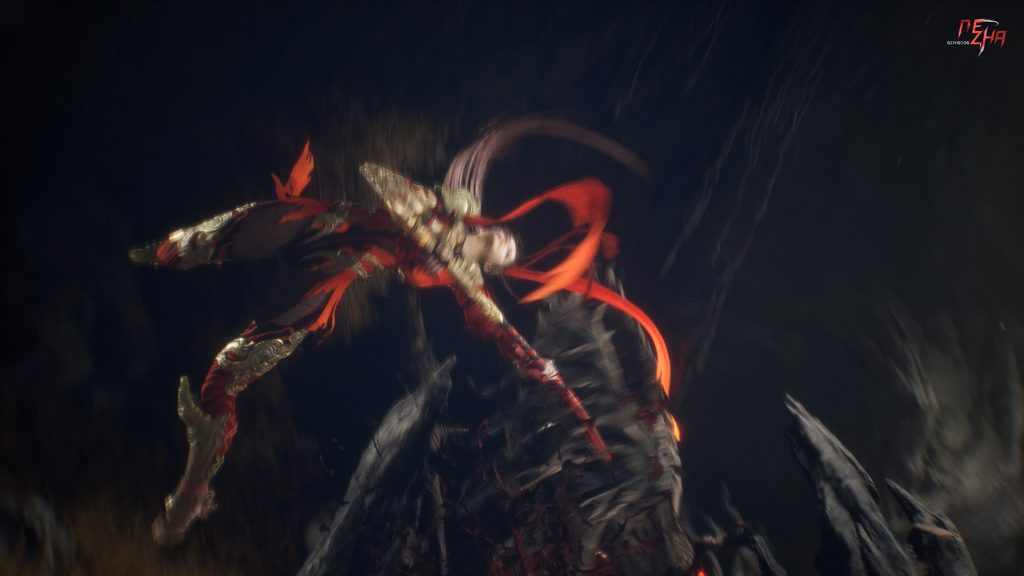
Visually speaking, Genigods: Nezha is a very beautiful game, though since this is an early demo, performance wasn’t quite up to par. The game runs on a heavily customized version of Unreal Engine 5, and the studio invested heavily into fluid effects, dynamic lighting, weather conditions, and environmental destruction. It’s especially fascinating that Genigods Lab collaborated with people who worked on the animated Nezha films, attempting to bring some of their lighting and fluid simulation tech into real time. The result is a game that can look truly spectacular in motion. And this is yet another title that blew me away by how the development team managed to put this demo together, likely in a very short amount of time, and make it this fun and mechanically deep when it comes to combat.
This was my final appointment at this year’s Gamescom, and I have to admit it wrapped up spectacularly. Last year, that high note was Phantom Blade Zero; this year, it was Jinyiwei and Nezha. Best of all, both games come from the 4Divinity publishing team. They clearly have quite the nose for great games in development. Genigods: Nezha looks genuinely promising, and I hope the development team has enough time to turn all their ideas into reality, especially regarding this facet of Chinese mythology. I spent a lot of time talking with them about this myth, and I have to admit I can’t wait to dive deeper. Chinese mythology is brimming with fantastic legends and rich history, so if you ask me, bring it on, we really need to step away from the familiar mythologies that have dominated the gaming landscape for the past 30-odd years.


