




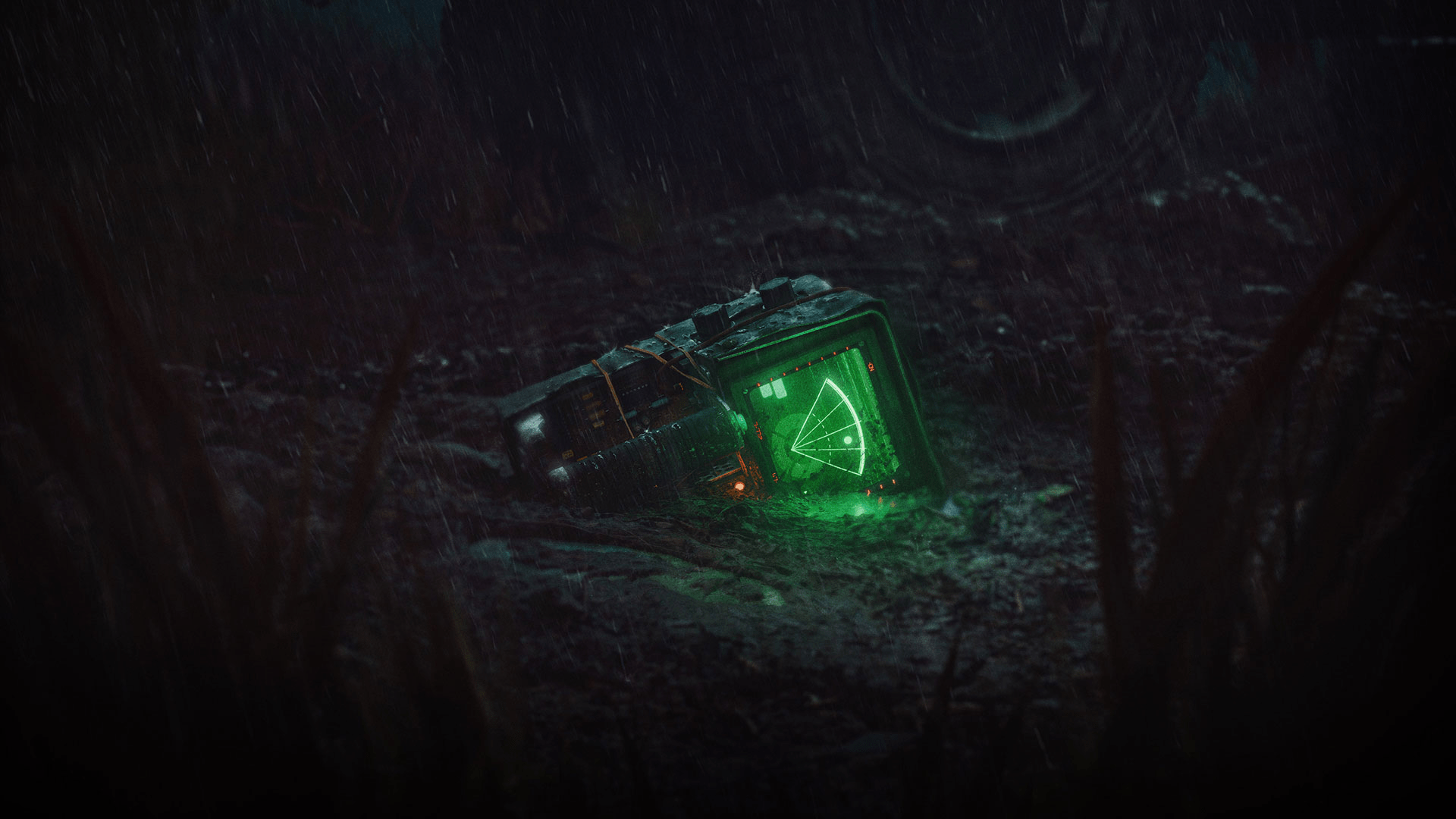


On the very first day of this year’s Gamescom, we had the chance to try out Alien Isolation 2. It’s the sequel to a now-cult classic, which is, well, incredibly hard to top when it comes to the sheer fear and dread a game can instill in players. That’s exactly why the burning question was: how will Creative Assembly handle a sequel when the first game was nearly perfect in every regard, and thanks to mods and VR, became an absolute must-play horror staple? Honestly, though, I never doubted that Creative Assembly would once again create something that makes us terrified to even pick up the controller. We had the opportunity to play what is likely one of the opening levels at the show, which, unlike the original, is designed quite differently, introducing elements that simply didn’t exist in the first game. Let’s dive in!

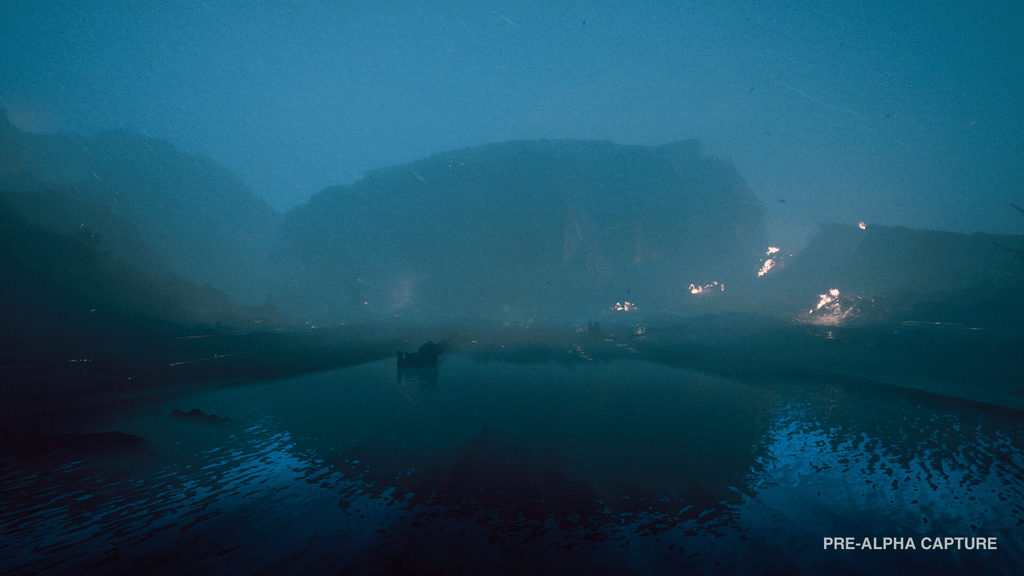
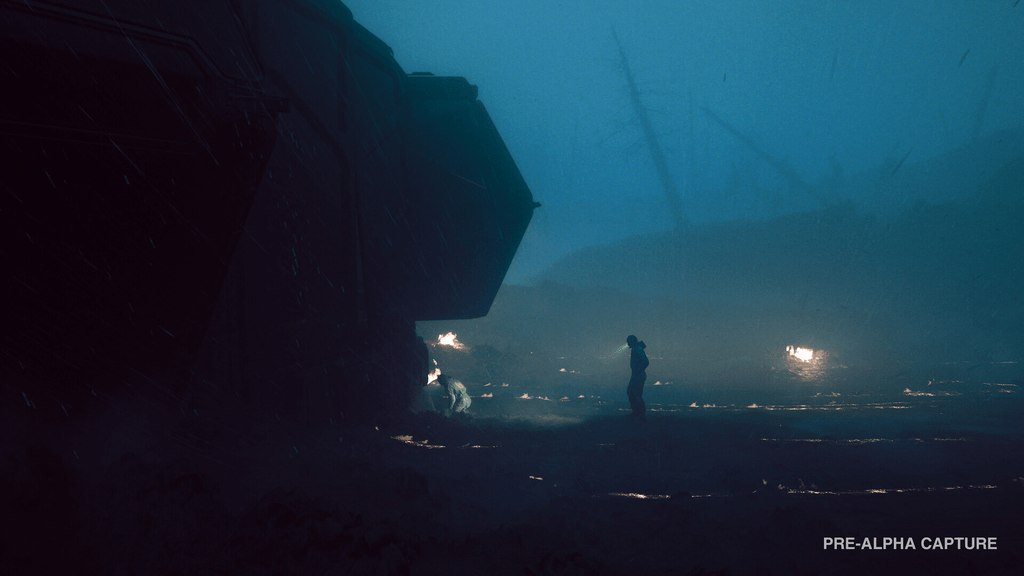
This time around, we aren’t returning to Sevastopol, and we aren’t playing as Amanda Ripley. The new protagonist is Blake, a Weyland-Yutani employee, and the story takes us to the remote colonial planet Kurosaki. At the very beginning, we find ourselves on the planet’s surface alongside the rest of the research team, while a severe storm brews around us. This is a fairly massive departure from the original. Instead of immediately being locked inside the metal labyrinth of a space station, the sequel’s first steps take place outdoors, in a forest battered by rain and wind, with lightning striking the surroundings. Honestly, I expected that an open space would automatically mean losing some of the atmosphere. How do you create claustrophobic horror when there is vast space all around you? How do you feel trapped if you can see the sky above? However, Creative Assembly found a brilliant solution. in this game, a space doesn’t have to be small for you to feel trapped.
The storm practically becomes a new kind of wall. The rain severely reduces visibility, the wind distorts what you hear, lightning illuminates the forest at irregular intervals, and navigating through the muddy terrain and trenches is nowhere near as carefree as one might expect from an open area. At one point, trees around you start catching fire from lightning strikes as you desperately try to find a path forward. Nothing is attacking you yet, but you already feel that something is terribly wrong. And that is exactly one of the things I love most about this approach. Alien: Isolation always worked best when it didn’t explicitly tell you to be afraid. The original taught you that a simple sound from a ventilation shaft could mean death, but it simultaneously crafted enough uncertainty that you were never entirely sure if what you heard actually meant something, or if you were just becoming paranoid. The sequel clearly aims to transfer that exact same principle to the great outdoors.
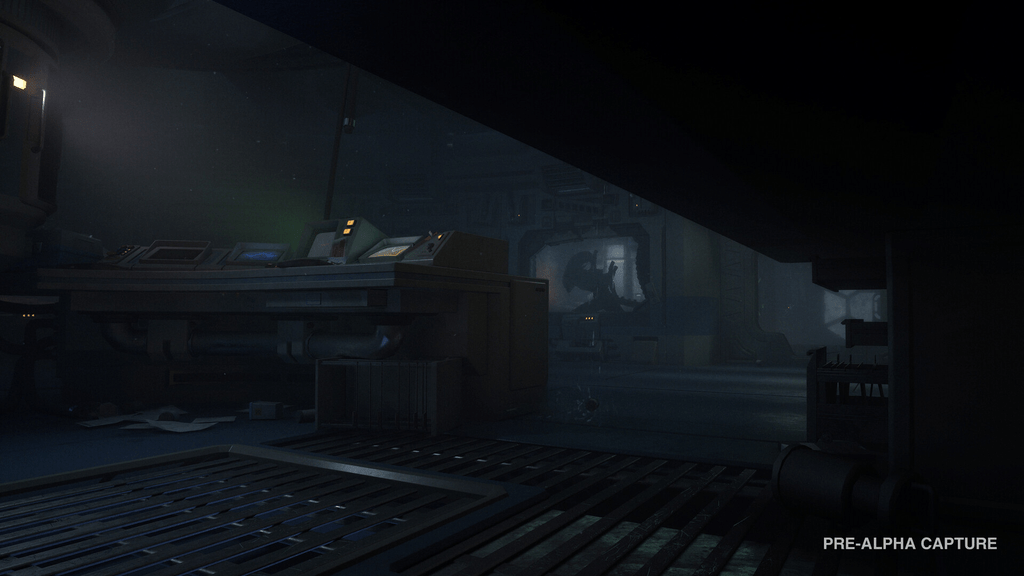
Following the initial surface section, the prologue leads us to a shipwreck, and then into more familiar territory packed with familiar fears: metallic corridors, pitch-black rooms, and abandoned facilities. Here, Alien: Isolation 2 practically returns to its roots. What is particularly interesting is that a portion of the demo is set in a wreckage connected to Sevastopol; the game deliberately uses recognizable elements to remind you that you are still very much in the same horror universe. In that moment, you realize all over again just how genius the core premise of the first game was. You have your motion tracker, you have limited resources, you can sneak, hide from enemies, create noise to distract them, and try to gauge whether the path ahead is safe. But the problem is, you can never again be absolutely certain that the enemy is exactly where you last heard it.
We’ve heard that Creative Assembly has put additional work into the Xenomorph’s behavior. The goal isn’t just to give the Alien more animations or have it wander the map a bit differently. The idea is for it to react better to your actions and actively change its tactics if you keep relying on the same tricks to distract or evade it. This is, of course, one of the hardest things to properly evaluate in a short demo. You can see that the Alien moves beautifully. You can see it reacting to noise, light, and your presence. However, for a deeper dive into its behavioral patterns and how it adapts to what you do in the game, we will have to wait for the full release. I don’t believe this will be an issue, though, or rather, I have complete faith in Creative Assembly and how they will craft the AI for Alien Isolation 2. That said, everything I saw was more than enough to plunge me right back into that uncomfortable mental state from the first game. You hear a noise. You check the motion tracker. Nothing. You check again. Still nothing. You keep walking. You hear something behind you. You spin around. Nothing is there. And right then, you realize your palms are sweating, even though literally nothing is happening on screen. I have to say, not a single minute of playing this demo was “pleasant,” simply because I never knew what to expect in the very next second.
Even though the outdoor portion of the prologue only lasted about half as long as the indoor segment, I have to say that Kurosaki is a fascinating change of pace. On Sevastopol, you mostly learned room layouts, ventilation shafts, and safe zones. I believe things will be vastly different on this planet, forcing you to pay attention to a multitude of other factors. If the storm is intense enough, you might not hear the enemy. If the fog is too thick, you might not see it. If the wind interferes, certain sounds could become muddled and misleading. This is literally just what I picked up on during the demo, and I’m sure there will be a ton of other elements that weren’t showcased here. Another crucial point for this game is that the movement system has also been upgraded. In the demo, I could see that Blake navigates the environment quite fluidly, she can crouch, climb, and vault over obstacles without feeling tethered to rigid, pre-determined animations. This is especially vital outdoors, where you no longer just have a straightforward corridor and a door in front of you. The terrain has to be an active part of the game, not just window dressing.
Visually, since the game is built in Unreal Engine 5, the development team is allowed to take a massive leap forward compared to the original. Alien: Isolation remains impressive today considering how gracefully it has aged, but the sequel can now merge that iconic lo-fi sci-fi aesthetic with modern lighting, volumetrics, dynamic weather effects, and far more detailed models. What is particularly great is that the studio isn’t trying to create a futuristic world that looks sterile and perfect. Everything still drips with that gritty, industrial aesthetic synonymous with the Alien universe.
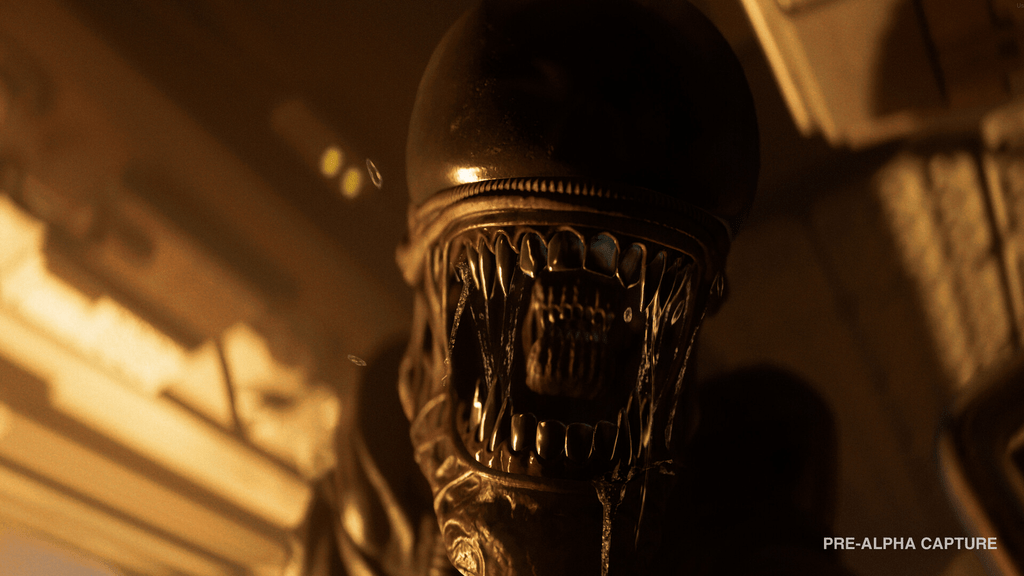
Although the demo was quite short, it honestly left one of the strongest impressions on me. Not just because it’s a horror game that quickly gets under your skin, but because the entire presentation, the transition from enclosed spaces to the open outdoors, is executed brilliantly. I believe Creative Assembly will continue, or is already working on, developing the narrative both inside the ships and out in the open. From what it looks like so far, stepping out of the metal box is a massive success. The horror element might actually be even stronger here than it was before, precisely because it no longer relies solely on claustrophobia, but rather on raw, primal fear. Alien Isolation 2 doesn’t have a concrete release date just yet, but I sincerely hope we won’t have to wait too long for this one.


