




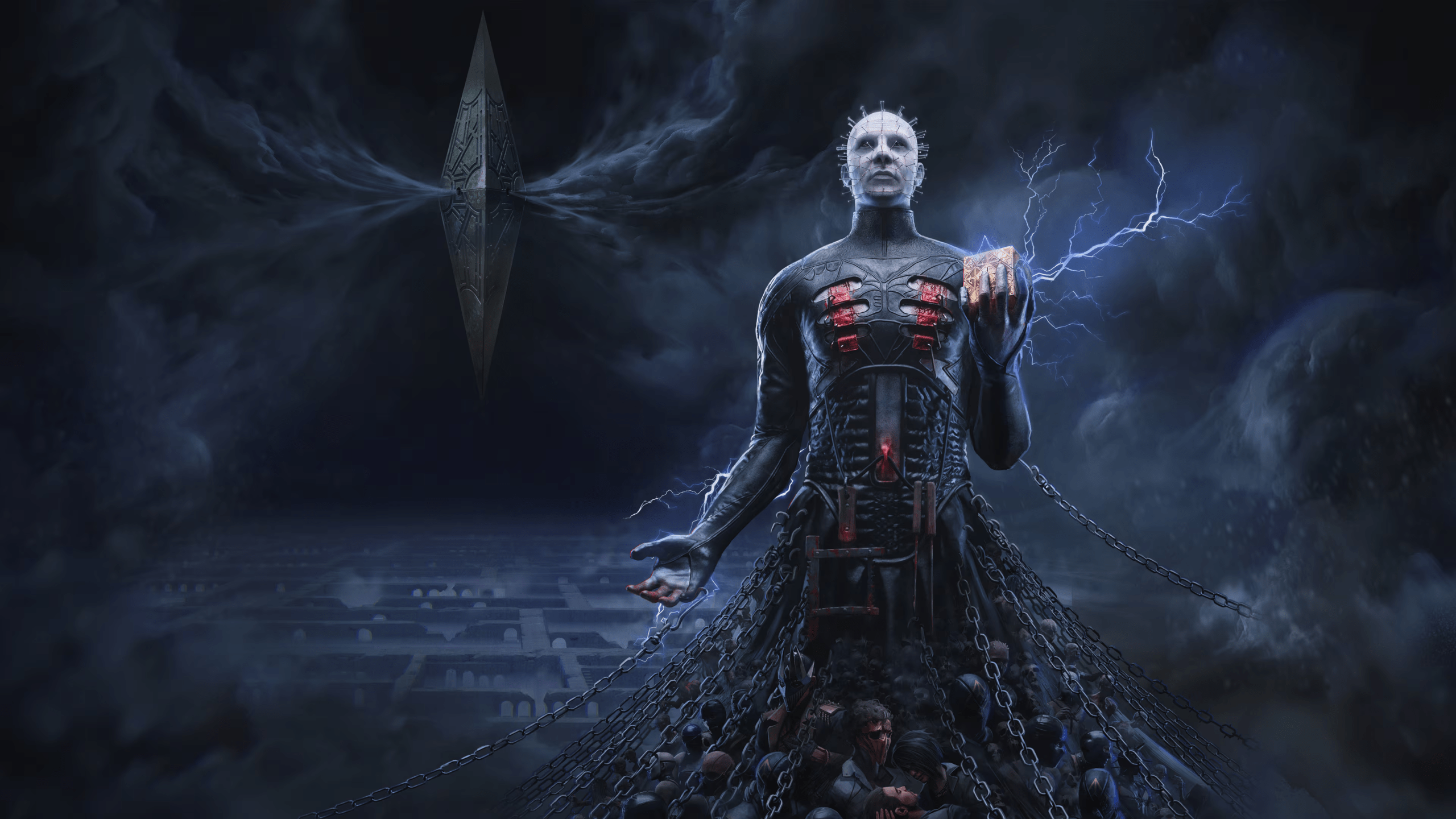


When we look back at gaming history, we occasionally encounter highly controversial titles. Manhunt (2003) instantly comes to mind, a game showcasing sadism, grotesque scenes, and a narrative that simply wasn’t for everyone. If we look at all existing IPs capable of surpassing that level of controversy, Hellraiser is undoubtedly one of them. That is likely exactly why we haven’t seen a single video game adaptation of this franchise, which just celebrated its 40th anniversary this year. So, we waited 40 years for the first Hellraiser game, and 19 years for a new Clive Barker title. It’s even more wonderful to see that Mad Head Studios, now Saber Interactive Serbia, was tasked with the immense responsibility of translating this fantastic, grotesque world that Clive Barker conceived back in 1986. The main question now is: was the wait worth it?

A Love Story, But Not As You Know It
The story in Clive Barker’s Hellraiser: Revival takes place in the universe established by the original novella, The Hellbound Heart, and the first two films (Hellraiser and Hellbound: Hellraiser II). The plot unfolds about 20 years after the events of the first film. You step into the shoes of Aidan Lynch, who, following a “minor incident” with his girlfriend in his apartment, sets out to find her, or rather, embarks on a sweet, noble rescue mission straight into hell. Since detailing any part of the story or the opening events would be a massive spoiler, that’s all I will explicitly say about the plot. Players need to see and feel what Hellraiser: Revival has to offer, particularly how it unfolds in its opening hour. And I must emphasize: the first hour of this title is arguably the most brutal, grotesque, and profoundly uncomfortable experience I have ever had in any video game.
At its core, Hellraiser: Revival is a love story, a tale of what one person is willing to endure to save the one they love. Simultaneously, it delves beautifully into modern issues like drug addiction, and addiction in general, exploring the fragility of the human mind and what a person can endure to achieve their goal. In the Hellraiser universe, it is virtually impossible for a person not to be destroyed, both physically and mentally. You will experience this firsthand, both through the characters you meet and through Aidan Lynch himself. This is exactly why I believe the game will spark intense controversy online. For the average player, those who aren’t die-hard fans of Clive Barker’s life and work, this will simply be too much. But for those yearning to see the Hell Priest again and witness what he can do to a human being, this will be a sweet, forbidden treat. I fall somewhere between these two camps, and I have to admit that the first hour or two instilled a deep sense of unease with every passing scene, starting right from the opening cinematic and the first major reveal.
Although the story is the main focus and the catalyst for everything that happens throughout the game, I have to mention that there are plenty of collectibles to discover, including documents, letters, journals, and much more. For anyone who is a fan of the series and has always wanted to dive even deeper into the lore of this franchise, I believe this will be a real treat. I know that this title explores certain events and aspects that were never covered in the novel or shown in the movies, and they are here simply to add even more depth and flavor to the entire IP.
A Game Unafraid to Show Hellraiser’s True Nature
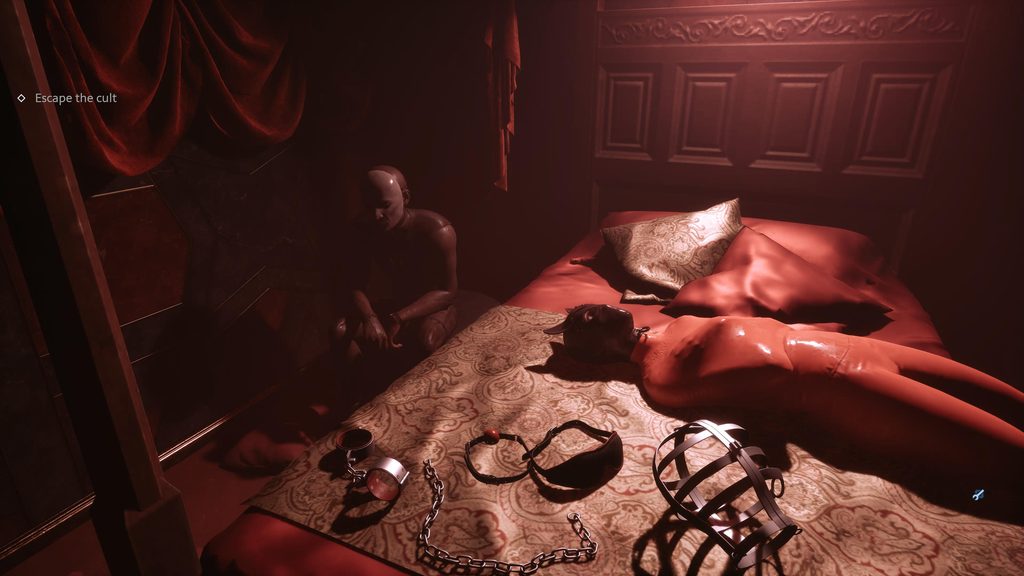
Given the creative freedom granted to the Saber Interactive Serbia team, the graphic depictions of brutality, sadism, grotesque imagery, and pure horror cross the boundaries of what most players expect from a video game. I’m not sure it’s even possible to articulate everything you will see; it’s best you play it and witness it yourself. Once you do, I doubt you’ll look at games the same way again.
Having said all that, as much as the game doesn’t hold back in shocking players early on with graphic bodily mutilation and visceral massacres, it seamlessly eases you into its gameplay mechanics. From a mechanical standpoint, the game starts rather smoothly, clearly explaining the core loops and your capabilities. The first thing I loved is how heavily the game relies on stealth. Early on, Aidan must escape a BDSM club that doubles as a base for cultists worshipping Leviathan, the God of Hell, and the Cenobites he created. Unarmed and vulnerable, you are forced to sneak around, waiting for the perfect opportunity to escape while quietly eliminating anything in your path. Stealth is your only means of survival and combat in the beginning. Once you find a knife, you quickly realize Aidan has absolutely zero chill when it comes to dispatching enemies, though that is far from the first shock you’ll experience; I skipped mentioning several of them for good reason. Regardless, stealth kills are a fundamental part of the game and aren’t reserved just for the opening hours; they remain one of the most effective ways to clear out enemies throughout the campaign, depending on the situation.
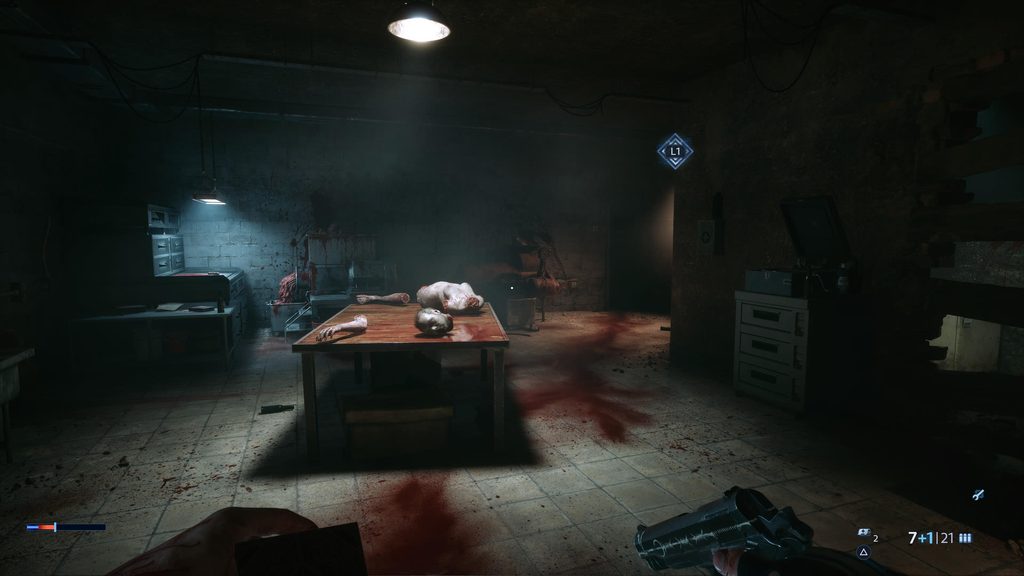
You will quickly discover other toys and items to expand your arsenal for disposing of foes. This aspect of the game strongly echoes Condemned. Even though Hellraiser: Revival doesn’t focus exclusively on melee combat, the melee system is executed brilliantly. You can genuinely feel the weight of the impacts when you swing a nail-studded bat, piercing a cultist’s mask to inspect what’s inside their head, or the swift, brutal thrust of a knife into the kidneys during a stealth kill. Okay, maybe not that “swift,” because Aidan really likes to ventilate every enemy he approaches from behind; and if it’s a frontal assault with a bladed weapon, he won’t hesitate to bury it straight into a cultist’s skull. Overall, the melee combat feels exceptional, and the development team deserves high praise for it.
A particularly cool mechanic is weapon durability and degradation. If you overuse a weapon, it will simply break. This adds another layer to the survival horror experience, forcing you to carefully plan how to eliminate the threats ahead. You have to decide who gets the quiet kidney-extraction treatment and who gets a frontal lobotomy with a mace. Because no matter how much softer a skull is than the head of a mace, the weapon will eventually shatter without proper maintenance. Yes, you can repair weapons, assuming you find one near and dear to your heart whose animations perfectly suit the monster hiding within you, but the game’s philosophy isn’t about hoarding one weapon. It’s about constantly adapting and fighting with whatever is at hand. This is, first and foremost, a survival horror game, and you will frequently find yourself without your preferred weapon, forced to fight for your life with whatever you can scrounge up, even if it’s just a tiny knife meant strictly for inspecting the health of kidneys and intestines.
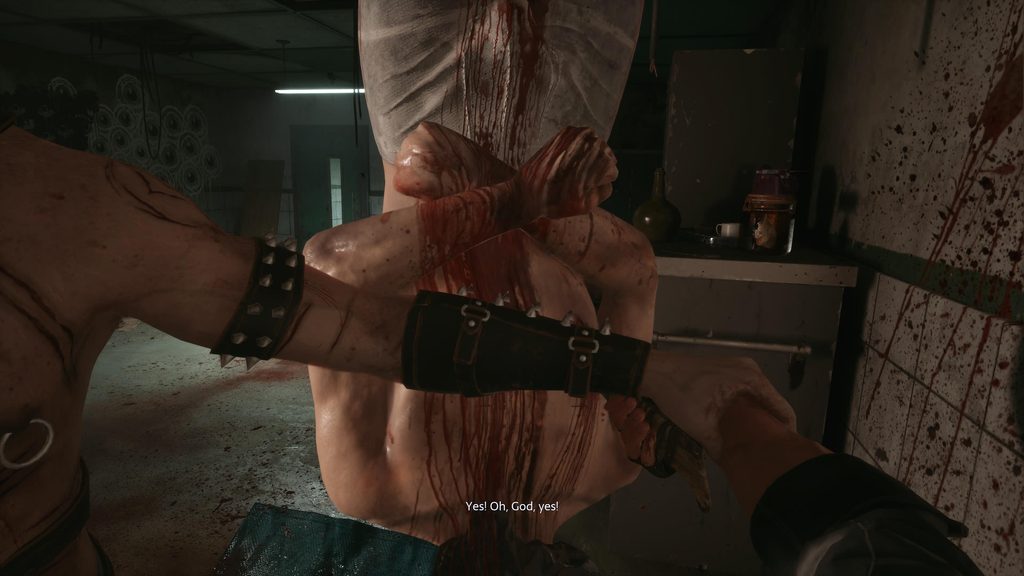
Aidan, the Old Craftsman and Hoarder
The survival element here is flawlessly executed. The game never allows you to feel comfortable or over-equipped. You will enter every cultist encounter or boss fight thinking you might not have enough resources, and you will often be right. Not knowing what awaits you after surviving a clash with your friendly neighborhood cultists is a core part of the experience. Even later, when you start wielding firearms, pistols, shotguns, and rifles, you will never have an abundance of ammo. The game drip-feeds bullets to you, teasing you with the beautiful sound and animation of a skull shattering from a well-timed revolver shot. It makes you desperately scour for more ammo or hoard it for special occasions, because popping melons is highly satisfying here. Sadistic agriculture is quite addictive in this title…
When you can’t scavenge everything you need, materials, bullets, knives, maces, bats, firearms, you can purchase them from Zora Beckett, a mysterious old woman who seemingly exists in this world without any consequences. She acts as your primary merchant. You buy what you need using currency found throughout your sadistic-masochistic adventure.
I have to point out the similarities to one of the industry’s most popular franchises: Resident Evil. The entire system of upgrading, crafting, scavenging, and inventory management is practically lifted from, or heavily inspired by, the recent Resident Evil titles. Your inventory space is limited, though you can eventually find backpack upgrades to carry more items. The raw materials you scavenge, chemicals, gunpowder, scrap metal, fabrics, serve as components to craft whatever you desperately need at that moment: ammo, health packs, melee repair kits, and so on. The entire survival horror framework wears its Resident Evil inspirations on its sleeve, and it works wonderfully within the context of Hellraiser: Revival.
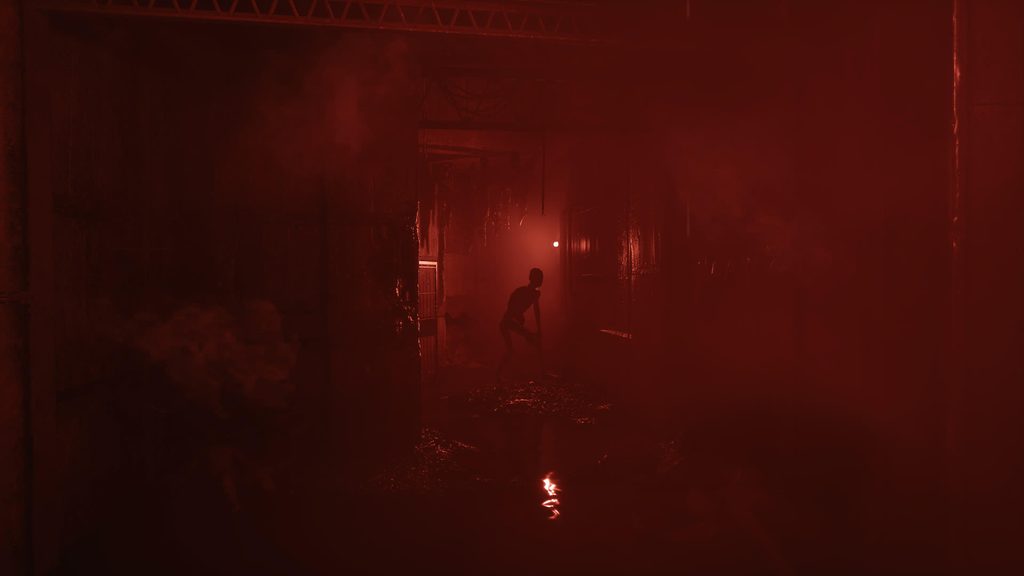
The Genesis Configuration – A Box That Elevates Gameplay
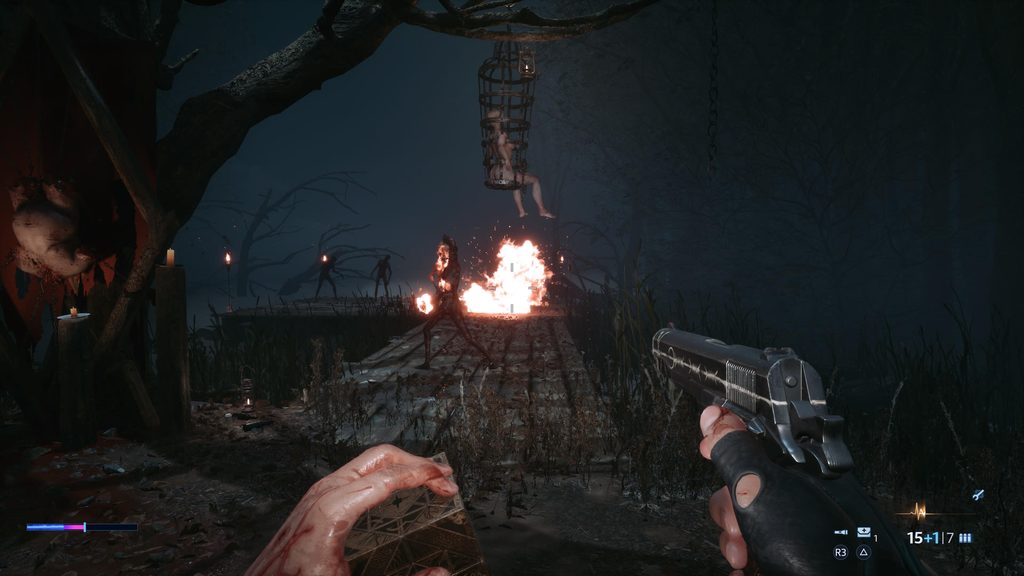
Alongside melee and firearms, Aidan carries the Genesis Configuration, the franchise’s iconic puzzle box. Naturally, everyone will assume it is used strictly for solving puzzles, but that isn’t its only use-case. While it is crucial for puzzle-solving, it also vastly enhances combat. Early on, you unlock Telekinesis, allowing you to pick up blades, nails, or fan blades and hurl them at enemies, severing arms, legs, or heads from their bodies. I must say, this is incredibly satisfying and works flawlessly. Later, you unlock additional capabilities for the box, such as Pyrokinesis, allowing you to manipulate fire. These aren’t the only two powers, but you’ll have to discover the rest yourself, as this little box holds many secrets and surprises. The dual-wielding mechanic (using a weapon and the box) functions brilliantly. It takes a little time to train your brain and fingers to efficiently eliminate enemies using everything at your disposal, but once it clicks, especially Telekinesis, you will spend a lot of time mentally mapping out where loose nails are located so you can launch them at your foes.
The Configuration is fueled by the “Suffering” you accumulate while fighting cultists or other entities. Suffering has a cap, and once depleted, you must rely on melee or firearms to attack. You can replenish your Suffering meter by executing “final blows” on staggered enemies. Not only does this restore your Suffering, but it also heals you slightly, a very cool mechanic considering how scarce health items often are.
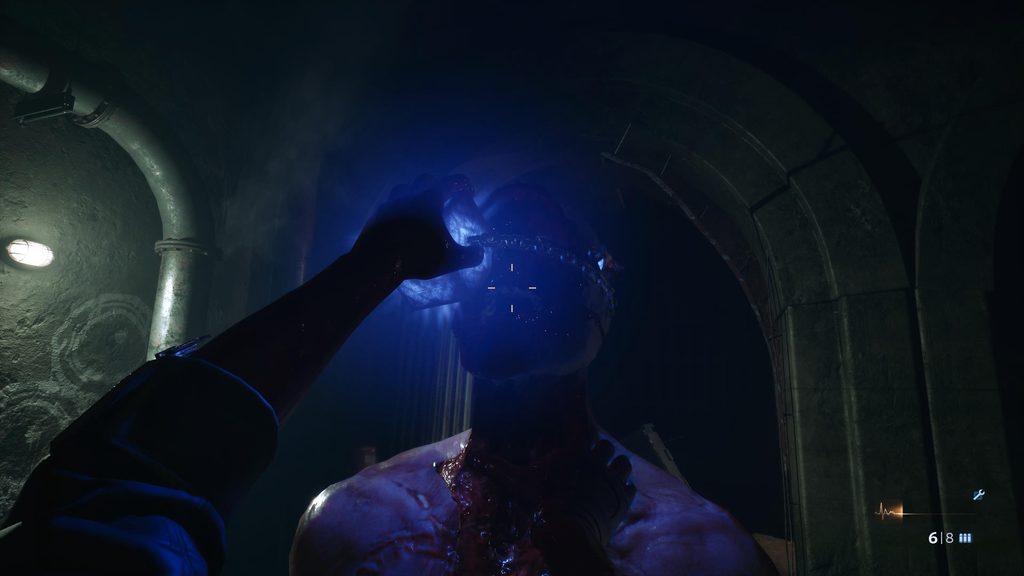
I mentioned puzzles, and I have to note they are definitely present. Or rather, progression is almost always gated behind a puzzle or a specific key item you need to find. Another RE moment, I must admit. But these puzzles aren’t there to torture you, there are plenty of other things in the game that will do that effectively enough. None of them are overly difficult or tedious; they serve as engaging progression blockers rather than frustrating roadblocks that make you want to bash your head against a wall. What is far, far more interesting than any puzzle, however, is the infamous Labyrinth.
The Hell of the Cenobites – The Labyrinth and Game Design
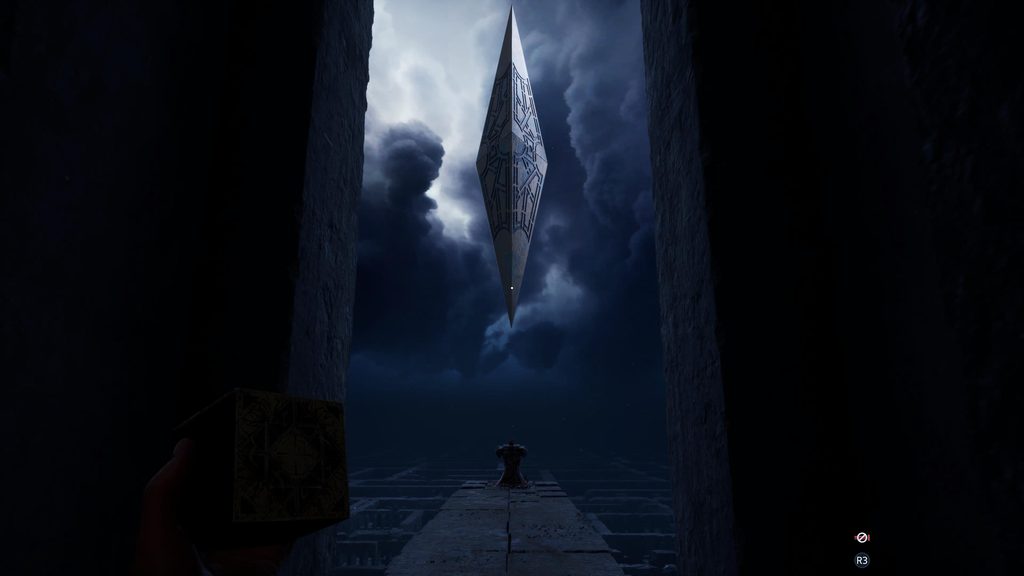
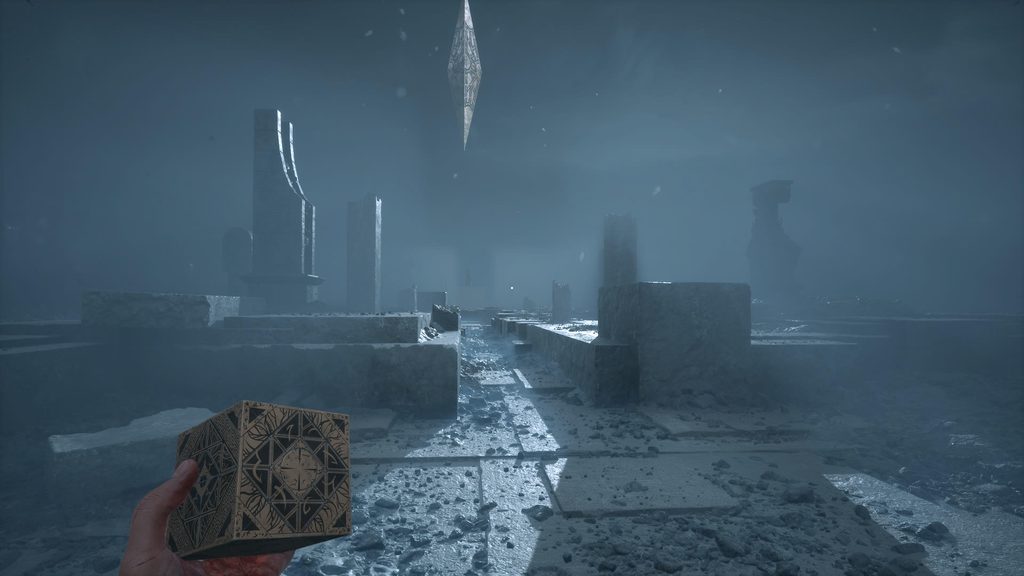
After every major narrative beat, Aidan finds himself in the rift between reality and Hell, the iconic Labyrinth. I have to admit, this is, at least to me, literally the best part of the game. Every Labyrinth section you enter is phenomenally crafted, both visually and from a design standpoint. The dimension where human souls reside, and where Cenobites revel in torturing them long after their lives in this “terrible plane of existence” have ended, is brilliantly realized. I almost feel bad that there aren’t more of these segments, or that the entire game doesn’t take place here. But on second thought, maybe it’s better this way; every time you leave the Labyrinth, you immediately crave returning as soon as possible. To increase your suffering, naturally.
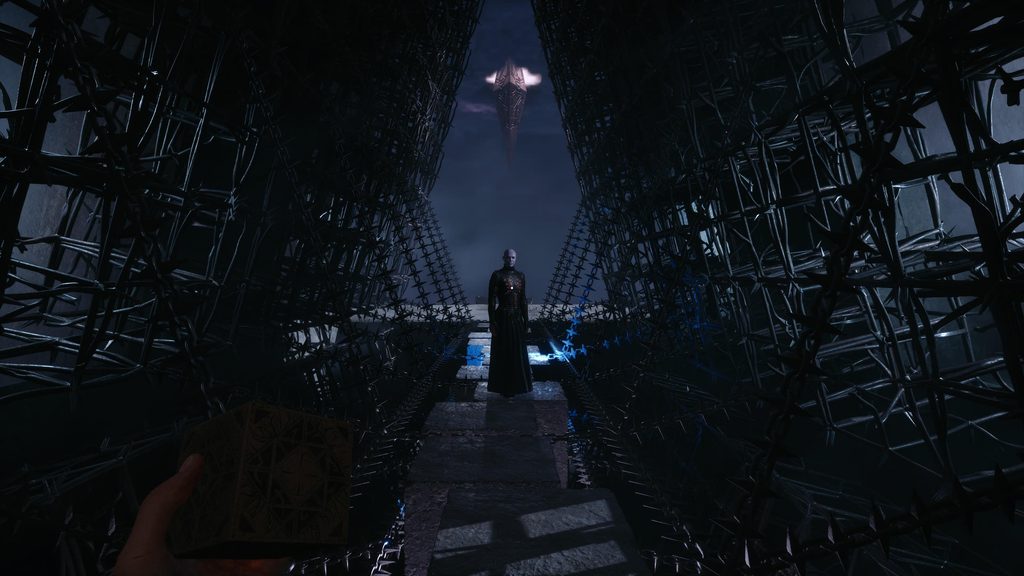
This is a horror adventure, but the horror element truly shines brightest in the Labyrinth. When you have to navigate to an exit or reach a goal while being hunted by the Chatterer… I don’t know if I’ve ever felt that level of anxiety and sheer, unbearable tension in any other game as I did wandering down narrow corridors, hearing the Chatterer’s teeth clicking right behind me as he tries to take a bite. This might be the best horror experience I’ve had in the past… well, maybe ever. The setup itself doesn’t inherently sound terrifying, but when you combine the Labyrinth’s design, the ambient audio, the clicking teeth, and the overwhelming sense of urgency, you can literally feel the unease in your own body. If Saber Interactive Serbia nailed any element of this franchise, it is undoubtedly this.
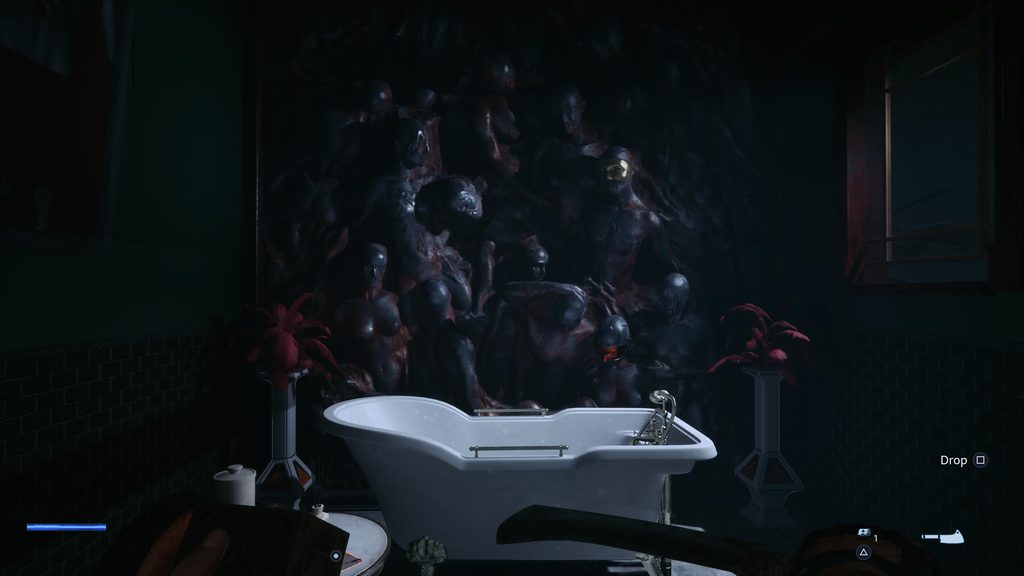
Furthermore, the transition between the world of the living and the realm of the Cenobites is handled beautifully. The portions of the game outside the Labyrinth are highly memorable in their own right, packed with things to see and discover. I’d even call it quite diverse. From the BDSM club to a graveyard, down to secluded mansions used by cultists to live out their twisted fantasies and offer sacrifices to Leviathan. Interestingly, while the real-world segments might not look as visually spectacular as the Labyrinth, the Labyrinth, with its simple architecture, stark geometric shapes, and sharp edges, looks far, far more impressive, at least to me, despite having more micro-details and environmental variety.
Baffling Cuts and Technical Performance
Because of all this, it’s a shame the development team decided to interrupt the action in certain parts with pre-rendered cinematics that simply cannot match the real-time visual fidelity made possible by Unreal Engine 5. Honestly, this is one mystery I just can’t figure out. These cuts are sometimes overly aggressive and sudden; right when you least expect it, the game pauses and abruptly shifts into a cinematic. There was one specific scene where I fully expected a pre-rendered cutscene because the game had conditioned me to, but it stayed in-engine, and I thought, “Okay, they could do this scene in-game, so why couldn’t they do the others?!”
As a result, the game feels quite “choppy” early on. Every time you get fully immersed and sucked into the world, it yanks control away from you just to show a short cinematic. I don’t understand the logic here, especially in the opening hours when the focus should be on immersing the player in the world without breaking that spell. I have to admit it made it quite difficult for me to let go and fully surrender to the world at the very beginning. This might not bother everyone, but it definitely annoyed me. Then again, those first couple of hours are exactly when the game is simultaneously overwhelming you with its most grotesque and brutal imagery.
On the bright side, the game runs fantastically on the PlayStation 5 (the base model, not the Pro). You can choose between two modes: Quality and Performance. Quality focuses on graphical fidelity at 30 fps, while Performance targets 60 fps. I have to admit I noticed the framerate drop below 60 in one specific situation, and I’m sure everyone will notice it, but the sequence itself is so spectacular that you really can’t complain. It is entirely worth the dropped frames in that moment.
Before the Credits Roll…
I have to reflect one last time on what Clive Barker’s Hellraiser: Revival actually is. First and foremost, this is not a game for everyone, as it contains shocking scenes that players are simply not accustomed to. Or rather, I don’t know if any game has dared to depict such scenes as (beautifully) brutally and graphically as Hellraiser: Revival does. Even I, someone who appreciates edgy content, was completely unprepared for the experience I had with this title. There were several moments where my stomach genuinely churned. And I don’t mean sex scenes or anything like that; I mean the culmination of everything Saber Interactive Serbia managed to adapt and translate from the books and films into this game. It is all truly impressive and deserves high praise, but I also know it will be a massive topic of online discourse once the game launches to the wider public. And I also know that, no matter how “distasteful or uncomfortable” it might be for many players, it will be an absolutely delectable treat for die-hard fans of the Hellraiser franchise. I believe this is exactly what they’ve been dreaming of for decades, ever since The Hellbound Heart was published.
We would like to thank Saber Interactive for providing us with a copy of the game for review purposes.
Clive Barker's Hellraiser: Revival (PlayStation 5)
In the end, as I've said a few times already, this is a magnificent triumph for the survival horror genre. Hellraiser: Revival dares to go above and beyond when tackling sensitive themes, delivering a graphically intense depiction of masochism and sadism wrapped in a story that might not seem spectacular at first, but harbors genuine depth, and sadly, striking parallels to real-world struggles with addiction of all kinds. But above all, the combination of these themes with survival horror mechanics that function flawlessly in this twisted, brutal world is a monumental achievement for the development team. The focus isn't just on shock value; it’s on gameplay systems that perfectly complement the narrative. For that reason, I believe Hellraiser: Revival is a title that every survival horror fan needs to play, provided they are of legal age, of course.


