

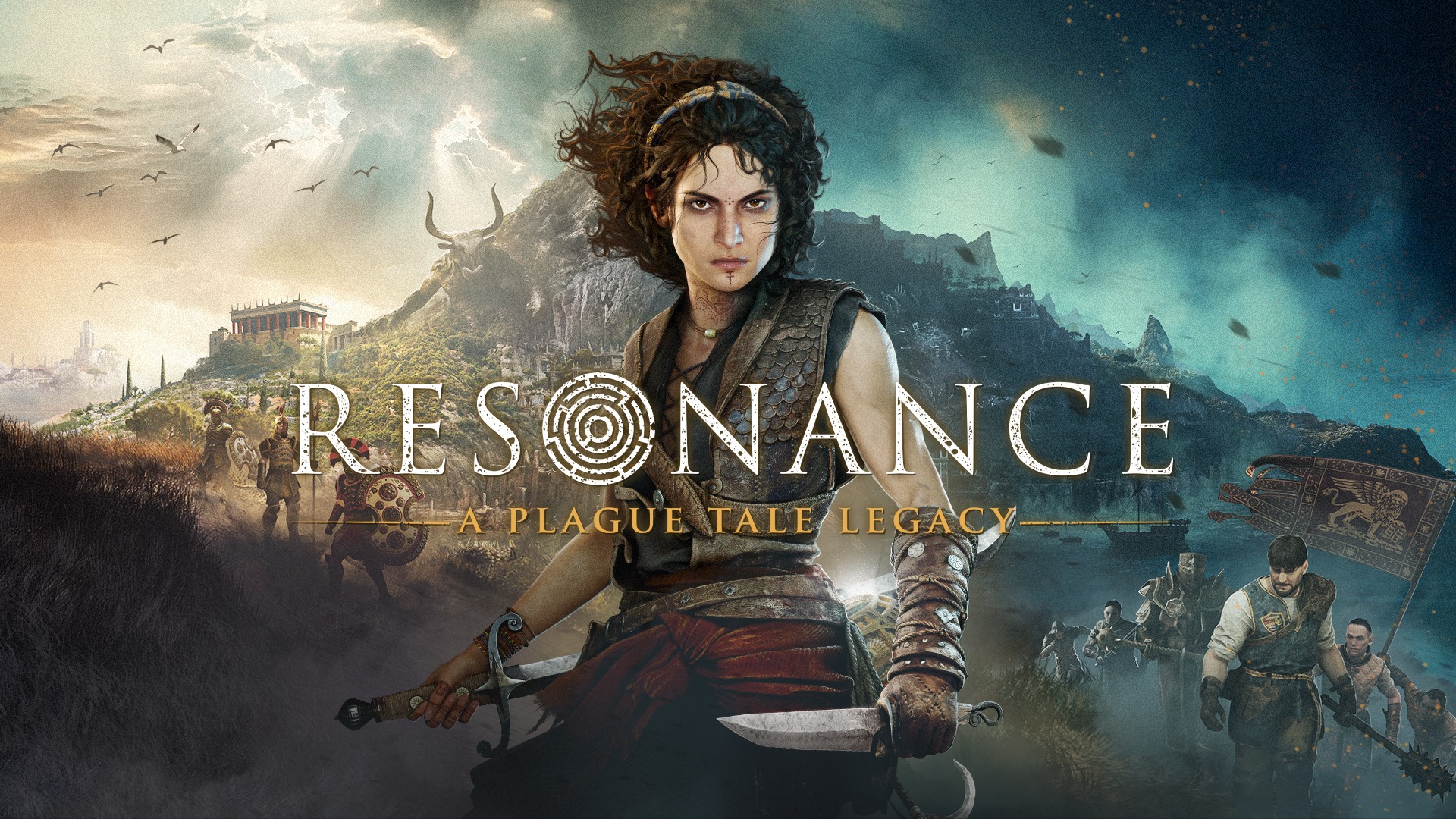


Stealth has always been something I tried to avoid in games whenever possible. I simply never had enough patience to sneak around, carefully plan every step, and wait for the perfect moment to slip past the enemies unnoticed. And yet, A Plague Tale managed to completely change my relationship with this style of gameplay and forced me to work on my patience. The reason was simple – behind its slower, more cautious approach to gameplay was an incredible experience, accompanied by a story and characters that made every moment spent in this world worthwhile.
A Plague Tale captivated me at first sight with its beautiful graphics, which was one of the main reasons the game initially caught my attention. However, what truly kept me invested was its deeply emotional story, filled with unforgettable moments and characters that were almost impossible not to grow attached to. Because of that, it was only natural that, as soon as the second game was released, I stepped back into this cruel yet mesmerizing world without a second thought.

Still, nothing could have prepared me for the ending of the second game. I cannot remember the last time I sat in silence for so long after finishing a game, simply staring at a blank screen. Likewise, I cannot remember the last time a game had the courage to deliver an ending like that and truly put a full stop to its story. However, even the scene shown after the end credits did not prepare me for a prequel in which we would finally get the opportunity to learn more about Sophia, who played such an important role in the second game.
Where Does Resonance Fit Into the Story of the A Plague Tale Series?
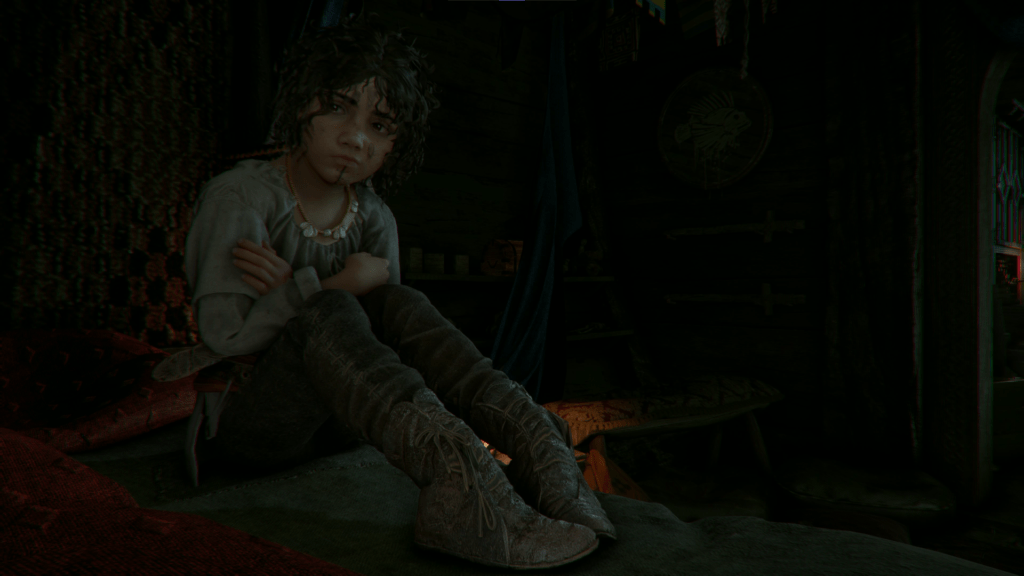
Before we answer that question, it is worth reminding ourselves who Sophia actually is. In the second game, A Plague Tale: Requiem, Sophia appears as a pirate well known for smuggling goods, much like her father, Alec. When Sophia was little, her mother sent her to a convent in the hope that it would help her ,,wash away her sins”, however, no one could have known that within those very walls, Sophia would be subjected to horrific torture for the sake of someone else’s benefit. The game begins with a striking glimpse into her childhood, during which we witness a disturbing experiment performed on her by the nuns. After blood is injected into her body, a strange reaction occurs, causing her veins to take on an eerie appearance that bears an unsettling resemblance to what we have previously seen in carriers of the Prima Macula. The purpose of this experiment is supposedly to ,,help” Sophia witness the past and transfer the images she sees onto paper. Before we are able to learn more, however, her father arrives to rescue her and takes her back to Venice. Even after Sophia is saved, visions of the Minotaur and an unknown hero continue to haunt her. Her father therefore decides to travel to the island she sees in those visions, hoping to find a way to help his daughter. As expected, things soon take the worst possible turn, and her father loses his life during one of these expeditions.
His death becomes a turning point for Sophia and the driving force behind her desire to become stronger. With the help of her friends and mentors, she begins training relentlessly, honing her skills and gradually growing into a capable warrior determined to one day become worthy of undertaking the very same kind of expedition herself.
Asobo Studio does a wonderful job of introducing us to Sophia carefully and patiently, giving us enough time to understand her motivations, empathize with her, and genuinely connect with her story. We follow her from her earliest childhood, through demanding training sessions and her first real mission, all the way to the moment when her life suddenly takes a completely unexpected turn. Once everything goes wrong and she is forced to flee, her first great adventure begins – along with the journey that will eventually shape her into the person we later come to know. On the other hand, this prequel is also inspired by the myth of the Minotaur, which makes the story considerably more intriguing and turns the journey itself into something almost epic. Alongside Sophia, we want to discover who the hero from her visions really is and what connection the Minotaur has to him, while at the same time uncovering more about the Prima Macula. What I can say is that this prequel connects beautifully to the previous games, and you will realize exactly how when you least expect it. That is precisely where the brilliance of its storytelling lies – in the way seemingly insignificant details and moments are gradually woven together into a greater whole, one that only later reveals its true meaning and emotional weight.
From Careful Sneaking to Merciless Combat
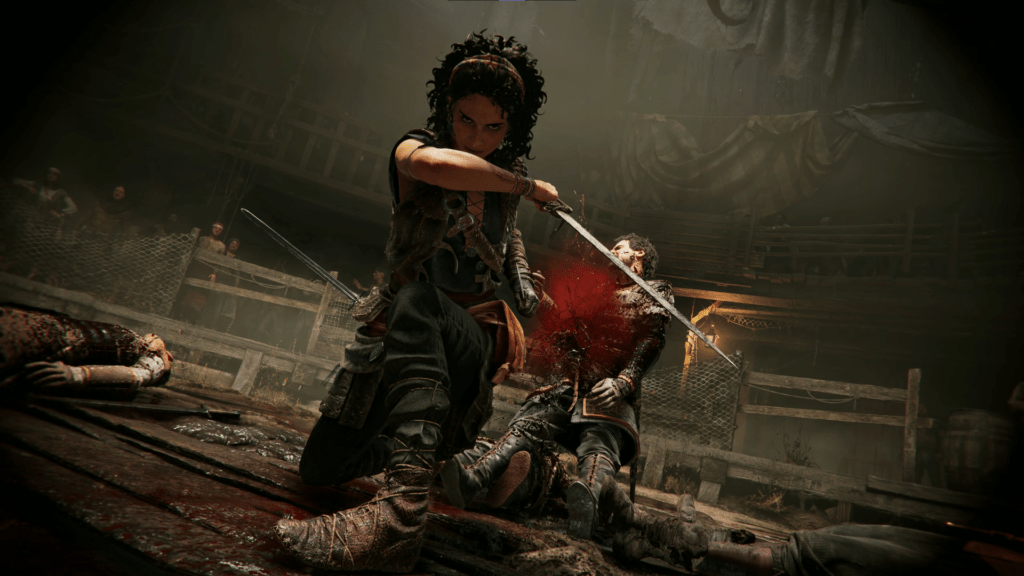
Unlike the first two games, this prequel is brutal when it comes to gameplay. Of course, this time you are not playing as a young girl who has to protect her little brother and who was never trained to be a warrior. Instead, the game cleverly introduces its combat mechanics through a tutorial seamlessly incorporated into the story. Sophia has both a sword and a knife at her disposal. She can chain together several light attacks and use a parry to block incoming strikes, with the exception of attacks clearly marked by red and yellow indicators. However, successfully performing a perfect parry briefly staggers your opponent, giving you the perfect opportunity to deal significant damage. You also have a dodge, a kick that becomes particularly useful when an enemy is carrying a shield or blocking your attacks, and a critical strike that requires you to identify the perfect moment to execute it. Combat feels incredibly fluid and satisfying. Sophia moves with ease, and her finishers are particularly impressive. In addition to these attacks, Sophia also carries a grappling hook. While it allows her to reach certain areas during exploration, it can also be used in combat to pull enemies toward her. All of these mechanics can be combined beautifully, resulting in fantastic encounters where several enemies may attack you at once, yet you still have plenty of ways to defend yourself. You can rely on perfect parries, use throwables to slow enemies down, or pull irritating archers toward you with the grappling hook before they have another chance to attack. Combat itself is essentially divided into two parts. At certain points, Sophia experiences visions of the past, allowing you to step into the role of Theseus. Both Theseus and Sophia have access to a Focus Attack once their Focus bar has been filled, allowing them to strike several enemies at once.
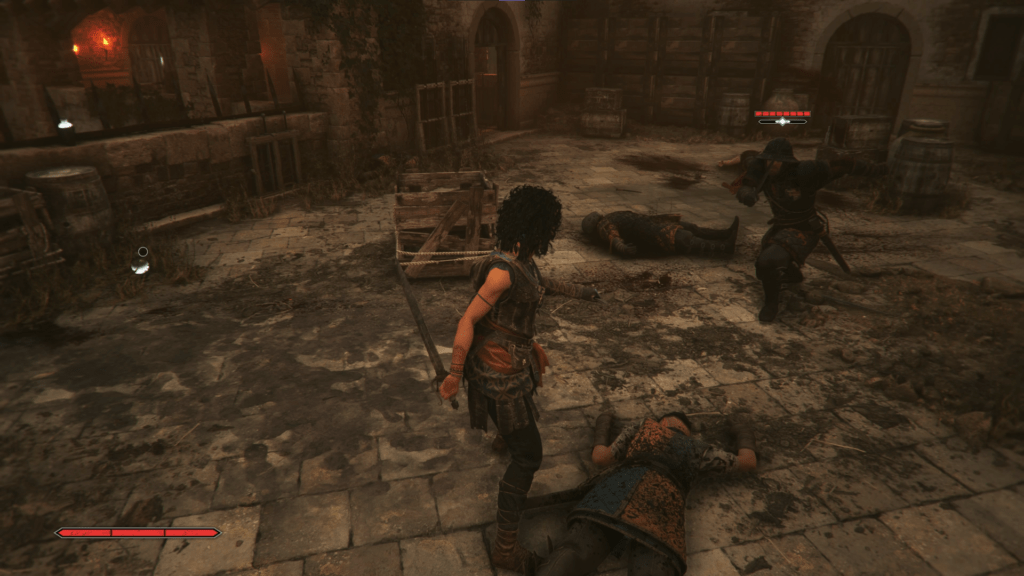
Aside from ,,human” enemies, you will also encounter creatures that cannot simply be killed with conventional weapons. Instead, you will need to make clever use of light in order to deal with some of these threats.
To make combat even more interesting, the game features a small skill tree. Resonance Points serve as currency and can be spent on improving Sophia’s kick and critical strike, unlocking the ability to dodge twice in quick succession, gaining a throwable after defeating an enemy, or even allowing you to parry certain attacks that would normally be unblockable. Sophia can also discover different swords throughout the chapters, each offering its own bonus, as well as various charms whose effects can provide additional advantages.
Much like the first two games, this installment also features puzzles, although they are generally quite simple. Most of the time, you will need to figure out how to direct light in order to open a new path forward. Sophia carries a sphere with three different modes. One allows her to uncover clues, another lets her direct green, blue, and red light where it needs to go, while the third, and arguably the best, helps her deal with certain enemies.
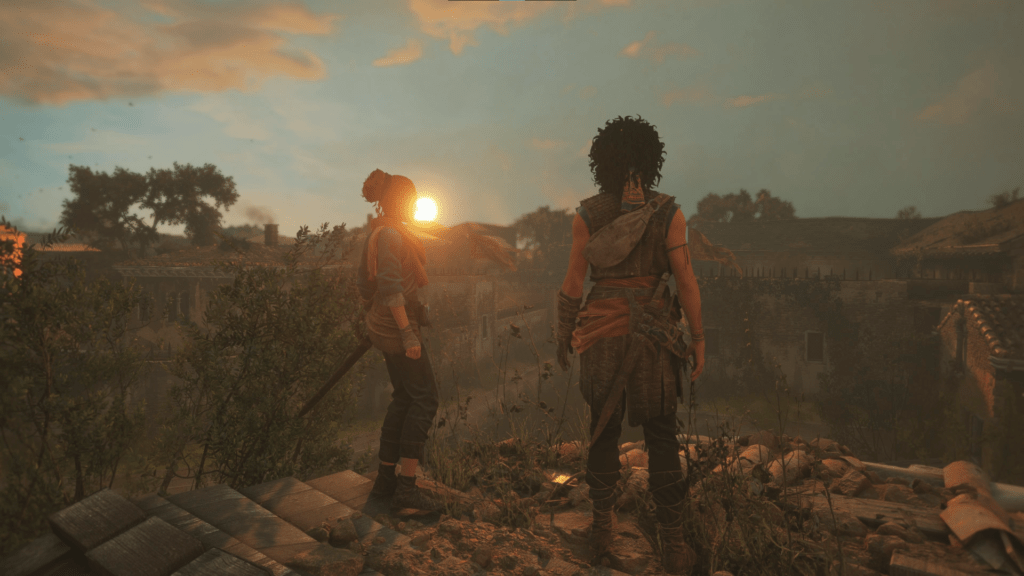
Alongside combat, there are also moments when you will need to rely on stealth in order to survive, particularly when there is not enough light available to protect you from the creatures lurking nearby. Still, I would have liked stealth to have been an option when dealing with regular human enemies as well. As expected, Sophia also has loyal companions who accompany her on her journey. On one of the first missions you will meet Leni, a charming thief whose sense of humor is guaranteed to leave an impression.
When Every Frame Deserves to Be a Postcard
A Plague Tale has always been a series capable of boasting incredible visuals, and graphics are once again one of those elements that will frequently make you forget what you were supposed to be doing simply because you want to stop and take in the scenery around you. Asobo Studio has created a world that, at times, feels more like a painting in motion than a video game. Almost every frame appears carefully composed, as though it were deliberately designed to make you spend an unreasonable amount of time experimenting with the game’s photo mode.
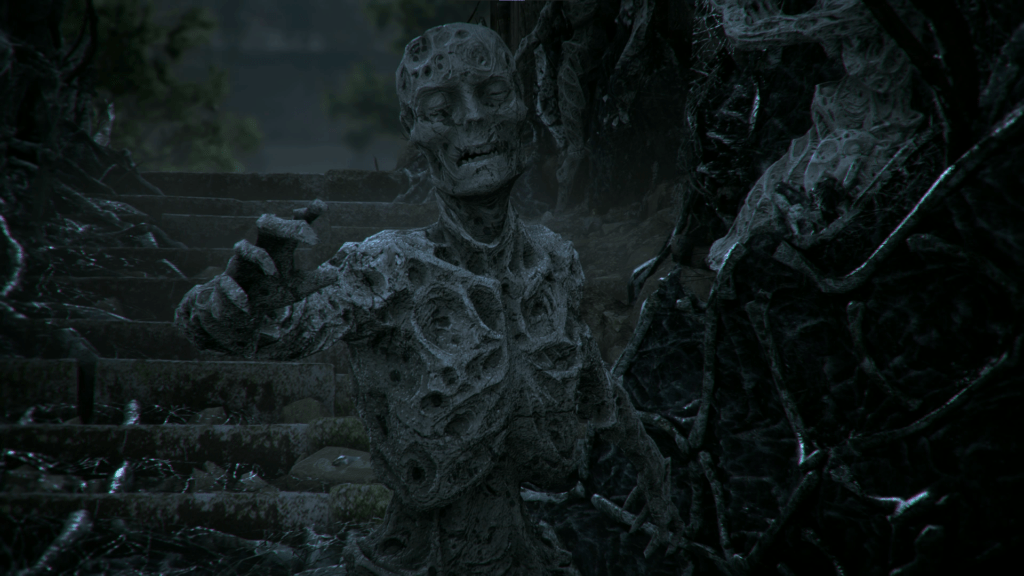
What is particularly impressive is the astonishing amount of detail. From tiny scratches and signs of battle on armor, weathered stone walls and magnificent architecture, to vegetation slowly reclaiming ancient ruins, almost every part of the environment tells a small story of its own. Ancient ruins feel cold and mysterious, while enormous arenas illuminated by fire somehow manage to appear majestic and terrifying at the same time.
Perhaps the greatest charm, however, lies in the way the game plays with light, especially considering that light itself is one of its central themes. Sunsets transform entire landscapes into delicate blends of gold and orange, while rays of sunlight break through buildings and stretch across rocky cliffs, creating scenes that make it almost impossible not to stop for at least a few seconds and simply admire them.
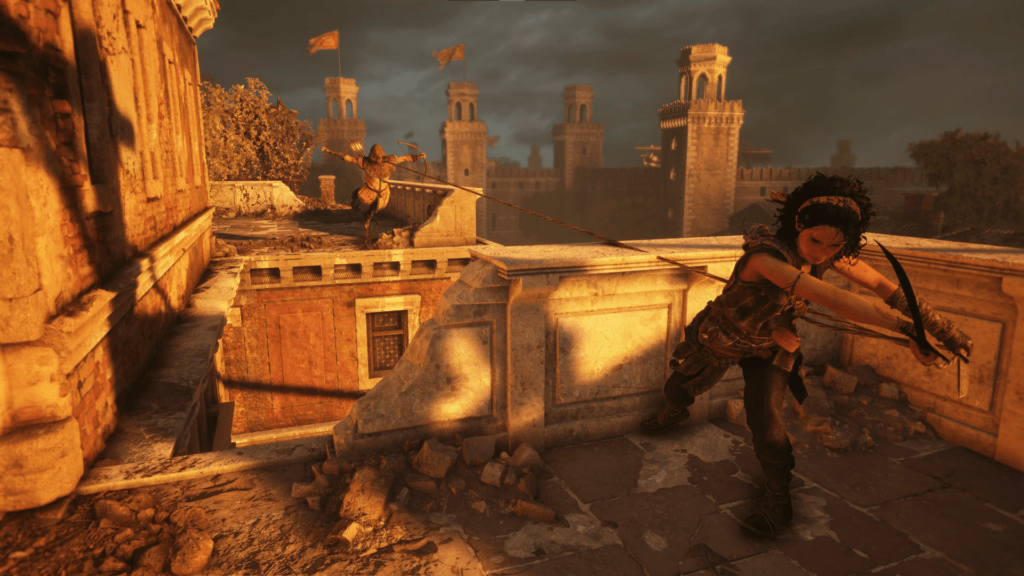
On the other hand, underground chambers and forgotten ruins are wrapped in colder tones and deep shadows, meaning that moving from one location to another almost always brings a completely different atmosphere. Because of this, exploring the world never becomes visually monotonous. Here, the beauty of the world becomes part of the storytelling itself. One moment you are walking through an almost heavenly landscape drenched in sunlight and color, and the next you are descending into dark ruins that feel as though they have been hiding something for centuries – something that was never meant to be discovered. It is precisely this contrast that makes the world feel mesmerizing, yet simultaneously melancholic and slightly unsettling. Even the characters themselves are packed with detail, from the smallest cuts and scars to Sophia’s beautiful tattoos and the hairpins she can wear if you manage to find them throughout the game. A Plague Tale: Requiem was already visually outstanding, but Resonance somehow manages to surpass it with its sheer beauty.
NPCs also feel remarkably alive, as the vast majority of those you approach have their own dialogue. Their conversations never feel out of place for either the characters or their surroundings, and listening to them is genuinely enjoyable, especially since some of them are incredibly interesting. Sophia’s voice acting is fantastic, as always, and the same can be said for Faro, Leni, and the rest of the cast. Theseus, however, managed to give me goosebumps on several occasions simply because of the raw emotion carried in his voice.

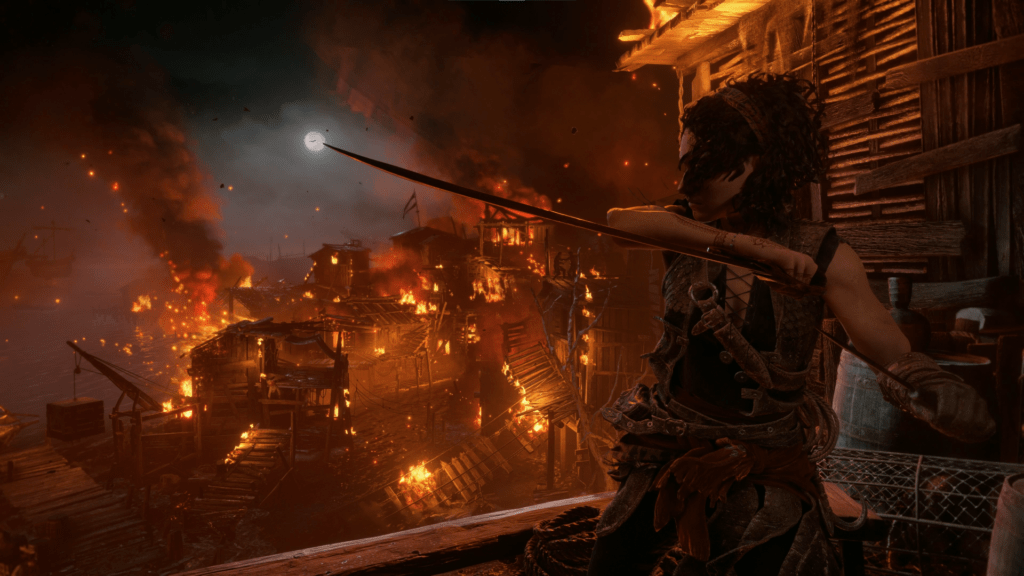
The soundtrack perfectly accompanies every step of Sophia’s journey, infusing her adventure with a distinctive Greek musical character that further emphasizes the spirit of the world around her. At one moment, its gentle and melancholic melodies evoke feelings of sorrow and longing, only to transform into powerful, almost monumental compositions that give every battle and major story moment a truly epic sense of scale. It is precisely this ability of the music to move alongside the story, shifting effortlessly from quiet melancholy to overwhelming grandeur, that makes it the perfect companion to Sophia’s journey.
At the End of the Golden Thread
I still remember the first time I played Uncharted 4 and how completely captivated I was by practically every frame the game presented to me. While playing Resonance, Uncharted frequently crossed my mind because of how strongly certain sections reminded me of it. I genuinely do not think I have played a more beautiful game this year. However, Resonance is not merely a beautiful game, this game has a soul. That soul is built not only from its breathtaking scenery, but from everything that stays with you long after the end credits have finished rolling. It comes from its engaging and significantly more dynamic combat, the lovable characters who are almost impossible not to become attached to, and, above all, Sophia’s journey and her mysterious connection to Theseus.
Then there is the myth of the Minotaur, which gives the entire adventure an equally epic and terrifying dimension, while its threads carefully intertwine with the story we already know through Amicia and Hugo. The way the game connects past and future, myth and reality, Sophia’s fate and the legacy of the Prima Macula gives its story far greater weight than you could possibly anticipate at the beginning.
All of this is accompanied by music that seems to breathe alongside Sophia and the world around her, shifting from melancholic melodies to magnificent compositions whenever the adventure demands it. And just when you finally believe that all of the golden threads have been connected and the story has reached its conclusion, its final moments leave us with one more intriguing question – could Asobo Studio already be hinting at another prequel?
Resonance: A Plague Tale Legacy (PlayStation 5)
Resonance: A Plague Tale Legacy proves that a story does not have to move forward for a series to take a major step forward. By returning to the past, Asobo Studio has not merely filled in the gaps left by the previous two games, it has managed to give this familiar world an entirely new dimension. Sophia finally gets the opportunity to tell her own story, and her journey proves to be far more than a simple prequel. Instead, it becomes an important piece of a much larger puzzle, one that further deepens everything we thought we knew about this world.
Resonance may trade much of the stealth for considerably more brutal and dynamic combat, but it never loses the most important thing that made the previous games so special - emotion. Behind every spectacular landscape, epic confrontation, and ancient mystery lies an incredibly human story about loss, growing up, destiny, and the need to find answers to the questions that continue to haunt us. Asobo Studio has once again demonstrated just how carefully it knows how to weave its stories. This time, those threads lead us through Greek mythology, ancient ruins, Sophia’s past, and the mystery of the Prima Macula, until they eventually intertwine with the story of Amicia and Hugo in a way that gives the entire journey even greater meaning.
And when the end credits finally begin to roll, that familiar feeling A Plague Tale knows how to evoke so well remains - a mixture of sadness, admiration, and the desire to stay in its world for just a little longer. If this truly is only one more thread in a much greater story, then all that remains is to see where Asobo Studio will lead us with it next.