


The Voice of Hind Rajab is a movie directed by filmmaker Kaouther Ben Hania. Story tells the last moments of a six-year old girl Hind Rajab caught in the war torn Gaza. The striking emotional performances and intense atmosphere, makes this a movie and a story that need to be brought to the whole world. We caught up with Saja Kilani the actress which portrayed Rana and spoke about the power of the film, poetry and movie recommendations.
VRK: What do you remember about the casting process for The Voice of Hind Rajab? Was it
done on the spot, or you had to record yourself and send the video? And were there any
specific guidelines for the audition?
Saja Kilani: It was a self-tape process. I recorded and sent my audition, but the story of the film was kept
hidden throughout the process. The directions were minimal, with an improvised style that
focused on honesty and emotional.

VRK: When you got confirmation that you will play Rana, did you meet her before filming? Did
she help shape the character, and how did she react to the film?
Saja: I didn’t meet Rana before filming but the first thing I did after receiving the script was get in
contact with her. Her response after watching the film was very moving and meant a great deal
to me. She felt that her emotions were mirrored, and I carry that with a lot of gratitude.
VRK: Before joining the film, were you familiar with Kaouther Ben Hania’s work? Did working
with her teach you something new?
Saja: Yes, I am a big fan of Kaouther’s work. Working with her was like attending a masterclass every
day on set. She is a true leader and her passion for what she does can only inspire you as an
artist.
VRK: The film uses Hind Rajab’s real voice recording. How did hearing it influence your
performance and the set dynamics?
Saja: Hearing her voice grounded everything in reality. It deepened the emotional weight for all of us
and created a shared sense of responsibility on set.
VRK:The film creates a strong sense of dread through silence and pacing. Did you feel that
during filming, or only when watching it?
Saja: We felt the intensity while filming, but it became even more powerful when watching the final
cut.
VRK: After the premiere, audiences were deeply affected. Do you think the director intended to
highlight helplessness and make viewers reflect?
Saja: The film invites the audience to witness, and question their own role in responding to such
realities.
VRK: The film is set in one room with glass walls. Was that based on reality or a creative
choice?
Saja: I think it was Kaouther’s creative choice to tell the story from that perspective, inspired by reality.
VRK: Is there a scene that stayed with you emotionally?
Saja: Yes, the scene where I read the verse from the Quran with Hind. It’s one that I feel will stay with
me for a long time.

VRK: Can you recommend five Arab films that might have gone under the radar?
Saja:
● 3000 Nights
● Chronicles from the Siege
● Gaza Mon Amour
● The Man Who Sold His Skin
● 200 Meters
VRK: As a poet, do you feel poetry still has the power to transcend cultures and connect
people?
Saja: Absolutely. Poetry distills emotion into something universal, it can cross borders in ways few
forms can.
VRK: Do you have a message for audiences in Serbia who will watch the film?
Saja: Watch with an open heart. Allow yourself to feel whatever comes up, and if the film moves you,
start a conversation about it.
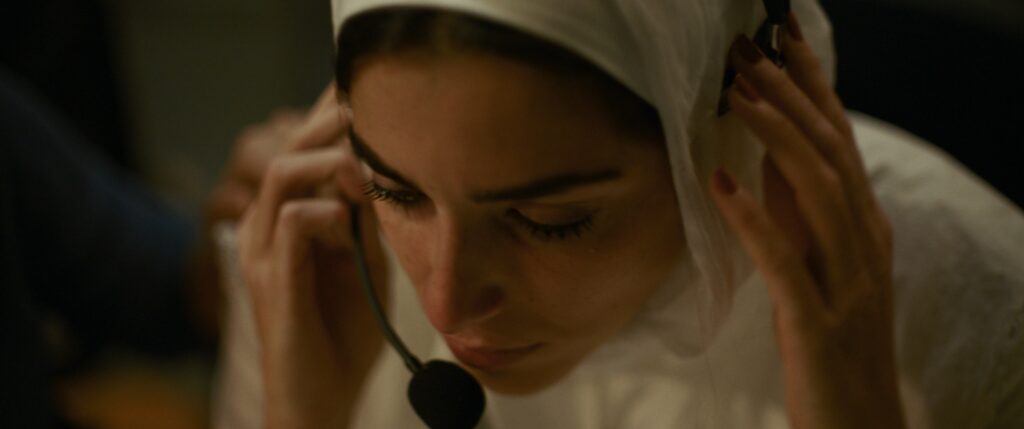
Photography Promo by Five Stars Films, Photo from the film MIME Films – TANIT FILMS.
