



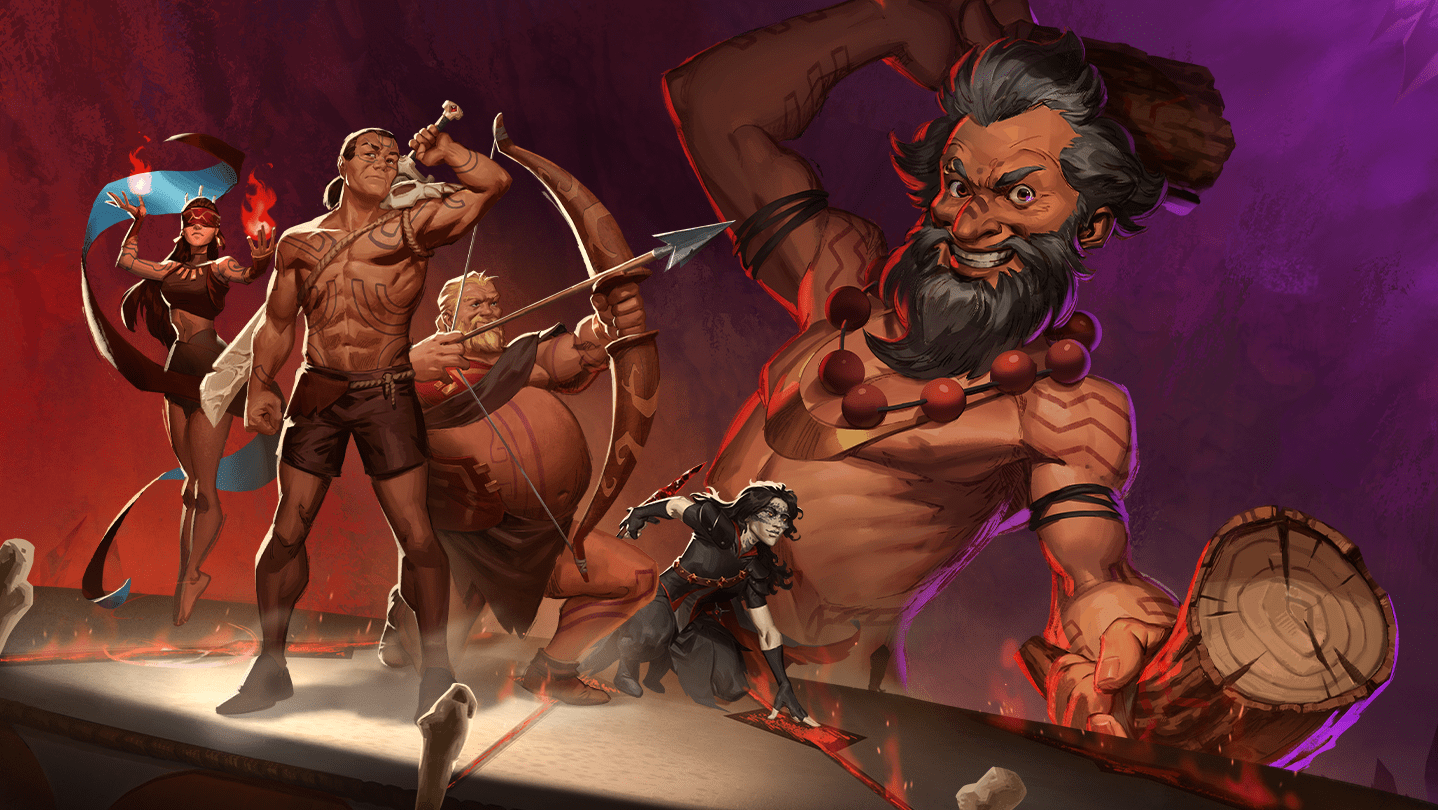


With Wardrum, Swedish developer Mopeful Games and Team17 deliver a fresh twist on the roguelite formula. The game combines turn-based tactics in the spirit of Fire Emblem and XCOM with rhythm game mechanics in which every attack is executed to the pulse of tribal drums and puts it in a roguelite shell. What initially sounds like a risky experiment turns out to be a mostly satisfying blend of strategy, timing and roguelite progression.

The story of Wardrum is kept simple and nothing to talk home about. A mystical force known as “Off-Beat Magic” has corrupted the land. Villages have fallen, creatures have been twisted into monstrous forms, and the world is on the brink of chaos. The player leads a group of five warriors determined to uncover and destroy the source of this threat.
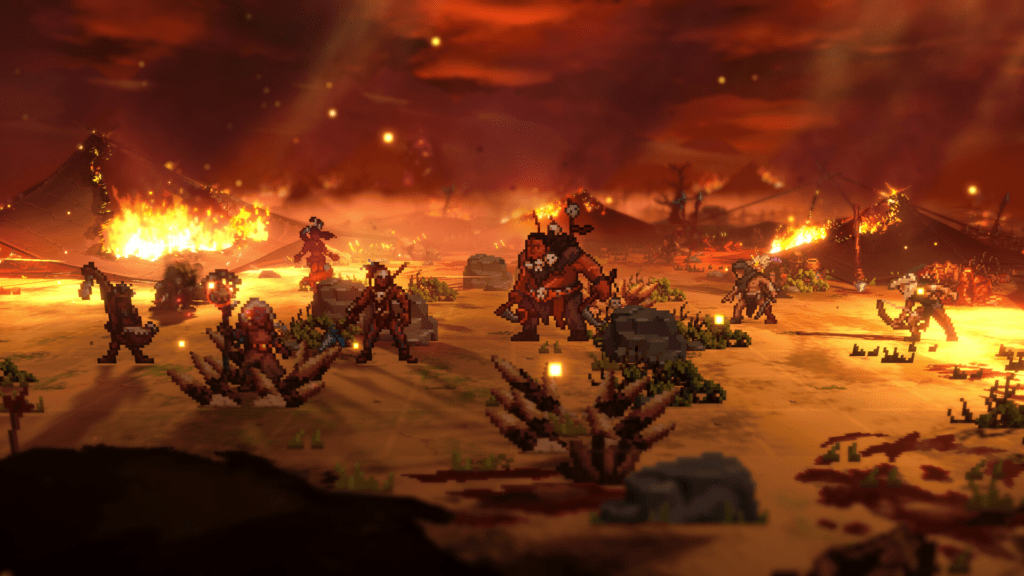
The setting blends tribal aesthetics with dark fantasy. Bone armor, totems and primitive weapons create a distinctive atmosphere. The world feels harsh, dangerous and ancient, a perfect match to the ever-ongoing pulse of the Wardrum that ties the entire experience together.
Although the narrative is not especially deep, it serves its purpose well by providing a compelling framework for the many battles and runs.
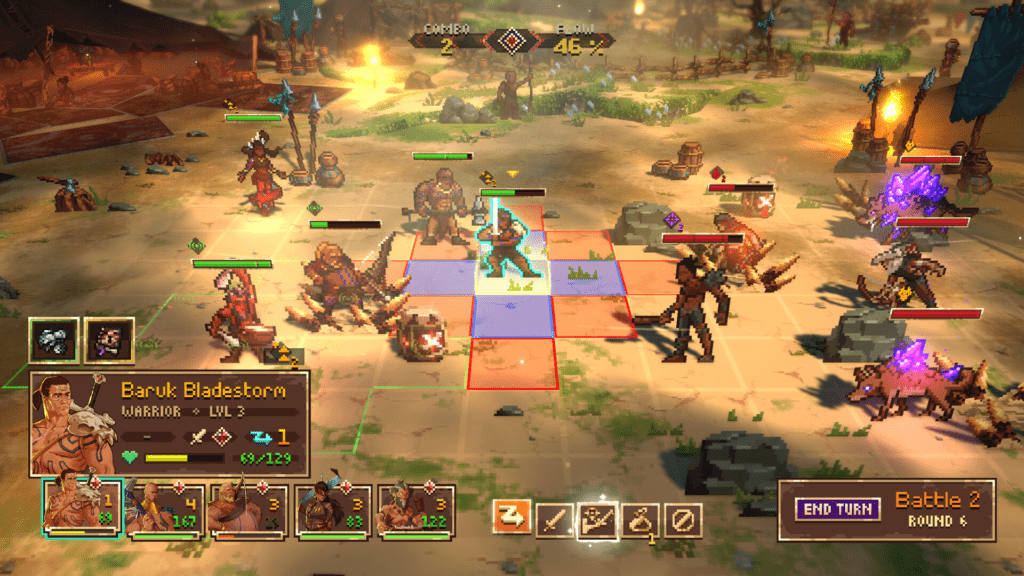
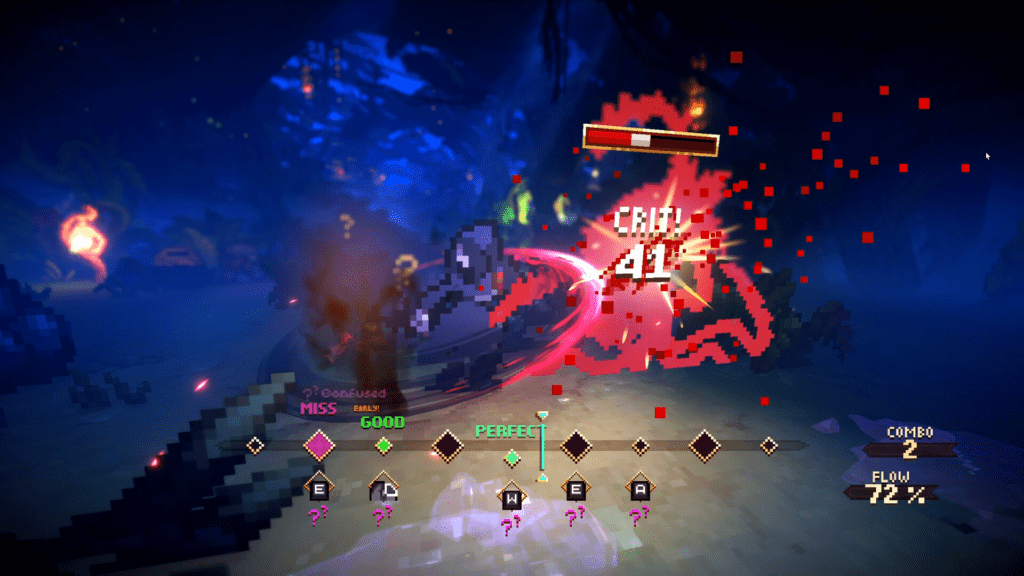
The heart of Wardrum is its combat system. On a square battlefield, players position their units and choose attacks or abilities. Once an action is triggered, a short rhythm mini game begins. The more precisely you hit the beats, the more effective the actions become. Missed beats deal little or no damage, good hits increase the effectiveness, perfect inputs trigger critical strikes or bonus effects. This mechanic adds tension to every move. Unlike traditional tactics games, victory depends not only on positioning and planning, but also on your sense of rhythm. Especially early on, when your characters are low level, the better you hit the rhythm, the easier the game gets, especially since enemies are tougher during the opening hours as well.
Each character features unique rhythm patterns. Archers may require holding and releasing buttons, while dagger users rely on rapid sequences of timed inputs. As a result, every character and every attack feels mechanically distinct. From the get-go the game expects you to understand the rhythm game inputs, but there is always a training ground available to practice attack chains and rhythm patterns, allowing even players unfamiliar with rhythm games to comfortably learn the mechanics.
The game begins with four classes, with additional ones unlocking over time. In total, Wardrum offers seven character archetypes with clearly defined roles. From frontline bruisers to ranged DPS and support casters, the roster covers a satisfying range of playstyles.
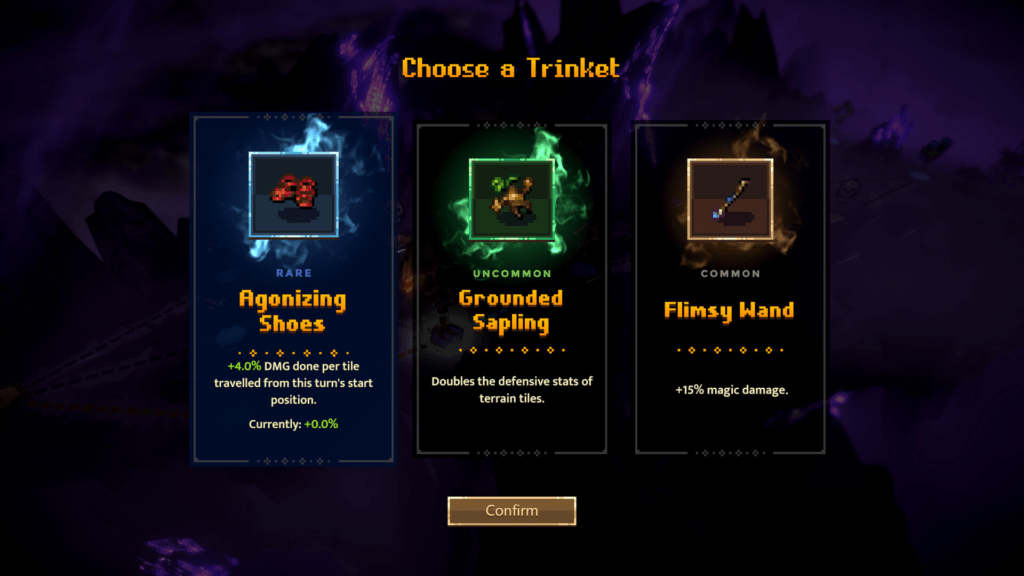
Each character has a talent tree featuring active and passive abilities. During a run, players can also discover artifacts and trinkets that significantly alter their builds.
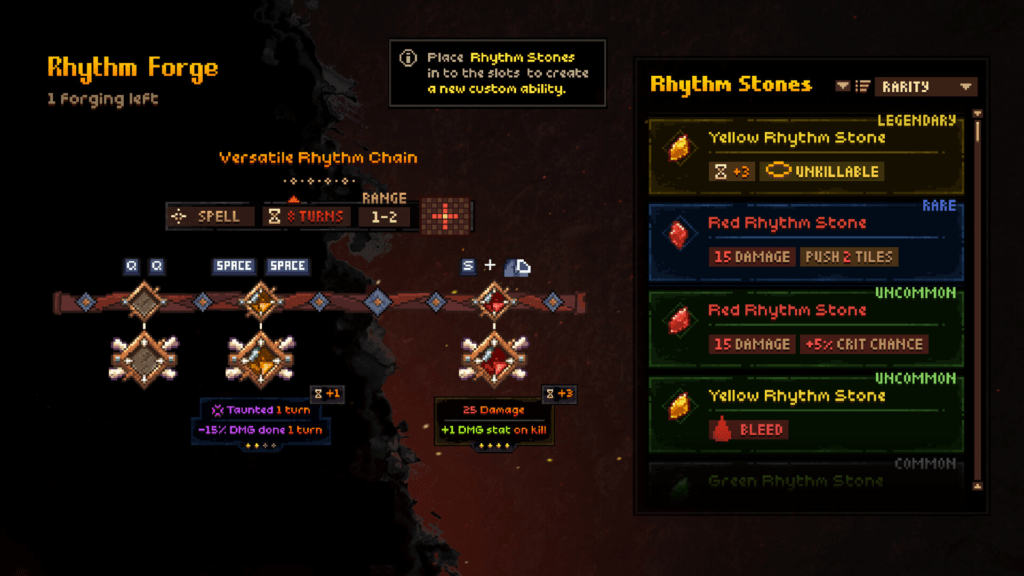
One standout feature is the ability to craft custom rhythm skills. Using collected resources, players can create attacks tailored to their preferred strategy and playstyle. This flexibility results in fun build options and strongly encourages experimentation.
One area where Wardrum truly shines is the pacing of its encounters. Battles rarely drag on for too long, largely because the rhythm system keeps every turn active and engaging. In many tactical roguelites, downtime between actions can become noticeable, especially during longer runs, but here the constant interaction keeps you mentally locked into the flow of combat. Every attack asks for your attention, and every successful combo creates a satisfying sense of momentum. When everything clicks together, Wardrum almost feels like conducting a battlefield orchestra where positioning, timing and instinct all work in unison.
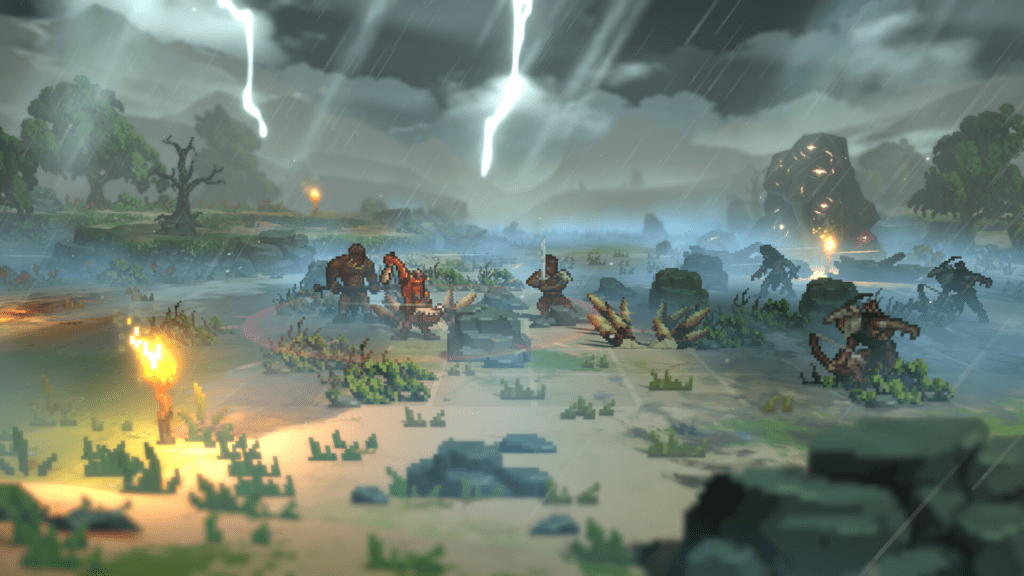
The enemy variety also helps keep combat fresh throughout the campaign. While early encounters are relatively straightforward, later biomes introduce enemies capable of disrupting both your positioning and your rhythm execution. Some enemies apply debuffs that alter timing windows, others create environmental hazards or force movement restrictions that completely change how you approach the battlefield. Certain elite enemies even manipulate the tempo itself, briefly shifting the rhythm pattern and forcing players to quickly adapt under pressure.
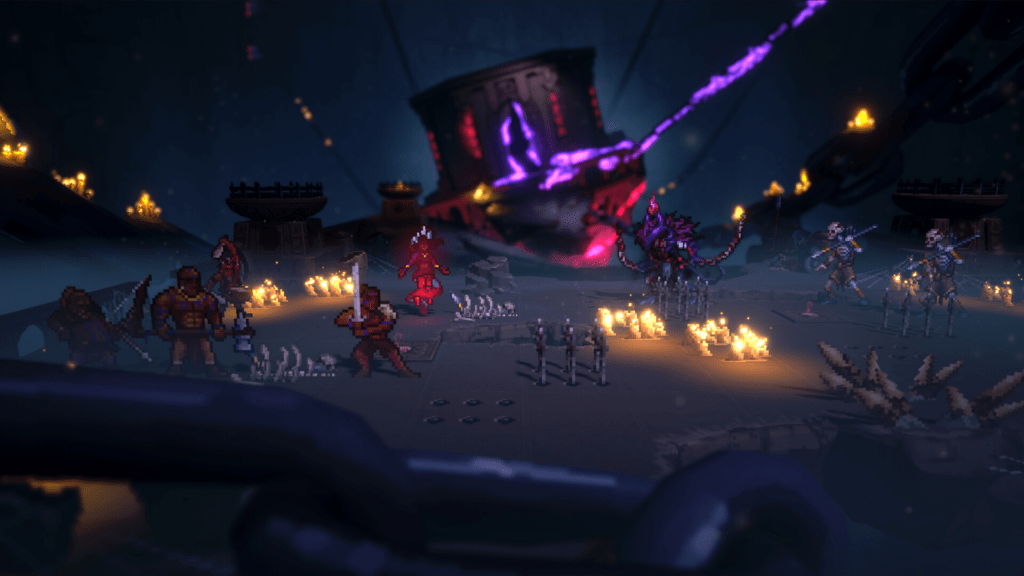
Boss fights are especially memorable because they fully embrace the game’s musical identity. Larger enemies often come with their own attack rhythms and unique combat gimmicks, turning encounters into tense battles of concentration and precision. Some bosses require players to perfectly balance defensive positioning with aggressive rhythm execution in order to survive. These fights can become stressful, but they also create some of the game’s most rewarding moments once victory is finally achieved.
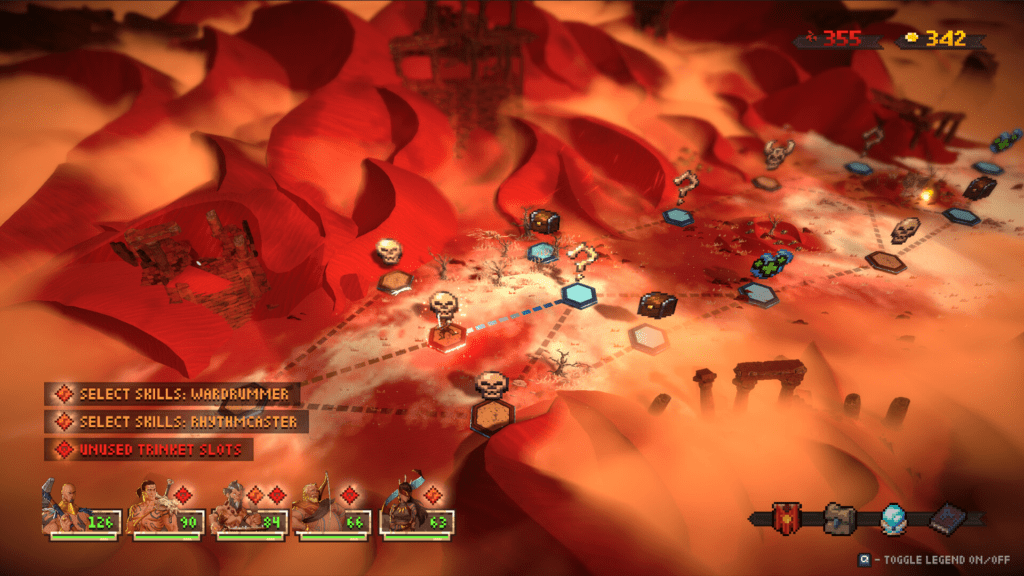
Like Slay the Spire and Darkest Dungeon, Wardrum is built around repeated runs. After each defeat, players return to a hub area where resources can be invested in permanent upgrades such as additional abilities, improved equipment or quality of life upgrades. This meta progression is essential because the early game is intentionally challenging. Even failed attempts produce meaningful long-term progress.
The hub itself gradually expands over time with new NPCs, crafting options and gameplay modifiers becoming available after successful runs. While the narrative remains lightweight overall, these additions help the world feel more alive and reinforce the sense of progression beyond simply unlocking stronger upgrades.
The world is divided into six biomes ranging from deserts to forests and cryptic ruins, and the procedurally generated maps, weather effects and environmental traps contribute greatly to replayability.
Visually, Wardrum’s stylised low-poly art direction is pleasing to the eye. Characters and monsters are richly animated, and environments are atmospheric and distinctive. Terrain features, hazards and movement ranges are always clearly visible and support the readability that is essential for tactical titles.
Perfect rhythm hits are accompanied by dramatic effects and impactful animations, making successful timings feel especially rewarding with a satisfying sense of impact.
Musically, Wardrum is built around tribal drumming that serves both as atmosphere and as a core gameplay mechanic. The soundtrack complements the setting and supports concentration during battles. While the central beats can become somewhat repetitive over time, they still manage to drive the player forward and reinforce the game’s identity.
A major advantage is the extensive calibration system. Players can adjust audio and input timing to account for hardware differences and personal preferences. To make the game as accessible as possible, players can also tweak rhythm tolerance, select multiple difficulty settings and reduce penalties for mistakes. These features make Wardrum considerably more approachable than many other rhythm-based titles.
Another major strength lies in how approachable the game remains despite its unusual premise. Combining tactical gameplay with rhythm mechanics could have easily resulted in an overwhelming experience, yet Wardrum introduces new systems gradually and gives players enough room to experiment before the real difficulty spikes begin. Early encounters almost function as extended tutorials, helping players naturally learn timing patterns and strategic positioning without excessive punishment.
That said, the game is not without flaws. Certain builds and rhythm skill combinations become noticeably stronger than others, especially once players discover synergies capable of chaining critical hits or stacking status effects repeatedly. Some classes also feel weaker during the early game until their skill trees become more developed. Random upgrade generation can occasionally create frustrating runs where experimentation feels limited by poor item choices.
Still, the sheer originality of Wardrum allows it to stand out in a genre crowded with familiar ideas. Few modern roguelites manage to feel genuinely fresh, and Wardrum succeeds by confidently committing to its unusual concept. The combination of tactical depth, rhythm-based execution and rewarding progression systems creates a unique identity that separates it from many of its contemporaries.
Wardrum is a fun and unique take on the roguelite formula. It successfully combines two genres that seem unlikely to fit together and transforms them into a distinctive and energetic experience.
The tactical battles are challenging enough to remain engaging for many hours, the rhythm mechanics are satisfying to master and the roguelite progression alongside the variety of characters provides lasting motivation. Although the game suffers from occasional balance issues and moments of repetition, its creativity and gameplay ideas far outweigh these shortcomings.
We would like to thank Team17 for providing us with the review code
Wardrum (PC)
Anyone open to fresh ideas and inventive twists on roguelite systems should absolutely give Wardrum a serious look. It may not be flawless, and the rhythm mechanics can initially appear intimidating, but the game does an excellent job accommodating all types of players, from complete beginners to rhythm game veterans, allowing everyone to learn the beat at their own pace. Wardrum may not be flawless, but it is undoubtedly one of the more exciting and unique roguelites of the year.


