


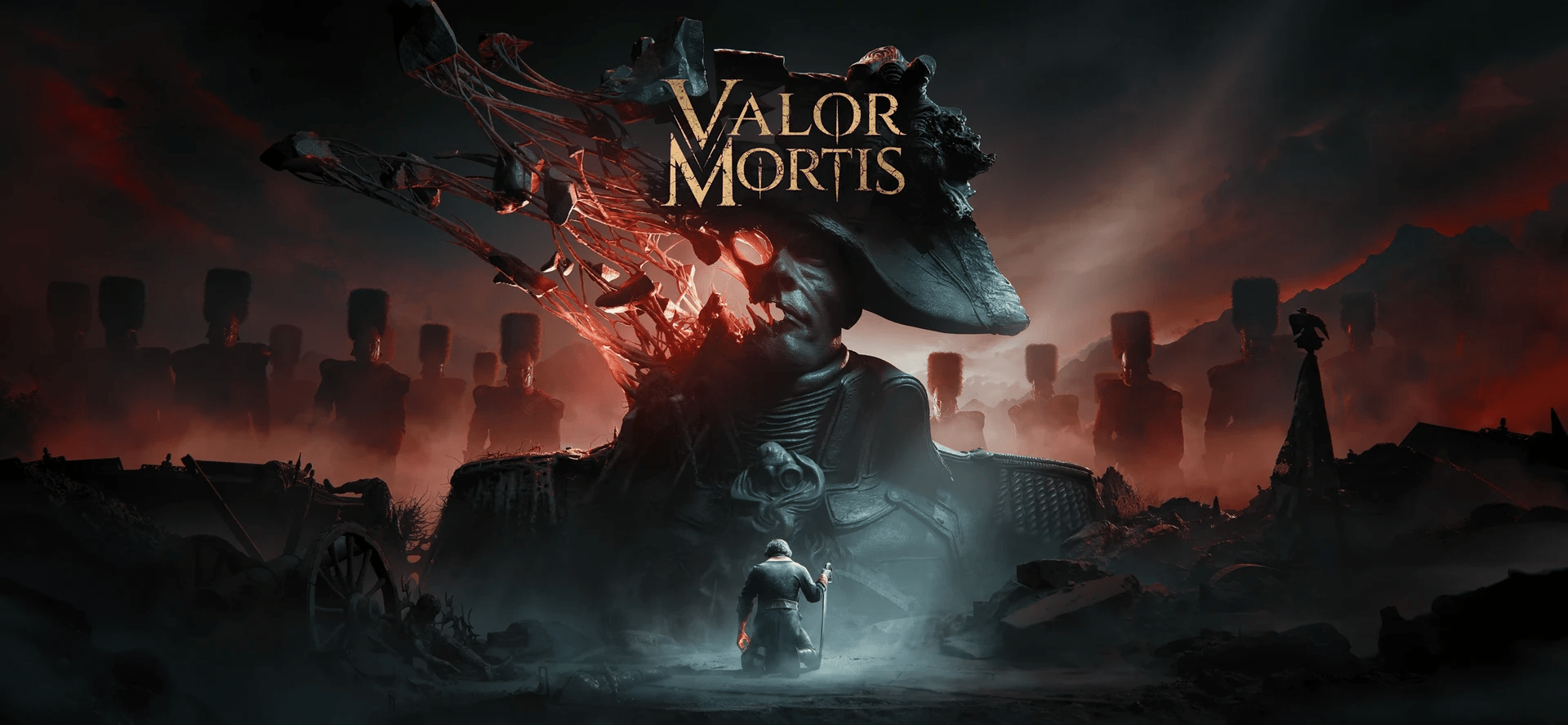


How often does it happen that you have little to no expectations for a game, only to find yourself becoming almost obsessed with it shortly afterward? That is exactly what happened to me with Valor Mortis. As a fan of the soulslike subgenre, the idea of a game combining its familiar difficulty and challenge with a first person perspective immediately caught my attention. The demo I played a few months ago only fueled my interest further, hinting that something truly special might be hiding beneath the surface. However, following a September packed with major releases, alongside numerous titles still waiting to arrive, it is hard not to wonder whether some games will unfairly find themselves overshadowed by much bigger names. I sincerely hope Valor Mortis will not be one of them, because this is a title that genuinely deserves a chance.

The game comes from the studio behind Ghostrunner, an adrenaline fueled experience defined by lightning fast action, a futuristic setting, and a post apocalyptic atmosphere. With Valor Mortis, the developers turn to a considerably different historical setting, placing us in an alternate version of the Napoleonic wars, where history intertwines with the terrifying elements of supernatural horror. However, do not let the historical setting fool you. This is not a story about a soldier fighting exclusively against human enemies. Terrifying creatures await you on the battlefield, and to survive their attacks, you will have to rely not only on your weapons but also on supernatural powers that make the entire experience even more intriguing. The result is a blend of historical fiction and soulslike mechanics that promises something different right from the start.
Hell On Earth Knows No Winners
Your story begins on a battlefield, where you awaken as William Dowsett, surrounded by piles of dead soldiers and with no memory of how you ended up there. As you attempt to piece together the puzzle and discover what happened, you encounter a soldier whose behavior raises suspicions. Although you wear the same colors and fight on the same side, he soon turns against you. It quickly becomes clear that something far worse than an enemy army lurks behind the horrors of war, a deadly plague that transforms soldiers into zombie like creatures.
However, the plague is not the only thing you will have to face. You soon encounter another soldier who has almost completely succumbed to its influence. After touching him, you gain the power to burn your opponents with fire, marking the beginning of your journey into the supernatural abilities that will prove essential to your survival. As a member of Napoleon’s Grande Armée, William gradually begins to question not only the purpose of the war he is fighting in but also his own existence. Why has his mind remained completely clear, untouched by the plague that has consumed his fellow soldiers? The answers do not come easily, but things become even more intriguing when the voice of Napoleon himself reaches out to you. He guides you through this nightmare and urges you to press onward in search of the truth behind the events that led to this tragedy. What caused the plague? What does it have to do with the war? And why have you, of all people, been spared its devastating effects? These questions form the backbone of a story that gradually unfolds as you venture deeper into the game’s world.
Throughout your journey, you will also meet several characters who help you find your footing in this hostile environment. Lucjan Skawinski serves as a guide of sorts, introducing you to the game world and some of its mechanics, while James Stewart, alongside another NPC, joins you at the HUB, a place you will frequently return to between expeditions. This location becomes your base of operations, offering a moment of respite and an opportunity to prepare for your next outing as you attempt to uncover the truth hidden beneath the horrors of war.
Death Is Inevitable, but Defeat Is a Choice
First, it is worth mentioning that the final version of the game differs from the demo in several respects. Certain weapons, as well as a boss from the first chapter that you could fight in the demo, have been moved to later sections of the full release. Although these changes are not particularly drastic, it is nice to see the developers rearranging certain elements, slightly altering the way the game gradually introduces its mechanics.
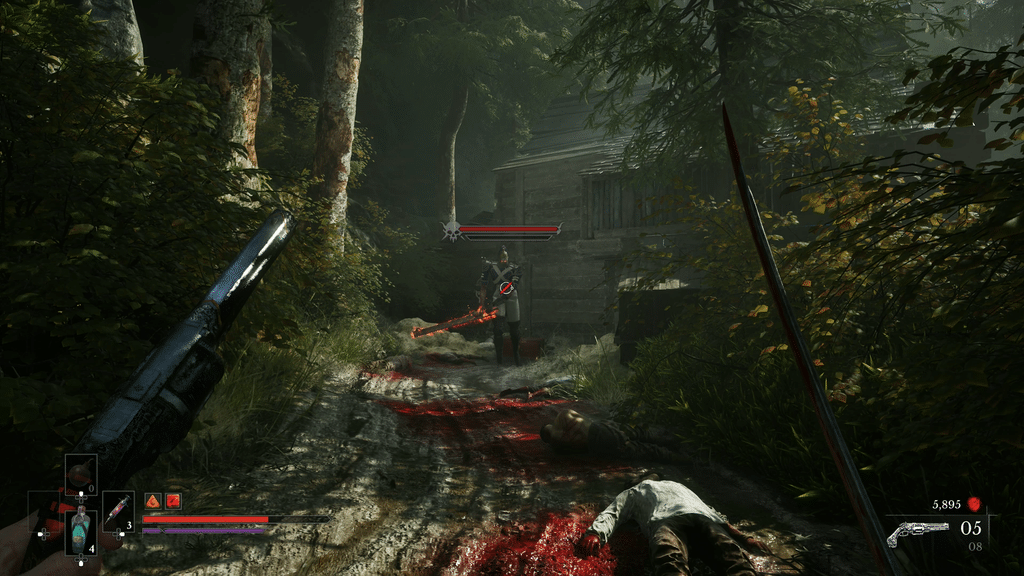
At the beginning, you have a saber at your disposal, featuring two basic attack types, light and heavy. Honestly, I rarely used heavy attacks, while the light attack’s somewhat inconsistent rhythm occasionally bothered me. The first three strikes flow naturally, but the fourth, a sweeping slash, feels slightly slower and more awkward, while the fifth is the slowest of them all. This is not necessarily a problem that will ruin your combat experience, but you will need to get accustomed to the rhythm of the animations if you want to get the most out of your weapon.
One of the most important elements of combat is the perfect parry. Successfully parrying a sufficient number of times opens up an opportunity to perform a critical attack that deals a significant amount of damage to your opponent. If you fail to get the timing right, William will still block the incoming strike, but he will lose some health in the process. Fortunately, you can recover that health by counterattacking. This system encourages a more aggressive playstyle, rewarding you not only for successfully defending yourself but also for being willing to immediately go on the offensive. Besides parrying, you can also dodge incoming attacks. If you execute a perfect dodge, time slows down for a few seconds, giving you an opportunity to deal additional damage to your opponent.
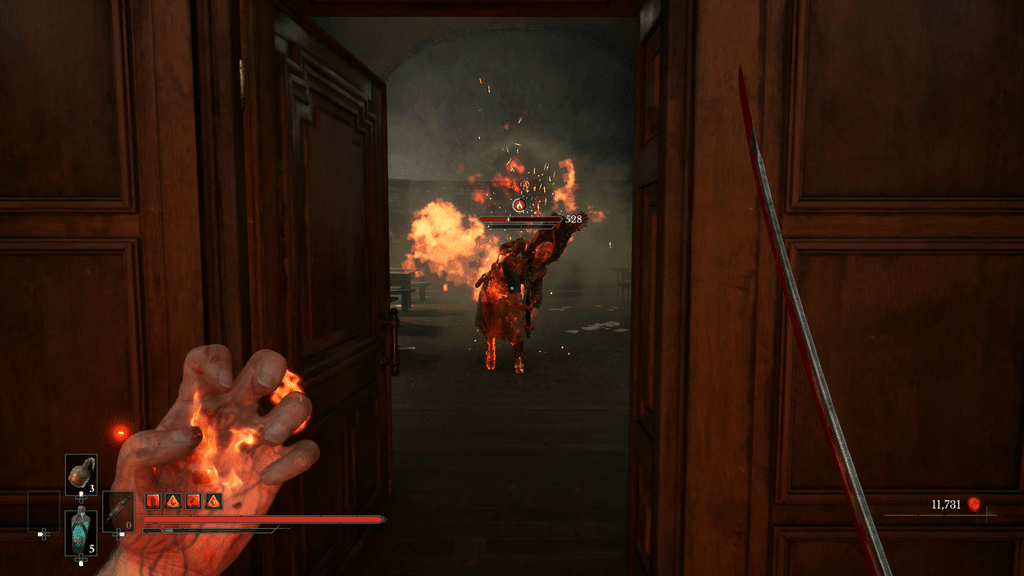
As you progress, you will unlock new abilities. One of them is Fire Transmutation, which allows you to set enemies ablaze once you have built up enough fire buildup. Soon afterward, you will obtain your first pistol, which serves a purpose beyond simply being another weapon in your arsenal. You can use it to target enemy weak points and deal massive damage, but also to activate certain environmental objects that open up new paths.
Interacting with the environment is one of the areas in which Valor Mortis truly shines. The developers provide numerous opportunities to eliminate enemies without relying exclusively on your own weapons. Explosive barrels can blow enemies apart, carts can run them over, boxes can fall on their heads, and pools of flammable oil can serve as perfect traps. These details encourage you to observe your surroundings carefully and think several steps ahead.
Things become even more interesting once parkour enters the equation. William can shoot while airborne, eliminate enemies by jumping on them, run along walls, and leap from one pole to another. Certain sections require you to combine all these mechanics into a seamless sequence. Valor Mortis does an excellent job of blending combat with parkour, rarely making the gameplay feel like a repetitive cycle of the same moves. As you unlock new weapons and abilities, your options continue to expand, and encounters with enemies become increasingly varied.
Still, I wish William had access to a wider range of powers. Besides fire, you can freeze certain objects and enemies, and unlock abilities that help you defend yourself against enemy attacks and projectiles. All of these abilities are useful, but as I played, I occasionally found myself wishing there were a few more powers to expand the possibilities for combining different combat approaches. Perhaps a future DLC will bring us some additional options.
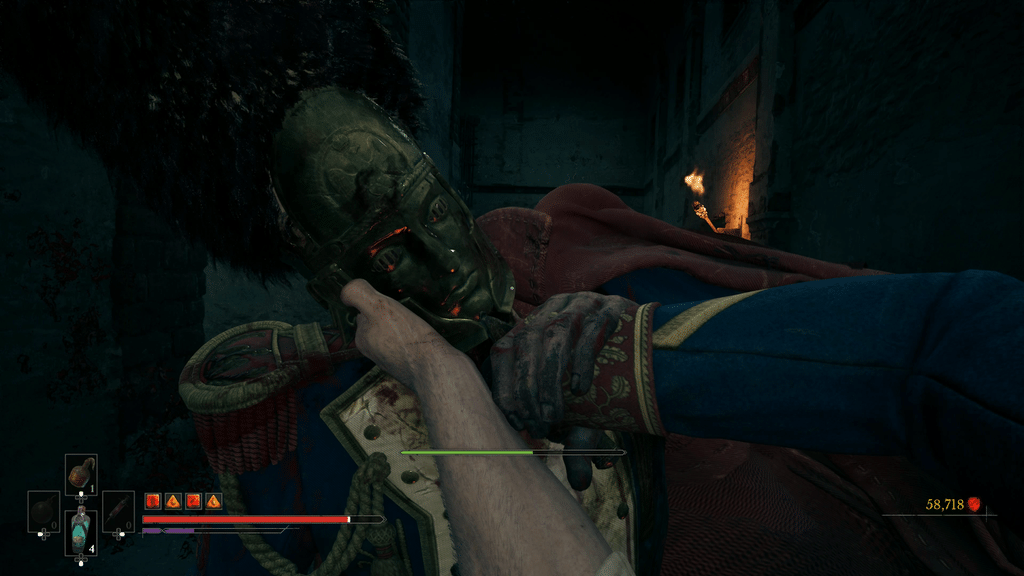
When it comes to weapons, the selection is interesting enough to let you tailor your playstyle to your personal preferences. Nevertheless, I relied on the saber most of the time, occasionally switching to the Rapier, which is considerably faster and allows you to target enemy weak points effectively at close range. As for firearms, alongside the standard pistol, I particularly enjoyed the Blunderbuss. This weapon proved extremely effective against ordinary enemies who managed to get too close, often eliminating them before they had a chance to strike back.
As far as enemy variety is concerned, I believe the game offers enough to suit its length. Over approximately twenty hours, new opponents are gradually introduced across different chapters and levels. You will encounter ordinary soldiers, enraged versions that behave more like wild beasts than the humans they once were, and fully mutated creatures whose appearance reveals just how drastically the plague has transformed them.
Boss fights, on the other hand, are somewhat inconsistent. Some bosses have exceptionally striking designs, but their difficulty does not always match the ambition suggested by their appearance. Certain encounters pose a serious challenge, while others are so easy that they barely leave an impression. Interestingly, the first boss, the same one I fought in the demo, remains one of the most difficult encounters in my memory. Perhaps this was because I was still learning the game’s mechanics at the time, but the later encounters showed me just how much the quality of boss fights can vary.
Still, when Valor Mortis gets the formula right, the result is truly unforgettable. One of my favorite boss fights forced me to use almost everything I had learned up to that point. I had to carefully dodge attacks, use my available abilities, and rely on the speed and skills I had developed over the preceding hours to climb toward the enemy’s weak point. Then came the second phase, where I found myself face to face with the boss and had to use almost all the ammunition I had saved up until then. It is a shame that this level of creativity and challenge is not present in every boss fight, because this encounter demonstrated just how far the developers’ ideas can go.
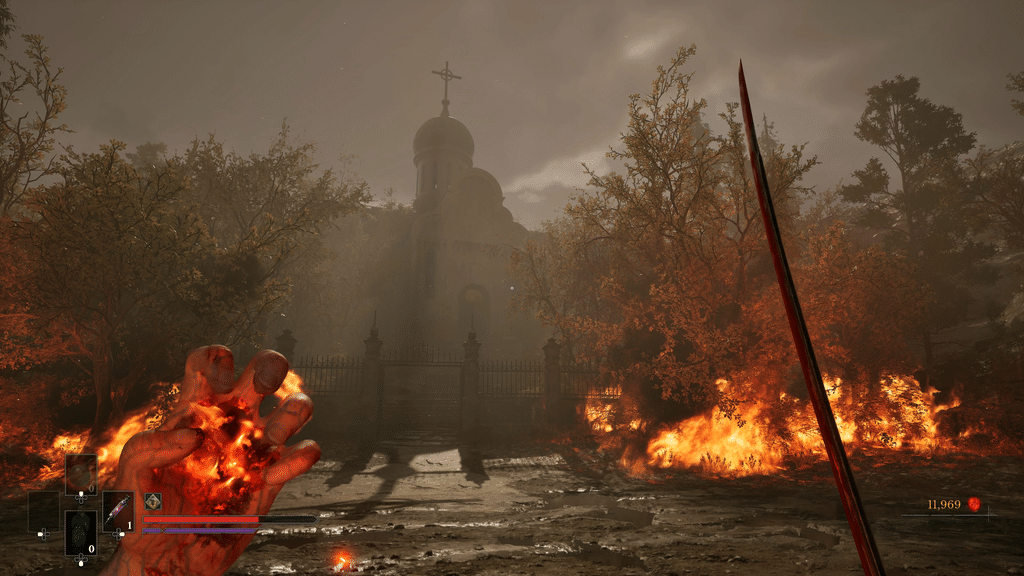
Of course, combat and exploration would not be complete without a progression system. William has access to a skill tree that can be opened whenever you are near a lamp. At the beginning, you choose between increasing your maximum health, the amount of Nephtoglobin, a resource that allows you to use your abilities more frequently, or your maximum stamina. As you reach certain levels, you unlock new branches and additional ways to customize your character.
A particularly interesting part of this system is the Amber, which comes in four types distinguished by their colors and effects. Some allow you to restore health or Nephtoglobin, others improve your firearms, while certain types increase the damage you deal with melee weapons. Progression, however, is not particularly fast. In the later stages of the game, you will need increasingly large amounts of Catalyst to level up, which can make the process feel a little slow if you want to unlock absolutely everything available to you. Fortunately, the skill tree is not particularly large, so this system never becomes a serious problem. I finished the game at level 53 with my pistol and saber fully upgraded, without needing to farm enemies just to become stronger.
Besides the main quest, Valor Mortis offers several side quests that you will encounter throughout your missions. Although they are generally not particularly long, they are interesting enough to justify the extra exploration. In one of them, you must track down and eliminate a number of stronger enemies, and the reward you receive after defeating them all can prove very useful during the later stages of the adventure. Other quests offer you choices, forcing you to decide whether to deceive someone, fulfill their request, or find an alternative solution. These situations add variety and give you a chance to stray from the main path for a while without making you feel as though you are simply ticking off a checklist of side activities.
All in all, Valor Mortis successfully combines fast paced first person combat, parkour, and supernatural abilities into an experience that rarely leaves much room for boredom. Although not every element is equally well balanced, from occasionally inconsistent attack animations to boss fights that vary in quality and difficulty, the game has enough creative ideas to keep you engaged.
An Atmosphere That Speaks Louder Than Words
If you ever get lost or forget certain story details while playing, there is no need to worry. William diligently records his thoughts, and his journal serves as an encyclopedia of everything you have discovered so far. It contains information about the characters you have met, the enemies you have faced, and the levels you have explored.
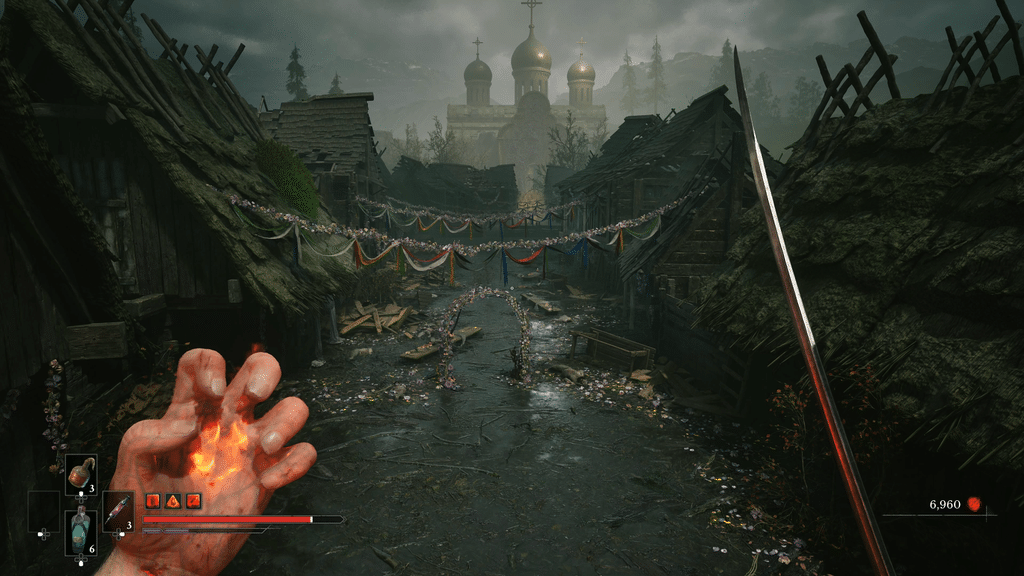
Speaking of levels, Valor Mortis certainly has a lot to be proud of. The environments are beautifully designed, and their atmosphere often communicates far more than the dialogue itself. I came across a post on Twitter in which one of the developers revealed how much they love Resident Evil 4 and expressed a desire to bring some of that game’s atmosphere into Valor Mortis. After learning that, you probably will not be surprised if a small village evokes familiar memories and reminds you irresistibly of the iconic locations from Capcom’s horror game.
However, this influence is not simply a matter of copying familiar motifs. Instead, it forms part of a broader vision of a world where historical tragedy intertwines with supernatural horror. That combination is precisely what gives Valor Mortis its distinctive identity. War has already left more than enough scars, but the plague that distorts people and turns them into monsters gives the entire tragedy an almost surreal dimension. The bodies of fallen soldiers, ruined buildings, and traces of life that once existed here merge into scenes that are simultaneously horrifying and strangely beautiful. At times, it feels as though the entire battlefield has become a dark work of art, as if death and destruction have somehow managed to create something almost mesmerizing despite everything. This beauty never diminishes the horror of what you are witnessing. Instead, it makes it all the more striking.
I particularly enjoyed how much the atmosphere changes from one area to another. At the very beginning, you find yourself on a battlefield that feels oppressive, claustrophobic, and chaotic. Everything around you seems far greater and more powerful than William himself, while the piles of bodies, destruction, and overwhelming sense of hopelessness create an atmosphere that almost physically weighs you down. However, not long afterward, you arrive in a small valley covered in colorful flowers. Its warm colors and peaceful appearance offer an almost surreal respite from the horrors you have witnessed so far. This contrast is particularly effective because it allows you to catch your breath for a moment while simultaneously reminding you of everything you have left behind.
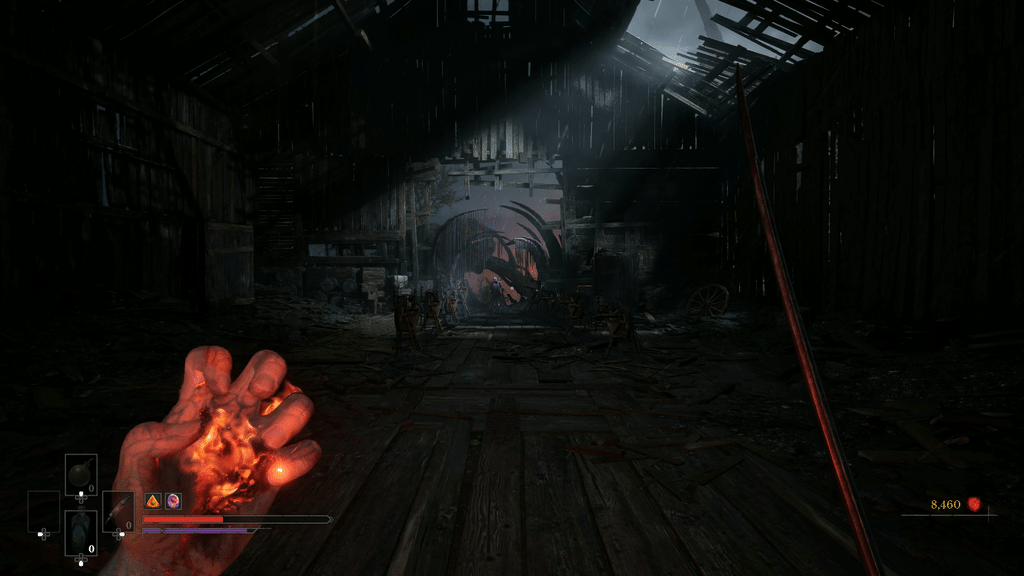
Later, you will find yourself in a dilapidated fortress, where one of the most memorable sights for me was the sunlight streaming through a shattered window. In a place that seems completely lifeless, that small beam of light feels almost like life itself attempting to find its way into a place that has long since lost all hope. Moments like these demonstrate just how much visual design can contribute to storytelling without a single word being spoken.
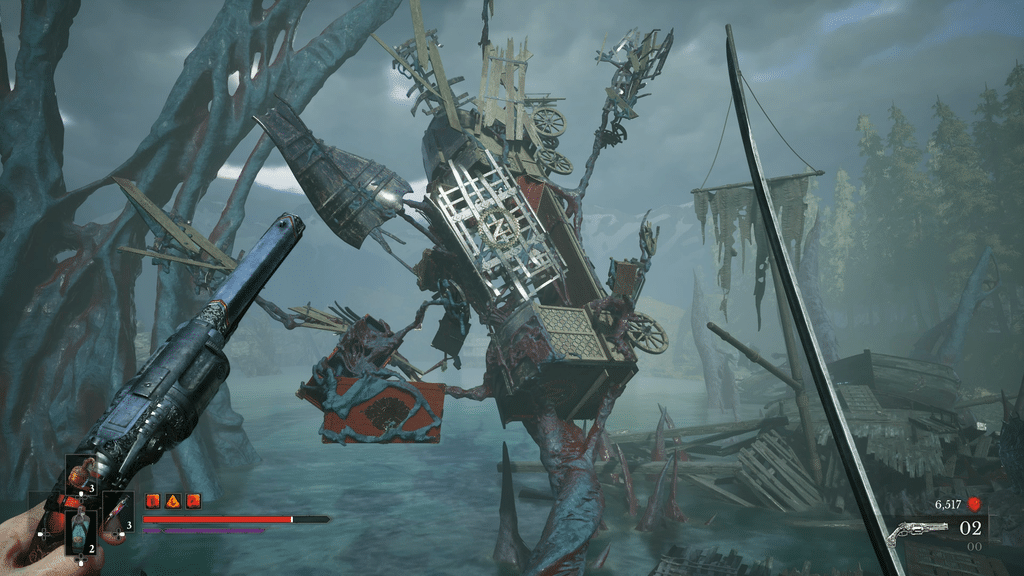
The visual effects are equally impressive. They are particularly effective in dark areas, where you can activate Fire Transmutation and use its flames to illuminate your surroundings and finally see where you are going. The attention to detail extends to the designs of enemies and characters, as well as seemingly minor elements such as the Amber. Each type has its own distinctive details, for instance, pink Amber often contains an insect, while green Amber tends to feature some kind of plant. All of this demonstrates just how much attention has been paid to the game’s visual identity.
When it comes to voice acting, Valor Mortis boasts an impressive cast. Vincent Cassel voices Napoleon himself, while Jennifer English, whom many players will recognize from her previous roles in video games, portrays The Shrike, a character determined to put an end to Napoleon’s reign. James Alexander lends his voice to the protagonist, William, while Adam “Nergal” Darski also deserves special mention for his portrayal of Captain Raphael – a character who, I believe, will stay with you long after the credits roll.
Imperfection That Promises Great Things
Valor Mortis pleasantly surprised me and reminded me how wonderful it feels when a game manages to capture your interest even when you initially expect very little from it. Its combination of soulslike mechanics, first person combat, parkour, and supernatural abilities offers enough freshness to stand out among the many games attempting to follow the genre’s established formula. The atmospheric world, striking visual identity, and intriguing premise also play a major role, transforming the Napoleonic Wars into something far more terrifying than a historical tragedy.
Of course, Valor Mortis is not without its flaws. I also encountered a few technical issues, and I believe the game could really benefit from a patch. Once you figure out how everything works, the experience becomes considerably easier, and some of the uncertainty and adrenaline that come with a real challenge begin to fade. The inconsistent animations, certain forgettable bosses, and abilities that you barely have any reason to use are all shortcomings that cannot simply be brushed aside, even if they do not diminish the overall enjoyment the game offers.
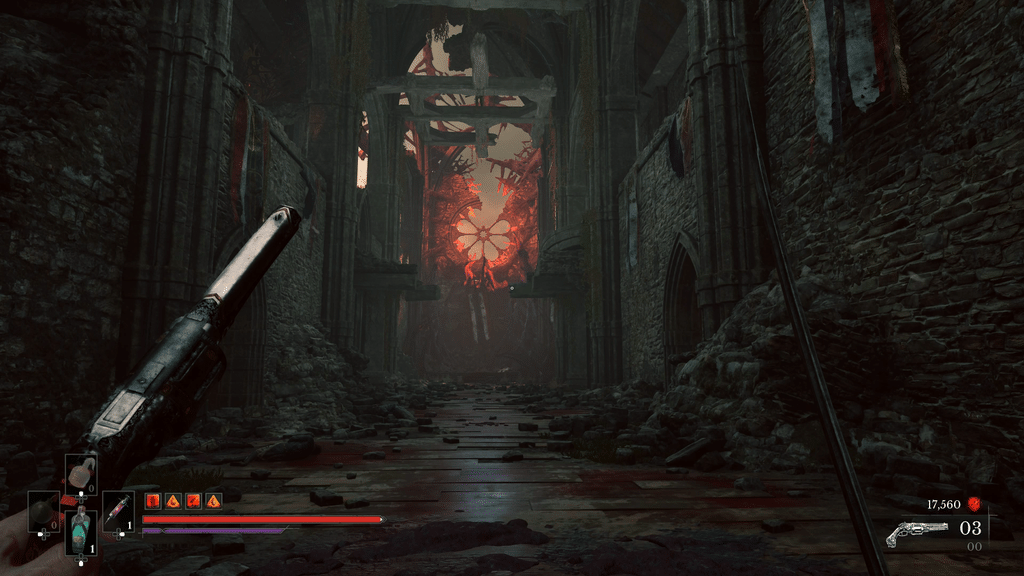
Still, I have to be honest, none of these flaws managed to overshadow the creativity at the heart of the experience. When all its mechanics come together, Valor Mortis demonstrates just how much potential there is in the idea of a first-person soulslike set in such a unique world.
At a time when we often find ourselves wondering whether a game is worth its asking price, it is worth noting that Valor Mortis is quite clear about what it offers. The Standard Edition costs €40, while the Deluxe Edition is slightly more expensive and includes the DLC scheduled to arrive in 2027. NG+ is also expected to arrive soon!
We would like to thank Lyrical Games for providing us with a copy of the game for review purposes.
Valor Mortis (PlayStation 5)
If you are a fan of soulslike games, dark atmospheres, and challenges that require you to learn from your mistakes, Valor Mortis certainly deserves a place on your wishlist. It may not hit the mark in every department, but it has enough character, ambition, and good ideas to leave a lasting impression. And if this is only the beginning of what we can expect from the studio that brought us Ghostrunner, I cannot wait to see what they have in store for us next.


