





I believe everyone on the planet has heard of RuneScape, the legendary MMORPG that launched a staggering 25 years ago and, to the absolute surprise of many, is still alive and kicking across almost every device imaginable. At this rate, we’re just waiting for a port to smart fridges and toasters so we can play it literally everywhere. That kind of longevity is pure proof of a phenomenal title that has effortlessly defied the passage of time in every conceivable way. Unfortunately, I never managed to play RuneScape seriously. I dabbled in it ages ago, but for a thousand different reasons, it never stuck. A few years back, I tried jumping into Old School RuneScape—essentially the classic build preserved for modern systems and mobile devices—but once again, I simply couldn’t find the time. So, I was absolutely thrilled when they announced RuneScape: Dragonwilds. A brand-new title set in a universally beloved universe, but delivering something entirely different. And since I’ve been sliding deeper and deeper into the survival genre over the past few years, I knew Dragonwilds would hit the absolute sweet spot the moment I got my hands on it.

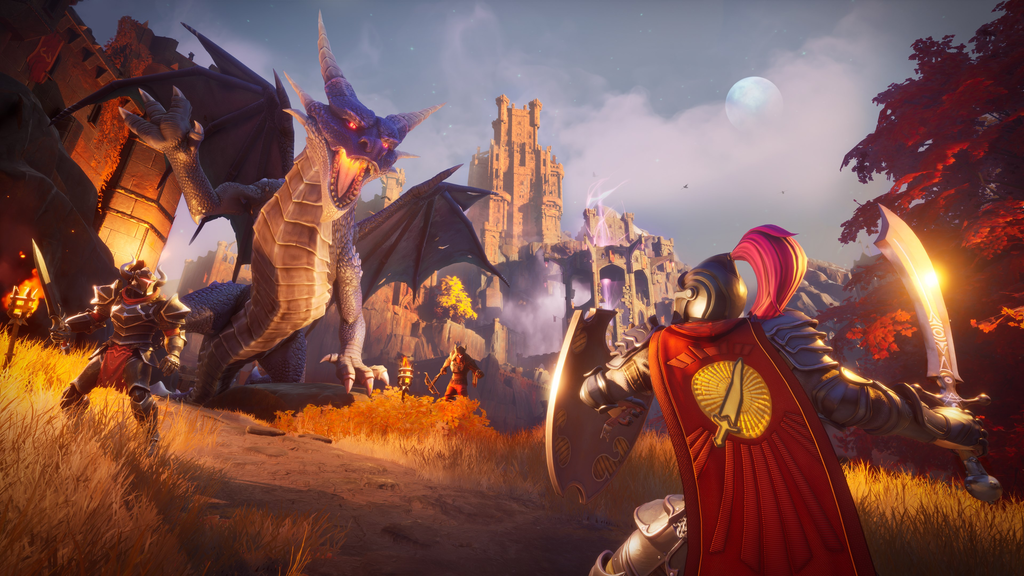
As I mentioned, instead of a classic MMO experience, this is a third-person survival adventure. You are tasked with exploring the uncharted continent of Ashenfall, scavenging resources, building shelters, crafting gear, and meticulously developing your hero to stand a chance against increasingly lethal threats—ultimately leading to a showdown with the Dragon Queen, Kuldra. Looking at that setup on paper, it doesn’t sound wildly original, right? Survival games have followed a very rigid formula for years, and the loop of gathering, crafting, base-building, and monster-hunting is something we’ve seen in countless titles. However, what Dragonwilds uses to aggressively separate itself from the pack is its RuneScape heritage—specifically, the iconic skill and progression systems, as well as a magic system that isn’t just a combat tool, but a fundamental aid in your daily survival. It is crucial to note right out of the gate that Dragonwilds is not a sequel to the existing MMORPG, nor is it trying to replace it. This is a standalone adventure set in the same universe, featuring its own pacing, systems, and narrative structure. You can play it solo or team up with up to three friends in co-op, which is more than enough to turn the exploration of Ashenfall into a glorious, shared expedition. The game received a steady stream of content during its Early Access phase, but on September 15, 2026, it finally hit version 1.0, dropping alongside the massive Scorned Wilderness update that officially concludes the first major Kuldra storyline. This means you aren’t jumping into an unfinished sandbox waiting for a proper ending; you are stepping into a fully realized, complete adventure that still leaves the door open for future expansions. That is incredibly cool, and I have to admit, I am genuinely happy I jumped in post-1.0 rather than before. I honestly don’t know if I would have had the patience to wait for the narrative conclusion.
The story unfolds on Ashenfall, a continent that hasn’t seen much mention in original RuneScape lore. The dragons have awakened, the land is in peril, and it is entirely up to you to uncover what actually happened and why Kuldra has become such an apocalyptic threat. Naturally, do not go in expecting a cinematic, narrative-heavy adventure where you sit through hours of cutscenes, track complex interpersonal drama, and make branching, world-altering decisions. Dragonwilds is fundamentally a survival game, so the story acts primarily as a framework that organically pushes you through different regions and gives you a tangible reason to keep exploring. A massive chunk of the continent’s history and the lore of its inhabitants is uncovered through quests, environmental clues, and scattered journals, rather than through non-stop exposition. I actually appreciate that the game refuses to bury you in lore dumps right at the start, though this approach is a double-edged sword. You will frequently have to connect the narrative dots yourself, and it is incredibly easy to miss fascinating world-building details if you strictly tunnel-vision the main quests. Hardcore fans of the RuneScape universe will undoubtedly get a massive kick out of recognizing familiar elements, factions, and the broader connective tissue of the franchise. You’ll encounter recognizable foes like Zogres and Black Knights, alongside entirely new monstrosities like the Garou. But even if you have never touched a RuneScape game in your life, you won’t feel like you are missing half the plot. Dragonwilds is engineered to function perfectly as a standalone adventure, though prior knowledge definitely adds a rich, satisfying layer to the experience.
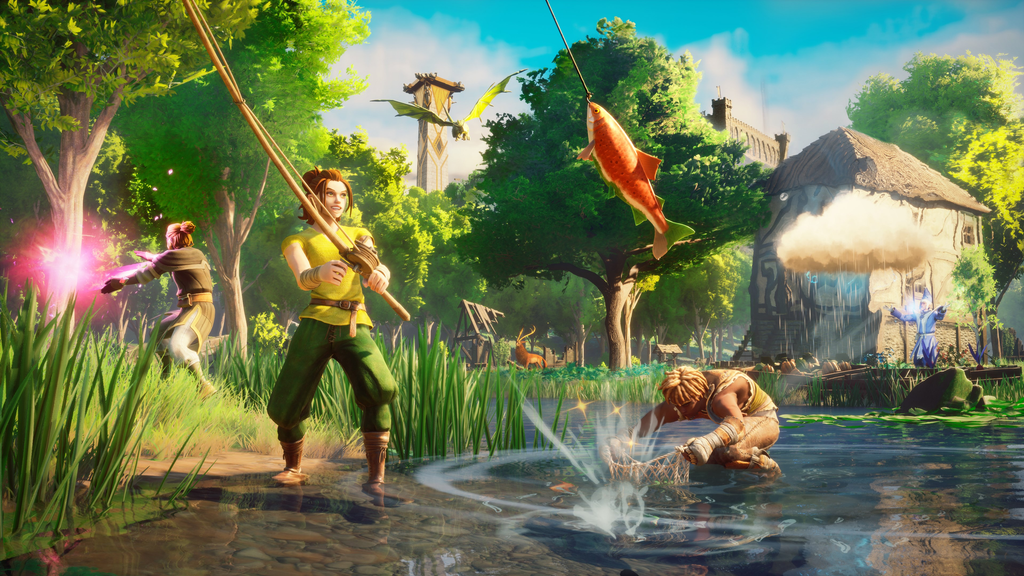
Far more important than the story is how the game handles its sense of progression. At the very beginning, you are practically a nobody. You have zero viable gear, you cannot go toe-to-toe with even the most basic predators, and even a simple trip to chop some wood can quickly spiral into a lethal disaster if you aren’t constantly checking your surroundings. Ashenfall is not a theme park where you can carelessly sprint from one quest marker to the next. You have to actively manage your health, stamina, hunger, thirst, and rest. Ignoring these basic human needs will swiftly put you in an incredibly compromising position. You don’t have to spend the entire 100-hour adventure obsessing over every single bite of food or sip of water, but the survival mechanics are prominent enough to constantly remind you that you aren’t on a tropical vacation. The core gameplay loop is wonderfully straightforward: explore, scavenge materials, craft gear, fight, and then head back out for rarer materials so you can push further inland. Early on, you will mostly be doing grunt work. You’ll chop trees, mine stone and basic ores, forage for plants, hunt for food, and craft primitive tools that simply allow you to access slightly better resources. From there, you start building workstations, smelting materials, and forging superior weapons, armor, and utility items. This all sounds highly familiar to anyone who has sunk time into Valheim, Enshrouded, or similar survival heavyweights. But Dragonwilds has one massive advantage: virtually every single activity is tethered to a dedicated skill system. This is exactly where that iconic RuneScape identity shines the brightest. Instead of just accumulating generic XP to level up your character, you develop distinct skills purely by engaging in specific activities. The more you do something, the better you get at it, and this natural progression gradually unlocks new capabilities and blueprints. Chop trees, and your Woodcutting skill rises; swing a pickaxe, and your Mining improves; forge gear, and your Crafting capabilities expand. I have to admit, I absolutely adore this system; it makes infinitely more sense than arbitrarily leveling up a character sheet.
Furthermore, there is a stark difference here compared to classic RPGs: you do not pick a class at the start, and you are never locked into a specific playstyle. Your character can engage in every activity and max out multiple skills, while the gear you choose to wear heavily dictates how you approach combat. If you want to rely on raw physical damage, you strap on heavy armor and swing a massive weapon. If you prefer magic, you swap your loadout and suddenly you’re Gandalf. The same applies to ranged archery builds. This fluid system is fantastic because it never forces you to commit to a single archetype for the entire campaign, but it also means you will have to invest serious time into grinding multiple different systems if you want to be truly prepared for everything Ashenfall throws at you. And trust me, it has plenty of nasty surprises. One of my absolute favorite things about Dragonwilds is how it utilizes magic. In most survival games, magic is strictly reserved for shooting fireballs or casting a few combat buffs. Here, it is a fundamental tool for everyday survival. You can summon a magical, ethereal axe that chops down trees infinitely faster than a standard tool; you can cast specific spells to extract ore and rare materials; and you can use short-range teleports to bypass hazards or escape a bad situation. Certain abilities even aid in foraging or allow you to magically yank fish straight out of the water in a highly unorthodox manner. In other words, magic isn’t just an ultimate ability you pop when a boss spawns; it is a vital utility kit that saves time and streamlines the survival grind. It is incredibly cool, and if you ask me, it is easily one of the most innovative ways Dragonwilds breathes fresh life into the established survival formula.
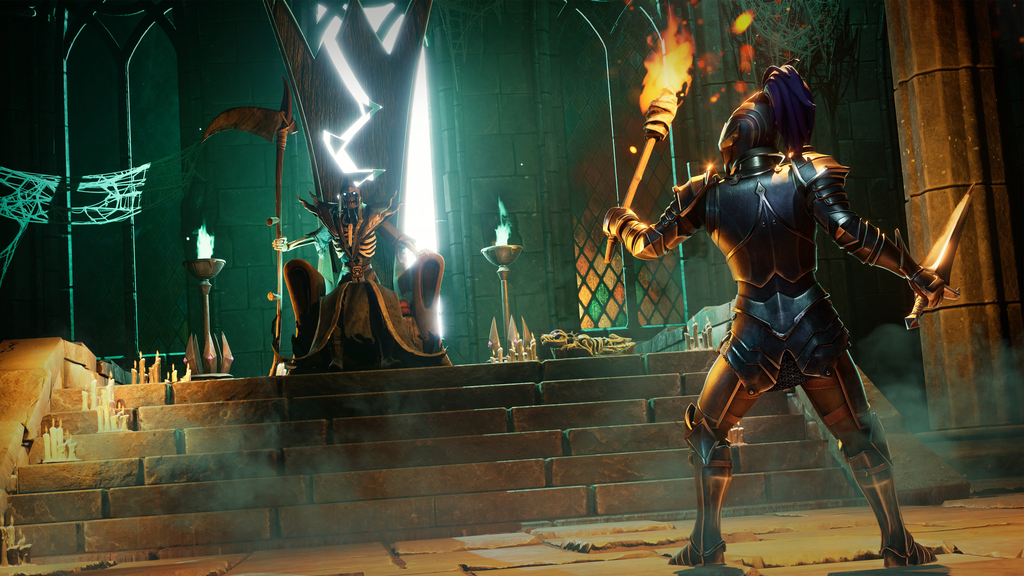
The crafting loop is practically second nature to anyone versed in the genre. You gather wood, stone, and basic fibers, construct a rudimentary workstation, and craft the tools or weapons you immediately need. But as you progress, the sheer volume of required ingredients and specialized workstations begins to balloon aggressively. To forge mid-to-late game armor and weapons, you need refined metals, treated fabrics, and exotic components that you can’t just pick off the ground. Some raw materials have to be processed through a highly specific workstation first. Then you realize that to even build that workstation, you are missing three other refined materials, which means you have to craft a completely different tool just to harvest them. It is incredibly easy to set out with the intention of crafting one specific sword, only to end up staring at a massive, multi-tiered grocery list of prerequisites. I don’t inherently see this as a bad thing, because this heavily nested system is exactly what gives the game its phenomenal sense of long-term progression. The problem only rears its head when the number of steps becomes so bloated that you spend more time playing inventory-management simulator than actually adventuring. Workstations are strictly divided by item categories, so eventually, you will have entirely separate tables for melee weapons, tools, armor, jewelry, bows/arrows, and magical focus items. While they all serve a distinct purpose, there are definitely moments where it feels like a few of them could have been consolidated to prevent your base from looking like a cluttered warehouse.
Because of this intense resource demand, exploring Ashenfall is just as critical as leveling your abilities. The world is not randomly procedurally generated for every new save file; it is a meticulously hand-crafted map divided into distinct biomes, each boasting unique characteristics, hazards, enemies, and resource nodes. As you push the main narrative forward, you unlock access to harsher regions and face increasingly demanding challenges. Every new biome provides the exact materials you need for your next tier of gear, but also introduces enemies that will violently force you to rethink your combat approach. However, you will rarely feel adequately prepared for what awaits you. You will frequently be forced to sneak into areas where the enemies wildly out-level you, simply because you desperately need a specific crafting material or need to trigger a quest objective. This is precisely why Dragonwilds can feel utterly brutal at times. You might set out on a seemingly simple resource run, only to find yourself ambushed by a pack of mobs that can easily shred your health bar in two hits. Simply carrying a decent weapon isn’t enough. You have to constantly evaluate if your armor rating is high enough, if you have cooked the right stat-boosting food, if you brought enough medical supplies, and if you are genuinely ready to commit to a fight. Sometimes, you just have to swallow your pride, execute a tactical retreat, run back to base, grind for better gear, and try again. It is highly frustrating when a sudden difficulty spike stonewalls a quest, but at the same time, it injects exploration with a palpable sense of danger that completely vanishes in other survival games once you reach the mid-game.
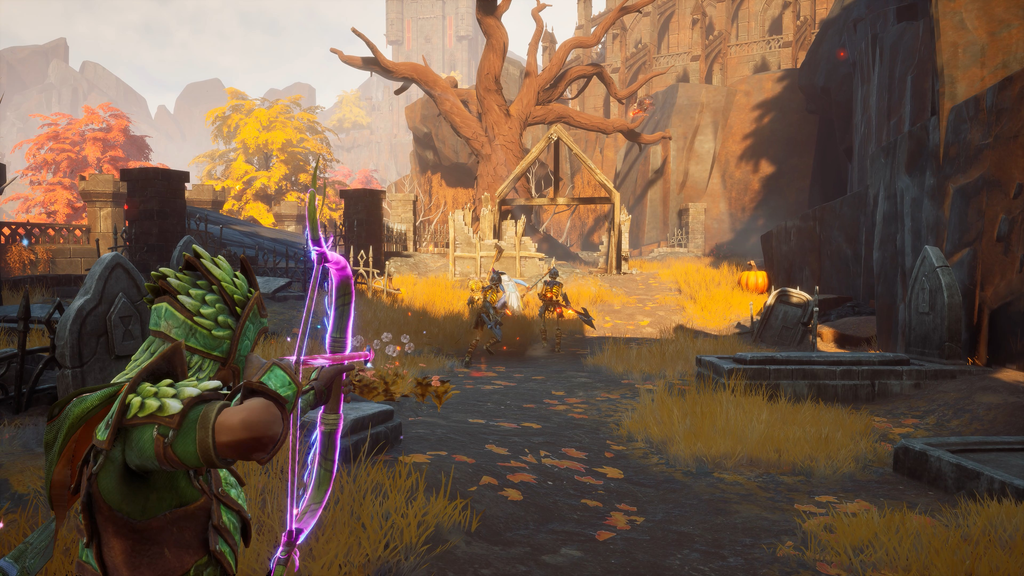
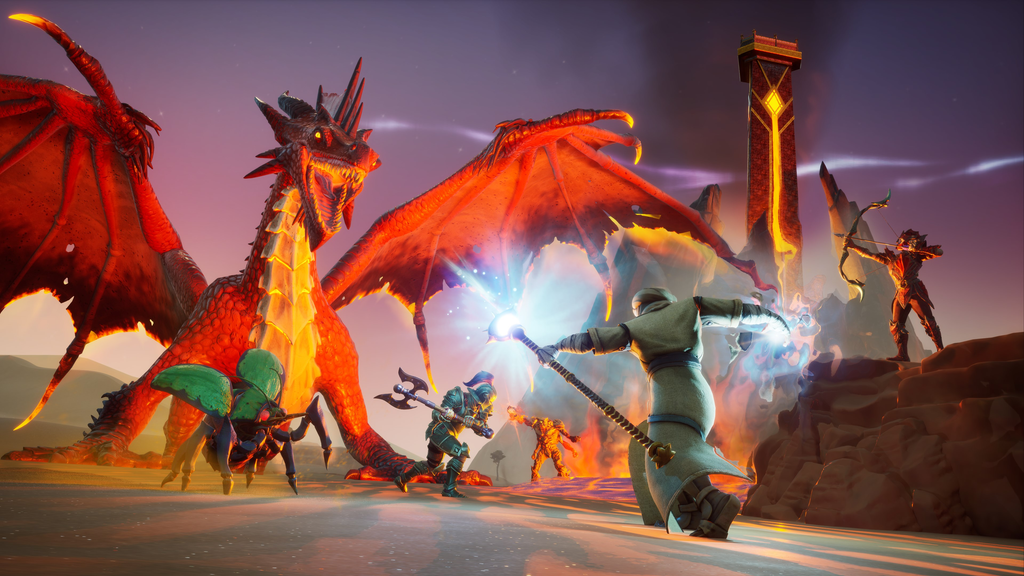
When it comes to the combat mechanics, things are undeniably interesting. You have access to various weapon types, melee combos, ranged archery, and magic, and the game fully expects you to learn enemy attack patterns, utilize blocks and dodge rolls, and find the exact window to execute a counterattack. Mindlessly mashing buttons and praying for a critical hit will only get you killed, especially when facing elite creatures. You have to actively gauge when it is safe to strike, when to create distance, and exactly how much stamina you have left in the tank. In this regard, the combat is highly engaging and demands significantly more mechanical focus than you might expect from a game built so heavily around gathering and crafting. But a noticeable issue crops up the second you are swarmed by multiple enemies. When you are dueling a single opponent, it is relatively easy to read their telegraphs and react appropriately. When you are attacked from three different angles, the situation devolves into pure chaos. One mob is rushing you for a melee strike, another is peppering you with ranged projectiles, and you are desperately trying to manage your stamina while mistiming dodges and blocks. In these chaotic crowd-control situations, the combat can feel a bit clunky and somewhat unfair, particularly if the enemies out-level you or you are caught wearing sub-optimal gear. Magic and ranged AoE (Area of Effect) attacks certainly help mitigate the swarm, but they don’t magically fix the underlying clunkiness. Sometimes, your only real saving grace is relying heavily on over-leveled armor and shamelessly chugging through a massive stockpile of healing items.
Another crucial mechanic worth mentioning is what happens when you actually die. Simply put, you drop your entire inventory, respawn at your last designated camp/bed, and a gravestone marks the exact spot of your demise, holding all your hard-earned loot. This means you have to physically trek back to your corpse to reclaim your gear. This is a staple survival genre mechanic, but in Dragonwilds, it can be uniquely agonizing if you happen to die deep inside a high-level biome or at the bottom of a hazardous dungeon complex. Instead of seamlessly pushing forward, you suddenly have to organize a naked rescue expedition just to retrieve the gear you literally need to survive that area. Thankfully, the developers included granular difficulty settings that allow you to tweak or disable these death penalties, meaning the game provides enough flexibility to tailor the experience to your preferred pacing. But on the flip side, playing on the default settings actively forces you to constantly weigh the risk vs. reward of pushing into the unknown while carrying your best gear. And trust me, there will absolutely be moments where you simply write off your dropped loot as a total loss and start the grueling process of re-crafting your entire inventory from scratch.
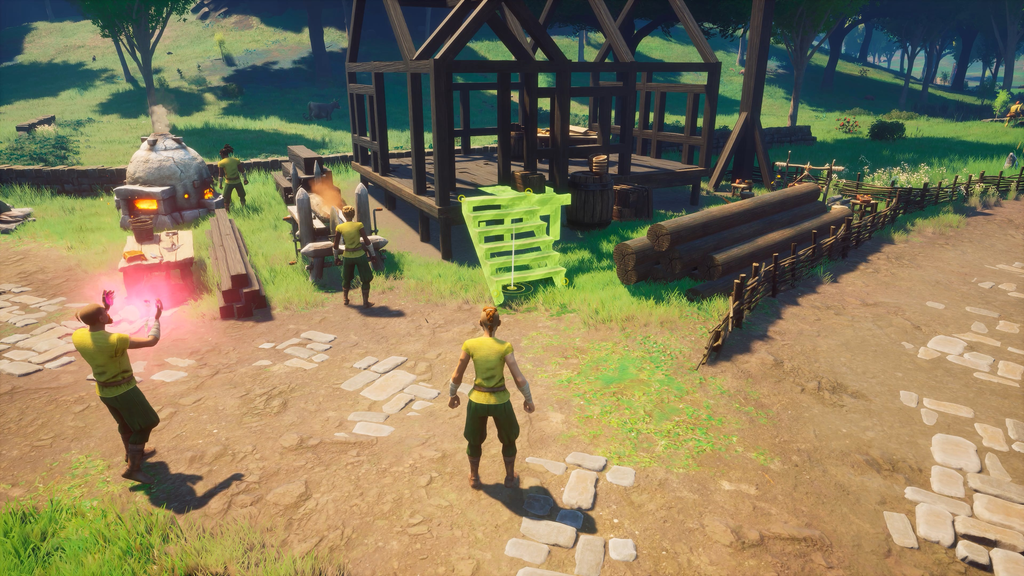
Base building is another massive pillar of the experience and, I have to admit, one of the systems that will cannibalize vastly more of your playtime than you ever originally intended. You have to scout a suitable location, haul in tons of materials, lay down foundations, snap walls and roofs together, and strategically place all those bloated workstations I mentioned earlier. You don’t need a degree in architecture to build a highly functional shelter, but the game offers more than enough aesthetic freedom to let you play around and design something genuinely cool. As you progress, you will constantly find reasons to expand your footprint, because you simply need more floor space for new crafting tables, massive storage vaults, and organizational layouts. Your base quickly evolves into much more than just a place to sleep. Naturally, your base is not a magical safe zone immune to the harsh realities of Ashenfall. As is tradition, you will occasionally suffer base raids from hostile factions, meaning you cannot view base building purely as a cozy, creative outlet. You have to seriously consider the tactical geography of where you build and how well you can physically defend it. Playing in co-op makes this entire process exponentially more fun, primarily because you can divide the agonizing labor. One player can be the designated miner, another handles the lumberjack duties, while a third stays home to cook food and forge gear. Or, obviously, you can all group up and hunt elite bosses together. The seamless support for up to four players and full cross-platform play makes it incredibly easy to assemble a squad regardless of what hardware everyone is running. Still, Dragonwilds is entirely playable solo; you just have to accept that you will be spending vastly more time doing all the manual gathering yourself.
Looking at the world itself, Ashenfall features more than enough distinct biomes to ensure exploration never flatlines into visual monotony. Different regions deliver fresh landscapes, new resource nodes, and unique enemies, and pushing into a new zone is always accompanied by a noticeable difficulty spike. What I really appreciated is that certain areas introduce entirely unique environmental mechanics that force you to change how you navigate. A stellar example is Fellhollow, which introduces a “soulrift” mechanic. This allows you to temporarily phase into an alternate, ethereal plane to uncover hidden pathways and spectral bridges that are completely invisible in the normal world. Moments like these prove that Jagex didn’t just want to rely on the standard “gather and fight” loop, but actively tried to inject major regions with memorable, bespoke gimmicks. I genuinely wish there were even more of these high-concept ideas scattered around, but the ones that are here absolutely elevate the variety of the adventure.
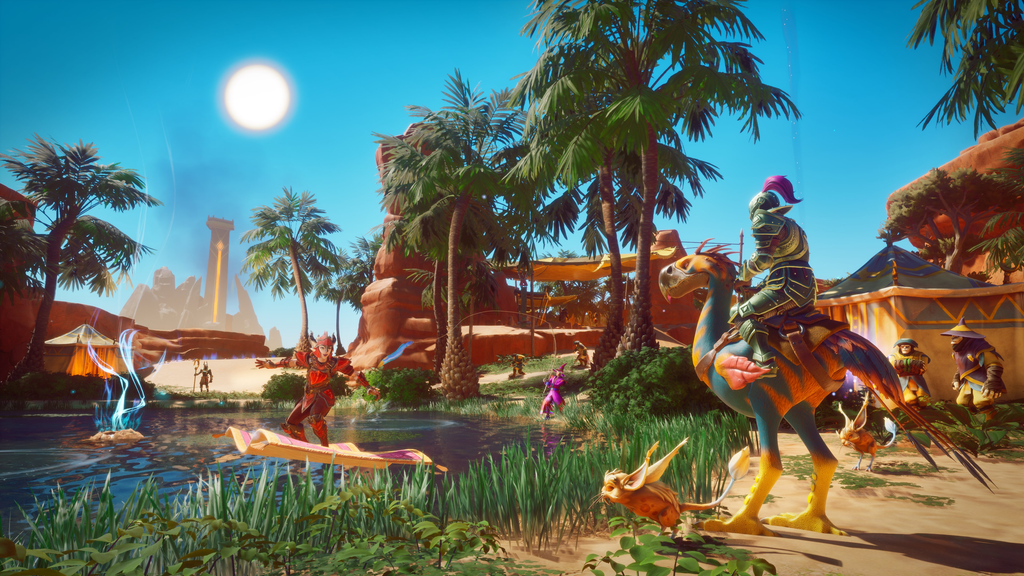
Visually, Dragonwilds looks fantastic. It sports a vibrant, slightly stylized, and colorful art direction that slots perfectly into the high-fantasy aesthetic of the RuneScape universe. The environments are highly distinct, the color palettes pop beautifully, and every biome has a very clear visual identity. The enemy design is also remarkably diverse, ensuring you never feel like you are just fighting the same three character models wearing different color swaps. The building system meshes perfectly with the world’s art style, giving you the tools to construct a sprawling fortress that doesn’t just look like a depressing wooden box filled with workbenches. The audio presentation is another major highlight. Jagex brilliantly wove iconic musical motifs from classic RuneScape into brand-new, sweeping orchestral tracks that score your adventure. Long-time veterans of the franchise will instantly recognize those nostalgic auditory cues. The score beautifully amplifies the atmosphere of exploration, though given the sheer 100+ hour length of the game, certain regional tracks will inevitably start to feel a bit repetitive. The combat and gathering sound effects are punchy and get the job done, but they don’t leave nearly as lasting an impression as the stellar soundtrack.
Taking everything into account, RuneScape: Dragonwilds is a game that fundamentally understands exactly what has kept players addicted to the RuneScape universe for decades, and that made me incredibly happy. The palpable sense of progression, the slow, methodical unlocking of new capabilities, and the immense rush of dopamine you get when you finally craft an item you’ve been hoarding materials for days to build—these are its greatest triumphs. Magic is a brilliant, highly innovative addition to the survival formula, exploring the hand-crafted world is consistently engaging, and the robust building system offers enough freedom to make you genuinely feel like you are carving out your own little home in Ashenfall. Furthermore, the seamless co-op integration effortlessly expands the experience, making the grueling grind of gathering, crafting, and exploring infinitely more enjoyable. To me, the greatest strength of Dragonwilds is that it refuses to hide its RuneScape roots. This is a game where the long, arduous grind is just as important as the final objective, and the journey to craft a single piece of gear is often vastly longer than the boss fight you will eventually use it in. Sometimes that is incredibly satisfying, and sometimes you will stare at your screen wondering why a basic tool requires five different exotic materials. But that specific, uncompromising grind is exactly where its character lies. Jagex successfully translated the iconic feeling of long-term skill development into a modern survival adventure, even if not every single element of that formula was executed with absolute perfection.
We would like to thank Jagex for providing us with a copy of the game for review purposes.
RuneScape: Dragonwilds (Xbox Series X)
Because of this, RuneScape: Dragonwilds is absolutely not a game for everyone. But it packs more than enough brilliant ideas and sheer volume of content to deeply hook fans of the survival genre, especially those who love meticulously setting their own pace and micromanaging their progression. Ashenfall hides a wealth of secrets to uncover, the magic system provides fantastic utility, and the incredibly long road from a naked nobody to a legendary dragon-slayer is paved with small, immensely satisfying victories. Just be fully prepared for the reality that along that road, you will chop down an entire forest of trees, mine a mountain of ore, and build so many damn crafting stations that you will inevitably wish your base was just a little bit bigger. Because long before you ever stand face-to-face with the Dragon Queen, you are going to have to learn how to survive her world first.


