


Video games are art. Let’s take it one step further and say that video games are the most complex form of art humanity has ever created. A unique blend of art and technology that, in return, delivers an interactive form of entertainment that no other medium can quite replicate in the same way. Video games can be brutal, but they also combine literature, cinematography, architecture, and music. A game is not just a form of art, it is the culmination of a multidisciplinary collaboration. Now, generally speaking, a project is worked on by a smaller or larger group of talented developers. Sometimes it’s thousands of people, sometimes hundreds, sometimes just a few friends driven by passion, and sometimes, as in the case of Project Songbird, just one person.
A MELODY OF APPALACHIAN HORROR
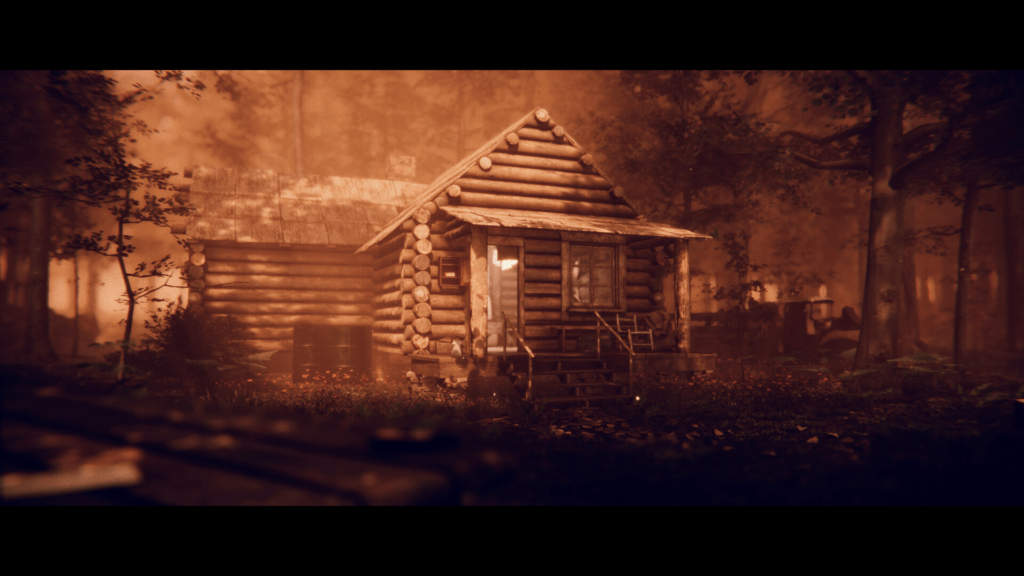
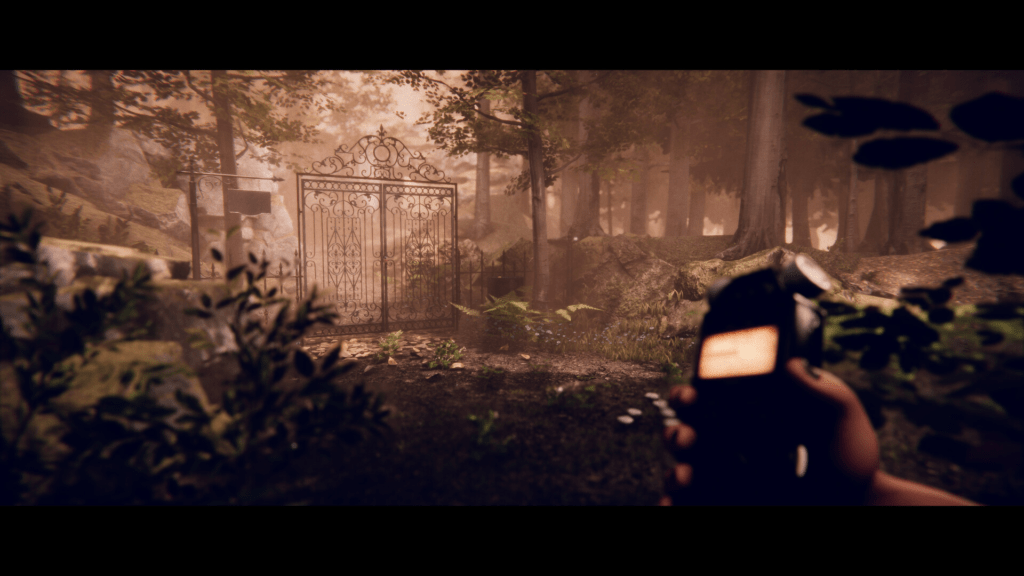
Behind the development “team” FYRE Games stands the driving force and the main face of Project Songbird, Conner Rush. Project Songbird is a first-person psychological horror game with cinematic storytelling. You take on the role of a girl named Dakota. She is a professional musician suffering from creative block and decides to isolate herself in the remote Appalachian woods in an attempt to record her next album. It’s up to you to immerse yourself in a very tense story, explore the natural environment surrounding a secluded cabin, and fight for survival in this somewhat shorter horror experience.
Project Songbird is a highly atmospheric game. From the very beginning, in its opening minutes, it makes it clear what kind of tone you should expect. The game has a distinct style, with a strong focus on narrative, story, dense atmosphere, elements of psychological horror, and a bit of action on the side. Most of the well-known elements of survival horror are present here as well—puzzle solving, thinking things through, running away from monsters, fighting monsters, backtracking, and a world around you that starts off closed but gradually opens up and expands alongside the story. Unlike some more action-focused survival titles, Project Songbird leans more toward psychological themes, in the style of Silent Hill. It deals not only with the immediate horror of the environment surrounding the main character, but also with human psychological traits—regret, grief, helplessness, and personal growth.
The previous game from this studio was released in 2020 under the name Summerland. I must admit I wasn’t familiar with it until now, and after playing Project Songbird I felt a natural curiosity to explore what that game was about. Summerland also dealt with psychological themes and morality. In a way, Project Songbird feels like an evolution of its predecessor into something significantly larger and more complex.
CHILLS DOWN THE SPINE
Maybe I’m dragging this out a bit before saying the most important thing in the simplest way—Project Songbird is genuinely a very good game. It is an excellent horror game, but very much in its own way, with a highly original theme. It also clearly feels like a long-term passion project. The result achieved by what is essentially a single developer is truly fascinating.
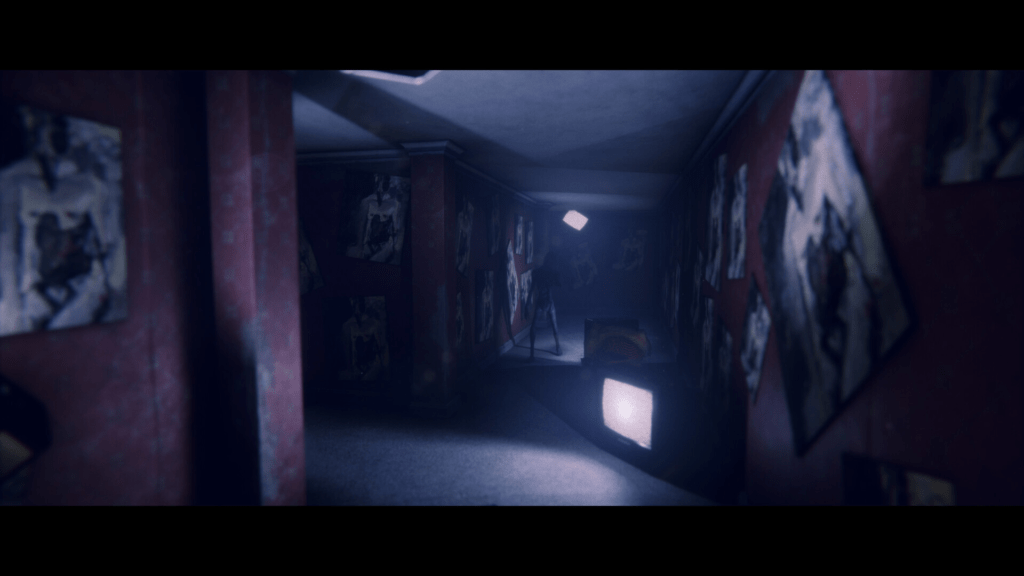
The core gameplay loop will feel somewhat familiar to fans of survival horror games. Segments of narrative intertwine with exploration, gathering certain resources, solving puzzles, and light metroidvania elements that push you back and forth across parts of the map. Project Songbird primarily takes place in the remote Appalachian mountains and areas—a perfect setting for this type of game. The game is divided into acts, and I have to emphasize that it features extremely effective horror elements. The kind of horror that sends chills down your spine.
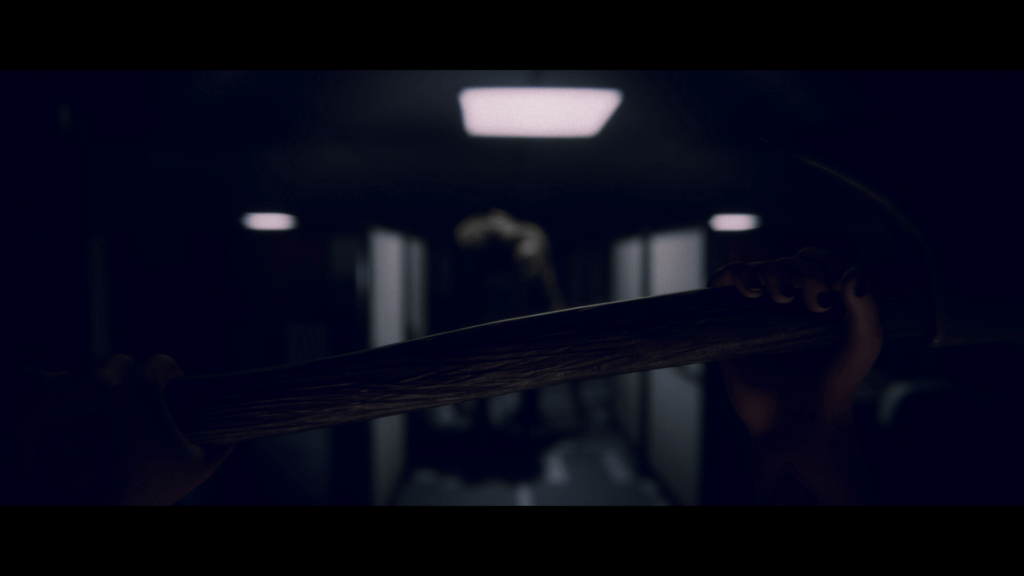
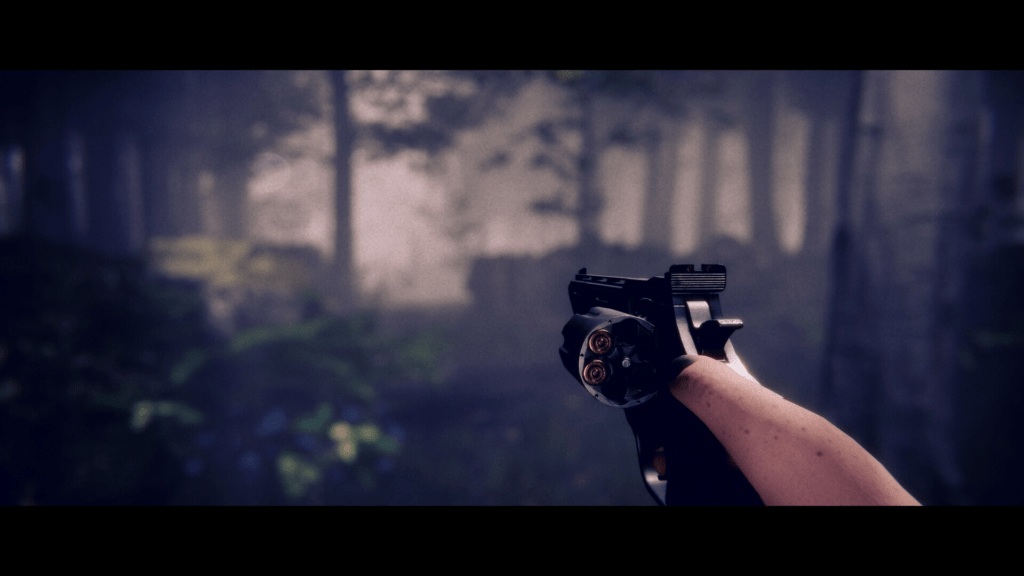
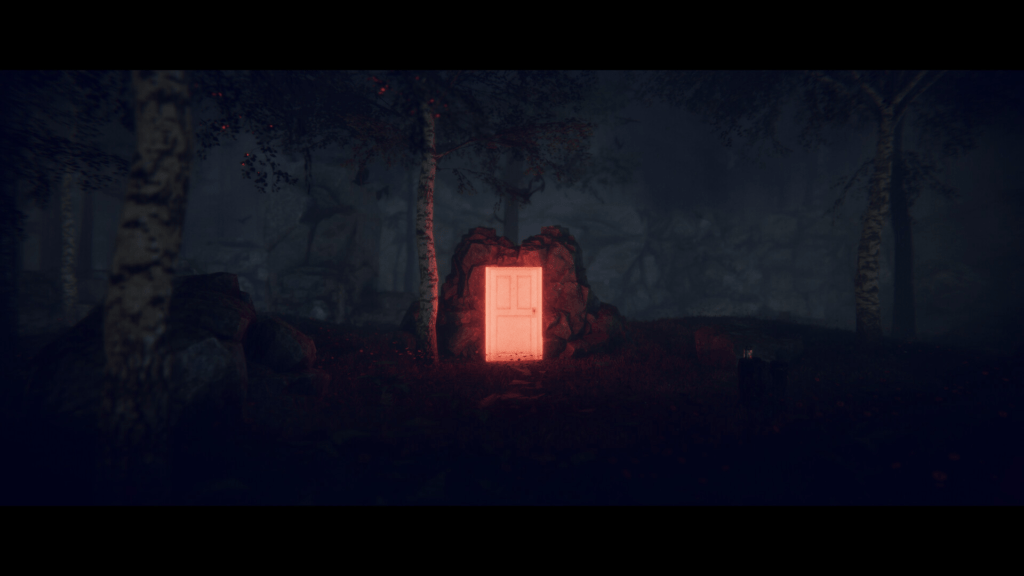
It may be a bit unfair to the game, but I started playing it right after finishing Resident Evil 9, and I have to say that in terms of horror that creates a real physical sense of discomfort, what I experienced here was stronger at times than what I felt in Resident Evil. Of course, they are different types of games despite some spiritual, genre, and gameplay similarities that come with the territory. But I genuinely mean that certain moments—especially one specific enemy you encounter—consistently sent chills down my spine like clockwork. There are multiple types of enemies, and combat is not the strongest aspect of the game. But that’s not what the game is trying to be. Project Songbird can feel somewhat clunky at times in combat, movement, and general gameplay, but not to the extent that it significantly lowers the overall quality of the experience. Besides shooting, the game also features other interesting tools that Dakota uses during her survival. You can probably tell that I’m intentionally trying to avoid mentioning specific details, because I believe going deeper into them would spoil the surprise or at least diminish the organic experience of the game. The game is not very long—around 4 or 5 hours, or longer depending on how you play. That makes every minute valuable, and it’s best that you discover it on your own.
THE CHALLENGE OF RETRO PUZZLES
One thing I found particularly interesting is that the puzzles forced me into an old-school mindset—having a piece of paper in front of me to jot down certain details. Or, in a more modern approach, taking pictures of the screen with my phone so I could remember details that would help later when solving puzzles. I’m not sure whether this was intentional or not, but when you find certain notes that cryptically explain how to solve a problem, you cannot pick them up—you can only read them and leave them where they are. I don’t necessarily mind this system, but it does feel a bit odd that Dakota can’t take a piece of paper she knows she’ll need, and instead has to constantly backtrack when she forgets the information.
In general, weapon handling is not the core of the game. The quality of the action, if we can even call it that, sits somewhere between “good” and “it could be better.” There is potential, but also a few issues. The game often encourages you to sneak rather than jump into direct combat. Ammunition is never plentiful—it seems to serve a purpose of helping you in critical moments when there’s no other way out. To eliminate that one troublesome enemy placed exactly where sneaking isn’t an option.
What is an option is running away. There is no shame in running here. It often feels like when monsters lose sight of you and you create enough distance, they simply give up. One thing that can be frustrating, however, is the reach of enemy attacks. At times it feels like enemies have wingspans like Victor Wembanyama, the NBA player. Even when it seems like you’ve successfully escaped, they can still hit you and bring you one step closer to death.
The music in the game is excellent. The atmospheric soundtrack and voice acting are delivered by experienced names from the industry. The cast includes Valerie Rose Lohman (What Remains of Edith Finch, Wolfenstein: Youngblood), Jonah Scott (Dying Light 2: Stay Human, Date Everything), and Aleks Le (Persona 3 Reload, Marvel Rivals, Ghost of Yotei).
We would like to thank FYRE Games for providing us with a copy of the game for review purposes.
Project Songbird (PC)
Project Songbird is an excellent game. It is a passion project with solid, familiar horror elements and moments that will, quite unexpectedly, stay etched in my memory. It also deals with deeper aspects of human personality, so you need the capacity and willingness to recognize the kind of experience you are playing. If you have the patience to surrender to it and understand it, I have no doubt you will enjoy it. Of course, the game is not perfect, it has its technical flaws. At times, the framerate stutters, and occasionally the entire game hiccups when it seems like new map sections are loading. But all of that can be fixed, and the foundation is strong and promising. If you are a fan of survival horror, narrative-driven games, and you’re willing to embrace the artistic side of video games, Project Songbird is the right choice.
