



I think I am one of the few people on the planet who actually dislikes Hades. However, everything else built in that same vein? I absolutely love. It’s very weird, I have to admit, but it is what it is. Because of that, I was highly excited to see Vaewolf at this year’s Gamescom, precisely because someone is finally trying to create something drastically different, rather than just another “Hades clone.” Milky Tea put genuine effort into shaking up how roguelite games function. I don’t mean the camera or the perspective; I mean how the game is actually played, what systems are in place, and naturally, how they plan to captivate and retain players with Vaewolf.

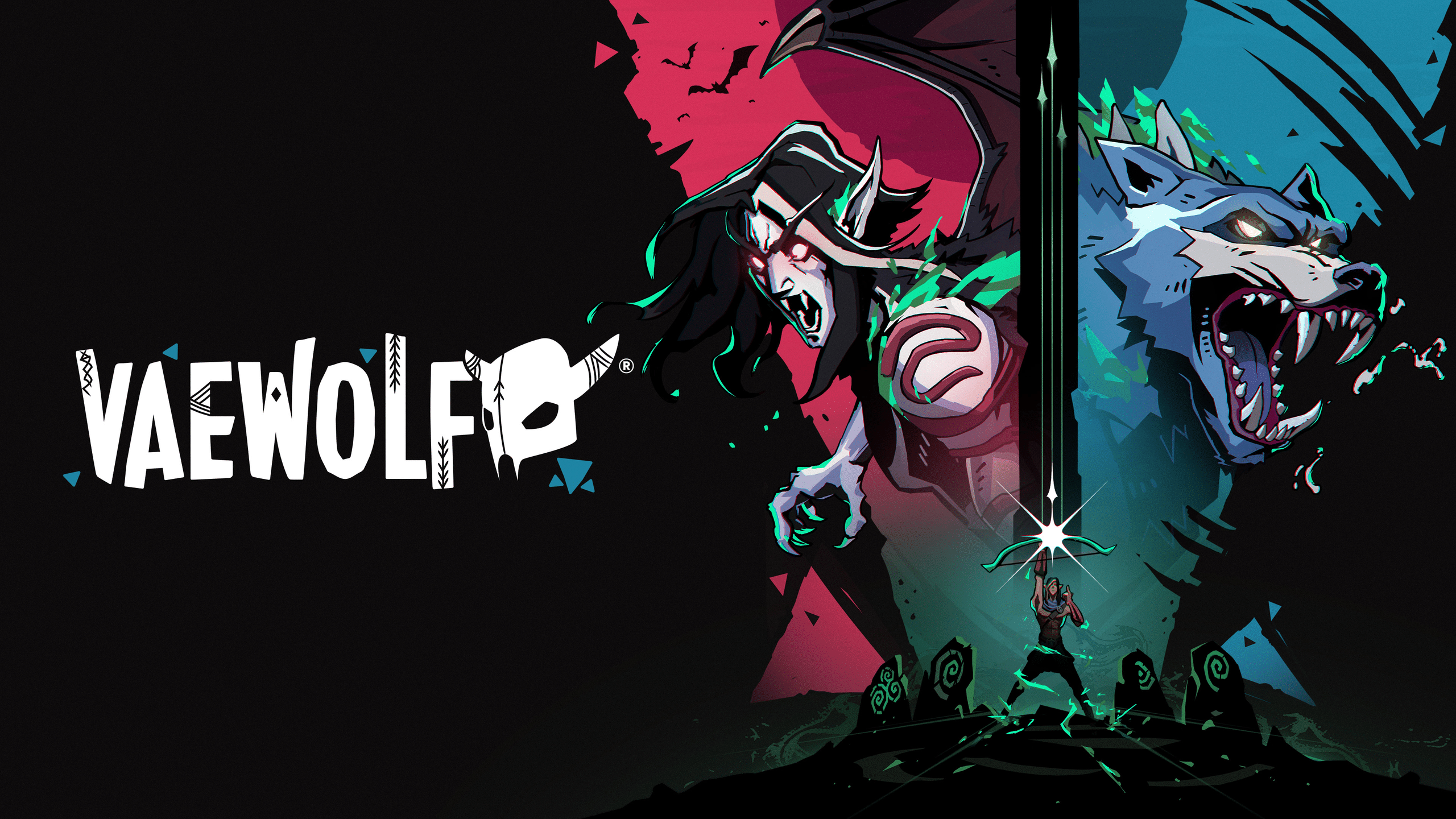
Vaewolf is a new action roguelite from Milky Tea, and its premise is so simple and slightly absurd that it becomes instantly memorable, and best of all, it genuinely sticks with you. A young elf survives the massacre of his tribe at the hands of a viking-werewolf clan. During the slaughter, he is infected with the werewolf curse and left for dead. However, a vampire comes to his rescue, taking him under his wing and granting him additional abilities. Thus, an ordinary elf becomes something far deadlier: a werewolf-vampire hybrid, or simply, a Vaewolf. The story is, therefore, completely unhinged. You don’t need to expect some complex political drama featuring ten factions and twenty characters delivering endless exposition about the world’s history. You have a young hero, a slaughtered people, a viking clan to hunt down, and revenge to serve. And honestly, I think that is more than enough.
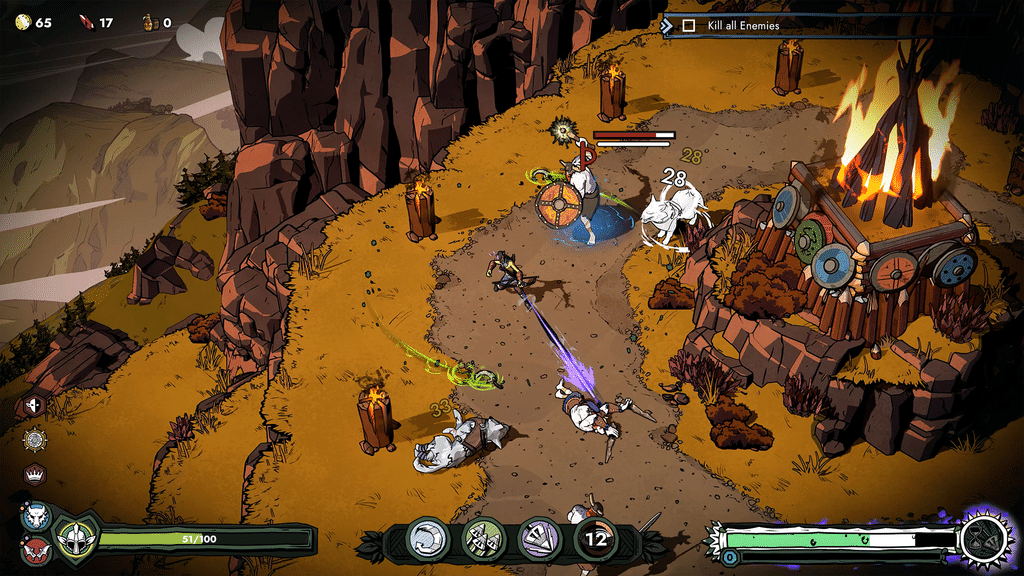
The setting itself takes place in an alternate version of Northern England during the Viking Age, with areas heavily inspired by the modern-day Lake District in Cumbria. The world then bleeds into darker, supernatural realms and subterranean caverns. It is quite a beautiful blend of historical landscapes and dark fantasy, and the visual style heavily accentuates that vibe. But, of course, no one is going to play Vaewolf for its historical context. You play it because you want to turn into a werewolf and start tearing everything to pieces. That brings us to the game’s core hook.
Vaewolf allows you to freely swap between three distinct forms mid-combat. As an elf, you wield a bow to keep enemies at a distance. The vampire form relies more on magic and AoE attacks that can strike multiple foes, while the werewolf is designed purely for direct, brutal melee confrontation. The most important detail is that you swap between these forms virtually instantaneously, without any classic cooldown timers. On paper, that might not sound revolutionary, but when you see it in action, the concept clicks beautifully. For example, you open an encounter as an elf, picking off a few stragglers from afar. When they close the distance, you snap into the vampire form and unleash magic to sow chaos among the pack. Finally, once they are practically on top of you, you transform into a werewolf and simply rip them apart at point-blank range. That exact shift in rhythm is exactly what Vaewolf aims to deliver. Not three characters you select before a run. Not three classes you lock into for a build. One character, three forms, and constant adaptation to the situation at hand.
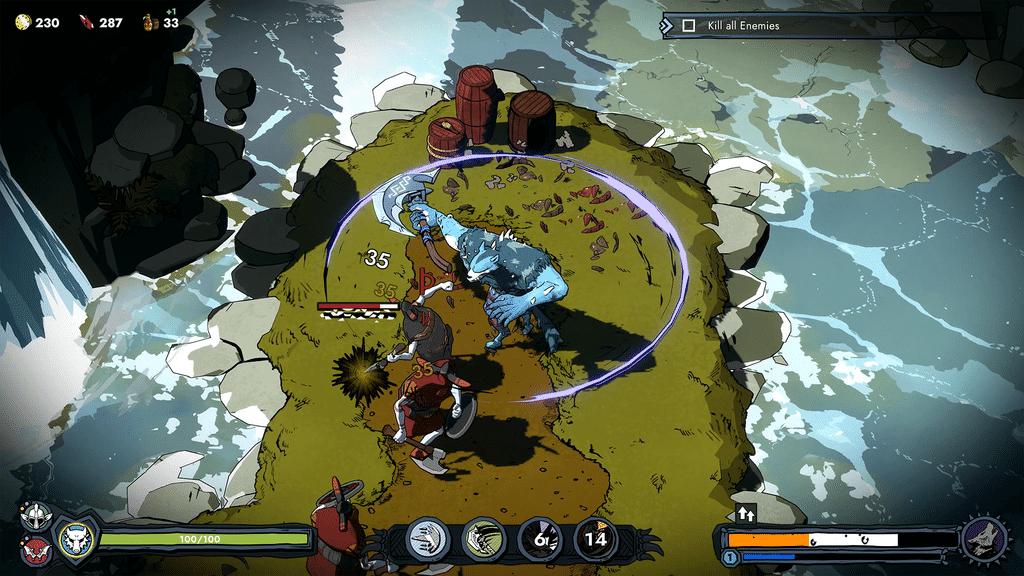
What I particularly love is that each form serves a very distinct purpose. The elf is precise and safer from a distance; the vampire is geared toward crowd control and magic; while the werewolf acts as your frontline tank, diving straight into the fray. This means you aren’t changing forms just because it looks cool to turn into a monster, but because the game expects you to understand exactly what tool is required for any given moment. Naturally, the real question is how deep this system will actually go once the game starts seriously turning up the heat.
And that is where the biggest dilemma surrounding Vaewolf lies. Because as fascinating as the core concept sounds, the rest of the formula is highly familiar. You have a classic roguelite structure, procedurally generated levels, branching paths, combat arenas, mid-run upgrades, and a hub world you return to between attempts. During a run, you secure temporary buffs, while between runs, you permanently upgrade your character. In some aspects, it very openly echoes Hades, to the point where comparisons are practically unavoidable. But for me, that isn’t inherently a problem. Hades set the bar for action roguelites so impossibly high that it’s virtually impossible to develop a game in this genre without someone pointing out the similarities. What matters far more is what a studio actually does with that foundational framework.
And Vaewolf, at the very least, has a strong central hook. During a run, you aren’t just thinking about which buffs to pick up. You have to actively consider how you want to weave your three forms together. If you prioritize werewolf abilities, you might want to spend the majority of your time brawling up close. If you invest heavily in vampire skills, you might focus on crowd control and keeping enemies at bay. The bow, on the other hand, dictates an entirely different playstyle. More importantly, these transformations can be chained together during a single combat encounter. That is exactly why Vaewolf holds the potential to be significantly more engaging than it might seem at first glance.
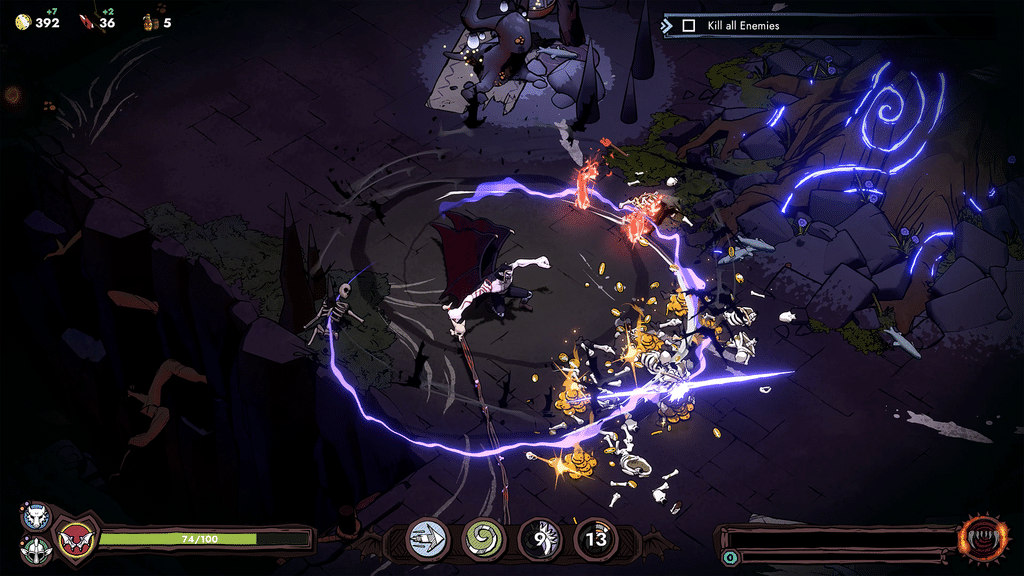
Just imagine a scenario where you tag an enemy from afar with an elven arrow, immediately swap to the vampire to spread an AoE status effect across a group, and then finish the fight by shredding the survivors as a werewolf. If the game balances its abilities and enemies well enough, these exact combinations could become the absolute core of the experience. If it ultimately devolves into “this enemy is tough, use the werewolf,” “there are a lot of enemies here, use the vampire,” and “this one is far away, use the bow,” it will very quickly become obvious exactly what the game expects of you. Once you learn the pattern, there won’t be much reason to deviate. But if the enemy and arena design constantly forces you to adapt and swap forms on the fly, it becomes an entirely different beast.
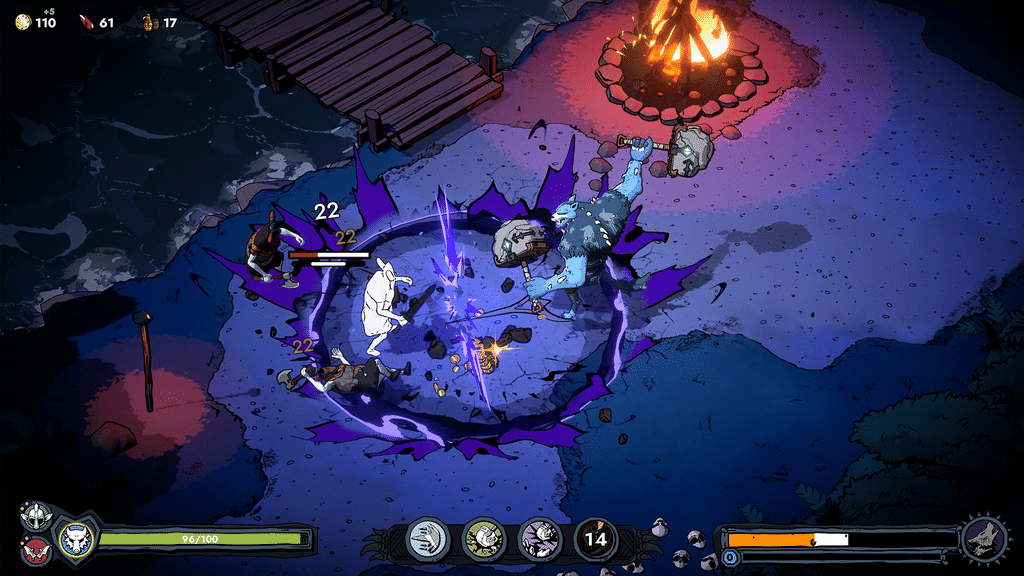
The visual style is another element that demands attention. Vaewolf utilizes a comic-book-inspired aesthetic, featuring cel-shaded graphics and hand-crafted character models and environments. It is incredibly pleasing to the eye and gives the game a distinct identity. However, one Gamescom attendee noted that visual clarity can suffer when the screen fills with too many effects and enemies. This is something Milky Tea will likely need to iron out before launch. Fast-paced action combined with an isometric camera already demands excellent readability; throw in three forms, magic, particle effects, dozens of enemies, and their incoming attacks, and it is very easy to create a situation where you have absolutely no idea what just hit you.
Vaewolf shapes up to be a highly focused action roguelite. There is no need to explore a massive open world, converse with hundreds of NPCs, or spend half an hour micromanaging your inventory. The premise is simple: jump into a run, fight, swap forms, hoard upgrades, and try to make it as far as possible. That could very well be its greatest asset. In a sea of games trying to be everything all at once, Vaewolf feels like a title that knows exactly what it wants to be. Even the story, as simple as it is, doesn’t feel like a crutch the game needs to lean on to function. A young elf wants revenge, a viking clan must pay, and in the meantime, we get to transform into a supernatural beast. One Gamescom impression even highlighted that the game simply doesn’t need a complex narrative to succeed.
Vaewolf is currently targeting an early 2027 release and will be available on PC, PlayStation 5, Xbox Series X|S, and Nintendo Switch 2. The PC versions are confirmed for Steam and the Epic Games Store, and Xbox Play Anywhere support has also been announced.