




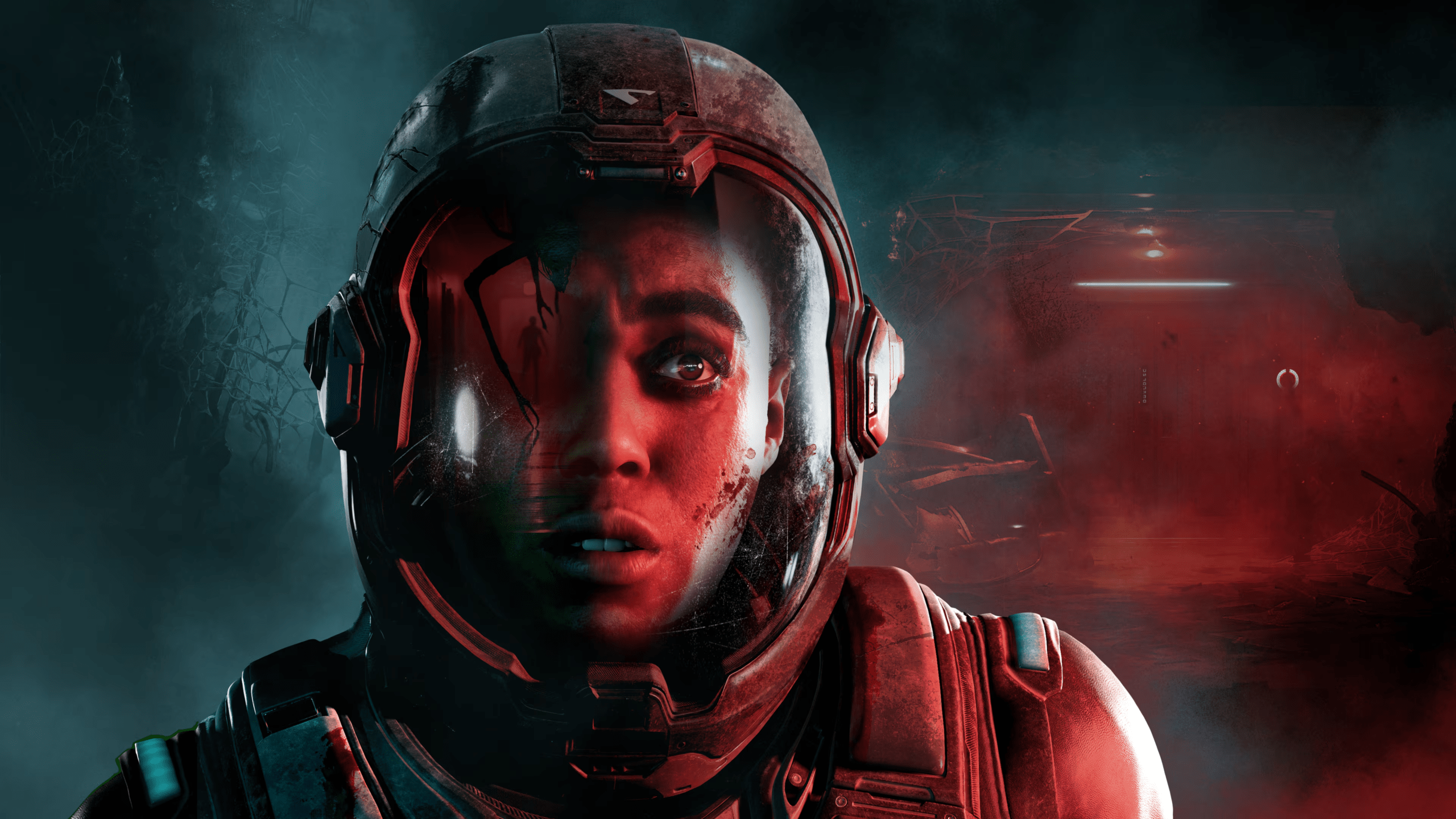


From the very first moment Directive 8020 was announced, I went through several waves of excitement and disappointment. First came the excitement, because it’s a sci-fi game set in space, exactly the kind of story and atmosphere I absolutely love. Then came a bit of disappointment when I saw that Supermassive Games was developing it, meaning it would almost certainly be another narrative-heavy experience. After that, excitement returned once they showed more gameplay and called it their most mechanically ambitious game yet. At that point, I thought: “Okay, maybe there’s hope. Maybe it won’t be as slow-paced as previous The Dark Pictures Anthology titles.” But then came disappointment again when I noticed there were still plenty of those familiar quick-time events that have become the trademark of the franchise. So until I finally got my hands on the game, I genuinely had no idea whether I’d enjoy it or not, or even if it could fully click with me at all.

And just to be clear from the start, the games in The Dark Pictures Anthology series are genuinely great. They are slow burns filled with story, atmosphere, and tension that never really lets go. The problem was simply that I wasn’t really in the mood for that type of experience right now, and somehow the core premise of Directive 8020 felt much better suited for an action-adventure with horror elements, or a horror game with heavier action mechanics. You probably understand what I mean. Knowing this was part of such a well-known Bandai Namco-published franchise, I expected a polished and quality experience, even if it perhaps wouldn’t completely align with what I personally wanted from a game like this at the moment. But let’s start from the beginning.
Directive 8020 is the newest entry in Supermassive Games’ The Dark Pictures series, released in collaboration with Bandai Namco around ten days ago. Yes, we’re a little late with the review, apologies for that. Whenever you think about Supermassive and The Dark Pictures, you already have a pretty good idea of what kind of gameplay to expect, assuming there is much gameplay at all. But as I mentioned earlier, with this title Supermassive stepped slightly outside of its comfort zone and attempted to create something more dynamic, which is naturally very welcome. The big question is whether they actually succeeded, whether they should have stuck closer to their old formula, or whether this represents a genuinely good step toward evolving into something different.
As is usually the case with these kinds of sci-fi stories, the premise itself will feel very familiar to most players. Earth is slowly dying, or perhaps already exhausted beyond repair. A group of astronauts is sent deep into space, twelve light-years away, to determine whether the newly discovered planet Tau Ceti f could become humanity’s final hope. All of this while traveling aboard a spaceship that was apparently 3D-printed within three months, which honestly isn’t the most comforting thought imaginable. But hey, they made it to Tau Ceti f, so that alone is already a massive achievement. Everything seems relatively calm while the crew observes and orbits the planet, until a meteor crashes into the Cassiopeia spacecraft. What initially appears to be minor damage quickly turns into full-blown paranoia once the ship’s AI, The Oracle, detects unknown lifeforms aboard the vessel.
And that brings us to the core of the game. Directive 8020 is fundamentally still a Dark Pictures title, but with mechanics that feel completely new. Combined with a threat you cannot always see or understand, the game genuinely attempts something fresh, and for most of its runtime, it actually works surprisingly well.
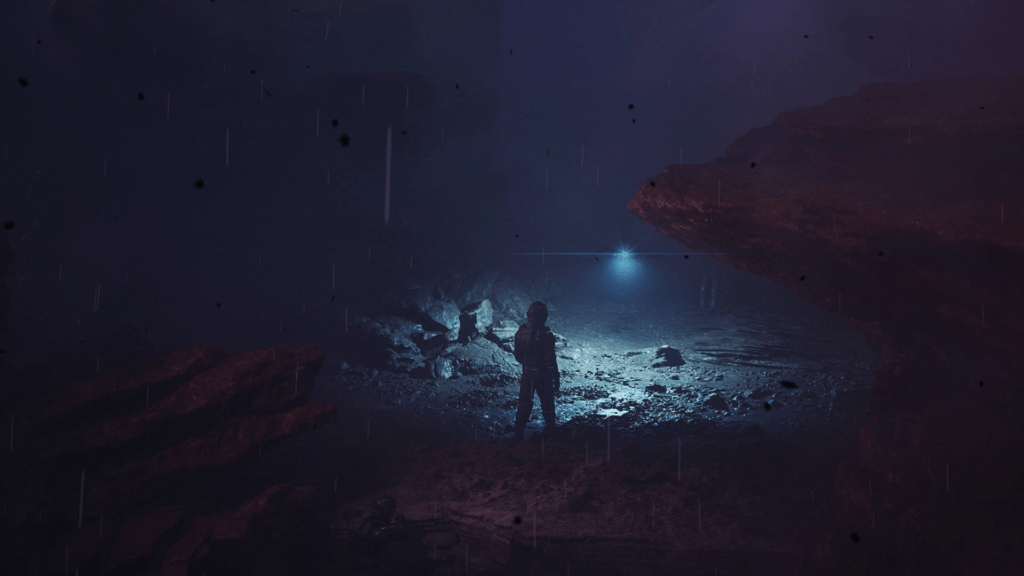
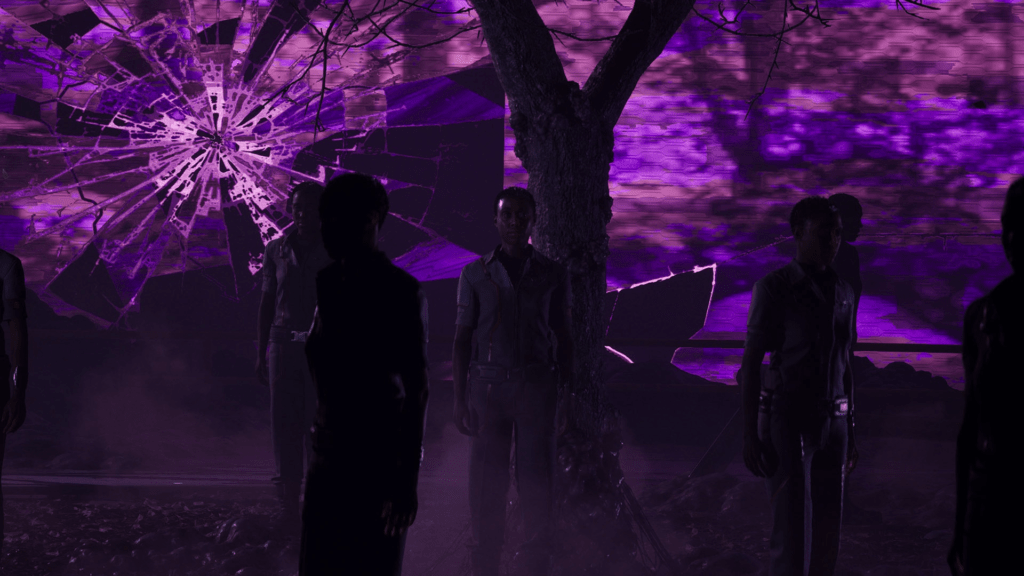
Some kind of unknown organism has infiltrated the ship. The crew refers to it as either the Mimics or The Growth, depending on how exactly it behaves aboard the spacecraft. The biggest twist in Directive 8020 is that, just as the first name implies, this lifeform can perfectly imitate other crew members. It does this so convincingly that during crucial decisions you often won’t know whether you’re speaking to a real human being you’ve spent months alongside, or to an alien entity hiding behind their face with motives and intentions of its own. This single mechanic injects constant tension throughout the entire experience. A tension born not only from gameplay sequences, but from ordinary conversations themselves.
There’s a constant discomfort because you never truly know who you are dealing with, what your next decision should be, or whether that choice might directly lead to the death of one of the playable characters. And honestly, I have to admit that this element of paranoia and uncertainty was executed extremely well. I genuinely didn’t expect it to hook me so strongly or make me so desperate to uncover the truth before the story naturally revealed it. Thanks to this idea alone, no conversation ever feels relaxing, even when the atmosphere briefly suggests you can finally breathe and enjoy a quieter moment. That question, “Is this person actually a Mimic?”, keeps scratching at the back of your mind from beginning to end.
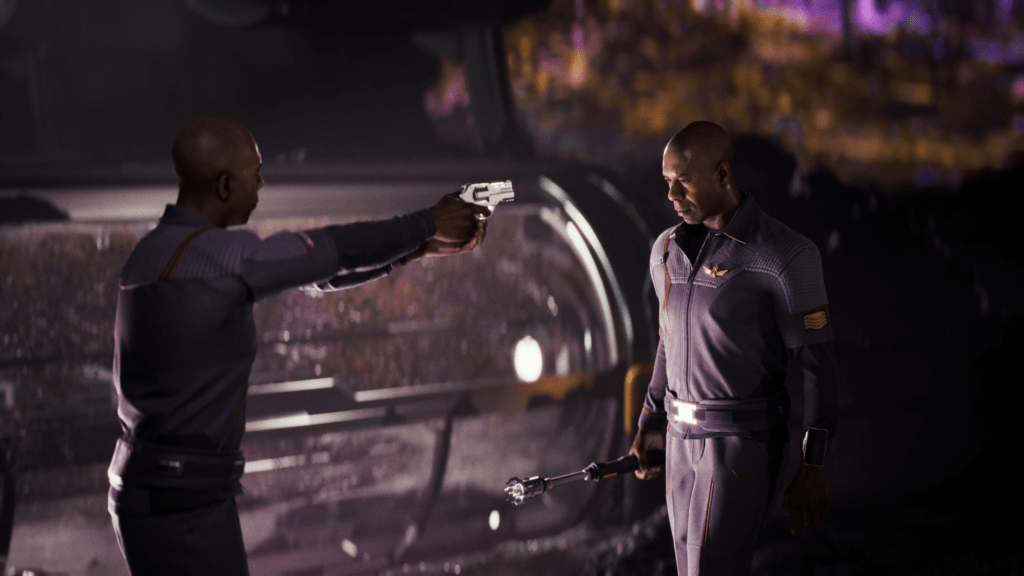
Now, if you make a mistake, hurt someone, or simply dislike the outcome of a decision, the game allows you to alter events through the Turning Point feature in the menu, essentially letting you rewind time and choose another path. But honestly, I wouldn’t recommend using it during your first playthrough. The entire point is to live with your decisions and their consequences, just like in real life.
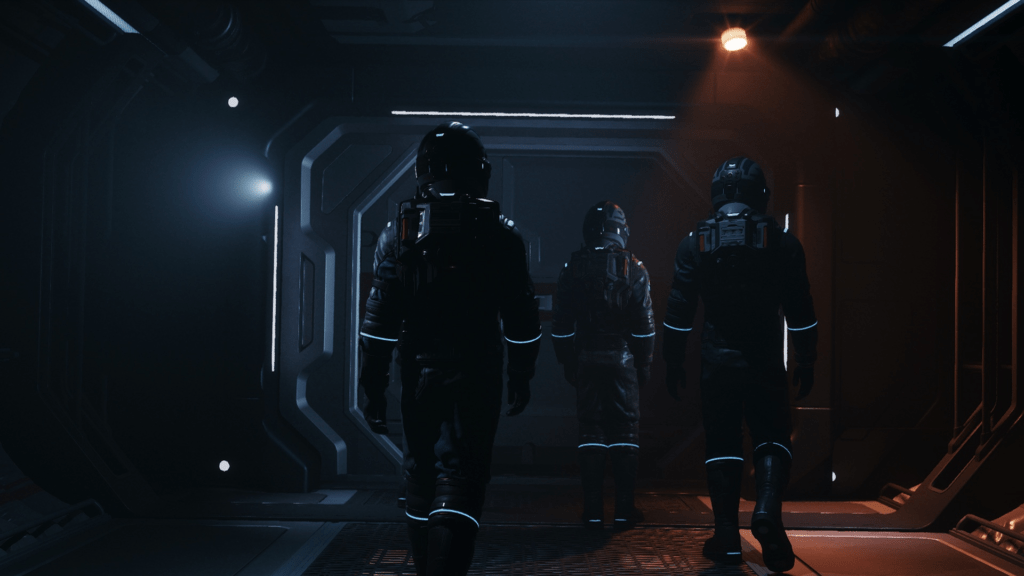
The second major side of the game is represented by its new gameplay direction. More specifically, Directive 8020 is now played entirely from a third-person perspective. At certain moments, you’ll absolutely be reminded of Dead Space or perhaps The Callisto Protocol, because the atmosphere, music, visual effects, and overall ambiance heavily evoke those games, and that’s definitely a compliment.
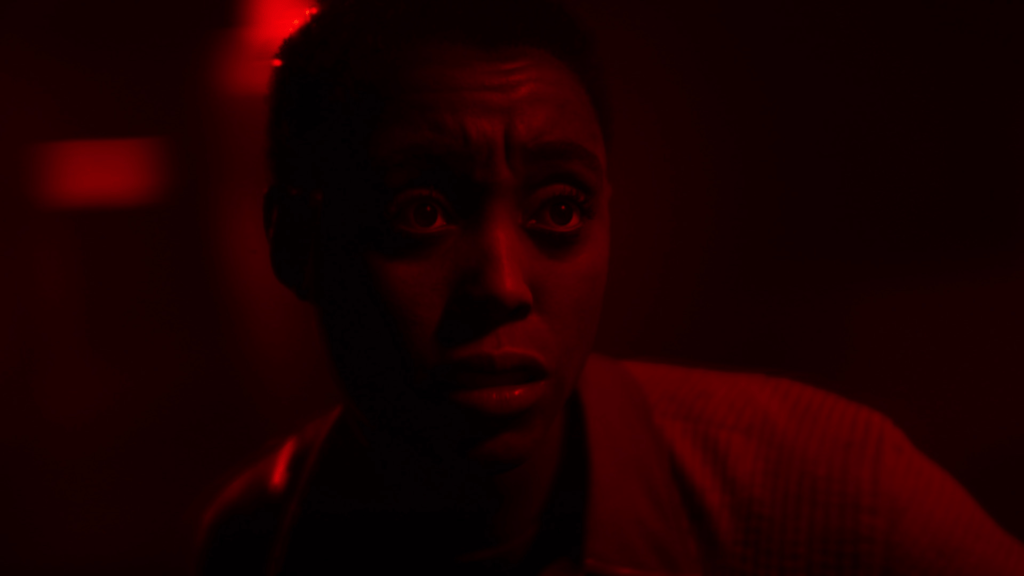
Even though I appreciated Supermassive stepping outside their comfort zone and trying to build something mechanically different from previous entries in the franchise, it’s also obvious they don’t have a huge amount of experience with this style of gameplay yet. Character movement feels sluggish, slow, and somewhat heavy, which does make sense because this is still fundamentally a slow-burn narrative horror game. But unfortunately, that same sluggishness remains even during moments that clearly demand more urgency and responsiveness from the player.
The third-person perspective was also introduced because of the alien’s second form, The Growth. These are the moments when it reveals its true face, a horrifying presence that can genuinely scare you and leave you breathless at times. During these gameplay sections, your job is to sneak around, complete a few objectives here and there, and repeat the cycle. So overall, it is a fairly basic execution of this side of the gameplay. And I have to admit, while I liked it, it also left me slightly disappointed because I expected a bit more interaction and depth. On the other hand, these sections are tense and uncomfortable, but for very different reasons compared to the dialogue-heavy moments where you make decisions.
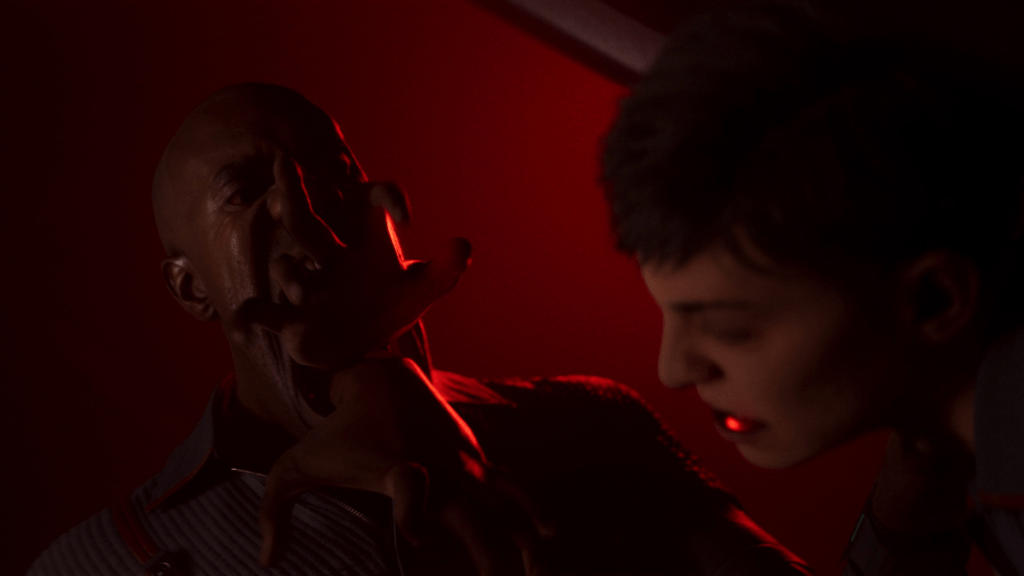
Here, you constantly feel like something is stalking you, like you are always one step away from being caught. It somewhat resembles Alien: Isolation, that feeling of knowing something is hunting you down and wants to tear you apart, forcing you to hide, stay quiet, and move carefully. And I say “supposedly” because it sometimes felt like this aspect was more of an afterthought from the development team, as if there is never truly a massive threat as long as you stay reasonably cautious. Yes, the tension is there, especially for players uncomfortable with these kinds of environments, but at no point does it really feel like you are about to lose too much even if you fail to stay perfectly silent and careful.
Still, as Supermassive Games’ first attempt at introducing something genuinely new into their formula, this is honestly a very impressive result. The combination of these two different gameplay rhythms works extremely well. In one moment, one kind of pressure weighs on you, while in the next, a completely different type of tension takes over, and the game blends these together very effectively. Could the execution have been better? Absolutely. But even with all its imperfections, it is more than good enough and feels like a bold and genuinely positive step forward for the studio.
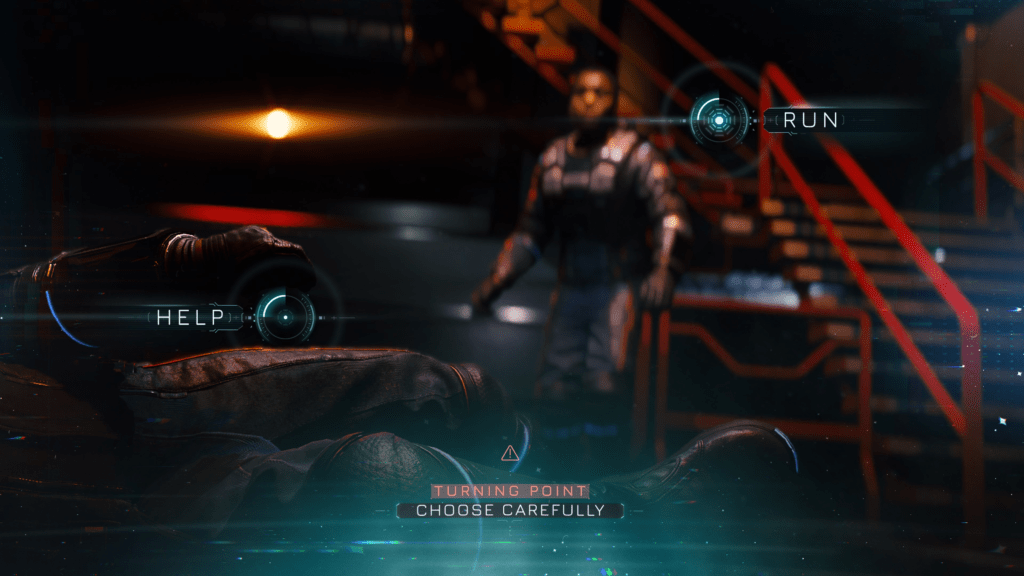
None of this would work nearly as well if the graphical presentation was not on such a high level. Interestingly, for this title Supermassive decided to move to Unreal Engine 5, which gave them the opportunity to make everything feel far more cinematic. In previous games, the focus was mostly on facial animations, but now that level of quality extends across every aspect of the experience, and it becomes obvious from the very beginning.
Every scene and every environment you explore looks genuinely stunning. At no point did I think, “This could have looked better,” or “The textures and models here are disappointing.” Literally every part of the game is masterfully crafted, especially the sequences that take place outside the spaceship itself. I often spent more time admiring everything I was seeing than worrying about how my next decision might harm the crew.
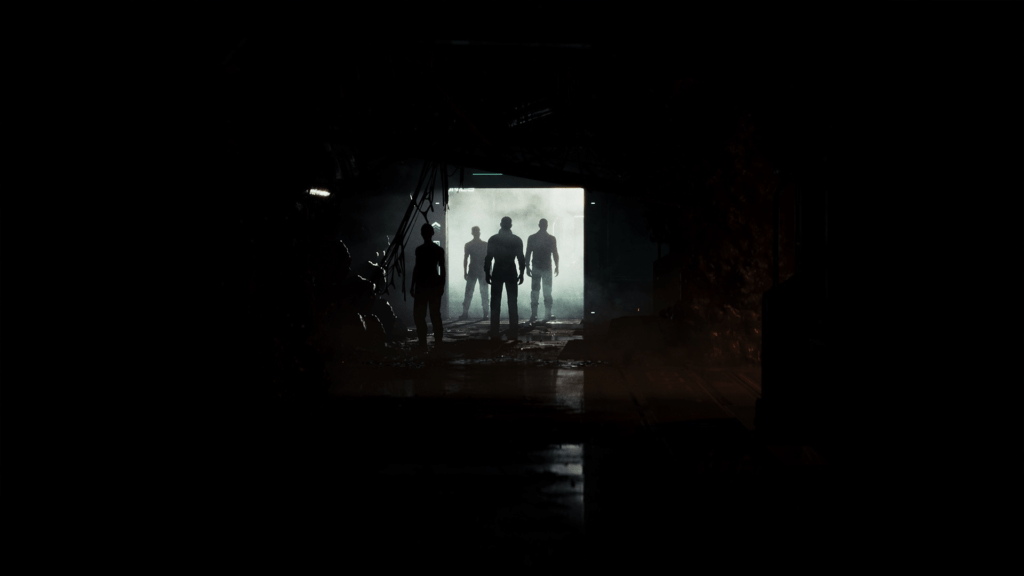
And of course, there are mimics, not the monster itself, but the quality of the character models and performances and their facial expressions. As with every Dark Pictures title, Directive 8020 features a very strong cast that adds even more weight to the story and the game’s many dramatic moments. Brianna Young portrays Lashana Lynch, the ship’s pilot, known for her role as Nomi in No Time to Die and Maria Rambeau in Captain Marvel. Danny Sapani plays Commander Nolan Stafford and is known for portraying Jacob Keyes in the Halo TV series and Sembene in Penny Dreadful. Lotte Verbeek plays Laura Eisele, and many players will recognize her as Geillis Duncan from Outlander. The rest of the cast, including Philip Arditti (Josef Cernan), Anneika Rose (Pari Simms), and Kobna Holdbrook-Smith (LaMarcus Williams), also deliver very strong performances, helping the game achieve that authentic cinematic feeling.
We would like to thank Bandai Namco for providing us with a copy of the game for review purposes.
Directive 8020 (Xbox Series X)
And in the end, I honestly really liked Directive 8020. Mostly because of the third-person gameplay perspective, which makes the experience feel far more personal compared to previous games in the series, since here you actually control your characters directly. And that part is handled quite well. However, as with every Dark Pictures title, it is still the story, the dilemmas, the risks, and the consequences of your decisions that carry the most weight and are executed best. And that is exactly why I think this game is worth playing, because unlike previous Dark Pictures entries, Directive 8020 feels more personal and modern, with mechanics that could appeal even to players who have never touched a game from this franchise before.


