



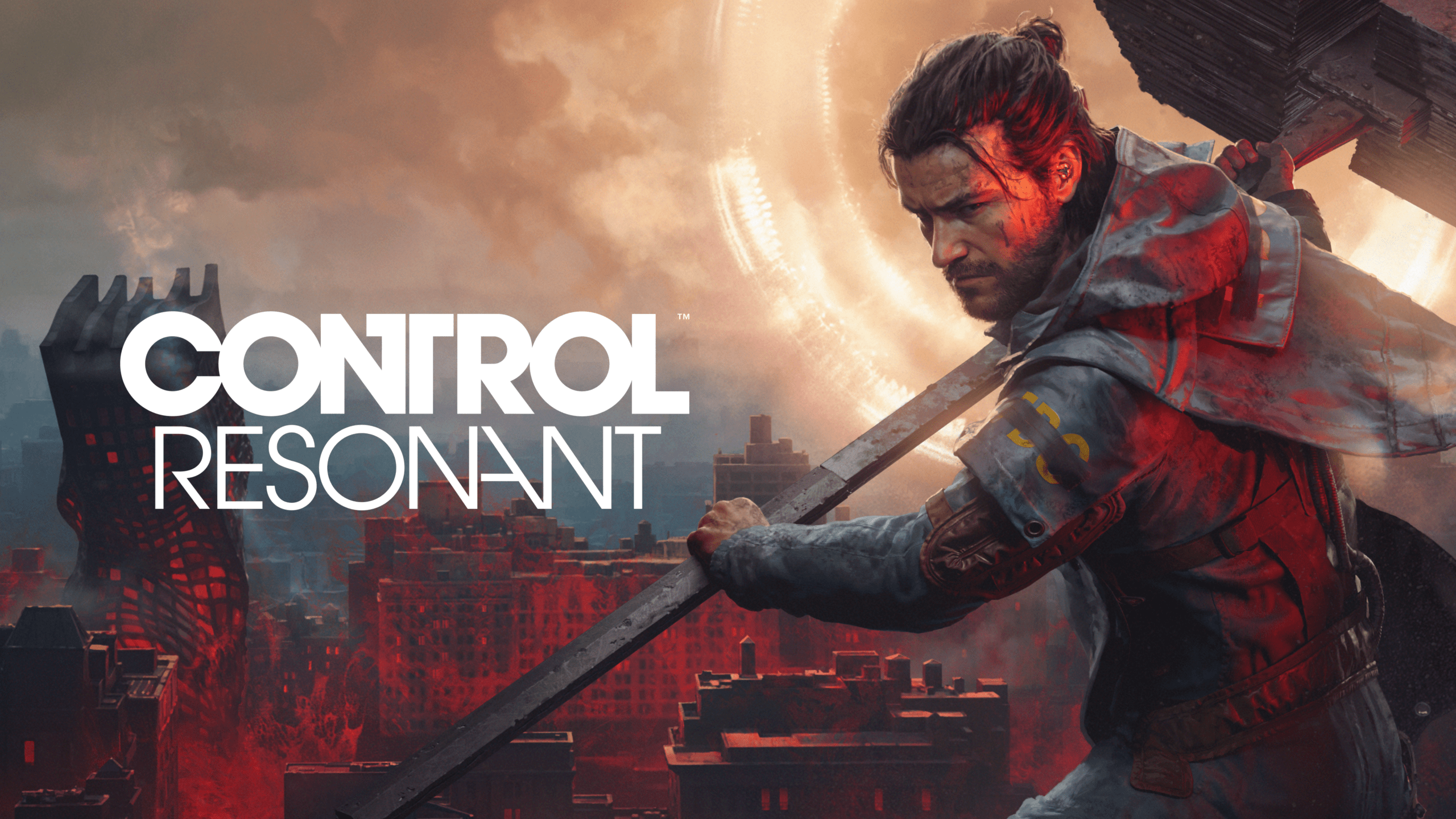


Remedy Entertainment has positioned itself in the industry as a company that loves to push exclusively its own style of storytelling and design through its games. And I have to admit, they are quite unique in that regard. Every one of their games is a blend of art, twisted narrative, incredible presentation, and a brilliant experience. All of this got even better when, with the release of Control, they merged all their worlds into one. Or rather, all the games they’ve created take place in the same universe, perhaps in different dimensions, but sharing that uniquely twisted narrative.

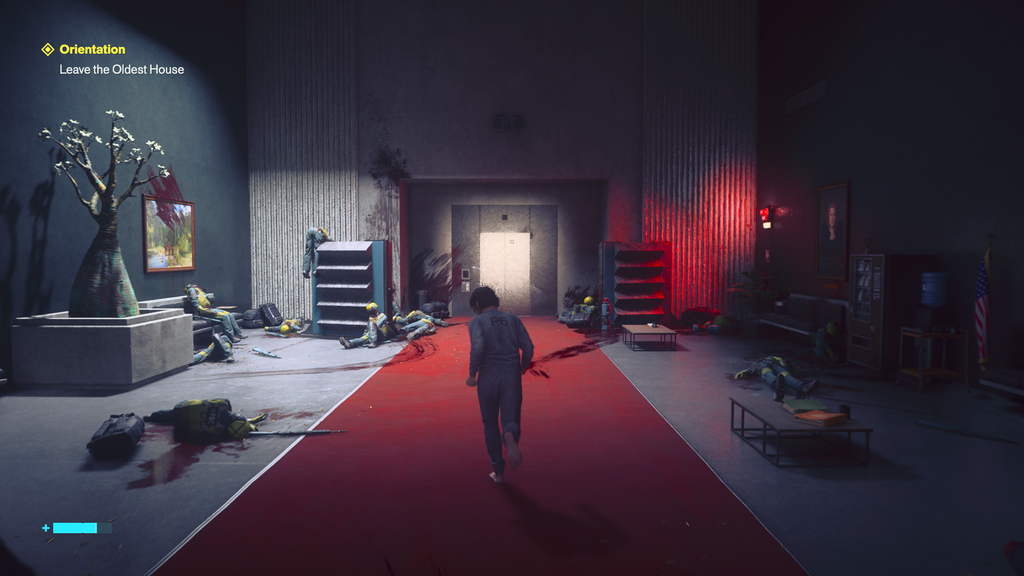
When Control Resonant was announced, I cannot describe how happy I was. It’s not like I didn’t like Alan Wake 2, but Control was and remains my favorite Remedy Entertainment game, and personally, one of the best games I’ve ever played. Rarely does anyone in the industry have the courage to serve players something like Control, without underestimating or insulting their intelligence regarding whether they will understand it, figure it out, or simply play it. However, I did have my fears with the Control Resonant announcement. Mostly because they shifted from third-person shooter mechanics to melee action. But, from talking with the people at Remedy Entertainment, even in the original Control, the gameplay was supposed to be a mix of melee and shooting, yet they saved that, it turns out, for the direct sequel. The second thing was the change of the main protagonist. We all grew to love Jesse Faden, and her brother Dylan was marked as the villain, the root cause of everything that happened in the first game. To take on his role now felt… well, weird, right? But, even with those fears that this might not be the most ideal setup for a sequel, if you ask me, and that it wasn’t something I necessarily wanted, I can’t say I wasn’t dying to jump into the game. And here we are, after spending about two weeks with this title, we can finally share our impressions. What do you think, is it good? Did Remedy Entertainment succeed in their ambitious intentions with Control Resonant? Let’s find out!
The World of Control seven years after the Hiss Invasion
As I mentioned, Control Resonant is a direct sequel to the original Control, which came out back in 2019. I will try not to spoil too much of this title, unless I absolutely have to, like the very beginning of the story and the setting, because it’s simply unavoidable. At the end of Control, Jesse Faden, the main protagonist at the time, managed to “save” the brother she had been searching for her entire life. She stopped the Hiss invasion that he was responsible for, which he channeled and summoned, but it was a pyrrhic victory for her, because shortly after, her brother Dylan Faden fell into a coma. And he stayed in it for a full seven years.
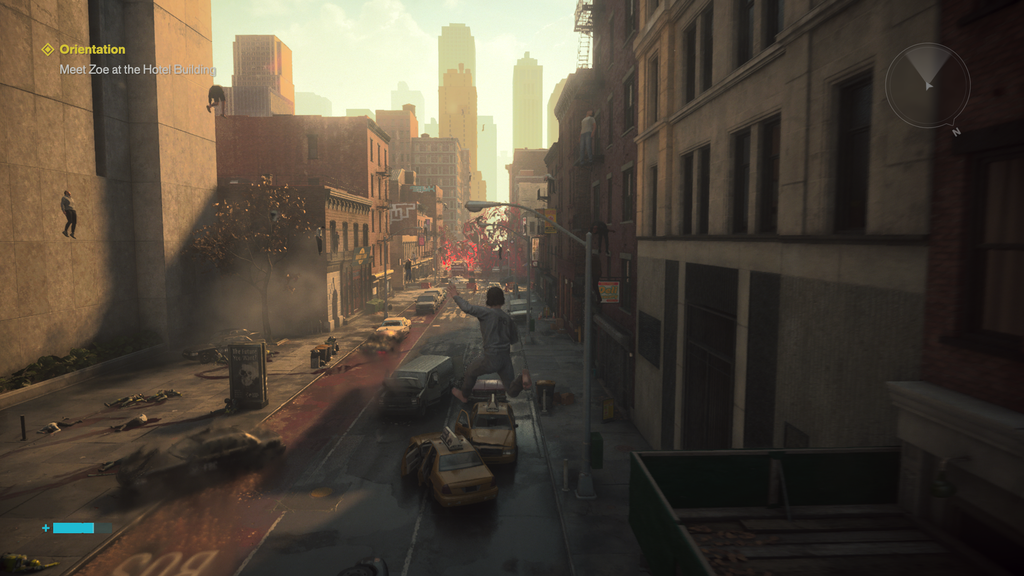
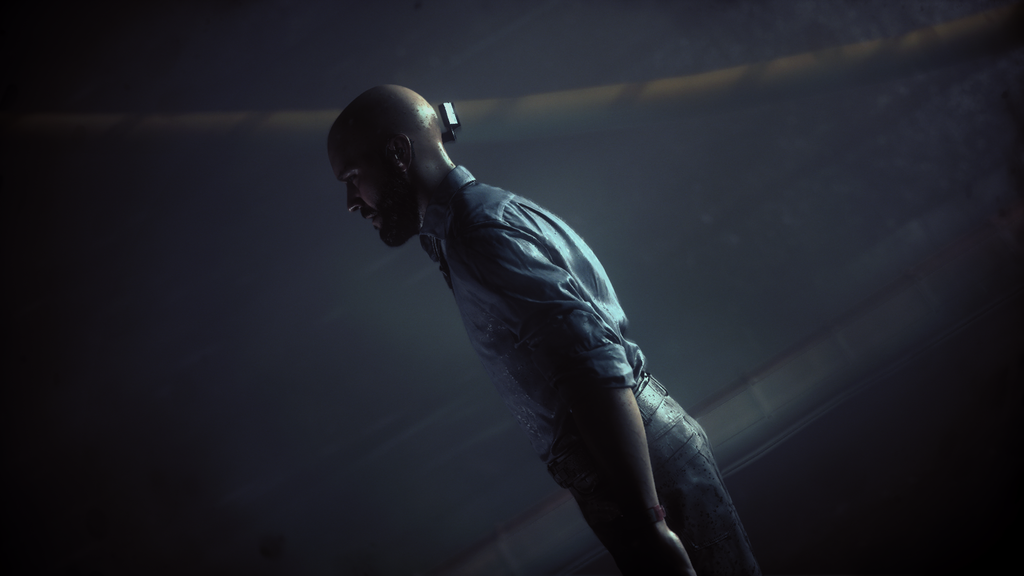
Control Resonant kicks off exactly after those seven years. Jesse is no longer there; she had to go somewhere and take care of something. Dylan wakes up with an object in his chest called the Aberrant, which Jesse gently passed on to him. This object houses The Board, the unknown entity responsible for communicating with and issuing orders to the Director of the Federal Bureau of Control, but it will also serve as his primary tool for destroying any threats to this world. Manhattan is under attack; everything The Oldest House ever kept hidden inside has surfaced and spilled out into the city. The Hiss, interdimensional beings, and disturbances that Jesse stopped in the first game have now occupied the city, though their invasion isn’t the only problem. They aren’t the only entity that bled out of The Oldest House; there is also The Mold, a fungal colony that has literally consumed a chunk of Manhattan. The space-time continuum is shattered, time, gravity, everything that was supposed to be fixed and stable simply isn’t anymore. The world has started to change, twist, decay, and collapse. And it all started from The Oldest House. Dylan has a fairly simple, but by no means easy, task: to figure out what is happening in this world and try to suppress the bleeding of other dimensions and the destruction of their reality.
I have to touch on Dylan before we move on. As I said, the root cause of all the bad things in the first game is here, and he is quite different. Cleansed of the Hiss infection, if I can put it that way, you finally get to see his true face and who he really is. At his core, he is a rather calm and somewhat lost individual. The way Dylan talks, his optimistic worldview, and his reactions to everything unfolding around him are quite naive. And there is a good reason for that, well, not so good for him. Dylan is someone who, since the age of 10, was subjected to FBC testing and trained to be the future Director. Practically speaking, this is a person who lost his entire childhood and endured horrific experiments for years. That is exactly why his personality and psychological profile are the way they are. A bit naive, a bit lost, and constantly unsure of what to say next or how to say it. The game brilliantly conveys that feeling of a lost, underdeveloped personality to the player. It often feels like Dylan is on the verge of a psychological breakdown, but he holds it together. Because no matter what threat stands in front of him, he knows he is partially to blame for what is happening to this world, and he wants to save it at all costs.
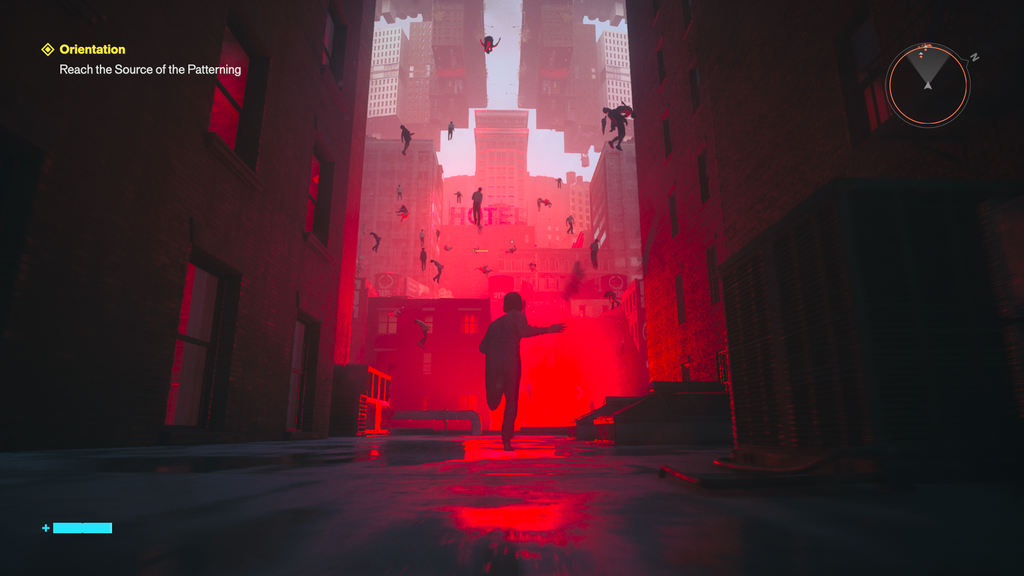
Looking at it from this perspective, after spending over 40 hours with the game, I have to say the beginning didn’t feel nearly as confusing or overwhelmingly packed with “too much weird information to process” as the start of the first Control. That’s when we were first exposed to all this twistedness, whereas here, the story starts off rather slowly, exactly as it should. However, that feeling of not being flooded by bizarre events largely stems from the fact that you are already familiar with the world; you know what is possible within it, so re-entering the Control universe feels like coming home. As you progress through the game, you’ll realize just how much grander, more ambitious, more detailed, and simply more complete the story is here compared to the first game. At no point does it try to confuse you with random events or leave you hanging without answers; everything unfolds naturally, and the pacing is perfectly balanced. You will hit several pivotal moments where you’ll think, “Oh, okay, I must be near the end of the game,” only for the game to inform you that you’ve merely solved one problem, neutralized a fraction of the threat, and still have a long way to go.
The rhythm maintained throughout the game is akin to watching a great movie. Following the climax of a “chapter”, in quotes, because the game isn’t strictly defined by them, comes a quiet moment where you can slowly gather your thoughts while wrapping up other missions and tasks you have pending. I honestly loved this shift in pacing after every single “what the hell” moment in the game. And there will be moments like that; there will be a lot of them in Control Resonant.
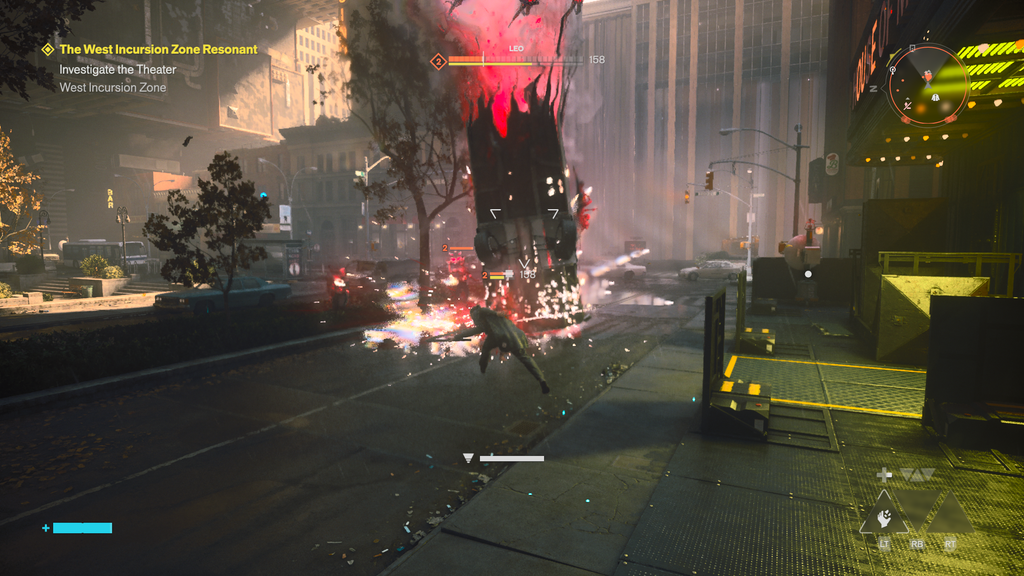
Because this game is much more open than Control, since it takes place outside, in Manhattan, beyond The Oldest House, I have to admit I was surprised by how tightly focused the story is. The world in Control Resonant is divided into several sectors that you access via transition points on the map. In each sector, you have a specific set of main missions and, naturally, a ton of side quests. Now, we all know what to expect from games when we hear “Side Missions.” Recycled tasks designed simply to pad the runtime between main missions, hand out a little XP, and so on. That is not the case in Control Resonant. Every Side Mission is a story in its own right, brilliantly and flawlessly crafted to suck players into these peripheral narratives. This isn’t a lazy attempt to feed players extra content; every Side Mission has meaning, a place in the overarching story, and its own separate narrative, equally weird, genius, and twisted, that blends perfectly into the events of this world. It’s mind-blowing how much attention was poured into this part of the game. They are so meticulously detailed and crafted with such care that, the moment you spot one on the map, you immediately want to see what is going on there, why certain things happened, and how you can stop them. The game forces you to think about them, which I believe is an absolute triumph in game design and side-quest creation.
As I mentioned, you’ll receive some of these through your Handler, Zoe De Vera, who will help you understand and solve the mystery that has swallowed Manhattan. But others you will simply discover on your own. Dylan will notice something, report it, and then dive deeper into that specific mystery.
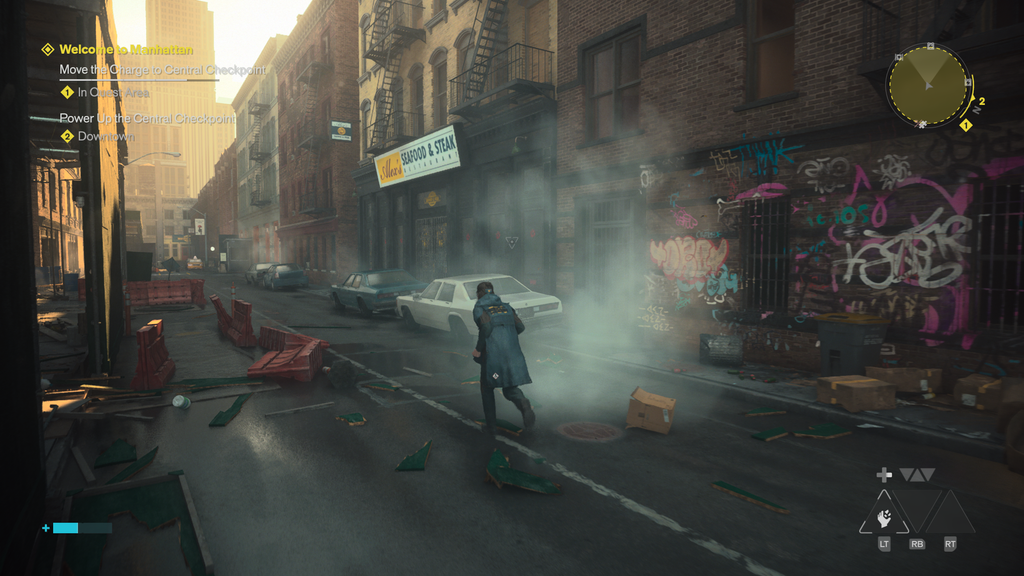
Having said all that, you’ll also have smaller tasks, akin to World Events, scattered across the map at specific times. These are the passing tasks, or what other games would typically label as side missions. However, no matter what you are tackling in this game, it will never be boring, which is incredibly commendable when it comes to the core design and the flawless execution of Remedy’s ideas.
On top of all that, the game is packed with small details that further enrich the story. I thought this aspect would take a back seat considering the different approach to the gameplay, but I was pleasantly surprised by just how many lore notes and other pieces of information you can discover throughout this fantastic world. Every note you find, every message left behind by survivors or former FBC agents, adds another layer to the story and, of course, to the overall experience. You will spend quite a bit of time reading, but trust me, it is worth every minute, because everything has been written with incredible attention to detail and carefully designed to fit perfectly with everything you see and experience in that particular part of the map, or the world as a whole.
Since I already mentioned Zoe, let me just touch on the characters you’ll encounter in the game. There are some you will recognize from the first game, but there are also plenty of new characters who will enrich your playthrough. Best of all, every character is exceptionally well-written and backed by stellar voice acting. I have to note that the game features a lot of over-the-shoulder chatter about Dylan and everything going on. The evolution of those conversations throughout the game is fantastic. At the beginning, everyone hates Dylan because of what he did seven years ago, and you can hear that in their background conversations if you stop to listen. But as time passes, as Dylan thwarts and destroys more and more threats, the tone of everyone you meet will shift. Initially, everyone doubts him and no one trusts him, but as the game progresses, that changes significantly. That evolving dynamic is such a small, subtle detail, but it is executed brilliantly.
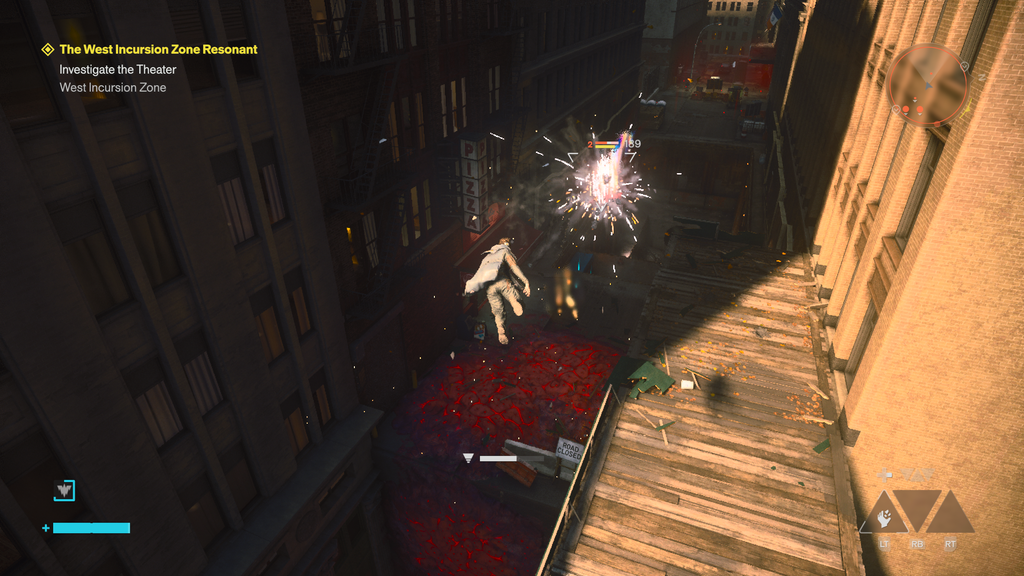
Be aggressive…. be aggressive, and The Board will reward you
Now for the gameplay and the very core of this title. As I said, the transition to melee combat was highly questionable to me before I started playing, and I have to admit I wasn’t happy about it. But the moment you jump into the game, you’ll realize it’s impossible for it to function any other way. Remedy Entertainment crafted a fantastic world, enemies, and combat scenarios exclusively with this playstyle in mind. At first, everything feels a bit… easy. For the first hour, maybe a bit longer, you’ll probably be thinking, “Okay, maybe they didn’t need to pivot so hard to melee.” But as time goes on, when things finally click and you unlock Dylan’s new abilities, you realize just how fantastic the game is because it is focused on melee combat.
Right from the start, you will notice a few things. Dylan is far more mobile than Jesse was in the first game, and I don’t just mean the traversal options he unlocks over time. I mean in combat and what he can actually pull off during a fight. The game heavily emphasizes aggression; it is crucial to stay constantly in the face of your enemies and be just as relentless as they are. Because this is not a game where you can hang back, take potshots, and wait for the enemy to die. The game actively rewards aggression, practically screaming at you: “Go crazy, do everything you can, destroy them all!” And that feeling is simply phenomenal. When the mechanics click, when your fingers get used to juggling a ton of abilities and everything else the game throws at you, every single fight becomes a genuine mini-spectacle.
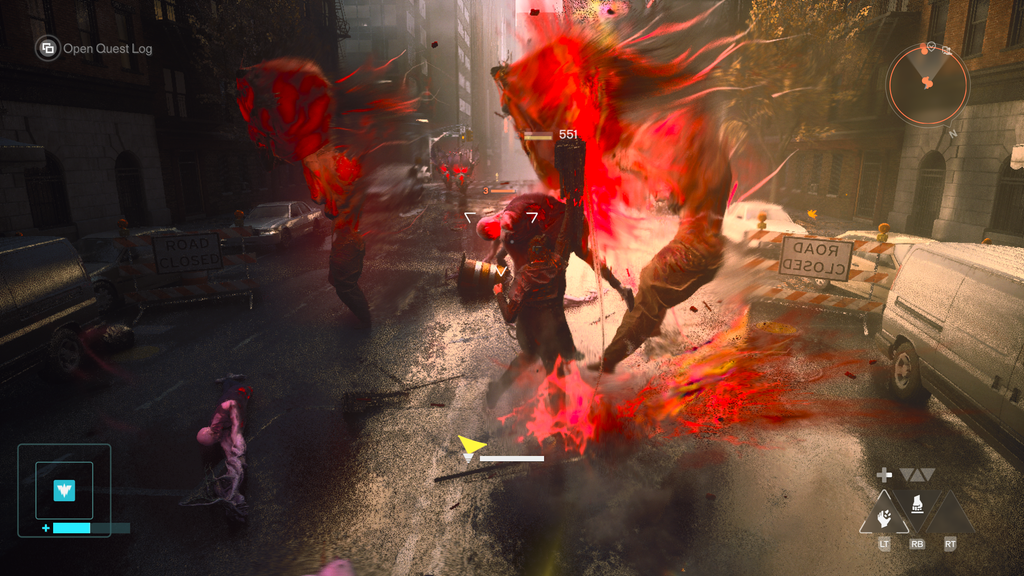
This is a game where enemies won’t attack you one by one. You will frequently face 10+ enemies in a single zone that you need to obliterate. Mobility is absolutely critical mid-combat. Dylan simply has to keep moving, because as much as the game pushes you to be aggressive, the enemies you face are just as aggressive, and obviously, much more numerous. At his core, Dylan has two basic attacks: a light attack on X (Xbox) or Square (PS5), and a heavy attack on Y (Xbox) or Triangle (PS5). But on top of that, you will be able to unlock up to six distinct abilities to use during combat, magic, powers, call them whatever you want. They completely alter the rhythm of a fight, coupled, of course, with a few mechanics specifically designed for aggressive, high-speed brawling.
Every enemy has a stagger meter, and if you fill it, you can trigger a “Dominance” state, meaning for about ten seconds, your attacks become significantly more potent. The catch is that filling this Stagger Meter varies from enemy to enemy. Early on, Dylan can choose from several forms of the Aberrant to wield in combat. Each of these attacks deals a specific damage type: Blunt, Slash, or Pierce. Each attack either deals heavy damage directly to the health bar or rapidly fills the enemy’s Stagger gauge. So, you have to decide on a tactic mid-fight: focus on building stagger to land finishing blows, or try to kill them outright by draining their health. The great thing is that you can always combine multiple attack types. For example, your primary attack could be Slash, ending with a Blunt combo finisher, while your secondary, heavy special attack is Pierce. This allows you to cover all damage types at any given moment, adapting your combat style depending on the enemy. However, that adaptation has to be lightning-fast. You have to master the mechanics so that transitioning from one attack type to another becomes purely intuitive. No overthinking, no wasted time, just reflexes and raw feel. And in every encounter, you will face several tougher enemies mixed in with the smaller grunts.
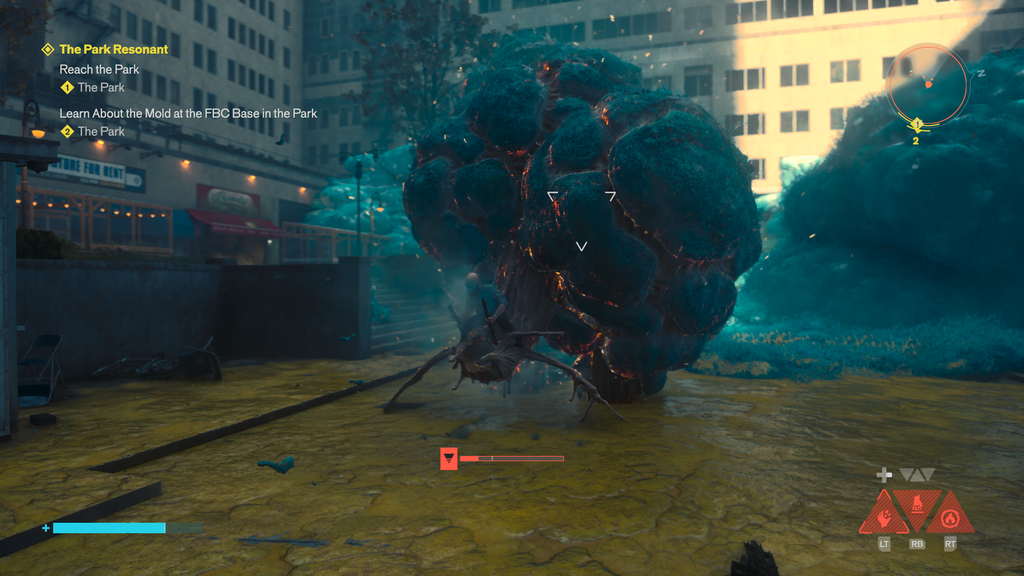
So, a typical fight should flow like this: focus on the weaker mobs, build up their stagger meters, execute a finishing blow to trigger Dominance, and then turn your attention to the heavy units, rinse and repeat. Once you get accustomed to everything the game offers mechanically and all the possible ways you can tackle an encounter, combat becomes incredibly fluid and fun. Above all, it actively pushes you to obliterate everything in your path, pumping adrenaline into your fingers and constantly building hype as you shred through each consecutive enemy. Throw in the stellar musical score during certain fights, and the feeling is simply un-be-liev-a-ble! It is physically impossible to play this game without a massive grin on your face during those moments, because everything is executed so phenomenally that it almost feels unreal.
Boss fights are a completely different beast. I have to admit that, even though this is Remedy Entertainment’s first stab at these kinds of encounters, featuring massive health pools, multiple ways to take them down, and designs where most bosses dwarf you in size, they are genuinely spectacular! However, unlike the street brawls in Manhattan, you have to be a bit more patient with bosses. You need to learn their attack patterns because their strikes can be absolutely lethal. But once you learn them, or rather, pick up on them early on, every subsequent opening becomes a window where you must unleash maximum aggression. The good news is that a boss’s health is divided into several segments. Once you deplete a segment, you are rewarded with a little health to patch you up if you were sloppy in certain moments. So, as brutal and genuinely difficult as some of these fights can be, the game doesn’t harshly punish your mistakes; you always have a way to claw your way out of a tight spot.
The RPG Progression Waiting for You Since Control
Combat isn’t the only system that rewards an aggressive approach; the skills do too. Because Control Resonant is, above all, an action game with RPG progression, you will earn Talent points, scavenge materials, and collect currency to unlock upgrades for your weapons, abilities, and passive skills. Almost every skill, for instance, is geared toward dealing more damage in specific situations, actively celebrating player aggression. As for upgrading the Aberrant’s forms, the more you upgrade it, the higher its Power Level climbs, meaning you deal even more devastating damage to enemies.
But there’s one more layer: Artifacts. You surely remember them from Control and Alan Wake as Objects of Power. They grant specific bonuses, and you can equip three Artifacts at any given time. Each one provides a distinct buff, and it’s vital to synergize those bonuses with your specific playstyle. Interestingly, you don’t just find Artifacts out in the wild; you craft them using specific materials scavenged during your playthrough. Additionally, you will be able to purchase these materials at specific locations if you are short on something needed to upgrade abilities, weapons, or craft an Artifact.
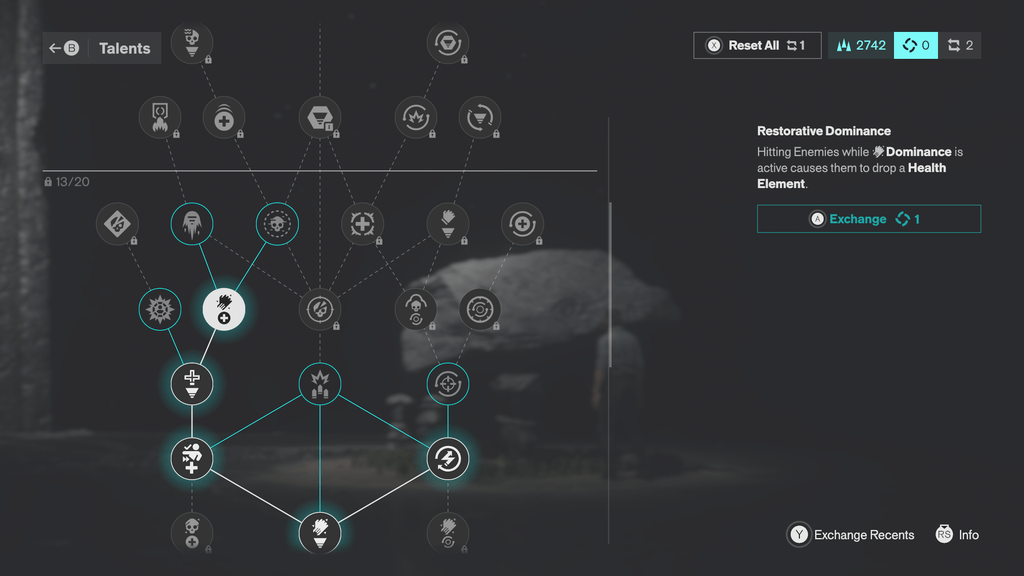
Every upgrade, special attack selection, and loadout tweak is handled in The Gap. It functions a lot like the Mind Place in Alan Wake 2, only here it is strictly focused on upgrading Dylan’s personality and weapons. You can enter The Gap at any moment, provided you aren’t actively in combat, of course, and handle all your necessary upgrades there. I just have to warn you: do not forget to actually do this. I forgot on a few occasions and found myself wondering, “Why are these enemies suddenly so tanky?” only to realize I hadn’t upgraded a single thing in ages.
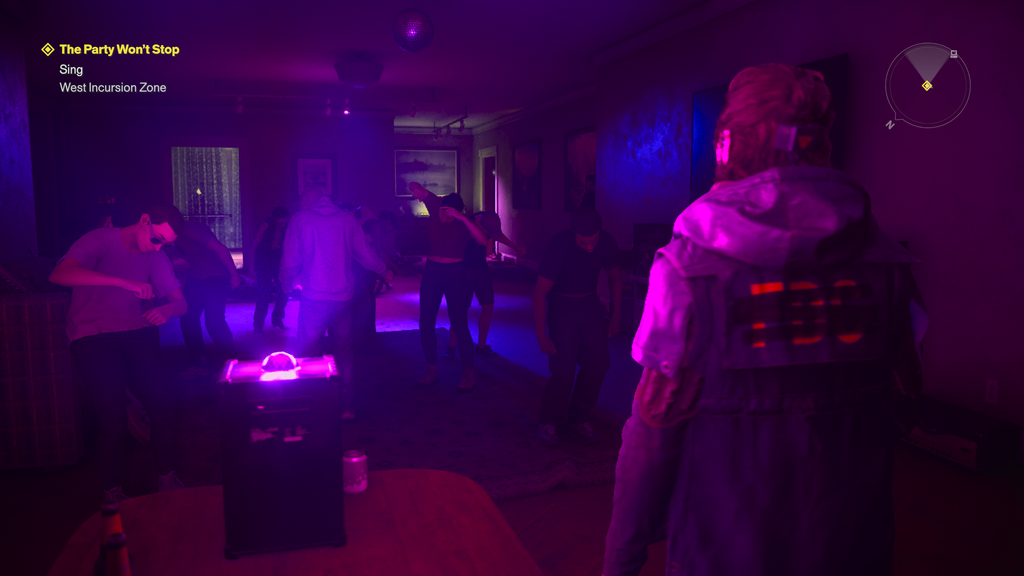
With all that said, there are also traversal abilities to discover out in the world. Or rather, in the interdimensional pockets of the game known as Dimensional Faults. I won’t spoil what you actually have to do in them, as they are a crucial part of the story. However, it is fascinating that, like many things in this game, you aren’t spoon-fed a clear waypoint telling you how to reach them; you have to figure it out yourself. The first thing that absolutely blew my mind in the West Incursion Zone was discovering a way to wall-run inside a garage… I’ll leave it at that, but I will say it is pure perfection in terms of both game design and its fantastic musical backdrop!
The Incredible Mind-Bending Design of the Fantastic Resonant World
And now for the aspect that blew me away the most, and I believe it will do the same for many fans of the Remedy Connected Universe, the breathtaking, fantastic world! Up until now, we’ve always had Remedy games that were somewhat constrained by what they could render in a single scene. Mostly because they simply weren’t designed to handle massive amounts of on-screen chaos. Yet, despite that, every scene looked incredible, with Remedy Entertainment meticulously utilizing the available space to showcase as much as humanly possible. Those scenes truly looked fantastic, as did some of the specific levels. Just remember the Ashtray Maze in Control. Peak game design.
Control Resonant, on the other hand, suffers from none of those restraining issues that plagued its predecessor, the Alan Wake games, and so on. We are dealing with a more open world here, handed to you on a silver platter to explore and manipulate however you see fit. This finally allowed Remedy Entertainment to create absolutely everything they ever dreamed of when it comes to game design. And I have to say, this is the most unique and fascinating game I have ever played.
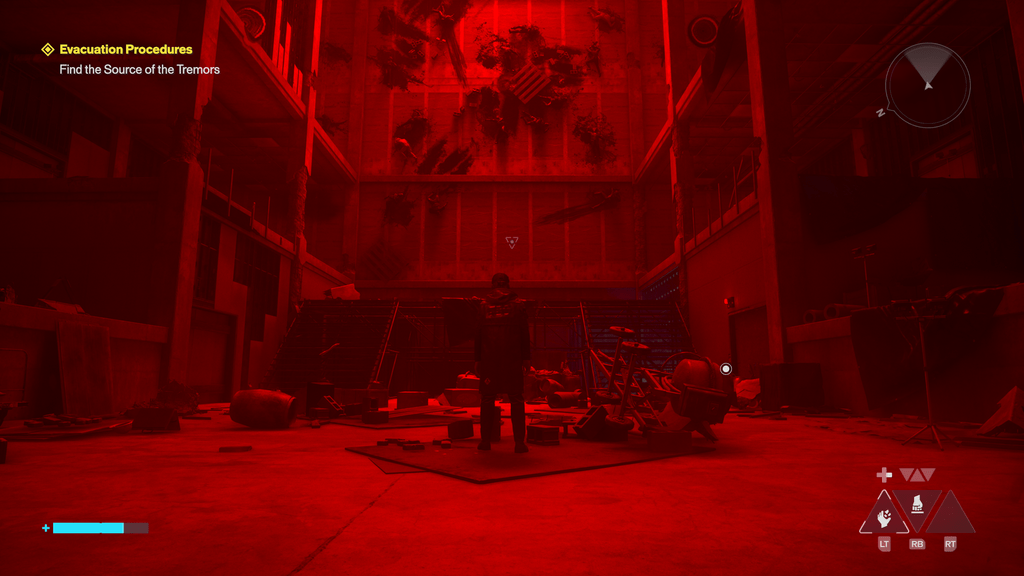
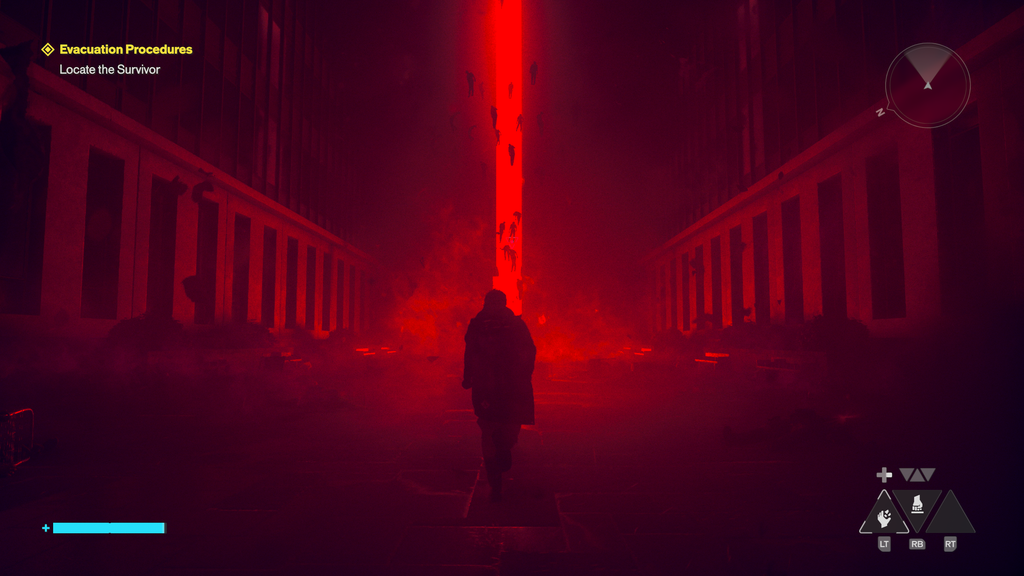
As I said, you have several regions of Manhattan to explore, and each one looks phenomenal. Each is crafted completely differently from the rest because, in every sector, a distinct anomaly is breaking reality and modifying it in ways we could never have expected. Every region is possessed by a different Resonant, threatening to obliterate everything you know about that area. Consequently, each Resonant warps reality in its respective zone into something entirely alien to what we are used to.
Now, early on, I thought Manhattan was the only explorable area, the only part that would look spectacular. But as time goes on, you discover everything beneath and above Manhattan that you can explore and visit. And every subsequent part of the game looks utterly unbelievable and surreal. Imagine the Ashtray Maze, multiply it by 10 in every possible regard, and apply it to every sector of the game. Just stepping into the West Incursion Zone, a section of the map where gravity refuses to work the way we’re used to, where everything is warped and twisted, where streets loom directly above your head, to your left, to your right, and you can flip gravity with the click of a button, I thought that was the peak of the game’s level design. And then I stumbled upon the Sinkhole, and… well, everything changed! That is the moment the game shifts from “Okay, you’re in Manhattan, and everything is fine as long as we destroy the threats up here” to “This is complete and utter madness, brilliantly executed in every conceivable sense of the word.” The pivotal shift that happens at the Sinkhole, and everything you witness afterward, defies anything you could have imagined someone actually pulling off in a video game. It’s not just playing around with gravity and physics; it is absolutely unhinged level design that I often have no idea how it manages to function so flawlessly.
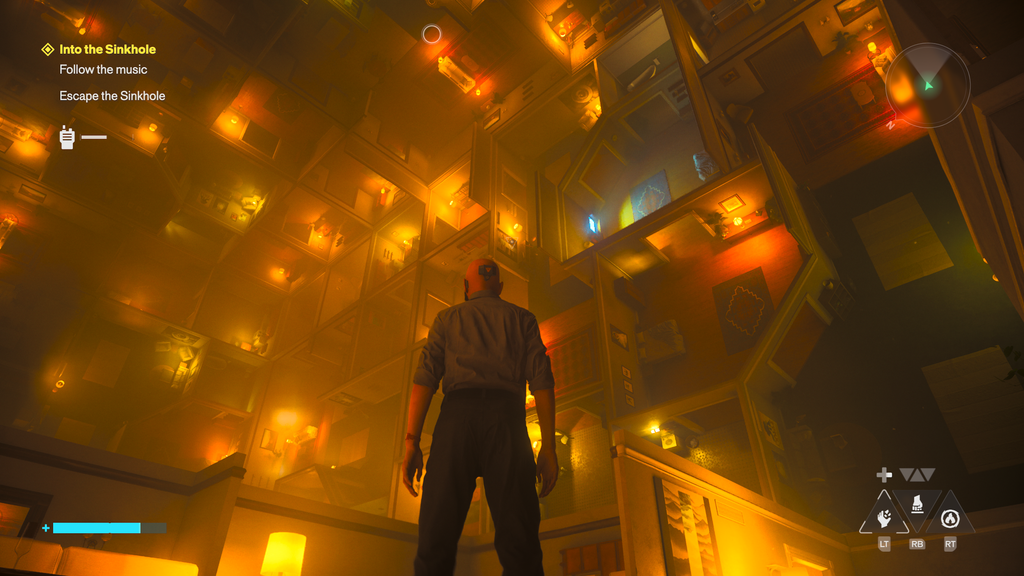
Some things are impossible to put into words until you actually feel and see them yourself, and those are the moments waiting in the latter half of Control Resonant. Because even I, someone who absolutely adores Control and every other Remedy Entertainment game, was entirely unprepared for something like this.
Best of all, you have no waypoints. You have no way to orient yourself other than forging your own path, getting your bearings, identifying landmarks, and heading toward them. There are simply going to be too many “what the…” moments in this game. From the second you lay eyes on something new, to the moments you have to orient yourself just to figure out how to reach a specific spot. As much as you are playing this title, it is actively playing with you, messing with your perception of reality, testing your spatial awareness at every turn, and refusing to let go for a single second. I don’t know if I’ve ever played a game that demands you to be this mentally invested in everything happening on screen. I don’t think I have, and I have to take my hat off to the level design team at Remedy Entertainment. Arhi Makonnen, one of the level designers we interviewed, did a flawless job alongside his colleagues. And I must also mention Daniele Mascagna, the mastermind behind the Sinkhole, who, alongside the rest of the team, turned this into reality. Because that is the exact moment you will say, “Oh my God, this is incredible!”
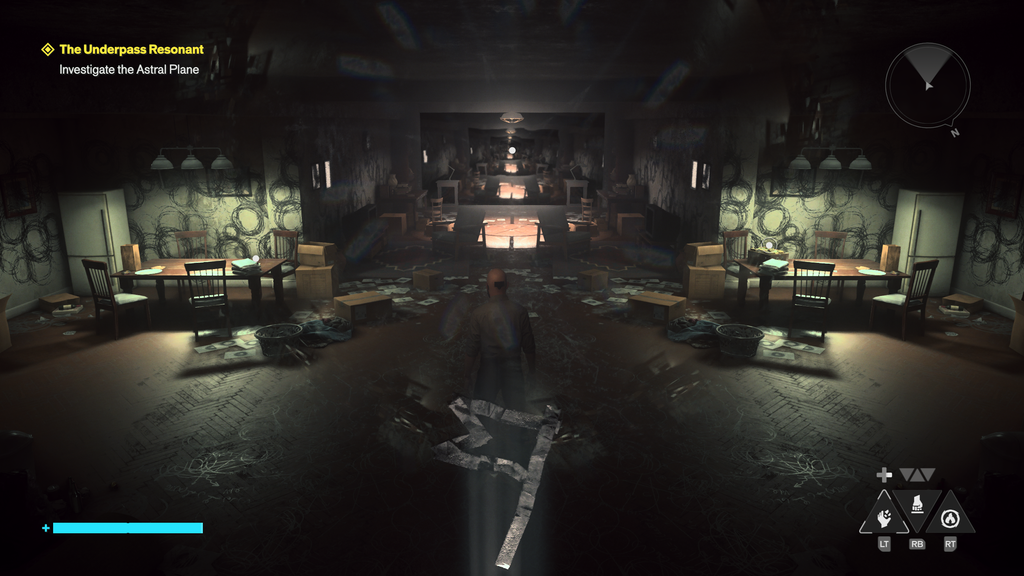
Alongside the level design is the musical score, which is also… well, perfectly integrated into this world. Remedy is already famous for selecting fantastic tracks for pivotal sequences. Sequences that will occur quite frequently here. And during those already mind-blowing events, you are backed by even better music that elevates an already fantastic experience. It’s yet another moment where you simply won’t be able to wipe that smile off your face. But it’s not just the soundtrack; the voice of The Board echoing from the Aberrant when you least expect it, layered over the ambient music and soundscapes, is executed flawlessly. I honestly believe Control Resonant is the absolute champion of presentation and game design in the industry as we know it today.
Technicals, Visuals, and Performance
Control Resonant is powered by Remedy’s Northlight Engine, and I have to say the engineers squeezed the absolute maximum out of the visuals and performance in this game. But at the same time, this is the only area that isn’t quite polished enough, because at least during this review period while we played, the framerate was frequently unstable. I’m not saying it bothered me or prevented me from enjoying the game, but on the Xbox Series X at least, drops did happen. Sometimes illogically, in moments when I really didn’t expect them, with practically nothing happening on screen; other times, they occurred during combat. These aren’t headache-inducing framerate plummets, but they are noticeable. Then again, as I said, this was during the review period, so it is entirely possible this will be patched by launch, but I had to point it out. Aside from that, the game looks breathtaking, and it was a genuine joy to play. Unfortunately, I didn’t get the chance to test it on other platforms, but I assume the experience is significantly “fluid” on PC. Still, I reiterate: it didn’t ruin the experience for me, but I did notice it.
We would like to thank Remedy Entertainment for providing us with a copy of the game for review purposes.
Control Resonant (Xbox Series X)
And now, at the very end, I don't know what else I could possibly say about this title that I haven't already covered in this massive text. This is an absolute triumph for Remedy Entertainment and their uniquely intelligent design. Beyond that, it is all spiced up with brilliant, aggressive, and dynamic gameplay designed to reward you whenever you pull off something amazing in combat, while simultaneously pushing your situational awareness to the absolute limit. I feel bad now remembering how I doubted some of the design choices before playing, because everything clicked perfectly, and I honestly don't know if it could get any better. So, at the end of the day, I should have just trusted Remedy Entertainment, because this is a title that every gaming fan simply has to play. Or at least try. Because if they try it, this fantastic world will effortlessly pull them in and refuse to let go until the credits roll. And then you will genuinely be sad that the end has come, because, as they say, all good things must come to an end. That is exactly the effect Control Resonant leaves on you. This is a masterpiece.


