






I had never enjoyed playing a roguelite deckbuilder before because, honestly, roguelite and deckbuilder games, separately, were always at the very bottom of my “must play” list, no matter how good they were. Let alone when you combine the two into one. That’s probably the main reason why I never even launched Balatro, even though I own it on several platforms. Still, over the past few months, by pure coincidence, I had to step into that world, and imagine that, I actually liked it! Not so much that I suddenly feel the urge to play every game in the genre, but enough to try titles I had never considered before. And when I saw that Black Jacket, the first game from Mi’pu’mi, was coming out soon, I had to play it. Why? Because it’s blackjack. I developed an aversion to poker after working as a croupier, but never to blackjack. I always found it fascinating to watch people standing on the edge of ruin, hoping for that magical card that would give them 21.

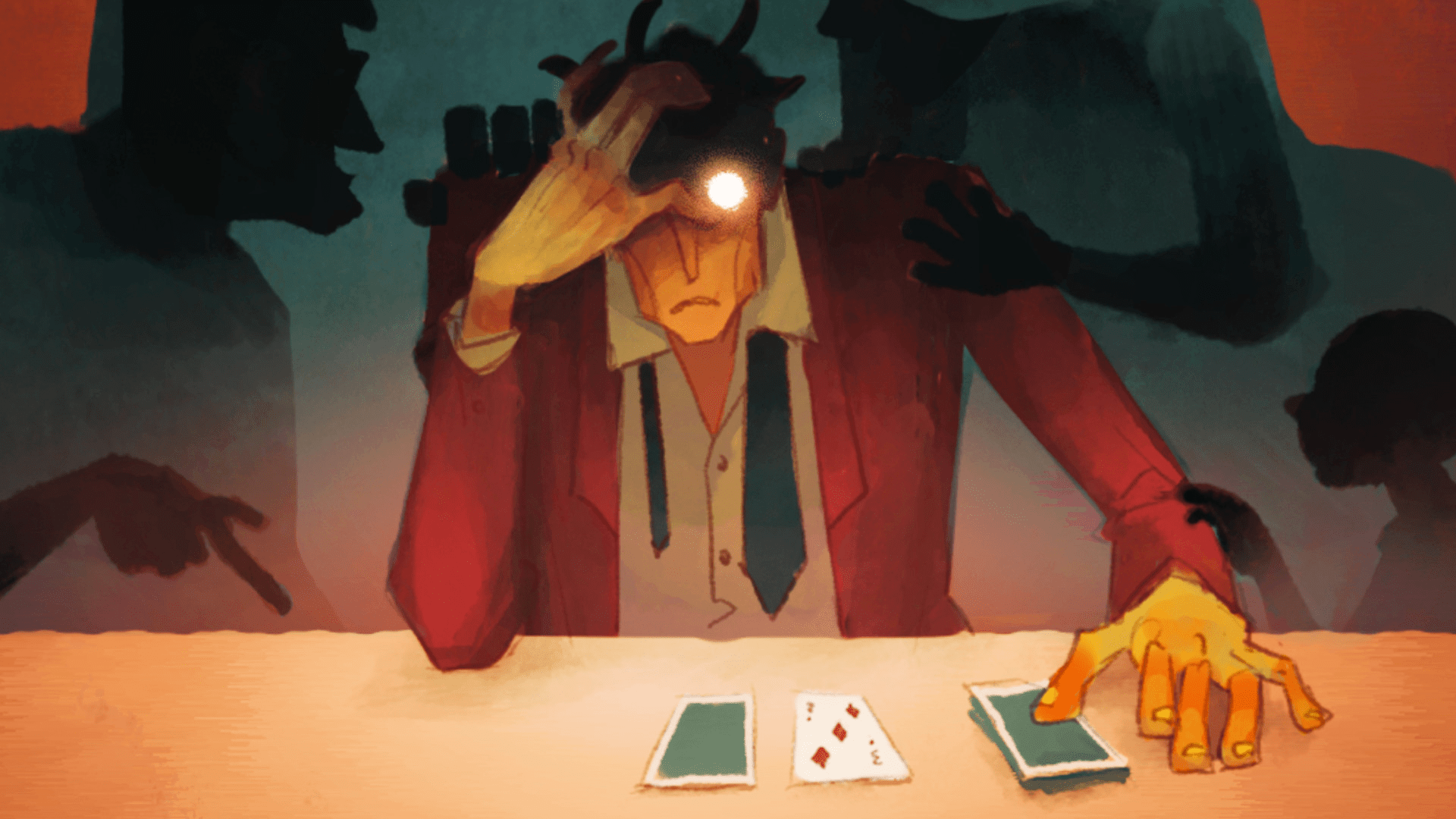
That exact feeling is practically the foundation of Black Jacket. You are a fallen soul who has arrived in purgatory, waiting your turn to be ferried across the river, presumably Acheron, by the Boatman. But he offers you, and all the other damned souls, a rather tempting opportunity. If you manage to earn enough coins to bribe him, instead of sending you to hell, he will return you to life. Since you have no idea how you ended up there, or whether you even deserve it, you obviously accept. And how do you earn the money to bribe the Boatman? By playing blackjack. Against a mix of opponents: other souls desperately searching for a way out, just like you, but also demons and trapped spirits who have long accepted their fate. In short, not exactly good people, or rather, players who weren’t good people. With a few exceptions, of course, like the kid who serves as one of the bosses, completely lost in this strange world.
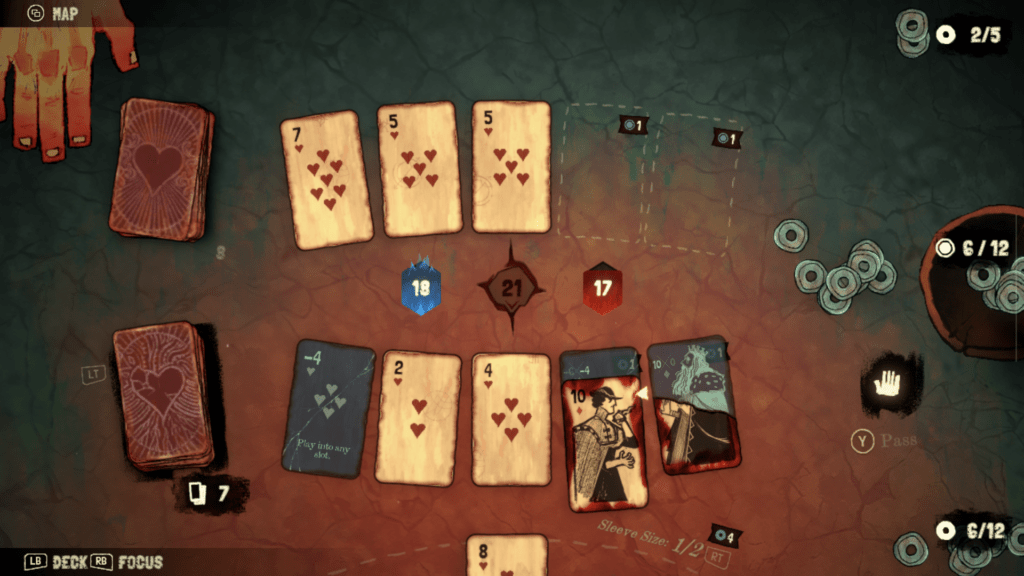
Most people already know the basics of blackjack. You sit at the table, the dealer gives you cards, and your goal is to reach a total that doesn’t exceed 21. You might have three cards totaling 18, or four cards totaling 20. The key is to have a higher total than the dealer, or in this case, the lost souls sitting across from you. Card values range from 1 to 10, with face cards worth 10. The Ace can count as 1 or 11, depending on what benefits you most at that moment. And there’s one more crucial element: after your first and every subsequent draw, you must follow the bet, using coins as your in-game currency. So yes, at its core, Black Jacket follows traditional blackjack rules. But don’t forget, this is a roguelite deckbuilder, so of course there are twists. And when you add the fact that the game takes place in what is essentially hell, anything is possible.
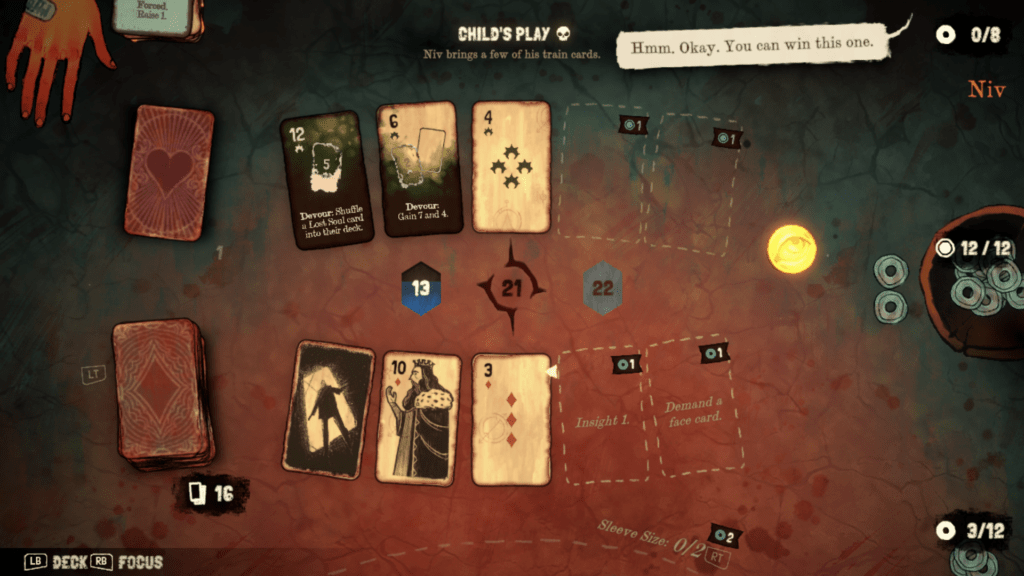
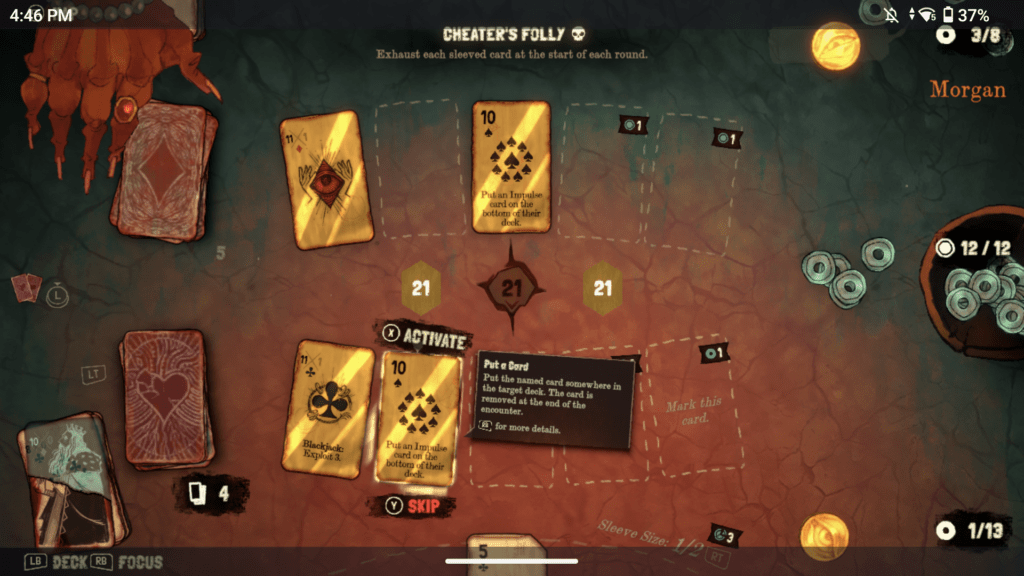
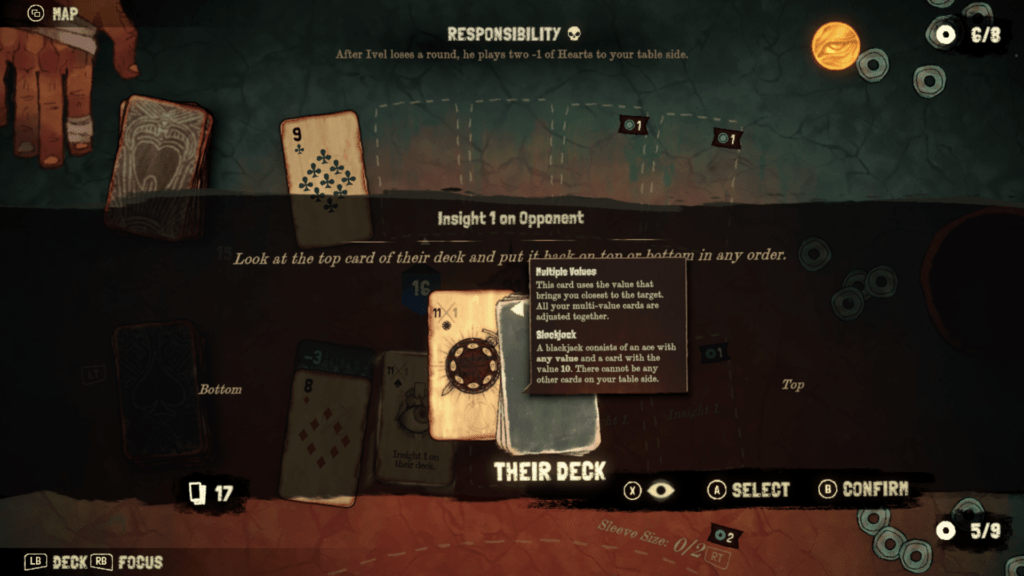
Alongside standard cards, you get modifiers, effects, and unique variations that spice up the gameplay and make an already stressful game of blackjack even more intense, and far more exciting. Every card has its value, but also multiple variations. For example, there’s an Ace that erases the value of the opponent’s card in the same slot. A small Two that wipes out all cards currently played by your opponent. Cards that swap positions with opposing cards. Cards that give you insight into what’s coming next. There’s a lot going on here, and it’s up to you to build a deck that not only fits your playstyle but also allows you to counter the opponents you’ll face.
And your opponent matters just as much as your deck. Regular enemies aren’t “that” difficult at the start. They often miscalculate or become too greedy chasing that magical 21, pushing themselves over the limit. But as you progress, you’ll face players with specific decks built around focused strategies, stealing your coins, stacking cards to free up board space, or hiding cards up their sleeve (which you can also do, but at a cost). Every time you stash a card in your sleeve for later, it costs coins, creating that constant risk/reward tension. Do you spend money to secure a strong move later, or gamble on what you draw next? Then there’s the kid boss who loves rotating the table and the cards on it. So if you think you’ve secured 21, think again, he might twist the board in his favor and leave you far behind.
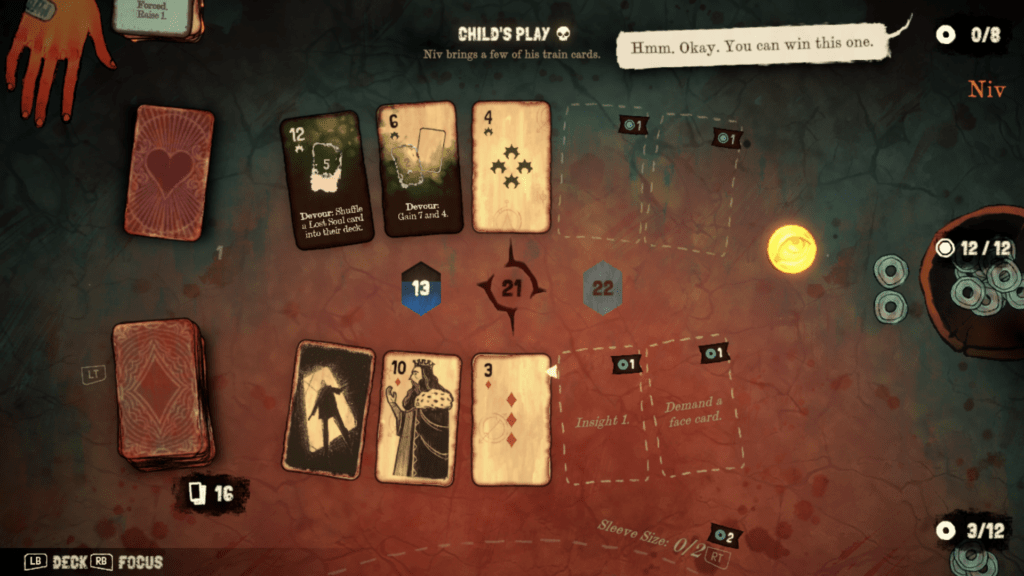
On your five-card board, two slots are always reserved for special actions that change from run to run. You might be able to mark a card to remember its position next time it appears, increase a card’s value by 1 or 2, or peek at the next card in your deck. But all these privileges cost coins, sometimes one, sometimes two. depending on how powerful they are. And since these effects rotate between runs, those two slots never function the same way twice in a row.
Because of all this, constant tactical thinking is required. You need to understand who you’re facing, what that lost soul can do with their cards, and how you can adapt. And this is where the roguelite structure truly kicks in. You won’t see everything immediately. Failed runs are a core mechanic. Each defeat teaches you enemy behavior and prepares you for the next encounter. At the same time, you unlock bonuses and improvements depending on how many opponents you defeat before losing. You might start with 8 coins, but later increase that to 15 or more. That makes a huge difference, longer matches, more room for tactical play, more chances to recover from mistakes, and ultimately a better shot at defeating tougher opponents.
On top of that, you can unlock additional sleeve slots where you can stash strong cards for later, discover charms that grant extra coins, reveal the next card in your deck so you can prepare accordingly, and much more. There’s a huge variety of upgrades and combinations you can experiment with as you keep playing. But these upgrades don’t come from a traditional skill tree where you simply choose what to unlock. Instead, they’re tied to challenges you complete during your runs, meaning the game constantly pushes you to play more and more in order to gradually earn advantages that will eventually give you a real shot at collecting enough coins to leave this place and return to the world of the living.
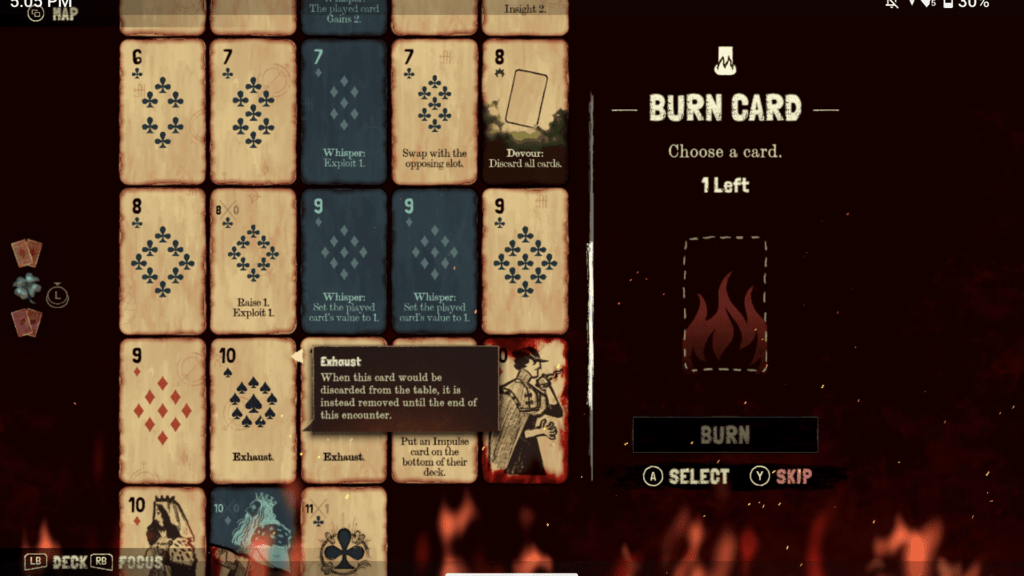
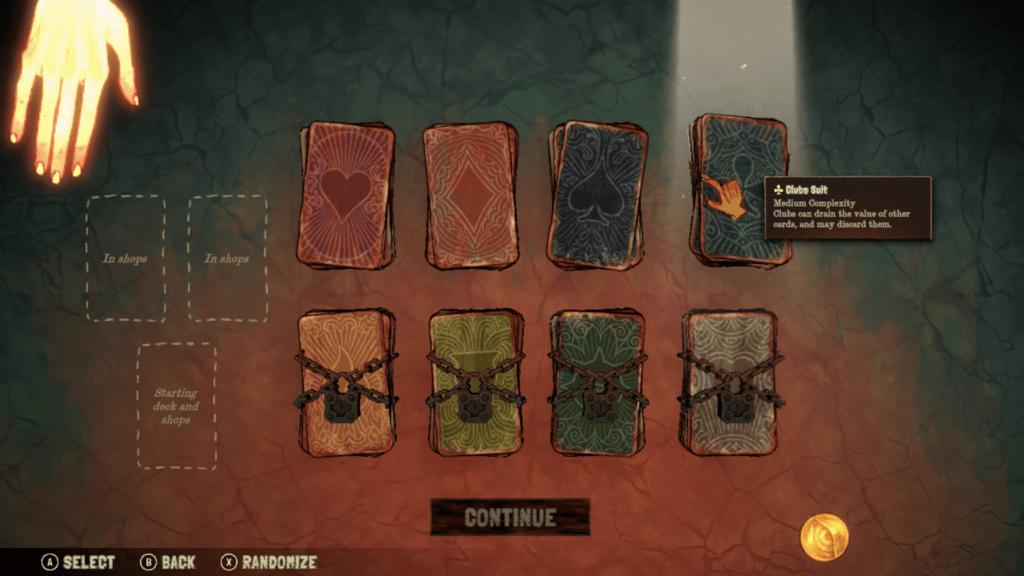
And then we get to the deckbuilding aspect. You start with 15 cards, choosing them from the starter decks available to you. But as you progress, your deck expands, you can buy new cards in shops, duplicate them, add special effects before a run, and so on. If you defeat a boss, you earn their Soul Coin, which can be used to purchase special cards or some of the charms I mentioned earlier. So while you may begin with a weak and limited deck, over time you’ll gain access to more and more tools to shape it into something truly powerful.
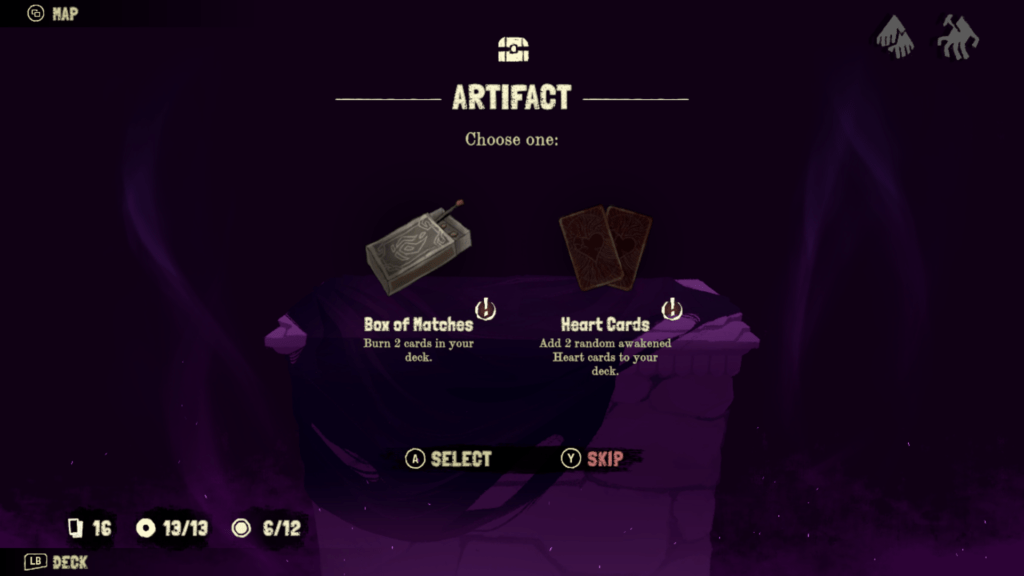
The whole point of the game, as I’ve said before, is to build a deck that suits your playstyle, one that can counter your opponent’s attempts to outsmart you while still allowing you to hit the highest total at the table. And I have to admit, that’s not easy. It takes time to truly master the systems, craft a deck that feels flexible and strong enough to beat anyone, and understand how to adapt on the fly. And this brings us back to the roguelite structure. When you lose, you return to the beginning and your carefully built deck is gone. However, the upgrades earned by completing challenges remain permanent, things like increased starting coins, additional sleeve slots, and similar bonuses. As you defeat more bosses and enemies, you also unlock new starting decks that can be combined in future runs, as well as expanded coin storage and other long-term benefits.
So no matter how you play, whether you win or lose, you always return to the start carrying something with you. It might be knowledge gained from experience, or permanent upgrades that make your next run stronger. Another really nice touch is the evolving relationship system with the bosses. If you defeat a particular boss four or five times, you unlock new bonuses and deepen your “relationship” with them. And perhaps the coolest part is that bosses rotate between runs. One time you might face a towering demon; the next, the lost child; then maybe a twisted woman. This keeps each run feeling fresh and unpredictable.
But the best part of all is the gameplay loop. If you don’t pay attention to the cards you’re playing, your run can end very quickly. On the other hand, if you carefully think through every move, analyze how to outplay your opponent, and choose your cards wisely, matches can last much longer. That constant sense of progression, tension, and adrenaline, especially when your opponent draws the next card that might either bury you deeper or suddenly make you rich, is simply beautiful. That’s what will keep players coming back.
At first glance, someone might think Black Jacket is just another blackjack game. But scratch beneath the surface and you’ll find so many clever mechanics and twists that elevate the already thrilling blackjack foundation into something far richer. That’s the real magic of this title. Even after many hours, you’ll still encounter something new, some fresh combination or mechanic you can’t wait to test in the next run. And then comes that familiar moment: “Okay, just one more run and I’m done.” Except that one more run turns into a few more hours.
As for the visual presentation, everything is clean, stylish, and charmingly designed. The voice acting, though limited in quantity, is excellent. After defeating each boss for the first time, you unlock a short story revealing who they were, why they’ve been trapped here for so long, and what led them to this fate, adding another layer of intrigue and emotional weight.
We would like to thank Skystone Games for providing us with a copy of the game for review purposes.
Black Jacket (PC)
I was initially drawn to Black Jacket because of its premise, blackjack in a roguelite format. But the more time I spent with it, the more I realized that beneath that simple concept lies something much deeper and more complex. And the best part is that this complexity unfolds gradually, expanding across every layer of the game. Because of that, Black Jacket might become someone’s next Balatro, a game people play day and night. Or to put it another way: what Balatro is to poker, Black Jacket is to blackjack. If you’ve enjoyed similar games, you should absolutely dive into this one, you won’t be disappointed. It’s a genuinely fantastic little title that will make the hours melt away.


