




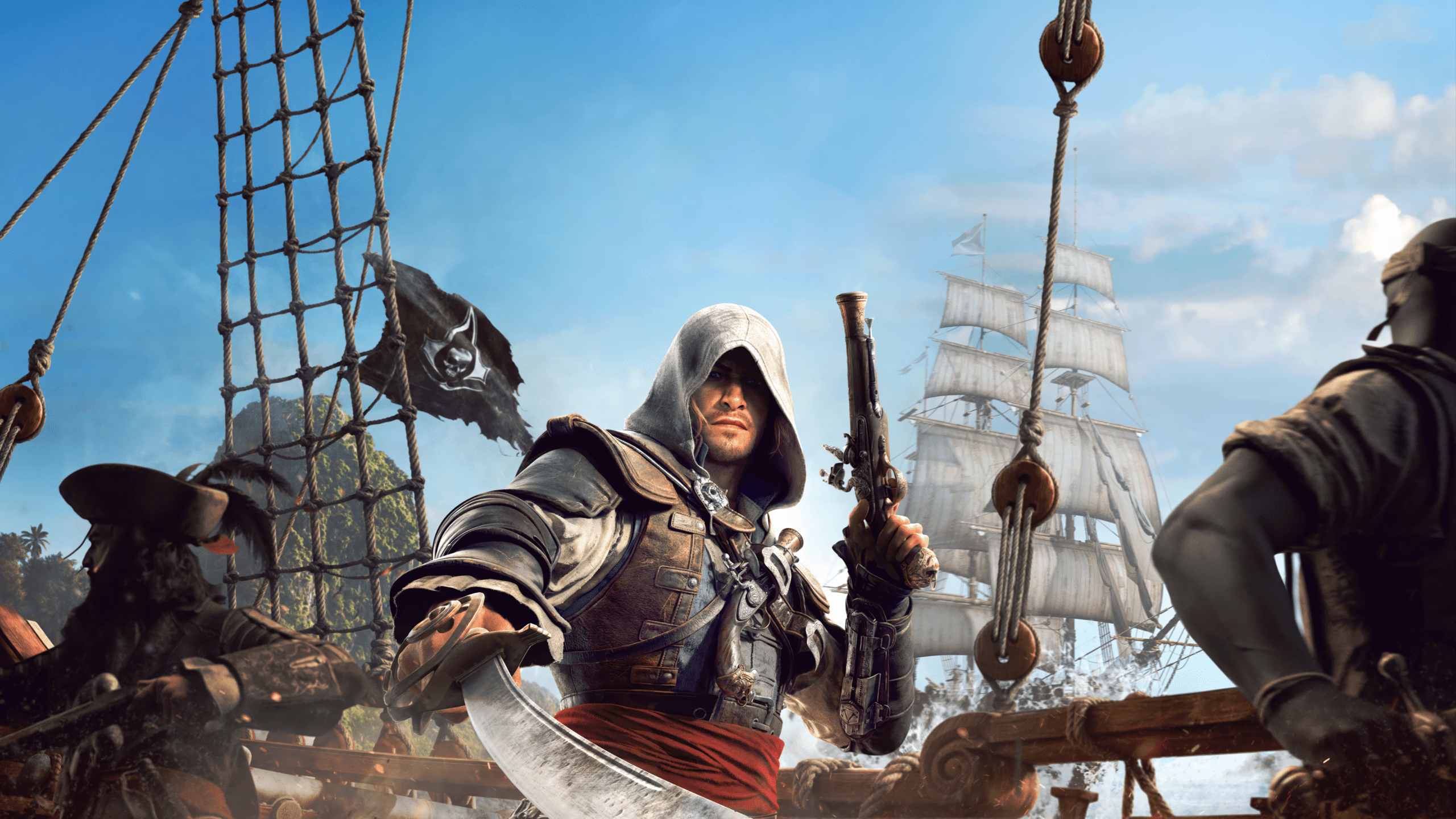


Unlike most players out there, I actually skipped Assassin’s Creed Black Flag when it originally launched. And unlike the majority of people who played it back then, the whole pirate theme simply didn’t click with me at that point in my life. About a year later, Assassin’s Creed Rogue came out, still only on the old-generation consoles, and, for whatever reason, that game resonated with me much more than Black Flag ever did. I mention Rogue because, in my mind, the two have always belonged to that same era of Assassin’s Creed.
That being said, I never thought Black Flag was a bad game. Quite the opposite, it simply wasn’t the right game for me at that stage of my life. I played it, admired its stunning visuals, and completely fell in love with its incredible world back in 2014. What makes it even more impressive is that the game continued to be praised for years afterward, becoming a benchmark not only for future Assassin’s Creed titles but even for games outside the franchise altogether (looking at you, Skull & Bones). Ironically, it’s also the only Assassin’s Creed game I never finished, and somehow managed to avoid completing all these years. But with the release of Black Flag Resynced, I finally ran out of excuses and decided it was time to experience the adventure in full.

Just like the original, Black Flag Resynced follows the story of Edward Kenway, arguably the most beloved protagonist in the franchise alongside Ezio Auditore. Edward is witty, charming, charismatic, but also ruthless when the situation demands it. After being shipwrecked on a small Caribbean island alongside an aging Assassin from an ancient Brotherhood, his story takes a very different path than that of most Assassin’s Creed protagonists. Unlike the others, Edward doesn’t earn his robes or his Hidden Blades through years of dedication or by proving himself worthy of joining the Brotherhood. Instead, he takes everything by force after killing Duncan Walpole, a rogue Assassin who traveled to the Caribbean in pursuit of his own selfish ambitions. For a brief moment, Edward assumes Walpole’s identity, but why? Because he wants fame, fortune, Spanish soldiers to loot, and, of course, treasure. Just like any respectable pirate would.
I have to admit, I really enjoyed this setup because it’s so different from the traditional Assassin’s Creed formula. Instead of spending hours proving yourself worthy of joining the Brotherhood, everything happens almost by accident. Edward has absolutely no idea what he’s gotten himself into, but one thing is crystal clear in his mind, wherever this journey leads, there’s bound to be plenty of riches waiting at the end, and that’s more than enough motivation for him.
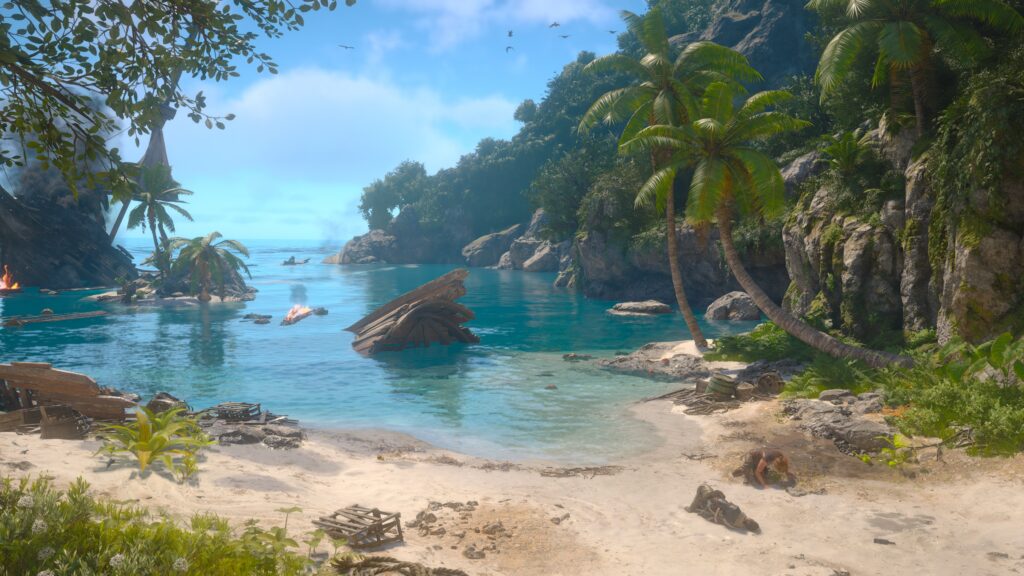
Of course, the treasure isn’t only waiting at the end of the journey. It’s scattered across every corner of Black Flag’s breathtaking Caribbean world. Out of every Assassin’s Creed game I’ve played, this one might honestly be the most relaxing despite simultaneously being one of the most brutal, largely thanks to Edward himself and the ruthless way he deals with anyone unfortunate enough to stand in his way. The moment you step aboard the Jackdaw, a ship you practically acquire by sheer luck early on, and begin sailing across those crystal-clear waters, it’s impossible not to feel a genuine sense of peace. As your crew belts out “Maid of Amsterdam” or some other pirate-era Billboard hit from the 1700s, you’ll find yourself scanning the horizon for merchant ships to plunder, secluded islands to explore, or maybe even diving into the sea simply because you weren’t feeling the current sea shanty. Every voyage feels like its own little adventure.
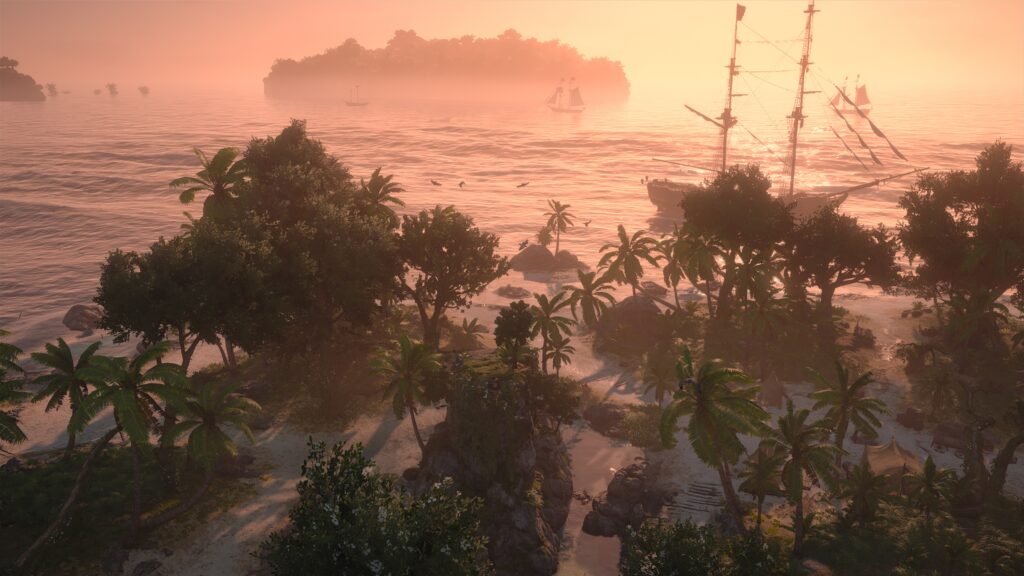
There’s an incredibly positive energy running through Black Flag. Something about its presentation and the way the world constantly unfolds manages to quietly take over your mind and keeps pulling you forward until you feel compelled to complete everything it has to offer. I still haven’t finished the game myself, but I absolutely intend to, because it delivers a strange sense of tranquility that’s surprisingly rare in modern games. It’s simply an incredibly enjoyable experience.
Let’s be honest, that same feeling was already there back when the original released. The difference is that, like every game, it was limited by the technology of its time. Now, with the new graphics engine, playing Black Flag Resynced feels like rediscovering your favorite childhood dessert after years of thinking about it. It was always somewhere in the back of your mind, quietly reminding you of simpler, carefree days. Except now it tastes even better, looks even better, and finally has all the ingredients you wished it had back then.
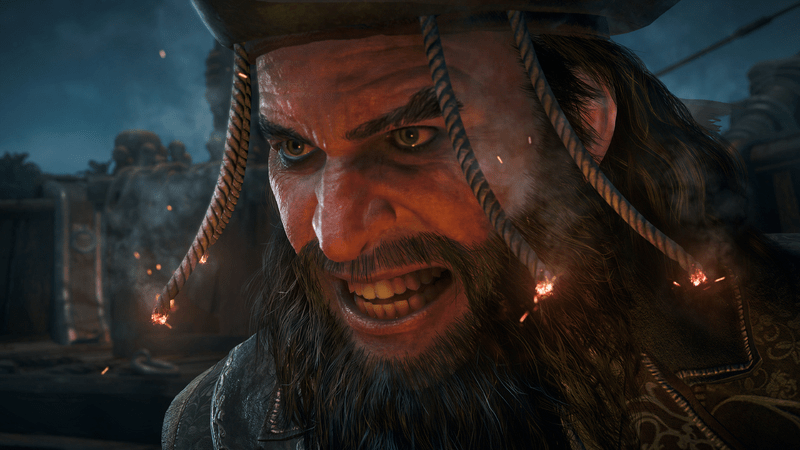
That’s exactly how I felt the moment I started playing Black Flag Resynced. Everything felt familiar, yet somehow completely new at the same time. In my memory, it looked fairly close to the original, until I booted up the Xbox 360 version again and realized the difference was nothing short of night and day. Resynced is absolutely stunning. The level of detail is remarkable, and I’m not just talking about old character models being dropped into the Assassin’s Creed Shadows engine. Everything has been rebuilt, refined, and carefully reworked to make this feel like a true reincarnation of Black Flag. Honestly, I can’t think of another Assassin’s Creed game that deserved this treatment more, especially considering its incredible setting and everything it offers players. Still, no matter how breathtaking the visuals are, graphics alone don’t make a great game. Gameplay remains the true heart of the experience.

One of the biggest issues with the original Assassin’s Creed Black Flag was that it remained trapped within the design philosophy of older Assassin’s Creed games. Stealth, combat, parkour, they all felt restrictive. Back then, it was fantastic. By today’s standards, though, it often feels like your hands are chained to the deck of a ship, preventing you from ever truly cutting loose. Combat suffered the most. It followed that familiar formula: one enemy attacks, you press a single button to counter, finish him off with a flashy sword animation, then repeat the exact same process for the next enemy, and the next one after that. The game had incredible potential, but it was held back by the foundations it was built upon. Black Flag Resynced finally breaks those chains. It feels liberating. It feels like you can finally breathe, experiment, and approach encounters however you want, and that feeling is absolutely fantastic.
What’s particularly impressive is how well everything has been blended together. The magic of the original remains completely intact, yet everything feels modern enough that you genuinely get the impression you’re playing a brand, new game. Then again, isn’t that exactly what a great remake is supposed to accomplish? And Black Flag Resynced might just be one of the finest examples of how to do it right.
Combat is fast, fluid, and genuinely exciting. If you’ve played Assassin’s Creed Shadows, you’ll immediately understand what I mean. It’s aggressive and action, packed while still rewarding perfectly timed parries that can instantly eliminate an enemy. At the same time, things become much more intense when four or five opponents surround you and begin attacking relentlessly. Positioning, dodging, jumping, perfectly timed parries, light and heavy attacks, kicks and trips, every mechanic has its place and constantly keeps you engaged. Honestly, there are so many different ways to approach every fight that it’s almost overwhelming in the best possible way. And the absolute highlight? Watching an enemy charge at you with a sword, only for you to pull out your pistol like Indiana Jones in Raiders of the Lost Ark and end the fight with a single shot. That feeling is simply priceless.
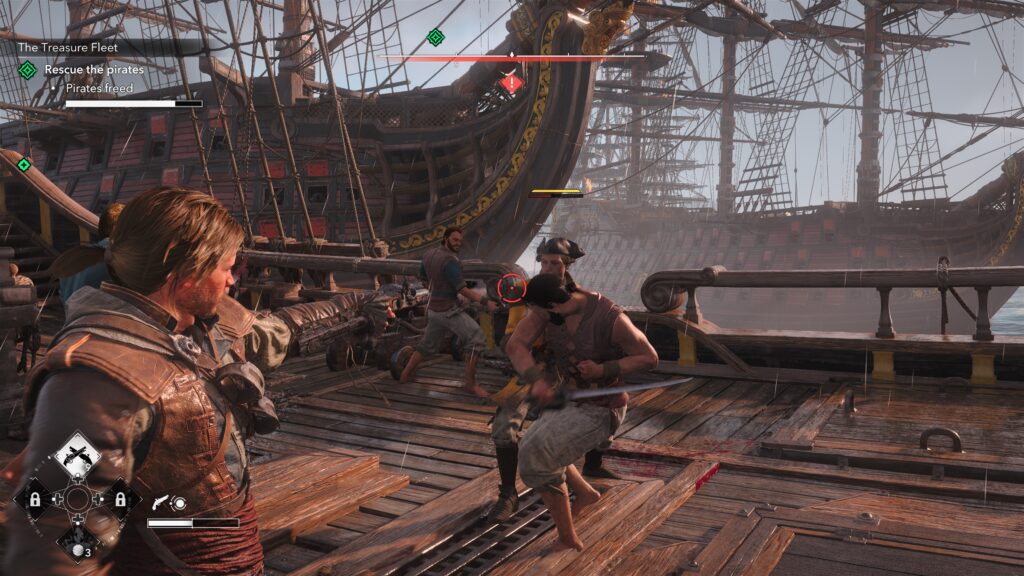
The newfound fluidity of combat blends perfectly with the world itself, giving everything greater purpose and a much stronger sense of momentum. You no longer feel like your hands are tied, forced to play exactly the way the developers originally intended. Instead, you’re finally free to approach every encounter however you want. And if stealth has always been your preferred playstyle, you’ll be happy to know it has been completely reworked from the ground up.
While a large portion of the game still takes place during daylight to showcase the breathtaking beauty of the Caribbean, which makes perfect sense considering this is, first and foremost, a pirate adventure, that doesn’t mean you can’t become a silent predator. Tall grass, environmental objects, and a wide variety of tools at your disposal allow you to eliminate enemies without anyone ever noticing, if that’s how you prefer to play. The best part is that stealth is no longer dictated solely by level design, it now depends heavily on the weather as well.
When heavy rain starts pouring, thunder crashes overhead, and strong winds sweep across the islands, your footsteps become much harder to hear. Those conditions let you sneak up on enemies like some mythical beast lurking in the shadows, leaving chaos in your wake before anyone even realizes you’re there. But storms don’t just affect sound, they also reduce visibility. When rain is pouring from every direction, staying hidden becomes significantly easier. You can’t simply pull up your hood and magically disappear anymore. Instead, you have to carefully plan your movements around the conditions of each mission, every section of the map, and whatever is happening around you at that particular moment. I absolutely loved that approach because stealth can now be played on a level that would probably make Naoe from Assassin’s Creed Shadows jealous.
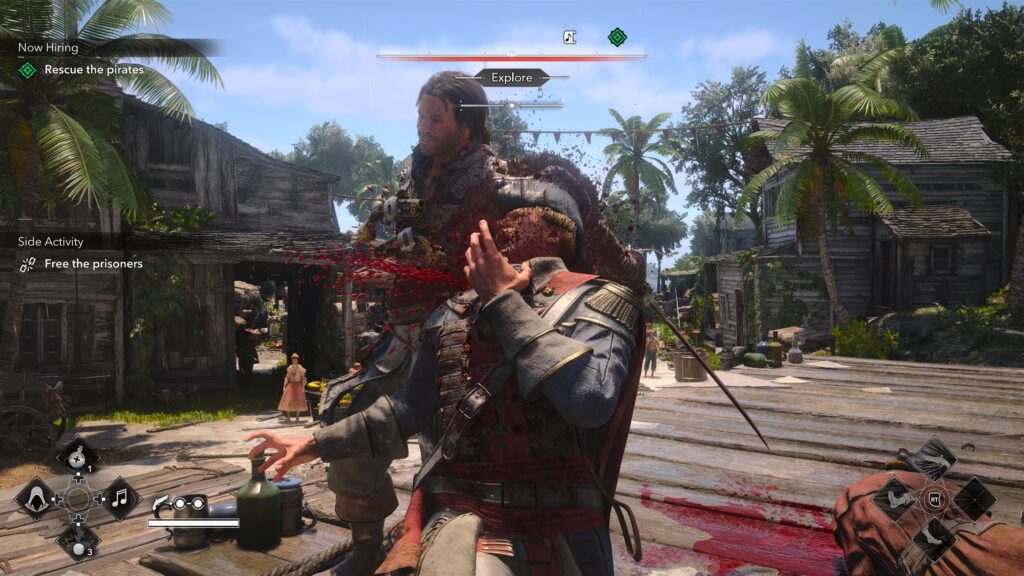
The complete redesign of these gameplay systems is more than welcome. Missions have naturally been reworked wherever necessary so every new mechanic feels meaningful rather than tacked on. Unlike some games where new abilities feel awkwardly inserted into levels designed for an entirely different gameplay philosophy, everything here has been carefully adapted to support the new mechanics. Enemy placement, AI behavior, level layouts, and the countless opportunities they create all work together beautifully. No matter which playstyle you prefer, you’ll constantly find new ways to approach situations, experiment, and have fun. You’re simply no longer limited by the constraints of the original, and that’s something worthy of genuine praise.
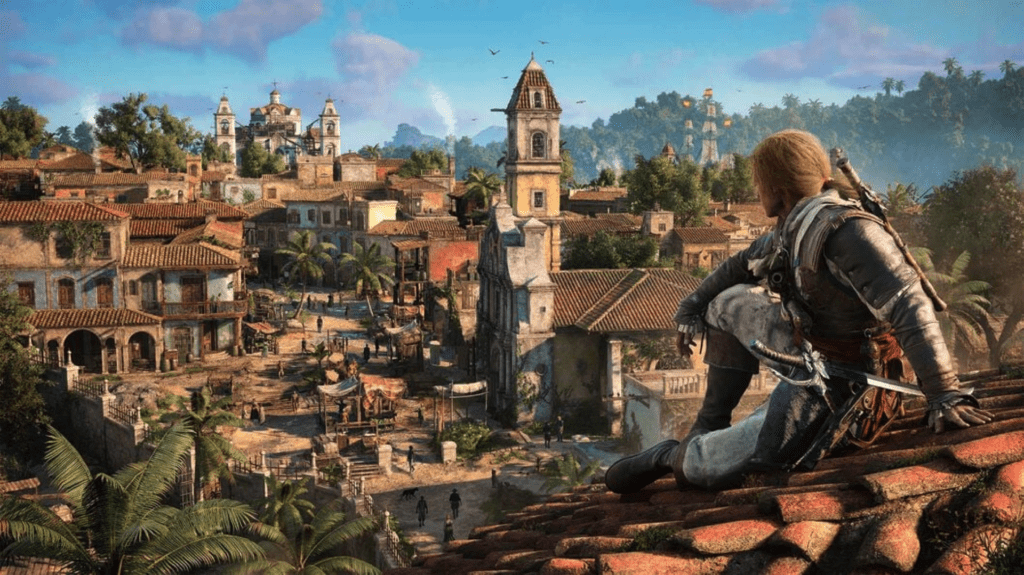
The same can be said about parkour. I remember playing one of the older Assassin’s Creed games with my girlfriend’s son, and his reaction perfectly summed it up: “Everything looks really cool… but it feels kind of clunky.” Honestly, that might be the best description of classic Assassin’s Creed parkour. It always looked impressive, but actually controlling it often felt awkward. Here, however, you finally feel like a true ninja… I mean, pirate… sprinting across the rooftops of Havana, Kingston, Nassau, and countless smaller islands as you chase hidden treasures or escape your pursuers. After all, everyone knows pirates spent their days hanging from rooftops collecting Animus fragments and mysterious notes scattered across history. Jokes aside, parkour feels fantastic this time around. It’s fluid, responsive, and once again genuinely fun to climb, swing, and traverse the world however you choose.
Perhaps the most important aspect of this remake is how Ubisoft handled the story itself. The complete narrative from the original game returns intact, accompanied by additional activities, optional story scenarios, and new endgame missions that further expand an already fantastic conclusion. But there’s one completely new feature that truly defines the “Resynced” subtitle: the Rifts.
These are special “what if” scenarios that introduce alternate versions of key events throughout the story. They explore paths history could have taken but didn’t, and the consequences those alternate realities may or may not have on the larger Assassin’s Creed universe. The Rifts are implemented intelligently, encouraging players to question everything they thought they knew. You constantly find yourself wondering whether these alternate possibilities might actually reveal a deeper truth than the version you’ve accepted for years. Thankfully, the game doesn’t overwhelm you with them. They only appear during carefully selected, pivotal moments throughout the campaign. It’s an excellent addition that adds another layer of mystery to the franchise’s already complex lore.
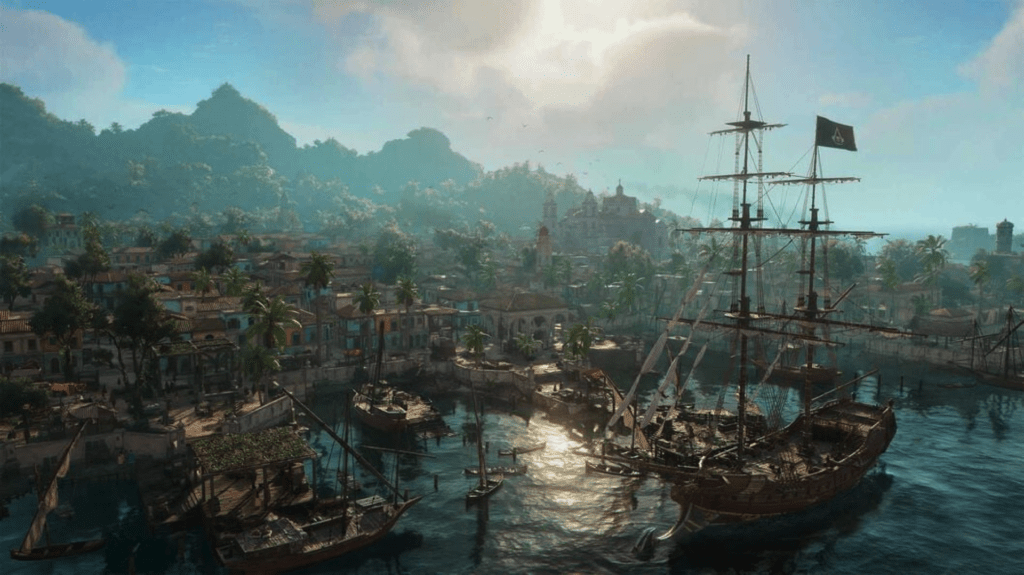
On top of that, you’ll discover plenty of additional missions, expanded character storylines, new officers to encounter, and numerous fresh events scattered throughout this gorgeous open world. Ubisoft truly went all-in with Black Flag Resynced, and I think every player will notice that almost immediately. The deeper you dive into the experience, the more obvious it becomes just how much love and effort went into every aspect of this remake. Betting on Black Flag once again has paid off, because nearly everything Resynced brings to the table feels exceptional.
There are also several other additions that shape the overall experience. Unlike the original release, the game now features an inventory system similar to the more recent Assassin’s Creed titles, particularly Shadows. You’ll find new weapons, equip trinkets that grant unique bonuses, and unlock various outfits, each offering their own gameplay perks. That said, this is by no means an RPG. At its core, Black Flag Resynced remains a true action-adventure game, with progression systems that simply provide more meaningful rewards, especially when it comes to upgrading the Jackdaw.
Naval exploration and sea battles were already among the highlights of the original Black Flag, and thankfully they’ve become an even bigger focus here. The Jackdaw now offers significantly more upgrade options than before, with a variety of different cannons, ammunition types, and ship improvements that dramatically change the flow of naval combat. Everything feels more cohesive in Resynced, carefully designed to encourage players to keep expanding their legendary pirate vessel. And once again, the Caribbean Sea itself is absolutely breathtaking. Better yet, you can now stop almost anywhere and dive beneath the surface, because the game’s secrets aren’t limited to tropical islands, they extend deep into the crystal-clear waters surrounding them.
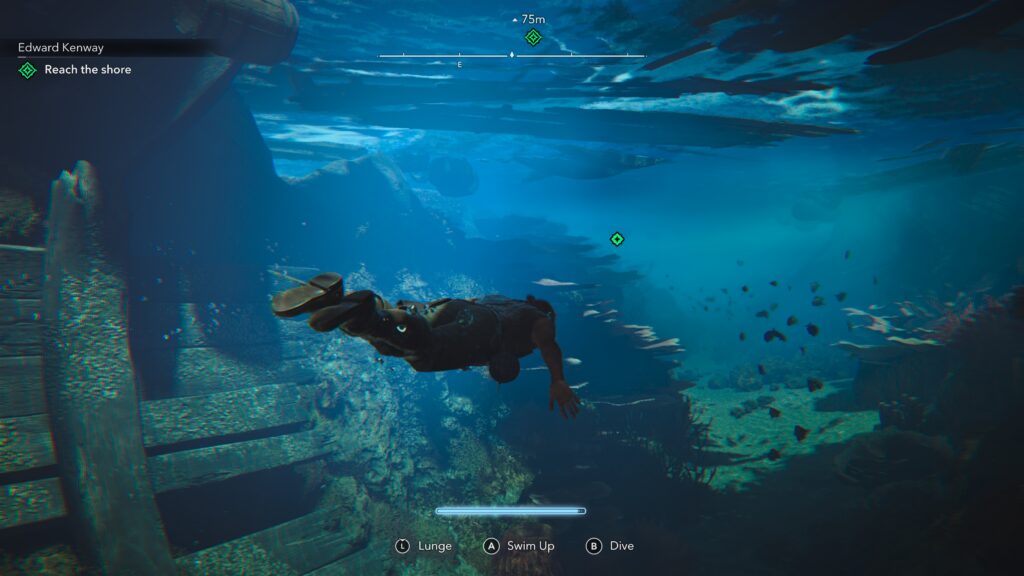
That naturally brings me back to the visuals, which are nothing short of stunning. Assassin’s Creed Shadows was already considered one of last year’s most beautiful games, and Black Flag Resynced proudly follows in its footsteps. I played on Xbox Series X using Balanced Mode, which delivers 40 FPS on a 120Hz display. Two additional graphics modes are also available: Quality Mode, which targets 30 FPS with enhanced visual effects and ray tracing features, and Performance Mode, which pushes the game to 60 FPS while sacrificing some graphical fidelity, although even then it still looks incredible. Balanced Mode proved flawless throughout my entire playthrough, maintaining a stable frame rate without any noticeable drops, which is highly commendable.
The biggest visual improvement comes from the lighting system, which is simply phenomenal. Every Caribbean sunset bathes the world in gorgeous shades of orange, creating scenes that are almost impossible not to stop and admire. Storms transform the landscape with deep blues, dark clouds, and rain-soaked environments, while sunny afternoons fill every location with warm, vibrant colors that perfectly capture the atmosphere of the tropics. No matter the time of day, every scene feels alive thanks to the completely overhauled lighting system. The most impressive moments come when time passes naturally while you wait, allowing you to witness every subtle transition of daylight in real time.
Ubisoft may not be in the strongest position when it comes to business decisions these days, but Assassin’s Creed Black Flag Resynced is a perfect reminder of just how incredibly talented the developers across this massive studio truly are. Even though Black Flag is now more than twelve years old, this reinvention of one of the franchise’s greatest entries should serve as both motivation for Ubisoft’s future and proof that the creative magic which once defined the series is still very much alive, it simply needed to be rediscovered.

We would like to thank Ubisoft for providing us with a copy of the game for review purposes.
Assassin's Creed Black Flag Resynced (Xbox Series X)
It doesn't matter how many times you've played the original Black Flag or how many hundreds of hours you spent sailing the Caribbean back in the day. Assassin's Creed Black Flag Resynced gives every fan countless reasons to return and experience this unforgettable adventure all over again. It's incredibly rare to see a remake crafted with this much passion, care, and respect for the original material. You can feel the developers' love for this era of Assassin's Creed in every corner of the game. Assassin's Creed Black Flag Resynced is a beautiful, unforgettable adventure that simply shouldn't be missed, whether you're a longtime fan of the franchise or stepping aboard the Jackdaw for the very first time. With so much content and so many memorable experiences waiting across its vast Caribbean world, it's practically impossible to ignore.


